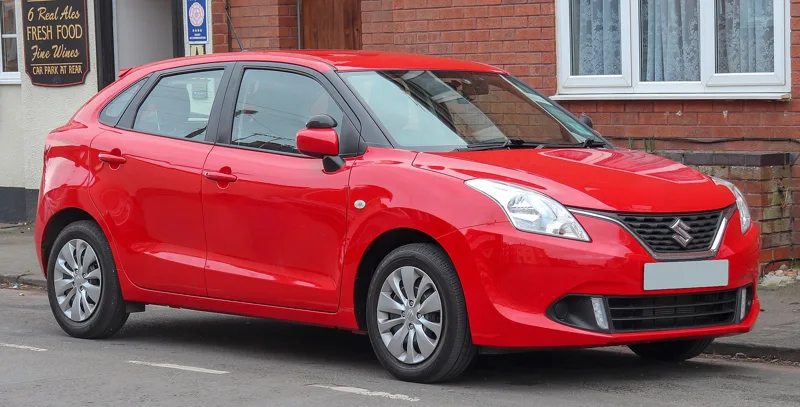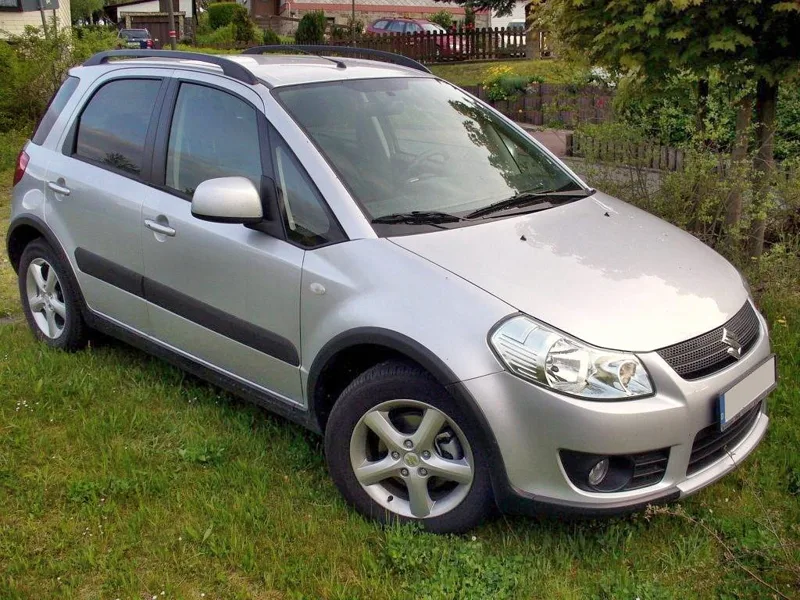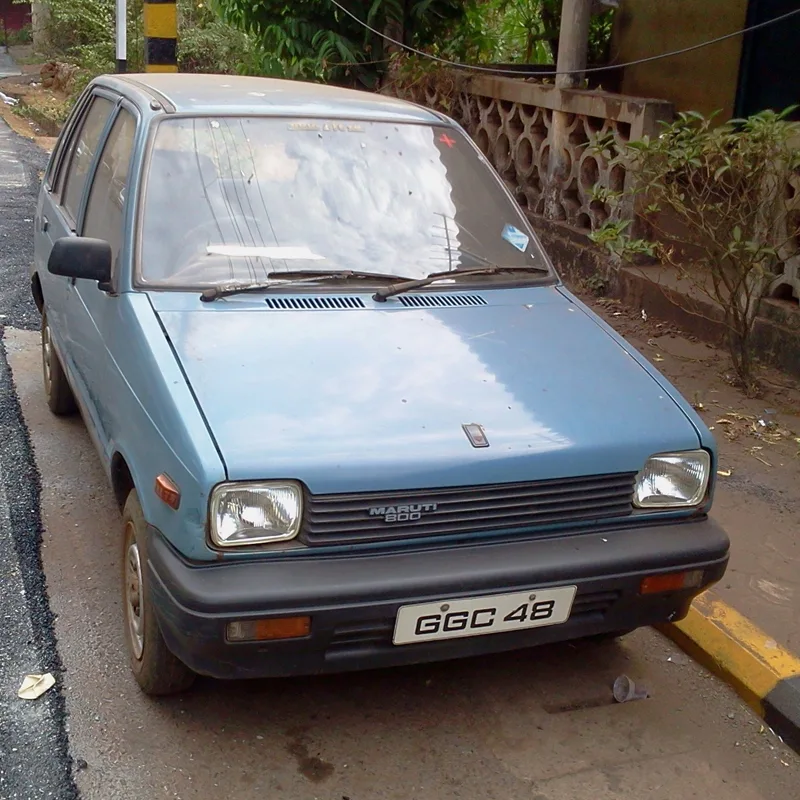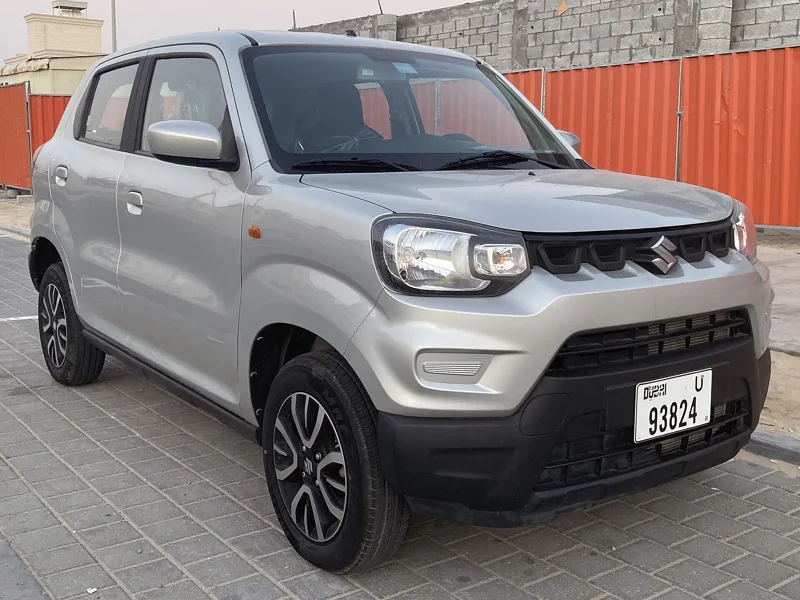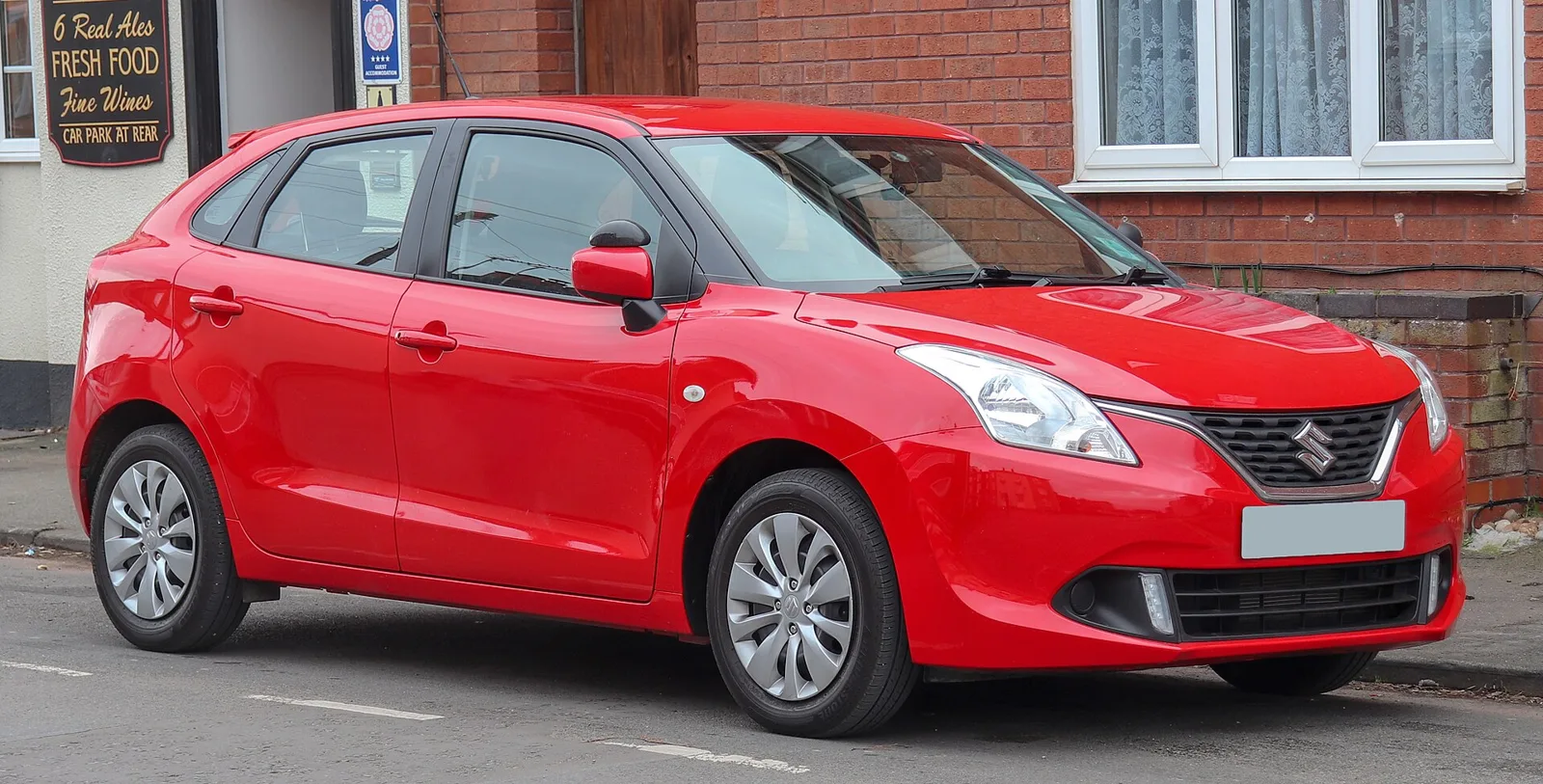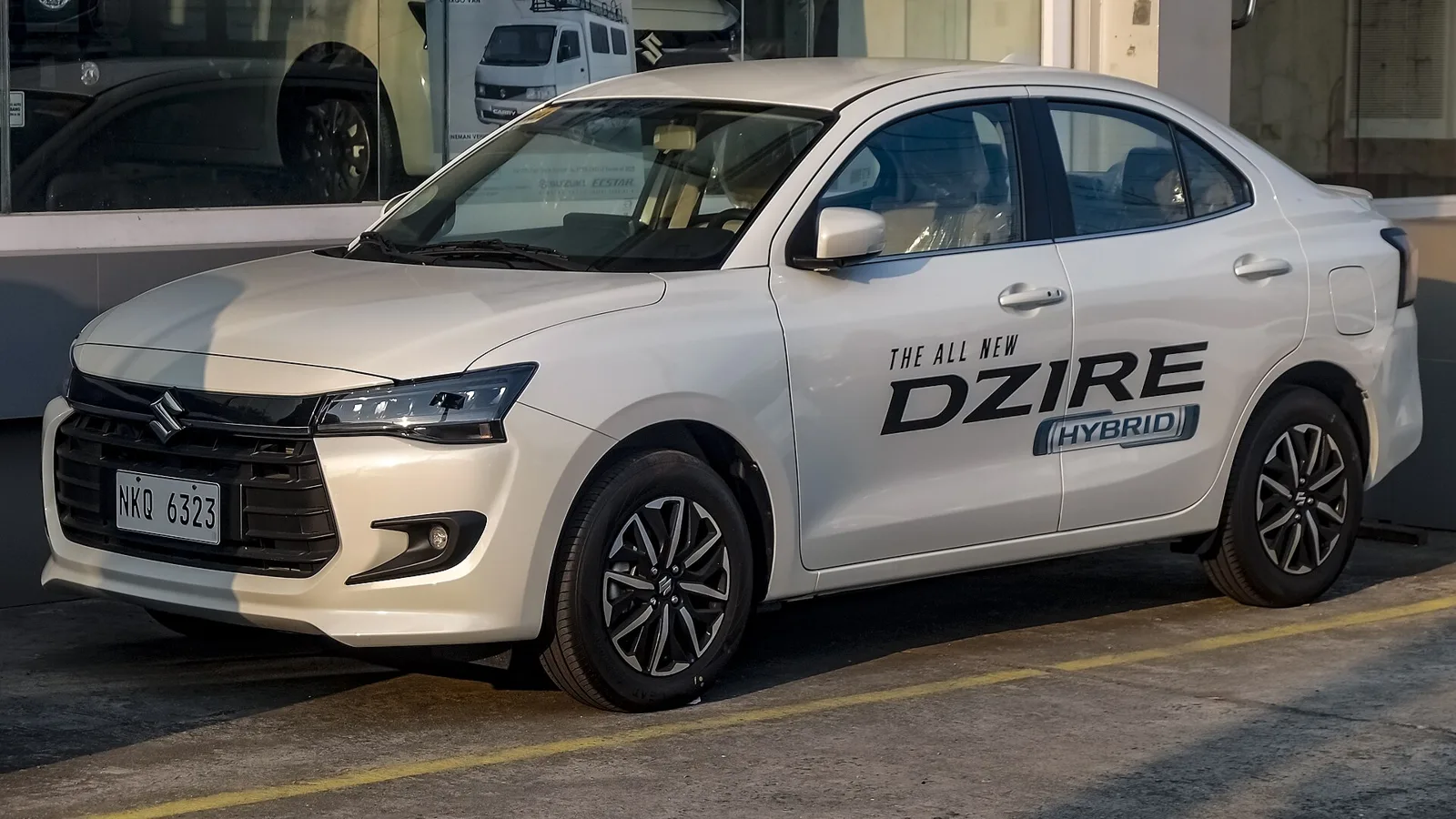
A sedan shortened for a tax class, an SUV developed wholly in India, a city car that went global and a mid-size sedan that was dropped.
Maruti Suzuki's Dzire, Celerio, Brezza and Ciaz show a maker designing around Indian rules. The Dzire was cut under four metres for tax, the Brezza was Suzuki's first fully Indian-developed car, and the Ciaz left India in April 2025.
A small sedan, deliberately shortened to slip under a four-metre tax line, overtook the Hyundai Creta as India's best-selling model as of 2025. That is the Maruti Suzuki Dzire, and it says a good deal about how Suzuki builds cars for the country that is its largest market.
Tax thresholds, emissions rules and crash-test scores left their marks on the Dzire, the Celerio hatchback, the Brezza SUV and the Ciaz sedan. Between them they chart what Indian buyers get, what they stopped getting and where each car went afterwards.
What do the Dzire, Celerio, Brezza and Ciaz show about Maruti Suzuki?
They show a company that designs around Indian rules and then exports the results. The Dzire was resized for a tax class, the Brezza was Suzuki's first car fully developed in India, the Celerio grew from a rebadged city car into a standalone model, and the Ciaz was the larger sedan aimed at the mid-size segment.
| Model | Body | On sale | Notable engines | Fate or latest news |
|---|---|---|---|---|
| Dzire | Subcompact notchback sedan | 2008, fourth generation from 11 November 2024 | 1.2-litre petrol, CNG, formerly 1.3-litre diesel | Best-selling model in India as of 2025 |
| Celerio | Hatchback city car | 2008, standalone from 2014 | 1.0-litre K10C Dualjet, formerly 793 cc diesel | Third generation unveiled 10 November 2021 |
| Brezza | Subcompact SUV | First shown February 2016 | K15C Dualjet petrol with mild hybrid | Facelift with 1.0-litre turbo on 24 July 2026 |
| Ciaz | Subcompact sedan | 2014 to 2025 | 1.5-litre K15B petrol with mild hybrid | Discontinued in India in April 2025 |
A small sedan shortened to slip under a four-metre tax line became the best-selling model in India.
Maruti Suzuki Dzire: the sedan built to fit a tax bracket
The Dzire has been Suzuki's subcompact notchback sedan since 2008, sold primarily in India as the sedan sibling of the Swift hatchback. Its length was cut to qualify for India's sub-4 metre tax class. In Colombia and Guatemala it is still marketed as the Suzuki Swift Sedan.
First and second generations
The original Swift Dzire of 2008 offered a 1.3-litre petrol engine and a 1.3-litre diesel sourced from Fiat. When BS IV emission norms arrived in 2010, Maruti swapped the petrol for a 1.2-litre K-series unit. Sales to general buyers ended in 2012, but fleet operators carried on buying it as the Swift Dzire Tour until 2016.
The second generation arrived in 2011, based on the second-generation Swift and again held to under four metres for the tax benefits. It had the 1.2-litre petrol, a 1.3-litre DDiS turbo-diesel and, on the VXi only, a four-speed automatic. The revised 2015 car was rated the most fuel-efficient diesel in India, and in January 2016 the ZDi with Automatic Gear Shift added a five-speed automated manual to the diesel. The diesel was dropped in April 2020 when BS6 rules arrived, leaving petrol and CNG in the fleet-only Dzire Tour S, which was sold until 2023.
The third generation of 2017
Maruti launched the third-generation Dzire in India on 16 May 2017. For the first time it lost the Swift name, except in Colombia and Guatemala. It sits on the HEARTECT platform, built with ultra-high and high tensile steels, and Suzuki claims 55 mm more rear legroom than before and a 378-litre boot. The front gained a large hexagonal grille, projector headlamps and a strip of LED daytime running lights.
The 1.2-litre K12M petrol made 61 kW (83 PS) and 113 Nm, while the 1.3-litre D13A diesel made 55 kW (75 PS) and 190 Nm, both with a five-speed manual or five-speed AMT. Claimed economy was 22 km/L on petrol and 28.40 km/L on diesel. A March 2020 facelift added a wider grille, faux wood trim and cruise control, and the K12N Dualjet 1.2 replaced both the old petrol and the diesel. A CNG version followed in March 2022, and the fleet-focused Dzire Tour S lasted until 2025.
Maruti Suzuki Dzire: the fourth generation and the export push
The fourth-generation Dzire was launched on 11 November 2024, with exports planned to African, ASEAN, Middle Eastern and Latin American markets. In India it comes in LXi, VXi, ZXi and ZXi+ trims with a 1.2-litre Z12E petrol and either a five-speed manual, an AMT or a CNG option.
Overseas launches came quickly. The Philippines got it at the Manila International Auto Show on 11 April 2025 in GL and GLX trims with a mild hybrid and CVT. The Middle East followed on 12 April, South Africa on 12 May in GA and GL+ trims with a manual or CVT, and Laos on 16 May in a single GLX trim.
Sales and safety
The Dzire has led India's subcompact segment since the second generation. It passed 1 million domestic sales in 2015 and reached 2.5 million in September 2023. In the 2016-17 period it sold more than double the numbers of rivals such as the Honda Amaze, Hyundai Xcent and Tata Zest. In 2015 J.D. Power named it Most Appealing Entry Mid-size Car, and also Most Dependable Mid-size Car.
The crash-test record changed sharply between generations. The third-generation car scored 2 stars for adults and 2 for children from Global NCAP in 2024. The fourth generation earned 5 stars for adult protection, a first for a Maruti Suzuki car in Global NCAP testing, and Bharat NCAP also gave it 5 stars.
Maruti Celerio: from rebadged Alto to its own model
The Celerio began as a rebadged Alto or A-Star in some markets between 2008 and 2013, then became a standalone hatchback replacing the A-Star in 2014. Suzuki previewed the second generation as the A:Wind concept at the Thailand International Motor Expo in November 2013 and showed it at the Auto Expo 2014 in India. In India it replaced the A-Star and Zen Estilo.
India launched with six variants, with a diesel following in the second quarter of 2015. The Celerio X added a sportier look and Automatic Gear Shift. That AGS system is a manual gearbox with a control unit that shifts gears hydraulically.
The 793 cc diesel
On 3 June 2015 Maruti introduced a 793 cc diesel in the Celerio at a price of 4.65 lakh rupees. The DDiS125 was Suzuki's first indigenously developed two-cylinder engine, with 37 kW (50 PS) and 125 Nm, and the company claimed a segment-best 3.6 L/100 km (27.62 km/L). The diesel was dropped in February 2017.
Europe, Pakistan and the Toyota Vitz
The Celerio had its European premiere at the Geneva Motor Show in March 2014 and went on sale there in the second half of the year. Cars for the British, Irish, Australian and New Zealand markets were built at the Rayong plant in Thailand, and production for the UK and Ireland ended in 2019 and for Australasia in 2021. The Australasian model lacked a fifth seatbelt.
In Pakistan the car arrived in 2017 as the Cultus, after the previous Cultus was dropped for poor sales and dated looks. It came in VXR, VXL and VXL AGS forms, and the AGS was the first car in Pakistan with that technology. The VXR lacked airbags, power mirrors, ABS and fog lights.
The third-generation Celerio was unveiled in India on 10 November 2021 on the lightweight HEARTECT platform that also underpins the Wagon R and Ignis. It uses a 1.0-litre K10C Dualjet engine, a reworked K10B with two injectors per cylinder. In January 2023 Toyota began selling it in South Africa and other right-hand-drive southern African markets as the Vitz, replacing the Agya as its entry-level car there.
Celerio crash tests
The Celerio's safety history is mixed. Global NCAP gave the Indian car zero stars in May 2016, noted that basic versions in India and Pakistan had neither airbags nor ABS, and rated the body shell unstable. The Indian-built Latin American car with two airbags scored 4 stars from Latin NCAP in 2013, the European car 3 of 5 from Euro NCAP in 2014 and 4 of 5 from ANCAP in 2015, though those two bodies were criticised for underscoring it.
In December 2025 Global NCAP tested the current Indian car: the two-airbag version earned 2 stars for adults and 1 for toddlers, and the six-airbag version 3 for adults and 2 for toddlers.
Maruti Suzuki Brezza: India's own SUV
The Brezza is a subcompact SUV and the first Suzuki-branded car fully developed in India. It was designed as a smaller alternative to the global Vitara for young buyers and is sold only in right-hand-drive emerging markets in Asia and Africa. The name means breeze in Italian, while Vitara comes from the English word vital.
The first generation, called Vitara Brezza, was unveiled at the 13th Auto Expo in February 2016, previewed by the XA Alpha concept of 2012. It used the global Vitara's platform and contained 98 percent Indian parts. It was Suzuki's first sub-4 metre SUV in India, which put it in the lower bracket of the country's GST structure.
Diesel first, then petrol
At launch the only engine was a 1.3-litre D13A DDiS turbo-diesel, sourced from Fiat, with 66 kW (90 PS) and 200 Nm, with a five-speed manual or automated manual. Fuel economy was stated at 24.29 km/L and the car was exported to neighbouring Nepal.
The February 2020 facelift replaced it with a BS6-compliant 1.5-litre K15B petrol making 77 kW (105 PS) and 138 Nm, with SHVS mild hybrid and a five-speed manual or four-speed automatic. Economy fell to 17.03 km/L for the manual and 18.76 km/L for the automatic. The bigger engine cost the car its GST advantage, because its displacement exceeded the 1,200 cc limit for petrol engines. From 2021 Suzuki exported it to right-hand-drive African markets and Brunei, with SHVS only on exports to South Asian countries such as Bangladesh and Nepal.
The Toyota Urban Cruiser and the second generation
Toyota sold the facelifted car as the Urban Cruiser from 22 August 2020 in India and from March 2021 in South Africa. Production of that car ended in late 2022, with the larger Urban Cruiser Hyryder as its indirect successor. A Toyota recommendation for a safer child-seat position improved its crash-test result over the Brezza, and dual seatbelt reminders became mandatory in India in July 2019.
The second-generation Brezza was unveiled on 30 June 2022 without the Vitara name. The body shell was retained with major revisions: new front and rear ends, a redesigned C-pillar, 16-inch alloy wheels, a shark-fin antenna and an electric single-pane sunroof. The shark-fin antenna added 45 mm (1.8 in) of height. Inside came a floating 9-inch display, a wireless charger and ambient lighting. ESP, hill-start assist and six airbags are standard across the range.
The engine is the K15C Dualjet petrol with five-speed manual or six-speed automatic and the 12-volt SHVS mild hybrid. It is not exported to South Africa, where the larger Grand Vitara and the Fronx fill the Brezza's role. On 24 July 2026 Maruti launched a facelifted Brezza with a 1.0-litre turbo BoosterJet engine producing 109 hp and 170 Nm, paired with a six-speed manual. The Vitara Brezza had been named Indian Car of the Year in 2017.
Maruti Suzuki Ciaz: the big sedan that left
The Ciaz was produced from 2014 to 2025 to replace the SX4 sedan in several Asian, African and Latin American markets. The name is an acronym for Comfort, Intelligence, Attitude and Zeal, with City from A to Z as the alternative reading. It was shown at the 2014 Auto Expo in India and, as the Suzuki Alivio, at the Beijing show in April 2014. Sales began in India in September 2014, though its market release is also dated to October.
At 4,490 mm long and 1,730 mm wide, on a 2,650 mm wheelbase, it is large for the class, and Suzuki claimed the 510-litre boot was the biggest in its segment. The wheelbase is C-segment territory, yet Suzuki positioned it against B-segment sedans. In India that is the mid-size sedan category, above the compact sedans under 4 metres.
Engines and the Nexa move
Initial engines were a 1.4-litre K14B petrol with 70 kW (95 PS) and 130 Nm and a Fiat Multijet 1.3-litre diesel with 66 kW (90 PS) and 200 Nm. ARAI economy was 20.73 km/L for the petrol and 26.21 km/L for the diesel. A mild-hybrid SHVS diesel followed in September 2015, adding an integrated starter generator and a claimed 28.09 km/L.
From April 2017 the Ciaz moved from Arena showrooms to the Nexa network for higher-end models, which had previously sold only the S-Cross and Baleno. By September 2019 over 270,000 had sold in India, with the top Alpha trim making up more than 54 percent and the Nexa Blue colour chosen by over 30 percent of buyers.
An August 2018 facelift swapped the 1.4 for a 1.5-litre K15B with SHVS making 77 kW (105 PS). The Fiat diesel gave way in March 2019 to an in-house 1.5-litre E15A with 70 kW (95 PS) and 225 Nm, but diesel models ended in February 2020 with BS6. In May 2024 Maruti said the Ciaz would stay in the range despite weak sales, and it was discontinued in India in April 2025.
The Ciaz abroad
In Thailand the Ciaz launched in July 2015, built at Rayong with a 1.2-litre engine and a CVT to qualify under the Eco Car rules, which give tax breaks to economical cars. Suzuki claimed 20 km/L and CO2 below 120 g/km. China got it in January 2015 as the Suzuki Alivio from Changan Suzuki, powered by a 1.6-litre engine, and it was relaunched in 2022 as the Oshan Qiyue after Suzuki left the Chinese market.
Indonesia took it from November 2015 but sold only around 200 cars before Suzuki stopped sending stock in December 2017. The Philippines launched it on 13 April 2016 and discontinued it in March 2022, leaving the Dzire as Suzuki's only sedan there. Toyota has sold the Indian-built car as the Belta in selected African countries since November 2021, as an entry-level sedan below the Corolla. In December 2025 Global NCAP rated the Indian Ciaz 1 star for adults and 3 for toddlers.
What this means if you are buying one of them
The Dzire carries a five-star adult-protection score from Global NCAP in its fourth generation, a petrol, AMT or CNG choice, and the biggest sales record of the four. The Celerio is the hatchback of the group, and its six-airbag version scored 3 stars for adults against 2 for the two-airbag car. The Brezza is the SUV, with six airbags standard on the second generation and a new turbo engine from July 2026.
The Ciaz left the Indian range in April 2025, which makes it a used-car search in India, though Toyota has rebadged it for some African markets.
The latest launches and rollouts
The latest news is about reach and refreshes. The Dzire was still rolling out in new markets through 2025, with exports planned for Africa, ASEAN, the Middle East and Latin America. The Brezza received its 1.0-litre turbo facelift on 24 July 2026. Third-generation Celerio sales continue in India and, as the Vitz, in southern Africa.