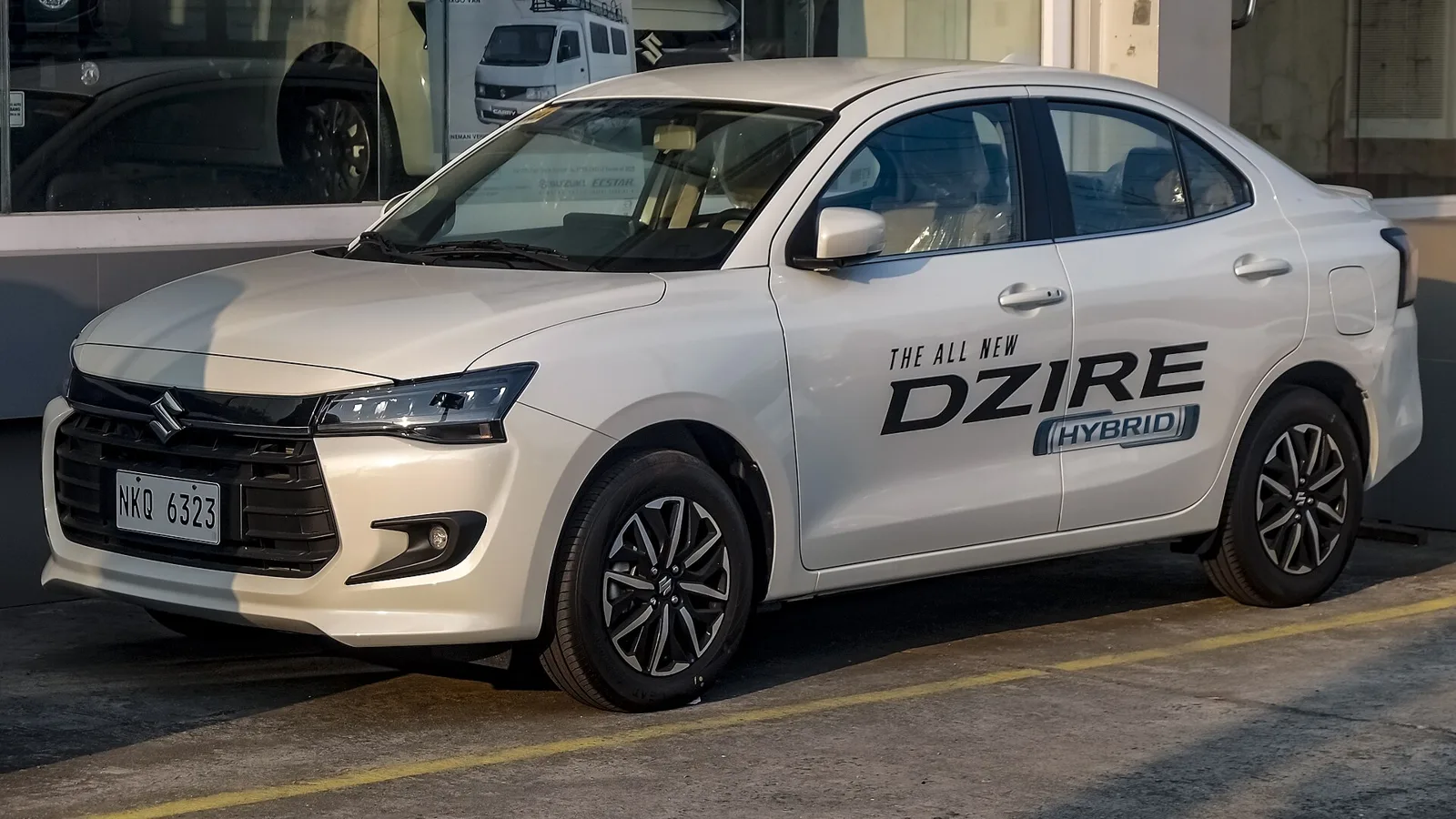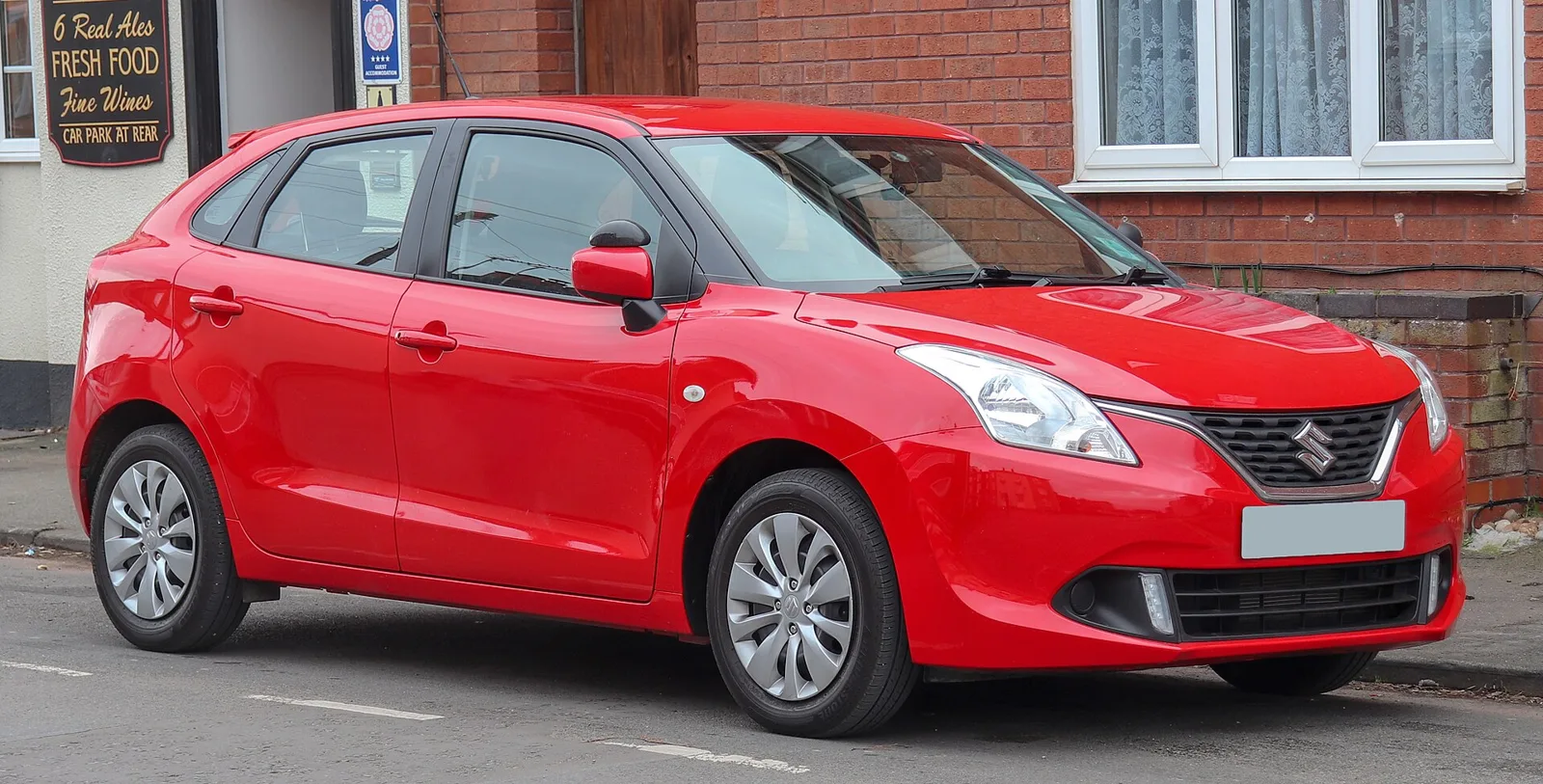
A roomy five-door built on the HEARTECT platform, sold under Suzuki and Toyota badges across more than a decade of export markets, then redesigned in 2022.
The Suzuki Baleno is a five-door subcompact hatchback that Suzuki began building in India in September 2015 on its lightweight HEARTECT platform. It also sold in Europe, Japan, Australia, Latin America and Africa, and a second generation arrived in 2022 with new bodywork and a bigger screen.
Suzuki's Baleno began as a roomy, sensibly priced hatchback for India and spread to a long list of export markets. The name means lightning in Italian. The car sat above the Swift in India, and Toyota later sold versions of it under its own badges.
Where did the Baleno come from?
The Baleno made its public debut at Frankfurt's IAA show on 15 September 2015, having been previewed by the iK-2 concept at the Geneva show earlier that year. It was the first Maruti Suzuki car built on the HEARTECT platform, which it shared with the Swift and Ignis.
Earlier Balenos had been sedans, wagons or three-door hatchbacks, with the name stretching back to the Cultus Crescent in many markets. The 2015 car was offered only as a five-door hatchback. In Indonesia the name had also covered sedan versions of the Aerio and SX4.
Indian production started with a launch on 26 October 2015. Maruti Suzuki built the hatchback to make the most of interior space while keeping within the Indian tax benefit for cars under four metres long, and sold it exclusively through its premium NEXA outlets.
A roomy, lightweight hatch that began in India and reached export markets under both Suzuki and Toyota badges.
How was the Baleno designed?
The Baleno's Liquid Flow shape gave it a drag coefficient of Cd 0.299, which made it the most streamlined production Suzuki at launch. Luggage space measured 320 to 355 litres with or without the spare tyre, growing to 756 litres with the rear seats folded. Total interior volume came to 1,085 litres on the VDA measure.
Ground clearance ranged from 120 mm to 170 mm according to the market and its road conditions.
The facelift of 2019 brought a new front bumper and grille, new 16-inch alloy wheels with a dual-tone finish and a black-and-blue interior scheme. Suzuki also said the interior had been made quieter, with improved ride comfort.
Which engines did the first-generation Baleno use?
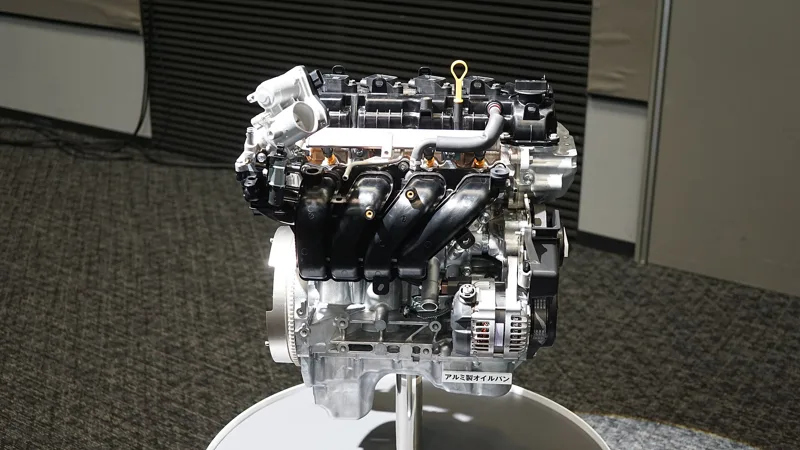
The first-generation car used the K-series petrol family. A three-cylinder 1.0-litre Boosterjet turbo sat at one end of the range, a four-cylinder 1.25-litre Dualjet with optional mild hybrid assistance sat in the middle, and a 1.2-litre was used mainly in India. A 1.4-litre suited most markets outside Europe and India, while a Fiat-sourced 1.25 turbo-diesel was sold only in India.
| Market | Engine | Output |
|---|---|---|
| Europe, 1.0 model | 1.0-litre K10C Boosterjet, three-cylinder turbo | 111 PS (109 hp; 82 kW) |
| Europe, 1.25 model | 1.25-litre K12C Dualjet, four-cylinder | 90 PS (89 hp; 66 kW) |
| India, petrol | 1.2-litre K12M, four-cylinder | 83 PS (82 hp; 61 kW), 114 N m of torque |
| India, diesel | 1.25-litre Multijet/DDiS 190 | 75 PS (74 hp; 55 kW), 190 N m of torque |
| India, RS | 1.0-litre Boosterjet, turbocharged | 102 PS (101 hp; 75 kW) |
| Japan, from May 2018 | 1.0-litre Boosterjet reworked for regular petrol | 102 PS (101 hp; 75 kW), down from 111 PS |
| Indonesia | 1.4-litre four-cylinder | 92 PS (91 hp; 68 kW), 130 N m of torque |
Indian models paired the 1.2-litre with a five-speed manual as standard, with a CVT available on the K12M. The CVT option was first offered on the Delta trim, then on the Zeta from April 2016 and on the Alpha from August 2017.
The Baleno RS arrived in India in March 2017 with the 1.0-litre Boosterjet in a higher state of tune, a five-speed manual and stiffer, tuned suspension. It had disc brakes on all four wheels, measuring 14 inches at the front and 13 inches at the rear, and it had been shown as a concept at the 2016 Auto Expo, next to the Ignis.
How did the Baleno sell in Europe?
The Baleno was announced in Italy in December 2015, but sales were held back until April 2016. European cars used the 1.0-litre Boosterjet or the 1.25-litre Dualjet, and a mild hybrid version was offered for the larger engine. The car was dropped from European showrooms in 2020 after falling sales.
The UK launch came in June 2016 with two trims, SZ-T and SZ5. A lower-priced SZ3 trim arrived in April 2017, and the car was dropped in August 2019, together with the Celerio city car. Europe as a whole followed in 2020.
What happened to the Baleno in Japan, Taiwan and Indonesia?
Japanese sales began on 9 March 2016. The launch base model was the XG with the 1.25-litre Dualjet, and the more expensive XT with the 1.0-litre Boosterjet followed in May. The XS joined in November 2016, and the XG was axed in December. Suzuki stopped selling the car in Japan in July 2020.
In May 2018 the 1.0-litre turbo was reworked to run on regular petrol with an octane rating of 89 to 94 RON. Output fell from 111 PS (109 hp; 82 kW) to 102 PS (101 hp; 75 kW); torque dropped from 160 N m to 150 N m. The change was made to widen the buyer base.
Taiwan received the hatchback in March 2017 in a single unnamed trim, with the 1.0-litre Boosterjet and a six-speed automatic. Sales there ended in October 2020 because volumes were low.
The car debuted in Indonesia in August 2017, at the 25th Gaikindo show. It was based on the Indian Baleno RS, but it was positioned as the successor to the second-generation Swift and sat above the smaller Ignis. The only trim was GL, with a 1.4-litre four and either a five-speed manual or four-speed automatic.
How did the Baleno fare in Australia and New Zealand?
Australia received the car in July 2016 in two trims. The GL used the 1.4-litre with either a five-speed manual or a four-speed automatic, and the GLX had the turbocharged 1.0-litre with a six-speed automatic. In February 2019 the 1.0-litre was dropped from the GL line-up in favour of the 1.4 with a four-speed automatic.
A second-series car, the Series II Baleno, reached Australia in August 2019. In October 2021 the 2022 model year car received a 9-inch touchscreen without satellite navigation, a change made to avoid the global semiconductor shortage. The car was strong for Suzuki Australia and was the brand's best seller, sitting second in its segment behind the MG3.
In August 2022 a Shadow Edition appeared, based on the GL with an automatic gearbox, black body kit and 16-inch alloys. Only 300 were offered, at a higher price than the loaded GLX. Suzuki discontinued the Baleno in July 2022, and the next generation was not brought in because it had not been engineered to meet the ADR85/00 side impact standard.
New Zealand had the car announced on 27 July 2016 in GLX and LTD trims, both with the 1.4-litre. An RS with the 1.0-litre turbo and six-speed automatic arrived in June 2017, and a revised car followed in August 2019 with LED projector headlights on the RS.
Was the Baleno safe?
Euro NCAP tested the European Baleno in April 2016. The basic version received three stars and the car with the Radar Brake Support package received four. Standard equipment included six airbags, ABS with EBD, brake assist, electronic stability programme and hill-start assist.
Latin NCAP later tested the base Latin American car under its 3.0 protocol, announcing the result in October 2021. It had two airbags and no electronic stability control, and it received zero stars. The test dummies recorded more severe injuries to the chest, neck and knees than the European car, along with greater risk to child occupants.
In 2025 Bharat NCAP rated the Indian Baleno four stars for adults and three stars for children, with six airbags fitted. Early Indian cars had only dual airbags, ABS and EBD as standard.
How did the Baleno do in India?
India was the car's home market. Four trims were offered in India, named Sigma, Delta, Zeta and Alpha. The regular Baleno was sold exclusively through NEXA outlets,.
Maruti Suzuki sold more than one million Balenos in India by the end of 2021. The facelift on 28 January 2019 brought the new look to the regular and RS models alike.
The RS was less successful. Critics liked it, but it was poorly received by buyers despite several price cuts. Units sat on showroom floors while the regular Baleno had long waiting lists. Maruti Suzuki discontinued the RS in January 2020, after choosing not to update the 1.0-litre Boosterjet for Bharat Stage 6 compliance.
The Indian diesel was dropped in May 2020 because of stricter emissions rules. In September 2026, Maruti Suzuki launched a further facelift with a 1.2-litre three-cylinder naturally aspirated petrol borrowed from the Swift, alongside minor design revisions and updated safety features inside.
What changed with the second-generation Baleno?
The second-generation Baleno went on sale in India on 23 February 2022. Suzuki called it a full model change under the New Age Baleno name, although it kept much of the previous underpinnings. The body gained new panels, headlights, LED fog lamps, tail lights and smaller C-pillar windows.
Inside, a redesigned dashboard carried a floating 9-inch LCD, while the features list added rear air vents, fast-charging USB ports, a head-up display, a 360-degree view camera and Amazon Alexa support. Suzuki also fitted a new suspension, a hydraulic clutch and larger front disc brakes to improve the handling.
The Indian car kept the 1.2-litre K12N Dualjet and the five-speed manual, with the CVT replaced by a cheaper automated manual. A CNG variant followed in October 2022. The export model moved to a larger 1.5-litre K15B engine in place of the old 1.4-litre K14B, with a choice of five-speed manual or four-speed automatic.
Indonesia received the second generation on 11 August 2022, launched alongside the S-Presso. It was a single unnamed trim with the 1.5-litre petrol, and a year later it gained the 9-inch screen and the 360-degree camera. Suzuki Indonesia stopped selling the Baleno in late 2025 in favour of the locally built Fronx.
How did Toyota's versions fit in?
Toyota began selling the facelifted Baleno as the Glanza in India from 6 June 2019. The Glanza G and V were based on the Zeta and Alpha trims and used the same 1.2-litre K12M or K12N petrol engines. The name had earlier belonged to the sporty version of the Japanese P90 Starlet hatchback.
The second-generation Glanza went on sale on 15 March 2022 in E, S, G and V trims, with a CNG option added in November 2022. It shared the Baleno's mechanical specification, but it had different front styling, alloy wheels and a dual-tone black and beige interior.
In several African countries the Baleno-based car was sold as the Toyota Starlet from September 2020. The second-generation Starlet followed in May 2022 with a 1.5-litre petrol and Xi, Xs and XR trims.
How did the Baleno race?
Suzuki Motorsport Italia modified a Baleno in 2016 for the Rally di Roma Capitale. The car used a 1.0-litre turbocharged three-cylinder and was built to the R1B class specification.
Toyota Gazoo Racing South Africa built a rally car from the Baleno-based Starlet for the 2022 South African National Rally Championship. It used a 2.0-litre turbocharged four-cylinder that drove all four wheels through a sequential gearbox, and it competed in the NRC1 class.
The Starlet driven by Guy Botterill and Simon Vacy-Lyle finished second in the championship, winning four of the twelve rounds.