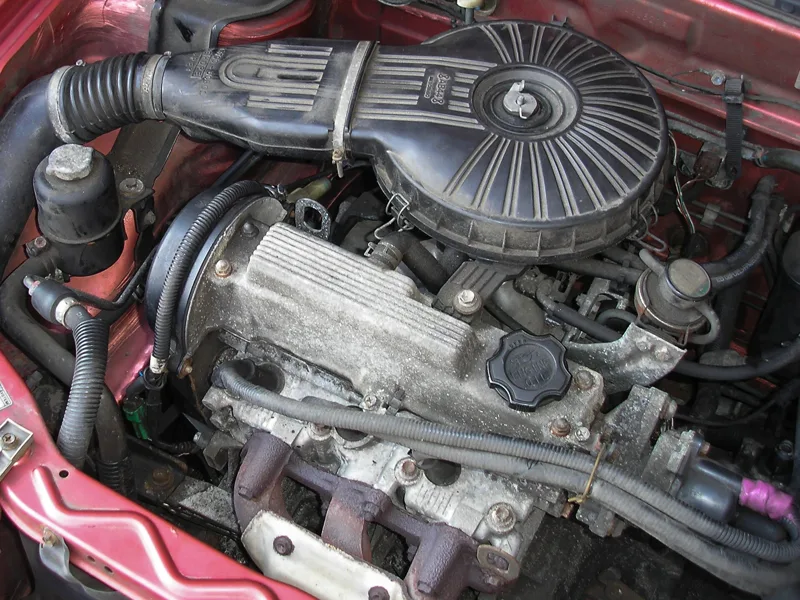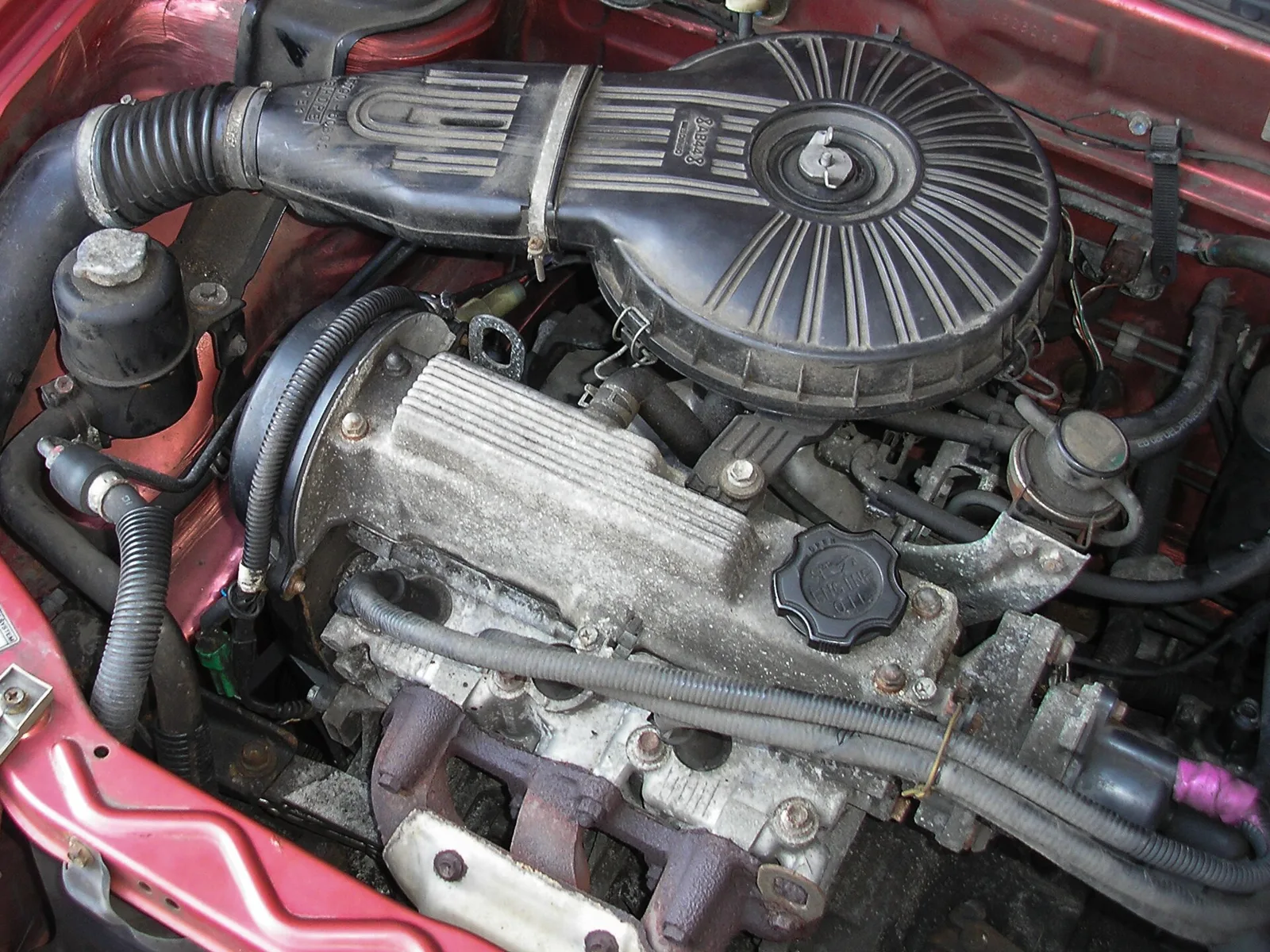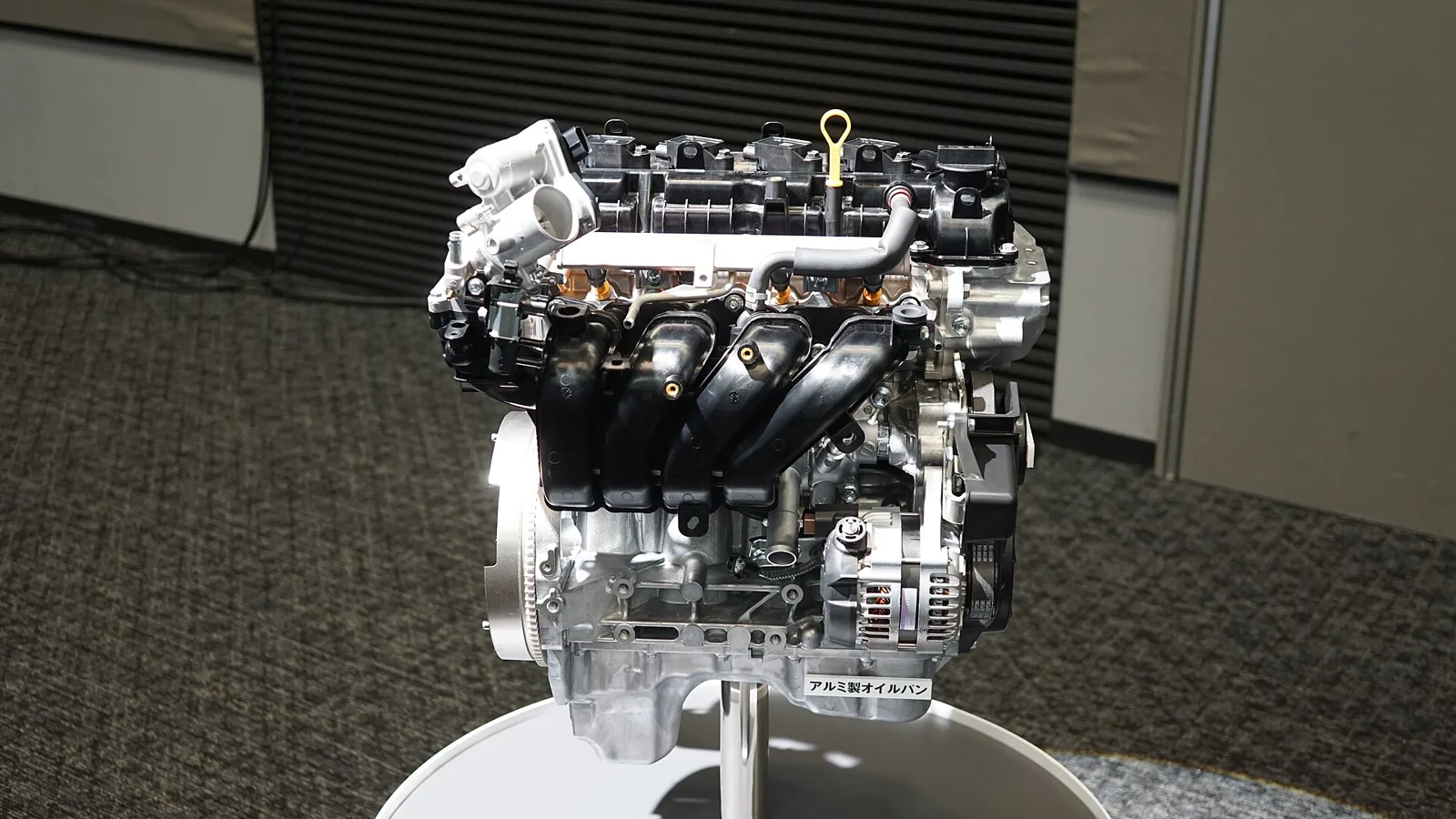
Introduced in 1994, the K family grew from a 658 cc three-cylinder for kei cars to 1.5 litre hybrids, with Dualjet and Boosterjet versions along the way.
The Suzuki K engine is a family of petrol engines introduced in 1994, with displacements from 0.7 to 1.5 litres. Its three and four-cylinder units use aluminium blocks and chain-driven twin cams, and the family includes Dualjet, Boosterjet and hybrid variants.
The Suzuki K engine family is a series of petrol engines that Suzuki introduced in 1994, with displacements from 0.7 to 1.5 litres. It began with a small three-cylinder for kei cars and grew into a range of three and four-cylinder units that now include hybrid versions.
What is the Suzuki K engine?
The K family uses aluminium cylinder blocks with three or four cylinders in line. Each cylinder head carries two overhead camshafts driven by chain, with four valves per cylinder, and the fuel is metered by multipoint injection or direct injection. Some variants are turbocharged, and the range spans from city cars to small commercial vehicles.
Suzuki has upgraded parts of the range over the years, and the newer versions bring the engine into line with tougher emission rules. The family is still built in several markets, which reflects how widely the K engine has been used across Suzuki and its partners.
A family that started as a 658 cc kei car engine and grew into 1.5 litre hybrids without losing its compact layout.
When did the K family begin?
The K family was introduced in 1994. Its first engine, the K6A, appeared that year and was discontinued in 2018. It was the smallest engine in the family and the first K engine to use variable valve timing, which set the pattern for the engines that followed.
The K6A came in several forms, including naturally aspirated, turbocharged, lean-burn, CNG and strong hybrid. The hybrid variant was a first for the kei class, and Suzuki fitted it only to the Twin.
The K6A measured 658 cc, with 68 mm bore and 60.4 mm stroke. Its DOHC layout had 12 valves, and its compression ratio ran from 10.5 in naturally aspirated form to between 8.4 and 8.9 in turbo versions.
How did the Dualjet and Boosterjet systems work?
From 2013 some K engines were upgraded with Dualjet technology. The changes included two injectors per cylinder, higher compression for better thermal efficiency, a redesigned water jacket and piston cooling by oil jets. A water-cooled EGR system and several other changes were added for fuel efficiency.
The turbocharged variant with direct injection is known as Boosterjet. It combines a turbocharger with the direct injection system, so the same engine family can be offered in naturally aspirated or boosted form, depending on the market and the car.
Suzuki also developed a mild hybrid called SHVS, short for Smart Hybrid Vehicle by Suzuki. It uses a 12 or 48 volt Integrated Starter Generator and is offered in markets with stricter emission rules, including Europe, Japan, India, Singapore and Mexico, where it is marketed as Boostergreen.
Which K engines came in the three-cylinder range?
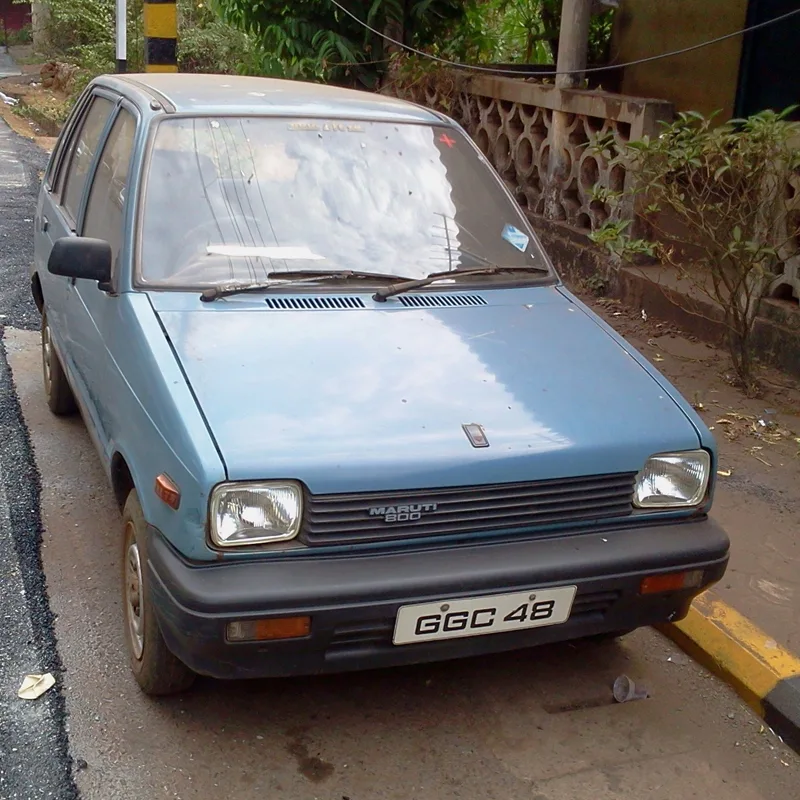
The three-cylinder K engines were the core of Suzuki's city car offer. The K10B was a 996 cc unit fitted to many city cars from 2008, and the K10C was its reworked successor, offered in naturally aspirated Dualjet or turbocharged Boosterjet form.
In 2014 the K10B was reworked raising compression from 10.0 to 11.0:1, and this revision was known as K-Next. Suzuki claimed the changes raised petrol mileage to over 23 km/L while delivering peak power at lower revs. A CNG variant was also made for the Indian domestic market.
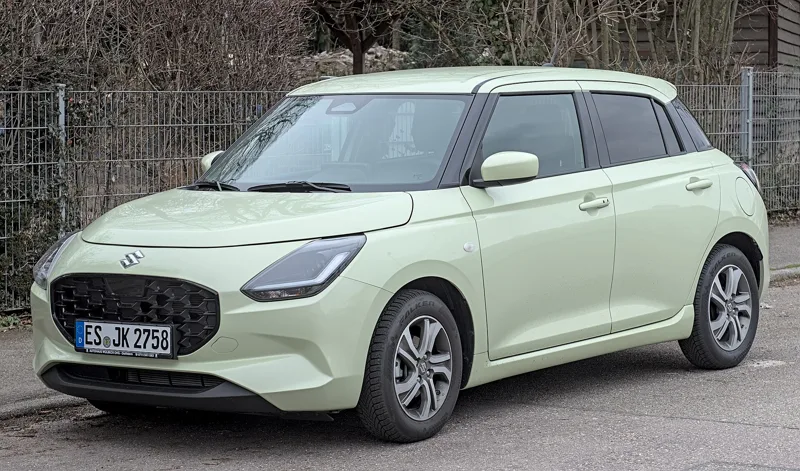
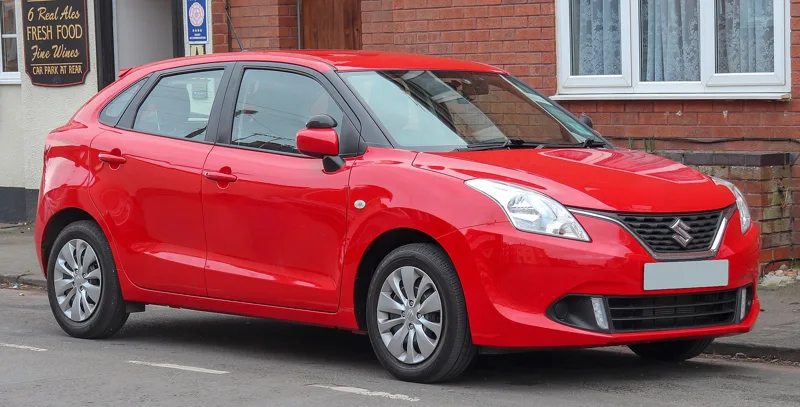
The K10C lifted compression from 11.0 to 12.0:1, which sharpened thermal efficiency and reduced friction. Its turbo version delivered 99 to 111 PS (73 to 82 kW) at 5500 rpm, and it powered cars such as the Baleno from 2015 to 2022 and the Swift from 2017 to 2024.
What was the Caterham engine?
The turbocharged K6A also appeared in the Caterham 7 160 and 165, which ran from 2013 to 2017 with 80 hp. That placed a kei-class engine in a small British sports car, which is a striking use for a unit designed for much smaller vehicles.
The turbo K6A delivered 60 to 64 PS (44 to 47 kW) at 6000 to 6500 rpm. Its maximum torque reached 83 to 108 Nm at 3000 to 3500 rpm, which gave it useful pulling power from low revs.
How did the four-cylinder K engines begin?
The smallest four-cylinder K engine was the K10A, a 996 cc unit with 16 valves, variable valve timing in some versions, and compression ratios of 8.4 in turbo form and 10.0 in naturally aspirated form. Its naturally aspirated power was 65 to 70 PS (48 to 51 kW) at 6500 to 7000 rpm.
The K12A had a displacement of 1,172 cc, 71 mm bore and 74 mm stroke. The 69 PS (51 kW) unit arrived at 6000 rpm and featured in the Wagon R+ sold in Europe from 1998 to 2000.
The K12B appeared in 2008 and was reworked with Dualjet technology in 2013. It had a displacement of 1,242 cc and gave 86 to 92 PS (63 to 68 kW). It was used in the Splash, the Opel and Vauxhall Agila, and the Swift from 2010 to 2017.
In China the K12B was also used by Suzuki's former joint venture partners, Changan Suzuki and its subsidiaries, sold as the E-Power EA12 or JL473Q. That gave the engine a second life in a market Suzuki had partly left.
What was the K12M and why was it destroked?
The K12M was a destroked version of the K12B, developed by Maruti Suzuki mainly for India. The country imposed a higher excise tax on petrol engines larger than 1,200 cc, so the smaller 1,197 cc engine was the answer. It also found homes in South East Asia, South America and Africa.
The K12M gained VVT in 2012. In February 2018 the Dualjet version was introduced first in Thailand, with compression lifted to 11.5:1. It put out 83 to 87 PS (61 to 64 kW) at 6000 rpm, and its torque of 108 to 113 Nm arrived between 4000 and 4400 rpm.
The K12N brought Dualjet to the K12M, and it could also be combined with SHVS mild hybrid technology. A lower output version was made for commercial vehicles, rated at 59 kW (80 hp).
How did the K12C and K12D reach Europe?
The K12C brought Dualjet to the K12B. Its compression was 12.5:1, could be combined with a 12 volt SHVS system or a strong hybrid with a Motor Generator Unit, and made 90 to 91 PS (66 to 67 kW) at 6000 rpm.
Emission standards moved to Euro 6d, and the K12D took over from the K12C in Europe and several other markets. It kept the 1,197 cc displacement of the K12M and K12N, but gained compression of 13.0:1 and a standard SHVS mild hybrid system. Its engine delivered 83 PS (61 kW) at 6000 rpm.
The K12D went into the Swift Hybrid from 2020 to 2024 and the Ignis Hybrid from 2020 to 2025 in Europe. Its electric motor added 3 PS at 800 rpm, a contribution that is small beside the combustion engine.
What were the K14 engines?
The K14B was a 1,372 cc engine used by Suzuki's former joint venture partner in China. It carried the E-Power EA14 and JL473Q1 designations, and it reached 92 to 96 PS (68 to 71 kW) at 6000 rpm. It went into the Swift, the Ertiga and the Ciaz in several markets.
The K14C was the Boosterjet version of the K14B, with direct injection and a turbocharger. It gave 136 to 146 PS (100 to 107 kW) at 5500 rpm, and torque of 210 to 230 Nm was available from 1500 to 4000 rpm. It powered the Vitara, Escudo, SX4 S-Cross and Swift Sport, although it was no longer available for the European market from mid-2020.
The K14D replaced the K14C for Europe. It paired the turbocharged engine with a 48 volt SHVS mild hybrid system to meet Euro 6d, and it put out 129 PS (95 kW) at 5500 rpm with 235 Nm of torque at 2000 rpm. It went into the SX4 S-Cross Hybrid, the Swift Sport Hybrid and the Vitara Hybrid.
What is the K15 family?
The K15B is the biggest engine in the K range, at 1,462 cc with 74 mm bore and 85 mm stroke. Peak output of 102 to 106 PS (75 to 78 kW) came at 6000 rpm, and the engine powered the Ertiga, the Jimny Sierra, the XL6 and XL7 and the Baleno from 2022.
The SHVS mild hybrid system was also offered for the K15B, and Suzuki claimed it was over 17 percent more fuel efficient than the non-SHVS engine. That made it a practical option for buyers who wanted lower running costs without a full hybrid.
The K15B-C was made for commercial use and used a metal cylinder head cover with 7 bolts instead of the resin cover with 12 bolts on the regular engine. It had a shorter camshaft profile and lower compression pistons, and it powered the international model of the Suzuki Carry from 2019.
Dualjet arrived on the bigger engine as the K15C, with compression of 12.0 to 13.0:1. It was offered in Europe and Japan with a strong hybrid and a Motor Generator Unit. Its petrol output was 99 to 103 PS (73 to 76 kW), and it powered the Brezza, the Ertiga and the Grand Vitara from 2022 onwards.
Which K engine suits which car?
| Engine | Displacement | Cylinders | Headline output |
|---|---|---|---|
| K6A | 658 cc | 3 | 37 to 54 PS (27 to 40 kW), naturally aspirated |
| K10B | 996 cc | 3 | 65 to 68 PS (48 to 50 kW) |
| K12B | 1,242 cc | 4 | 86 to 92 PS (63 to 68 kW) |
| K12M | 1,197 cc | 4 | 83 to 87 PS (61 to 64 kW) |
| K14C | 1,372 cc | 4 | 136 to 146 PS (100 to 107 kW) |
| K15B | 1,462 cc | 4 | 102 to 106 PS (75 to 78 kW) |
The spread shows how the K family covered everything from kei cars to larger family cars. It is also a reminder that the same design could be tuned for very different jobs, from a small city runabout to a hybrid crossover.