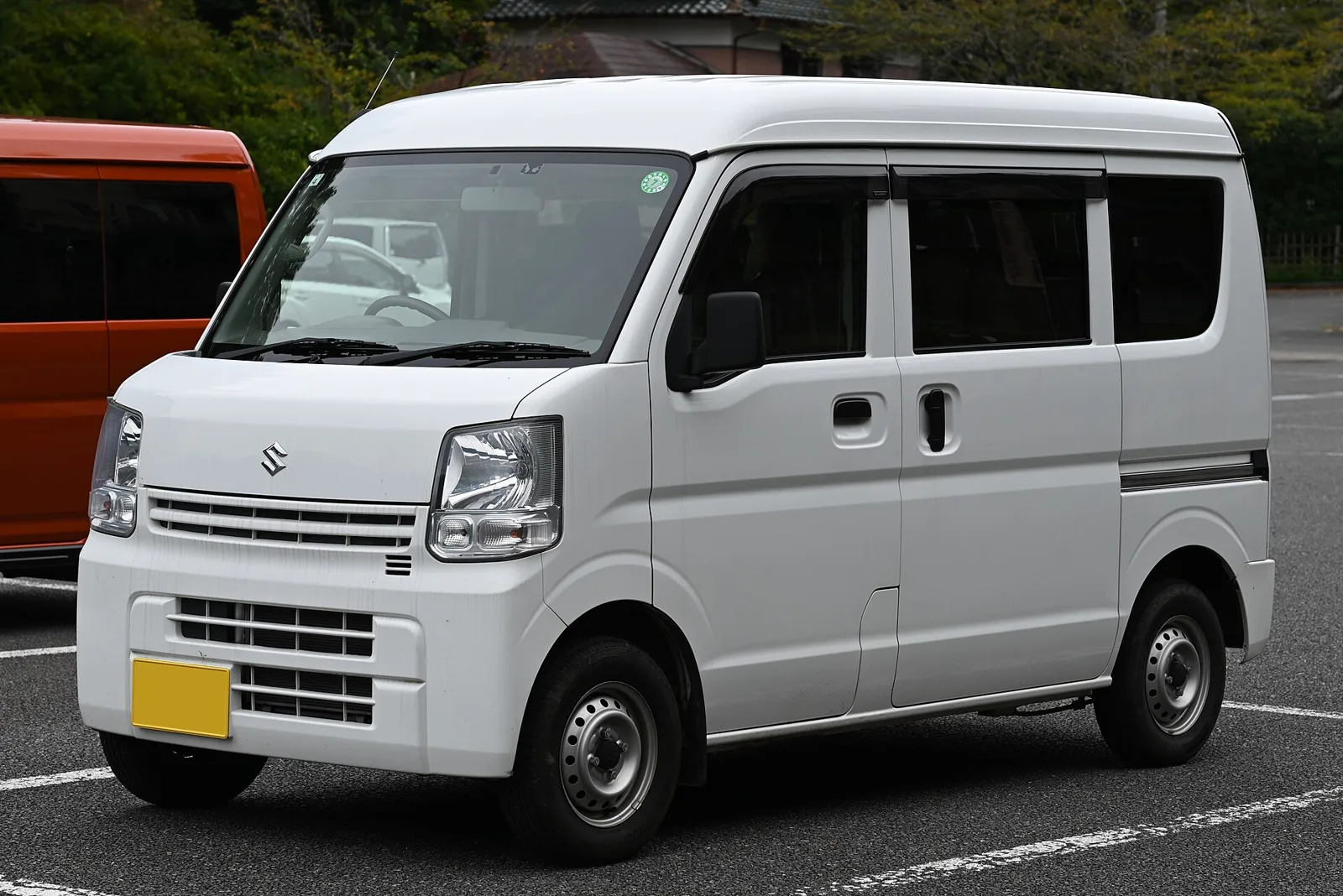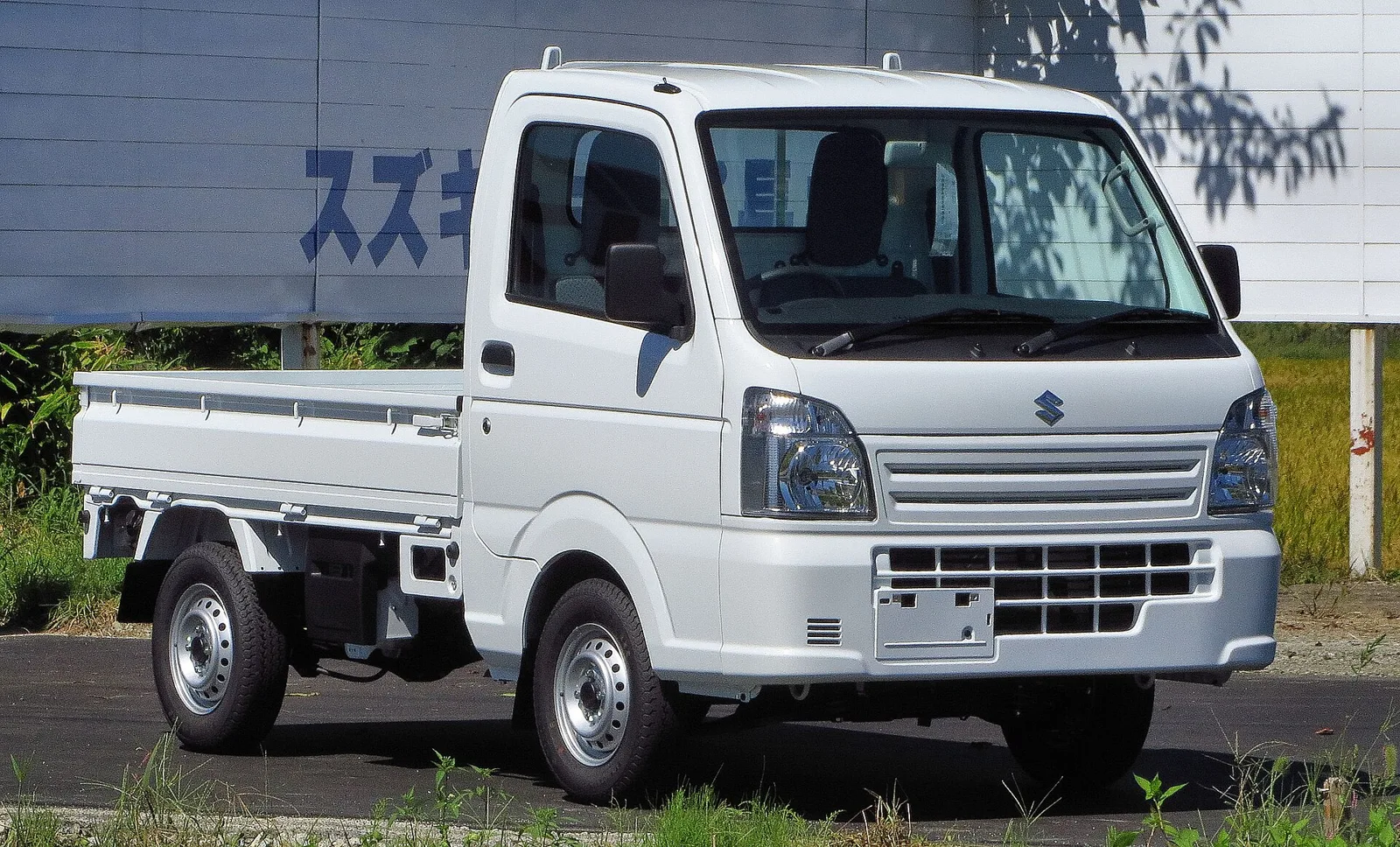
A Japanese kei truck from 1961 that grew through eleven generations into a van family sold under Daewoo, Ford, Chevrolet, Bedford and Holden badges.
The Suzuki Carry is a Japanese kei truck launched in 1961, later split into the Every microvan. Its badge-engineered versions include the Daewoo Damas, Ford Pronto, Bedford Rascal and Chevrolet CMV and CMP, spanning eleven generations.
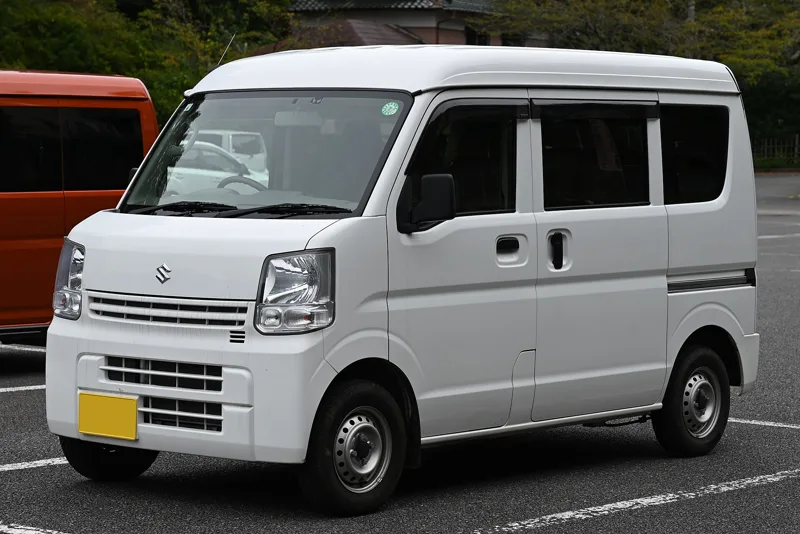
The Suzuki Carry is a kei truck from the Japanese maker Suzuki, launched in 1961 and now in its eleventh generation. Its microvan versions became the Suzuki Every in 1982, and export models have carried Daewoo, Ford, Chevrolet, Bedford, Vauxhall and Holden badges. It is the only car ever offered with both Chevrolet and Ford badges, and it remains one of the best-travelled small commercial vehicles on earth.
What is the Suzuki Carry?
In Japan the Carry is a kei car, built to the country's small-vehicle rules. Export versions and derivatives have used engines of up to 1.6 litres, and they have been sold under a wide range of names. Early microvans bore the Carry van name until 1982, when passenger versions became the Suzuki Every.
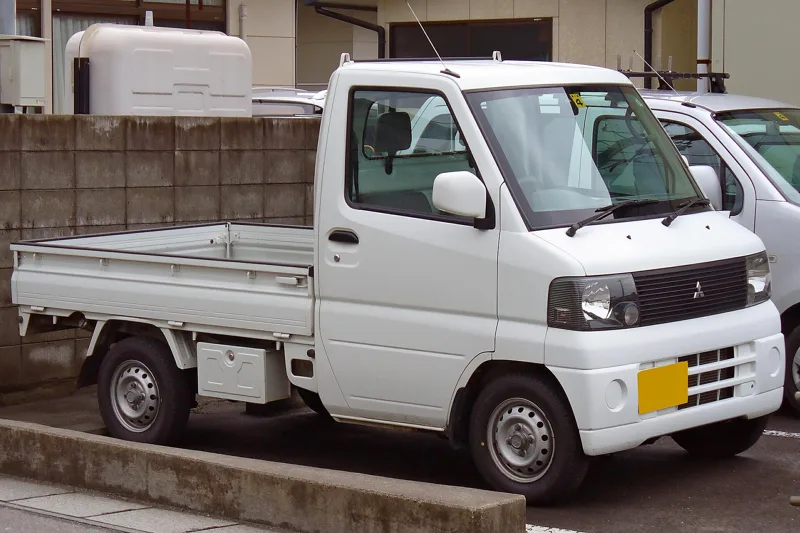
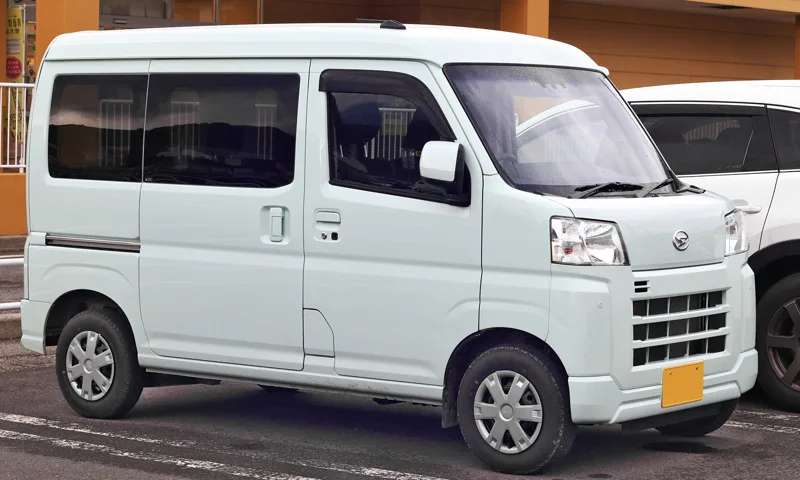
At home the Carry has competed with a group of similar vehicles, including the Kurogane Baby, Honda Acty, Subaru Sambar, Mitsubishi Minicab and Daihatsu Hijet. The first two generations used the Suzulight badge, which underlined Suzuki's focus on Light Cars, or kei jidosha.
A Japanese kei truck that became a van family sold under Daewoo, Ford, Chevrolet, Bedford and Holden badges across eleven generations.
How did the first Carry work?
The Carry series began in October 1961 with the FB Suzulight Carry, a pickup with the engine under the front seat and a short bonnet. That layout is often called semicabover. The engine was a 359 cc air-cooled two-stroke twin giving 21 PS (15 kW), and top speed was no more than 76 km/h (47 mph). Suspension was rigid, with leaf springs front and rear.
A panel van, the FBC, followed in July 1962, and a glassed FBD Carry van was added in September 1964. The FB engine stayed in use in three-cylinder form until late 1987, when it powered the Suzuki Jimny as the LJ50.
What changed with the L20 and L30 models?
In June 1965 a new body arrived on the L20 Suzulight Carry, which took over from the FB. Its chassis gained independently sprung front wheels on torsion bars, and the engine used Suzuki's patented Cylinder Crank Injection lubrication. Output stayed at 21 hp, but top speed fell to 75 km/h. The L20V van came in January 1966, along with a dropside pickup called the L21 and the L20H, a canopied pickup with a rear-facing seat for four.
The L30 of February 1966 was a full cabover with the same engine mounted horizontally under the load area. Its maximum load was 350 kg (770 lb), and a van version, the L30V, appeared in March 1968 with four doors and a two-piece tailgate. Production moved from Toyokawa to a new plant at Iwata in August 1967.
Why was the L40 called the Fast Carry?
In July 1969 Giugiaro's design appeared in the L40 Carry, and in November of that year a van with two opening side doors and a top-hinged rear gate joined the range. The L40 was too modern for the orthodox commercial buyers of Japan, and its interior space was limited. In Japan it was marketed as the Fast Carry, or Idaten Kyari, because of its rakish looks.
The L40 used an updated FB with 25 PS (18 kW) and a reed valve. Dimensions were kept to the kei limits of 2,990 mm by 1,295 mm (117.7 in by 51.0 in), with 359 cc. The truck could carry 350 kg (772 lb) and the van 300 kg (661 lb), and top speed rose to 95 km/h (59 mph).
A facelift in April 1971 brought a 27 PS (20 kW) version of the FB engine, which also went into the LJ10 Jimny. A V40FC Camper van followed later that year, with beds, curtains and a table.
How successful was the L50 generation?
The L50 truck arrived in May 1972 and the van in August. It echoed Giugiaro's design with round headlights, and its water-cooled engine produced 28 hp (21 kW). Maximum load went back up to 350 kg (770 lb). A five-door van, the L50VF, came in December 1972, and the dropside L51 followed in March 1973.
The L50 family led Suzuki to market success, and Suzuki sold more kei trucks than any other maker during 1973 and 1974. The production run of the earlier L40 generation had been about 233,000 units in less than three years, and the truck outsold the van by roughly eight to one.
In September 1975 an export-only L60 arrived with a larger 446 cc engine producing 29 PS, a stronger differential and sturdier springs. Load capacity rose to 550 kg (1,210 lb). Domestic L50s lost two horsepower in December 1975 to meet tougher emissions standards.
What did the ST10 and ST20 bring?
In May 1976 Suzuki responded to new kei class rules with the Carry 55, chassis code ST10. It used a larger, water-cooled 539 cc three-cylinder two-stroke, and it was otherwise hard to tell apart from the L50. The ST10 was also the first Suzuki to enter CKD production in Indonesia, in 1976.
Within four months the widened and lengthened ST20 replaced it. Marketed as the Carry Wide 550, it reached the maximum dimensions for the class. The ST20 van followed in November, and an ST20K model had three drop-sides for a more truck-like form. Japanese versions made 26 PS (19 kW) at 4,500 rpm, and about 187,000 were built before an October 1977 facelift.
The Custom Van of October 1977 was aimed at private buyers, with metallic paint, reclining seats and chrome bumpers. It pointed towards the Every range of passenger microvans.
Which Carry used a four-stroke engine?
The export-only ST80 of 1977 was the first Carry with a four-stroke engine, a 797 cc inline-four F8A borrowed from the LJ80 Jimny. It produced 37 hp (28 kW; 38 PS) at 5,500 rpm. In Indonesia the ST20 was nicknamed Turungtung after the sound of its two-stroke, and it was the first Suzuki built in that country. Local body builders turned it into minibuses for the angkot taxi trade.
The seventh generation arrived in March 1979 as the ST30. By then the Carry had been Japan's best-selling kei truck for eight straight years. Export models received the 797 cc four-stroke, and in October 1980 the domestic market gained a 543 cc four-stroke F5A in the ST40. Later export models used a 970 cc four under the ST100 code.
Where was the Carry built outside Japan?
In China, Changhe was the first maker to produce minivans and pickups, and it built 151,629 Carry units. In Pakistan, Pak Suzuki Motors assembled the ST90V-based Suzuki Bolan until 2024. It kept a 796 cc three-cylinder F8B engine that gave 27 to 29 kW, and it offered a four-speed manual giving a top speed of 120 km/h (75 mph). The Bolan sold 220,790 units from 2007 to 2018, and a pickup version called the Suzuki Ravi was also made.
In Taiwan, the Ford Pronto was a rebadged Carry ST80, sold from 1985 to 2007 by Ford Lio Ho, a joint venture between Ford and Lio Ho. It was made only for Taiwan, where it competed with the Mitsubishi Minicab and the Subaru Sambar. Its front end was designed in Australia by an independent firm.
In Indonesia, Suzuki Indomobil Motor began assembling the seventh-generation Carry in 1983 with the 970 cc F10A engine, rated at 50 PS (37 kW). A locally developed rear body gave it a 10 cm longer wheelbase, about 20 cm more overall length, and room for a third row of seats in the minivan. The Super Carry Extra arrived in 1986, and by 1987 the Carry was Indonesia's best-selling vehicle, until the Daihatsu Zebra and Toyota Kijang overtook it. Production there ended in 2009.
In India, the Maruti Suzuki Omni was a microvan that started life as the Maruti Van in 1984, one year after the Maruti 800. Its 796 cc three-cylinder matched the 800's engine, and the name Omni came in 1988. It was discontinued in April 2019 after 35 years, because it could not meet the new safety and emissions rules. Its replacement is the Eeco.
In South Africa the Carry used the 797 cc F8A four-cylinder and was nicknamed half loafs. Many of these yellow and green vans worked as shared public transport in Cape Town and Durban.
How did the Bedford Rascal relate to the Carry?
The Bedford Rascal, later the Vauxhall Rascal, was a joint venture between General Motors and Suzuki. It was also built as the Suzuki Super Carry, and it was sold from 1986 to 1994. Its payload was 550 kg for the van and 575 kg for the pickup. The vans were built at the IBC Vehicles plant in Luton, England, next to the main Vauxhall factory.
The Rascal was rebadged as a Vauxhall in 1990, when the Bedford marque was being retired. Production moved to Japan in 1993 and continued there until 1999. In much of continental Europe, where Suzuki was not marketed, the car was sold as the GME Rascal.
Europe received the eighth-generation Carry from 1985. Post-1985 export Carrys used the 797 cc F8A, while Super Carrys had the 970 cc F10A. Power was 37 PS and 45 PS, with top speeds of 110 km/h and 115 km/h. In much of Europe these were sold as the Bedford, Vauxhall or GME Rascal, which were built at the GM plant in Luton to get around the voluntary export limits agreed by Japanese makers.
What is the Daewoo Damas?
The Daewoo Damas is a badge-engineered Carry or Every, produced by the South Korean maker Daewoo since 1991. Its pickup version was the Daewoo Labo. Daewoo's Damas and Labo used a 796 cc three-cylinder SOHC F8C engine instead of the smaller 660 cc units used in Japan, which gave more power and comfort. Both were available only with a manual transmission, and air conditioning was optional.
In some export markets the Damas was known as the Daewoo Attivo. After General Motors took over Daewoo, the Damas and Labo became the Chevrolet CMV for the passenger van and the Chevrolet CMP for the pickup in markets such as Central America and Tunisia. Since 2011 the Damas and Labo have been sold in South Korea without any family name.
A July 2003 facelift stretched the Damas nose by 245 mm (9.6 in) to meet tougher passenger safety rules, and it became the Damas II in South Korea. Over the years the Labo gained various grille and headlight combinations from the Japanese Carry and Every.
Why did Korean production of the Damas stop and start?
In January 2007 Labo and Damas production stopped because the vans could not meet emissions rules. Production resumed as the New Damas in April 2008, with LPG engines only for the home market. The Daewoo badge was dropped in March 2011.
In December 2013 production halted again, because the vehicles lacked the oxygen sensors required for vehicles built after 2014 and did not meet South Korean on-board diagnostics rules. A campaign by small business owners, who feared a flood of Chinese imports, led the government to create an exemption. Production restarted in August 2014. South Korean output was extended to 2020, and in 2019 the government extended the exemption for at least another year.
VIDAMCO of Vietnam built the Damas from knock-down kits until 2018. In Uzbekistan, UzDaewoo Auto began local production in 1996, and the Damas became the predominant form of public transport there. After General Motors took over the UzDaewoo plant in 2008, the Damas II was renamed the Chevrolet Damas.
What did the ninth and tenth generations bring?
The ninth generation appeared in September 1991 with the 657 cc F6A engine and much smoother bodywork. The truck kept a similar chassis, while the vans had a longer wheelbase and a midships engine just ahead of the rear axle. A gentle facelift in September 1993 switched the front drum brakes to discs on all models, and two months later the vans were renamed Every.
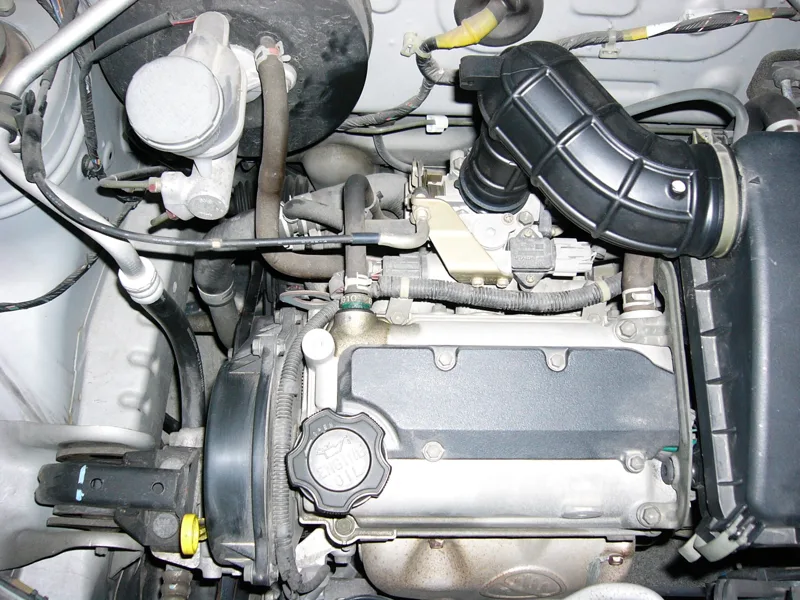
The tenth generation arrived in January 1999 with the F6A still in use, now in a modernised form. A turbocharged six-valve F6A made 60 PS (44 kW). The K6A engine replaced it in September 2001. In November 2005 the Carry FC was introduced for farmers, with a much shorter wheelbase and a turning circle of 3.6 metres (11 ft 10 in).
How did the Ford Pronto end?
The tenth-generation Carry was also built in Taiwan as the Ford Pronto from late November 1999. It used a Japanese-made 1-litre, 16-valve G10B engine producing 66 hp (49 kW), and the lifestyle van was called the Pronto PR-Z. Ford Lio Ho ended production at the end of 2007, because that engine could not meet revised local emissions rules.
What is the eleventh-generation Carry?
The eleventh generation went on sale in Japan in August 2013. Sister models wore the Mazda Scrum, Mitsubishi Minicab and Nissan Clipper badges. A large-cabin Super Carry followed in May 2018, after a showing at the 2017 Tokyo Motor Show. A major facelift arrived in December 2025, with a redesigned front, standard LED lights and an 8-inch colour LCD meter.
What were the Futura and the Colt T120SS?
In April 1989 Suzuki agreed with Mitsubishi to develop light commercial vehicles together in Indonesia. The result was the Suzuki Carry Futura, which debuted in February 1991, and the Mitsubishi Colt T120SS. The Futura was sold as the bigger alternative to the Carry in Indonesia, and later the Carry name was dropped to avoid confusion with the ST100.
The Futura's first engine was a 1,360 cc unit producing 73 PS (54 kW). A 1,590 cc G16A with 80 PS (59 kW) came in 1997, and a 1,493 cc G15A replaced both in 2000 after Indonesia raised taxes on engines above 1500 cc. The Futura was discontinued in February 2019. The Colt T120SS, which shared most of the Futura's structure, built 324,960 units from 1991 to 2019, and the last one left the East Jakarta plant on 22 January 2019.
What is the Carry in India, Philippines and beyond?
Maruti Suzuki launched a small truck called the Super Carry in India in 2016, based on the Futura. It had a 140 mm longer wheelbase and could run on a 1,196 cc G12B CNG engine or a 793 cc two-cylinder turbodiesel. The diesel was dropped in March 2020 because it did not meet the Bharat Stage 6 emissions standard. The Super Carry was also sold in Africa from April 2016, and in the Philippines from October 2016.
The current international Carry was produced in Indonesia from 2019 by Suzuki Indomobil Motor. The engine is a 1.5 L (1,462 cc) K15B-C rated at 71 kW (97 PS). The launch came at the 27th Indonesia International Motor Show, on 25 April 2019, and exports now reach nearly 100 countries. It reached Thailand on 16 August 2019, the Philippines on 26 September 2019, and the Middle East in February 2024.
Carry generations at a glance
| Generation | Launch | Key change |
|---|---|---|
| FB | October 1961 | Semicabover pickup with 359 cc two-stroke twin |
| L20 | June 1965 | Torsion bar front suspension |
| L30 | February 1966 | Full cabover layout, 350 kg load |
| L40 | July 1969 | Giugiaro design, Fast Carry in Japan |
| L50 | May 1972 | Water-cooled engine, 28 hp (21 kW) |
| ST10 | May 1976 | 539 cc three-cylinder two-stroke |
| ST80 | 1977 | Export four-stroke F8A, 797 cc |
| ST30 | March 1979 | Seventh generation, engine moved under the seat |
| Eighth | March 1985 | Fuel-injected options, F5B from 1989 |
| Ninth | September 1991 | 657 cc F6A, new bodywork |
| Tenth | January 1999 | Turbo F6A, K6A from 2001 |
| Eleventh | August 2013 | Japan launch, also sold as Mazda Scrum |