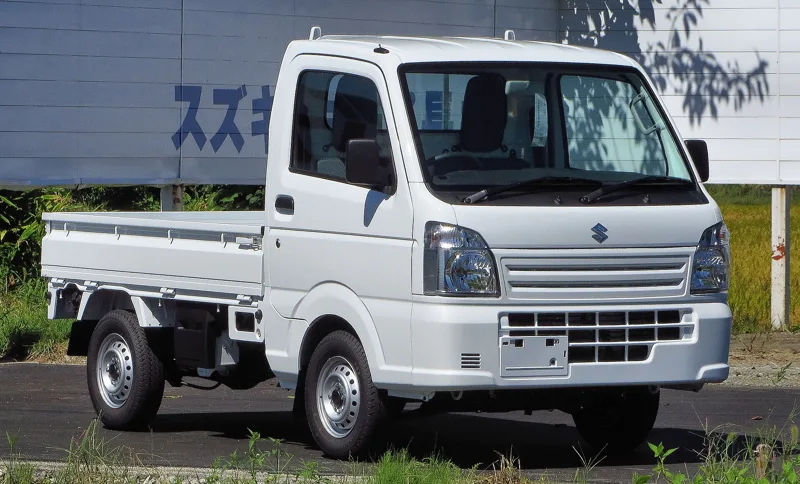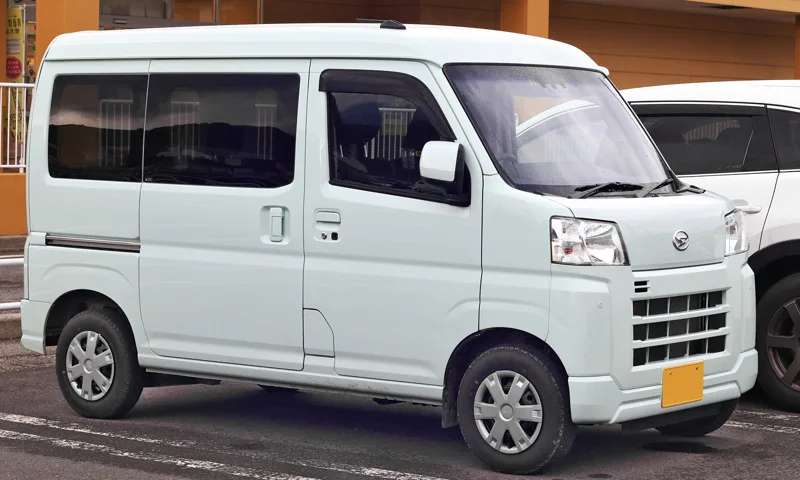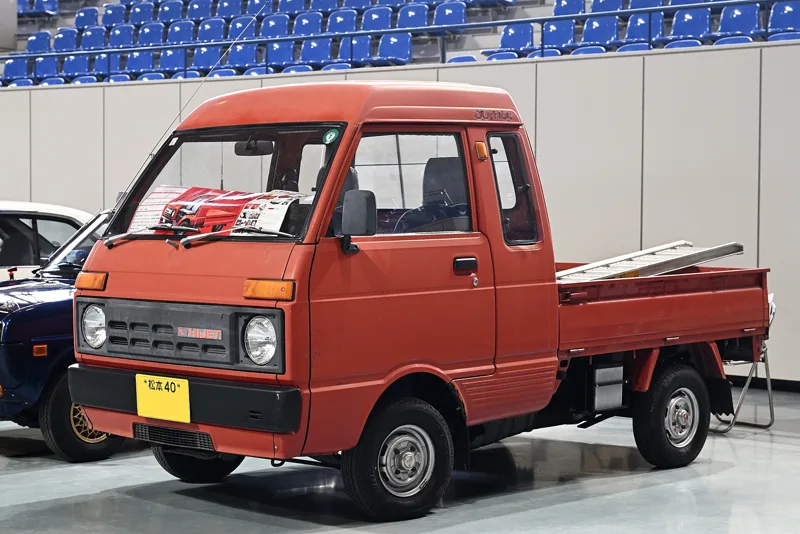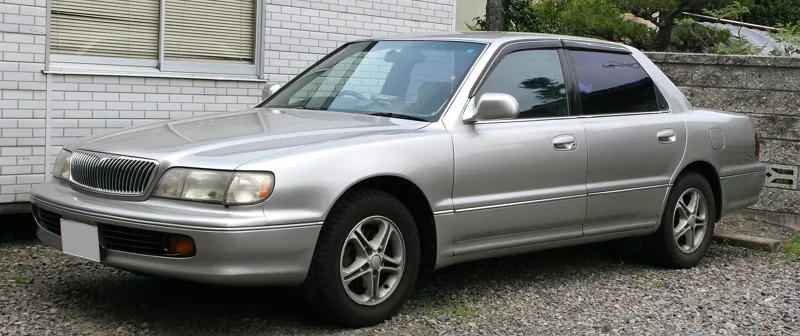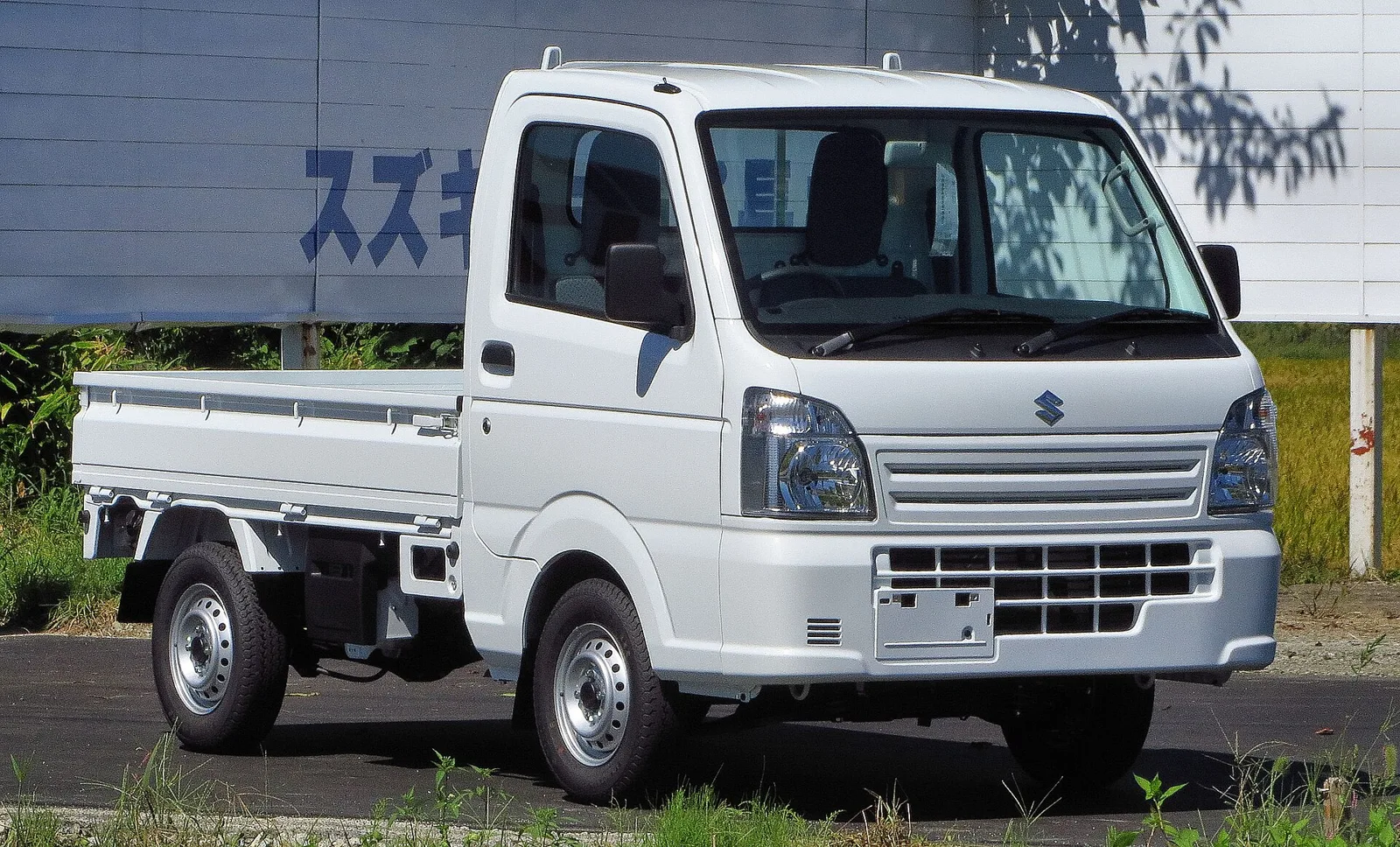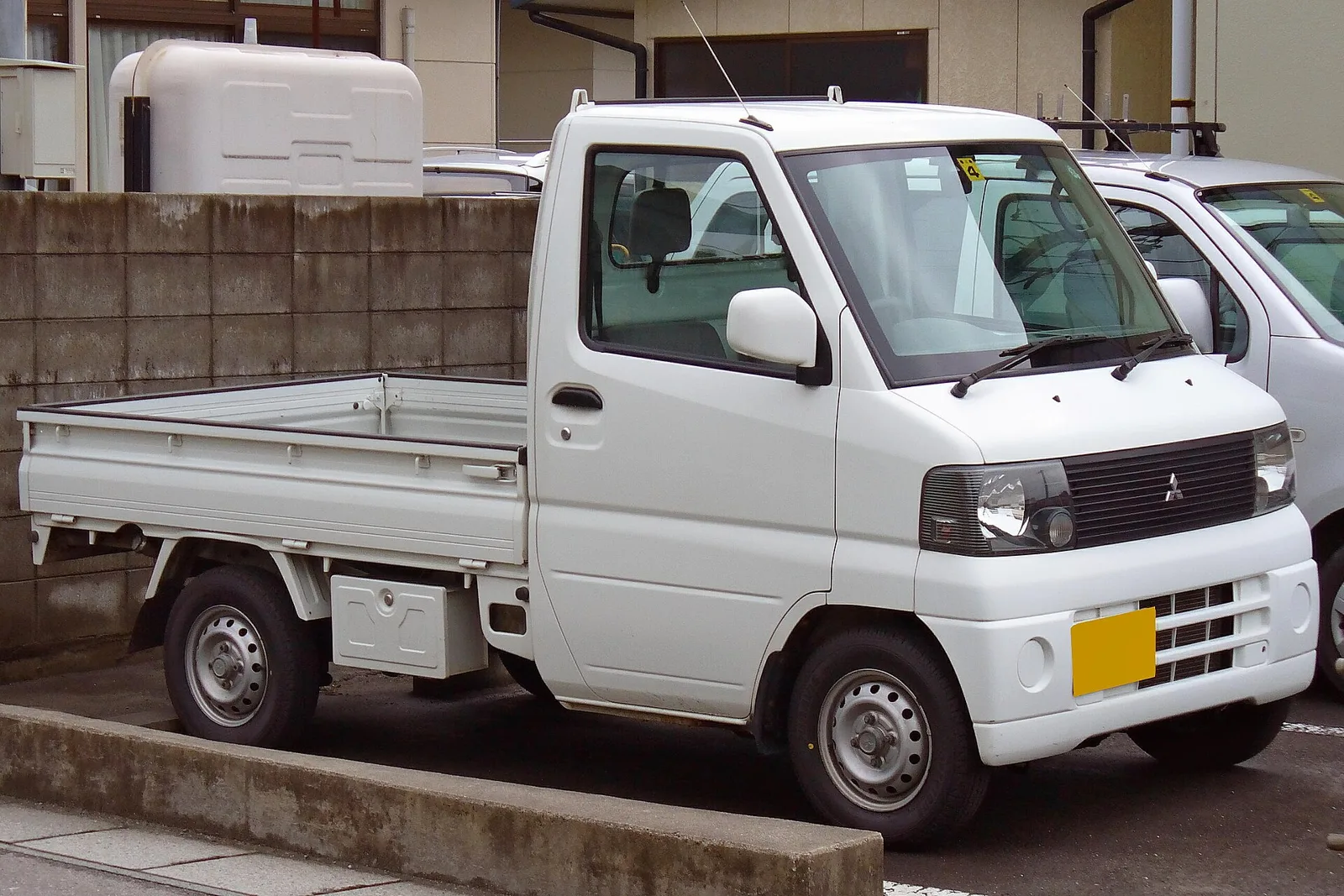
Eight generations of a Japanese kei truck and microvan, from a two-stroke cabover pickup to an electric van and a Suzuki-based successor.
Mitsubishi's Minicab is a Japanese kei truck that has been built since 1966 in eight generations. It produced cabover pickups, vans and microvans, and an electric version went on sale in December 2011.
The Mitsubishi Minicab is a Japanese kei truck and microvan that Mitsubishi has built since 1966. It was sold in Japan through the Galant Shop retail chain, reached Taiwan as the CMC Veryca from 1985, and gained an electric version in December 2011. Since February 2014 it has been a rebadged Suzuki Carry or Every, apart from the electric model.
Where did the Minicab come from?
The Minicab cabover pickup launched in 1966 to replace the 360 trucklet, which had by then taken the same model name as the Minica sedan. Engineers gave it the codename LT30. Power came from the 359 cc ME24, a two-stroke unit that was air cooled like the sedan's, and cargo gates opened on three sides for easy loading.
A van version followed in 1968 in four equipment levels. The T30 truck gave way to the Minicab EL in 1971, while the van stayed in production and was updated with a dummy grille and a new headlight surround. The T30V kept the air-cooled layout and carried a 26 PS (19 kW) ME24E until 1976, and the better-equipped Super Deluxe used the 30 PS (22 kW) ME24F. About 224,766 first-generation Minicabs were built.
Eight generations of kei truck, from a two-stroke cabover in 1966 to an electric van and a Suzuki-based successor.
How did the second generation change?
In May 1971 the Minicab received its first model change. The T130 brought a new interior and a longer cargo bed, and it was offered only as a truck while the old LT30 van carried on until 1976. Its reed-valve ME24 still produced 30 PS (22 kW), but ride quality improved with a front wishbone and rear leaf spring suspension.
A panel box van arrived in September 1972 as the Minicab W, with the water-cooled 2G10 engine and the T131 chassis code. Round headlights returned, the grille was revised in September 1973, and the W badge gave way to a Minicab script. In January 1975 an emissions-cleaned engine using Mitsubishi MCA technology produced 28 PS (21 kW). Just under 210,000 second-generation vehicles were built, making it the slowest-selling generation.
What was the third generation?
The third generation appeared in April 1976 as the Minicab 5, with chassis code L012. It was longer to suit changed tax rules and used the 471 cc Vulcan S engine from the passenger car range, which kept the same maximum power as the 360. The new rules allowed up to 550 cc, so that engine was used only in a short-lived group of interim models.
In April 1977 the body was widened and given a full 546 cc engine, and the model became the Minicab Wide 55 (L013), producing 29 PS (21 kW). Power rose by two horsepower in 1979. The 1981 update brought the timing-belt G23B engine with 31 PS (23 kW), restored the simple Minicab name and moved the chassis code to L015.
Export L100 models received the 2G24 engine of 644 cc from November 1981 and carried small 650 badges. In 1982 the flat-floor van gained double-walled construction for an open cargo area, and a four-wheel drive model joined the range. Overall, 768,393 third-generation Minicabs were built across the L012, L013 and L015 chassis codes.
Which Minicabs were sold under other names?
Several versions wore different names in export markets. Chile and Argentina knew the third generation as the Mitsubishi L100, matching the L200 truck and L300 vans. In China the same generation was built as the Shenwei SYW 1010 and the Liuzhou Wuling LZ 110, and the latter used Mitsubishi's larger 800 cc engine.
The fourth generation also travelled abroad. In Indonesia a wider version with a longer rear end was sold as the Jetstar from 1987 to 1990. It used a 993 cc three-cylinder Daihatsu engine from the Hijet, because a 1981 rule required local engines of at least 1.0-litre by 1985 and Mitsubishi had no suitable unit of its own. The name is reported to combine jet, from the Hijet, with star, from the three-diamond emblem.
In Taiwan, China Motor Corporation built long-wheelbase fourth-generation models as the CMC Varica, with a 1061 cc 4G82 engine producing 58 PS (43 kW). Overall length reached 3,645 mm, and top speed was 115 km/h. Cushman imported the Varica to the United States as the Type G, also known as the Cushman White Truck or White Van.
What changed with the fifth generation?
The fifth generation arrived in February 1991 as a larger redesign that took advantage of the expanded kei limits. Engine choices were three 660 cc units: a four-valve SOHC, a five-valve DOHC reserved for the Bravo, and a two-valve SOHC. The two-valve and four-valve engines produced 38 and 42 PS (28 and 31 kW) at 5,500 and 6,000 rpm.
The high-roof truck was discontinued, and Japanese vans became two-seaters only. Four-speed manuals were typical at first, with the five-speed kept for the top TL model, and a three-speed automatic was optional on the TD truck. Across the range 66 variations were possible. The entry-level TU was the only version with 10-inch wheels and drum brakes at both ends.
Steady changes followed. The electrics gained better waterproofing in January 1992, the five-speed became standard from January 1993, and square SAE headlamps replaced the round units in February 1994. A two-spoke steering wheel borrowed from the base Minica arrived in January 1996, and a fuel-injected 48 PS (35 kW) engine was added in October 1997. In all, 723,772 fifth-generation Minicabs were built.
What was the Bravo?
The Minicab Estate, the passenger-focused four-seat van of the fourth generation, was renamed the Minicab Bravo in January 1989. The fifth-generation Bravo then dropped the Minicab name altogether and came with unusual concave, oval headlights.
Lower-priced Bravos used the 12-valve carburettor engine from the Minicab trucks and vans, while pricier versions had a fuel-injected five-valve unit. Outputs were 42 and 50 PS (31 and 37 kW). A turbocharged 64 PS (47 kW) version arrived in January 1992 in the MZ-G and MZ-R, and in January 1994 a new 4A30 four-cylinder replaced the 3G83 in all but the cheapest versions.
The 16-valve single-cam model came carburetted or fuel-injected, producing 44 or 52 PS (32 or 38 kW). The twin-cam, 20-valve GT was fuel-injected with a turbocharger and intercooler, but its claimed power stayed at the 64 PS (47 kW) limit that Japanese makers had agreed. The retro-styled Bravo Route 66 joined the line in August 1997.
How did the sixth generation look?
The sixth-generation Minicab, the U60 series, arrived in February 1999 with a new semi-front design. A wagon called the Town Box followed in April 1999. The trapezoidal headlights were squared off in December 2000, and 419,070 petrol-engined U60s were built.
The Minicab MiEV continued on the old Minicab platform. Mitsubishi began testing it in Japan in October 2010, and in January 2011 it said an electric Minicab would go on sale in the third quarter of that year, although a December 2011 launch was later planned.
What was the Minicab MiEV?
The Minicab MiEV was an electric kei van and truck sold in Japan from December 2011. Its 30 kW (41 PS) Y4F1 traction motor produced 196 N-m (145 lb-ft) of torque, and buyers could choose a 10.5 kW-hr battery giving 100 km on the JC08 cycle or a 16.0 kW-hr battery for 150 km.
Curb weight ranged from 1,090 to 1,110 kg (2,400 to 2,450 lb), depending on the battery. Payload stayed at 350 kg (770 lb) with two occupants. Its drivetrain and major parts were taken from the i-MiEV, and the motor was reworked to give more low-speed pull for van work. Charging to 80 percent on 50 kW DC took 15 to 35 minutes, while a full charge from a 100 V, 15 A wall supply took 14 to 21 hours.
Yamato Transport placed early orders for 100 units in May 2011. The target price was below 2,000,000 yen (about US$24,450) after subsidies. With subsidies the starting prices were 1,730,000 yen and 2,020,000 yen for the two battery options, and without them 2,400,000 yen and 2,950,000 yen.
The Minicab MiEV had sold 4,544 units in Japan through October 2013. A truck version launched in January 2013 and reached 536 units by October 2013, and its sales ended in May 2017. Japan Post ordered 1,200 units in 2019 for service by the end of March 2021.
What is the Minicab EV today?
The electric Minicab now trades as the Minicab EV, because the MiEV name was deemed confusing. It was revived in Japan in December 2023 with a 20.0 kW-hr battery, and its model code changed from ZAB-U68V to ZAB-U69V. It produces 31 kW (42 PS) and 196 N-m (145 lb-ft), with a range of 180 km (112 mi).
Mitsubishi Motors Krama Yudha Indonesia began selling the Mitsubishi L100 EV on 16 February 2024. Mitsubishi had announced in February 2023 that it would build the model in Indonesia. In Japan the electric model is still produced on the old Minicab platform at the Mizushima plant.
Why did Nissan sell a Minicab as the Clipper?
Mitsubishi built a badge-engineered Minicab pickup for Nissan, which sold it as the Nissan Clipper. The trucks were called NT100 Clippers and the vans NV100s. Both models competed in the kei van class with the Honda Acty, Subaru Sambar, Daihatsu Hijet and Suzuki Carry.
Both models were facelifted in July 2012 to meet new safety regulations. When Mitsubishi announced it would stop making its own kei trucks for 2014, Nissan ended sales of the rebadged Minicab in November 2013. In 2024 the badge-engineered version returned as the electric Clipper minivan.
Did the Suzuki Carry and Every replace the Minicab?
From 2014 onward, yes. The seventh-generation Mitsubishi Minicab is a rebadged Suzuki Carry or Every, introduced on 27 February 2014. The vans, with chassis code DS64V, lasted only one year because the Every they were based on was about to be replaced.
Mitsubishi also offered a passenger-oriented Suzuki Every Wagon, with a redesigned rear and the revived Town Box badge. The truck range, chassis code DS16T, stayed in production after Suzuki let the two model lines diverge. A facelift arrived in February 2026.
The eighth-generation Minicab, a van only with chassis code DS17V, was introduced in March 2015. It was also a rebadged Suzuki Every, and the Every Wagon-based Town Box changed at the same time.
What are the Mitsubishi Minicab specifications?
| Specification | Detail |
|---|---|
| First generation | Launched 1966 as the LT30 cabover pickup |
| First engine | 359 cc air-cooled two-stroke ME24 |
| T30V output | 26 PS (19 kW) from the ME24E |
| Second generation | T130 from May 1971; 2G10 water-cooled van from September 1972 |
| Third generation | Minicab 5 from April 1976 (L012); Wide 55 from April 1977 (L013); L015 from 1981 |
| Third-generation engines | 471 cc Vulcan S; 546 cc at 29 PS (21 kW); G23B at 31 PS (23 kW); 644 cc 2G24 for export |
| Fourth generation | Launched 1984 as the U11/12; U19 chassis code by 1990 |
| Fourth-generation engines | Three-cylinder 3G81 Cyclone from 1987; 657 cc 3G83 from January 1990 |
| Fifth generation | Launched February 1991; 660 cc engines at 38 and 42 PS (28 and 31 kW) |
| Bravo turbo | 64 PS (47 kW) from January 1992 |
| Sixth generation | U60 series from February 1999; 419,070 petrol vehicles built |
| Seventh generation | Rebadged Suzuki Carry or Every from 27 February 2014 |
| Eighth generation | DS17V van from March 2015 |
| Minicab MiEV motor | 30 kW (41 PS), 196 N-m (145 lb-ft) |
| Minicab MiEV range | 100 km (JC08) with 10.5 kW-hr; 150 km with 16.0 kW-hr |
| Minicab MiEV payload | 350 kg (770 lb) with two occupants |
| Minicab EV | 20.0 kW-hr battery, 31 kW (42 PS), 180 km (112 mi) |
| Taiwan Varica engine | 1061 cc 4G82, 58 PS (43 kW), 3,645 mm long |