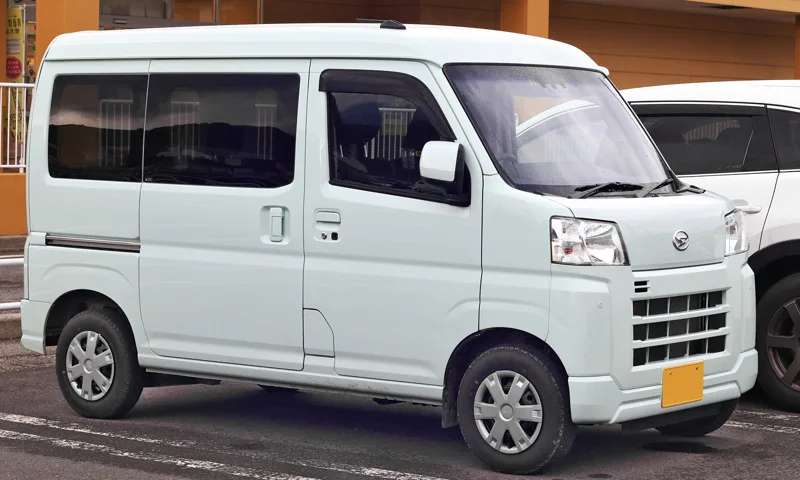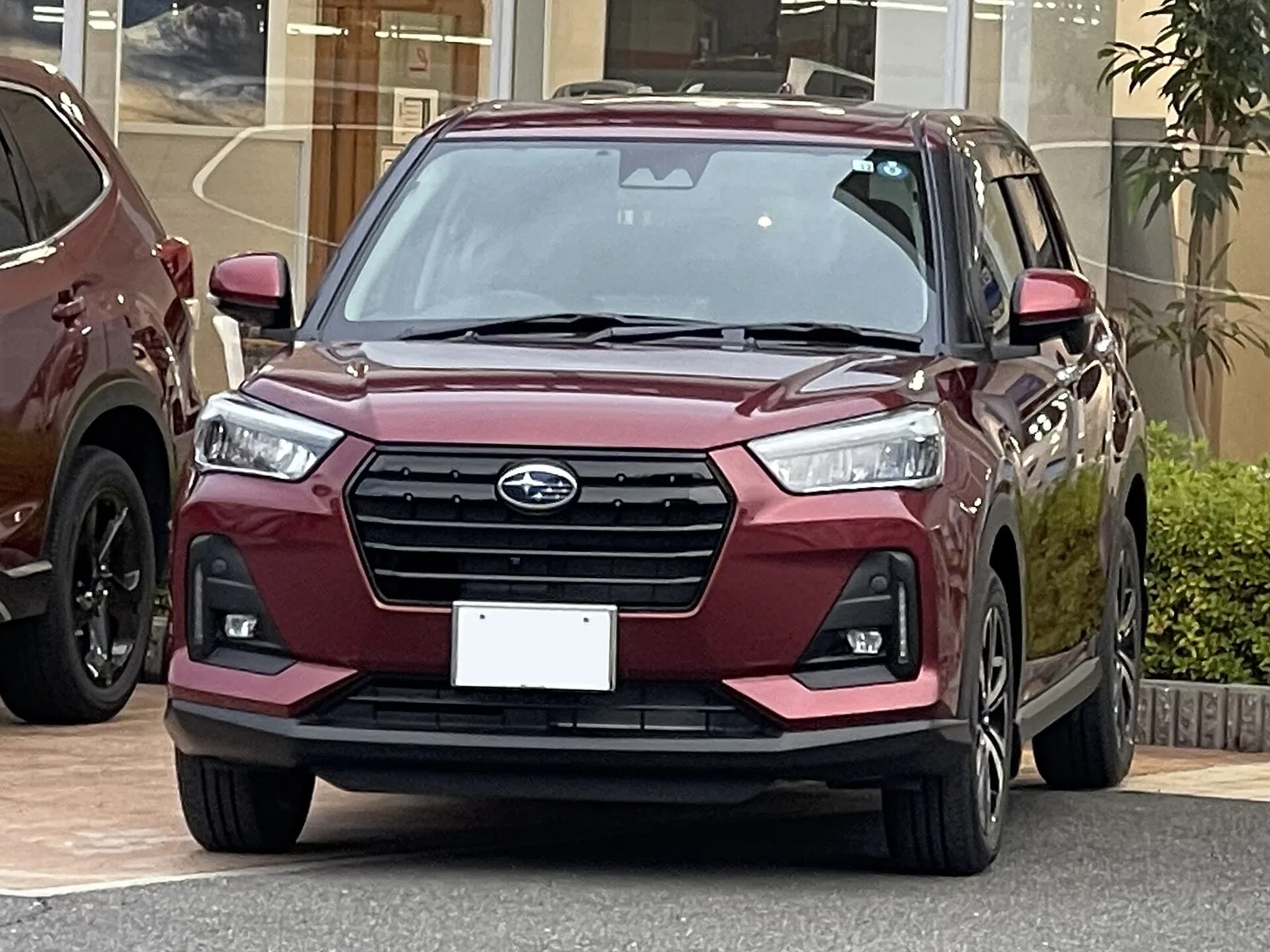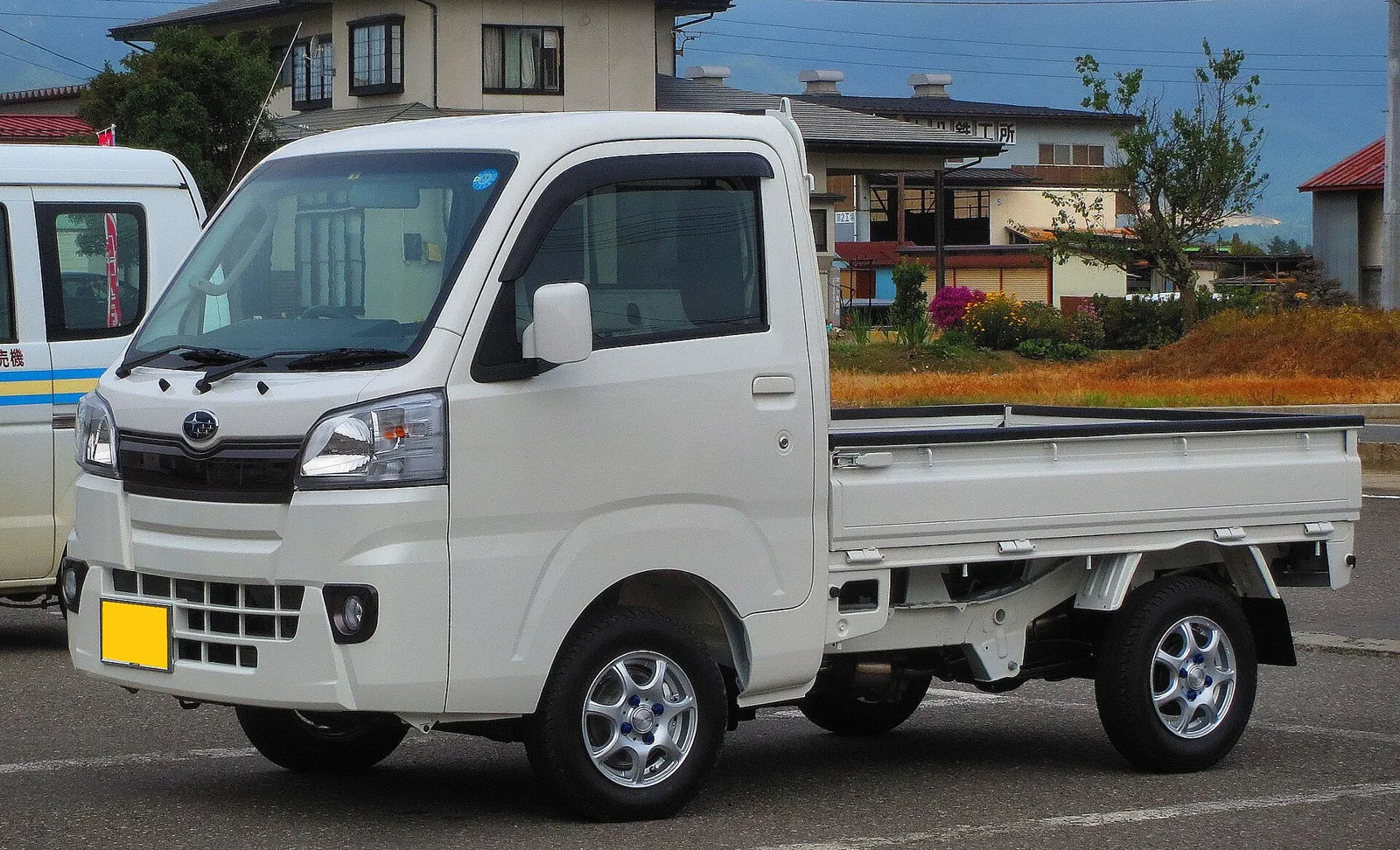
A rear-engined kei truck and microvan that moved from Subaru's own engineering to rebadged Daihatsu models and is still in production.
Introduced in 1961, the Sambar is a Subaru kei microvan and cabover truck that kept a rear engine for decades. Its eighth generation is still sold as a rebadged Daihatsu Hijet, and the Sambar Dias carries the family into passenger form.
The Subaru Sambar is a Japanese kei cabover truck and microvan that Subaru launched in 1961. For most of its life it used a rear engine and rear-wheel drive, and it is now in its eighth generation. From the seventh generation onward it has been a rebadged Daihatsu Hijet, which marked the end of Subaru's own kei engineering.
Where did the Sambar come from?
The Sambar was introduced at the 1960 Tokyo Motor Show in passenger and commercial versions, with the microvan and kei pickup following in 1961. It was the second kei truck after the Kurogane Baby, and it was built on the Subaru 360 platform. The name refers to a species of deer.
The Volkswagen Type 2 (1951-1967) van used a similar cabover layout with its engine at the rear, and Subaru's design may have drawn on it. The Sambar's one-box body was also influenced by the 1957 Fiat 600 Multipla.
A rear-engined cabover kei truck that outlived its own engineering and carried on as a rebadged Daihatsu.
What made the Sambar's layout unusual?
The Sambar used a rear engine, rear-wheel drive and body-on-frame construction rather than a unibody. It was the last kei vehicle to keep a rear-engine, rear-drive layout, which set it apart from the front-engine rivals of its time. Its cabover shape made the most of a short kei body.
Four-wheel drive became optional in 1980, and the same option later appeared on the Subaru Rex. Later generations used water-cooled engines drawn from the Subaru Rex, Vivio and Pleo, which replaced the air-cooled units of the early years.
How did the early generations evolve?
The second generation, nicknamed baban Sambar, debuted in January 1966 with a truck variant and revised styling. The third generation appeared on 10 February 1973 under the nickname Goriki, meaning Herculean strength, after an advertising campaign of the time. From February 1976 the engine was upgraded to a water-cooled four-stroke to reduce emissions.
The fourth generation KR arrived on 9 May 1982 with the Sambar Try, a boxy van with two roof heights. Its suspension moved to four independent wheels with MacPherson struts at the front, and the wheel size grew from 10 inches to 12 inches.
What engines did the Sambar use?
The first two generations used air-cooled engines from the Subaru 360, and later generations used water-cooled engines from the Subaru Rex, Vivio and Pleo. The original two-stroke twin made 18 PS (13.2 kW; 17.8 bhp), while the fourth-generation EK23 made 28 PS (21 kW) from 544 cc.
Export markets received larger engines. The Subaru 700 used a 665 cc version making 31 PS (23 kW), and the fifth-generation Vivio EN07 engine gave 40 PS (29 kW). Supercharged fifth-generation models rose to 55 PS (40 kW).
How did the fifth and sixth generations change?
The fifth generation arrived in 1990 with a 660 cc engine, and the sixth followed in February 1999 once kei width rules changed. The width limit rose to 1,480 mm (58.3 in) on 1 October 1998, so the sixth generation was widened to match.
The sixth generation's supercharged engine reached 58 PS (43 kW), while the naturally aspirated models rose from 46 to 48 PS (34 to 35 kW). Dual front airbags, power sliding rear doors, power windows and leather upholstery on upper trims arrived on 18 July 2008.
Why did Subaru stop making kei vehicles?
In April 2008 Fuji Heavy Industries said it would pull out of the kei class, following Toyota's investment in the company. Subaru ended kei production at the end of fiscal 2011, and the final day of production was 29 February 2012. Its kei products were replaced by rebadged models from Daihatsu.
Sambar fans protested the decision. Subaru had concentrated on four-wheel-drive family cars with horizontally opposed engines, and kei sales were almost entirely limited to Japan, so the company judged the kei range not worth keeping.
How did the seventh and eighth generations come about?
The seventh-generation truck reached Japan on 2 April 2012 as a badge-engineered Daihatsu Hijet Van and Truck. It was the first Sambar to be semi-cabover, with the engine placed between the front seats and driving the rear wheels. The eighth-generation truck followed on 2 September 2014.
The Sambar van stayed on the S321 platform until January 2022. The eighth-generation van arrived that month as a rebadged Daihatsu Hijet Cargo built on the DNGA platform, and the truck continued in production alongside it.
What about the Dias Wagon and Sambar Dias?
Passenger variants were sold as the Subaru Dias Wagon. Introduced in September 2009 as a rebadged Daihatsu Atrai, it was discontinued in early 2020 and renamed Sambar Dias. It carried the Sambar family name into the passenger market. It was the passenger counterpart of the truck and van range.
The Sambar Dias Classic, a retro appearance package, was offered on the Dias range and later on the Sambar truck. It was influenced by the Subaru Vivio Bistro and appeared in the anime Love Hina as Seta's van.
How did the Sambar reach export markets?
Sambar models were built in China as the Sanba and in Finland in a joint venture with Elcat Automotive. Passenger variants were marketed as the Dias Wagon. Export names also included the Subaru 500, Subaru 600 and Subaru 700, which reflected the engine size of each stage.
In Europe a larger Domingo version was sold from 1983 under names including Sumo, Libero and Columbuss. The 1000 cc three-cylinder engine powered the Domingo, while the small-bodied van went on sale in the United Kingdom in August 1985. Subaru planned to sell about 500 examples per year there, split evenly between drivetrain types.
Who were the Sambar's rivals?
Rivals included the Mazda Porter from 1968, the Honda Vamos from 1970, and the Daihatsu Hijet cabover from 1964. The Suzulight Carry adopted a cabover layout in 1966, and the Kurogane Baby had come first among kei trucks. Before 1966 the Suzulight Carry had placed its engine in front of the driver.
Kuniko Yamada, a Japanese comedian, appeared in commercials for the fifth generation.
What changed in the fourth generation Try and Van?
The Sambar Try came in van form with two roof heights, and a high-roofed passenger model carried the KR code. From May 1986 retracting seat belts became standard, and the TG version replaced the earlier TX-G. The commercial one-box models were renamed Sambar Van on 9 January 1987, while the high-roofed passenger version kept the Try name.
Options expanded across the generation. An automatic clutch was offered on the Try FL and FX, front disc brakes joined the options list, and full-time four-wheel drive arrived late in the cycle. A six-valve unit making 34 PS (25 kW; 34 bhp) was added in April 1989, sitting beside the standard engine on top-spec Try and truck models.
How did the fifth generation handle transmissions?
That 660 cc engine was the EN07 unit that also powered the Subaru Vivio. Four-cylinder carburetted models made 40 PS (29 kW), while the optional supercharged model with fuel injection reached 55 PS (40 kW). An automatic was offered in the form of Subaru's ECVT system, paired with full-time four-wheel drive.
October 1995 saw the ECVT removed because of drivability issues, and a three-speed automatic replaced it. A naturally aspirated EMPi engine option producing 46 PS (34 kW) was also introduced. In 1994 the Domingo received a full model change, using the Justy's 1200 cc three-cylinder EF12 engine with seven seats possible.
Sixth generation refinements
The sixth generation arrived in February 1999 as a wider, larger body. The 4WD Dias now came only with a three-speed automatic, and carburettors disappeared from the whole EN engine range. Naturally aspirated models first received single-point fuel injection, which was replaced with multi-point injection in August 2001.
The Sambar was facelifted in September 2002, November 2005 and again in September 2009. Each update added modest changes to the front and interior, while the basic one-box body and rear-engine layout of the earlier years stayed the same.