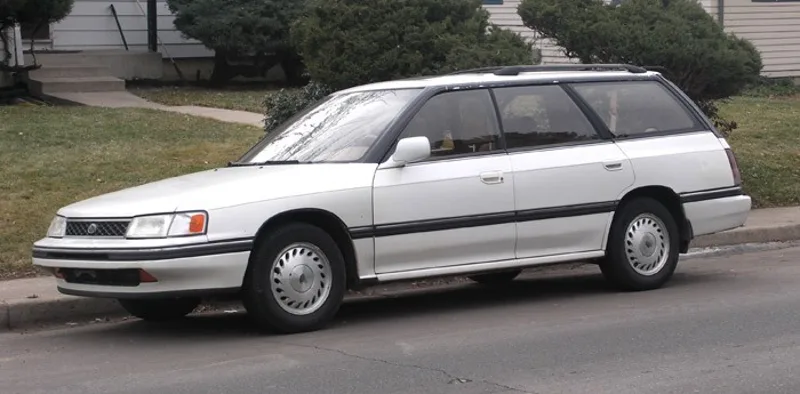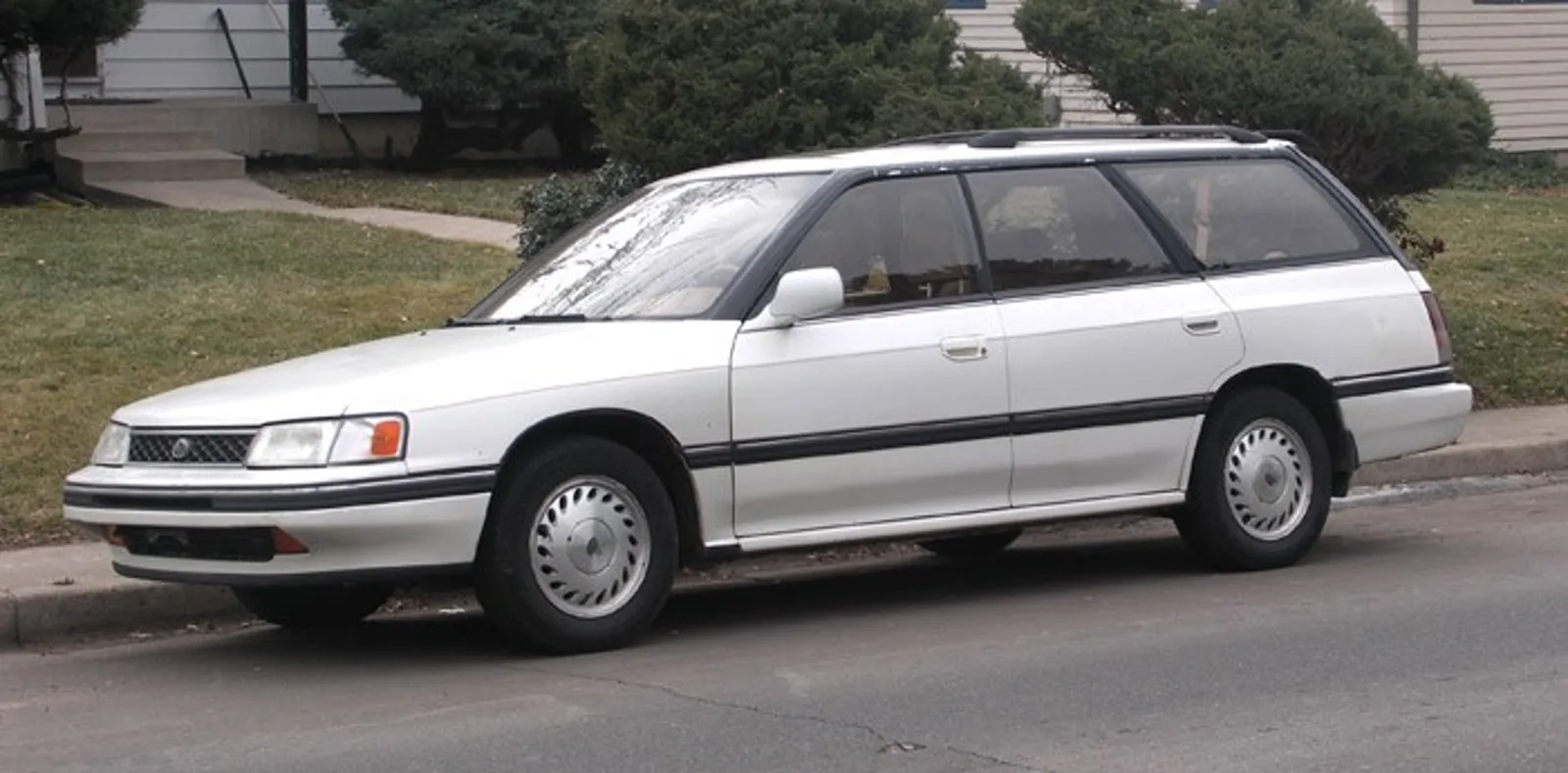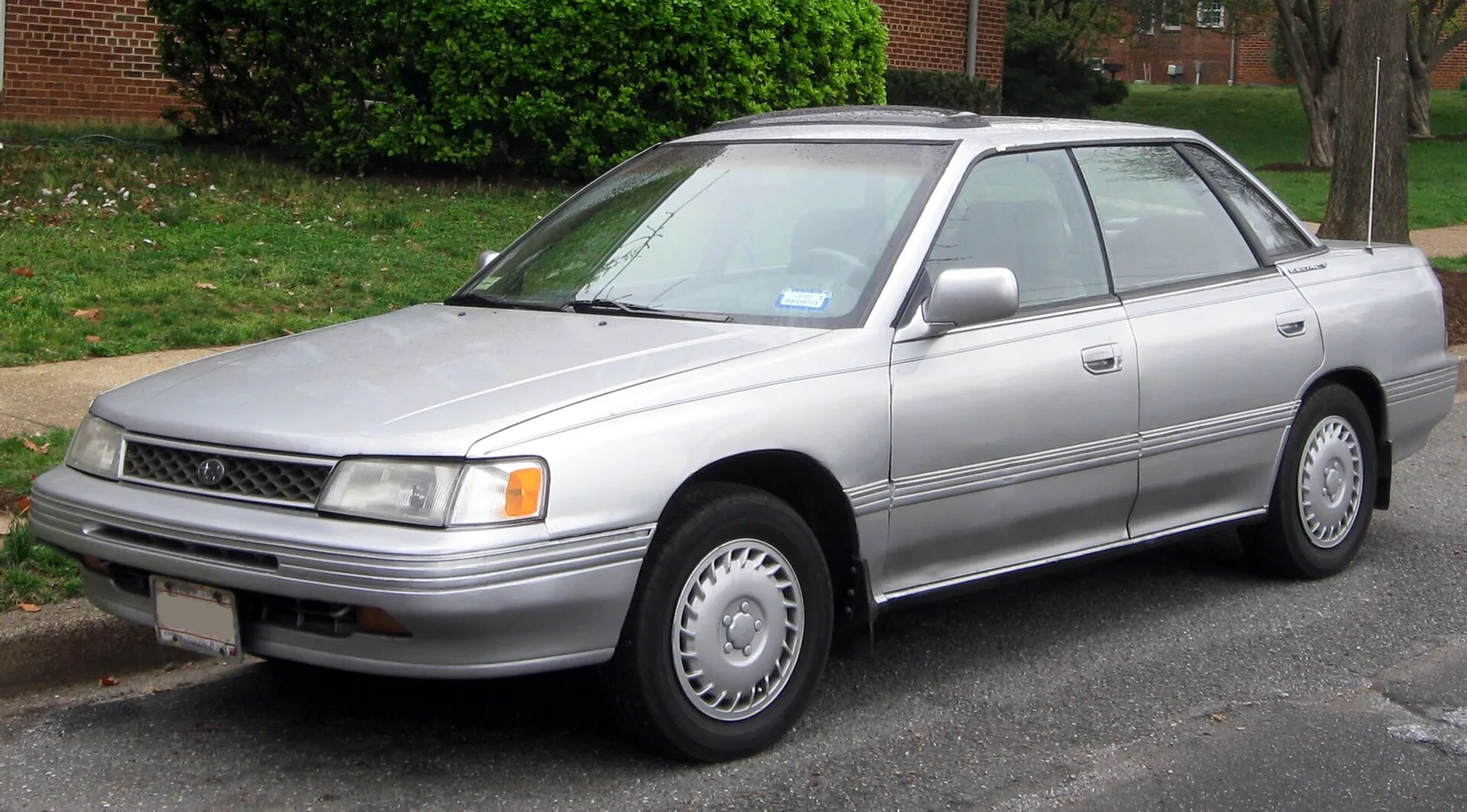
An all-new mid-size wagon and sedan from 1989 with standard all-wheel drive, a turbo RS that became a cult car and the limited-edition Type RA.
Launched worldwide in 1989 as an all-new model, the Legacy shipped with standard features that rivalled pricier cars. Its Japanese RS turbo and US EJ22T engines, along with standard AWD in many markets, helped reshape Subaru's image and gave the company a credible mid-size range.
The first-generation Subaru Legacy was a mid-size family car and wagon developed by Fuji Heavy Industries, launched worldwide in 1989. It was an all-new model, and it changed how the brand was seen. Its standard all-wheel drive, luxury equipment and turbocharged RS made it a car that buyers remembered long after the first sales.
What was the first-generation Subaru Legacy?
Fuji Heavy Industries developed the first-generation car as an all-new model. It was a clear break from earlier Subarus, which had built a reputation for quirky cars. The launch took place worldwide in 1989, and the Japanese cars went on sale on 1 February 1989.
The Legacy began with four-door sedan and five-door wagon bodystyles. The front-wheel-drive layout was joined by an optional full-time all-wheel-drive system, and several markets took only the four-wheel-drive version.
The car was introduced in the United States, the UK, Germany, the Benelux countries, Argentina, Chile, Japan, Australia and New Zealand. Australia sold it as the Liberty, because the Legacy name clashed with an existing Legacy in that market.
An all-new 1989 Legacy that brought standard all-wheel drive and a turbo RS to buyers who had expected quirky Subarus.
Why did the Legacy matter for Subaru?
Subaru had a reputation for quirky vehicles, at a time when Asian rivals were bringing more upscale and conventional models to market. The Legacy changed that picture and became a solid seller that reshaped the brand's reputation.
The Legacy reached the United States around the time Lexus and Infiniti arrived, five years behind Acura. Some observers read it as Subaru's attempt to join the emerging imported luxury car market. Its engine range stopped short of V6 and V8 units, which limited that ambition.
The Legacy was also more slippery in shape than earlier Subarus, with rounded edges and a tidier look. Its sedan beltline dipped from the windscreen to the front door glass and then rose towards the rear window, a treatment that Subaru reused on the SVX coupe in 1992.
What did the Legacy break from earlier Subarus?
The Legacy stopped carrying the spare tyre in the engine bay, behind the engine and above the transmission. That arrangement had started with the 1966 Subaru 1000, and it was also used on the Citroen GS. Moving the spare was one of several breaks with the brand's older habits.
Only one earlier Subaru had used five lug nuts per wheel, and the change suited the extra power and torque. It was slotted at the top of Subaru's range, above the Leone, the XT coupe, the Justy and the Rex and Sambar kei cars sold in Japan.
The Subaru star badge was redrawn with a more conventional and stylised look. Together with the new body, it marked a clear change of direction for the brand's image.
What came as standard on the Legacy?
The Legacy came with many features normally found on pricier cars. Standard kit included electric windows, central locking, fuel injection, climate control, alloy wheels, variable-effort steering and all-wheel disc brakes. The suspension used four independent corners with MacPherson struts front and rear.
Extra-cost items that kept the price in check were a four-channel anti-lock system from Bosch and air suspension with height control. Above 50 mph (80 km/h) the air suspension dropped the body, and it could lift the car for rough ground.
Power central locking was operated from the driver's door switch, which locked or unlocked every door at once. Individual doors had their own rocker switches, and the outside key unlocked only the driver's door on the first turn.
How did the Japanese line-up work?
The Japanese range opened with the RS, a turbo 2.0-litre DOHC rated 220 PS (162 kW) and offered solely with a five-speed manual. The VZ and TZ sedans and wagons used a 150 PS (110 kW) DOHC 2.0-litre engine, and a 102 PS (75 kW) SOHC 1.8-litre powered the Vi, Ti, Mi and Ei models.
The GT turbo, a 2.0-litre DOHC with 200 PS (147 kW), arrived in 1990 as a sedan and extended-roof wagon, with a four-speed computer-controlled automatic on the sedan. The slightly more affordable RS type R turbo sedan joined it, and the GT, RS and RS type R wore 15-inch alloys and 205/60R15 tyres.
The Ti type S arrived in 1991 with the 1.8-litre engine but the equipment of the VZ and TZ. The smaller engine allowed Japanese buyers to choose a well-equipped car while avoiding the higher annual road tax that applied to the 2.0-litre.
The all-wheel-drive system, called Active Torque Split in Japanese brochures, was standard on the GT and RS and optional on other trims. Lower trims such as the Mi and Ei offered a partial 4WD system with a manual gearbox, switched on from a button on the gear lever.
What were the RS type R and the Type RA?
The RS Type R and RA were rare limited-run cars. The Type R, released in February 1989, had firmer springs and dampers, a three-spoke MOMO steering wheel and Advan tyres. Subaru described it as a basic grade suitable as the starting point for a competition car.
STi, the firm's motorsport arm, readied four RS cars with more potent drivetrains, firmer suspension and a roll cage. In January 1989 they ran on the Arizona Test Center oval under FIA supervision, covering 100,000 kilometres over more than 18 days and setting a speed record.
STi used that experience to build its first production car, the Legacy RS Type RA, which went on sale in November 1989. It looked like a regular RS apart from front-door decals reading Handcrafted tuning by STi, but its engine borrowed forged pistons, strengthened connecting rods, a balanced crankshaft and an extra radiator fan.
The first series of the Type RA was limited to 100 units in Ceramic White. A second series from May 1990 added a close-ratio gearbox, and the third series, with the 1991 facelift, gained a 16-bit ECU, more mid-range torque and Feather White paint. Black Mica came in the final series, and total production was approximately 700 units.
How did the European and Australian ranges differ?
Trims for these markets were the GX, the LX or GL, and the basic DL, with all-wheel drive available on the top three. Europe and Britain paired the GL and DL with a 1.8-litre, while the GX used the 2.2-litre. Australia offered an SOHC 2.2-litre in the GX and LX and a DOHC 2.0-litre turbo in the RS.
In 1992 Australia added the Liberty RS turbo, available as a sedan or an extended-roof wagon, but only with a manual. The Japanese turbo also reached Europe and Australia, bringing its leather-wrapped MOMO wheel with it.
Special editions included the GX Gala in Europe and the GX Heritage in Australia, both with grey leather. The European DL was basic, with no tachometer, no power windows or central locking, no radio and no all-wheel drive. Its wheels were silver steel with a silver lug nut cover.
Wagons in Europe, Britain and Australia could be fitted with a dual-range manual gearbox that US and Japanese cars never received. In Germany the extended wagon was sold as the Super Station, while the standard wagon was the Legacy Station with a 1.8-litre engine only.
What did US buyers get?
The US Legacy began with three trims, the Standard, L and LS. In 1991 the Standard was dropped and the LSi was added as an LS with grey leather on the sedan. The Standard had been very spare, close to the bare-bones European DL and the Japanese Ei.
The 1991 L had a Value Plus option: anti-lock brakes, electric windows, central locking, climate control, cruise and an 80-watt stereo. The turbocharged Sport Sedan arrived in the US in 1991 with grey Alcantara upholstery.
The US engine line-up centred on a 2.2-litre SOHC making 135 bhp (101 kW; 137 PS). Its turbocharged EJ22T, rated at 163 bhp (122 kW; 165 PS), was sold only in the United States and Canada, with a manual or automatic on sedans and an automatic on wagons.
Trim levels were easy to spot by their door handles. Base cars had chrome handles, while uplevel cars had handles painted to match the body. The split held until 2010, when the fifth-generation platform ended it.
Some rural mail carriers in the US drove Legacys ordered in right-hand-drive form from 1990 to 1999. Those wagons differed little from the private-use L trim.
How did the automatic and all-wheel-drive systems work?
The computer-controlled 4-speed automatic, called the 4EAT, had a lock-up torque converter and no overdrive. A Manual button let the driver start in second gear on ice or snow, and the system split torque 50:50 front to rear when it was engaged.
The automatic shifted up to the next gear at 6500 rpm to protect the engine, and its computer shared information with the fuel injection, cruise control and anti-lock brake systems. The computers could also store possible faults to help a mechanic diagnose problems.
On all-wheel-drive cars the normal split was 90 percent front and 10 percent rear. A computer-controlled, multi-plate transfer clutch sent more torque to the rear when the front wheels lost grip, and the system moved torque in the same way under acceleration, uphill and braking.
A Power mode let the transmission hold gears longer at higher revs. In the US and Japan it was triggered by pressing the throttle quickly, while European and Australian cars had a console or gearshift switch. Manual models used a viscous limited-slip centre differential that gave a 50:50 split until the wheels began to slip.
What engines powered the Legacy?
The EJ series flat-four was an aluminium engine developed for the Legacy and the most powerful Subaru engine to date at its launch. It used five main crankshaft bearings for durability, and it could be built with single or double overhead camshafts.
The engine used distributorless ignition, a mass airflow sensor and an oxygen sensor in front of the catalytic converter. Its reverse-flow cooling sent water from the radiator into the cylinder heads first, with the thermostat placed next to the water pump to reduce thermal shock.
The Japanese DOHC 2.0-litre had a dual-stage intake manifold that opened extra air paths between 3,200 and 3,500 rpm. Its non-turbo output was 150 PS (110 kW), with the turbo RS at 220 PS (162 kW).
The DOHC 2.0-litre turbo EJ20G, rated 162 kW (220 PS; 217 hp), became a prized engine among Subaru enthusiasts. It later powered the Impreza WRX from 1993. The New Zealand version was rated 164 kW (223 PS) at 6000 rpm.
How did safety rules shape the US car?
From 1 April 1989, US rules required passive front restraints on new cars, which pushed manufacturers towards airbags. Subaru offered a driver airbag as an option for 1992 models, and made it standard on the 1993 and 1994 cars.
A steel safety cage enclosed the cabin, while the engine and boot areas were designed to crumple. Steel beams ran through the front and rear doors to protect against side impacts, and North American bumpers used a foam insert for extra rigidity.
On AWD cars with ABS, the anti-lock computer talked to the transmission, which sent power to all wheels during emergency braking. Every turbo car came with ABS and rear ventilated discs, with Australia the exception, since there ABS was an extra on the RS.
Canadian cars were not fitted with automatic seat belts, after objections from the Canadian government. European wagons came with rear headrests and three-point belts as standard, while headrests were optional on upper trims elsewhere.
What changed in the 1992 facelift and later?
The 1992 model year brought a light refresh of the nose, covering the grille, the wings, the bonnet and the lamps. The rear trim changed from Subaru to Legacy, and the star logo left the back of the car.
In Japan the GT type S2 added BBS alloy wheels and a rear trunk spoiler as standard, and the Brighton 220 took over the TZ slot with much of the VZ equipment. A 200-unit run of Touring Wagon STi cars followed in August 1992, with a Nardi steering wheel and higher turbo boost.
Turn signal and parking light positions also moved between markets. US parking lights sat in corner lenses beside the headlights until 1992, when they joined the front turn signals, while European, Australian and Japanese parking lights were inside the headlights.
The refreshed car reached American, Japanese and Australian showrooms for 1992. The second generation followed in October 1993 in Japan and Australia, and Isuzu badged the same car as the Aska for 1992.
How did the Legacy perform in motorsport?
Before the Legacy reached the US, three Japanese-spec RS turbo sedans ran at the FIA test track in Phoenix, Arizona. The cars held a 223.4 km/h (138.8 mph) average over a test that ran close to 19 days, covering 100,000 kilometres and stopping only for fuel and routine service.
In the 1990 Alcan Winter Rally, two AWD Legacy wagons finished first and second over a loop of 10,100 km (6,300 miles) from Seattle up to the Arctic Circle and back. Another wagon won the rally again in 1992.
At the 1990 Safari Rally, two Legacys finished, and Patrik Njiru won the Group N class. Only 10 of the 58 starters crossed the line. In the 1990 Acropolis Rally, a Group N Legacy driven by Ian Duncan finished eighth overall.
How was the Legacy marketed?
Its US rivals were the Accord, the Camry, the Stanza and the 626. All-wheel drive was its main point of difference, and it set the Legacy apart from its rivals on the showroom floor.
Toyota had offered AWD on a Camry in limited US markets, but dropped it after weak sales. Mitsubishi's Galant VR-4 was the only other Japanese sedan of similar size with AWD, while Subaru offered it as an option across its range.
In Japan the car was the Legacy Touring Sedan, and its wagon was the Legacy Touring Wagon rather than a station wagon. Rivals in Japan included the Nissan Presea, Toyota Carina ED and Honda Vigor, while the RS turbo's rivals were the Carina G Limited and the Bluebird SSS-R.
Bruce Willis appeared in a Japanese campaign with print and TV advertising. He returned for a later commercial to mark the 3 millionth Legacy in 2005, which was when the fourth generation was on sale.
What are the Subaru Legacy first-generation specifications?
The first-generation Legacy was sold as a sedan and wagon with a range of 1.8, 2.0 and 2.2-litre flat-four engines, and AWD could be fitted to most models. The table gathers the main figures across the markets covered here.
| Specification | Detail |
|---|---|
| Launch | Worldwide in 1989; Japan on 1 February 1989 |
| Bodystyles | Four-door sedan; five-door wagon with extended roof in Japan |
| Drive | Front-wheel drive with optional full-time AWD; 4WD only in many markets |
| Suspension | Four independent corners; MacPherson struts front and rear |
| Japanese top engine | RS turbo: 2.0-litre DOHC, 220 PS (162 kW), five-speed manual |
| Japanese other engines | 150 PS DOHC 2.0-litre; 102 PS SOHC 1.8-litre |
| US top engine | 163 bhp (122 kW; 165 PS) EJ22T turbo |
| US base engine | 135 bhp (101 kW; 137 PS) SOHC 2.2-litre |
| Automatic | Computer-controlled 4-speed 4EAT with lock-up converter |
| Brakes | All-wheel disc; optional four-channel ABS from Bosch |
| Limited edition | Type RA by STi, approximately 700 units |
| Facelift | 1992 model year |
| Second generation | October 1993 in Japan and Australia |