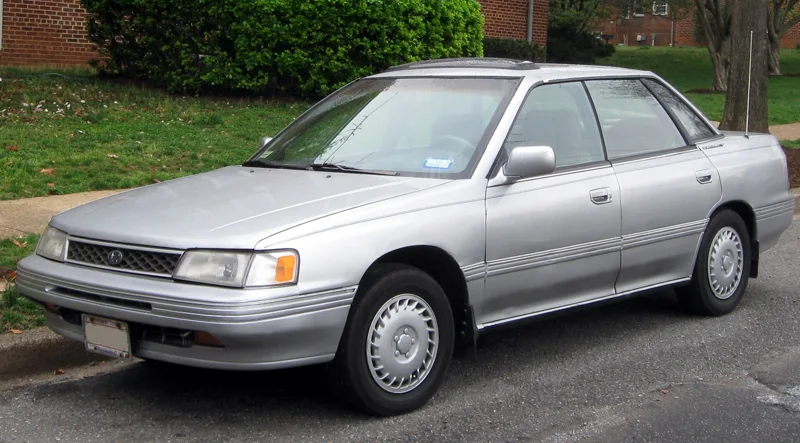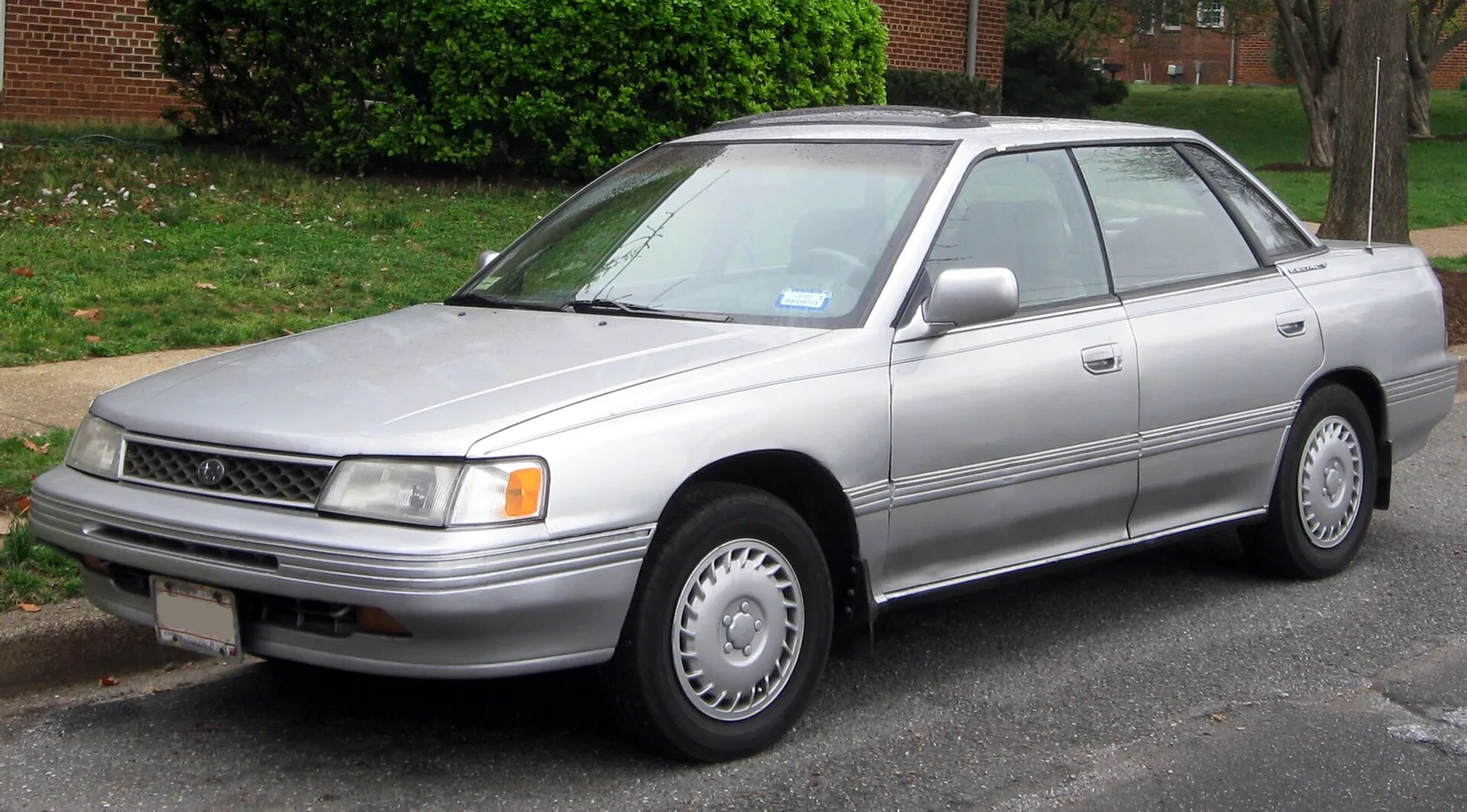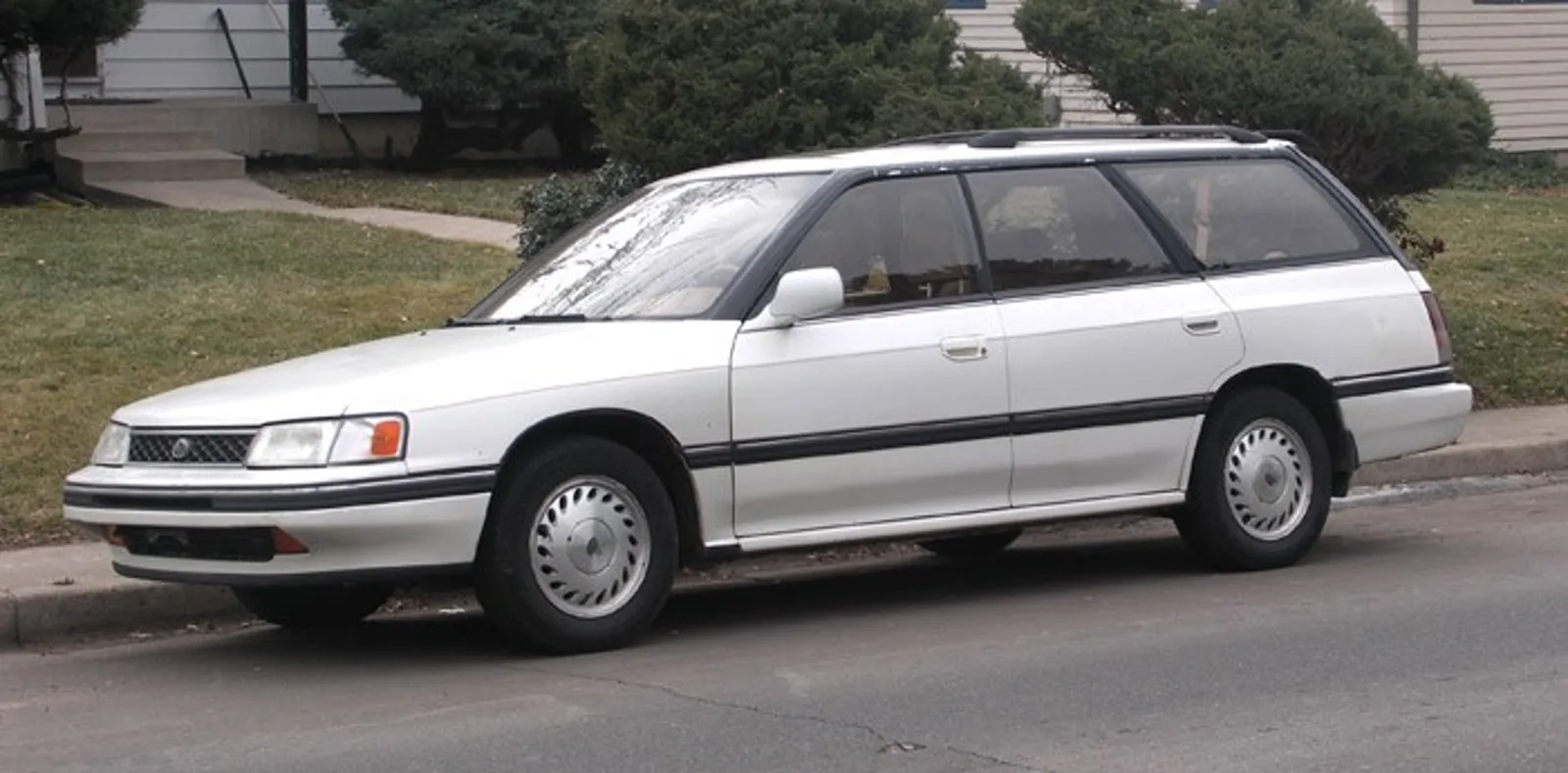
Subaru's 1989 Legacy used all-wheel drive and a turbo RS to shake off its quirky image, while Toyota's wide-body Camry moved into the mid-size class in 1991.
The Subaru Legacy arrived worldwide in 1989 with all-wheel drive, standard features and a 220 PS turbo RS in Japan. The Toyota Camry XV10 was introduced in North America on 9 September 1991, moved the Camry into the mid-size class and offered a 185 hp V6 in its early years.
The first Subaru Legacy and the Toyota Camry XV10 were both mid-size family cars of the early 1990s, and each marked a turning point for its maker. The Legacy arrived worldwide in 1989 and changed Subaru's quirky image, while the wide-body Camry moved into the mid-size class in 1991. Subaru could offer all-wheel drive and a turbo RS, and Toyota offered a smoother V6 and a ride tuned for American roads.
How did the Legacy change Subaru's image?
Subaru had earned a reputation for quirky vehicles while other Asian makers were offering more upmarket and conventional cars. The Legacy was different, and it became a solid seller that reshaped the brand's image. It appeared in the same period as the US launch of Lexus and Infiniti, and some saw it as Subaru's attempt to join the emerging imported luxury market, though the company still had no V6 or V8. It was an all-new model and a notable departure from earlier Subarus, and in Australia it was sold as the Liberty to avoid a clash with an existing Legacy name.
The Legacy broke with several Subaru traditions. It no longer carried its spare tyre in the engine bay, a habit that began with the 1966 Subaru 1000, and it was only the second Subaru to use five lug nuts instead of four to cope with extra power and torque. It was slotted at the top of Subaru's range, above the Leone, the XT coupe and the Justy.
An all-wheel-drive Subaru that set out to shake off its quirky image, against a Camry drawn for American highways.
What did the Legacy offer as standard?
The car was built with features normally found on more expensive vehicles. Power windows, central locking, fuel injection and air conditioning were standard, along with power-assisted rack-and-pinion steering, alloy wheels, MacPherson strut suspension at all four corners, anti-sway bars and all-wheel disc brakes. Four-channel ABS, licensed from Bosch, and air suspension height control were available as options.
The body was a four-door sedan or five-door wagon with front-wheel drive and an optional full-time all-wheel drive system. In many markets only four-wheel-drive models were sold, or only a very limited front-wheel-drive line-up. The body had a distinctive beltline that dropped from the windscreen and rose again at the rear, a treatment that returned on the SVX in 1992.
What were the Japanese Legacy trims?
The Japanese range opened on February 1, 1989 with the RS, a 220 PS (162 kW) turbocharged DOHC 2.0 L offered only with a five-speed manual. The VZ and TZ used a 150 PS (110 kW) DOHC 2.0 L, and a 102 PS (75 kW) SOHC 1.8 L powered the Vi, Ti, Mi and Ei models. The VZ was the top level, and it was offered with blue, grey or a special pearl white and dark red combination.
In 1990 the turbocharged GT arrived with 200 PS (147 kW) and a four-speed computer-controlled automatic, and the Ti type S of 1991 gave buyers the higher equipment of the VZ and TZ with the 1.8 engine. The reason was tax. The 2.0 L carried a higher annual road tax in Japan, so the smaller engine let buyers avoid it while keeping the equipment.
The 1990 Japanese updates were modest but telling. The glass moonroof became available on the GT and VZ, and the interior colours were cut to grey across the line-up, with velour, moquette or tricot cloth depending on trim. Leather was an option on the GT alone, and the RS and GT carried a black leather MOMO steering wheel with a cruise control switch in its hub.
The Touring Wagon, with its extended roof, was the only wagon offered in Japan. The EP-S electronic air suspension was available only on the all-wheel-drive VZ wagon with an automatic transmission.
How did the Legacy race and set records?
Subaru Technica International, known as STi, prepared four Legacy RS cars for a record attempt. They had stronger drivetrains, stiffer suspension, a deep front air dam, a roll cage and a quick-fill fuel tank. In January 1989 they ran at the Arizona Test Center, an oval in the Phoenix desert, under FIA supervision. Over more than 18 days they covered 100,000 kilometres and set a speed record of 138.78 mph.
STi then built the Legacy RS Type RA, launched in November 1989. It looked like a standard RS apart from badges, but it had forged pistons, strengthened connecting rods, a balanced crankshaft and flywheel, and retuned suspension. The first series was limited to 100 cars in Ceramic White, and roughly 700 Type RAs were built in total.
How was the Camry XV10 developed?
The XV10 began as an angular narrow sedan that Toyota's Japanese product planners had imagined, a car that resembled the V20 it was set to replace. American executives in Torrance, California argued for a completely different car. They pointed to wider American roads, larger landscapes and longer highway journeys, and they wanted a smooth, quiet ride and a wide cabin.
The Japanese executives reluctantly agreed. Osamu Shikado drew the new design within a few weeks, and it was curved, with a roofline and flush windows that echoed the Lexus LS400. The development drew on the ES300 for insulation, fluid-filled engine mounts and hydraulic fan technology, and on the LS400 for layered asphalt-resin composites and steel that quieted the cabin.
The result was a car that Toyota placed in the mid-size class, which the XV10 is generally regarded as the first Camry to enter. At the same time the Corolla moved down to the compact class, and the Camry took its place in the market Toyota called world-sized.
Why did Toyota keep two Camrys in Japan?
Japan's tax rules shaped the smaller V30. To meet the number five compact car bracket, the V30 had to stay within a 1,700 mm width and a 4,700 mm length, and that narrower model would not sell enough in the United States, as the earlier V20 had shown. The wide-body XV10 was developed from 1988, with its design frozen in late 1988, and design patents followed in 1989.
Toyota chose the Scepter name for the Japanese version, a reference to the Camry and Crown naming tradition. The name echoed a ruler's ornamental staff, which is why the car carried a regal name in its home market.
What engines did the Camry XV10 offer?
The base car used a 2.2 L 5S-FE four rated at 130 hp (97 kW), with 145 lb-ft (197 N m) of torque. The 3.0 L 3VZ-FE V6 produced 185 hp (138 kW) and 195 lb-ft (264 N m). In 1994 North American cars received an all-aluminium 1MZ-FE V6 with 188 hp (140 kW) and 203 lb-ft (275 N m), while other markets kept the 3VZ-FE.
The SE carried a standard V6 along with alloy wheels, a rear spoiler and the sports suspension from the Lexus ES 300. The XLE had leather, an electric sunroof and a power adjustable driver seat, and wagons could be ordered with seven seats from 1992.
What did North American buyers get?
The North American line-up for 1992 was the DX and LE, joined by an XLE luxury trim and the SE sport trim, which arrived in March 1992. The SE differed from the LE and XLE with a standard V6, alloy wheels, a rear spoiler and black mirrors. Automatic became the only transmission on all but the base and sport models, where a manual had previously been widely available.
The Camry was on the Car and Driver Ten Best list for 1992 and 1993. A facelift for the 1995 model year brought a revised front fascia, new turn signals and headlamps, and body-coloured plastic between the tail lamps. In 1996 the 2.2 L engine was detuned slightly to 125 hp (93 kW) to meet tighter emissions rules.
How did the two cars fare on safety?
Crash testing for the Camry of this period is the clearest safety record in this pairing. NHTSA gave the 1994 to 1996 Camry four stars for the driver and three for the passenger. The IIHS rated the same car acceptable overall in frontal offset, with three of six categories acceptable and three good.
A 2008 review by Monash University's accident research centre rated the 1993 to 1997 Scepter-based Camrys and Holden Apollos as average for occupant protection.
How did the Camry sell in Japan and beyond?
In Japan the XV10 became the Toyota Scepter, sold alongside the smaller V30 Camry at Toyota Corolla Store dealers. The Scepter was first imported as a station wagon in September 1992, followed by the Japanese-built sedan in November 1992, and the coupe was imported from the United States in November 1993, and it stimulated modest sales. The large wagon could take seven passengers, and all three bodies were available with the 2.2 and 3.0 engines.
Australia built the car from 1993 to 1997 and sold it under three names: the Camry, the Holden Apollo, which came from a model-sharing arrangement between GM Holden and Toyota, and the Vienta for six-cylinder versions from 1995. Exports from Australia to Thailand began in August 1993.
Specifications side by side
| Feature | Subaru Legacy (first generation) | Toyota Camry (XV10) |
|---|---|---|
| Introduced | February 1, 1989 in Japan; worldwide 1989 | 9 September 1991 in North America |
| Body styles | Four-door sedan and five-door wagon | Sedan, wagon and a coupe from 1994 |
| Drive | Front-wheel drive; optional full-time all-wheel drive | Front-wheel drive |
| Four-cylinder | 2.0 L DOHC turbo, 220 PS (162 kW) in the RS | 2.2 L 5S-FE, 130 hp (97 kW) |
| V6 | Not offered | 3.0 L 3VZ-FE, 185 hp (138 kW); 1MZ-FE from 1994 |
| Suspension | Four-wheel independent MacPherson struts | Not listed |
| Brakes | All-wheel disc brakes; four-channel ABS optional | Not listed |
| Limited edition | Type RA, about 700 built | Not listed |
| Speed record | 138.78 mph (STi, Arizona oval) | Not listed |
| Crash result | Not listed | NHTSA four stars driver, three passenger (1994 to 1996) |
| Plant | Not listed | Georgetown, Kentucky (first US car 3 September 1991) |
Which family sedan suits which buyer?
The Legacy suits a buyer who wanted a family car with all-wheel drive, standard equipment that was once reserved for luxury cars, and a turbo RS for enthusiasts. Its wagon body and the Type RA's motorsport history gave it a character that Subaru's earlier models had not offered.
The Camry XV10 suits a buyer who wanted a smooth, quiet, mid-size family car with a choice of four-cylinder or V6 engines, an XLE with leather and a seven-seat wagon. Its styling reflected the American market that Toyota's North American executives had argued for.
On the evidence here, neither car takes a clear lead, because they were aimed at different tastes. The Legacy's appeal was its all-wheel drive and its performance, while the Camry's was its refinement and its V6 options. A buyer who needs traction in bad weather will look at the Legacy, while one who wants a quiet, smooth ride will look at the Camry.