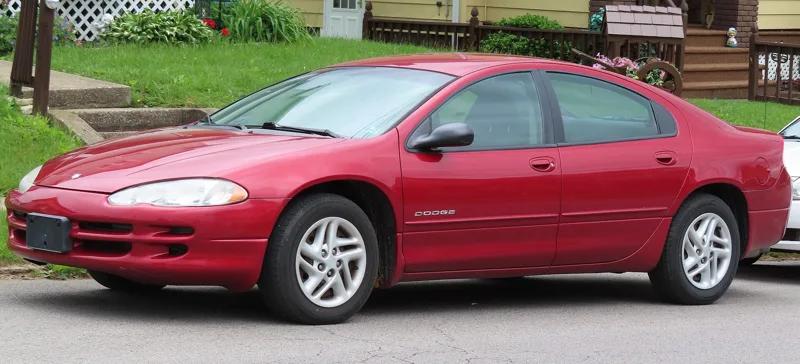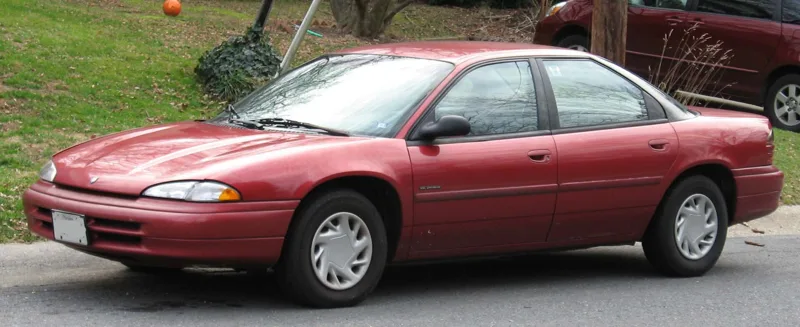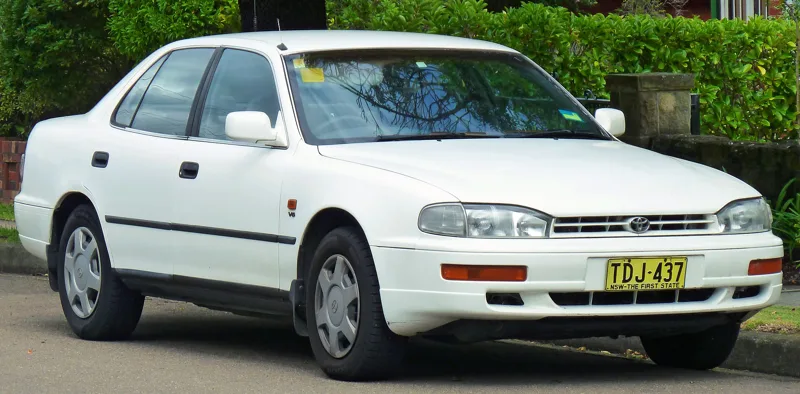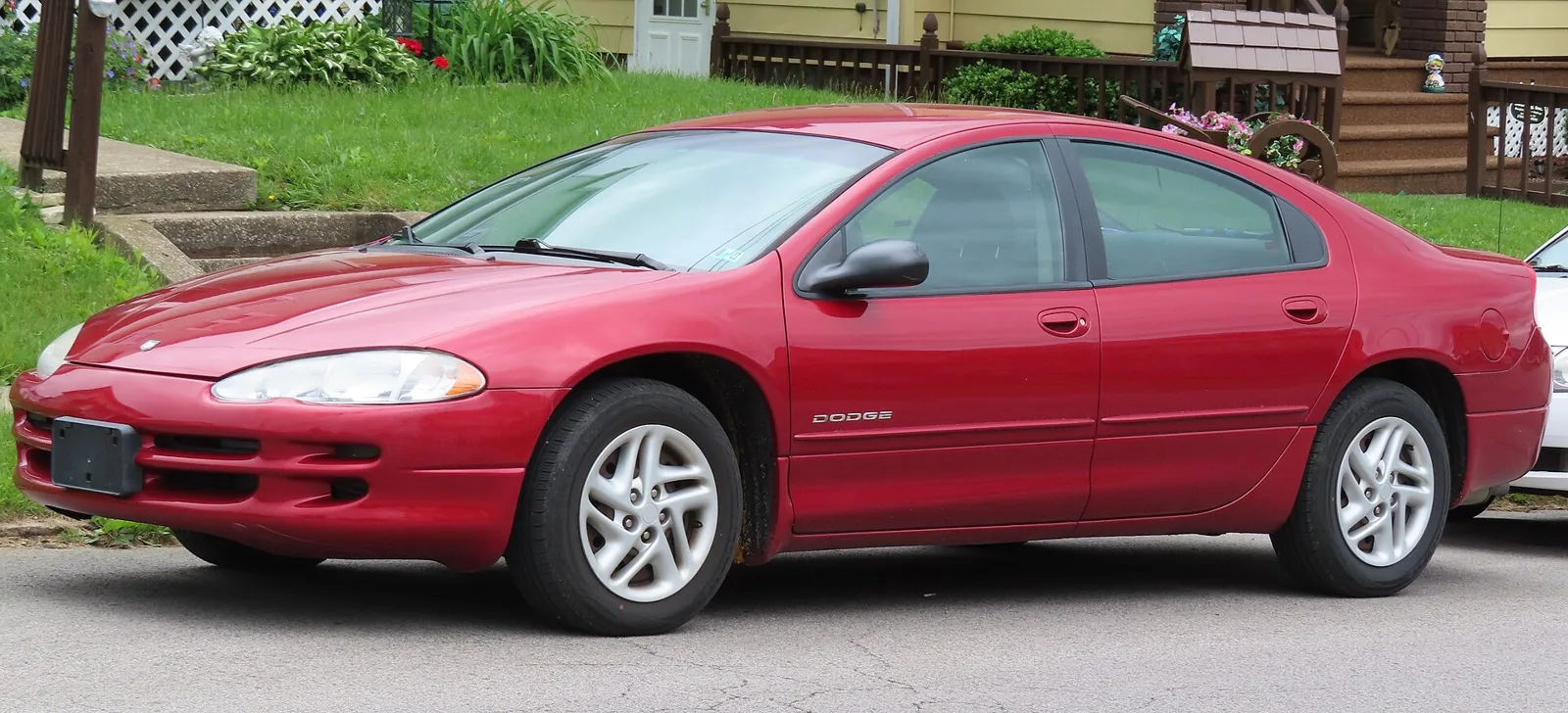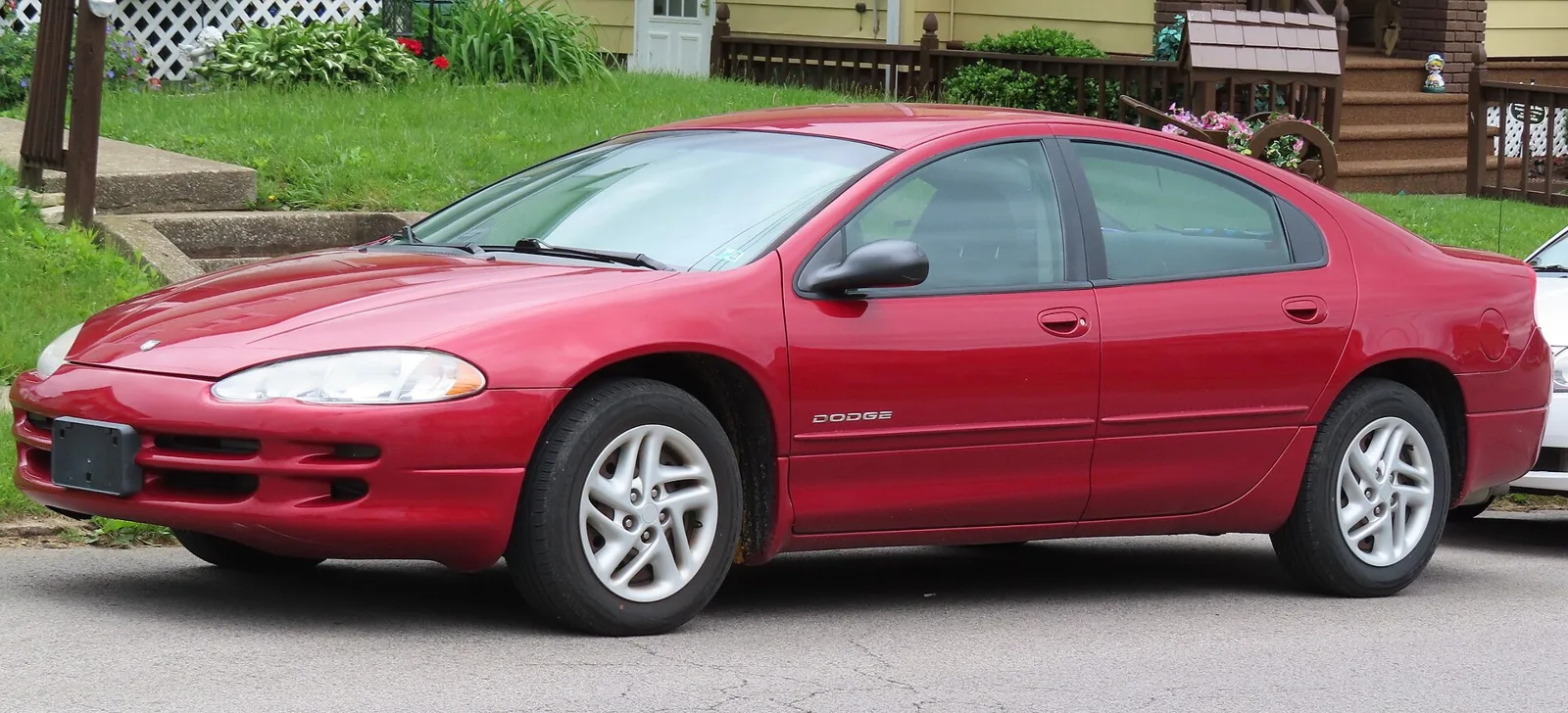
Chrysler's full-size Intrepid and Toyota's XV10 Camry, the car that broke Toyota into the mid-size market, shared the early-1990s showroom with very different designs.
The Toyota Camry XV10 reached North America in 1991, before the Dodge Intrepid was shown at the 1992 Detroit show for 1993. The Camry was a curved, Lexus-influenced mid-size car, while the Intrepid was a full-size cab-forward sedan with airbags on every car.
The Dodge Intrepid and the Toyota Camry XV10 were both sold in North America in the early 1990s, and both were built to win over buyers who wanted more room and a smoother ride. The Intrepid was a full-size front-drive sedan on Chrysler's cab-forward LH platform. The XV10 was the Camry that broke Toyota into the mid-size market, with a curved shape that owed a lot to the Lexus LS400.
Which arrived first?
The Camry came first. The XV10 reached North America in September 1991, and it was on sale as a 1992 model. The Intrepid was shown at the 1992 Detroit show as one of three LH models for 1993, so the Camry had a year's head start.
The Camry therefore had about a year on the Intrepid in the showroom, and it arrived with a strong home record in Japan and the United States. The Intrepid's first generation ran from 1993 to 1997, a period that overlapped the XV10's final years.
The Intrepid replaced the Dodge Monaco as Dodge's largest passenger car in the United States. In Mexico it replaced the Dynasty, which had been sold there under the Chrysler brand.
A cab-forward full-size Dodge against a curved Toyota mid-size, each built around a different idea of the family car.
Where were the two cars built?
Intrepids were built at American Motors' Brampton Assembly in Ontario, which had been set up to build the Eagle Premier, and at Chrysler's plant in Newark, Delaware. Their Canadian versions were badged as Chryslers.
The XV10 was made at Georgetown, Kentucky, where the first US-built car rolled off the line on 3 September 1991. The last one came in June 1996. Toyota's Japanese cars and Australian cars were built to their own rules and markets.
Why did the Camry become a mid-size car?
The Japanese V30 Camry had to keep to a narrow body to fit Japan's compact tax bracket, with a width of 1,700 mm (66.9 in) and a length of 4,700 mm (185.0 in). In the United States that narrow car would not have sold enough, which had been the lesson of the earlier V20.
Toyota therefore developed a wide-body Camry alongside it, the XV10, from 1988, with its final design frozen in late 1988. Patents for the sedan were filed in Japan on 28 February 1989. The XV10 is regarded as the first Camry to break into the mid-size market, which Toyota billed as world-sized.
At the same time the Corolla moved down into the compact class, while the Camry moved up. The XV10 was the start of a larger, more comfortable family car that Toyota sold under the Scepter name in Japan.
How did the Camry's design take shape?
The first concept for the XV10 was an angular sedan that would have looked much like the V20 it replaced. That idea was dropped after American executives argued that US roads and driving distances needed a smoother, quieter and roomier car.
The Torrance-based team argued that Americans drove longer distances on highways, so a smooth, quiet ride and a wide cabin mattered most. Osamu Shikado then penned a curved design, which borrowed the roofline and the flush, curved windows of the Lexus LS400.
The Intrepid had its own shape language. Its cab-forward layout pushed the wheels to the corners, with a long, low windshield and short overhangs, which gave it a larger cabin than most of its rivals. The Camry's answer was a smooth, rounded body with flush windows, aimed at the same comfort brief.
The curved windows and roofline also helped reduce wind noise. The result was a car with no hard angles, which some inside Toyota thought was too much car for the mid-size segment.
How much did the Lexus engineering shape the Camry?
The XV10 was developed after the ES300, and it shared the ES300's firewall insulation, fluid-filled engine sub-mounts and hydraulic fan technology. Layers of asphalt resin composite and steel were carried over from the LS400, which helped keep the cabin quiet.
The Japanese variant was several inches narrower than the North American car, so its cradle had to be redesigned and widened. Engineers also worked to close the gaps between the curved hood and the curved headlamp housings, which the LS400's rectangular lamps had avoided.
Some at Toyota argued the Camry should have been developed more closely with the Lexus brand, to bring buyers up into the luxury nameplate. Others felt the level of equipment was too high for the mid-size segment, and that debate was part of the car's identity.
What engines did each car offer?
The XV10's base engine was a 2.2-litre 5S-FE four rated 97 kW (130 hp) and 197 N-m (145 lb-ft). The 3.0-litre 3VZ-FE V6 offered 138 kW (185 hp) and 264 N-m (195 lb-ft), and from 1994 North American cars used an all-new aluminium 1MZ-FE V6 at 140 kW (188 hp).
The Intrepid's standard engine was a 3.3-litre pushrod V6, and a 3.5-litre SOHC V6 with four valves per cylinder joined the range in 1990. That engine was the optional choice in the first generation, rated at 214 hp.
Transmission choices differed too. The Intrepid came with a four-speed automatic, and Autostick, a manual shift function, arrived for 1996. In North America the Camry's automatic became standard on all but the base and sport models for 1992.
Specifications side by side
| Specification | Dodge Intrepid (first generation) | Toyota Camry (XV10) |
|---|---|---|
| Model years | 1993 to 1997 | 1991 to 1996 in Japan and North America; 1993 to 1997 in Australia |
| Size class | Full-size sedan | Mid-size sedan and wagon |
| Layout | Front-wheel drive, LH cab-forward platform | Front-wheel drive, Camry platform with ES300-derived insulation and mounts |
| Base engine | 3.3-litre OHV V6 | 2.2-litre 5S-FE four, 97 kW (130 hp) |
| Larger engine | 3.5-litre SOHC V6, 214 hp | 3.0-litre 3VZ-FE V6, 138 kW (185 hp); 1MZ-FE V6 from 1994, 140 kW (188 hp) |
| Transmission | Four-speed automatic; Autostick from 1996 | Automatic standard on all but base and sport models from 1992 |
| Body styles | Four-door sedan | Sedan and wagon; seven-seat wagon from March 1992 production |
| Airbags | Driver and front passenger on every car | Driver airbag from 1991; dual front airbags standard with the 1MZ-FE from 1994 |
| Trims | Base and ES | DX, LE, XLE and SE |
| Build location | Brampton, Ontario, and Newark, Delaware | Georgetown, Kentucky (first US-built car 3 September 1991) |
| Name in Japan | Not given | Toyota Scepter |
| Crash results | Not given | NHTSA four stars driver, three passenger; IIHS overall acceptable (1994 to 1996) |
| Awards | Car and Driver Ten Best, 1993 and 1994; Consumer Guide Best Buy | Car and Driver Ten Best, 1992 and 1993 |
Which trims did each car offer?
The Intrepid came in base and ES trim. The ES added four-wheel disc brakes, 16-inch wheels with better tyres and touring suspension damping, and it was the sportier of the two.
The Camry's North American range ran through DX, LE, XLE and SE. The SE arrived in March 1992 with a standard V6, alloy wheels, a rear spoiler, black mirrors and the sports suspension from the Lexus ES300. The XLE carried leather upholstery, an electric sunroof and a power driver's seat.
The Camry station wagon was offered as a seven-seater from March 1992 production, a useful family option that the Intrepid never matched.
How did the Camry's name travel?
In Japan the XV10 was the Toyota Scepter, a name chosen in the Camry and Crown naming tradition for a symbolic ornamental staff of royal regalia. The Scepter wagon arrived in Japan in September 1992, followed by the sedan in November 1992 and the coupe from November 1993.
In Australia the Camry was sold under three names. The Holden Apollo was a version sold under a model-sharing arrangement between GM Holden and Toyota. From 1995 six-cylinder Camrys were also badged as the Toyota Vienta.
Australian production was also exported. Exports to Thailand began in August 1993, and Middle Eastern models began in February 1996. The Scepters in Japan were phased out in 1996, starting with the coupe.
How did the two cars fare on safety?
NHTSA gave the 1994 to 1996 Camry four stars for the driver and three for the passenger. The IIHS scored the same car acceptable overall, with three categories rated acceptable and three rated good.
A 2008 study by Monash University in Australia rated 1993 to 1997 Scepter-based Camrys and Holden Apollos as providing an average level of occupant protection. The Camry's ratings give the safety comparison real numbers.
The first Intrepid has no crash ratings to set beside those, so the safety comparison rests on equipment. Every Intrepid had driver and front passenger airbags, which was rare at the time, and anti-lock brakes were optional on both the base and ES cars.
How did the cars sell and get reviewed?
The Camry's first North American generation was on Car and Driver's Ten Best list for 1992 and 1993. The Intrepid and the Concorde were on the same list for 1993 and 1994, and both Intrepid generations won Consumer Guide's Best Buy award.
Intrepid sales began to slump in the second generation, when cost-cutting removed features and the cab-forward design became common. The first generation's changes were modest and spread over five years.
What did Chrysler try with the Intrepid?
In the late 1990s Chrysler used the Intrepid as a research platform for a diesel-electric hybrid, in the ESX, ESX II and ESX III cars. The ESX aimed at 80 mpg-US and reached an estimated 55 mpg-US, at an estimated cost of $80,000.
The ESX II and ESX III went after cheaper, lighter builds. The ESX II used an aluminium frame and carbon fibre, costing about $37,000, while the ESX III used thermoplastic and cost roughly $30,000 in total. Toyota's Camry had nothing comparable on the research side.
How did the Camry change through its run?
A coupe joined the Camry in 1993 for the 1994 model year, with styling close to the four-door car. It stimulated modest sales and was dropped for the next generation, when the Camry Solara took its place.
In 1994 the aluminium 1MZ-FE V6 arrived in North America, and dual front airbags became standard with it, which had not been the case for the 1991 to 1993 cars. A facelift in the third quarter of 1994 for the 1995 model year brought a revised front fascia, new turn signals, reshaped headlamps and a rear fascia with body-coloured plastic between the tail lamps.
In 1996 the 2.2-litre engine was detuned slightly to 93 kW (125 hp) to meet stricter emissions rules. The Camry's design patents for that facelift had been filed in May 1993 in Japan.
What changed on the Intrepid during its first generation?
The Intrepid's first generation was modest in its changes, but each year brought something. A variable-assist power steering rack replaced the original in 1994, with a firmer feel at speed, and the touring suspension became standard on the base car that year.
In 1995 anti-lock brakes became standard on the ES, and the Dodge Ram logo was added to the car's exterior that year. The Intrepid's exterior treatment used a hoodline and chrome-accented daytime running lights with body-coloured accents.
The second generation then arrived for 1998, designed by Robert Boniface, after 31 months from design freeze. Its body shells were stiffer and gained double-shear suspension mounts and integrated side impact protection, and every engine in the line was an all-aluminium unit.
Which buyer suits each car?
A buyer who wanted a large front-drive sedan with airbags on every car, a choice of V6 engines and a cab-forward shape would look at the Intrepid. That buyer also got Dodge's brand campaign, with its distinct styling.
A buyer who wanted a quiet, smooth mid-size car with a seven-seat wagon option and a Lexus-influenced cabin would look at the Camry. The XV10 offered the more detailed safety record, and its Scepter name in Japan showed how far the car travelled.
The Camry was the first of the two to reach showrooms. The Intrepid answered with a more daring shape. Neither car settles the comparison alone, and the buyer's priorities decide it.