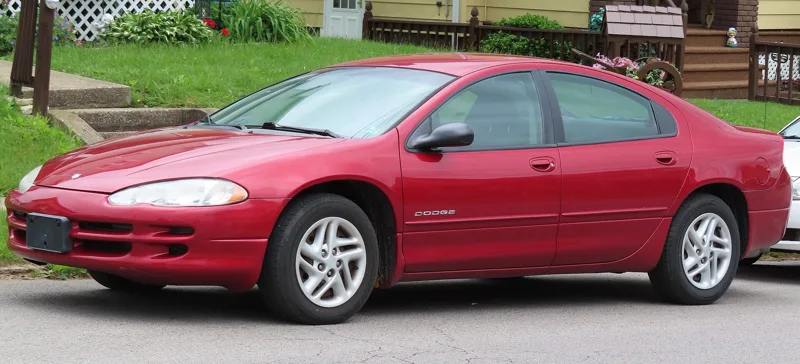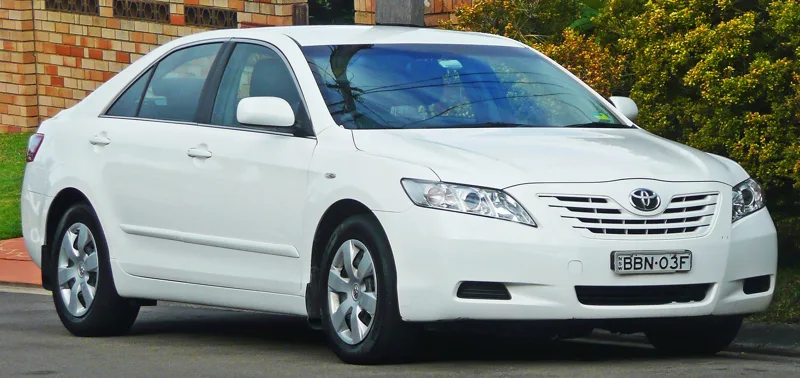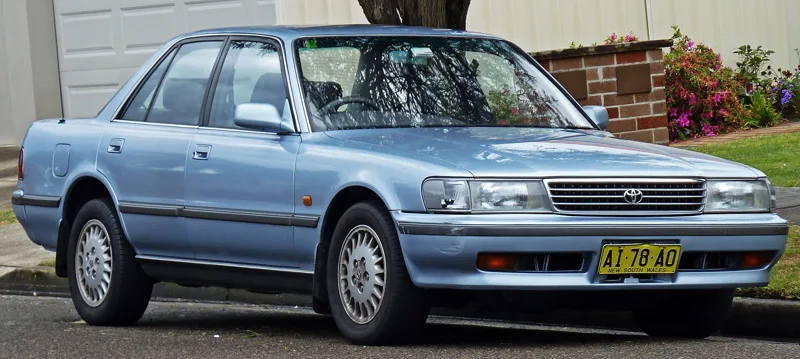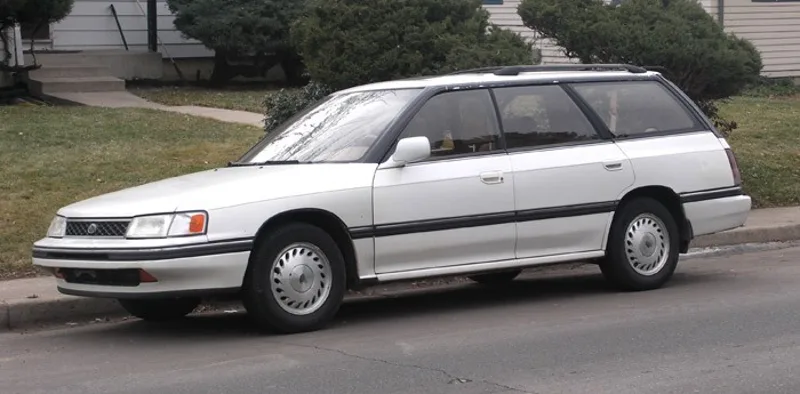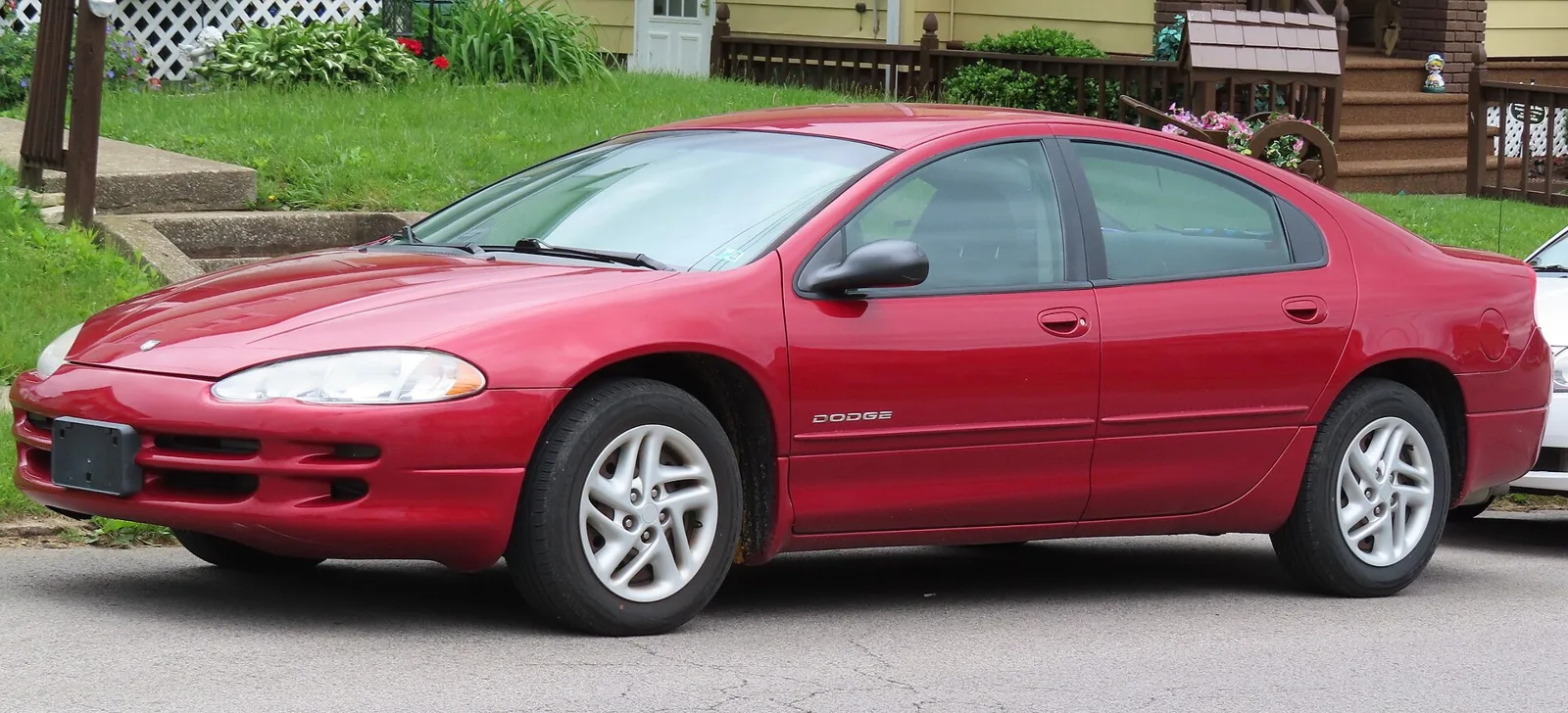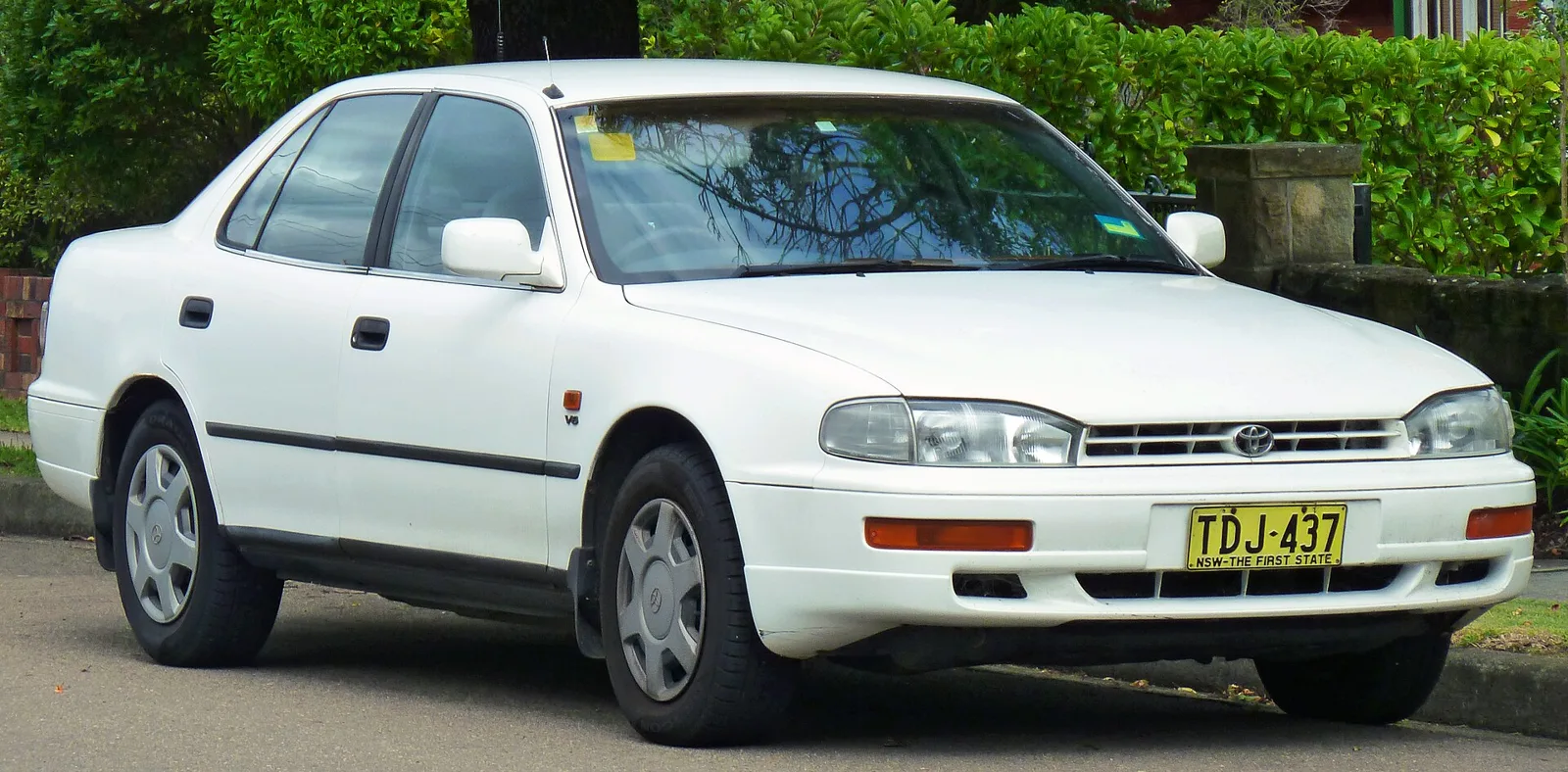
Built from 1991 to 1996 with a curved, Lexus-influenced shape, a 2.2-litre four and 3.0-litre V6, and a twin sold in Australia as the Holden Apollo.
Sold from the early 1990s, the XV10 gave Toyota a wider, curvier Camry with a 2.2-litre four, a 3.0-litre V6, a Japanese Scepter badge and an Australian Holden twin.
The Toyota Camry XV10 was a mid-size car that Toyota made in several markets over the early 1990s. It was the third generation of the Camry outside Japan and used a curved, Lexus-influenced body that set it apart from earlier cars. Its engines ranged from a 2.2-litre four-cylinder to a 3.0-litre V6, with a 1MZ-FE V6 arriving in 1994.
When did the Toyota Camry XV10 go on sale?
The XV10 was introduced to North America on 9 September 1991. The first US-built car rolled off the Georgetown, Kentucky line on 3 September 1991, and the last came in June 1996. In Japan the same generation was sold as the Toyota Scepter, alongside the narrower V30 that remained on sale there.
Development began in 1988, and the final design was frozen in late 1988. Patent applications for the sedan's design went in at the Japan Patent Office on 28 February 1989, with the wagon following on 18 July 1989. The XV10 became the first Camry to move into the mid-size market.
A curved, Lexus-influenced Camry that moved the nameplate into the mid-size class and sold as the Scepter in Japan.
Why was the XV10 shaped the way it was?
Japanese executives first envisaged an angular sedan that resembled the V20 it would replace, but American Toyota executives in Torrance argued for a complete redesign. Their case was that American roads were wider and that buyers travelled longer distances, so a smooth, quiet ride and a spacious cabin mattered most.
Designer Osamu Shikado penned the new concept within weeks, and the result echoed the curved shape of the Lexus LS400. The roofline and flush, curved windows were shaped to resemble that car, and they also helped reduce wind noise. Lexus's ES250 was intended to be a stable mate for the LS, which gave the Camry's engineers another reference point.
The Japanese team reluctantly accepted the change. Some in the company felt the Camry carried too many features for a mid-size car, while others wanted it developed more closely with the new Lexus brand. The debate reflected the wider product planning tensions inside Toyota at the time.
How was the Camry positioned in the market?
Many regard the XV10 as the first Camry to enter the mid-size segment, which Toyota promoted as world-sized. At the same time the Corolla moved to the compact class, and the Camry moved up to mid-size. The car marked a transition from a smaller vehicle into a larger and more luxurious family car.
The name Scepter was chosen as a reference to the Camry and Crown naming tradition. A scepter is a ceremonial staff held by a ruling monarch, and it was used as a prominent item of royal regalia. Toyota intended the name to suggest prestige.
The Japanese-market V30 was limited by tax rules. To meet the number five compact car bracket, it had to stay within a 1,700 mm width and a 4,700 mm length. The XV10 was therefore developed as a separate, wider car for markets where size restrictions did not apply.
What engines did the XV10 use?
The entry engine was a 2.2-litre 5S-FE four-cylinder, which made 97 kW (130 hp), with 197 N-m of torque. This was a step up from the 2.0-litre units of the V20 and V30 Camrys, and the exact output varied slightly by market.
The V6 engines
The 3.0-litre 3VZ-FE V6 was rated at 138 kW (185 hp) and 264 N-m (195 lb-ft) of torque. It was the standard V6 in most markets for the whole generation, except North America, where the car received a newer engine.
An all-new aluminium 1MZ-FE V6 debuted in North American models in 1994, and it produced 140 kW (188 hp) and 275 N-m of torque. The North American 1993 cars had already used the 1MZ-FE, while the Scepter kept the 3VZ-FE over its entire model cycle.
Toyota later detuned the 2.2-litre engine to 93 kW (125 hp) in 1996 to meet stricter emissions standards. A cam angle sensor in the distributor was also replaced with a crank angle sensor that year, to give a smoother idle.
How did the XV10 sell in Japan?
In Japan the Scepter arrived first as a station wagon imported from the United States in September 1992. The Japanese-built sedan followed in November 1992, and the coupe was imported from November 1993. All three body styles were offered with either the 2.2 or the 3.0-litre engine.
The wagon was the most practical of the three, because its third-row seat stowed away under the cargo floor and allowed seven passengers. The Scepters were phased out in 1996, starting with the coupe in April, then the wagon in June and the sedan in December.
What was the XV10 like in North America?
North American Camrys were produced at Georgetown, Kentucky. The car arrived in October 1991 as a 1992 model, and automatic transmission became the only option on most trims, whereas a manual had previously been available on the majority of levels.
The 1992 range included the DX and LE trims, plus the XLE luxury trim, which had leather upholstery, an electric sunroof and a power-adjustable driver's seat. The SE sport trim arrived in March 1992. The station wagon was offered in a new seven-seat guise from March 1992 production.
A coupe version arrived for the 1994 model year, with styling very similar to the four-door, but it was dropped for the next generation and replaced by the Camry Solara. The car was given a facelift for the 1995 model year, with a new front fascia, reshaped headlamps and a revised rear end with body-coloured plastic between the tail lamps.
The Camry was featured on Car and Driver magazine's Ten Best list in both 1992 and 1993, a notable endorsement for a family sedan at the time.
How did the Australian Camry differ?
In Australia the Camry was built at Port Melbourne from 2 December 1992. Prime Minister Paul Keating attended the official launch and the start of sales on 15 February 1993. The four-cylinder range comprised the Executive, CSi and Ultima sedans, and the V6 range was known as the Camry Vienta.
Production moved to the Altona plant in January 1995, and the official launch of the new assembly line was commissioned by Keating on 31 March. The Australian facelift in July 1995 brought a new grille, updated rear end details, new hubcaps and a lighter interior colour scheme.
Later Australian specials included the Getaway, launched in October 1996, and the Intrigue, launched in April 1997. The Touring Series V6 sedan arrived in October 1993 with sports suspension, and the CSi and CSX names were rearranged in April 1994.
Australian Camrys were also exported. Exports to Thailand began in August 1993, and in February 1996 Toyota Australia started exporting left-hand drive Camrys to the Middle East.
Where else was the XV10 sold?
In Europe the range was more limited. The 2.2 GL and 3.0 GX models were sold as sedans and wagons from October 1991. European cars came from Japan's Tsutsumi plant, apart from the wagon, which arrived from the United States.
In South Africa the car was built at Durban, where 3.0-litre models were sold as the Camry 300i, with the top specification badged 300SEi. In the Gulf States the Camry was introduced in late 1992 for the 1993 model year, replacing the Cressida as the regional mid-size car.
China received the XV10 in 1991 when it was imported from the Georgetown, Kentucky factory. Sales in the Gulf ended in 1997 with the arrival of the next Camry.
What was the Holden Apollo?
Holden sold a rebadged XV10 in Australia as the Holden Apollo from 1993 to 1997. It replaced an earlier Apollo that had been a rebranded Camry V20, and the model sharing arose from the United Australian Automobile Industries joint venture formed in 1987 between Toyota Australia and Holden.
The arrangement was a product of the Button car plan, introduced in May 1984 to rationalise the Australian industry. Apollo sales were always well below those of the Camry it was based on. In 1992 the Apollo's 4,490 units were 17.5 percent of Camry output, a sign of how much smaller the twin was. Production was 4,490 units in 1992 for the V20 Apollo, 5,314 in 1993 and 5,519 in 1994.
The JM series arrived at Holden dealerships in March 1993 and was based on the enlarged Camry. Holden gave the car its own bumper, bonnet, grille and headlamps, along with a markedly different rear. The JP series succeeded it in August 1995, when the grille insert was revised and the car gained four-wheel disc brakes across the range.
The joint venture was dissolved in March 1996, and Apollo production ended in late 1996. The replacement Holden Vectra arrived in 1997.
How did the XV10 perform in safety tests?
The National Highway Traffic Safety Administration awarded four stars to the driver and three to the passenger of the 1994-1996 car. The Insurance Institute for Highway Safety rated the same car acceptable overall. The car was tested only for frontal crashes by the NHTSA and frontal offset crashes by the IIHS.
In the Monash University Used Car Safety Ratings, the 1993-1997 Scepter-based Camrys and Holden Apollos were given an average level of occupant protection. The ratings were published in 2008 by the Monash University Accident Research Centre in Australia.
What are the Camry XV10 specifications?
| Specification | Detail |
|---|---|
| Production span | Japan and North America 1991-1996; Australia 1993-1997 |
| Japanese name | Toyota Scepter |
| Four-cylinder | 2.2-litre 5S-FE, 97 kW (130 hp), 197 N-m |
| V6 (to 1994) | 3.0-litre 3VZ-FE, 138 kW (185 hp), 264 N-m (195 lb-ft) |
| V6 (from 1994) | 1MZ-FE, 140 kW (188 hp), 275 N-m |
| 1996 2.2-litre | 93 kW (125 hp) |
| Australian plant | Port Melbourne, then Altona from January 1995 |
| Australian twin | Holden Apollo, 1993-1997 |