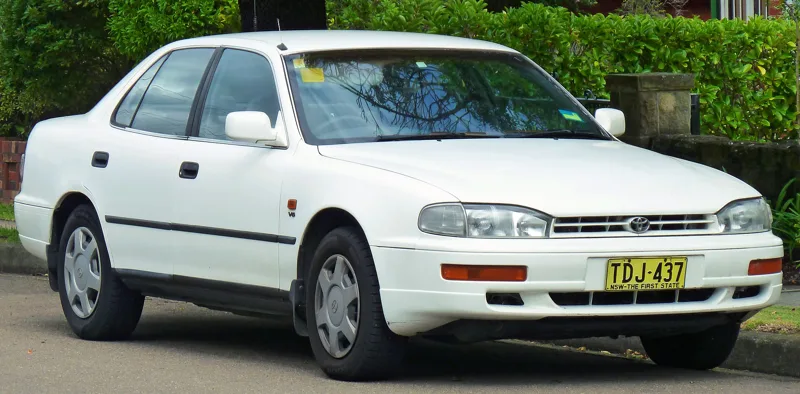
A 2006 sedan with a stepped underbody, the first Camry hybrid and a 2007 NASCAR debut, built until October 2011 before the XV50 replaced it.
The Toyota Camry XV40 was a sixth-generation mid-size car built from 2006 to 2011. It was the first Camry with a hybrid option, used a 2.4-litre four or a V6, and was replaced by the XV50.
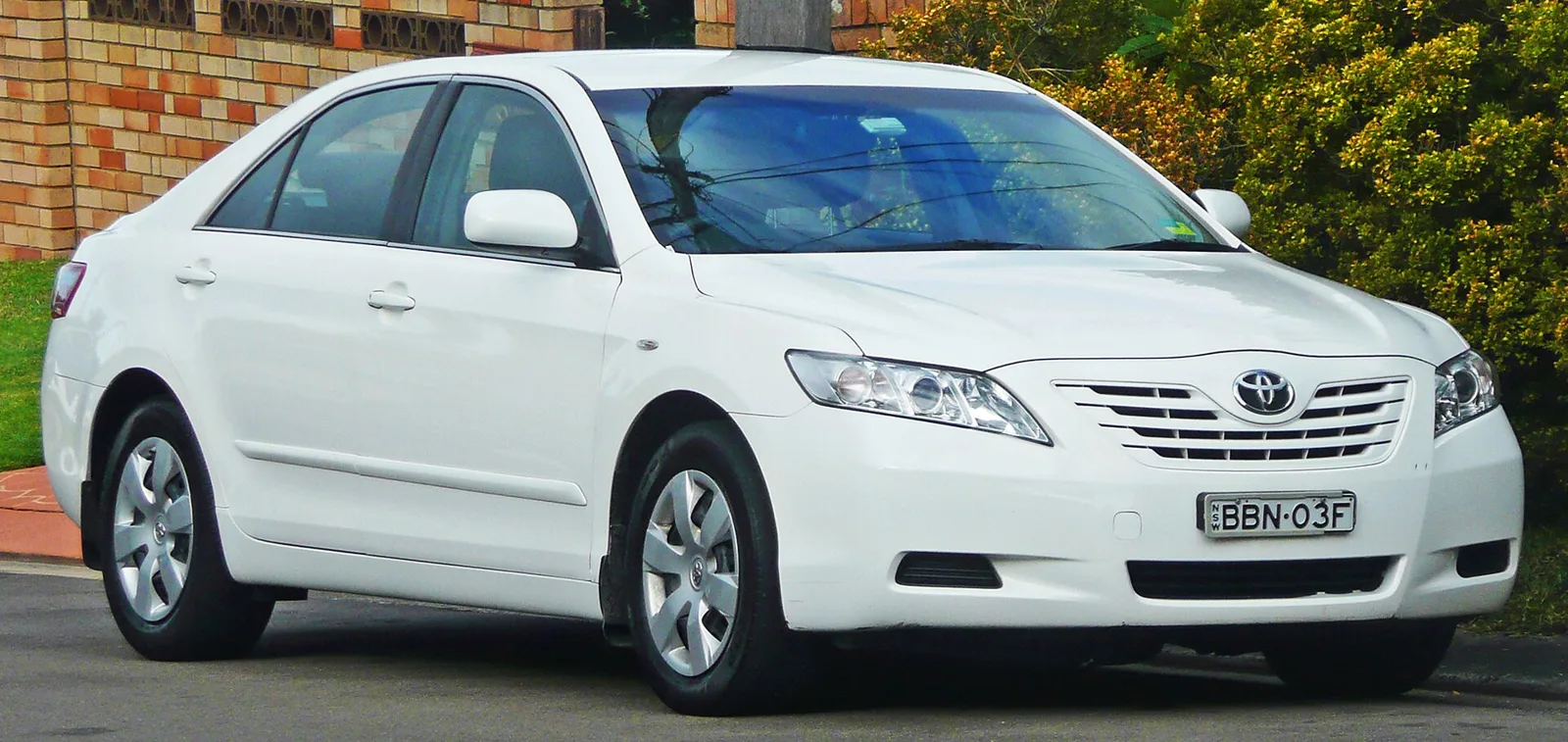
The Toyota Camry XV40 was a mid-size car built from January 2006 to October 2011. It was the sixth generation of the Camry outside Japan, and it was the first Camry to offer a gasoline-electric hybrid drivetrain. Toyota replaced it with the XV50 in 2011, after a run that also saw the car enter NASCAR racing.
When did the Camry XV40 go on sale?
The XV40 was introduced at the January 2006 North American International Auto Show. Its North American sales debut came in March 2006 as a 2007 model, and the Japanese launch followed on 30 January 2006 with a target of 1,000 units per month.
Between 2006 and 2010 a badge-engineered model called the Daihatsu Altis sold alongside the Camry in Japan. Daihatsu ceased manufacture of its branded models in February 2010, after only 447 units of the XV40 Altis were registered in three years.
The Camry sold in Australasia and North America matched the Japanese version. The car sold in China and most of Southeast Asia was based on the Australian-designed Aurion, which was essentially the same as the regular Camry with revised front and rear styling and minor interior changes.
A sixth-generation Camry that brought the first hybrid to the range and then raced in NASCAR.
How was the XV40 designed?
Toyota's vibrant clarity language shaped the look, with three bars across the grille and stepped panels at the hood and trunk. Kenichiro Fuse was the chief engineer, and work started in early 2002. A final design was set in September 2003 and frozen in August 2004, which was 17 months ahead of production.
US design filings followed on 27 December 2005. The new car had a wheelbase 55 mm (2 in) longer, wider wheel tracks and a stiffer body. The car gained interior volume mainly fore and aft, by moving the windshield and rear glass outwards.
The underbody was stepped, which created a Venturi effect and a low-pressure area under the front end to increase downforce. Other aerodynamic features included a stepped engine undercover and rear wheel fairings. The coefficient of drag was Cd 0.28 for petrol cars and Cd 0.27 for the hybrid.
How much cargo space did the XV40 offer?
Cargo space was 535 litres (19 cu ft), which was 32 litres (1 cu ft) less than the previous model. The SE and Sportivo offered 504 litres (18 cu ft) because bracing was placed behind the rear seat. The hybrid fell to 389 litres (14 cu ft) because its battery pack took up room.
The SE and Sportivo versions were the sporting models, and they featured a honeycomb grille, 17-inch wheels and firmer shock absorbers. The V-brace behind the rear seat prevented the seat from folding down, so the car offered only a ski pass rather than a full fold.
How did the XV40 change in its 2009 facelift?
Toyota refreshed the regular Camry for 2009, unveiling it in January of that year. The update brought a new front fascia with a larger air intake, larger projector headlamps and redesigned tail lamp lenses. LEDs were fitted to the tail lamps on all models, where previously only hybrids had them.
Inside, the trim was revised, the power window switches were improved and the audio system was overhauled. The audio now supported satellite radio in North America and added USB connectivity, while the dashboard screen integrated a backup camera for cars with satellite navigation.
The hybrid received its own distinct face after the facelift. It gained a large central air dam, vertically slotted fog lamps and a single-blade grille, while its rear lamps moved to predominantly clear lenses.
When did the Camry Hybrid first appear?
The Camry Hybrid premiered in January 2006, alongside the non-hybrid car. It was first built at the Tsutsumi plant in Japan, although the hybrid was never sold in its home market. North American hybrid production moved to Kentucky in October 2006.
Toyota Australia began local manufacture of the hybrid at its Altona, Victoria plant on 11 December 2009. The Thai Gateway plant had built hybrids from May 2009, and those cars were based on the prestige Camry design.
By August 2009 the Camry Hybrid accounted for 8.3 percent of Toyota's hybrid sales worldwide, ranking second after the Prius. More than 167,000 Camry Hybrids had been sold, and US sales reached 154,977 by December 2009, placing it as the third best-selling electric hybrid in that market.
How did the Camry Hybrid's powertrain work?
The hybrid used a 2AZ-FXE 2.4-litre engine with an Atkinson cycle, which produced 110 kW (148 hp) and 187 N-m of torque. The 650-volt electric motor provided 105 kW (141 hp) and 270 N-m of torque, and together they delivered a combined 140 kW (188 hp).
The system used Toyota's Hybrid Synergy Drive with an electronic continuously variable transmission. The trunk-mounted nickel-metal hydride battery weighed about 70 kg (154 lb), and the hybrid hardware totalled about 135 kg (298 lb) across the car.
Toyota claimed that the electric motor improved acceleration by an estimated 15 percent over the non-hybrid 2.4-litre automatic. The hybrid's electric power steering, brakes and air conditioning remained fully working when the engine was switched off.
How much did the Camry Hybrid save on fuel?
At launch, the hybrid's EPA rating put it roughly 27 percent ahead of the non-hybrid 2.4-litre automatic on the combined cycle. Its 2007 ratings were 40 mpg-US for the city and 38 mpg-US for the highway.
The EPA later changed its method to account for air conditioning, rapid acceleration and cold temperatures. Under the revised method, the hybrid was rated at 33 mpg-US in the city and 34 mpg-US on the highway.
The hybrid was certified AT-PZEV by the California Air Resources Board, and it also met the US Super Ultra Low Emission Vehicle standards. Its emissions were minimal for hydrocarbons, nitrous oxides and carbon monoxide.
Which engines and gearboxes were offered?
The entry engine was a 2.4-litre 2AZ-FE four-cylinder with front-wheel drive and a five-speed manual or automatic. In Japan only, an all-wheel drive version of the 2.4-litre was available with a four-speed automatic.
From January 2009 the US cars replaced the 2.4-litre with a 2.5-litre 2AR-FE engine, and they gained new six-speed manual and automatic transmissions. In some markets the top powertrain was a 3.5-litre 2GR-FE V6 with a six-speed automatic.
How safe was the XV40?
The Insurance Institute for Highway Safety rated the sedan Good in both the frontal offset and side impact tests. It also rated the roof Good, with a strength-to-weight ratio of 5.31 and a peak force of 7,978 kg (17,588 lb).
The National Highway Traffic Safety Administration first gave the XV40 five stars in most tests and four for rollover. Under its new methodology in 2010, the 2011 model year car was downgraded to three stars, and a later release of the 2011 car was raised to four stars.
The Australasian New Car Assessment Program initially gave the XV40 four stars. Toyota Australia then revised the specification with a front passenger seatbelt reminder, and Australian models built from May 2011 achieved five stars. The Monash University Used Car Safety Ratings gave the XV40 an excellent rating in 2010.
Were there recalls on the XV40?
Toyota recalled the optional all-weather floor mats on 26 September 2007. A second recall followed on 2 November 2009, asking owners to remove the driver floor mat, and the recall was extended on 25 November. A further recall on 21 January 2010 covered accelerator pedals that could stick in models without floor mats.
Car and Driver and Edmunds both found that the Camry's brakes could overcome the accelerator in their tests, bringing the car safely to a stop.
Where was the XV40 built?
The XV40 was built at Tsutsumi in Japan, at the Toyota Motor Manufacturing Kentucky plant in Georgetown, at Altona in Victoria and at Shushary in Saint Petersburg, Russia, from December 2007. Additional US production began at Subaru of Indiana in Lafayette, Indiana, on 20 April 2007.
A Camry made in Japan carries a VIN beginning with J, while US-made models carry a numeral. The Camry was the best-selling vehicle built in Australia when all sales were counted, both domestic and exports.
How did the XV40 sell in Asia and Australasia?
In Japan the Camry was offered in three levels of luxury, the G, G Limited Edition and G Dignis Edition. The G Dignis Edition featured a 7-inch touch LCD with satellite navigation and G-BOOK telematics. The Altis variant was identical to the Camry in appearance.
In India the Camry was offered in four specifications, W1 to W4. The Middle East received Australian-built Camrys with the 2.4-litre engine and trims called GL, GLX and Touring. South Korea officially received the car in 2009.
For the first time since 1988 the Camry was sold in Australasia with a four-cylinder engine only, because the Aurion offered the V6. The Australian media debut was on 25 July 2006, and the Altona plant also exported the car to New Zealand and the Pacific Islands.
Did the XV40 race?
In 2007 the XV40 became Toyota's stock car for its NASCAR debut. That made it the first foreign car in the series since the MG MGA, which raced in the Grand National Series in 1963. The XV50 generation later continued Toyota's NASCAR participation.
The car's racing debut came at a time when the Camry was building its US reputation. Its success in sales and its participation in the sport reflected Toyota's wider investment in the American market.
What are the Camry XV40 specifications?
| Specification | Detail |
|---|---|
| Production | January 2006 to October 2011 |
| Successor | XV50, 2011 |
| Entry engine | 2.4-litre 2AZ-FE four-cylinder |
| US engine from 2009 | 2.5-litre 2AR-FE |
| Top engine | 3.5-litre 2GR-FE V6, six-speed automatic |
| Hybrid engine | 2AZ-FXE, 110 kW (148 hp) |
| Hybrid motor | 105 kW (141 hp), 270 N-m |
| Hybrid combined output | 140 kW (188 hp) |
| Drag coefficient | Cd 0.28 petrol; Cd 0.27 hybrid |
| Wheelbase change | 55 mm (2 in) longer |
| Cargo space | 535 litres (19 cu ft) petrol; 389 litres (14 cu ft) hybrid |