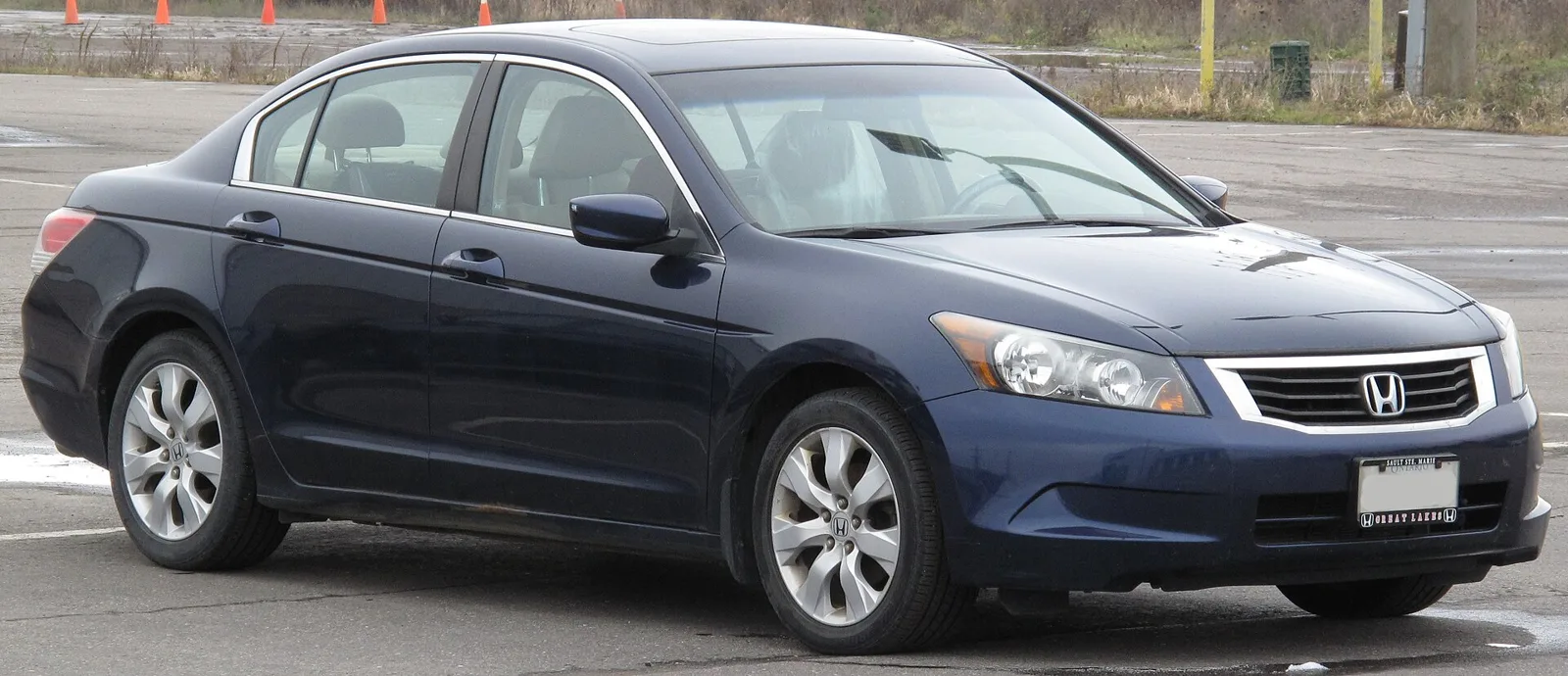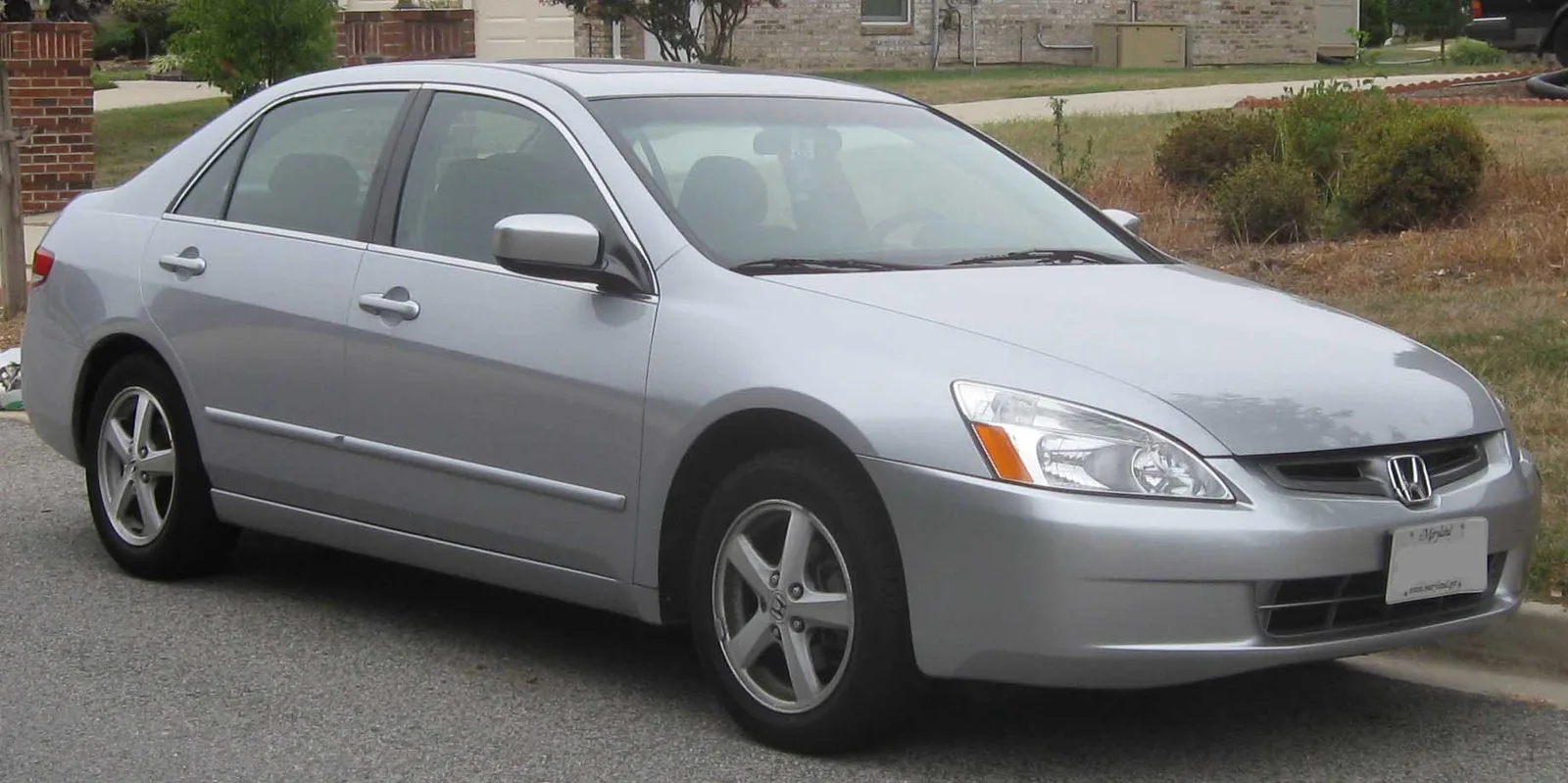
Honda's 2003 Accord added a hybrid in 2005, while Toyota's XV30 Camry was built in four countries and sold across much of the world.
The seventh-generation Honda Accord was built from 2002 to 2007 with a 240 hp V6 and a 2005 hybrid, while the Toyota Camry XV30 ran from 2001 to 2006 and was built in four countries. The two mid-size sedans competed for the same family buyers, with the Accord offering a coupe and the Camry a broader market reach.
The seventh-generation Honda Accord and the Toyota Camry XV30 were both mid-size sedans from the early 2000s, and they competed for the same family buyers. The Accord went on sale for the 2003 model year and was built until 2007. The XV30 Camry was sold from June 2001 to January 2006. The Accord later added a hybrid, and the Camry was built in four countries and sold widely across Asia, the Middle East and Australia.
How did the seventh-generation Accord come about?
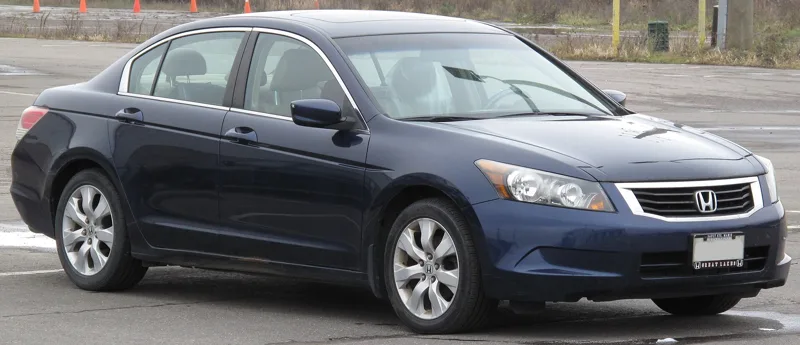
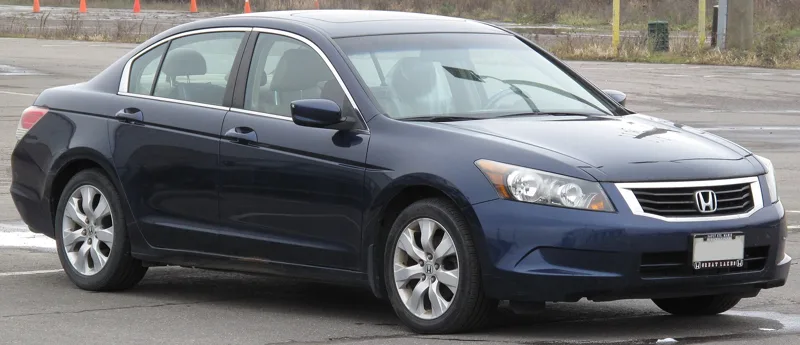
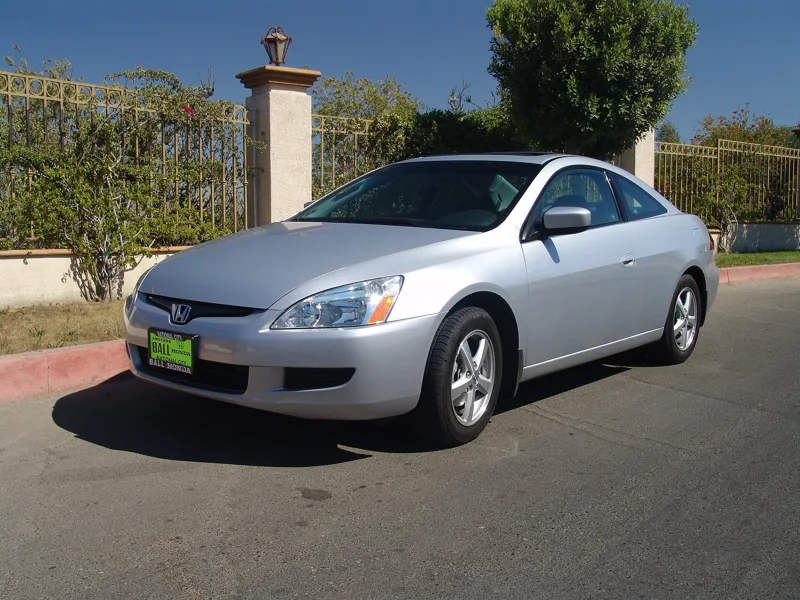
The Accord was offered as a four-door sedan or a two-door coupe, and it was produced from September 2002 for the 2003 model year. The first car rolled off the Marysville, Ohio assembly line on 26 September 2002. It was larger than the car it replaced, and it added chrome interior accents and better materials, while keeping the same trim names as before: DX, LX, EX, LX-V6 and EX-V6.
The car was also a sales vehicle beyond America. It was sold in parts of Latin America, Asia, the Middle East, the Caribbean, Australia and New Zealand, and it became the Honda Inspire in Japan from 2003. Honda also used it as the launch vehicle for its South Korean market, where sales began on 20 May 2004.
A 2003 Accord with a 240 hp V6 and a hybrid by 2005, against a Camry that rolled out of four plants.
How did the XV30 Camry arrive?
The XV30 was the fifth generation of the Camry outside Japan, and it followed a different lineage in its home market. Toyota launched it on 27 August 2001 as a larger sedan with no station wagon, which was the first time the Camry had gone without one. Toyota had been losing wagon sales to minivans and crossover SUVs, so the Camry's wagon role passed to the Sienna minivan and the Highlander SUV, both built on the Camry platform.
The development programme began in 1997 under chief engineer Kosaku Yamada. A design by Hiroyuki Metsugi was chosen in 1999, 26 months ahead of production, and it was frozen that July for June 2001 production. Toyota cut the development time from 36 months to 26 months, and the car's drag coefficient was 0.28.
How did the two cars differ in size and shape?
The XV30 was a decidedly tall car compared with the squat model it replaced. It stood 2.5 inches (64 mm) taller than before, and its wheelbase was 2 inches (51 mm) longer. Its front end was short, leaving most of the length to the cabin, a technique more often used on compact cars. The Accord, by contrast, was simply a bigger car than its predecessor, with a more conventional stance.
The Camry was a sedan only in this generation, while the Accord also offered a two-door coupe with a sporty edge. That coupe had a sports suspension, 17-inch wheels and a six-speed manual taken from the Acura CL.
Honda also added a production detail that mattered to its plants. In early 2005 the East Liberty Auto Plant began building the Accord sedan on the same line as the Civic and the Element, which gave Honda more room to meet demand. The Acura TL was assembled at Marysville, which made the Accord and its Acura cousin share some of the same engineering.
Which engines did the Accord and Camry use?
The Accord's new four-cylinder was the K-series, the first four-cylinder Accord to use coil-on-plug ignition, which had previously been introduced on the V6. That system improved reliability and gave a slight gain in power and economy. Honda also switched the recommended oil from 5W-30 to 5W-20, reducing friction, and the four-cylinder was rated at 23 mpg city and 31 mpg highway in 2008 EPA terms.
The V6 used the J-series unit with revised intake and exhaust systems, giving 240 hp in 2003, a 40 hp gain. One four-cylinder version also met California's most demanding emissions class, the SULEV standard, which made it a pioneer in that respect. The Camry's engines were a 2.4 L 2AZ-FE VVT-i four and a carry-over 3.0 L 1MZ-FE V6, and both were ULEV certified in the United States.
Transmissions were a point of difference. Both cars had automatics: the Accord used a new five-speed automatic with overdrive, and the Camry was offered with a four-speed in most markets. The Camry's manual gearbox was not available on V6 models outside Australia and New Zealand, while the Accord coupe came with a six-speed manual.
How did the Accord Hybrid compare with the Camry Hybrid?
Honda introduced the Accord Hybrid for the 2005 model year. It was the company's third hybrid, after the Insight and the Civic Hybrid, and it was built only at Sayama in Japan. The car cost US$3,000 more than the EX V6, and it sat at the top of Honda's non-Acura range in North America.
The hybrid's V6 derived from the engine in the 2005 Odyssey minivan. It could shut off three of its six cylinders, using Honda's Variable Cylinder Management, and its output rose from 240 to 255 hp. Torque went from 212 to 232 lb-ft (287 to 315 N m), and the car reached 60 mph in 6.5 seconds. Its EPA figures were 29 mpg city and 37 mpg highway for 2005, though a later moonroof and spare tyre change added weight and lowered the rating.
The Accord Hybrid did not sell well. It was up against the sixth-generation Toyota Camry Hybrid, which was built on an inline-four petrol engine and priced close to the Camry's own V6 and four-cylinder trims. The Accord Hybrid was pricier, and its fuel economy was no better than the regular Accord V6, so Honda's hybrid was seen as a muscle-car hybrid with more power and the same fuel use. Production ended with the rest of the generation in 2007.
What changed in the 2006 refresh?
For 2006, the 30th anniversary of the Accord, the car received a mid-generation refresh that enthusiasts sometimes called the 7.5 generation. The new grille was the one first seen on the eighth-generation Civic, the rear got triangular LED taillights, and US EX models gained daytime running lights and heated mirrors.
Vehicle Stability Assist, traction control and brake assist became available on the V6 for the first time. The V6 rose to 244 bhp, the four-cylinder to 166 bhp, and the four-cylinder moved to drive-by-wire throttle control. The V6 sedan could also be had with a six-speed manual from 2006, and the 2007 model year added an SE-V6 trim. Reviewers still rated the 2007 car highly, and in an Edmunds family sedan comparison it scored only slightly below the redesigned Camry, even though it was in its final year.
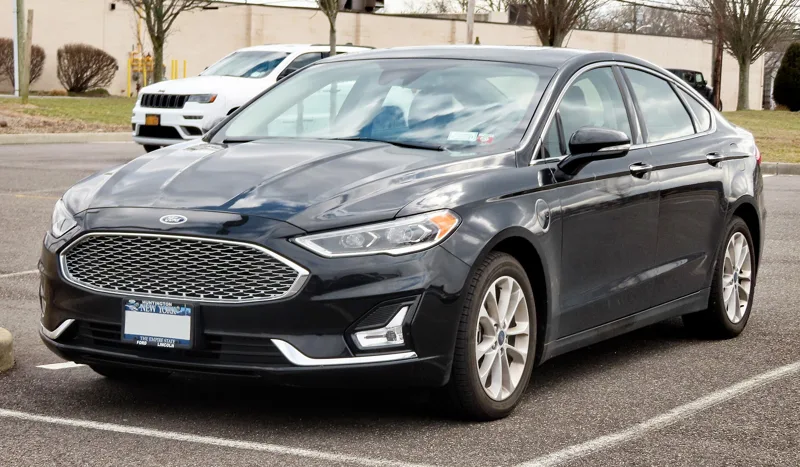
Brazil received a different four-cylinder, a 2.0 L K20A with 148 bhp, which replaced the 2.4 in that market to take on the Ford Fusion. Canada got its own trim list, with DX-G, SE, EX-L and SE-V6 among the sedan options.
How did the Camry sell across its markets?
The Camry was built in four plants: the Tsutsumi plant in Toyota City, Japan; Toyota Australia's Altona plant in Victoria; Toyota Motor Manufacturing Kentucky in Georgetown; and the Gateway plant in Chachoengsao, Thailand. Regional plants also made it in Malaysia, Indonesia and Taiwan.
Australia was an especially important market. The Australian Camry, sold from September 2002, came in five trims: Altise, Ateva, Sportivo, Grande and Azura. About 77 percent of its components were locally developed, and the brakes, body panels, headlights, seats, radio antenna and suspension were tested for about 10,000 km in New Zealand. The one millionth Australian Camry was built in September 2004, and the 10 millionth Camry worldwide rolled off the Altona line in October 2005. More than 90 percent of Australian Camry exports were left-hand-drive cars bound for Middle East countries such as Saudi Arabia, Kuwait and Qatar.
In China the Camry arrived in 2004 with only the 2.4 L engine and a four-speed automatic. In the Middle East the XV30 was offered as the XLi, GLi, Touring and Grande V6, and the XLi was the common choice for taxis, while in Saudi Arabia the car was also used for a form of street drifting that carried obvious dangers.
What else did the XV30 family include?
The Camry Solara coupe stayed on the earlier XV20 chassis until the 2003 model year, receiving only minor styling changes and the same 2.4 L engine as the Camry sedan. The second-generation Solara, introduced in 2003 as a 2004 model, was styled very differently and took cues from the Lexus SC 430.
Toyota also showed a performance concept, the TS-01, at the 2005 Melbourne International Motor Show. It had significant performance and visual upgrades over the production car and hinted at the TRD Aurion. In Japan, Daihatsu continued the Altis twin, and Toyota also sold the Verossa, a sedan of similar size to the Camry with rear-wheel drive or an optional all-wheel drive that the Camry lacked. The Verossa was replaced by the Mark X in 2004.
Specifications side by side
| Feature | Honda Accord (seventh generation) | Toyota Camry (XV30) |
|---|---|---|
| Production | September 2002 (2003 model year) to 2007 | June 2001 to January 2006 |
| Body styles | Four-door sedan and two-door coupe | Sedan only in most markets; wagon dropped |
| Four-cylinder | All-new K-series with coil-on-plug ignition | 2.4 L 2AZ-FE VVT-i |
| V6 | J-series V6, 240 hp in 2003, 244 bhp by 2006 | 3.0 L 1MZ-FE; 3.3 L 3MZ-FE from 2004 in SE |
| Hybrid | Accord Hybrid, 255 hp V6, 2005 to 2007 | Not listed for this generation |
| Fuel economy | Four-cylinder 23 mpg city, 31 mpg highway; V6 automatic 21 city, 30 hwy | Not listed |
| Drag coefficient | Not listed | Cd 0.28 |
| Airbags | Six standard from 2005 | Side and curtain airbags optional at launch |
| IIHS | Not listed | Good frontal offset; side Good with side airbags |
| Manual gearbox | Five-speed; six-speed on the coupe | Not available on V6 outside Australia and New Zealand |
| Plants | Marysville, Ohio; East Liberty, Ohio | Tsutsumi; Altona; Georgetown, Kentucky; Chachoengsao |
Which mid-size sedan suits which buyer?
The Accord suits a buyer who wants a sedan with a coupe option, a V6 with more power than the Camry's, and a hybrid that was on sale from 2005. Its six airbags as standard from 2005 are a clear advantage, and its 2006 refresh added the stability and traction controls the V6 had lacked.
The Camry suits a buyer who wants a car built across four countries and sold in many markets, with an Australian version that had a high share of local components and a V6 sport variant. The XV30 was also a tall, compact-feeling car with a 0.28 drag figure, and its markets showed what it could do outside North America.
On the evidence here, neither car takes an overall lead. The Accord offers the sportier coupe and the hybrid, while the Camry offers the wider market footprint and the Australian variants. Buyers who keep a car for a long time will want to weigh the Accord's 2006 stability controls against the Camry's broader engine range.