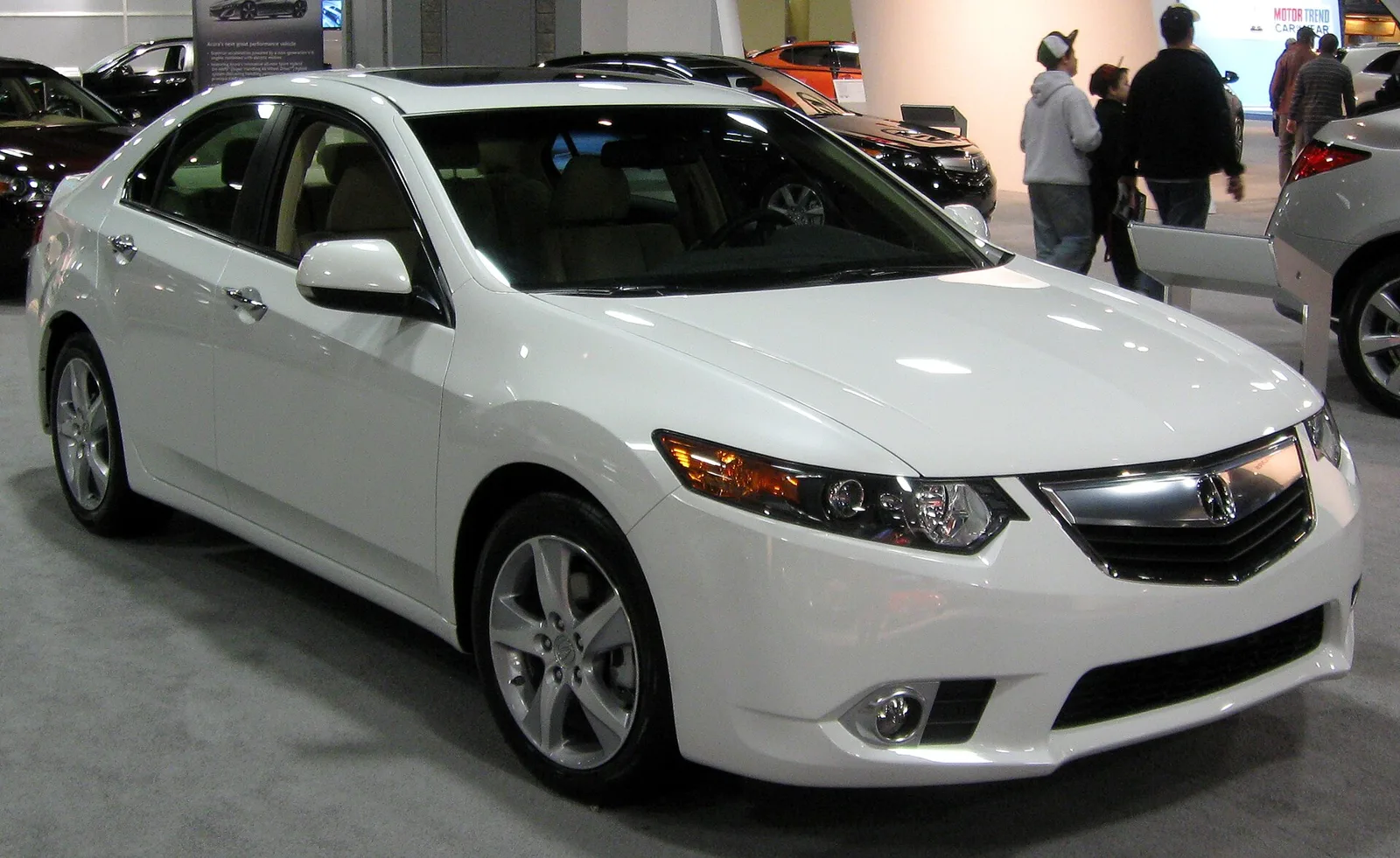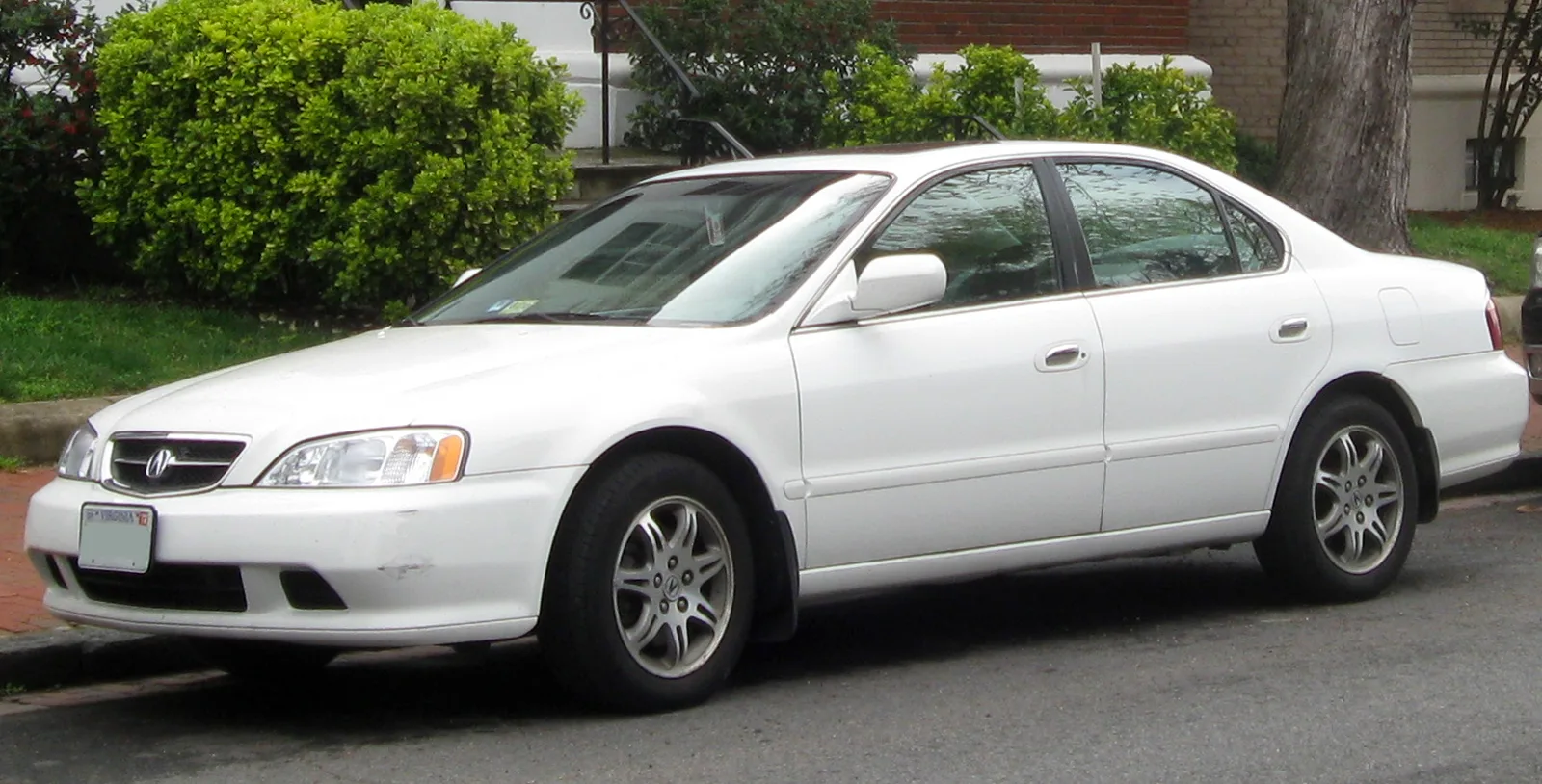
Introduced in 1995 to replace the Vigor, the TL became Acura's best-selling car before a transmission problem and a slow decline ended its run in 2014.
The Acura TL was an entry-level luxury sedan from Honda's luxury division, introduced in 1995 for the 1996 model year. It led Acura's sales until the MDX overtook it in 2007, four generations were built, and production ended in March 2014 when the TLX replaced it.
The Acura TL is an entry-level luxury sedan that Acura, the luxury division of Honda, built for almost two decades. It arrived in 1995 for the 1996 model year to replace the Vigor, and four generations followed before production ended in March 2014. It became Acura's best-selling model for a time, and it was also sold in Japan under the Inspire and Saber names.
Why was the TL introduced?
The TL debuted for the 1996 model year as a replacement for the Vigor, and it was the first Acura model to use the new alphanumeric naming scheme. Replacing names such as Vigor and Legend with letters was intended to focus buyers' attention on the Acura name itself. The initials stood for Touring Luxury.
The first car came off the line at Sayama, Japan, on March 28, 1995. The 2.5 model reached showrooms in early 1995, whereas the 3.2 arrived only in late 1995 after a trade dispute. A U.S.-Japan trade dispute had prompted threats of 100 percent tariffs on higher-priced Japanese cars, and a deal was eventually reached that avoided them.
In Japan the car wore other badges, the Honda Inspire from 1996 to 2000 and the Honda Saber from 1996 to 2004. Those were the names buyers saw at home, while the Acura badge carried the car in North America.
An entry-level Acura that sold well enough to lead the brand, then struggled with its transmissions for years.
What engines did the first-generation TL use?
The 2.5 TL used a 2.5-litre SOHC 20-valve five-cylinder rated at 176 hp (131 kW), taken from the Vigor. The 3.2 TL used a 3.2-litre SOHC 24-valve V6 producing 200 hp (149 kW), borrowed from the second-generation Acura Legend. A 2.0-litre inline-five was offered in Japan but not in the US market.
Both petrol engines sat in a front-rear, or longitudinal, position. That was unusual for a car of its class, and Acura said it improved weight distribution and reduced nose dive. The layout also produced a longer wheelbase and shorter front overhang, which suited a near-luxury car.
The 2.5 TL was the sporty model, with a firmer suspension, while the 3.2 TL offered a more luxurious ride. The extra power gave the 3.2 TL better acceleration. The inline-five in the 2.5 competed with similar five-cylinder engines from Audi and Volvo.
How did the first generation change over its life?
Standard equipment on the early cars included dual airbags, anti-lock brakes, automatic climate control, a cassette and CD sound system, and power windows and locks. Leather was standard on the 3.2 TL, and the car was a four-door pillared hardtop with frameless windows, like its predecessor.
In 1997 Acura added a standard power moonroof to every TL, and every car also gained a variable-speed intermittent wiper. The 3.2 ran 205/65/15 tyres, while the 2.5 received new alloy wheels. For 1998 several options became standard on the 2.5 TL, and that year was the last of TL production in Japan.
What changed with the second generation?
The second-generation car arrived in 1999 and was derived from the US-market Honda Accord platform. It was sold only as the 3.2 TL, with a newly designed 3.2-litre SOHC VTEC J32 V6 producing 225 hp (168 kW). The 2.5 was dropped, and a four-speed automatic with SportShift was the only transmission.
Production moved to the Marysville Auto Plant in Ohio, where the Accord was also built. Cars for Japan were sold as the Inspire through the Clio network and as the Saber through the Verno network, and the main difference between them was the front grille. The first 1999 TL was assembled on August 4, 1998.
Cabin air filters became standard equipment from this generation. The only factory option on the early car was a CD-based navigation system, which stored its maps in five zones for the United States.
Why did the transmission become a problem?
The five-speed automatic introduced for 2000 was meant to improve fuel economy and acceleration. In many cars, however, the third-gear clutch pack wore and shed particles that blocked oil passages. That led to overheating, failure to shift and sudden downshifts, and the Los Angeles Times highlighted the fault in September 2002.
Consumer Reports rated the TL and the CL worst for transmission reliability. Acura extended the warranty to seven years or 100,000 miles (160,000 km) in the United States, and a class-action settlement stretched it to 7.75 years for 1998 to 2002 models and some 2003 cars by VIN. Canadian owners did not receive the same extension.
Transmissions replaced before March 2005 often failed again. Units fitted from March 2005 onward had a redesigned third-gear clutch pack that was reported to fix the problem.
How did the Type-S and the CL sibling fit in?
The 2001 model year brought the CL Type S, a sportier version of the Acura CL that was mechanically identical to the TL. Its sales never approached its sibling's, and it was discontinued in May 2003.
A Type-S version of the TL was added in the 2002 range. Output rose by 35 hp (26 kW), reaching 260 bhp (194 kW) at 6100 rpm, along with 232 lb-ft (315 N-m) of torque from 3500 to 5500 rpm. The car also had 17-inch (430 mm) wheels and firmer seats and suspension.
What did the 2003 and third-generation cars bring?
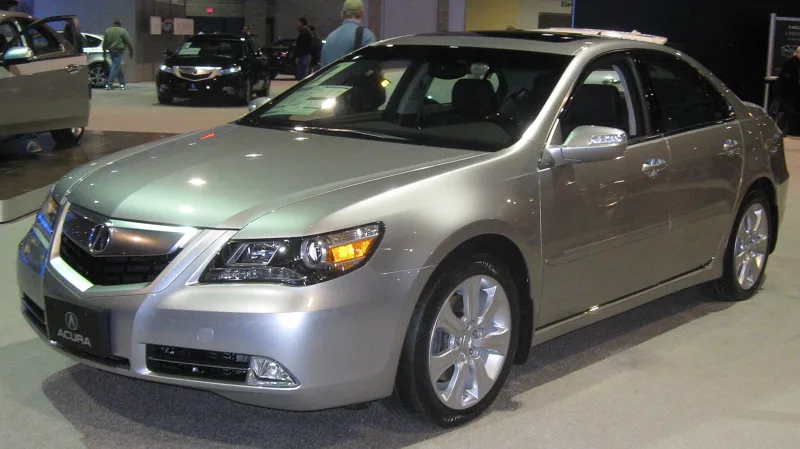
The third-generation TL went on sale in North America in October 2003, and the 3.2 moniker was dropped. Much of the work took place in America under Erik Berkman's team, and the bodywork came from Jon Ikeda, a designer at American Honda. It was built in Marysville, Ohio, and derived from the seventh-generation US Accord.
The engine was a 3.2-litre 24-valve SOHC VTEC V6, rated at 270 hp (201 kW) at launch and later revised to 258 hp (192 kW) under a new SAE standard. Torque was 233 lb-ft (316 N-m), and buyers could choose a SportShift five-speed automatic or a six-speed manual. Manual cars received Brembo four-piston front calipers, a Torsen-type limited-slip differential and stiffer anti-roll bars.
From March 2004 the TL A-SPEC tuner package added a suspension tuned by Makoto Tamamura, an underbody kit, a spoiler, a limited-edition steering wheel and 18-inch (460 mm) wheels. The package carried the 4-year, 50,000-mile (80,000 km) warranty when fitted at purchase.
The third generation was also the first car sold in the US to feature a six-disc DVD-Audio system. Its 8-speaker, 225-watt system was made by Panasonic and tuned by the Grammy-winning engineer Elliot Scheiner. Bluetooth hands-free calling came standard on US models, and an Alpine navigation system with an 8-inch (200 mm) touchscreen could accept voice commands.
How well did the third-generation TL sell?
In 2004 the TL was Acura's top-selling luxury sedan, with over 79,000 units moving that year. It had been the second best-selling luxury sedan in the United States in 2005, behind the BMW 3 Series.
Insurance safety researchers at the IIHS placed the TL second-lowest for accident fatalities among midsize luxury cars. Sales later declined after the 2008 model year.
Japan's version went separately. The JDM Honda Inspire debuted on June 11, 2003, about four and a half months before the North American TL, and it used Variable Cylinder Management to shut off half the engine when it was not needed.
What changed in the 2006 to 2008 updates?
The 2006 TL received a tyre pressure monitoring system and a new engine management system to reduce torque steer. Its horsepower rating dropped to 258 hp (192 kW) because of a change in testing procedures, although the engine itself was technically unchanged.
For 2007 the TL gained LED turn signal repeaters on the mirrors and fog lamps in the bumper. The manual transmission was dropped from the base car because sales were tiny, with only one in 40 TLs sold across America having a manual. A new five-speed automatic with rev-matched downshifts came in for the 2007 and 2008 models.
The 2007 return of the Type-S was the most notable change. It received the 3.5-litre J35A8 V6 from the Acura RL, tuned to 286 hp (213 kW) and 256 lb-ft of torque. Quad exhaust pipes, Brembo brakes, 17-inch dark silver wheels, a firmer suspension and Kinetic Blue Pearl paint set it apart.
The 2008 model added a new immobiliser system and a separate TPMS warning lamp, and AcuraLink satellite services expanded to 76 markets from 38.
What did the fourth generation change?
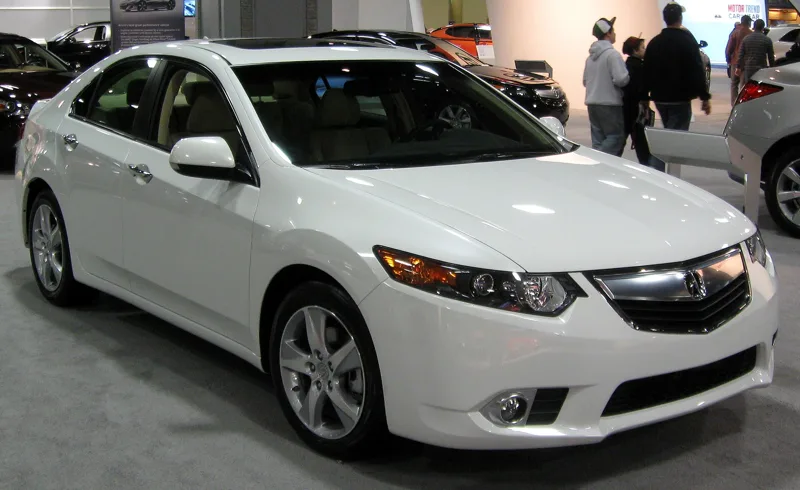
The first fourth-generation TL rolled off the line on September 23, 2008, and it arrived for the 2009 model year. Its styling used Acura's Keen Edge Dynamic language, with a controversial Power Plenum upper grille. The wheelbase grew by 1.4 inches (36 mm), reaching 109.3 inches (2,780 mm). The car was 6.2 inches (160 mm) longer, and it was wider by 1.8 inches (46 mm) and taller by 13 mm (0.5 inch).
Rear legroom grew by 1.3 inches (33 mm), and high-strength steel made up 47.6 percent of the chassis. The base car used a 3.5-litre V6 producing 280 hp (210 kW) and 254 lb-ft (344 N-m), 22 hp (16 kW) more than the old 3.2.
The new SH-AWD model, short for Super-Handling All-Wheel Drive, was the first all-wheel-drive TL. It replaced the previous Type-S and used a 3.7-litre V6 with 305 hp (227 kW) and 275 lb-ft (373 N-m). Acura first advertised 307 hp (229 kW) but later revised the claim without explanation.
The SH-AWD system sends 90 percent of the power to the front wheels when cruising. Under hard acceleration it can send up to 70 percent to the rear, and the car can direct that rear power to either side to help through a corner. Brakes grew to 12.6 inches (320 mm) at the front and 13.2 inches (340 mm) at the rear.
What were the late-generation TL updates?
For 2010 Acura offered a six-speed close-ratio manual on the SH-AWD model, with a self-adjusting dual-mass clutch and firmer front dampers. The 2010 car also added an eight-speaker audio system, USB connectivity and a hard-drive navigation system in the optional Technology Package.
The 2012 model received Honda's six-speed automatic, which improved efficiency and performance. Its combined economy figures rose by two mpg in the city and three on the highway, and the highway cabin was 3dB quieter. A Special Edition in 2013 added 18-inch alloy wheels and a deck lid spoiler.
The IIHS study of 2009-11 front-wheel-drive TL models recorded five driver deaths per million registered years. The car used Honda's Advanced Compatibility Engineering front end.
How did production of the TL end?
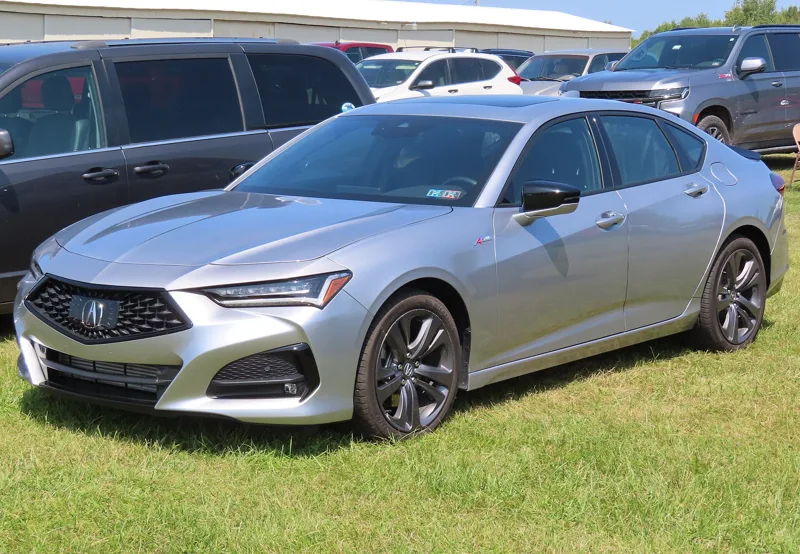
In early 2014 Honda announced that the TL would be replaced by the new Acura TLX sedan. TL production ceased in March 2014, and the 2015 TLX went on sale later that year. The TLX took on the TL's role in the lineup.