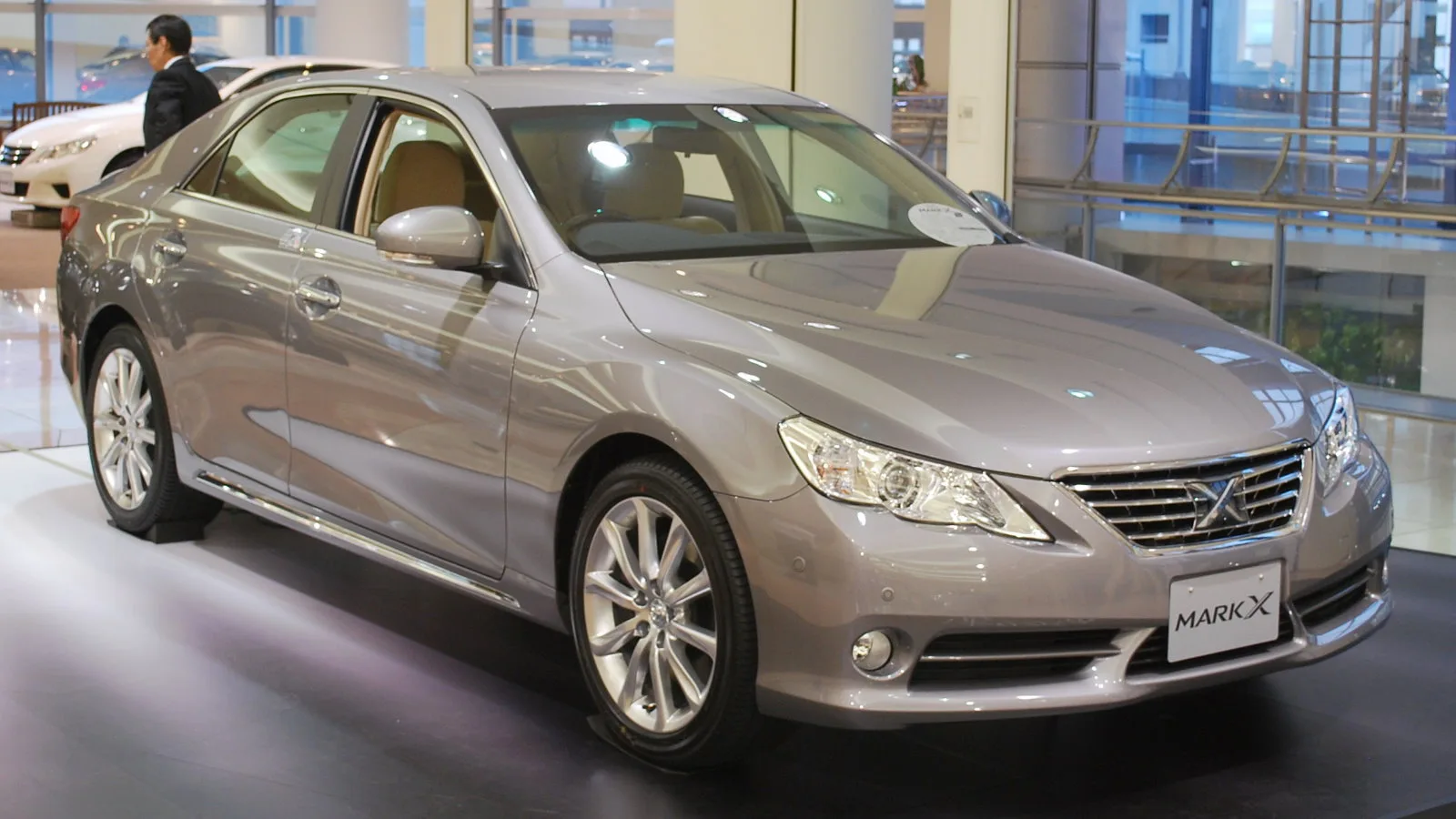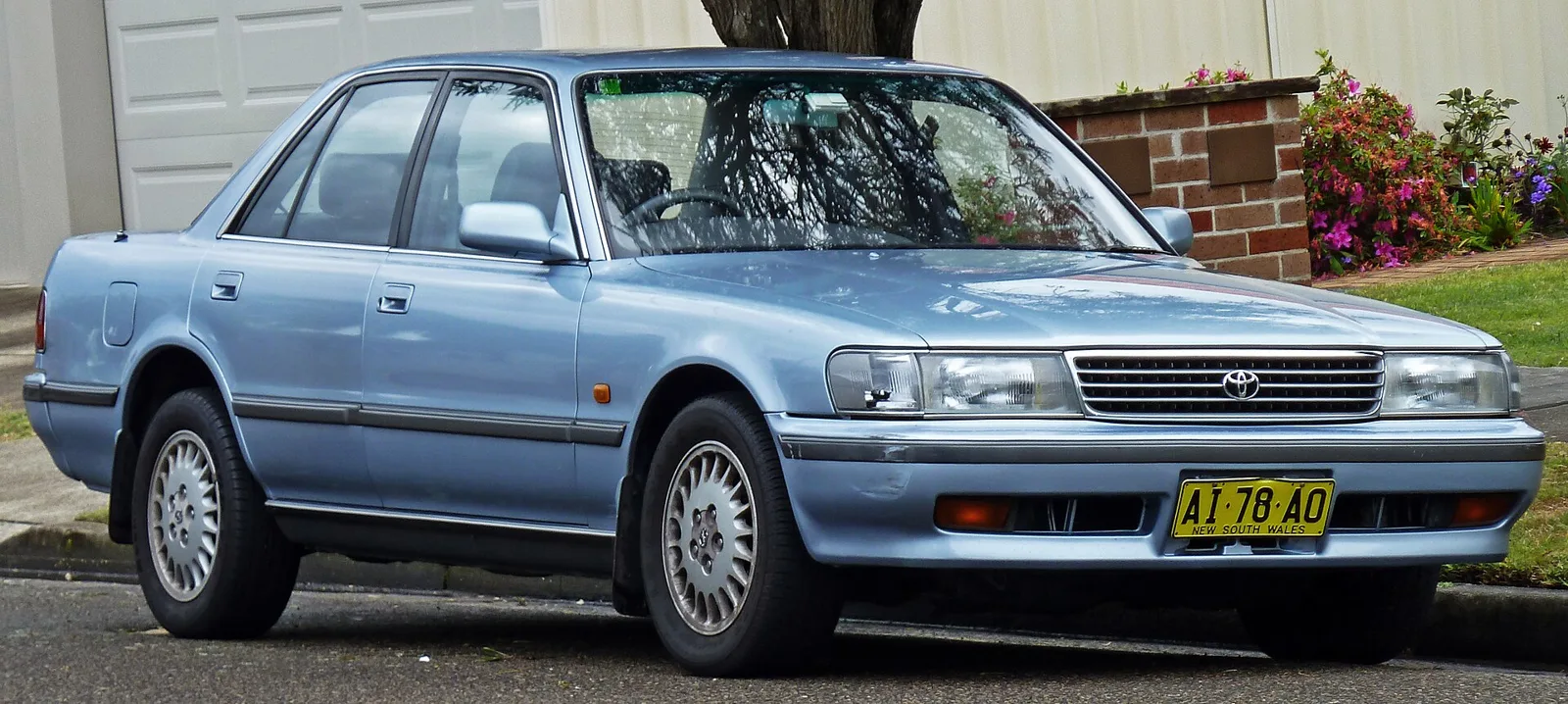
Sold in Japan as the Mark II and abroad as the Cressida, a rear-drive Toyota sedan that ran from 1968 and shaped the first Lexus models.
The Toyota Cressida was the export name of the Toyota Mark II, a compact then mid-size sedan first sold in Japan in 1968. Toyota used the Cressida name in most export markets from 1976 to 1992 across four generations, and the car helped shape the first Lexus models.
Toyota's Mark II was a family saloon that sat between the everyday Corona and the Crown at the top of the range. Sold abroad as the Cressida, it ran through four generations in export markets and helped shape the first Lexus models.
Where did the Mark II come from?
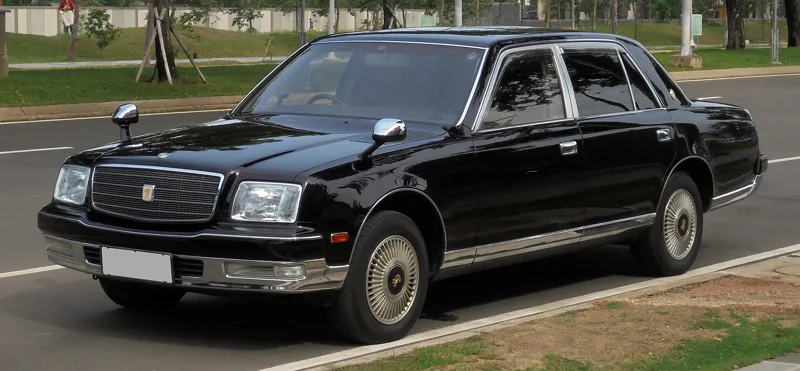
The Corona Mark II went on sale in September 1968 through Toyopet Store dealerships as a larger companion to the Corona. It sat below the Crown and the hand-built V8 Century, and its main rival in Japan was the Nissan Laurel, which had launched that April.
Toyota was then known as a maker of small, economy cars, so the Mark II was a clear step up. It used the platform of the Corona sedan but was slightly larger and wider, and it was built at the Motomachi plant in Toyota, Aichi, from September 1968.
Production later spread to other sites. The Miyata plant of Toyota Motor Kyushu built Mark II cars from December 1992 to October 2000, and some models were assembled in Jakarta, Indonesia and Paranaque, Philippines, under the Cressida name.
A rear-drive Toyota sedan that wore the Mark II badge at home and the Cressida badge abroad.
Why was the car called the Cressida abroad?
Export markets received the car as the Cressida from December 1976, a name never used in Japan. The name is taken from a female Trojan character in William Shakespeare's play Troilus and Cressida, and the Mark name already had a history in North America through the 1956 Continental Mark II.
In most export markets the car was sold as the Cressida for four generations, from 1976 to 1992. In North America it was Toyota's largest sedan and wagon range, while the personal luxury coupe was not offered. In other markets the larger Toyota Crown remained available.
In Japan the Mark II name stayed in place, and the car continued alongside its sportier and more upmarket siblings.
What did the first generation offer?
The first generation was designated T60 for the four-door sedan and T70 for the two-door coupe, and it was the only series offered as a two-door pickup for commercial use. Engines began with a 1,600 cc 7R, which later gave way to a 1,700 cc 6R, while the 1.9-litre 8R was unique to the Mark II.
Dimensions grew over the Corona. The Mark II measured 4,295 mm (169.1 in) long against the Corona's 4,125 mm (162.4 in), and it was 1,610 mm (63.4 in) wide against 1,549 mm (61 in) for the Corona. The wheelbase was a constant 2,510 mm (98.8 in), longer than the Corona sedan's 2,420 mm (95.3 in).
The hardtop coupe arrived in September 1968 with the 1900SL and 1900 Deluxe trims. A September 1969 refresh added the 1900GSS, which used a twincam 1,900 cc engine.
What changed in the second generation?
The second generation, the X10 sedan and wagon and the X20 coupe, moved to a new X series platform in 1972. Its styling followed the Coke bottle look popular across the decade, and it brought the first six-cylinder Mark II.
The Mark II-L was the first to get the 1,988 cc M inline-six, borrowed from the Crown and rated at 110 PS (81 kW). Power sat between the single- and twin-carburettor four-cylinder models, and the six needed different front sheet metal with a split grille.
The engine range ran from a 1,707 cc 6R rated at 95 PS (70 kW) up to a 2,563 cc 4M for export markets only. Electronic fuel injection arrived on the two-litre 18R in August 1973, and the 1.8-litre was discontinued in October 1975 in Japan.
North America received only the six-cylinder. Early 1972 cars carried a 2.3-litre M, which was replaced in August 1972 by a 2.6-litre 4M whose power rose from 109 hp (81 kW) to 123 hp (92 kW). With the Crown gone from the US after 1972, the Mark II became a practical choice for families leaving large American cars during the 1973 oil crisis.
How did the third generation change the car?
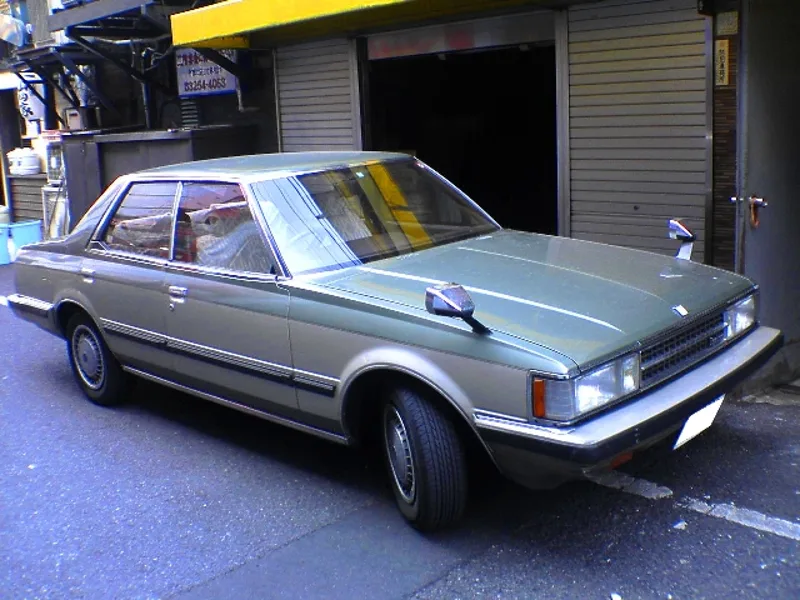
The third generation, the X30 and X40 series, arrived in 1976 with a more upscale, European-type design. It combined the previous generation's American lines with a British-looking front end, and Toyota adopted MacPherson struts at all four wheels.
The body moved to unitary construction, dropping the body-on-frame chassis, and every body style gained a safety cage with crumple zones. Japanese buyers also got a diesel Mark II from October 1979, sold only through Toyota Diesel Store locations.
Cressida production began in December 1976, and the 1979 MSRP in the United States was US$9,190. North American models started with the carbureted 4M, but in mid-1978 the fuel-injected 4M-E replaced it, which made the car one of the first Toyotas in the US to use fuel injection.
How did the Cressida sell in Australia and New Zealand?
In New Zealand the Cressida was assembled locally in a highly specified GL form with the 18R engine, keeping the engine at two litres to avoid the sales tax on larger units. It replaced the 2.8-litre Crown, which had been hit hard by those high taxes after the 1970s oil crises.
Car hire firm Hertz Rent A Car bought a large number of the four-cylinder New Zealand cars, many fitted with air conditioning by the dealer.
The Australian car received the 2.6-litre 4M, which was detuned to meet ADR27 emissions rules and produced 79 kW (107 PS). Its performance was relaxed, although it still matched the larger six-cylinder engines offered by Ford, Chrysler and Holden. The Cressida sold in Australia from April 1977 until February 1993, when the Vienta took over.
How did the Cressida fare in Europe and the Middle East?
Europe took the Cressida in only a few markets and never in large numbers, because Toyota was withdrawing from big cars there. European cars were generally fitted with two-litre inline-fours or sixes, and the 99 PS (73 kW) four-cylinder was the usual choice.
Middle East sales were far stronger. Two engines were on offer: the 2.4-litre 22R, rated 108 hp (81 kW) at 6,000 rpm, and the 2.8-litre 5M-E at 103 kW (140 PS; 138 hp). The car was popular both as a taxi and with private owners. It stayed on sale there until the 1996 model year, with the Camry as its successor.
What changed in the 1983 Cressida?
In 1983 the Cressida received a semi-trailing link rear suspension with independent wheels, ventilated rear discs and the 5M-GE twin-cam engine, much of it drawn from the Toyota Supra parts bin. The electronically controlled A43DE automatic had Power, Normal and Economy modes.
The US cars from 1981 carried motorized automatic shoulder belts, which wrapped around front occupants when the door closed and the ignition was switched on. Toyota introduced that motorized passive belt arrangement on this model a year before the law required it.
Power also rose. The 5M-GE made 143 hp (107 kW) in North American trim in 1983 and 1984, up from 116 hp (87 kW) at 4800 rpm on the earlier fuel-injected 5M-E.
How good was the 1989 Cressida?
The fourth-generation Cressida arrived for the 1989 model year as the final North American generation. Its 3.0-litre 7M-GE six produced 190 hp (142 kW) at 6,000 rpm and 251 N m (185 lb ft) at 4,400 rpm, and most mechanical parts were modified versions of those in the Supra.
The 1989 car came with power windows and locks, cruise control, a tilt steering column and a four-speed automatic as standard. Antilock brakes, leather trim and a power moonroof were available at extra cost, but airbags were never offered.
Reviewers praised the ride, handling and reliability. A July 1989 Consumer Reports test recorded 23 mpg (US) on average, but the rear seat was uncomfortable on full loads and the boot offered only 12.5 cubic feet of space.
The most substantial change was the 1990 facelift for the 1991 model year. It brought brighter alloy wheels, a redesigned grille with the new Toyota T logo, and simplified climate controls.
How did the Cressida connect to Lexus?
The Cressida helped shape the first Lexus models, and the LS 400 most closely resembles it. Toyota chairman Eiji Toyoda started a clandestine F1 project in August 1983 that led to the Lexus LS, a full-size luxury sedan built for export markets.
Overlap became a problem. Shared concepts between the Cressida and early Lexus models led Toyota to end the Cressida in most markets after the 1992 model year, and the 1992 Camry redesign with its XLE V6 covered some of the same buyers.
The Toyota Avalon arrived in the American market in 1995 to fill part of the gap. The Lexus GS, introduced in 1993, is often seen as a spiritual successor: a midsize, rear-wheel-drive Toyota luxury car with a kinship to the Supra.
What happened to the Mark II after the Cressida?
The Mark II carried on in Japan. In Japan the name lasted far longer than the export Cressida, evolving through several generations. The seventh generation, the X90, arrived in October 1992 with tail lights that gave the JZX90 its Samurai nickname. Toyota planned to sell about 14,000 units a month, and the Chaser and Cresta were discontinued and folded into the short-lived Verossa.
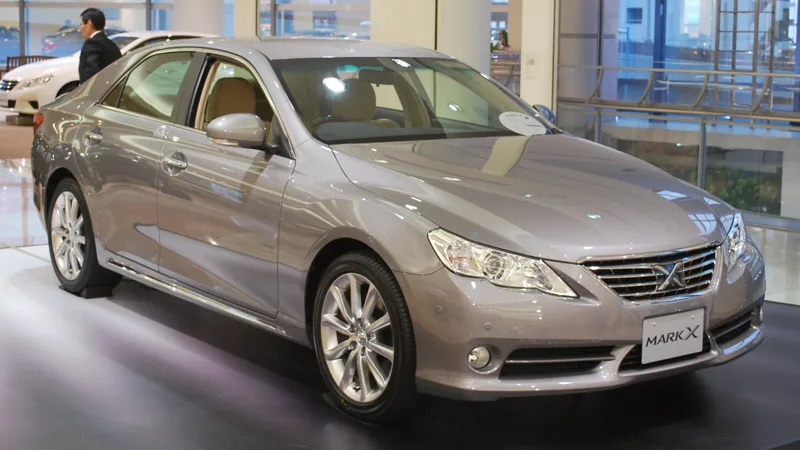
The ninth generation, the X110, introduced the 1JZ-FSE, the first direct-injection engine for mass production on a Toyota passenger vehicle. The Mark II evolved into the Mark X, a name chosen because it was the tenth generation, and it was canceled in 2019 as demand moved to SUVs and crossovers.
What are the Cressida specifications?
| Generation or market | Years | Engine | Output |
|---|---|---|---|
| Mark II second generation, Mark II-L | 1972 | 1,988 cc M inline-six | 110 PS (81 kW) |
| Mark II second generation, US | 1972 | 2.6-litre 4M | 123 hp (92 kW) |
| Second Cressida generation, US | 1981 and 1982 | 5M-E fuel injection | 116 hp (87 kW) at 4800 rpm |
| Second Cressida generation, US | 1983 and 1984 | 5M-GE DOHC | 143 hp (107 kW) |
| Fourth Cressida generation, US | 1989 | 3.0-litre 7M-GE six | 190 hp (142 kW) at 6,000 rpm |
| Australia | 1977 to 1993 | 2.6-litre 4M, ADR27 form | 79 kW (107 PS) |
| Middle East | To 1996 | 2.8-litre 5M-E | 103 kW (140 PS; 138 hp) |