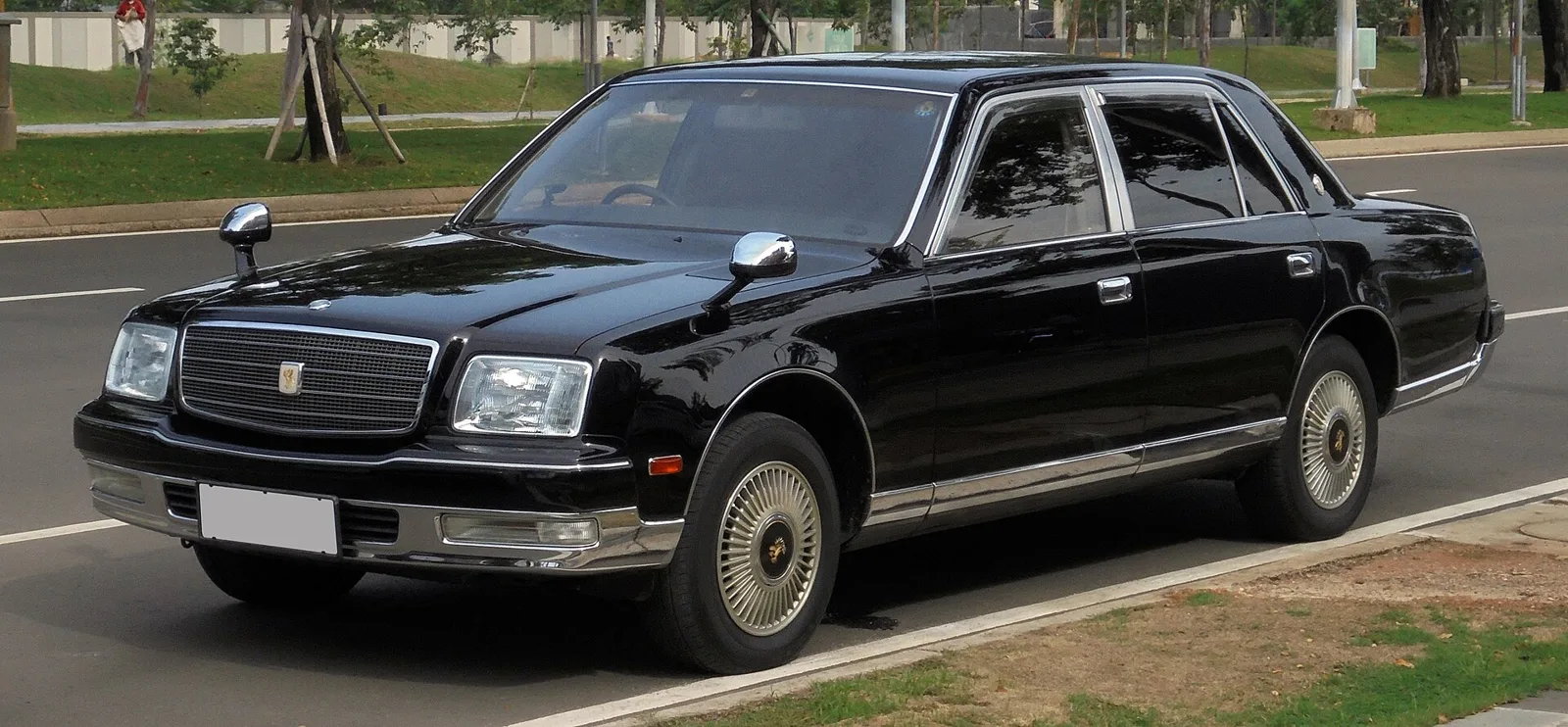
A hand-finished luxury car built mainly for Japan's imperial household, government and business elite, with a V12 phase, a hybrid return and a 2023 SUV.
The Toyota Century is a full-size luxury car and limousine built mainly for Japan, serving as the brand's flagship there since 1967. Its V12 second generation of 1997 gave way to a hybrid V8 in 2018, and an SUV joined the range in 2023.
The Toyota Century spans full-size luxury cars and limousines, made mostly for Japan, where it is the brand's top model. It began production in 1967, changed little until redesigns in 1997 and 2018, and gained an SUV body style in 2023.
Globally the Lexus brand carries Toyota's luxury flag, so the Century has always been a domestic prize. Users have included the Imperial House, the Prime Minister, senior officials and top corporate executives.
Where did the Century name come from?
The name marks the 100th birthday of Sakichi Toyoda, born on 14 February 1867, who founded Toyota Industries. The first car grew out of the 1964 Crown Eight and its 2.6-litre Toyota V8, arriving nearly two years after Nissan's 4-litre President of October 1965.
Its look was set early and held for decades. Aside from small cosmetic changes and engine upgrades, the look barely moved over a 30-year production life, and later cars still echo it.
Toyota's flagship within Japan, built to be earned rather than displayed, with a V12 phase and a hybrid return.
Who was the Century built for?
The Century was made for people at the top of Japanese public life and business. Its natural comparisons were some of the grandest limousines of the age, including the Austin Princess and Daimler DS420, the Cadillac Series 70, the Mercedes-Maybach, the Hongqi, the Rolls-Royce Phantom and Russia's ZIL limousines.
Its closest Japanese rival was the Nissan President, a car with similar standing. The Mitsubishi Debonair shared that high positioning in the 1960s and 1970s, while the Isuzu Statesman de Ville and Mazda Roadpacer, both derived from Holden products, were short-lived large sedans of the 1970s.
What was the first-generation Century like?
The first car used an electromagnetic door latch that integrated the door lock, with electrically operated handles inside and out. The Crown Eight had used a button to release its latch, but the Century kept a conventional handle that was still electrically operated.
The original 1967 car used the 3.0-litre 3V V8, carrying the VG20 chassis code. Its suspension used trailing arms at the front and rear, with airbag support springs. The blue badge on the C pillar bore a gothic-style C with a V8 label below.
Automatic climate control arrived in 1971, which was an innovation for a car of this kind. Taillights also changed in 1973, and front disc brakes followed in the same round of updates.
How did the first-generation engines develop?
The 3.4-litre 4V arrived in April 1973 under the VG21 code. It was replaced two years later by the 4V-U, which used Toyota's TTC emissions control technology. Fuel injection came in November 1978 with the 4V-EU, which changed the chassis code to VG35 and met that year's emissions standards.
The engine grew once more in November 1982, when the 4.0-litre 5V-EU arrived with a major facelift as the VG40. The 3V, 4V and 5V labels were model names in Toyota's V engine range, not valve counts.
In 1987 an electronically controlled four-speed automatic replaced the hydraulic three-speed. A floor shifter also turned up on the D-type, which had front bucket seats.
What did the Bubble era add to the Century range?
Sales climbed from 1,027 in 1985 to 2,117 in 1989, during Japan's boom years. The sedan was no longer enough for the mood of the time, so the Century Limousine appeared in October 1989. The Limousine was Toyota's answer to that appetite for size and status.
The stretch added 650 mm (26 in), giving 5,770 mm (227.2 in) overall and a 3,510 mm (138.2 in) wheelbase. It came with a padded vinyl roof, an opera window in the centre pillar and 150 mm wider rear doors. Toyota planned an annual output of 60 units.
From September 1990 an L-type stretched sedan joined the range, at 5,270 mm (207.5 in) long on a 3,010 mm (118.5 in) wheelbase, with the same larger rear doors as the Limousine.
What was the 1975 gas turbine concept?
At the 1975 Tokyo Motor Show, Toyota showed a Century gas turbine hybrid concept with a GT45 gas turbine and an electric motor. It was an early sign of the hybrid road the company would later take with the Century.
What made the second generation of 1997 different?
The Century was completely redesigned in April 1997, though it kept many design cues from its predecessor. The 5.0-litre 1GZ-FE V12 made 206 kW (276 hp; 280 PS) in Japanese trim, with export cars reaching 220 kW (295 hp; 299 PS) at 5200 rpm. Each version produced 460 N-m (339 lbf-ft) of twist.
The first V12 came with a four-speed A342E automatic, and a six-speed intelligent transmission arrived in 2005. The suspension moved to double wishbones at the front and rear, with air-bag support springs. The Century remains the only Japanese front-engined, rear-drive production car to carry a V12, and it was Toyota's first V12 engine.
The selector became either floor- or column-mounted, and the V12 briefly ran on CNG fuel from 2003 to 2004.
Was the second generation ever sold abroad?
From November 1998 the G50 went abroad in small numbers, targeting executives and officials in Europe, China and the Middle East. Roughly 100 left-hand-drive cars were built for export, and a few reached the United States for promotion and trials.
A handful became company cars for the brand's North American leadership. As of 2023, the G50 remained the only Century sedan generation officially sold outside Japan.
How does the Century differ from other luxury cars?
From its 1967 launch the Century sat at the top of Toyota's range, a status it held for decades. Its position was always about standing rather than volume. It sat above the Lexus line-up in its day and was the most prestigious Toyota on sale.
Rivals such as Maybach and Rolls-Royce sell on display, but the Century is not pitched as a status symbol of excess. Toyota's literature says it is earned through persistent work, the kind done in a plain but formal suit.
Rear passengers come first. The rear seats recline, and in right-hand-drive cars the front passenger seat has a fold-down centre section so a rear passenger can stretch their legs. The rear seats also have a massage system, and the doors pull themselves fully shut electrically once the latch meets the striker.
How much did the Century cost?
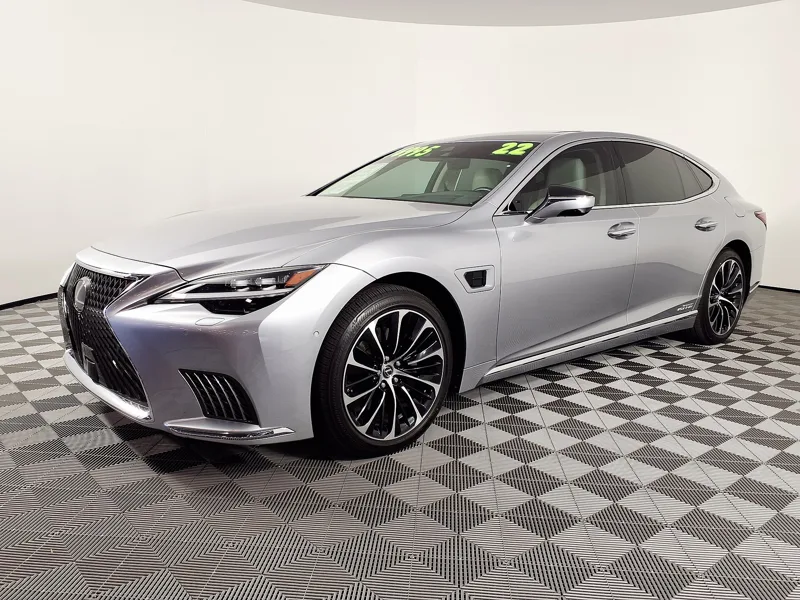
The Century was priced at JPY 11,445,000, roughly US$100,000. In comparison, the base price of the 2008 Lexus LS 460 was about JPY 10,000,000 (US$87,000), while the LS 600h L was JPY 15,000,000 (US$125,800). Those figures show how the flagship sat against Lexus rivals.
The second generation ended on 4 February 2017, after nearly two decades on sale. Some 9,573 vehicles were built, with the final 100 cars completed in 2016.
What is the Century Royal?
The Century Royal is the Emperor of Japan's official state car, a specially prepared one-off priced at JPY 52,500,000 (US$500,000). It has wool cloth upholstery, granite entry steps and washi paper headlining, along with security measures that Toyota has not disclosed.
It uses the same 5.0-litre V12 as the standard car, which is quoted at 206 kW (276 bhp; 280 PS) and 460 N-m (339 lbf-ft). Other state vehicles use conventional Century sedans carrying an Imperial number roundel. The limousine measures roughly 20 feet end to end and 6.5 feet across.
What did the third generation of 2018 bring?
The third generation was shown at the October 2017 Tokyo show and reached buyers on 22 June 2018. Prices started at JPY 19,600,000, about US$180,000 at mid-2018 exchange rates, rising to JPY 60,000,000 for the top limousine grade. Production was limited to 50 a month and built in a nearly hand-made way.
The powertrain uses Hybrid Synergy Drive with the 2UR-FSE 5.0-litre V8, producing 317 kW (431 PS; 425 hp). Displacement matches the old V12, yet the hybrid system lifts economy to 13.6 km/L (7.4 L/100 km; 32 mpg-US), where the earlier car managed 10 km/L (10 L/100 km; 24 mpg-US).
Unlike the second generation, the third generation was not sold outside Japan, and it adopted a multi-link rear suspension with supplemental air bags.
What are the GRMN and Convertible versions?
The GRMN version appeared on public roads in September 2018, finished in white with aero parts and aluminium wheels. Only two were built, and the white car served as a chairman's car at the 2019 Hakone Ekiden. The black car was shown at the 2019 Tokyo Auto Salon, but no commercial release was planned.
A special Convertible was built for the coronation of Emperor Naruhito on 10 November 2019. Its roof was removed and its C pillars were cut, and it had white leather seats and a raised rear seat with a backrest fixed at 25 degrees.
The Prime Minister used a G60 Century, alongside an older Lexus LS, from 2020 until June 2026.
How comfortable is the third-generation interior?
Rear comfort remained the priority. The rear seats recline and have integrated heaters, a massage function and a power leg rest for the seat opposite the driver. The sound system includes 20 speakers, and a 20-inch LCD screen lets rear passengers control many features and play video.
Upholstery is 100% wool in a heather pattern, in three colours, with leather available in two combinations, and both options come with two wood inlay choices. The transmission selector, once floor- or column-mounted, is now floor-mounted only.
Where is the Century built?
Until 2020 Century bodies were built at the Higashi-Fuji works in Susono, Shizuoka, run by Kanto Auto Works and then Toyota Motor East Japan. On 10 December 2020 that plant stopped car production, and assembly moved to Toyota City's Motomachi plant.
What is the Century SUV?
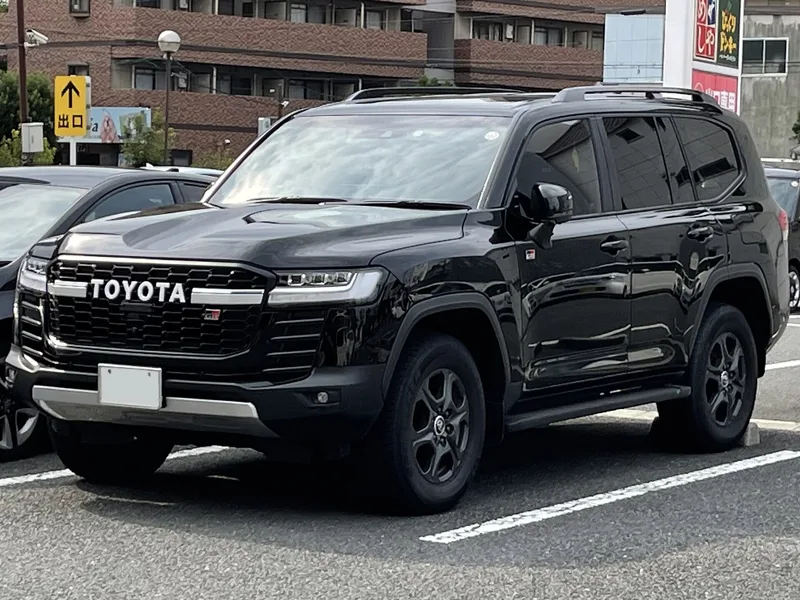
The Century-badged SUV was unveiled on 6 September 2023 on the front-drive GA-K platform, which it shares with the Grand Highlander and the Lexus TX. The standard engine is a 3.5-litre 2GR-FXS V6 plug-in hybrid rated at 303 kW (412 PS; 406 hp), paired with the E-four all-wheel-drive setup.
Toyota avoided calling it an SUV in its releases and described it simply as the New Century. Chief engineer Yoshikazu Tanaka called it a new concept for chauffeur-driven mobility, adopted because the body style gives the most rear seat space.
A convertible version appeared at the Grand Sumo Tournament in Tokyo in January 2024, an idea put forward by former yokozuna Hakuho. On 23 June 2025 the SUV gained a dimming feature for its rear windows, and on 22 June 2026 Prime Minister Takaichi replaced the G60 with a G70 SUV.
How did the Century SUV reach Japan and China?
Japanese sales of the SUV began on 6 September 2023, and orders were taken that same day. It is sold alongside the G60 at selected Toyota dealers, with specialist staff known as Century Meisters. Sales of both models therefore run side by side at those outlets.
A Chinese version was shown at Auto Guangzhou on 17 November 2023. It is sold through Lexus dealers as an imported car, and it is the first Century to be officially exported with left-hand drive since the G50 sedan ended in 2017.
What are the main Century specifications?
| Specification | Detail |
|---|---|
| Production start | 1967 |
| Second-generation engine | 5.0 L 1GZ-FE V12, 206 kW (276 hp; 280 PS) in Japan |
| Export output | 220 kW (295 hp; 299 PS) at 5200 rpm |
| Second-generation torque | 460 N-m (339 lbf-ft) at 4000 rpm |
| Limousine length | 5,770 mm (227.2 in) |
| Limousine wheelbase | 3,510 mm (138.2 in) |
| L-type length | 5,270 mm (207.5 in) |
| Third-generation engine | 5.0-litre 2UR-FSE V8 hybrid, 317 kW (431 PS; 425 hp) |
| Third-generation economy | 13.6 km/L (7.4 L/100 km; 32 mpg-US) |
| Century SUV engine | 3.5-litre 2GR-FXS V6 plug-in hybrid, 303 kW (412 PS; 406 hp) |
| Third-generation output limit | 50 cars a month |
.jpg)