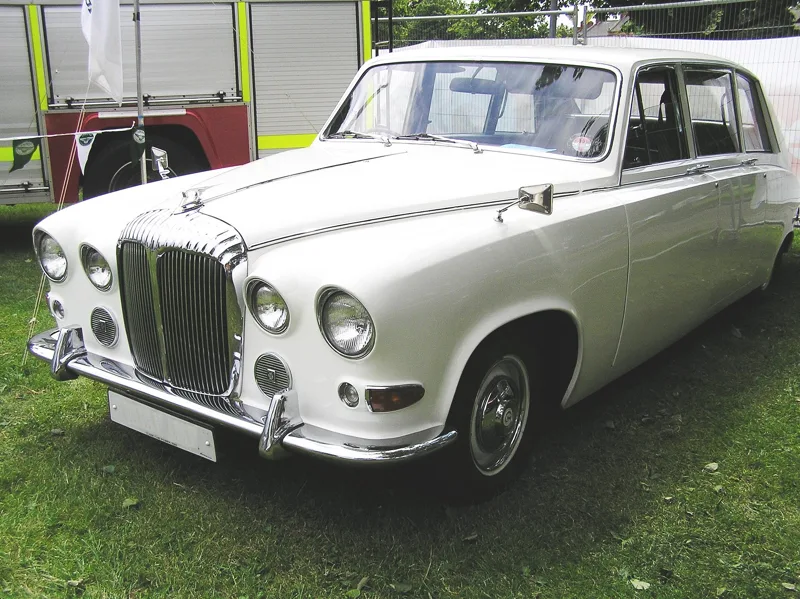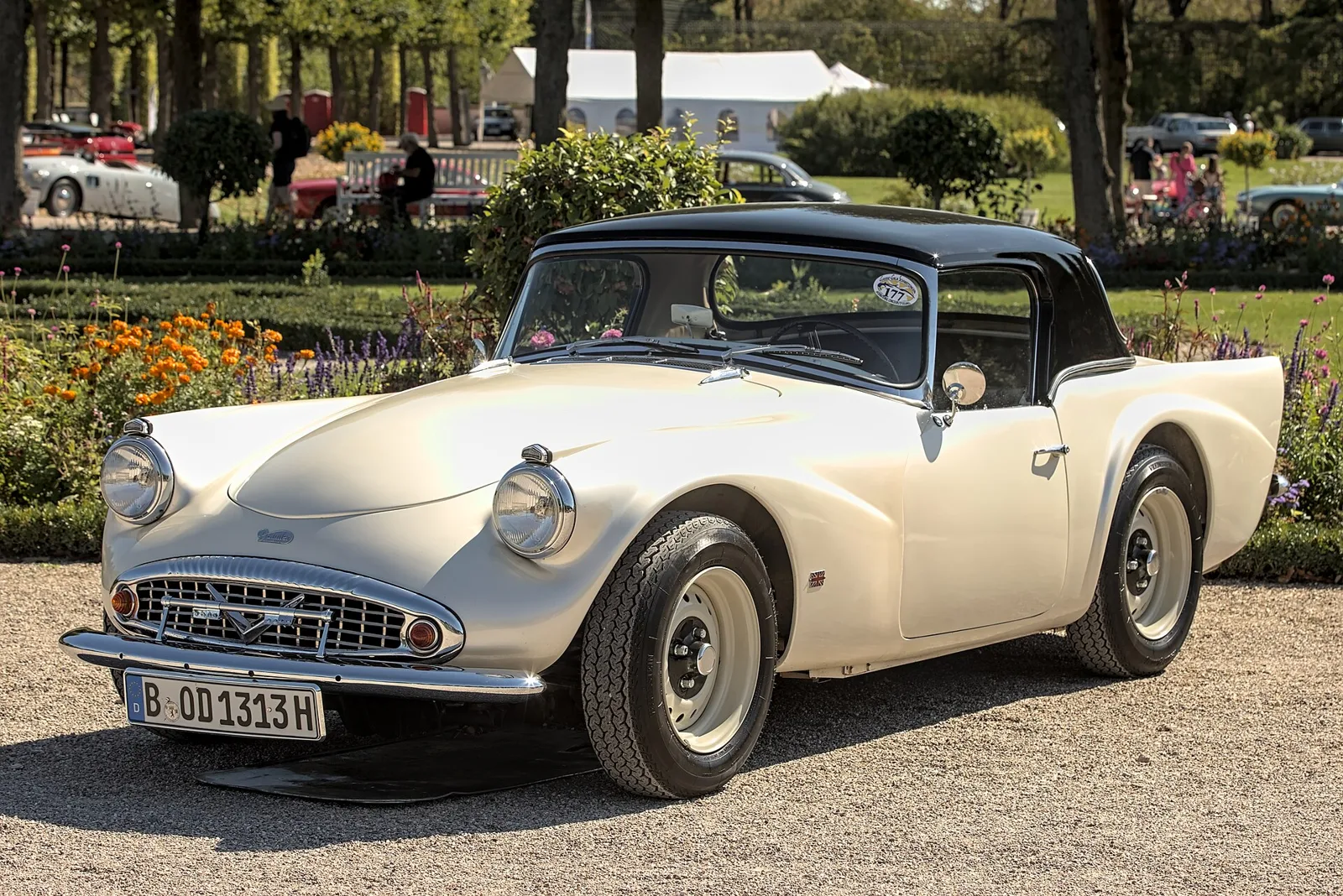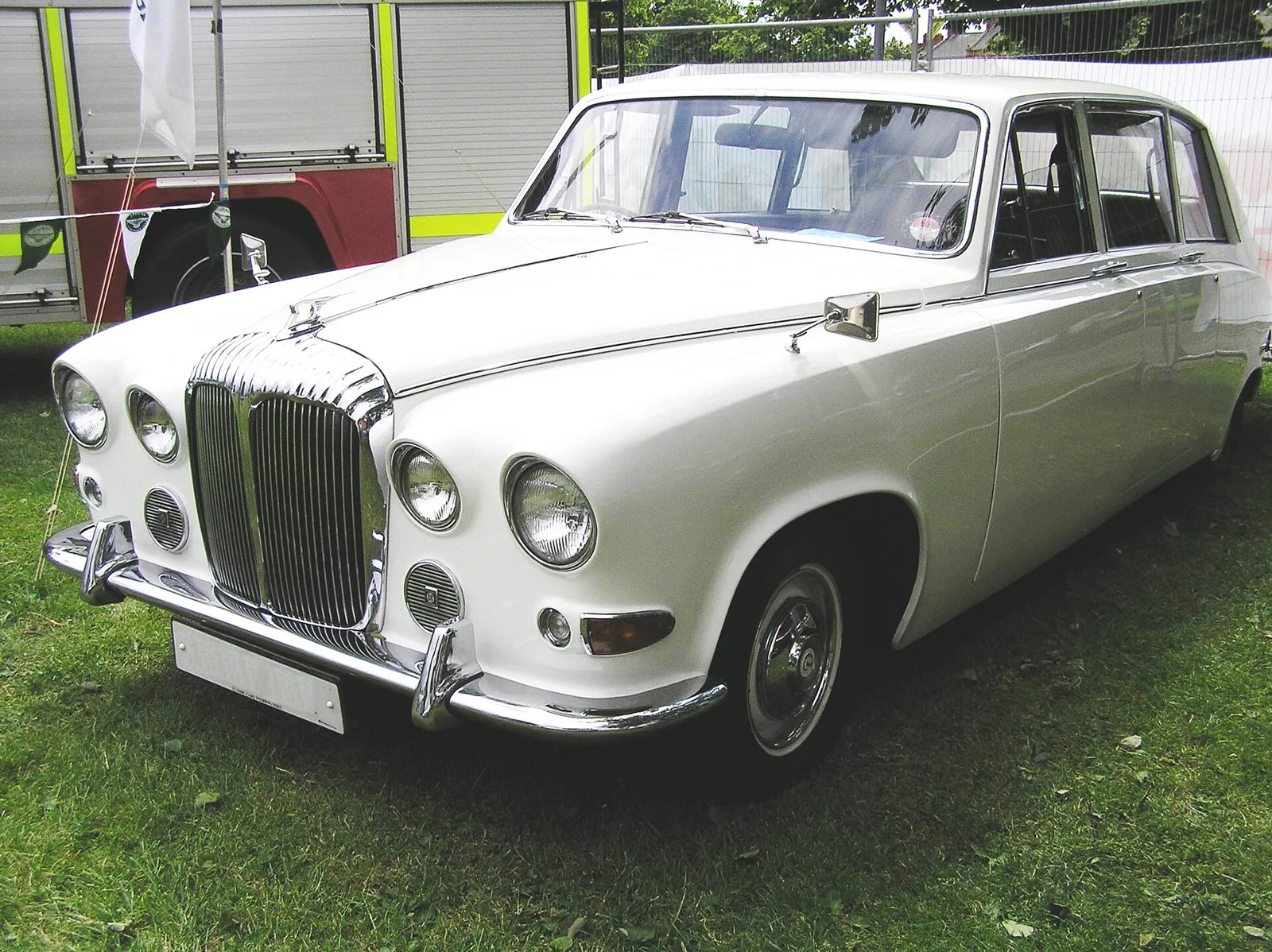
Jaguar-engineered and built in London and Coventry, the DS420 became the limousine of choice for reigning monarchs and state officials.
The Daimler DS420 was a limousine built by Jaguar for Daimler from 1968 to 1992, using an extended version of the 420G floorpan and the XK engine. It was ordered by more reigning monarchs than any other limousine, and it remained in state use for the royal houses of several countries after production ended.
The Daimler DS420, also known as the Daimler Limousine, was a formal limousine built between 1968 and 1992. It was designed for official use and became the favourite of chauffeur services, hotels and funeral directors, and it served as a state car in many countries. It is also the limousine that has been delivered to more reigning monarchs than any other, and it still serves the royal houses of the United Kingdom, Sweden, Denmark and Luxembourg.
Where did the DS420 come from?
Jaguar Cars bought the Daimler Company in 1960, and the British Motor Corporation acquired Jaguar in 1966. The group became part of British Leyland in 1968. Before the merger, BMC and Jaguar each had a limousine of their own, the Vanden Plas Princess and the Daimler DR450, so the new owners chose to make one model under the Daimler name rather than build two competing cars.
Jaguar did most of the engineering, and the DS420 shared its engine, gearbox and suspension with the Jaguar 420G. Production was announced in June 1968 and the cars were to be built at the Vanden Plas works in Kingsbury. The name followed the Daimler sequence, with DR giving way to DS, and the 420 referred to the 4.2-litre (260 cu in) XK engine.
The car used the floorpan of Jaguar's 420G flagship, with its wheelbase stretched by 21 in (533 mm). The front wore the traditional Daimler fluted grille, while the headlights came from the 420G. Two 10-US-gallon (38 L) fuel tanks sat in the rear wings, each with its own electric pump, selected from the dashboard.
A Jaguar-built limousine that outsold its Rolls-Royce rival at royal courts and ended as the XK's last production car.
How did the DS420 compare with a Rolls-Royce?
Set against the Rolls-Royce Phantom VI, the DS420 had a wheelbase 4 inches (10 cm) shorter and a body 12 inches (30 cm) shorter. It weighed about 350 kilograms (770 lb) less, and its engine had roughly two-thirds the displacement of the Rolls-Royce V8. It was cheaper than the Phantom, and its price came in under half that of the long-wheelbase Silver Wraith II.
The driver sat on a fixed full-width bench in a fairly upright position, with only 2.75 inches (7 cm) of telescopic adjustment on the low-set wheel. A sliding window separated the driver from the passengers, and three of the six passengers faced forward on a bench more than 6 feet (1.8 m) wide, while the other three used occasional folding seats.
How was the DS420 built?
Assembly took place at the Vanden Plas works in Kingsbury Lane, London. Body shells came from Park Sheet Metal, panels came from Motor Panels of Coventry, and Pressed Steel Fisher also supplied parts. Early limousines carried the Daimler Vanden Plas name on their tread plates and workshop manuals.
Kingsbury shut in 1979, and Jaguar at Coventry took over the work, building the car there until 1992. The move also brought the most extensive facelift, with larger bumpers and a revised rear number-plate frame. Earlier, in 1972, the rear passenger window had been changed from a split division glass to a single sliding pane, which also cured a corrosion problem on earlier cars.
The third and last facelift came in 1987, with plastic-coated bumpers and small interior changes. That final version, known as the Mk IV, ran until 1992, when Jaguar and Daimler ended work on their final coach-built limousine. Part-bodies were also sold to outside coachbuilders making hearses.
Who bought the DS420 apart from royalty?
Delivered cars ranged from basic models with hand-wound windows to a car reportedly built in 1984 for Jaguar boss John Egan, fitted out as a mobile boardroom with a television, computer, printer and cocktail cabinet. Private owners tended to specify every option, while funeral firms and limousine companies usually ordered few.
Daimler Hire, which was later owned by Hertz, was one of the largest customers until the early 1980s. Its cars were offered as limousine transport and for state use, and most were well equipped with a division window, air conditioning, matching leather and a bonnet flag mount for ceremonial use.
The DS420 was also widely used across the funeral trade, both as the executive car for mourners and, after customisation, as the hearse. The most prominent example came at the funeral of Diana, Princess of Wales in 1997, when her coffin travelled in a 1985 Daimler hearse from RAF Northolt to St James's Palace, and her sisters followed in a 1992 Daimler Limousine belonging to Elizabeth II.
Which governments and hotels used the DS420?
Governors and diplomats were regular users, including the governors of Hong Kong, Tasmania and Guernsey, the High Commissioner of New Zealand and the Lieutenant Governor of Jersey. Diplomatic missions in London that used the DS420 included those of Jordan, Oman, Portugal and Spain, and governments in Australia and New Zealand chose it for state visits.
Hotels also ran them for guests. The Regent Hotel in Hong Kong, now the InterContinental Hong Kong, had 22 in service over the years.
Why did monarchs favour the Daimler?
Daimler has supplied automobiles to all five monarchs of the United Kingdom since 1901. Prince Philip ordered a Rolls-Royce Phantom IV in 1950, and it became part of the royal fleet in 1952 when Princess Elizabeth became Queen. The Phantom V later took orders from five reigning monarchs, while the Daimler DR450 went to King Bhumibol Adulyadej of Thailand and King Hussein of Jordan, and the Daimler Straight Eight was a favourite of several monarchs.
William Lyons launched the DS420 in the same year as the Phantom VI, aiming to restore Daimler's place at royal courts. King Frederik IX of Denmark saw the first demonstrator during a London visit in April 1968 and later ordered a black production car, delivered in March 1970. It passed to Queen Margrethe II and to the dowager Queen Ingrid, and it appeared again at the 2004 wedding of Crown Prince Frederik.
After Frederik IX died in 1972, both his daughter and Queen Ingrid wanted a Daimler, so a second car was ordered and delivered in 1974. Queen Ingrid chose the newer car and used it both privately and on official duty.
Prince Rainier III of Monaco took delivery of a DS420 in 1970 and used it as his state car until his death in 2005. Queen Elizabeth the Queen Mother visited the Vanden Plas factory to supervise customising, and between 1970 and 2002 five DS420s served her, delivered in 1970, 1978, 1983, 1986 and 1992.
King Hussein of Jordan ordered a Daimler in 1970, and Grand Duke Jean of Luxembourg ordered one that same year for delivery in 1971. In January 1972 Sultan Qaboos of Oman took two identical cars, and King Yahya Petra of Malaysia took delivery in 1977. Sultan Hassanal Bolkiah of Brunei later had a 1981 limousine registered in England. By 1984 there were eight orders from reigning monarchs, and that year Queen Elizabeth II placed her first order.
What did the 1987 and 1988 orders change?
The 1987 model year marked 35 years of Queen Elizabeth II's reign, and the Royal Mews renewed its fleet. The two Vanden Plas Princess limousines and the Rolls-Royce Phantom IV Landaulet were retired. Daimler supplied a DS420 with the new facelift, chassis 200970, which served Prince Charles, Diana, Princess of Wales and their sons.
The Swedish court followed in 1987 with a black car, chassis 201045, finished in October and handed to King Carl XVI Gustaf. In September 1988 Grand Duke Jean replaced his 1971 car with a second Westminster Blue example, chassis 201168. The Queen's third DS420, chassis 201127, was delivered in August 1988 to replace the 1984 model.
Flag shields on the roof showed who was travelling. The Queen used her personal flag shield, while other royals used one bearing the vice-regal crown, which also appeared for dignitaries following the state car.
How did production of the DS420 end?
By 1992 the DS420 was the sole Jaguar-range car still relying on the XK engine, and output no longer made commercial sense. The last four examples went to the Jaguar Daimler Heritage Trust, to the Queen Mother, chassis 201629, and to a matched pair for Queen Elizabeth II, chassis 201628 and 201630. The last car, registered L420 YAC, was built at Browns Lane late in 1992.
The Daimler outlived the Rolls-Royce Phantom VI by one year. The XK engine of the 1950s and the chassis of the 1960s were the limiting factors, rather than any lack of demand from royalty.
Queen Margrethe II of Denmark found a 1987 car with almost no mileage, kept in reserve by a Swedish importer. Chassis 201065 reached Denmark in 1994 and became number one in her fleet only after a change of plates. The Danish cars carried Crown plates, and by 2004 the 1987 car had Crown 5 while the oldest carried Crown 1.
What was the DS420's royal record?
The rear compartment took up to six passengers, and the DS420 is the only car that has carried six members of a reigning royal family at once. Both sons of Queen Margrethe II have four children, and they can be seen travelling with their parents in the rear of the Daimlers. Royals also sometimes drove the car, such as Prince William in August 1999.
The DS420 drew orders from ten reigning monarchs. The Phantom VI, by contrast, won orders from just two rulers. Today it still serves state offices in the United Kingdom, Denmark, Sweden and Luxembourg, though production ended long ago.
What are the Daimler DS420 specifications?
| Specification | Detail |
|---|---|
| Production | 1968 to 1992 |
| Engine | 4.2-litre (260 cu in) Jaguar XK |
| Wheelbase | Jaguar 420G wheelbase extended 21 in (533 mm) |
| Fuel tanks | Twin 10-US-gallon (38 L) tanks in the rear wings |
| Passengers | Six, with three facing forward on a bench 6 feet (1.8 m) wide |
| Versus Phantom VI | 4 inches (10 cm) shorter wheelbase, 12 inches (30 cm) shorter body, about 350 kilograms (770 lb) lighter |
| Final model | Mk IV, from the 1987 facelift |
| Last car | L420 YAC, built late 1992 |