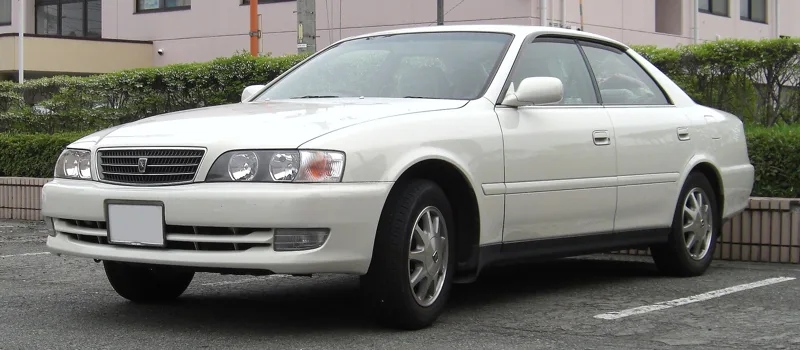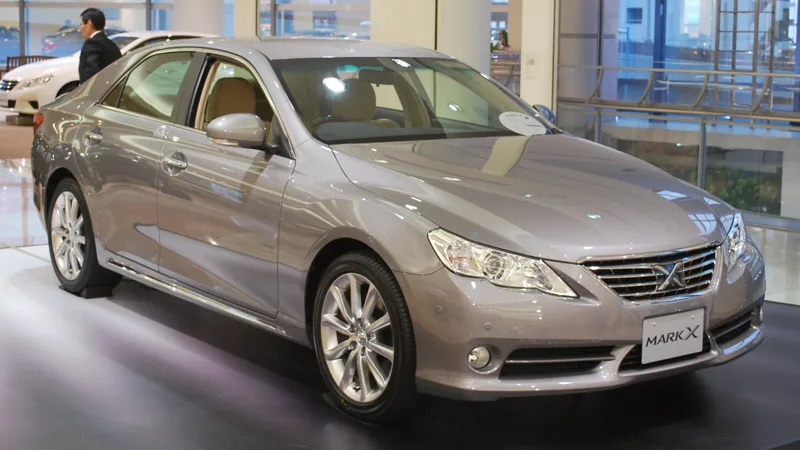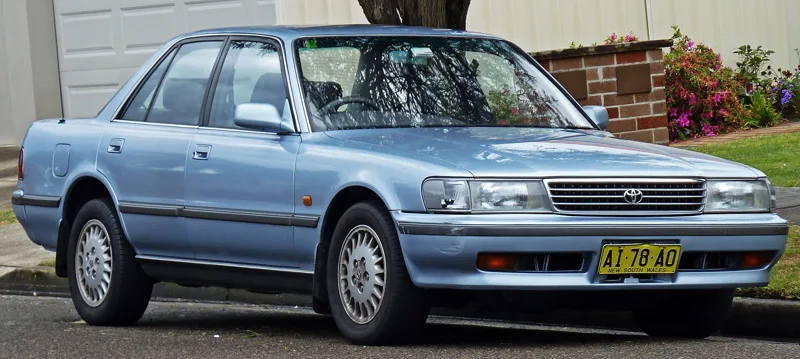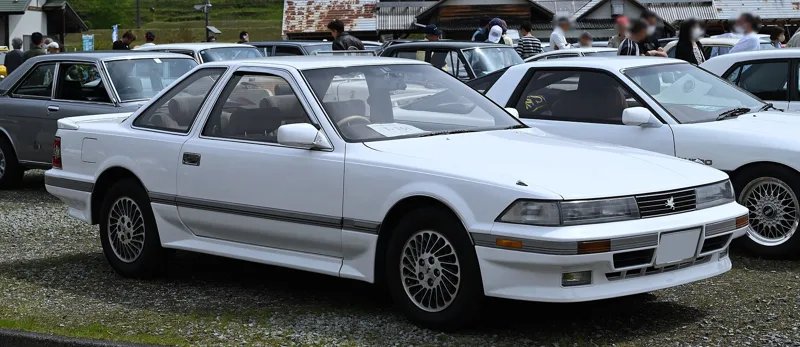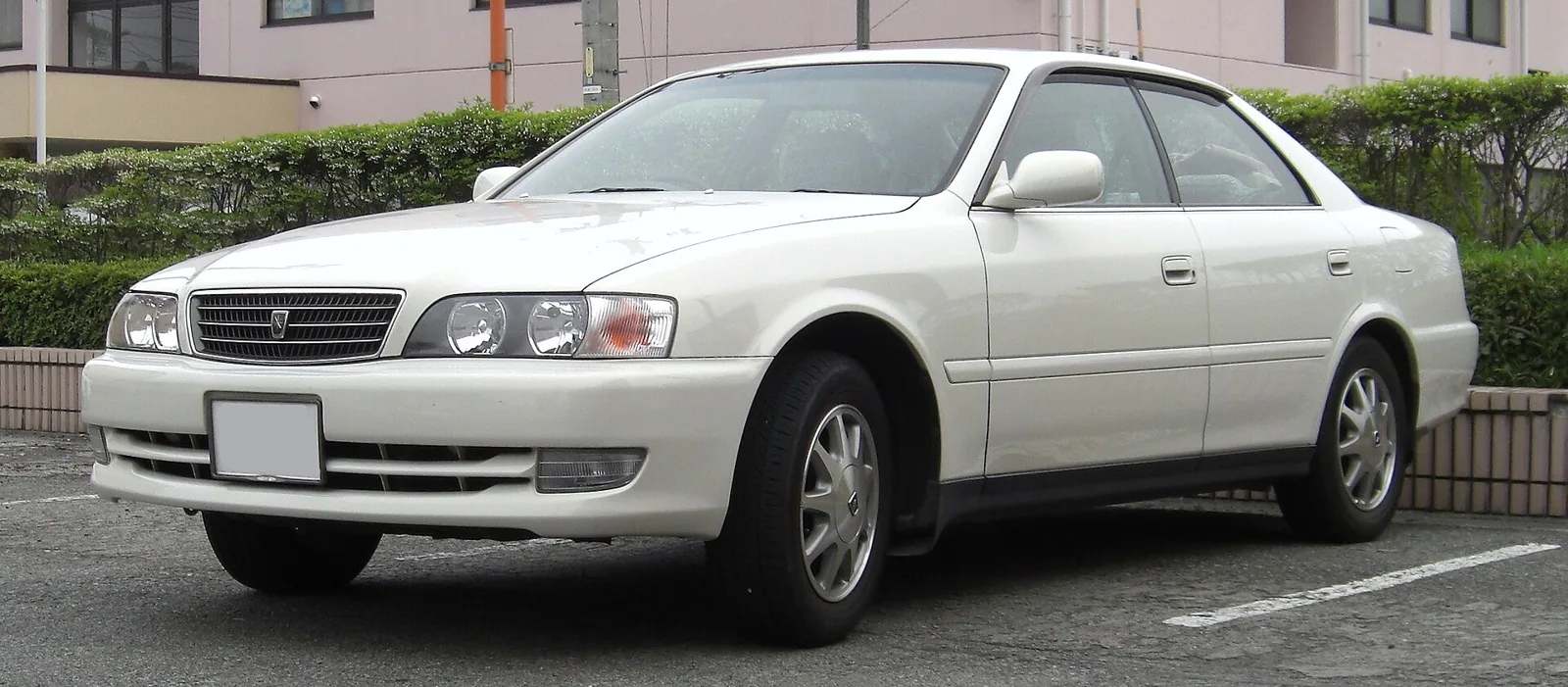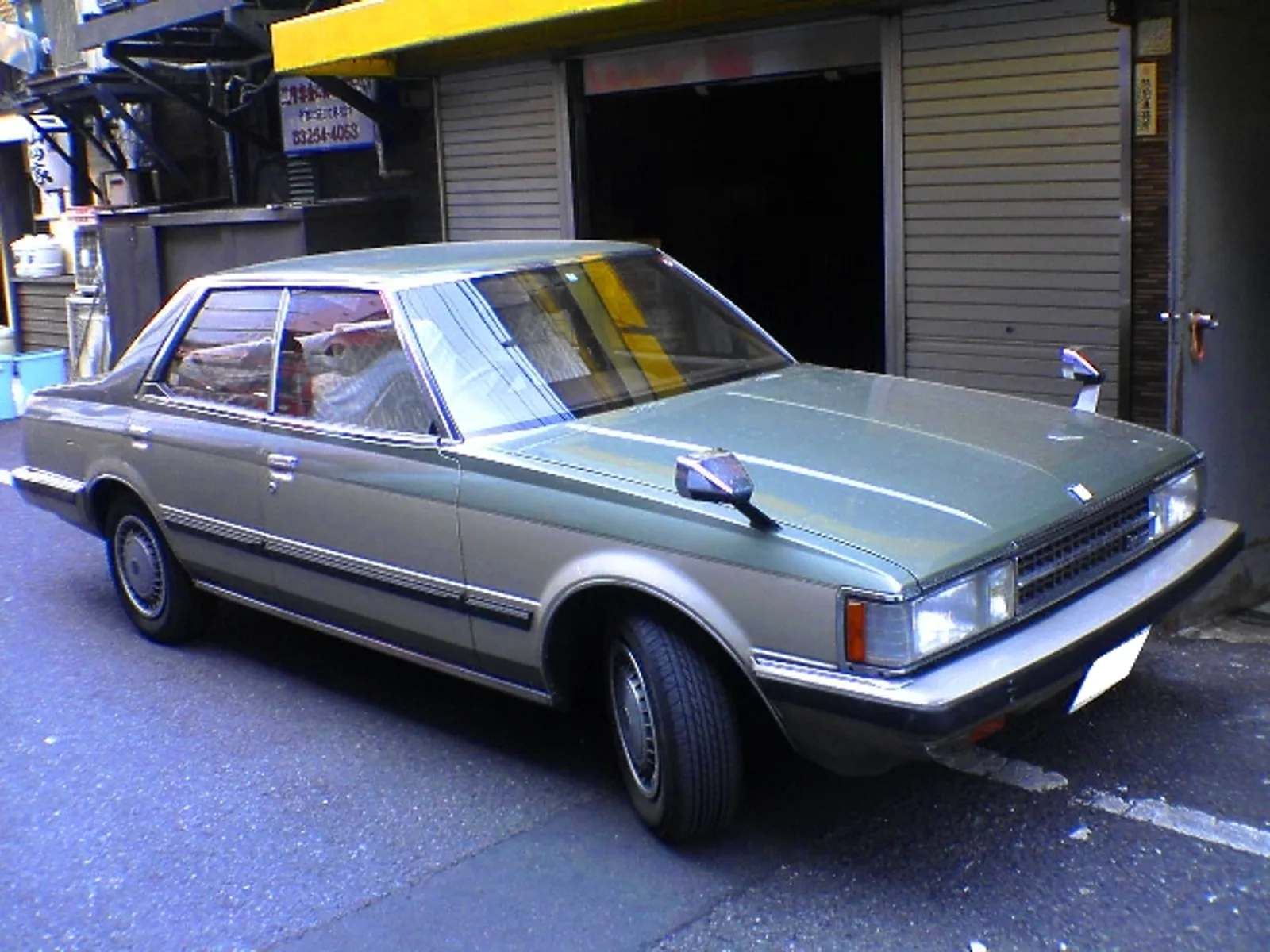
A mid-size luxury sedan built on the Mark II and Chaser platform, the Cresta moved from four halogen headlights to a Soarer-like body before it was merged into the Verossa.
The Cresta was Toyota's mid-size luxury sedan from 1980 to 2001, spanning five generations. Built on the Mark II and Chaser platform, it was sold through Toyota Vista Stores and moved from straight sixes to 1JZ turbos and iFour four-wheel drive. It ended in June 2001, when the Verossa replaced it.
The Toyota Cresta was a mid-size luxury car that Toyota built for five generations, from 1980 until production stopped in 2001. It shared its chassis with the Mark II, the Cressida and the Chaser, and it was the top-level car at Japan's Toyota Vista Store dealerships. Its brief was refinement, while the Chaser kept the sporting role on the same platform.
What was the Cresta meant to be?
The Cresta was built to give Toyota buyers a more luxurious package than the Mark II. The Chaser shared the same platform but was the performance-oriented model, and the two cars were sold through different dealership networks rather than in a single showroom.
The name Cresta comes from the Latin for crest, the plume of feathers or ornament worn on a helmet. The logo was modelled on a Kabuto, the traditional Japanese helmet, and that heraldic idea ran through the car's branding for its whole life.
Like its siblings, the Cresta's luxury reputation grew as each generation offered larger engines. Turbochargers and superchargers were added to bigger displacements, although Japanese tax and emissions rules limited the scope of those changes.
A luxury Toyota with a helmet crest on its badge, built for 21 years before its name passed into history.
How did the first-generation Cresta launch?
The first Cresta arrived in April 1980, sold exclusively through the newly introduced Toyota Vista Store, while Toyota Auto Store sold the Chaser. It was positioned as a luxury sedan above the Mark II, which was dedicated to Toyopet Store locations, and alongside the older Crown, which was only available at Toyota Store outlets.
The car was sized to stay clear of the dimension rules that carried extra annual tax. It was launched with four halogen headlights, and the mid-cycle refresh replaced them with single units for a more modern European look. Toyota's Soarer luxury coupe arrived in February 1981, and the Cresta was updated to look similar.
Engines were the SOHC 2.0 L M-EU and 2.0 L 1G-EU straight sixes, mated to a five-speed manual or a four-speed automatic shared with the Crown. Ride quality and handling were prioritised, and MacPherson struts were used at all four corners, with the rear suspension borrowed from the Crown and Soarer. Each first-generation trim offered seven exterior colours, and the top Super Lucent alone had a dark grey over silver two-tone. Interior colours were blue, grey or brown, but cloth patterns varied by trim and leather was not offered. The body colour set the interior colour unless a special order was placed. The name Super Lucent comes from the Latin lucens, meaning to shine.
What did the 1984 second generation bring?
Released on March 8, 1984, the X70 borrowed styling ideas from the Mark II and the newly launched Soarer. The Cresta was now offered as a four-door, four-window hardtop sedan with a distinct, creased rear window, and the Mark II took a similar hardtop body.
The Cresta remained the top-level car at Toyota Vista Store, a role it shared with the Crown, which had been refreshed in 1983. Its marketing targeted the growing private ownership market, while the Crown served chauffeur-driven corporate and taxi customers.
In October 1985 the 1G-GTEU parallel twin-turbo reached the GT TWIN TURBO trim, which shared its name with the Chaser. The car had larger disc brakes and bucket seats borrowed from the Supra (A60), and side turn signals were added above the headlights to improve pedestrian safety.
Suspension was improved and given the PEGASUS name, first seen on the Soarer, and the ECT-S automatic was new for the generation. The 2.2-litre diesel was offered only in the Super Custom, then raised to 2.4 litres at the mid-cycle refresh. The interior moved to dark blue, dark brown or dark red, replacing the dark grey of the previous car, and the two-tone exterior paint changed to pearl white and gold. Power side mirrors were moved to the leading edge of the front doors, where they retracted electrically for tight parking.
How did the third generation change the Cresta's look?
The third generation was introduced on March 8, 1988. It moved away from the straight edges Toyota had used in that period and was sold only as a sedan, while the Chaser remained a pillared hardtop. The Cresta visually resembled a four-door Soarer and used the same interior colours and paint choices.
The top model, the Super Lucent G, offered a choice of engines. The base variant used a supercharged 2.0 L 1G-GZE straight six, while the Super Lucent G carried the 3.0 L 7M-GE six that the Soarer also used. A belt drives the supercharger, which engages through an electromagnetic clutch and therefore runs only on demand.
The Super Lucent G grew wide enough to fall outside the small-car rules, which increased its yearly taxes, while other trims stayed within them. The suspension moved to double-wishbone design at both ends and could take optional TEMS electronic shock absorbers. All engines were upgraded to DOHC for efficiency.
The 1JZ-GE and 1JZ-GTE in the GT Twin Turbo grades were shared with the Chaser. Five studs were added to each wheel to cope with the extra torque, and in August 1990 the mid-cycle refresh added the Super Lucent Exceed, the Super Custom Extra and the 2.5 GT Twin Turbo.
What was the fourth-generation X90 like?
The X90 Cresta debuted in 1992 with significant styling and mechanical changes. It grew in size and gained new trim levels to match its Mark II and Chaser siblings. Its exterior moved closer to the Toyota Aristo, by then the senior luxury car sold at Vista Stores.
In 1994 Toyota changed the front grille and taillight design after mid-cycle refreshes. The car was no longer regarded as a compact under Japanese dimension rules, because its length and width had grown and it no longer offered two width dimensions.
The base trim was the SC, with few options and a petrol or diesel engine mated to a four-speed automatic. The Suffire had more equipment and an optional five-speed manual. The Super Lucent was the upper tier, offering three straight sixes from 2.0 to 3.0 L with an electronically controlled four-speed automatic and the option of TEMS, a moon roof or a limited-slip differential.
The Super Lucent G added ABS, 15-inch wheels, cruise control, a digital instrument cluster and leather. A permanent four-wheel drive system called iFour arrived as an option in the 1993 refresh, splitting power 30 percent to the front and 70 percent to the rear. A driver-side airbag became standard in 1995. Standard items also included automatic climate control and side-impact bars in every door, while the base SC offered few options.
How did the Tourer models perform?
The Tourer trims all used a 2.5 L 1JZ straight six. The Tourer S was naturally aspirated with a four-speed automatic, while the Tourer V used a pair of turbochargers and could be fitted with an R154 five-speed manual. The Tourer V alone came with traction control, ABS and a limited-slip differential as standard.
Tourer V models were popular with enthusiasts and drifters because of their stiff chassis, their price against other rear-drive turbo Toyotas, and their power-to-weight ratio.
What did the fifth generation X100 bring?
The X100 Cresta was released in September 1996. Its dimensions were close to the X90, but it weighed an extra 90 kg (200 lb), partly because of stricter safety rules. It was given an updated front and rear end, and it lost the 1.8 L 4S-FE four-cylinder option.
The Tourer name was replaced by Roulant, and a new 2.0 L 1G-FE straight six joined the range. The Super Lucent moved to a mid-priced grade, replacing the Suffire, and the four-cylinder cars became diesel-only. Leather upholstery, offered in the previous generation, was dropped.
The X100 had a more elegant body than its siblings. It had sloping and curvaceous bodywork, a simple grille and a sloping beltline, and its overall height of 1,420 mm (56 in) was 20 mm higher than the Mark II and Chaser. Dual airbags and side airbags in the front seatbacks became standard.
What were the late-1990s updates?
A timeline of updates shows how the car was refreshed as it aged. In August 1997 the Super Lucent L was launched with aluminium wheels and a leather-wrapped steering wheel. In January 1998 the Super Lucent Four N, a full-time 4WD special edition, arrived with a keyed electric door lock.
In August 1998 the grille and taillights were changed, the interior fabric updated and the Roulant wheel reduced to three spokes. VVT-i was adopted on the 2.0 L 1G-FE, and AWD was added to the 2.0 L. The Excellent Edition followed in December 1998, and the Premium Edition models in April 2000 brought HID headlamps and a six-CD changer.
How did the Cresta end in 2001?
The Cresta ended production in June 2001, folding into the Verossa alongside the Chaser. The diesel 2L-TE 2.4 turbo was dropped during the run, and the BEAMS VVT-i mechanism became standard on all Cresta engines.
The car's final stock sold out in July 2001, closing 21 years of production. Five generations had passed since 1980, and the nameplate did not return.
What are the key Cresta specifications?
| Specification | Detail |
|---|---|
| Launch | April 1980, exclusively at Toyota Vista Store |
| First-generation engines | SOHC 2.0 L M-EU and 2.0 L 1G-EU straight sixes |
| Second-generation diesel | 2.2-litre, later 2.4 litres at the mid-cycle refresh |
| Third-generation top engine | 3.0 L 7M-GE straight six shared with the Soarer |
| Fourth-generation sixes | 2.0 to 3.0 L straight sixes with electronically controlled four-speed automatic |
| Tourer V | 2.5 L 1JZ-GTE twin turbo, R154 five-speed manual option |
| Fifth-generation weight gain | 90 kg (200 lb) more than the X90 |
| Fifth-generation height | 1,420 mm (56 in), 20 mm higher than Mark II and Chaser |
| Permanent AWD | iFour, 30 percent front and 70 percent rear |
| Production end | June 2001, merged into Verossa |