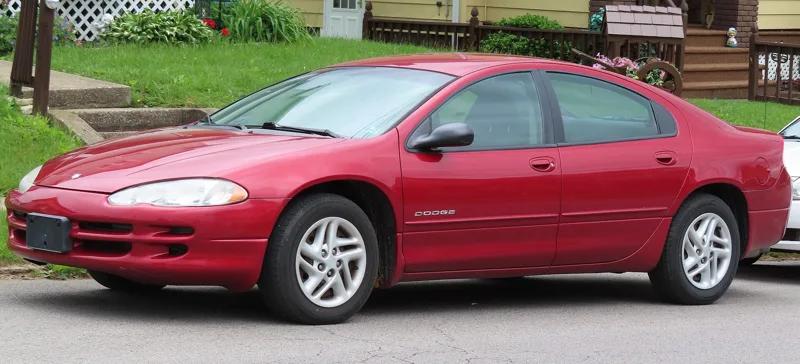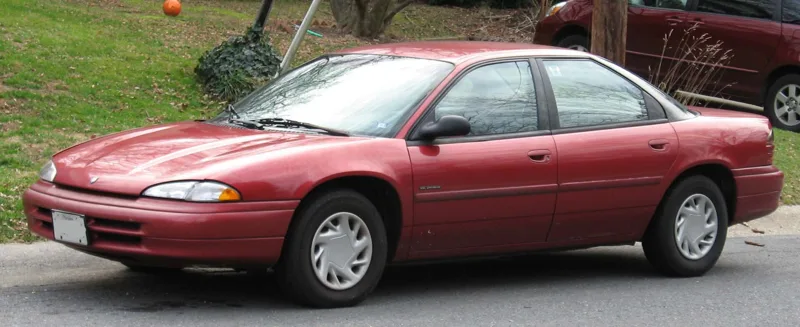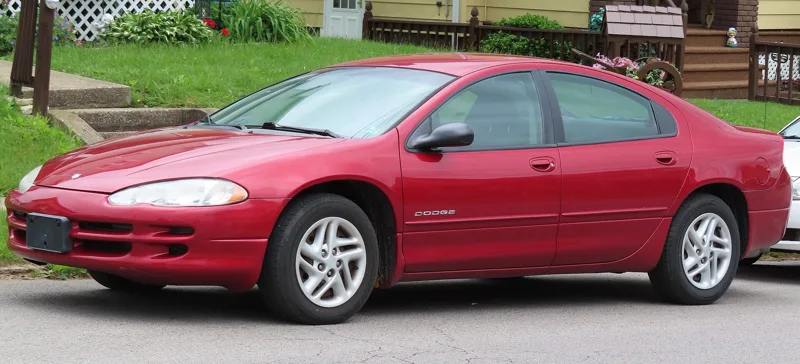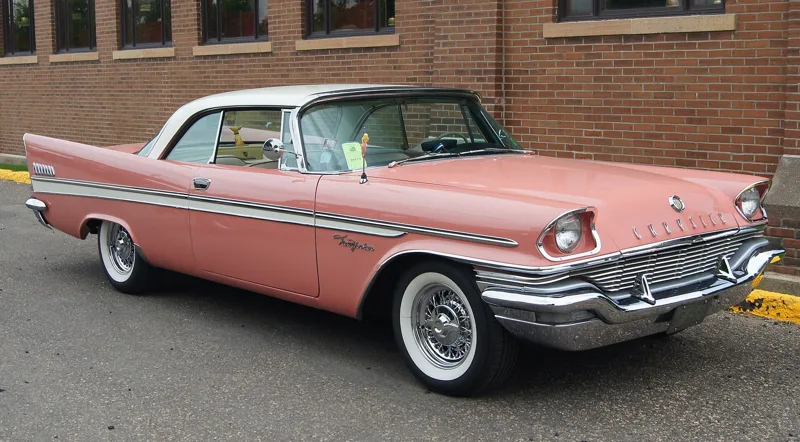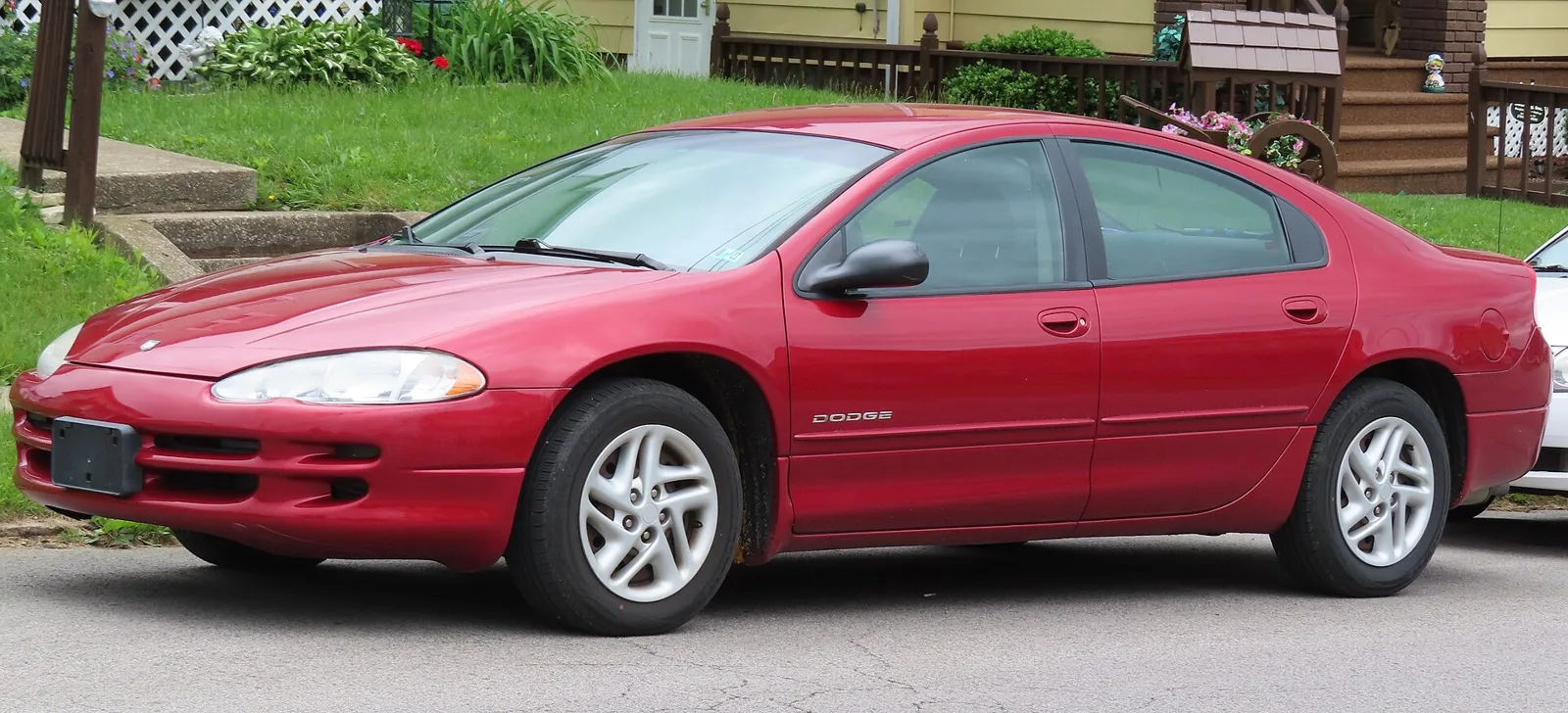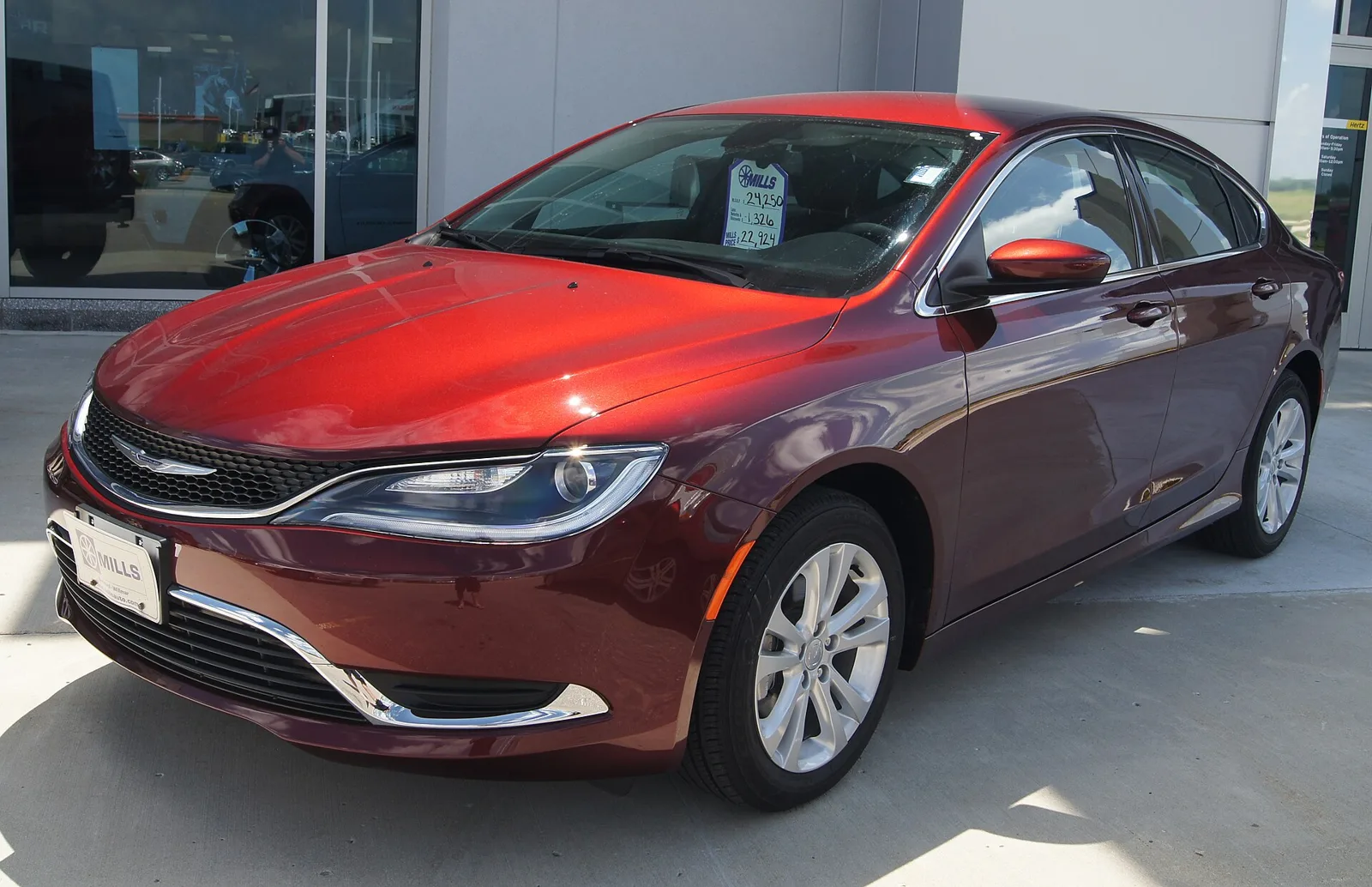
A small luxury coupe from a brand that swore off small cars, the last rear-drive Chrysler sedan, a cab-forward front-drive full-size sedan and a mid-size 200 that lasted six years.
The Cordoba was Chrysler's 1975 personal luxury coupe, the Fifth Avenue the top Chrysler trim below the Imperial from 1979 to 1993, the Concorde a cab-forward front-drive sedan from 1992 to 2004, and the 200 a mid-size sedan from 2011 to 2017. Each answered a different market shift.
Throughout the early 1960s, Chrysler's catalogues told the public that there would never be a smaller Chrysler. By 1977 the company was building 183,000 of them in a year.
That reversal, the Cordoba, is one of four sedans and coupes that map Chrysler's changing ideas of itself. The Fifth Avenue kept rear-drive comfort alive into the late 1980s, the Concorde bet on a radical shape, and the 200 tried to take on the Camry and Accord.
What was the Chrysler Cordoba?
The Chrysler Cordoba was an intermediate-sized two-door personal luxury car sold from the 1975 model year until 1983. It was Chrysler's first model made specifically for that market and the first Chrysler smaller than full-size. The name had already appeared on a full-size Newport trim package in 1970 and on a show car.
The show car was the Cordoba de Oro, designed by Chrysler's design chief Elwood Engel and shown at the 1970 Chicago Auto Show. It had a wedge-shaped body that later evolved into the fuselage look, a cantilevered roof with no A-pillars, and an air intake controlled by a thermostat. In the spring of 1970 the Newport Cordoba followed, a gold-painted limited edition with an Aztec eagle hood ornament and antique gold vinyl inside. It cost US$3,769 with a 383 cu in (6.3 L) V8 making 200 hp (149 kW; 203 PS), and Chrysler built 3,741 of them.
Why did Chrysler change its mind about small cars?
Chrysler first designed the car as the Plymouth Sebring, to share bodies with the Dodge Charger SE. It instead positioned it as a personal luxury car, since losses on the new full-size C-body cars after the 1973 oil crisis pushed executives to seek better profits under the Chrysler badge. It rode on a 115 in (2,921 mm) wheelbase, 9 in (229 mm) shorter than the next largest Chrysler.
The Spanish name was marketing rather than substance. The city of Cordoba, Spain, gave the car its name, and even the emblem was a stylised Argentine cordoba coin. Actor Richard Basehart was the first spokesman, but Ricardo Montalban fronted the advertising for the whole run, praising its rich Corinthian leather.
It worked. At a time when Chrysler was teetering on bankruptcy, demand for Cordobas exceeded supply for the first few years. More than 150,000 sold in 1975, 165,000 in 1976 and just under 140,000 in 1977, although production peaked at 183,000 in 1977. Cordobas made up half the Chrysler division's output in those years, and occasionally more. The Dodge Charger SE, a cheaper cousin, sold far fewer.
What went wrong?
Buyers found plenty to like inside: a velour bench seat as standard, Corinthian leather buckets as an option and simulated burled elm trim, switched to rosewood from 1976. The first design then aged. The 1978 restyle, with stacked rectangular headlights, drew criticism from Chrysler designer Jeffrey Godshall in Collectible Automobile as somewhat tacky, and it made the car look heavier just as rivals shrank. The Ford Thunderbird had been downsized in 1977, and the Chevrolet Monte Carlo and Pontiac Grand Prix followed in 1978.
The smaller Chrysler LeBaron, offering similar luxury from mid-1977, took some of its customers, while Chrysler's finances and quality reputation slipped. As fuel prices rose and fuel economy rules tightened, the Cordoba's weight of nearly 3,700 lb (1,700 kg) with 360 cu in (5.9 L) or 400 cu in (6.6 L) V8 engines looked out of date.
The second generation, 1980 to 1983, was downsized onto the J platform, which it shared with the Dodge Mirada. A 225 cu in (3.7 L) Slant six with 95 hp (71 kW) was standard. The 318 cu in (5.2 L) V8 made 130 hp (97 kW), and the 360 cu in (5.9 L) V8 made 185 hp (138 kW), but fewer than 100 buyers ordered the latter. Sales fell substantially, Chrysler moved its attention to front-drive compacts, and the Cordoba ended in 1983.
Cordobas also raced in NASCAR: Ed Negre in 1978 and 1979, and Buddy Arrington from 1982 to 1984. Arrington never won, but collected 26 top-10 finishes. Good cars were scrapped after the 1990s, and aftermarket support is thin.
Four sedans, four strategies: personal luxury, traditional rear-drive comfort, cab-forward engineering and a mid-size contender.
What was the Chrysler Fifth Avenue?
Fifth Avenue was the name of Chrysler's most prestigious sedan trim from 1979 to 1993, taken from the Manhattan street two blocks west of the Chrysler Building. It sat below only the Imperial, began as an option package and then became its own model line, competing with the Lincoln Town Car and Cadillac Fleetwood. From 1982 to 1989 it was the Chrysler version of the Dodge Diplomat, which made it the last rear-wheel-drive Chrysler sedan of the 20th century.
The first Fifth Avenue, in 1979, was an upmarket New Yorker trim on the R-body, still V8 and rear-drive, with a 118.5 in (3,010 mm) wheelbase. The Fifth Avenue Edition came in a single two-tone, Cream-on-Beige, with Champagne leather, driftwood trim and a Pentastar hood ornament. It added US$1,500 to a New Yorker priced at US$8,631, and the colour-keying went as far as the bumper rub strips. Black Walnut metallic arrived in 1980, and two new colours followed in 1981, by which time the package cost US$2,092 on a US$10,459 car.
Under the skin the car was old-fashioned. Chrysler still used its longitudinal Torsion-Aire front torsion bars, a design that dated to 1957. Production was low: under 75,000 R-body New Yorkers from 1979 to 1981, with about a quarter of them Fifth Avenues. Fourteen were stretched into limousines, and several served at the 1980 Winter Olympics in Lake Placid.
How did the M-body Fifth Avenue become a hit?
The 1982 car moved to the smaller M-body, with the Fifth Avenue still an option package at US$1,244 on top of US$10,851. It added a distinctive vinyl roof, electro-luminescent opera lamps and button-tufted seats in Kimberley velvet or Corinthian leather. The names then got confusing: in 1983 the New Yorker name moved to a new K-car, and the M-body became the New Yorker Fifth Avenue. From 1984 it was simply the Fifth Avenue, a name that lasted six successful years.
Every one from 1984 to 1989 had a 318 cu in (5.2 L) V8 with a three-speed TorqueFlite automatic. In 1985 a revised engine with a roller camshaft and a Holley carburettor lifted output from 130 to 140 hp, and torque from 230 to 265 lb ft. As the biggest Chrysler on sale, it sold in large numbers, notably in 1985 and 1986, and the car outsold its Dodge Diplomat and Plymouth Gran Fury siblings by a wide margin. Figures differ: a peak of 118,000 is quoted for 1986, while year-by-year totals run to 109,971 for 1985 and 104,744 for 1986.
Between 1982 and 1989 Chrysler built 569,114, with 1989 the final year and a driver's airbag standard. Production moved from Windsor, Ontario, to St. Louis in 1984, then, between mid-1987 and mid-1989, to the Kenosha plant that Chrysler acquired with American Motors in 1987. About 60 were stretched into limousines. This was also the last rear-drive, V8-powered Chrysler until the 300 returned in that form for 2005.
A third Fifth Avenue ran from 1990 to 1993 as a long-wheelbase New Yorker on the Y platform, sharing its body with the Imperial. Chrysler then retired the name in favour of the LH-platform New Yorker and the LHS.
How did the Chrysler Concorde bring cab-forward to Chrysler?
The Concorde was a front-wheel-drive full-size sedan built from 1992 to 2004 that replaced the New Yorker Salon as the entry-level full-size Chrysler. Its cab-forward shape pushed the wheels to the corners and stretched a long, low windshield over a big cabin. It was one of the first three LH-platform cars and appeared on Car and Driver's Ten Best list for 1993 and 1994.
The shape began with Kevin Verduyn's Navajo concept of 1986, which never got past clay. Chrysler had by then bought Lamborghini, and the design was reworked into the Lamborghini Portofino concept shown at the 1987 Frankfurt show. It was a hit, and Chrysler decided to build a production sedan around the same cab-forward idea. Picture the cabin slid forward over the front axle and the wheels pushed out to the four corners: that is cab-forward, and it leaves very little bodywork hanging past the wheels.
The engineering followed Chrysler's 1987 purchase of American Motors. When Francois Castaing, formerly AMC's engineering chief, became Chrysler's vice president of vehicle engineering in 1988, he scrapped an early Dynasty-like design. The new platform drew on the Eagle Premier, which supplied its longitudinal engine layout, front suspension geometry and part of the brakes, and Premiers served as development mules. The Renault-style layout allowed a lower hood line, easier servicing and a tighter turning circle. The A606 transmission borrowed heavily from Chrysler's Ultradrive. Chrysler also built a new 3.5-litre V6 with four valves per cylinder in three years, where the old system would have needed up to five.
What was the first Concorde like?
The 1993 Concorde debuted at the 1992 Detroit show as a single, well-equipped model at US$18,341. It was closest to the Eagle Vision, sharing nearly all its sheet metal and differing mostly in grille, rear fascia and trim. The Concorde had a six-section waterfall grille with a Pentastar on the centre strip and a full-width lightbar between the taillights. Dual airbags and power windows were standard and an automatic was the only gearbox. A front bench seat, available from 1994, made it a six-seater.
The Center for Auto Safety ranked the 1993 car as superior in crashworthiness after a 35 mph (56.3 km/h) crash into a wall. The 3.3-litre V6 made 153 hp (114 kW), rising to 161 hp (120 kW), and the 3.5-litre made 214 hp (160 kW). Changes arrived steadily: a touring suspension for 1994, sheet-metal fenders and the Chrysler wreath logo in 1995, and LX and LXi trims in 1996.
How did the second generation differ?
The 1998 Concorde grew 7.5 in (190 mm) longer on the same 113 in (2,900 mm) wheelbase yet lost nearly a hundred pounds, thanks to aluminium in the rear suspension, bonnet and engines. New V6s made 200 hp (149 kW) from 2.7 litres and 225 hp (168 kW) from 3.2 litres, and a reworked 3.5 made 253 hp (189 kW) in the 2002 to 2004 Limited. Designers worked to separate the Concorde from the Intrepid and the new 300M, giving it a full-width grille set in the bumper.
The Concorde, 300M and Intrepid all ended in 2004. The rear-wheel-drive Chrysler 300 replaced the Concorde and 300M as a 2005 model.
What was the Chrysler 200?
The Chrysler 200 was a mid-size sedan sold for the 2011 to 2017 model years, with a convertible in its first generation. The name began on the 200C, a hybrid prototype based on the 300 and shown at the 2009 Detroit show, which was engineered to take petrol, hybrid or full-electric power.
The first-generation 200 was a restyled, re-engineered third-generation Sebring on the same JS platform, which had Mitsubishi origins. It kept a 2.4-litre four with 173 hp (129 kW) and 166 lb ft (225 N m), and added the new 3.6-litre Pentastar V6 with 283 hp (211 kW) and 260 lb ft (353 N m). Stiffer mounts, LED lighting and better materials aimed to cut noise and lift the cabin. Built at Sterling Heights, it reached dealers in December 2010, and the convertible arrived in early 2011. According to an Edmunds analyst, the new name let the car ride on the coattails of the 300 and put distance between it and a Sebring notorious for quality problems and fleet use.
Marchionne told the press in early 2013 that the first generation would be short-lived. A 2013.5 200 S Special Edition with Carhartt at US$28,870 became the 2014 Super S, carrying Mopar Stage One cosmetics and Stage Two mechanical parts. In Europe the convertible was sold as the Lancia Flavia from 2012 to 2014.
How did the second generation change?
The 2015 car, unveiled on 13 January 2014 at the Detroit show, used the long-wheelbase Compact US Wide version of Fiat's Compact platform. It came in LX, Limited, S and C trims against the Camry, Altima, Accord, Mazda6, Passat, Malibu and Fusion. Chrysler claimed the best V6 horsepower in the class and a drag coefficient of 0.27, and it was the first car in its segment with a dial gear selector. There was no convertible, since Chrysler cited falling demand and high cost.
Engines were a 2.4-litre TigerShark with 184 hp (137 kW; 187 PS) and 173 lb ft (235 N m), or the 3.6-litre Pentastar with 295 hp (220 kW; 299 PS) and 262 lb ft (355 N m), both with a nine-speed automatic. The V6 could have all-wheel drive with a fully disconnecting rear axle that engaged when the system detected poor traction.
Why did the 200 end so soon?
After the first year Fiat Chrysler chief executive Sergio Marchionne said the 200 would run its course on the current architecture. He blamed rear-seat entry, which the roof slope crimps, in blunt language, although the car was a high-volume seller and some argue other factors mattered more. Other evidence points to FCA's stronger sales of trucks and SUVs as a primary reason, and the Dodge Dart, the other car on the same architecture, was dropped as well.
FCA announced on 26 July 2016 that production would end in December. It did, on 2 December 2016, after a 2017 model run of exactly four months. At the 2017 Detroit show Marchionne described the 200 and Dart as the least financially rewarding enterprises FCA had undertaken in eight years. FCA planned to move Ram pickup production into Sterling Heights.
The 200 still had one marketing triumph. Chrysler bought a two-minute Super Bowl XLV advertisement featuring Eminem and the line Imported from Detroit, passing over the 300 because it was built in Ontario. The day after, Chrysler 200 was the second most-searched term on Google, AOL Autos searches rose 685 percent, and the video passed 5 million views.
How do the four Chryslers compare?
| Model | Years | Layout | Typical engine | Role and end |
|---|---|---|---|---|
| Cordoba | 1975-1983 | Rear-drive personal luxury coupe | 225 cu in (3.7 L) Slant six or 318 cu in (5.2 L) V8 in later years | First small Chrysler; ended as Chrysler turned to front-drive compacts |
| Fifth Avenue | 1979-1993 | Rear-drive sedan until 1989 | 318 cu in (5.2 L) V8, 140 hp from 1985 | Top Chrysler below the Imperial; name retired after 1993 |
| Concorde | 1992-2004 | Front-drive cab-forward sedan | 3.3 L or 3.5 L V6, later 2.7 L and 3.2 L | Replaced by the rear-drive 300 |
| 200 | 2011-2017 | Front-drive or all-wheel-drive mid-size sedan | 2.4 L four or 3.6 L Pentastar V6 | Ended 2 December 2016 as FCA focused on trucks and SUVs |
What to know before buying a used Chrysler of this kind
A Cordoba is a rare survivor, because good ones were scrapped after the 1990s and spare parts are scarce. A Fifth Avenue of 1984 to 1989 is the traditional, simple one, with a single engine and a three-speed automatic. The Concorde had a touring suspension from 1994 and sheet-metal fenders from 1995, and the 1996 and later LX and LXi cars got extra sound insulation. The 200 is the easiest to find, and in the second generation only the V6 could be had with all-wheel drive.
What replaced the four Chryslers
Chrysler's sedans did not return in their old forms. The rear-wheel-drive 300 took over from the Concorde in 2005, and after the 200 FCA positioned itself in the US largely as a maker of SUVs and trucks, finding extra capacity for Jeep and Ram. The Ram pickup was due to move to Sterling Heights, the plant that had built the 200.