From a 1920 Connecticut coachbuilder to the last car in 1995, the LeBaron name covered classic luxury bodies, K-car sedans and the J-body coupe and convertible.
The Chrysler LeBaron was a name Chrysler used from 1931 to 1995 on several different cars. It began as a luxury coachbuilt body, returned in 1977 as the lowest-priced Chrysler, and covered five distinct designs before the last car was built.
The Chrysler LeBaron was a name that Chrysler used on several different cars between 1931 and 1995. It began as a luxury body from a Connecticut coachbuilder, returned in 1977 as the company's cheapest model, and survived through five distinct designs before the last one was built in 1995.
The name also outlived the company's own luxury plans. Chrysler dropped the Imperial brand in 1975, yet the LeBaron name had already been attached to Imperial models from 1957.
Where did the LeBaron name come from?
LeBaron was a coachbuilder set up in 1920 in Bridgeport, Connecticut. Thomas L. Hibbard and Raymond H. Dietrich were the founders. Briggs Manufacturing Company of Detroit acquired the firm in 1926 and ran it as a specialist subsidiary. Chrysler later bought Briggs outright in 1953, which brought the LeBaron name into the company.
The first Chrysler LeBaron appeared in 1931, with a body built by the coachbuilder and aimed at rivals such as Lincoln and Packard. For the next decades the name stayed tied to high-end bodies rather than to a single mass-market model.
A name that began on a coachbuilder's bodywork and ended on a family sedan in 1995.
How did the coachbuilder shape the classic LeBaron?
LeBaron supplied bodies for the high-end CW series, which sat beside Chrysler's Airflow Imperials of the mid-1930s. The Airflow was a radical Art Deco shape, and buyers rejected it, with conventional Chryslers outselling it by about 3 to 1 at the time.
Raymond Dietrich, who had co-founded LeBaron, was hired by Chrysler in 1932 as its in-house stylist and restyled the Airflow line into more mainstream shapes. The coachbuilder's last Chrysler commissions were two show cars. The Newport Phaeton was a streamlined dual-cowl car with an aluminium body. The 1941 Thunderbolt roadster hid its headlamps and folded a metal top away, and its styling came from Alex Tremulis, a designer who later worked on a section of the 1948 Tucker.
Only six examples of each car were built, so neither reached a production line.
Why did the Imperial LeBaron matter?
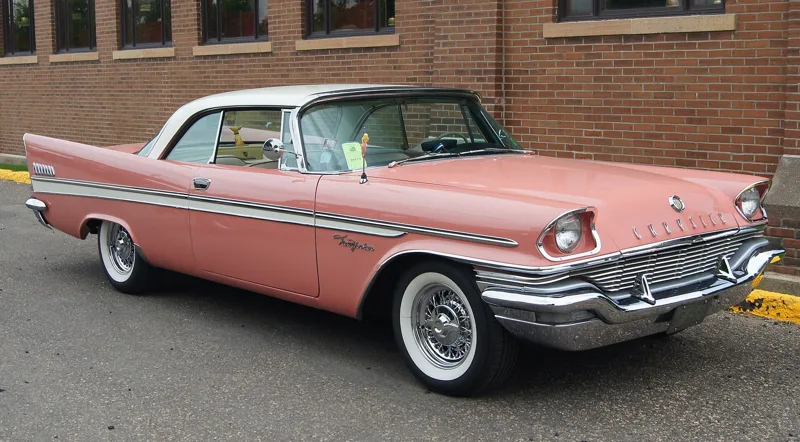
The Imperial LeBaron was the flagship of Imperial, which Chrysler had made a separate luxury make in 1955 to rival Cadillac, Lincoln and Packard. The LeBaron name ran on Imperials from 1957 until 1975, tying the marque to the coachbuilder that had given Chrysler its first LeBaron bodies.
Imperial used two nameplates alongside a base model, the Imperial Custom sold from 1960 to 1963. The mid-range line was the Imperial Crown, while the top line carried the LeBaron name in honour of the coachbuilder. Southampton labelled pillarless hardtop styles.
The Imperial brand was retired in June 1975 because sales were falling. For 1976 the flagship car became the New Yorker Brougham.
What did the 1977 LeBaron look like?
The 1977 LeBaron answered the Cadillac Seville and the Lincoln Versailles, and it was the smallest vehicle Chrysler had sold under its own badge at that point. Chrysler offered a two-door coupe alongside the four-door sedan, and the Town and Country station wagon joined for 1978.
The car rode on the M platform with a wheelbase of 112.7 in (2,863 mm). The Dodge Diplomat and Plymouth Caravelle used the same bodywork. Power came from a Slant Six of 225 cu in (3.7 L) as standard, while 318 cu in (5.2 L) and 360 cu in (5.9 L) V8s were optional. A three-speed Torqueflite automatic was offered with all three engines, and a four-speed manual overdrive was available with the smaller two.
For 1980 the car received a mid-cycle revision. The grille became narrower and more radiator-like, the sedan roofline was squared off, and the coupe took on a more formal profile. The Fifth Avenue option package, converted by American Sunroof Corporation, added a padded vinyl roof over the rear quarter glass. A police-equipment package followed for 1981, sold alongside the Newport and the Gran Fury.
How did the K-platform LeBaron differ?
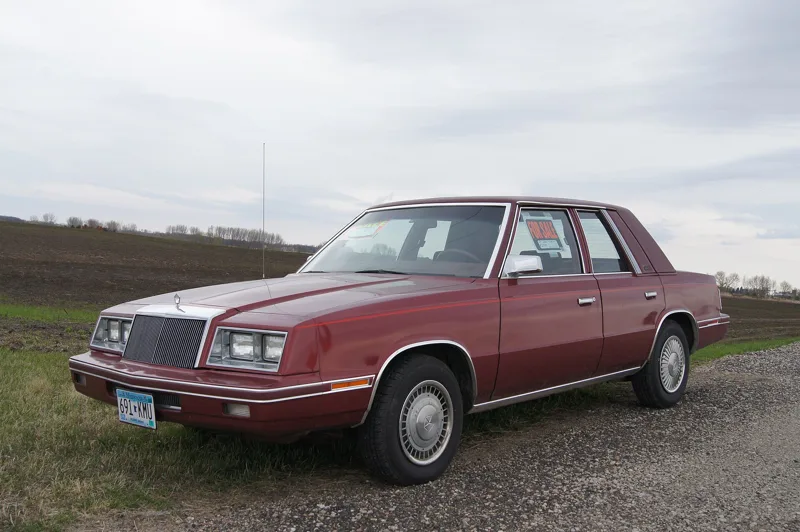
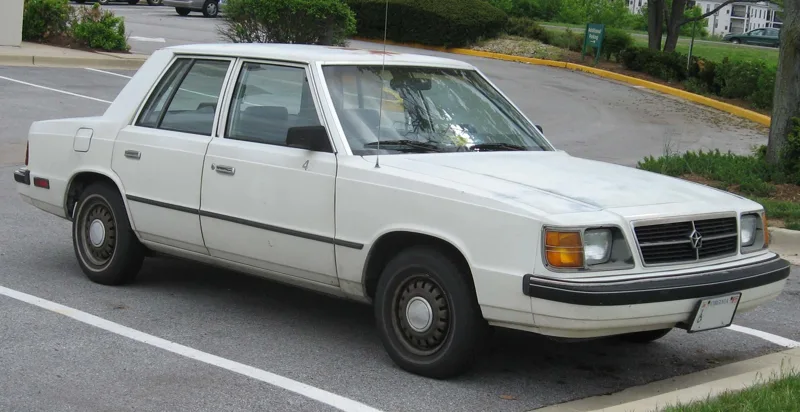
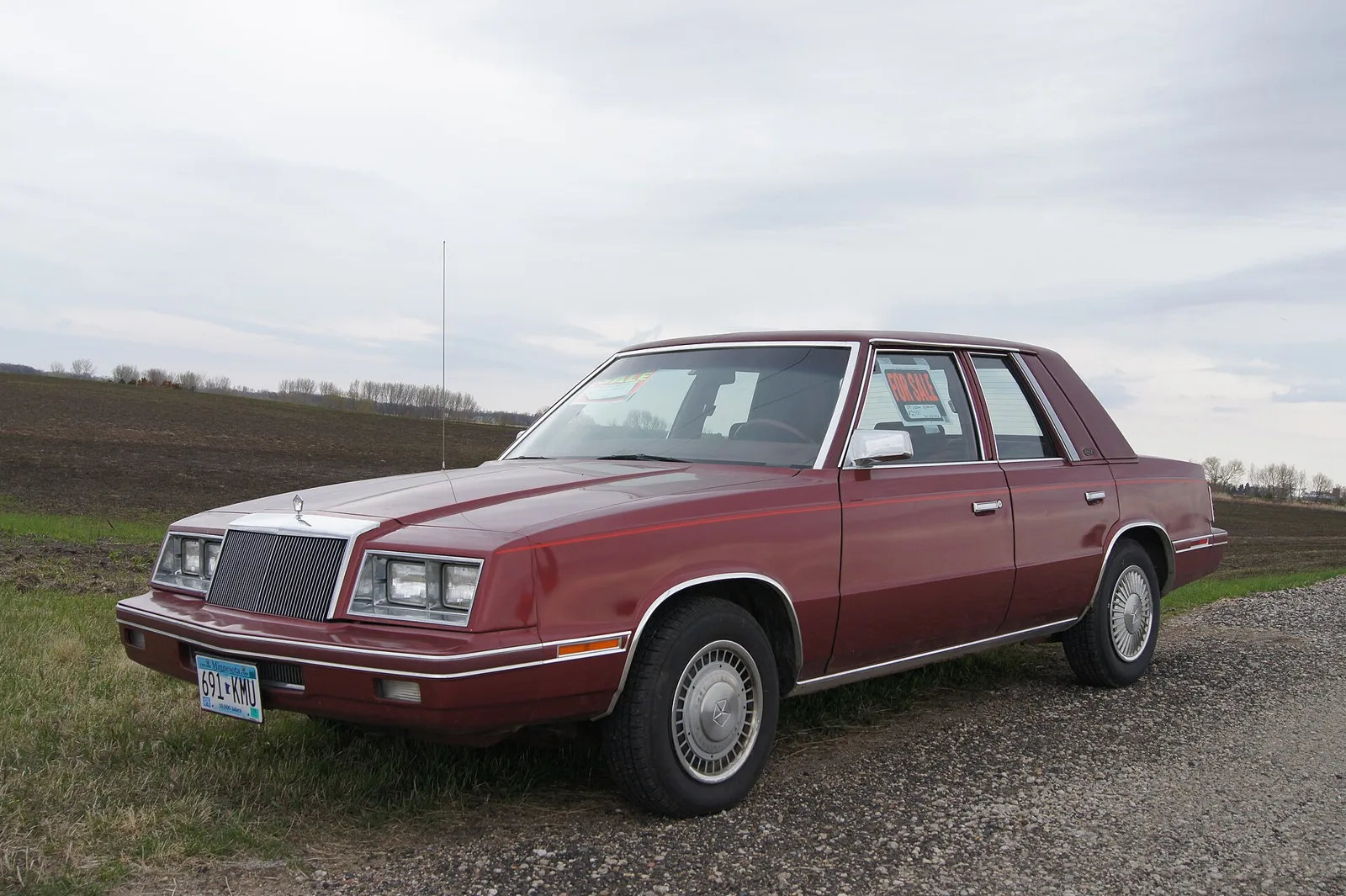
In 1982 the LeBaron switched to the front-drive K platform and became the cheapest model in the upmarket brand's range. It was first offered as a sedan and coupe, then as a convertible in early 1982. That open-top was the first factory-built domestic convertible since the 1976 Cadillac Eldorado, and it marked a sharp change of direction for the nameplate.
The K platform was shared with the Dodge Aries and Plymouth Reliant, although the LeBaron's fascias were closer in look to the larger E-body sedans. A Town and Country wagon with simulated wood panelling joined the range, along with a unique Town and Country convertible built from 1983 to 1986. The sedan carried Electronic Voice Alert, a computerised voice that warned drivers with phrases such as a door being ajar or oil pressure being low.
The 1986 facelift gave the car rounder front and rear ends and a new landau top for the sedan. The coupe and convertible were discontinued after 1986, and their successors arrived as J-body cars for 1987, while the sedan and wagon carried on with minor changes until 1988.
What was the LeBaron GTS?
The GTS of 1985 stood apart from the standard car. Built on the H platform, it was a five-door hatchback derived from the K-car, and it sold next to the Cadillac Cimarron, a small Cadillac with similar equipment. Its base engine was a 2.2-litre inline-four.
A later 2.5-litre TBI version made 100 hp (75 kW), and a turbocharged 2.2-litre offered 146 hp (109 kW). The GTS name was retired for 1989, when the model reached its end.
How did the J-body coupe and convertible look?
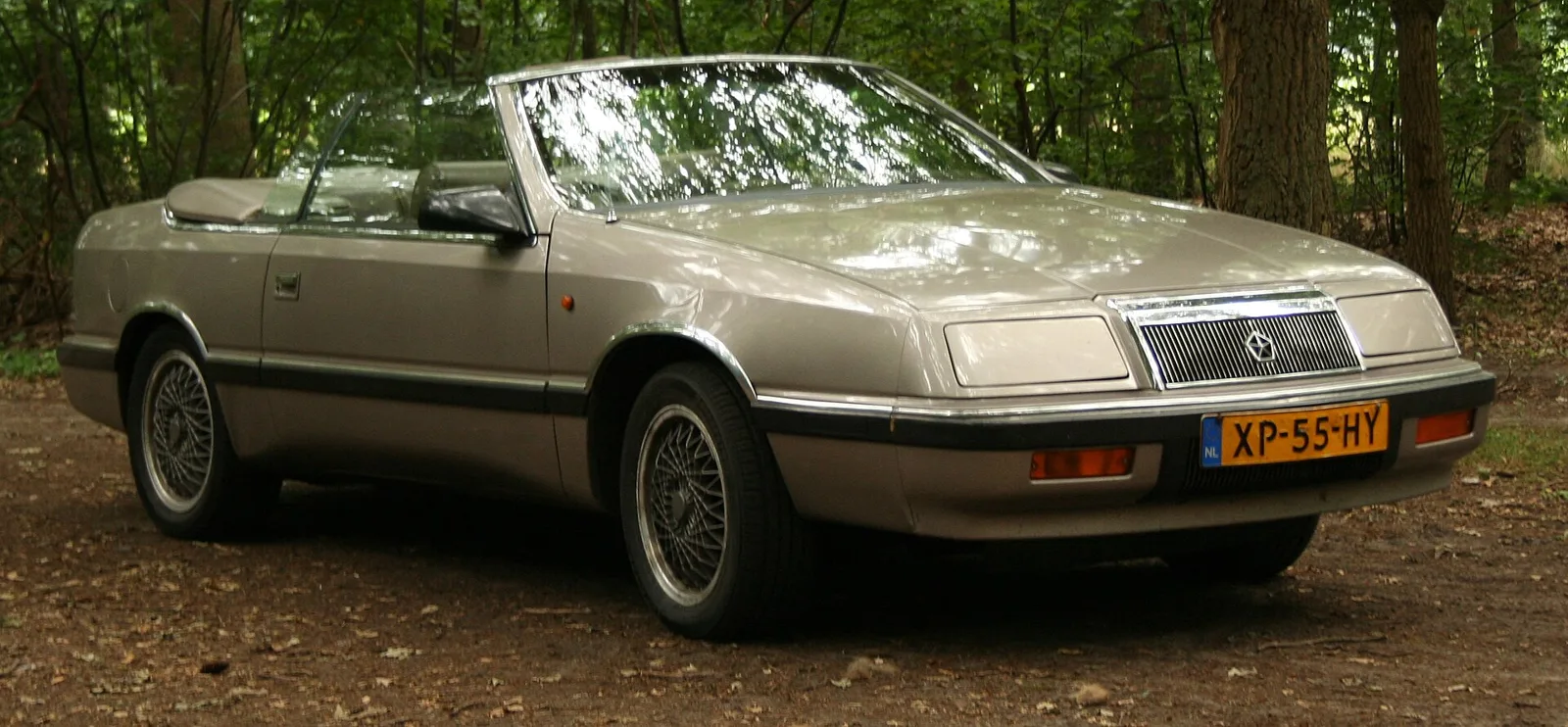
The J-body coupe and convertible arrived for 1987 on a K derivative. Their headlights hid behind retractable metal covers, and the car had a waterfall grille, a steeply raked windshield and full-width taillight lenses. Curved rocker panels in the style of a Coke bottle finished the shape. The LeBaron also carried a trip computer and full instrumentation.
For 1992 a sport package gave coupes and convertibles a monochrome look, with a body-coloured grille, accent stripe and decklid logo. Buyers got 14-inch wheel covers in a lace pattern, and a black band under the taillights replaced the chrome. Coupes also received blacked-out window mouldings.
Engines started with the 2.2-litre and 2.5-litre fours, naturally aspirated or turbocharged. A 3.0-litre Mitsubishi V6 joined for 1990, and for the last two model years it was the only engine left. Output in that application was 141 hp (105 kW). The 1990 refresh brought a new dashboard, gauge cluster and door panels, all smoother than the boxy 1987 to 1989 interior and in tune with the aero styling of the early 1990s.
For 1993 the hidden headlamps were replaced with flush-mounted units, and every model received the amber rear turn signals first seen on the deluxe 1992 cars. The coupe ended after 1993, and the convertible continued until 1995, when the Sebring coupes and convertibles took over.
What were the LeBaron sedans like from 1990?
The AA-body sedan replaced the old K-based sedan in 1990. It was a front-drive K derivative that sat below the New Yorker in Chrysler's line. Dodge and Plymouth sold near-identical versions under the Spirit and Acclaim names, and the LeBaron differed mostly in its trim and details, although it was marketed as the luxury version.
The top-line Landau came with a padded vinyl half-roof, a smaller formal backlight and button-tufted bench seats. Every sedan had a driver airbag as standard and seated up to six people. Trim levels changed over time, with the base model running from 1990 to 1992, the LX appearing in 1992 only, and the Landau and LE covering the later years. The sedan was discontinued on 18 May 1994.
Safety ratings from the National Highway Traffic Safety Administration gave the sedan 4 out of 5 for driver frontal protection and 3 out of 5 for the passenger. Chrysler replaced it with the Cloud Car, the Cirrus. The Dodge Spirit and Plymouth Acclaim stayed in production until 21 December 1994, and for 1993 the sedan's rear lamps took over the reversing lights that had sat in the bumper.
What about the European and Mexican LeBarons?
The LeBaron coupe and convertible were part of Chrysler's export push and were widely sold across Europe. European cars had firmer springs and shocks. The Mitsubishi 3.0-litre V6 arrived in mid-1989 with the four-speed automatic only, and it made 136 PS (100 kW; 134 hp).
That V6 took 10.8 seconds to reach 100 km/h and had a top speed of 182 km/h (113 mph), slightly less than the American version produced.
Chrysler had returned to selling cars under its own name in Europe in April 1988, when it offered the GTS, a rebadged Dodge Lancer ES, with moderate sales. The turbocharged 2.2 later gained an intercooler, lifting output to 177 PS (130 kW; 175 hp). That hotter version was called the LeBaron GTC and was never offered with an automatic.
In Mexico the M-platform car was built at Toluca from 1977 through 1982, and the K-car LeBaron followed from 1983 through 1987. The J-body coupe was sold there as the Chrysler Phantom from 1987 to 1994, with first deliveries in December 1986. Phantoms were the top model in that market and only ever came with turbocharged engines. The Mexican four-door K-body LeBaron was sold in two trims, one with a Landau roof and leather, and the other without, while the AA sedan there was called the New Yorker and always wore a Landau roof. The Phantom R/T later used the 224 hp (167 kW) Turbo III with a five-speed Getrag manual.
Did the LeBaron race?
Several ARCA teams built LeBaron-based race cars and ran them from 1988 to 1998. ARCA sat one tier below NASCAR's Cup series, and Chrysler's Direct Connection performance division was revitalised to support those cars with parts, giving customer teams a route into the sport.
The racing programme gave the brand a visible performance story while the sedan and wagon went about their work in the family market.
Which trim levels did the coupe and convertible offer?
The coupe and convertible came in several trims over their life. The first year offered Highline and Premium, which were typical Chrysler trims of the time, and the number of grades grew until 1990, when six were available. After that the range shrank, and only two trims remained for 1995.
Turbo versions carried their own names, such as GT Turbo, GTC Turbo and Highline Turbo, so a buyer could choose between the standard engines and the boosted ones within the same model year.
Specifications at a glance
| Generation | Years | Platform | Key detail |
|---|---|---|---|
| Classic LeBaron | 1931-1941 | Coachbuilt bodies | CW series for Chrysler |
| First generation | 1977-1981 | M | 112.7 in (2,863 mm) wheelbase |
| Second generation | 1982-1988 | K | Front-wheel drive, convertible from 1982 |
| GTS hatchback | 1985-1989 | H | 2.2-litre inline-four base |
| Coupe and convertible | 1987-1995 | J | 3.0-litre Mitsubishi V6 from 1990 |
| Sedan | 1990-1994 | AA | Discontinued 18 May 1994 |