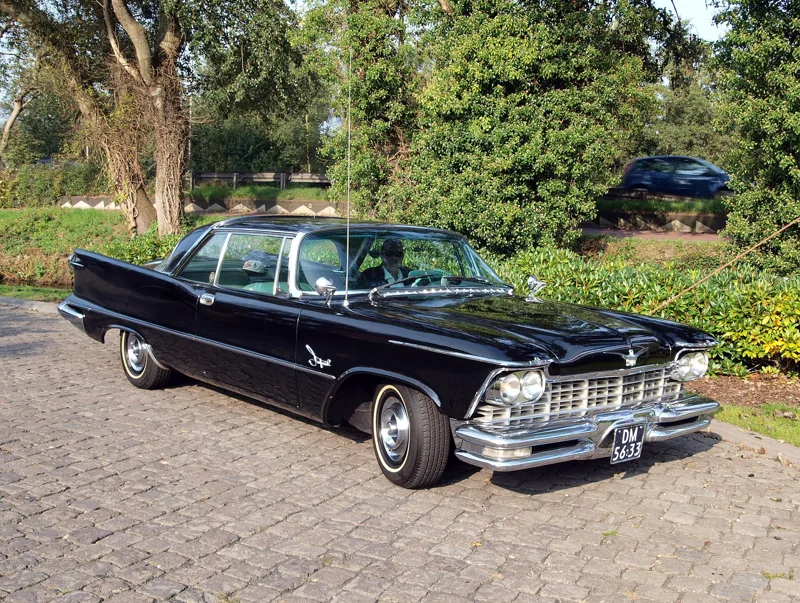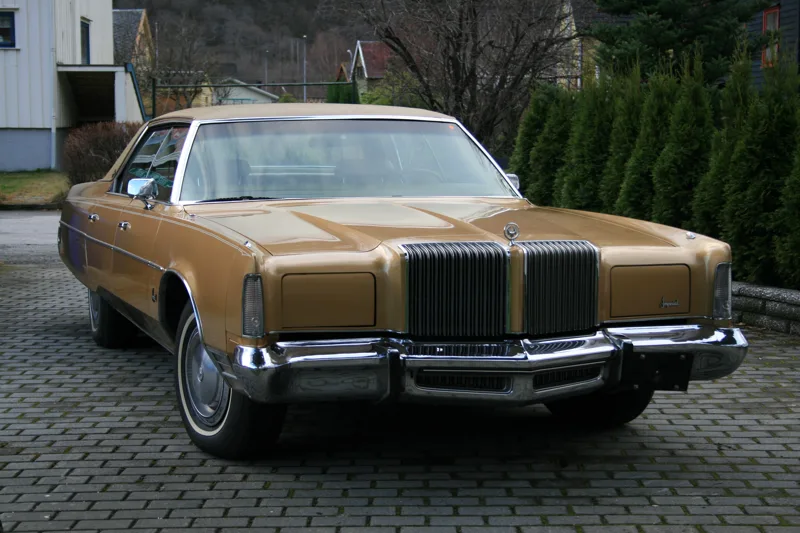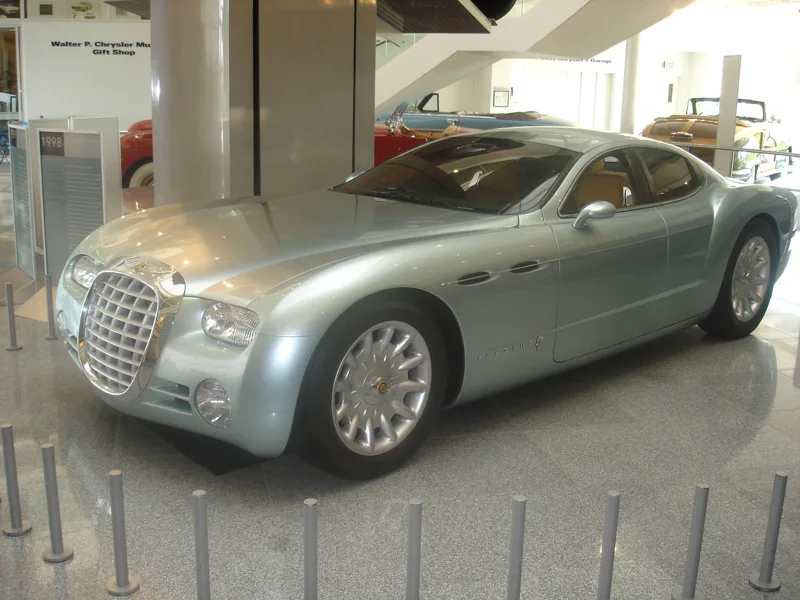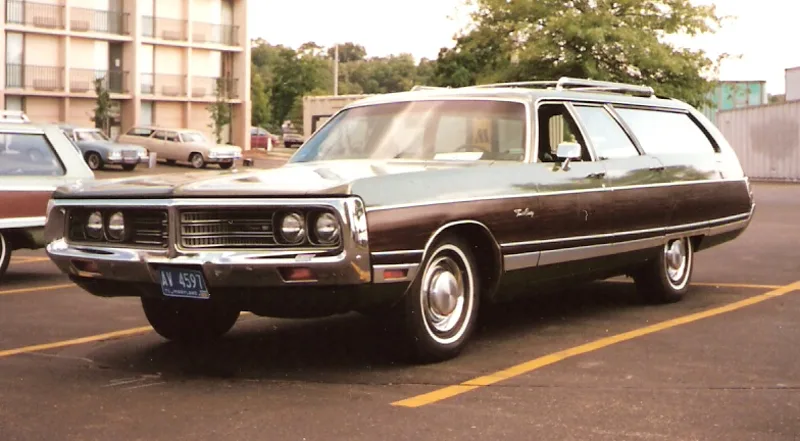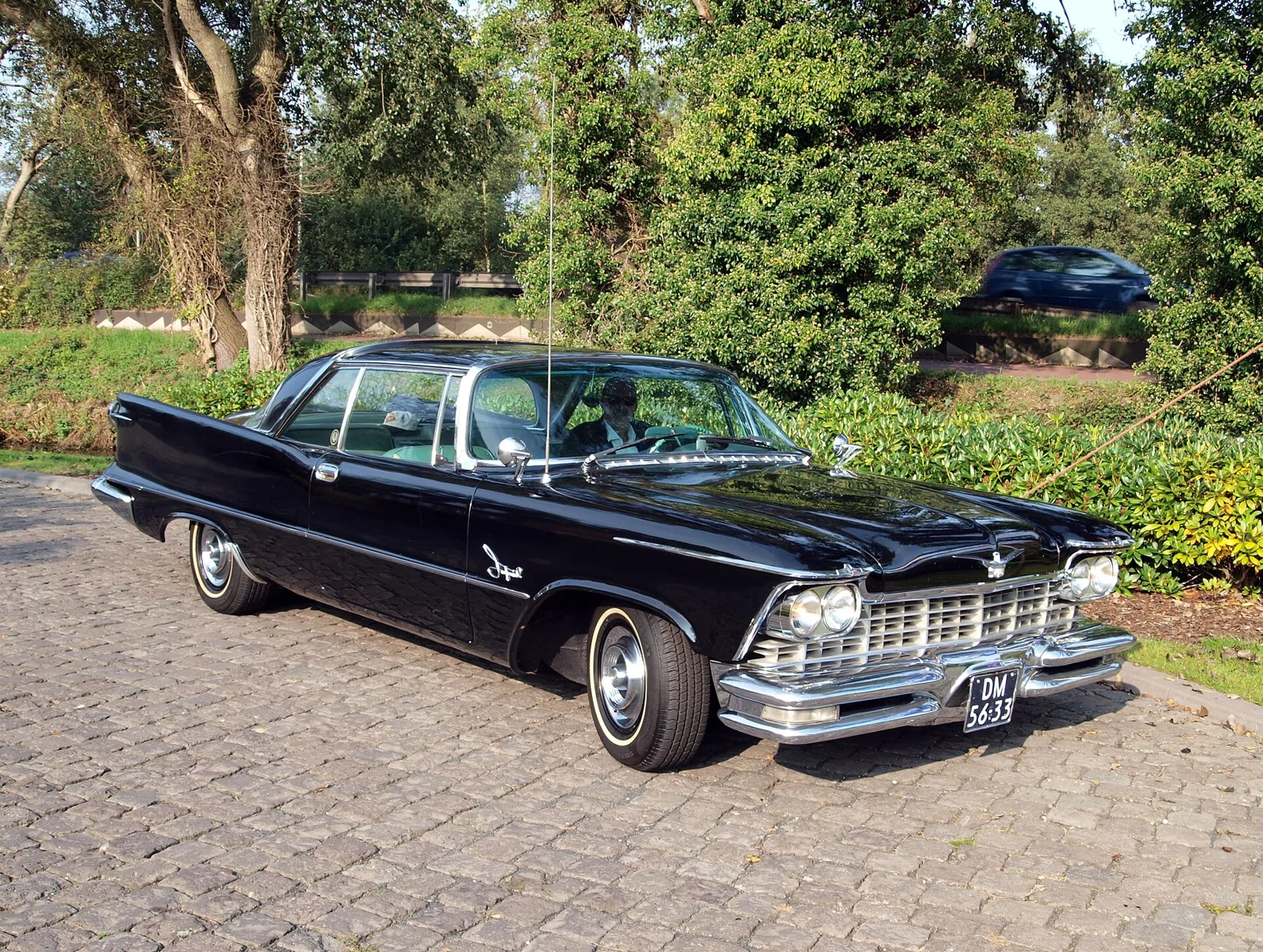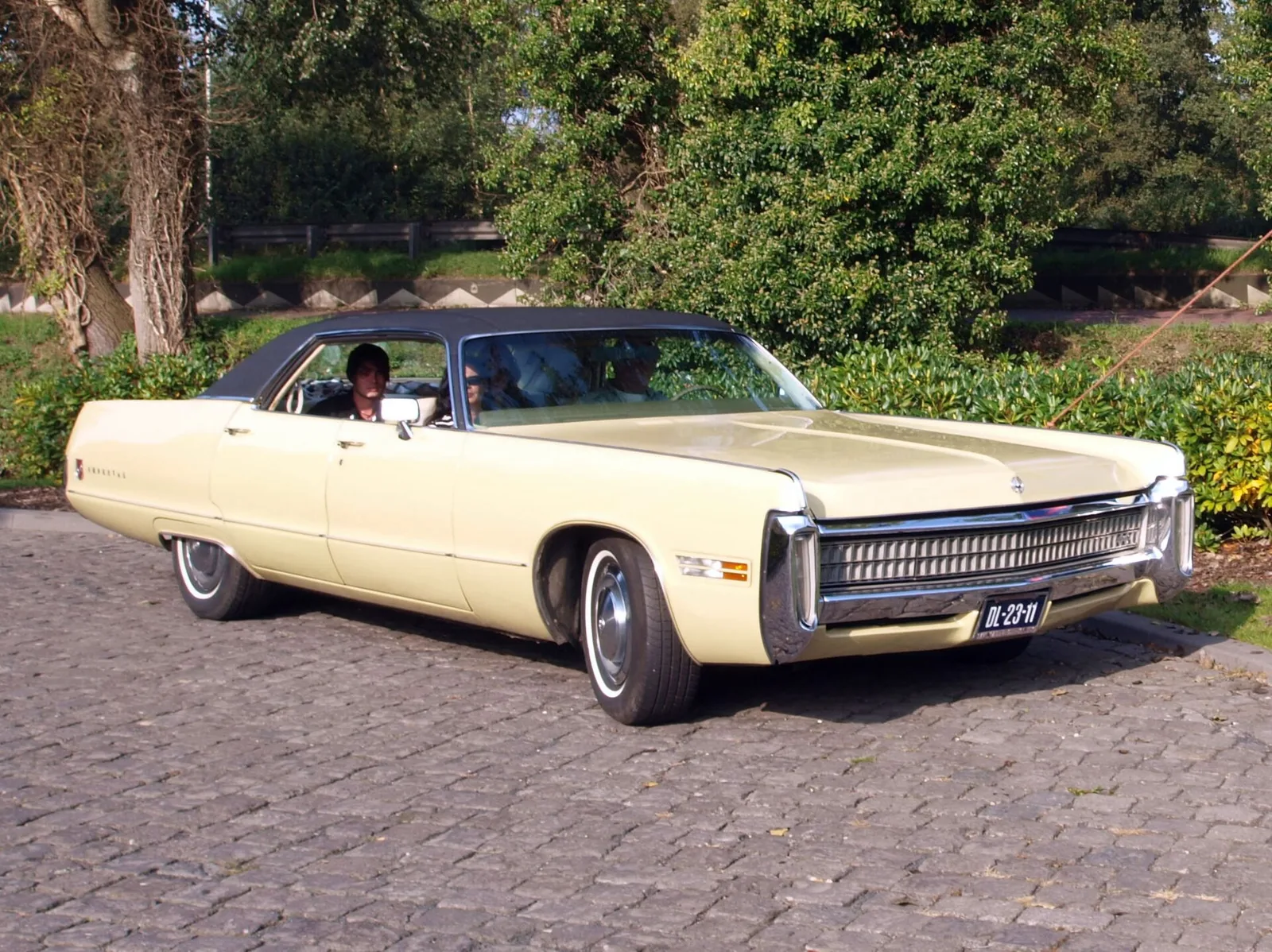
Five generations from 1957 to 1975, a price battle with Cadillac and a stretched Stageway limousine.
The Imperial LeBaron was a Chrysler-group luxury car offered from 1957 to 1975 in five generations. It began as the top Imperial and became the brand's only model in 1971, after the Custom and Crown had been dropped. Its name came from a coachbuilder that Chrysler had bought in 1935.
The Imperial LeBaron was the top model of Imperial, the American brand that Chrysler ran as a separate fifth marque from 1955. It was built from 1957 to 1975 in five generations, and from 1971 it was the brand's only car. For most of its life it sat above the Custom and Crown, and it later became the most successful model in the Imperial family.
Its story is partly about a naming problem. Chrysler's best cars carried the Chrysler name, which buyers at the top of the market did not rate as highly as Cadillac or Lincoln.
Why did Chrysler create a separate Imperial brand?
At the start of the 1950s Chrysler had no upper-class brand of its own, unlike General Motors and Ford. Its luxury cars were well-equipped Chrysler vehicles sold as the Chrysler Imperial, a name used since 1926. Because they belonged to the mass-market Chrysler, sales suffered, so from 1955 Imperial became an independent fifth brand within the group.
The first generation was a simple range. In 1955 and 1956 the cars were called Imperial Coupe and Imperial Sedan, with no separate model lines behind them.
By 1969 the LeBaron had become the most successful model in the Imperial family.
How did the three 1957 Imperial lines differ?
The Custom was the base model and the cheapest car in the range. The Crown sat in the middle, and the top version was the Imperial LeBaron. The three lines were almost identical in body and mechanicals, so the LeBaron mostly stood out through its equipment and a distinct roof shape around the C-pillar.
Imperial dropped the Custom from the 1964 model year, which made the Crown the brand's base model. The Crown itself ended with the 1970 model year. From 1971 the LeBaron was the only car sold under the Imperial name until the brand was discontinued at the end of 1975.
The LeBaron name came from a coachbuilder founded in 1920 by Raymond Dietrich, which Chrysler had bought in 1935. In the factory codes that changed each year, the digit 4 marked the LeBaron line at first, and from 1958 the letter H, for High, took its place.
What engines did the LeBaron use?
The LeBaron used the largest eight-cylinder engines in the Chrysler group. The 1957 and 1958 cars had 6,423 cc (392 cu in) and 325 PS (SAE; 321 hp) net. In 1959 the displacement rose to 6,767 cc (413 cu in), and output reached 340 to 350 PS (SAE; 335 to 345 hp) net.
The 7,210 cc (440 cu in) unit, which arrived for the 1966 model year, became the standard engine of every Imperial model until the brand was dropped in 1975.
Was the LeBaron built on a unitary body?
Not in its early years. Through the second and third generations, from 1957 to 1966, the LeBaron rode on a conventional box frame with the body bolted to it. Chrysler moved its largest models to unitary bodies in 1960, but Imperial kept the frame as its top brand and only converted all its lines for the 1967 model year.
Until 1959 the chassis was the same design that Chrysler used for the full-size models of its other group brands. From the 1967 model year, Imperial's bodies matched the rest of the Chrysler range again.
Drivetrain choices matched the Custom and Crown, and the differences lay mainly in equipment and some styling details.
Body styles and design
The LeBaron was consistently sold as a four-door hardtop saloon, which carried the additional name Southampton from 1957 to 1963. A four-door sedan with a fixed B-pillar and three side windows was a second option in the first four years, though buyers chose the hardtops more often every year.
From 1967 to 1969 Imperial again offered four-door saloons with a centre pillar, but those were reserved for the Crown, and the LeBaron did not take that body.
Two-door coupes did not exist from 1957 to 1969. A two-door closed coupe finally arrived in 1970, though only in small numbers, mostly in three figures. The LeBaron never had a convertible.
The 1957 to 1963 bodies followed the Forward Look designed by Virgil Exner. They were very plain at first, but after two revisions in 1959 they were already seen as overdecorated, and from 1961 they looked either classic or dated, and opinions varied. The third generation, for 1964, had a new body by Elwood Engel, with a sober look. Engel had also designed the Lincoln Continental, which won a design award in 1961. For 1964 to 1966 the Imperial had its own bodyshell, with no common parts shared with other Chrysler models. The fifth generation of 1969 followed what was called the Fuselage Design, and the sixth, for 1974, shared its bodyshell with the large Chrysler models.
Equipment was richer than on the cheaper lines, and the gap changed each year. In 1961 the LeBaron added electrically adjustable seats, electric window winders, an illuminated vanity mirror, better carpets and electrically operated front quarter windows, with whitewall tyres as standard. By 1967 the differences from the Custom had shrunk to trim and upholstery.
Did the LeBaron sell well?
Not at first. In its first seven years the LeBaron had the lowest sales in the Imperial family, with production mostly in three figures. It became the most successful Imperial model in 1969, when it cost only slightly more than a Crown.
Sales stayed well behind the Crown even after the Custom disappeared, and the balance only changed with the 1969 model year. Its prices show the shift. In 1957 a LeBaron Southampton Hardtop Sedan cost US$5,743, about US$900 above the Custom and US$300 above the Crown. By 1963 the gap to the Custom had grown to US$1,200. After 1964 the LeBaron was again about US$900 above the Crown, but by 1970, the Crown's last production year, the gap was only US$300.
How did the LeBaron compare with Cadillac and Lincoln?
Until the late 1960s the LeBaron competed with Cadillac's top model, the Fleetwood Sixty Special, and cost about US$100 more than it. From the 1969 model year it was pitched against Cadillac's middle line, the DeVille, and the two were priced at roughly the same level. The Fleetwood Sixty Special, by contrast, was about US$1,600 dearer.
Lincoln, the upper-class brand of Ford, was usually about US$1,000 cheaper than the Imperial.
What was the LeBaron Stageway limousine?
It was a lengthened representative limousine. Until 1966 Imperial sold it as the Crown Imperial Limousine, and European coachbuilders in Italy and Spain made most of the bodies by hand. From 1967 an American specialist in Fort Smith, Arkansas, took over production, and the cars were sold as the LeBaron Stageway Limousine.
With a wheelbase of 4,104 mm (161.6 in), the Stageway was the longest factory-built passenger car in the United States. Most had two extra seats in the middle and a cabinet holding a television and a bar. The move to domestic coachbuilders cut the price by more than US$2,000, and in its last production year the Stageway cost US$16,000. About 27 had been built by 1972, when Chrysler ended its factory offer of lengthened limousines. Later, independent coachbuilders built lengthened limousines to individual customer requests.
Imperial LeBaron specifications
| Specification | Detail |
|---|---|
| Built | 1957 to 1975, five generations |
| Engine, 1957 and 1958 | 6,423 cc (392 cu in), 325 PS (SAE; 321 hp) net |
| Engine, from 1959 | 6,767 cc (413 cu in), 340 to 350 PS (SAE; 335 to 345 hp) net |
| Engine, from 1966 | 7,210 cc (440 cu in), standard on all Imperial models until 1975 |
| Body | Four-door hardtop saloon; two-door closed coupe from 1970 |
| Stageway wheelbase | 4,104 mm (161.6 in) |
| 1957 Southampton hardtop price | US$5,743 |