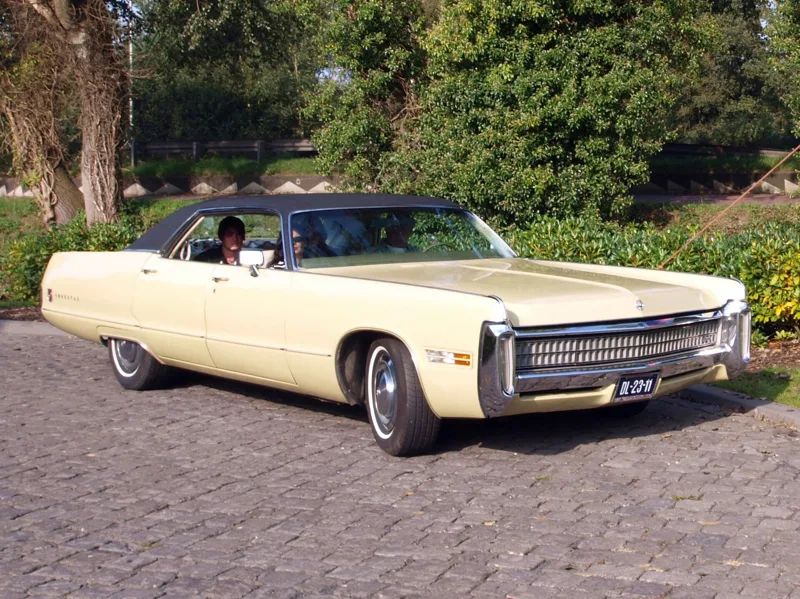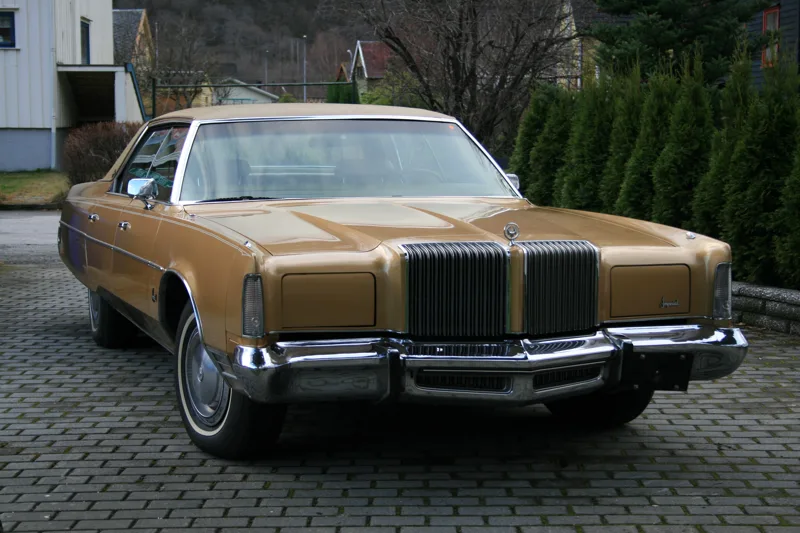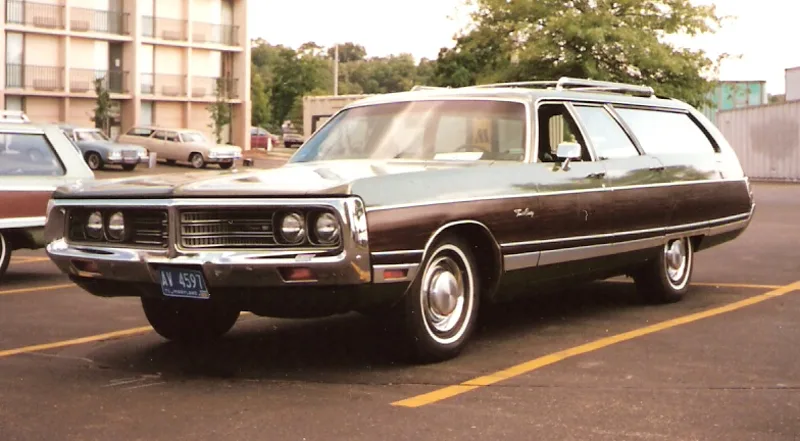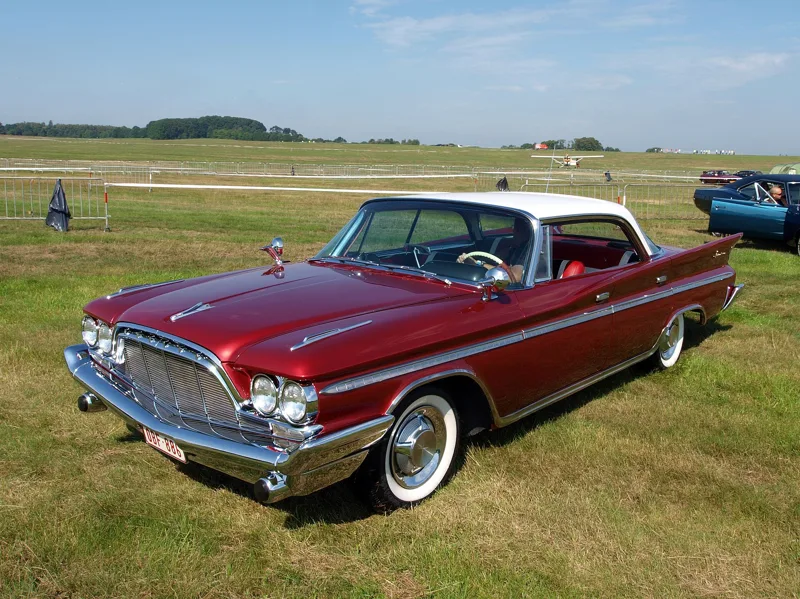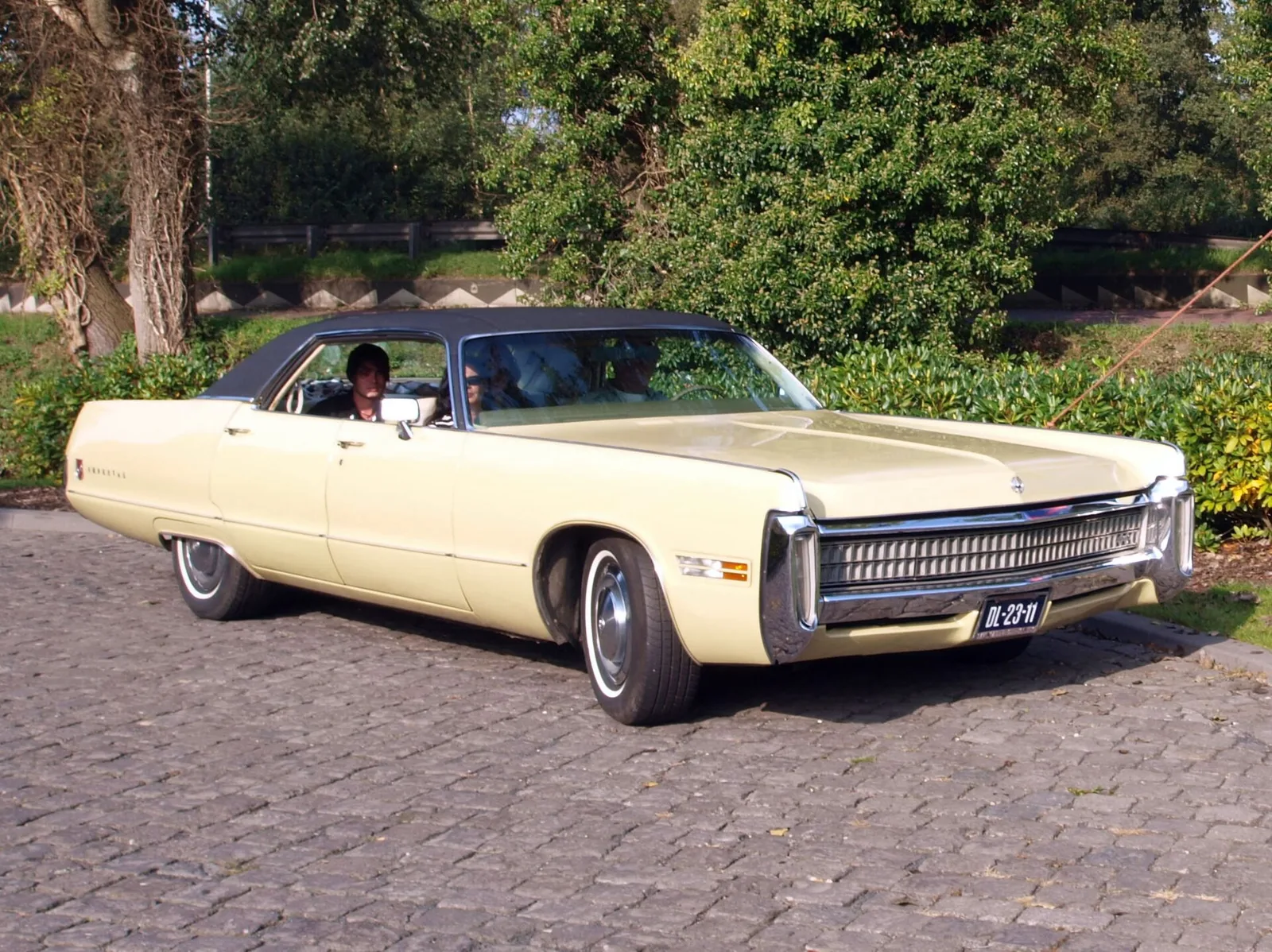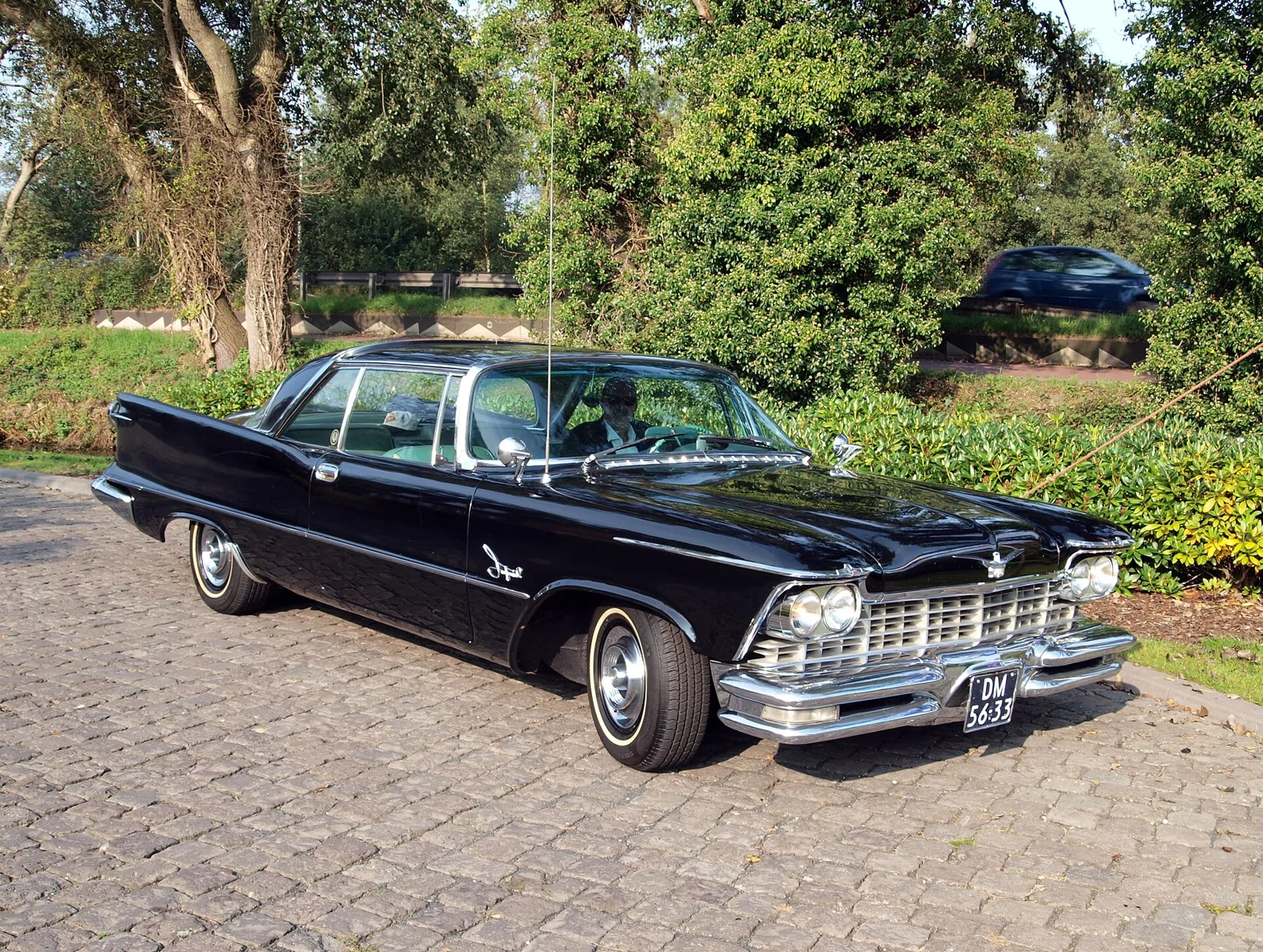
Chrysler's separate luxury brand from 1955, with three series, tail fins that grew and then vanished and a chassis that barely changed.
Sold as Custom, Crown and LeBaron series, the 1957 to 1963 Imperial was Chrysler's luxury brand. Its styling moved from the Forward Look to retro tail fins, and although it was a separate brand from 1955, it never matched the sales of Cadillac or Lincoln.
The Imperial of the 1957 to 1963 model years was Chrysler's luxury brand in the United States. It was sold in three series, and its body was redesigned in details each year, while the chassis under it barely changed. Its styling swung from clean Forward Look lines to tail fins and retro detail, and its sales never reached those of Cadillac or Lincoln.
Why did Chrysler create a separate Imperial brand?
Imperial was Chrysler's luxury offering from 1955, when it became an independent fifth brand within the corporation. Before that, the Chrysler Imperial name had been used since 1926 for the top-trim Chrysler models. Management believed that selling its top cars under the Chrysler name, which also belonged to a mass-market maker, hurt sales, because the name carried less prestige than Cadillac or Lincoln.
Early Imperials looked much like other Chrysler models on purpose, because the company hoped the resemblance would lift sales of its cheaper cars too. The press criticised this, arguing that the closeness stopped Imperial from building a personality of its own.
In its first two model years Imperial sold 21,716 saloons and coupes between them. The second generation arrived for the 1957 model year and stayed in the range until 1963.
A luxury Chrysler with tail fins that split critics and sales that never caught Cadillac or Lincoln.
How was the 1957 to 1963 range organised?
From 1957 Imperial sold three series: Custom, Crown and LeBaron, marked L, M and H in the factory codes. All were technically and stylistically identical, and they differed only in decorative elements and standard equipment. Crown Imperial, a stretched executive saloon, was partly built by hand in very small numbers.
- Custom: the cheapest series, with the internal suffix L for Low.
- Crown: the middle series, taking a name previously used on stretched executive saloons, with the suffix M for Medium.
- LeBaron: the top series, with the suffix H for High, offered only as a four-door saloon. The name recalled a coachbuilder that had built high-quality bodies before the Second World War.
Unlike the 1955 and 1956 cars, the 1957 range added a convertible, positioned against the Cadillac Eldorado and offered only in the middle series. Coupes existed only in the Custom and Crown series. Until 1960 the saloon could be ordered as a Four Door Sedan (three side windows, centre pillar) or as a Hardtop Sedan (two side windows, no B-pillar).
Which engines and gearboxes did the Imperial use?
Imperial used the largest eight-cylinder engine in the Chrysler range. For 1957 and 1958 this was an enlarged Firepower unit, known as the Hemi, of 6,423 cc (392 cu in) that produced 325 net PS (SAE). A TorqueFlite three-speed automatic, operated by buttons on the dashboard, sent the power to the wheels.
The 1959 model year saw the Hemi swapped for a fresh 6,767 cc (413 cu in) unit, the Wedge Head, whose combustion chambers were wedge-shaped. Compared with the Firepower eight, it weighed roughly 45 kg (99 lb) less. Its output was 350 net PS at first and 340 net PS from 1962, and it was also cheaper to build than the Hemi.
For 1962 the TorqueFlite was reworked, becoming narrower and a little under 30 kg (60 lbs) lighter. Its torque capacity rose by ten per cent over the old design, while the ratios were left alone.
How was the chassis built?
The Imperial kept a separate box frame, with a wheelbase of 3,276 mm that was longer than the other Chrysler models. At the front sat double wishbones with torsion bars; at the rear, a solid axle hung from semi-elliptical leaf springs. Four disc brakes were standard on every model of the generation.
Air suspension was not available at first. Air suspension arrived as an option in 1959, rear-only, for an extra 156 US dollars. Imperial kept the chassis unchanged until 1963, even though the other Chrysler brands had moved to unitary bodies in 1960.
Brakes were improved for 1961 to cut the fade that critics had flagged in earlier years, and the power steering was redesigned. Testers found the new steering so direct that it cost them much of their feel for the road surface.
How did the styling change from year to year?
Virgil Exner's Forward Look gave the 1957 cars smooth panels and tall tail fins, which climbed in one unbroken curve from the middle of the rear doors. The tail fin shape was called the Flightsweep. The design was not developed in a straight line, and in the early years Exner added striking ornament that the original design had largely lacked.
The 1959 cars were regarded as overdecorated. They had lower headlights set in round chrome housings, a thick horizontal bar across the radiator, and bumpers mounted lower to make the car look lower. The 1960 cars were a facelift, because Imperial kept the separate frame while the other full-size Chrysler models received a new unitary body.
The 1961 cars were the most controversial. Their tail fins were even larger than before, the headlights stood free in recesses beside the grille, and the tail lights hung from the fins in a way that one contemporary description compared to jewellery on a lead. The dashboard became a rectangular unit with push buttons that also controlled the automatic gearbox.
Reactions were divided. Some observers saw a classic sculpture, others called the body wild, and later writing treats the 1961 design as a mistake. Rather than a smooth progression, the cars quoted the design tradition of 1957 in a way that made them look dated next to other luxury models of the same year.
How did the 1961 design affect sales?
Imperial sold only 12,285 vehicles in 1961, a fall of almost 30 per cent on the year before. Management blamed Exner's design for most of the decline. Exner then quit Chrysler and carried his neoclassical ideas on as an independent designer.
The Stutz Blackhawk from 1969 and the 1964 Duesenberg Model D both showed some elements that recalled the 1961 Imperial.
How did the 1962 and 1963 cars differ?
Elwood Engel took over from Exner and revised the Imperials for 1962 and 1963 as transitional models. For 1962 he removed the tail fins entirely, so the horizontal beltline ran on over the rear wings, and freestanding tail lights were mounted on them. The result was generally seen as an improvement, with cleaner lines.
The 1963 changes went further. The cars received a new square-shaped roof, and the torpedo-like freestanding tail lights were dropped in favour of vertical light units built into the rear wings. The 1963 design was meant to prepare customers for the 1964 generation, which followed the style of Engel's Lincoln Continental.
Imperial model years and production
| Model year | Factory code | Vehicles built | Notes |
|---|---|---|---|
| 1955-1956 | First generation | 21,716 combined | Saloons and coupes only |
| 1957 | IM 1 | 37,593 | Tripled on 1956; Crown Southampton Hardtop Sedan the best seller at 7,843 |
| 1958 | LY 1 | 16,133 | Fell by more than half; twin headlights standard in all states |
| 1959 | MY 1 | 17,269 | Wedge Head engine; first year ahead of Lincoln |
| 1960 | PY 1 | 17,719 | Separate frame kept; last year ahead of Lincoln |
| 1961 | RY 1 | 12,285 | Retro design; sales down almost 30 per cent |
| 1962 | SY 1 | 14,337 | Tail fins removed; Lincoln sold more than twice as many |
| 1963 | TY 1 | 14,121 | Last year of the second generation |
Did Imperial catch Cadillac and Lincoln?
Imperial never matched the sales figures of those two brands. In 1962 Lincoln sold more than twice as many cars as Imperial, and Cadillac made eleven times as many vehicles. In 1957 Imperial was only 3,500 cars behind Lincoln in output.
Imperial did beat Lincoln on output at two points. 1959 was the first year it built more vehicles than Lincoln, and 1960 was the last time it did so. In 1957 it moved up the annual production table from 18th to 15th place.
What changed in 1958?
Very little changed for 1958. The Imperial kept its technology, and the cars gained twin headlights in every state, sheltered by wing extensions with stylised eagles, along with a new radiator grille containing horizontal chrome inserts. Across the range, prices climbed roughly 100 US dollars.
The recession hit sales hard. Recession hit Imperial as it hit most American makers: output fell by over half to 16,133 units, sliding the brand to 16th in the production table. The Crown Southampton Hardtop Sedan remained the best seller, while the LeBaron four-door saloon was the rarest car of the year apart from the Crown Imperial, with only 501 built.
What did an Imperial cost?
Starting at 4,736 US dollars, a Custom Southampton Hardtop Coupe was the entry point in 1957, and LeBaron coupes and saloons reached 5,743 US dollars. By 1959 the dearest car, the LeBaron Sedan, cost 6,103 US dollars.
Each 1958 model rose by roughly 100 US dollars, and 1959 increases ranged from 50 to 140 US dollars by model. A Dodge Coronet Lancer, from another Chrysler brand, cost 2,665 US dollars in 1957.
What did the Southampton name mean?
Southampton was not a model or a trim line at Imperial. It described a roof and body form with two side windows and no centre pillar, and the name stayed on the Imperial from 1961 until the third generation dropped it in 1964. Chrysler marketing said it gave a high society feeling.
The Southampton Sedan differed from the Four Door Sedan in its roof line, with a wider C-pillar that joined directly to the rear doors. Its panoramic rear window was drawn into the body sides on the Custom and Crown until 1962. From 1960 the LeBaron Southampton swapped that window for a small rear window and a broad C-pillar, which was meant to give its passengers more privacy.
What set the 1959 Imperial apart?
For 1959 the Imperial fitted a 6.8-litre eight-cylinder engine and offered optional air suspension. The Silvercrest Landau Roof, available only with the Southampton roof, paired coloured synthetic leather with unpainted stainless steel. Swivel Seats turned the front seats 40 degrees towards the door opening to make getting in and out easier.
Contemporary road tests praised the 1959 cars for their design, performance and economy alongside their driving behaviour. Their measured average consumption came to 26 litres per 100 km (10.7 mpg).
Why does the Imperial 1957-1963 still get discussed?
The cars are discussed because they show a luxury brand trying to set itself apart from its parent. Their styling moved from clean lines to heavy ornament and then retro tail fins, while the separate frame kept Imperial distinct from its Chrysler siblings after 1960.
The brand's arc is clear from the numbers. It built 37,593 cars in 1957, its strongest year in the period, and then fell to 12,285 in 1961. The second generation closed with 14,121 Imperials in 1963, before the third generation took over in 1964.