From the 1941 woodie to the fuselage-era wagons and the LeBaron years, the Town & Country was Chrysler's luxury wagon for nearly five decades.
The Chrysler Town & Country was a luxury station wagon built from 1940 to 1942 and from 1945 to 1988, with the name later moving to a minivan in 1990. It began with wooden bodywork in 1941 and ended its wagon years with the LeBaron-based models of the 1980s.
The Town & Country began as a wooden-bodied wagon in 1941, when it was Chrysler's first car with wooden doors and body panels. The nameplate ran from 1940 to 1942 and again from 1945 to 1988, and a 1990 minivan kept the name alive after the wagon was gone.
For most of its life it was a luxury station wagon. It wore real wood in the early years and simulated woodgrain later, and by 1978 the name had shrunk to a mid-size wagon built on the LeBaron platform.
Where did the Town & Country name come from?
The name came from the Town Sedan, a six-passenger car that Chrysler sold on its Windsor, Saratoga and New Yorker lines from 1941 to 1942. The first Town & Country wagon borrowed the roof of the Chrysler Imperial limousine, which gave it a rear-loading layout.
The rear doors were wooden double doors, known as Barrel Back doors, that opened outward from the centre beneath the fixed rear window. Framing came from white ash, and the veneer was Honduran mahogany supplied by Perkins Wood Products.
Wood was not an unusual choice for the era. Most cars built from the 1900s to the 1930s used timber for body support, flooring or structure. The owner's manual still told buyers to varnish the panels every six months.
The Town & Country began with real wood on its doors and ended as a mid-size LeBaron wagon.
How many 1941 and 1942 wagons were built?
Chrysler built 200 six-passenger and 797 nine-passenger wagons in 1941. The six-cylinder Windsor wagon was priced at US$1,492, and a straight-eight Saratoga version was also offered, although only one was specially requested that year.
The 1942 run totalled 999 wagons before the United States' entry into the war shortened the programme. In 1942 the straight-eight moved to the New Yorker line, where only one New Yorker wagon was built.
It was sold as a luxury vehicle rather than a working wagon, and Chrysler's wood wagon was more than a station wagon. Its roof came from the Imperial, and nine-passenger versions made up most of the early output, which made it a flexible family car.
What was the woodie era from 1946 to 1950?
After the war the nameplate returned, though the eight-passenger four-door wagon did not. Only the four-door sedan and the two-door convertible were offered in 1946, while the sales brochure also showed a roadster, a two-door Brougham and a hardtop called the Custom Club Coupe.
Just one Brougham and seven Custom Club Coupes were ever made, and none of the three extra body styles reached production. The 1946 car averaged US$2,609 and sold 2,169 units.
The wood was now bonded to steel body panels. In 1948 the genuine mahogany was replaced by DI-NOC vinyl panels, the four-door sedan was dropped, and Packard's Station Sedan arrived with a two-piece wooden tailgate.
The two-door convertible ran until 1949, when Chrysler's cars became the first designed after the war, with a longer 131.5-inch wheelbase. The 1950 Newport hardtop was the last true woodie, with simulated panels by then.
What happened when the all-steel wagon arrived?
The Town & Country returned in 1951 as an all-steel wagon, using Chrysler's first V8, which was called FireDome and later unofficially known as the HEMI. The wagon introduced roll-down tailgate windows that year, and it gained rear-facing third-row seats in 1957.
Under the skin it matched the Chrysler Imperial, from the chassis to the transmission and the luxury interior. Wood-look bodywork was dropped on the Town & Country because it was hard to keep in good shape, although DeSoto and Dodge continued to use wood-style trim for a time.
Production in 1951 was 1,967 Windsor, 1,299 Saratoga and 251 New Yorker wagons. The New Yorker was listed at US$4,026, a price that kept sales within a small luxury market. Across Chrysler's cars in 1953, power windows, a heater, power steering and power brakes arrived as options, while two-speed wipers, directional signals and full floor carpeting came as standard.
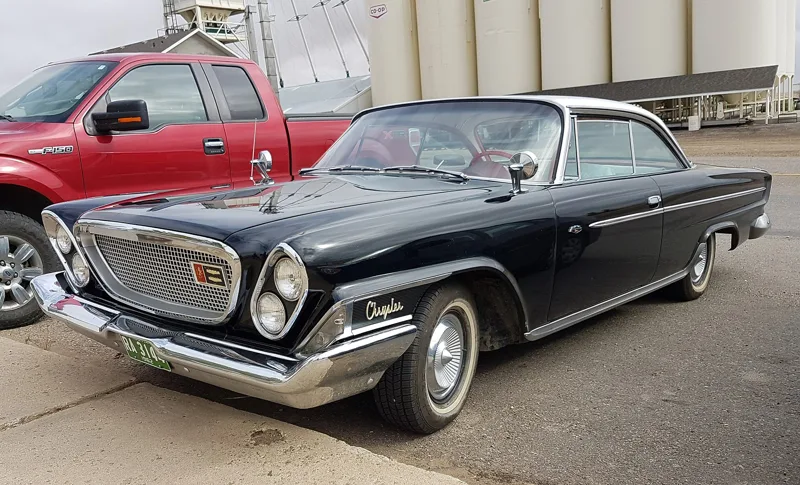
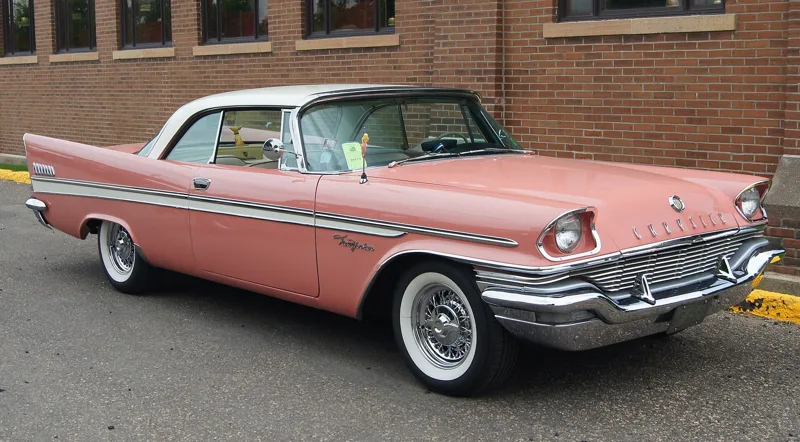
The 1955 cars were restyled under Virgil Exner in what was advertised as the 100-Million Dollar Look, and the look brought a longer, lower and wider stance. The PowerFlite automatic arrived that year with a dashboard-mounted lever, and the TorqueFlite followed in 1956.
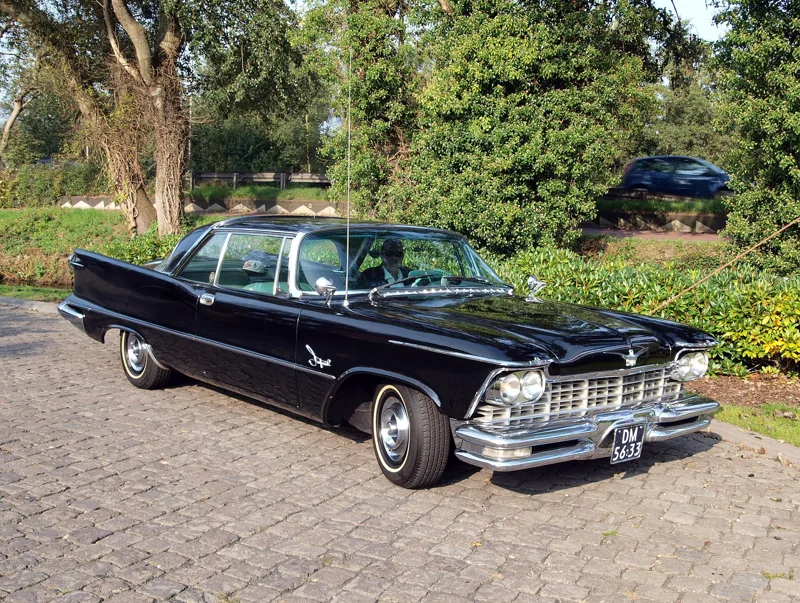
The Forward Look styling sold well across Chrysler's line, yet the Town & Country did not share that success. Sales stayed modest through the decade. The Windsor averaged about 2,700 units a year in 1956 and the New Yorker about 1,070, but by 1959 output had fallen to 751 Windsors and 444 New Yorkers.
What changed in the 1960s?
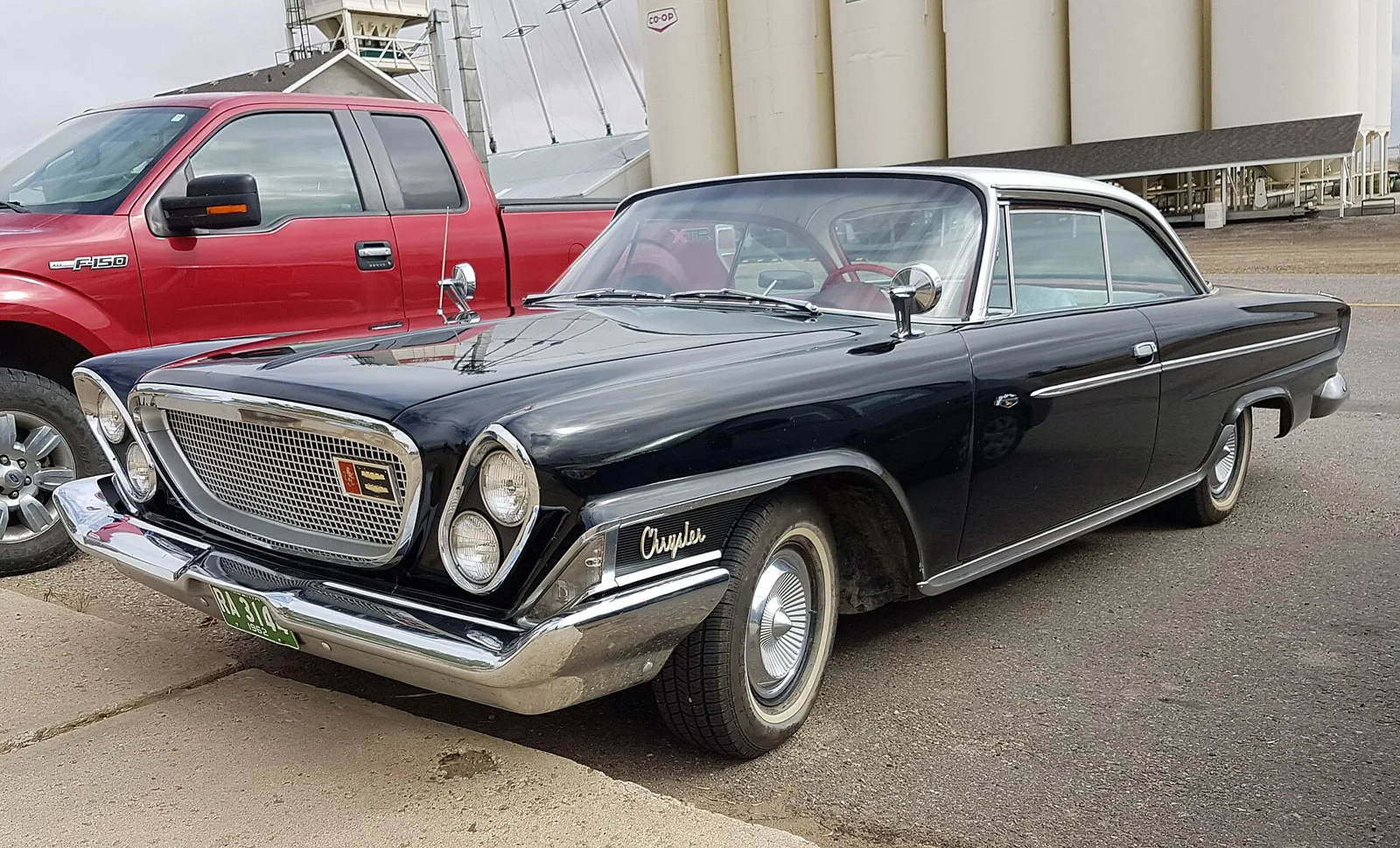
Hardtop styling became standard on Chrysler models in 1960. The New Yorker wagon kept a 126-inch wheelbase, and the Windsor and Newport models used 122 inches. For 1960 to 1964 the wagons were four-door hardtops, the last American station wagons offered in that configuration.
The 1962 wagons were a patchwork. Chrysler's 1961 front ends were mated to the body of a 1961 four-door Plymouth wagon, because a planned Chrysler program had been cancelled in 1960. The Plymouth body was used because Chrysler had only one finless full-sized wagon of its own.
The New Yorker remained the only large American wagon to offer bucket front seats with a centre cushion and folding armrest. The 1965 cars got a new design under Elwood Engel, a designer lured from Ford. The wagons shared a 121-inch wheelbase with Plymouth and Dodge wagons, and simulated woodgrain returned to the body. The 1965 New Yorker wagon listed at US$5,033, and 1,697 were recorded.
In 1966 the Town & Country became a model in its own right and the only wagon in the Chrysler lineup. Power steering, power brakes and TorqueFlite were standard, and the top engine was a 440 cubic-inch V8 producing 350 hp.
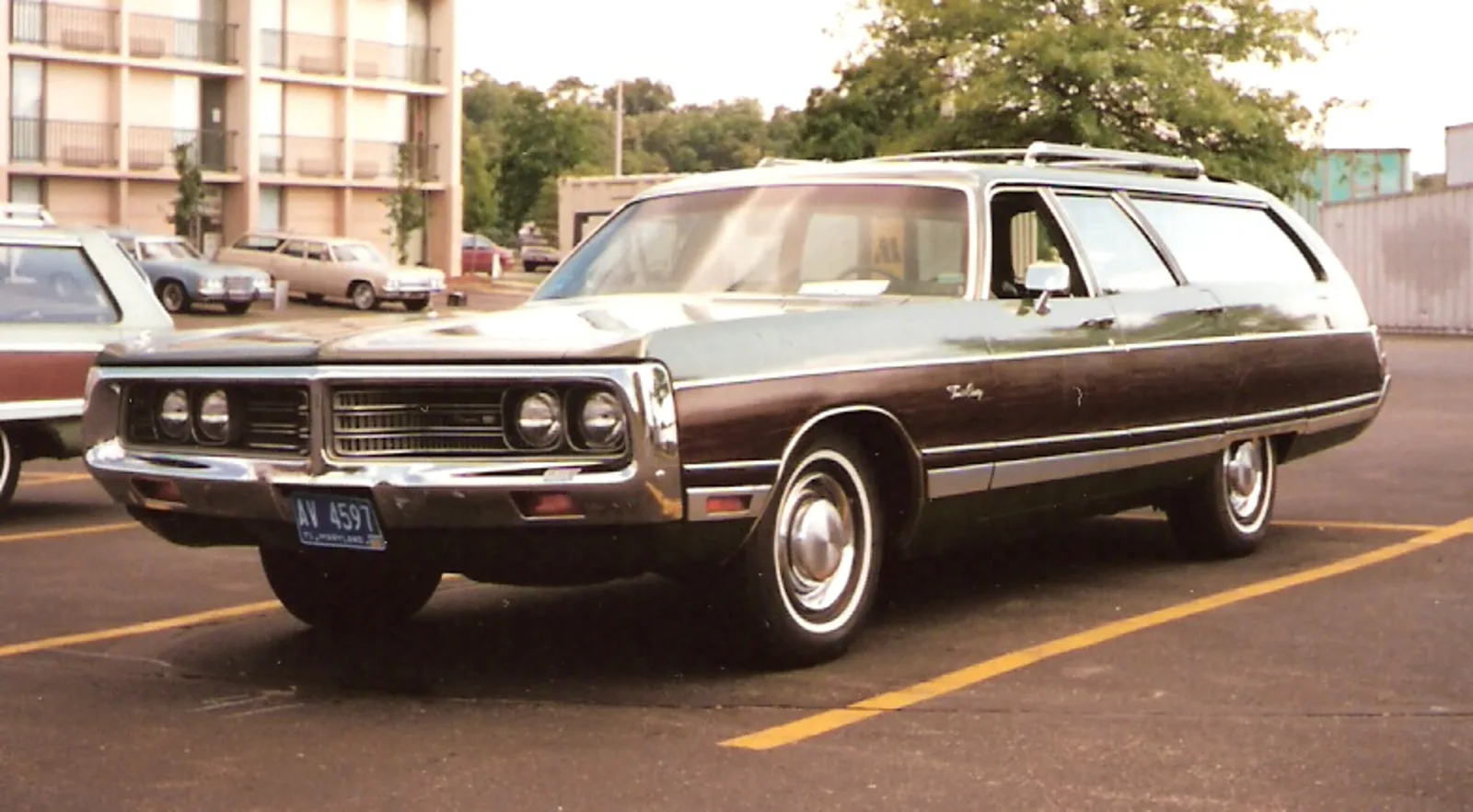
From 1968 simulated walnut grain paneling filled the coved part of the body sides, framed by stainless steel moulding. The wood panels were standard on the wagon, although an option without them was offered.
Why did the fuselage generation matter?
The 1969 fuselage design gave Chrysler's full-size cars a pronounced side curvature from rocker to roof rail. The wagon's shorter wheelbase was offset by extra rear overhang. The Town & Country sat on a shorter 122-inch Dodge wheelbase, yet it was nearly as long as the sedans, at just under 225 inches.
The 1969 wagon listed at US$5,279, and 24,516 were recorded. Its rooftop airfoil directed airflow over the tailgate window, which kept the glass clearer.
Chrysler caught up on wagon features in 1969. The tailgate turned into a two-way door-gate that could swing sideways or drop, and the rear axle track was widened to 63.4 inches, giving a 48.5-inch load floor between the wheel wells. The tailgate became a three-way door-gate in 1972.
How did engines and emissions shape the early 1970s?
Bias-belted tyres arrived for 1970, and the late 1960s brought tougher emissions and safety rules that pushed the planned 1971 restyle back a year. The Town & Country received front disc brakes as standard in 1971. Wagons also gained Torsion Quiet Ride, a system unique to Chrysler that used tuned rubber isolators at the front subframe and the rear leaf-spring mounts. Other Chrysler models had it from 1970.
Power fell as compression ratios dropped for unleaded fuel. The 1971 383 two-barrel V8 was rated 190 net hp, the 383 four-barrel 240 net hp, and the 440 four-barrel 220 net hp.
The 1972 cars sold well. Six-passenger wagons numbered 6,473 that year, against 14,116 nine-passenger cars. In 1973 the car received five-mph impact bumpers, which added more than 5 inches to its length, and the 440 gained electronic ignition.
What did the 1974 and 1975 cars bring?
The 1974 cars were a new large-car generation, with more tumble home and lower beltlines. The timing was poor, because the Arab oil embargo of late 1973 left big cars in a glut.
In 1975 the Imperial stopped being a separate model, and the Town & Country kept its trim and body as they were. The fuel tank had moved from the left rear quarter to under the floor, a safety improvement. The wagon weighed about 5,200 pounds with options, and the 1974 cars came with L78 bias-belted tyres, with steel-belted radials optional. Air conditioning and power assists were among the options on that car.
The nine-passenger wagon was priced at US$8,099 in 1975, when 4,764 were recorded. The last full-size Town & Country came in 1977, and that year the big wagon was not sold in California or at high altitude because of emissions rules.
What was the LeBaron-based Town & Country?
From 1978 to 1981 the nameplate sat on a simulated woodgrain wagon from the mid-size LeBaron series, built on Chrysler's M platform. From 1982 to 1988 it appeared on the K-body front-wheel drive LeBaron wagon, with a convertible sold from 1983 to 1986.
The 1978 car shared its M-platform chassis with the Plymouth Gran Fury, the Dodge Diplomat and the LeBaron, and its trim was more elegant inside and out. Wheelbase, track and interior dimensions matched the compact Aspen and Volare, so the main differences were overhang and overall length.
The 1983 to 1986 convertible had a Mark Cross leather interior and was built in limited numbers. It was meant to echo the convertibles of the 1940s and early 1950s.
The name was briefly absent in 1989 and returned for 1990 as a luxury minivan derived from Dodge's Grand Caravan and Plymouth's Grand Voyager. That minivan was a different vehicle, and the wagon story ended with the 1988 model year.
Who were the Town & Country's rivals?
Until the final full-size version in 1977, the Town & Country had no real peer within its luxury segment. Competitors included the Mercury Colony Park, the Ford Country Squire, the Oldsmobile Custom Cruiser and the Buick Estate, and the AMC Ambassador also competed in the segment. Chrysler's wagons of this period were among the roomiest factory-bodied cars on the market.
AMC's Jeep Grand Wagoneer arrived in 1976 with similar passenger space and a simulated woodgrain look, on a dedicated chassis. The Town & Country kept its place at the top of the segment until its size was reduced in 1978.
GM and Ford kept their big wagons going for longer. Ford continued until 1991 and GM until 1996, while Chrysler's replacement for the C-body was offered only as a four-door sedan.
Chrysler Town & Country specifications
| Specification | Detail |
|---|---|
| Production span | 1940 to 1942 and 1945 to 1988 |
| First wagon | 1941, with wooden doors and body panels |
| 1941 Windsor six | US$1,492 |
| All-steel wagon | From 1951, with Chrysler's first V8 |
| 1969 wagon | US$5,279; 24,516 recorded |
| 1972 output | 6,473 six-passenger; 14,116 nine-passenger |
| 1975 nine-passenger | US$8,099; 4,764 recorded |
| LeBaron-based years | 1978 to 1981 on the M platform; 1982 to 1988 K-body |
| Last full-size | 1977 |
| Minivan | 1990 model year, derived from Dodge's Grand Caravan and Plymouth's Grand Voyager |