A name that began on a one-off phaeton, spread across Chrysler's hardtops and ended as its cheapest full-size car, with a 1984 revival that never happened.
Chrysler's Newport name began on a 1940 phaeton and spent 1961 to 1981 as the company's cheapest full-size model. Its generations ran from the 1965 C platform through the 1969 fuselage cars and 1974 slab sides to the 1979 R-body, which ended after the 1981 model year.
Newport was Chrysler's name for a hardtop body style and, from 1961 to 1981, for its cheapest full-size model. The name's most famous early car was a dual-cowl phaeton of which only six were built, and one of them paced the 1941 Indianapolis 500. The badge later spread across the hardtops of the 1950s before it settled on a line of budget sedans.
What was the 1940s Newport Phaeton?
The Newport Phaeton was built during 1940 and 1941 on the Chrysler Imperial Crown chassis and engine. Its 323.5 cu in (5.3 L) Straight Eight, the Spitfire unit, used dual carburetors and a three-speed manual gearbox. Ralph Roberts, a designer at LeBaron and Briggs, styled the body.
Owners included actress Lana Turner, and Walter Chrysler himself used one as a personal car. Few cars of the period came with a bespoke aluminium dashboard and leather upholstery, and the phaetons had both.
The Newport was also the pace car for the 1941 Indianapolis 500. Chassis number C7807503 was the only one without hide-away headlights, and it became the personal property of Walter P. Chrysler Jr. after the race. Five Newport Phaetons are known to survive.
The phaeton shared much of its thinking with the Thunderbolt, a related show car built on the 127 in (3,226 mm) New Yorker chassis. Both cars had electro-hydraulic doors, electric windows and covered headlights, and the Thunderbolt's roof stowed in the rear of the car.
A name that began on a one-off phaeton and ended on Chrysler's cheapest full-size sedan.
How did the Newport name spread through the 1950s?
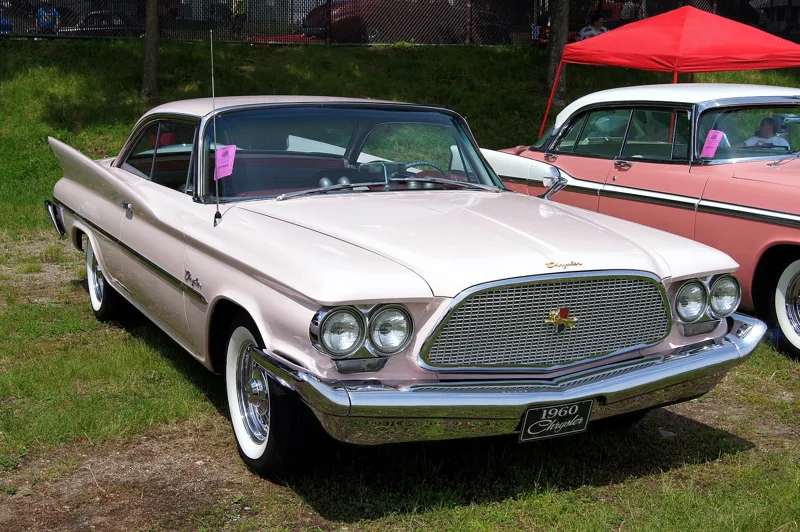
From 1950 the Newport name covered the two-door hardtop body style across Chrysler's lineup, including the Windsor, Saratoga, New Yorker and Imperial. DeSoto used the Sportsman name for its hardtop and Dodge used Lancer. By 1956 the name had settled on two- and four-door hardtops, except the Chrysler 300, which was only a two-door hardtop or convertible.
Chrysler had offered a Custom Club Coupe hardtop as far back as 1946, but very few were built. The Town and Country hardtop appeared only in the final year of that model, 1950, and from 1951 the Town and Country name was reserved for station wagons.
The Imperial carried a hardtop called the Imperial Newport for one year, in 1955. That year Chrysler also tried St. Regis and Nassau nameplates on two-tone New Yorker and Windsor hardtops, but it dropped them in 1956. The Imperial hardtop became the Southampton, a name it kept until 1963.
When did the Newport become a separate model?
Chrysler made the Newport a separate model for 1961, placing it below the Windsor, which was in its final year. Its base price of $2,964 ($32,257 in 2025 dollars) made it the least expensive Chrysler. The New Yorker, by comparison, cost $4,870 ($53,000 in 2025 dollars).
The Newport was aimed at buyers who would once have chosen a DeSoto. Advertising described it as a full-size Chrysler at a lower price, and it insisted the car was not a compact, with its tagline rejecting junior editions. Base models had smaller hubcaps instead of full wheel covers, plain interiors and modest trim.
The 1961 range included a convertible, a two-door hardtop, a four-door sedan, a four-door hardtop and a station wagon. The base engine was a 361 cu in (5.9 L) V8 rated at 265 hp (198 kW; 269 PS). Larger 413 cu in (6.8 L) and 383 cu in (6.3 L) engines were optional, and the 383 was mostly fitted to the Town and Country wagons.
A three-speed manual was standard but seldom ordered. The dash had been designed around Chrysler's push-button automatic controls, and the AstraDome instrument cluster stretched out over the column. That forced the turn signal lever onto the dashboard as a sliding control that returned to centre.
The Newport was the bulk of Chrysler's output in those years. Its base sedans were modest trim versions of the traditional upscale models, and the 413 could be ordered with single or dual four-barrel carburettors. Most of the 300 letter car options were available, except four bucket seats, a centre console and a tachometer.
How did the Newport change in the 1960s?
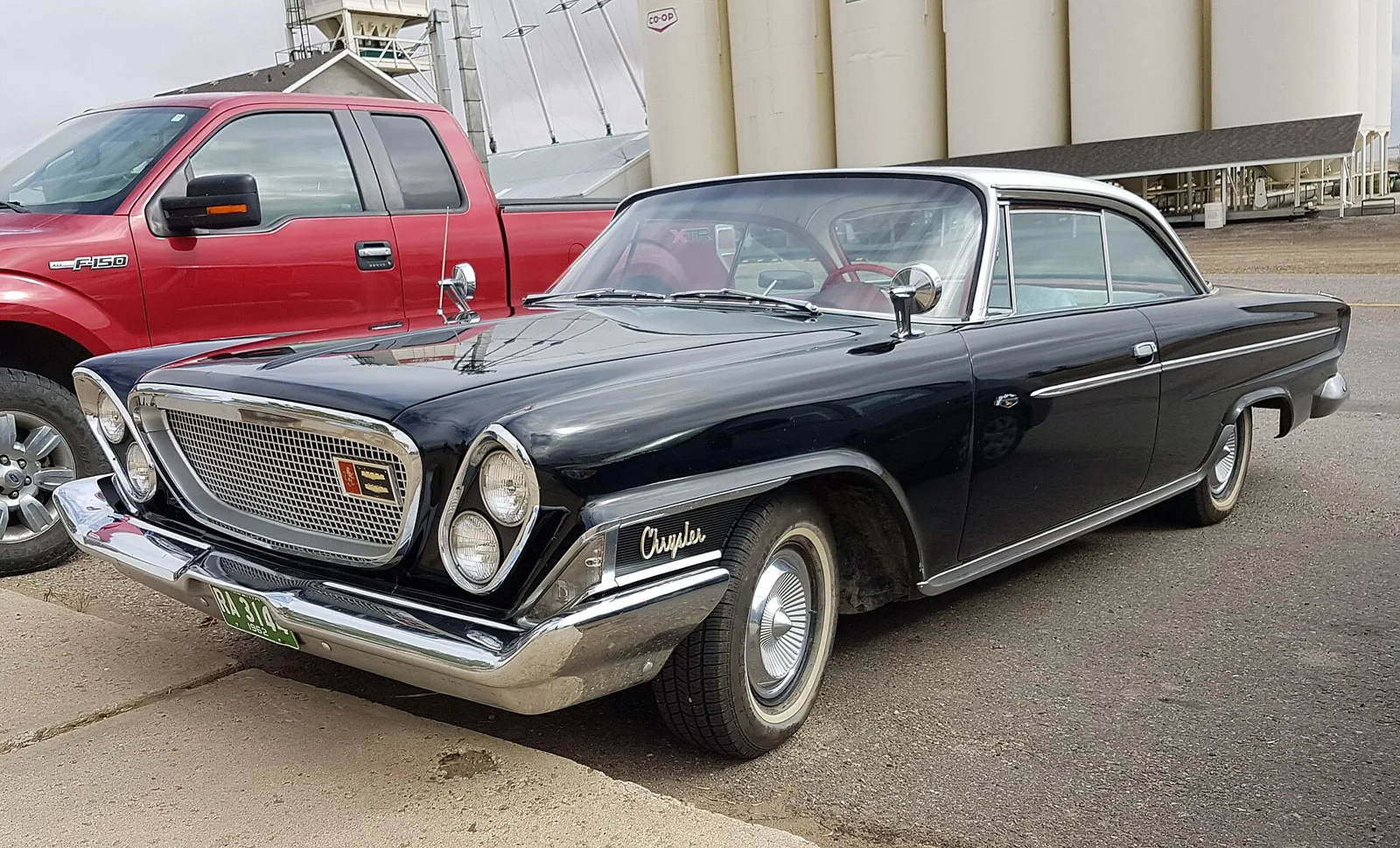
The 1962 cars were a makeshift job, because the all-new Chrysler program for that year had been cancelled in 1960. Chrysler mated the front of a 1961 Newport to the body of a 1961 Dodge Polara, which supplied finless rear fenders and new taillights. The 1962 Town and Country wagon used a Plymouth body instead.
The 1963 restyle dropped the tailfins altogether, and the 1964 cars brought back small chrome-topped fins. The 1965 Newport was built on the all-new Chrysler C platform, which it shared with the 300, New Yorker, Polara and Fury. Wheelbases grew to 124 in (3,150 mm), while the wagons kept 122 in (3,099 mm).
The 1965 engine list topped out with a four-barrel 383 rated at 315 hp (235 kW) on premium fuel. The standard 383 two-barrel made 270 hp (201 kW). A 440 cu in (7.2 L) TNT version arrived in 1966 at 365 hp (272 kW), rising to 375 hp (280 kW; 380 PS) by 1967.
The 1966 Newport received new grille work and revised taillights, and its four-barrel 383 gained 10 hp, to 325 hp (242 kW). The 1968 facelift brought new grilles and taillights again. The standard two-barrel 383 rose by 20 hp to 290 hp (216 kW), while the four-barrel went to 330 hp (246 kW).
A six-window Town Sedan arrived in 1965 and was dropped in 1967, when the Newport received new sheet metal on the same bodyshell. Two-door hardtops got an angular semi-fastback roofline, and a more luxurious Newport Custom series was introduced. A mid-year Sportsgrain option, with simulated woodgrain bodyside trim, went on 965 hardtops and 175 convertibles in 1968.
How did the 1969 Newport sell?
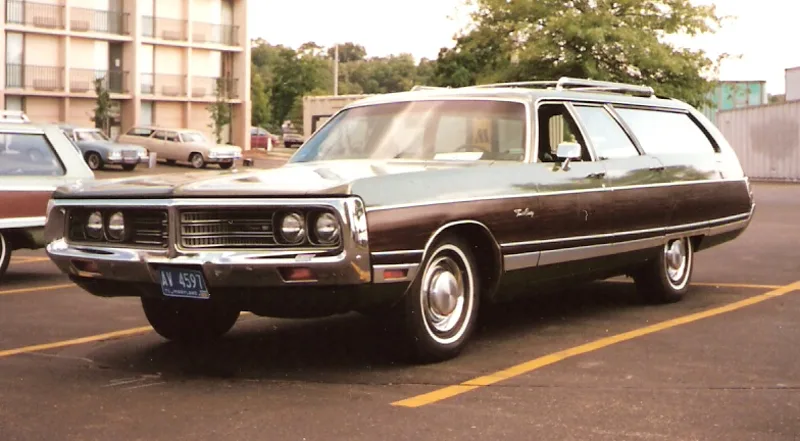
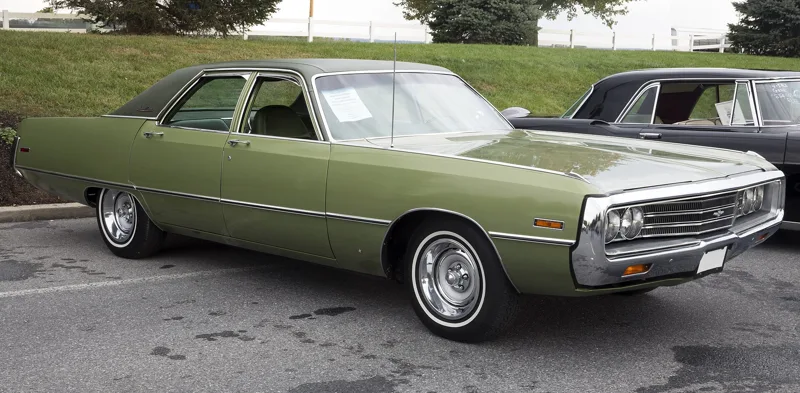
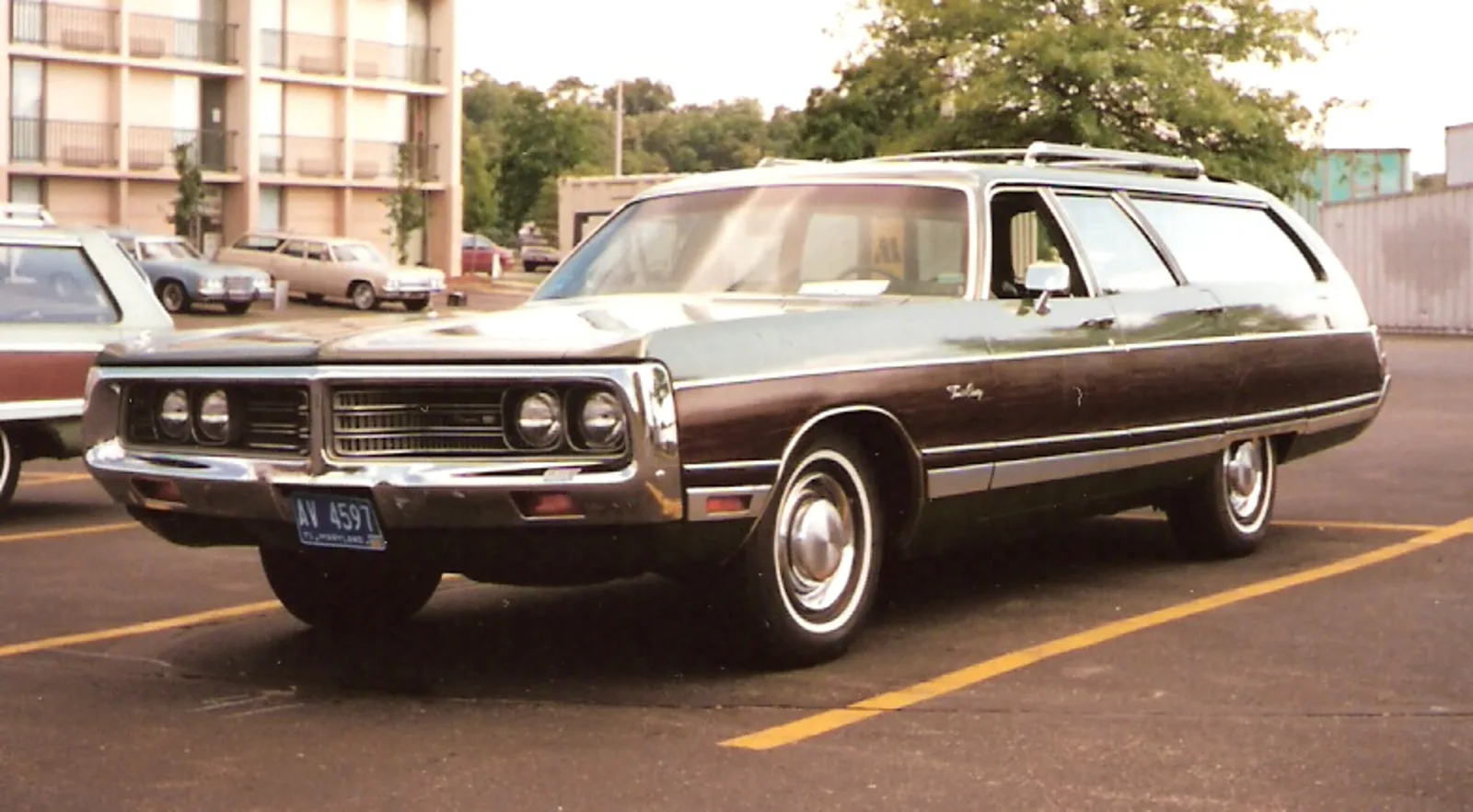
The 1969 Newport was completely redesigned with fuselage styling on the same 124 in (3,150 mm) wheelbase as the New Yorker. It was longer, lower, wider and several hundred pounds heavier than the car it replaced. That look came to symbolise Chrysler's full-size cars until the end of the 1973 model year. Station wagons moved to a separate Town and Country model, and convertibles were dropped after 1970.
Convertible sales fell 48 percent in 1970, to 1,124 units, and total Newport sales dropped almost 30 percent, to 110,292 units, despite the restyling. The Newport Custom stayed the top trim throughout the 1969 to 1973 cycle, while the Royal, introduced in 1971, became the entry-level model.
Engine outputs fell through the period. For 1971 the Royal came with a 255 hp (190 kW) 360 cu in V8, and 275 hp (205 kW) or 300 hp (224 kW) 383 cu in engines were optional. By 1972 the standard engine was a 190 hp (142 kW) 400 cu in V8, and the 440 options peaked at 245 hp (183 kW). Output kept falling on every engine as emissions rules tightened and fuel prices rose.
What did the Royal and Cordoba trims offer?
The Royal and Cordoba defined the Newport's late-1960s and early-1970s range. The Royal borrowed its name from the entry-level Chrysler sold between 1937 and 1950, and the Cordoba was a trim package for the hardtops. The Royal name was dropped for 1973, when the Newport became the base Chrysler.
The Cordoba was a 1970 appearance package for the two- and four-door hardtops, not a separate model. The Royal came into its own in 1971, when it was the entry point to a range led by the Custom.
The 1971 Custom came standard with a 275 hp (205 kW) 383 cu in V8. Buyers could choose a 300 hp (224 kW) 383 or a 440 cu in V8 rated at 335 hp (250 kW), which made the Custom the most powerful Newport on the list.
How did the 1974 Newport handle the oil crisis?
The 1974 Newport shed the fuselage styling for crisper slab sides and lost several inches of length. It still ranked among the heaviest cars Chrysler produced. The model arrived as the 1973 OPEC oil embargo hit, and sales of all full-size cars plummeted.
Chrysler was hit especially hard, because it had no smaller cars under its own brand at the time.
A 1976 redesign gave the Newport Custom horizontal taillights, while the standard car kept its vertical units. The fuel door moved between the new lamps, and the Custom was dropped after the 1976 model year. The 1977 and 1978 Newports carried the horizontal lights across the line.
Production of the C-body Newport ended in 1978, along with the New Yorker. Town and Country wagons had gone a year earlier, and the related Dodge and Plymouth C-body cars had been dropped in 1977 as well. The 1978 Newport and New Yorker were the last American two-door and four-door hardtops, since every four-door and every coupe in the range had a hardtop roof.
Why did the R-body Newport disappear?
While GM and Ford shrank their big cars by engineering smaller bodies around roomy interiors, Chrysler modified its existing platform instead. The 1979 Newport was downsized onto the R platform, a derivative of the circa 1962 B platform. It was offered only as a single pillared hardtop four-door sedan, and the large V8s were dropped. Chrysler saved weight with plastic brake wheel cylinder pistons and chrome-plated aluminium bumpers.
Initial sales were strong, helped by fleet buyers, but Chrysler's unsteady finances weighed on the car. The 1980 arrival of the Plymouth Gran Fury took sales away, and the early 1980s recession hurt the whole market. Chrysler was shifting toward smaller front-wheel-drive cars, so the R-body models ended after a short run of 1981 cars.
The plastic pistons were a known weakness. They could swell and bind the brakes after some years in service, and the chrome bumpers were replaced in 1980 by a stronger steel rear unit.
Was there a Newport revival?
A Newport revival came close in early 1984. The plan was to offer a more affordable version of the Fifth Avenue, but at the last minute the car was marketed as the Dodge Diplomat SE, a premium version of that line. The Newport name therefore never reached a showroom in 1984.
The Diplomat SE used the Fifth Avenue's waterfall grille, with a horizontal bar across the centre to match the crosshair grilles elsewhere in the Dodge range.
Newport generations at a glance
| Years | Generation and detail |
|---|---|
| 1940 to 1941 | Phaeton on the Imperial Crown chassis, 323.5 cu in (5.3 L) Straight Eight |
| 1961 to 1964 | Separate low-priced model, base 361 cu in (5.9 L) V8 at 265 hp (198 kW; 269 PS) |
| 1965 to 1968 | C platform, 124 in (3,150 mm) wheelbase, 375 hp (280 kW; 380 PS) TNT V8 by 1967 |
| 1969 to 1973 | Fuselage styling, Royal and Custom trims, 110,292 sold in 1970 |
| 1974 to 1978 | Slab-sided C-body, horizontal taillights from 1976 |
| 1979 to 1981 | R platform, single pillared hardtop four-door sedan |