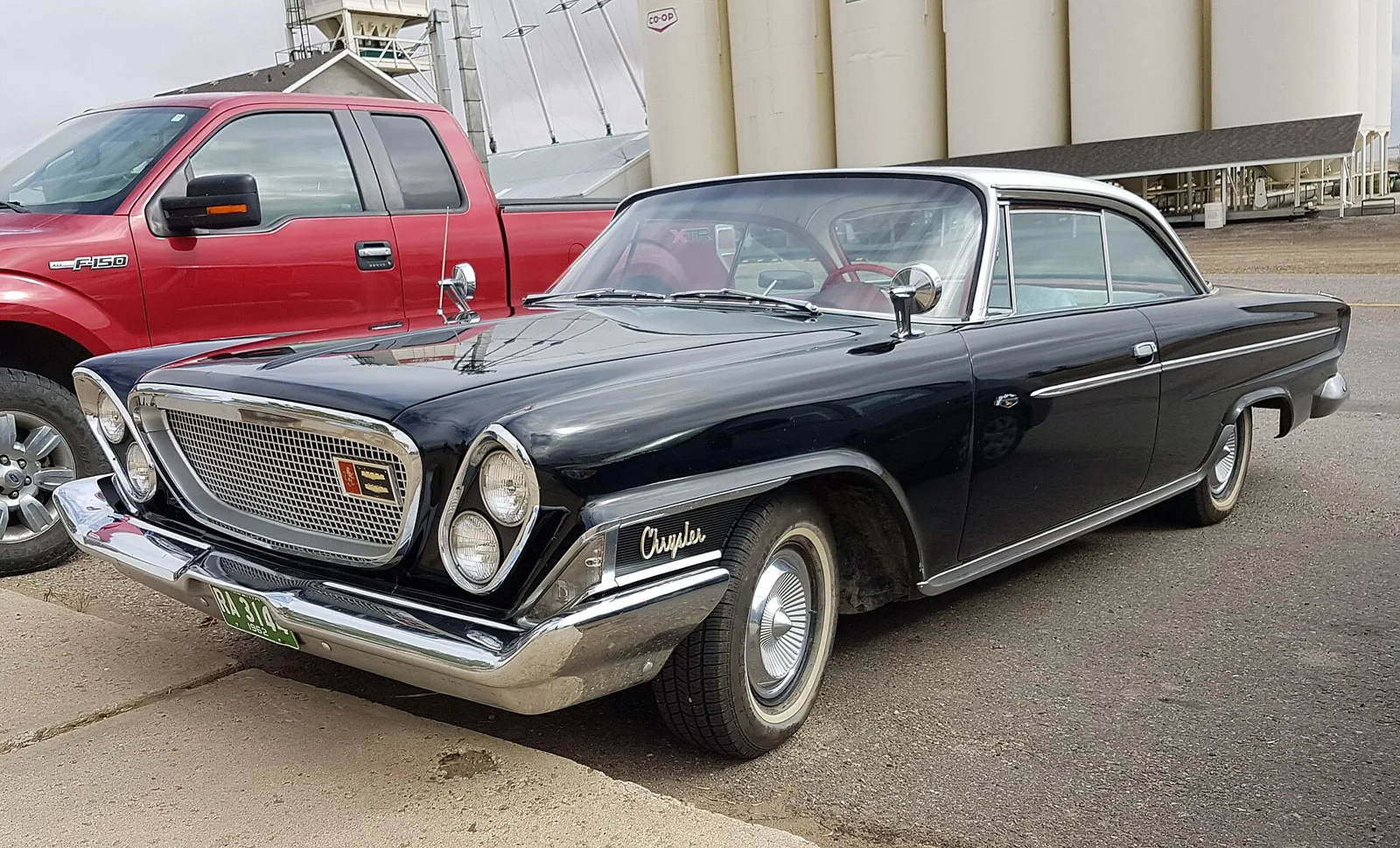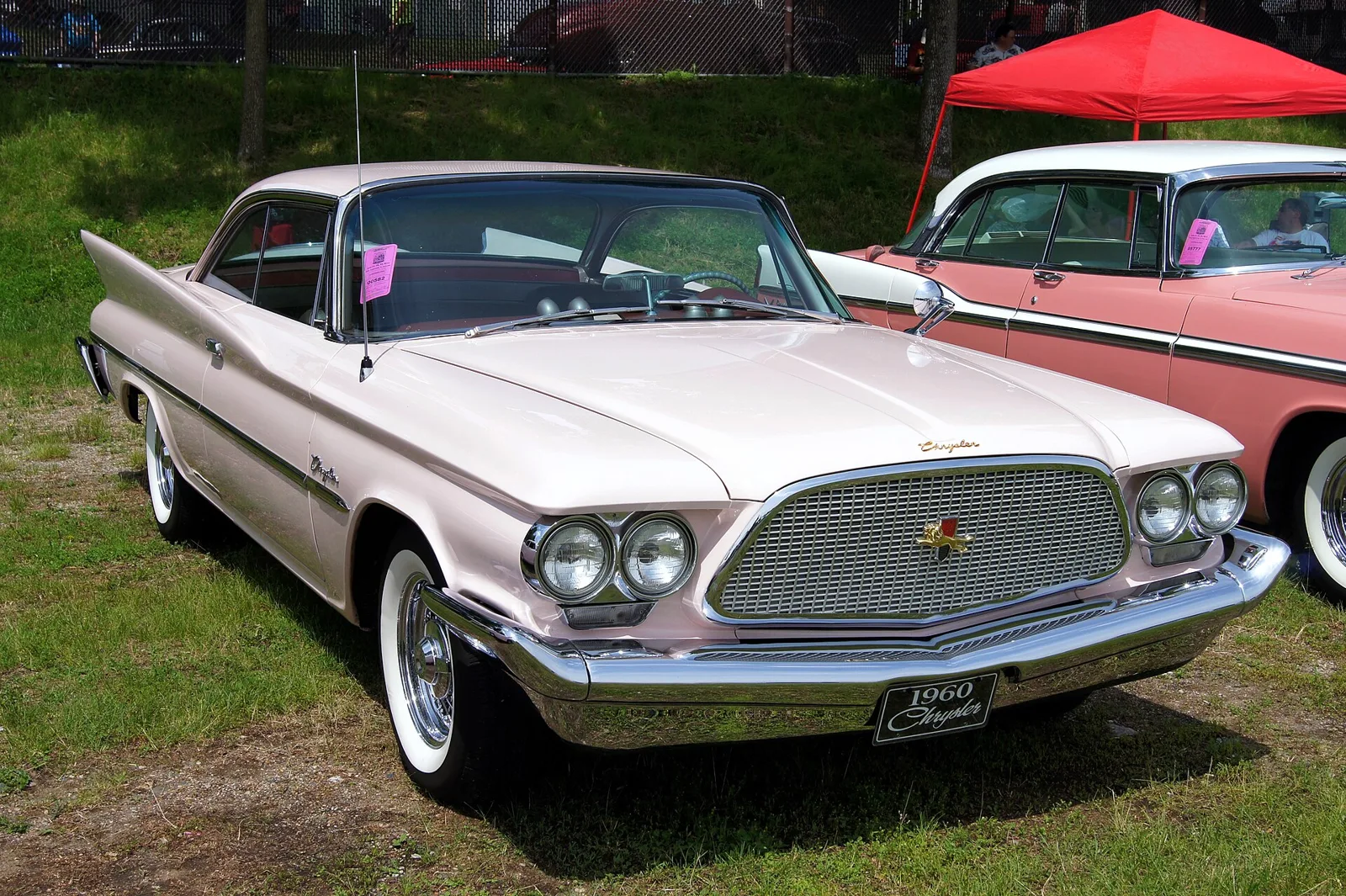
A full-size Chrysler that shared the New Yorker's shape but kept the six-cylinder engine, lasting in the US until 1961 and in Canada until 1966.
The Chrysler Windsor was a full-size Chrysler from 1939 that matched the New Yorker in size and interior but used only the Straight Six. Its last US model year was 1961, and the Windsor name gave way to the Chrysler 300 in 1962.
Chrysler's Windsor was a full-size car sold in the United States from 1939 to 1961, with Canadian production running on to 1966. It looked almost identical to the New Yorker but offered only the six-cylinder engine, which made it the value choice in the lineup.
How did the Windsor start in 1939?
The Windsor began in 1939 as the Royal Windsor, the senior model to the Royal. It used the Straight Six while the New Yorker and Imperial used the Straight Eight.
It shared the available wheelbases with the Royal and offered more standard equipment. Three two-door styles were on offer, the Business Coupe, the Victoria Coupe and the Club Coupe, along with a four-door sedan for five passengers.
Prices were US$1,185 for the Club Coupe and US$1,175 for the sedan. Chrysler also sold 394 cowl and chassis units for custom coachwork, which gave independent builders a rolling base to clothe.
The Windsor gave Chrysler buyers the New Yorker's shape with a simpler six-cylinder engine.
What changed for the Windsor during the war?
In 1940 the line was renamed with Royal, Royal Windsor and Windsor Highlander models, and sealed beam headlights arrived. The 1941 Town and Country station wagon was styled by David A. Wallace, then the president of Chrysler, before production ended in January 1942.
The Windsor Highlander came with moleskine leather and tartan interior trim, and it used the same six-cylinder engine as the Royal. Production ended in January 1942 as American carmakers switched to war work, and the 1942 cars carried fenders that were better integrated into the bodywork.
How did the Windsor return after the war?
After the war the Windsor returned with new front fender and grille styling, and it sold well. It made up 62.9 percent of company sales in 1946, because buyers wanted the six-cylinder's better fuel economy and did not need the eight.
The six-passenger sedan was listed at US$1,711 before options in 1946. Presto-Matic semi-automatic transmission was offered alongside the three-speed manual, and the Windsor Traveler returned with a full-length roof rack.
In 1949 the Windsor shared its updated look with the new Chrysler Imperial sedan, and the line carried on with the six-cylinder engine that was shared with DeSoto, Dodge and Plymouth.
Why did the Windsor become Chrysler's entry-level car?
In 1951 the Royal was dropped, and the Windsor became Chrysler's entry-level car. It remained above DeSoto, Dodge and Plymouth in equipment and interior trim, and a 1951 Popular Mechanics survey found owners averaging 14.1 mpg.
Owners liked the car's comfort. In a 1954 survey, 53 percent of Windsor owners rated the comfortable ride as the best feature, with ease of handling a close second.
Power steering was a $177 option in 1953, and the 1955 restyle gave the Windsor wrap-around windshields and 35 inches (890 mm) of front headroom. The Windsor made up 64.72 percent of Chrysler's sales that year.
What were the key Windsor specifications?
The Windsor kept the Straight Six for most of its life, and a Poly V8 option arrived in 1955. Wheelbases shifted in 1958, and the 1959 Golden Lion engine was the headline engine of its era.
| Item | Detail |
|---|---|
| First model year | 1939 |
| Final US model year | 1961 |
| Canadian production ended | 1966 |
| Engine | Chrysler Straight Six, Poly V8 option from 1955 |
| Wheelbase, US, 1958 | 122 in (3,100 mm) |
| Wheelbase, Canada, 1958 | 126 in (3,200 mm) |
| 1959 V8 | RB 383, 305 hp (227 kW) |
| Air conditioning, 1959 | US$510 |
| Successor | Chrysler 300, 1962 |
What were the Golden Lion years like?
In 1959 Chrysler advertised its new wedge-head V8 as the Golden Lion, and the cars were marketed as Lion Hearted. Lions appeared in the advertising, and the cars carried lion emblems on the front doors and the cylinder heads.
Canadian Windsors did not get the RB engine. They used the B 361 unit, producing 295 hp (220 kW), and they carried three golden crests on the front doors rather than the lions.
Options added cost. Air conditioning was US$510 in 1959, and Captive-Aire tyres that stayed inflated after a puncture cost US$94 extra.
How did the Windsor end in the United States?
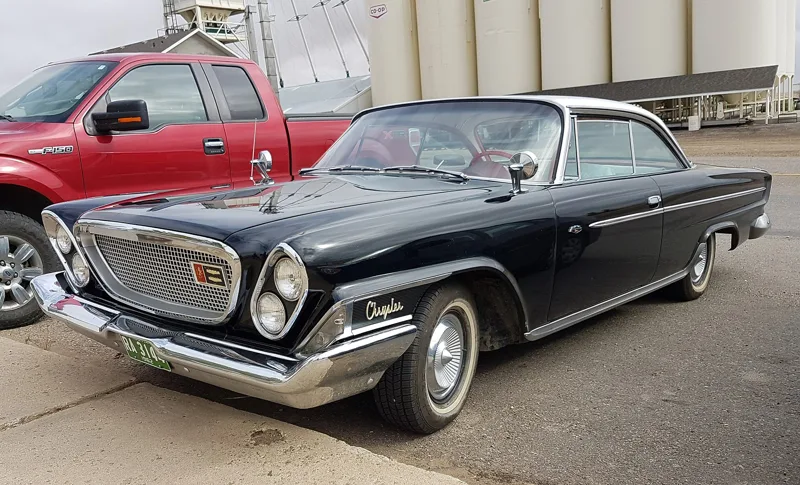
The Windsor's last US model year was 1961, when Chrysler redesigned its full-size cars and added a safety padded dash. The Newport took over the Royal's old market position, and the Windsor name was replaced by the Chrysler 300 in 1962.
All Chrysler cars received a unibody frame in 1960, and the Windsor's brakes were 11-inch drums that year. The AstraDome cluster, a semicircular dome that housed the speedometer and every gauge, was shared across the Chrysler range.
Canada kept the car going until 1966. The Canadian Windsor was, in effect, the US Newport wearing a Windsor badge, and it stayed on the 122-inch wheelbase while the rest of the line moved on.
How did the Windsor's wheelbase change in 1958?
In 1958 the US Windsor moved to the 122-inch Dodge and DeSoto Firesweep chassis, and its front end took on a modified design based in part on Dodge's front clip. Canadian Windsors kept the longer 126-inch chassis, and in that year they were essentially rebadged Saratogas.
The new front end was especially evident around the headlights, which made the 1958 Windsor look different from its 1957 predecessor. New for 1958 across Chrysler was Auto-Pilot cruise control, whose speed warning pushed back through the pedal when the car went too fast.
What did the 1957 restyle do for the Windsor?
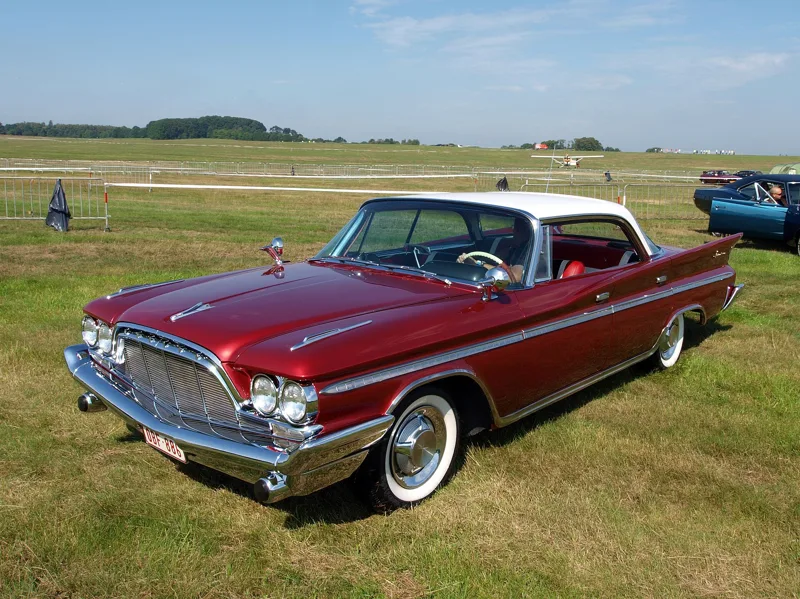
The 1957 cars were redesigned with Virgil Exner's Forward Look, with taller tailfins, vertical taillights and thinner C-pillars. Front headroom grew to 35.7 inches, and safety equipment remained optional on the Windsor.
Quality problems marred the 1957 Chrysler line, with breaking torsion bar suspensions and rust reported by owners. Dual headlights became standard in the middle of the model year, replacing the single lamps that had begun the year.
How did the Windsor's engine range evolve in the 1950s?
The Windsor's V8 option came in the form of the cast-iron Poly V8 from 1955, and the Hemi was also available as an option. From 1959 the RB 383 wedge engine brought the Golden Lion era, with 305 hp (227 kW) in the US and 295 hp (220 kW) in Canada.
Canadian Windsors used the B 361 unit, a Low Block engine also found in US Dodges and DeSotos, and they lacked the Golden Lion trim. The Straight Six that began Chrysler in 1925 never disappeared entirely from the Canadian line.
How much of Chrysler's sales did the Windsor carry?
The Windsor took 64.72 percent of Chrysler's sales in 1955 and 42.36 percent in 1958, which shows its central role in the lineup. Its share fell as the Newport and the 300 took over more of the market.
In 1961 the Newport took the position the Royal had once held, and the Windsor moved up one level above it. The Windsor name survived only until the 300 replaced it in 1962.
What did the Windsor's interior offer?
The Windsor's interior followed Chrysler's trim pattern of each year, and the Highlander models of 1949 to 1952 had a tartan fabric and leather interior. Those Highlanders came with most options standard, including full wheel covers and a radio.
By 1951 the Windsor DeLuxe had an electric clock as standard, while electric windows were optional. The car kept full instrumentation as the company's entry-level model, which marked it out from the cheaper Chrysler-group cars.
What did testers and owners say about the Windsor?
Owners and testers valued the Windsor for its ride and its driveability, and survey results from the 1950s back that up. Popular Mechanics readers liked the padded dashboard, and 98 percent of them approved of it in 1951.
In the September 1951 issue, readers reported an average of 14.1 mpg with the Windsor. The padded dash and the comfortable ride earned repeated praise, and the 1954 survey put the ride first among the car's strengths.