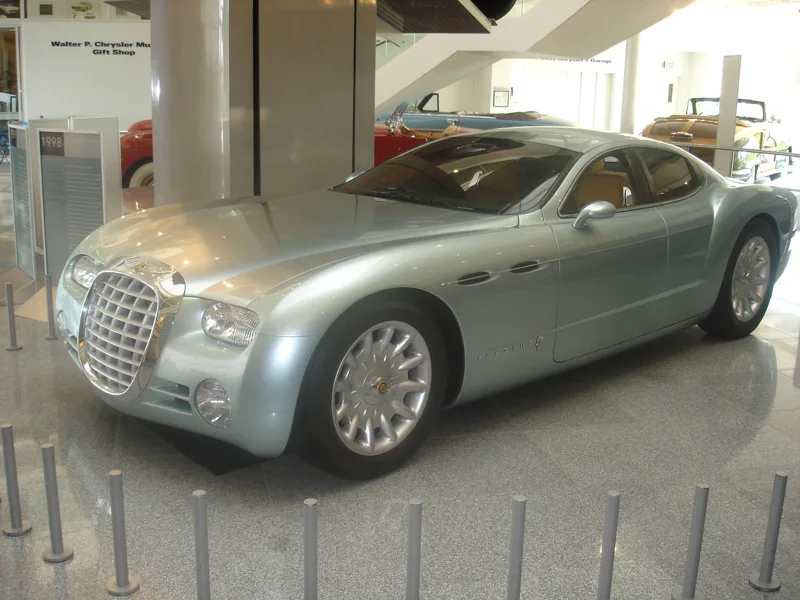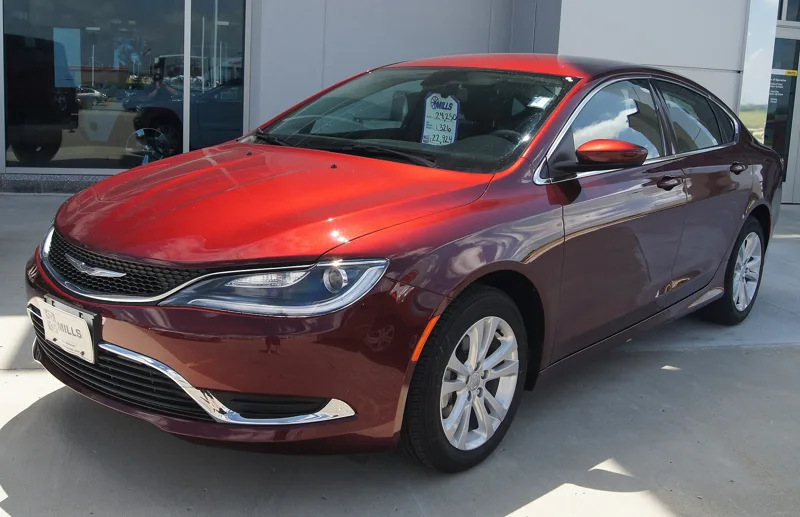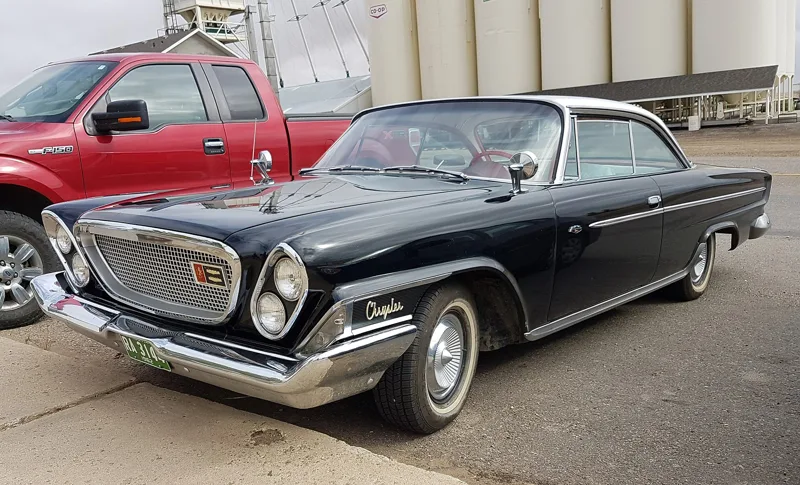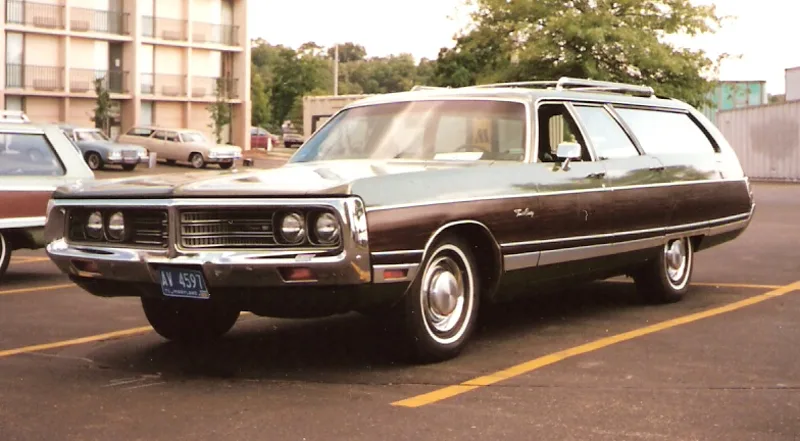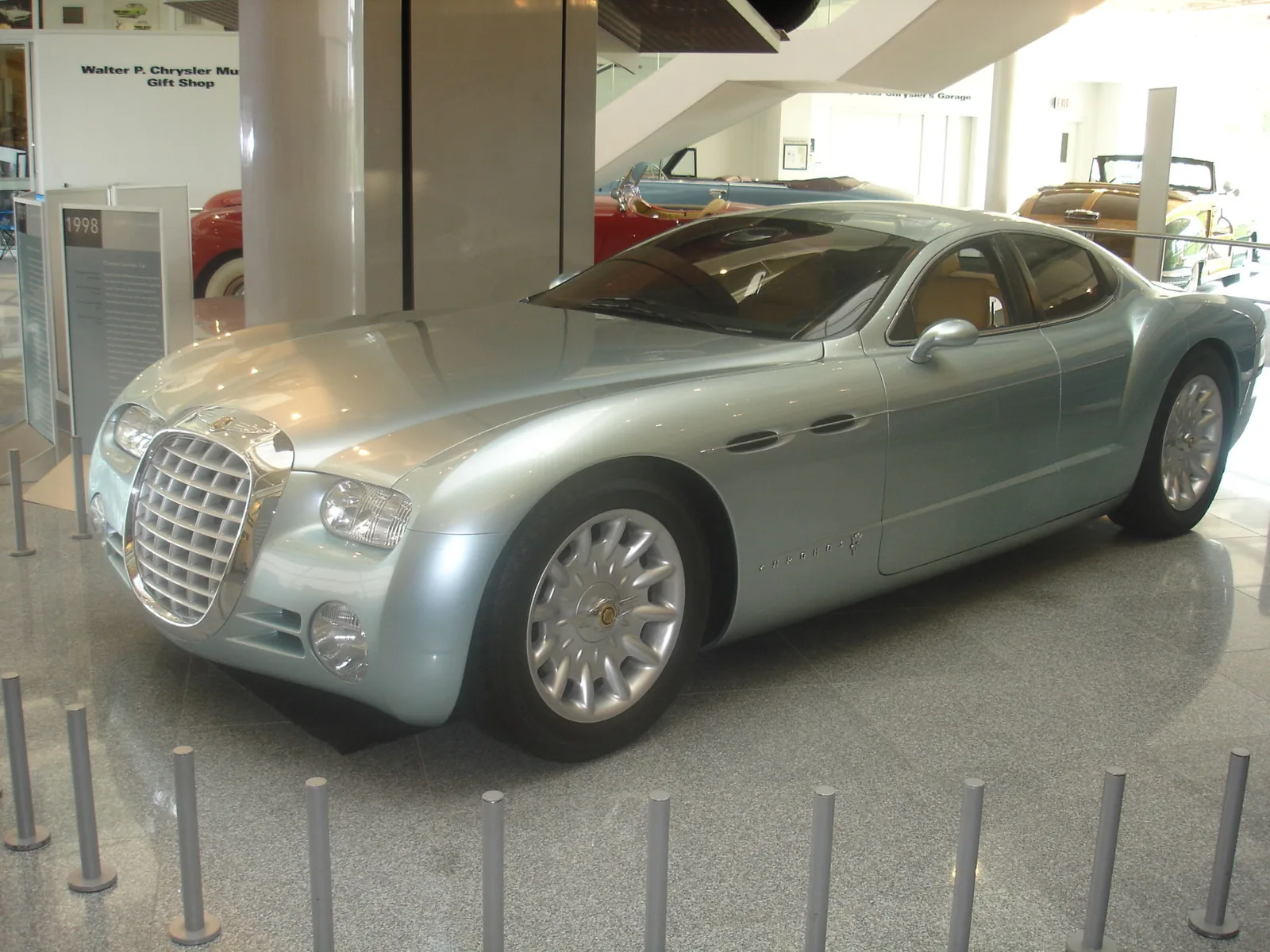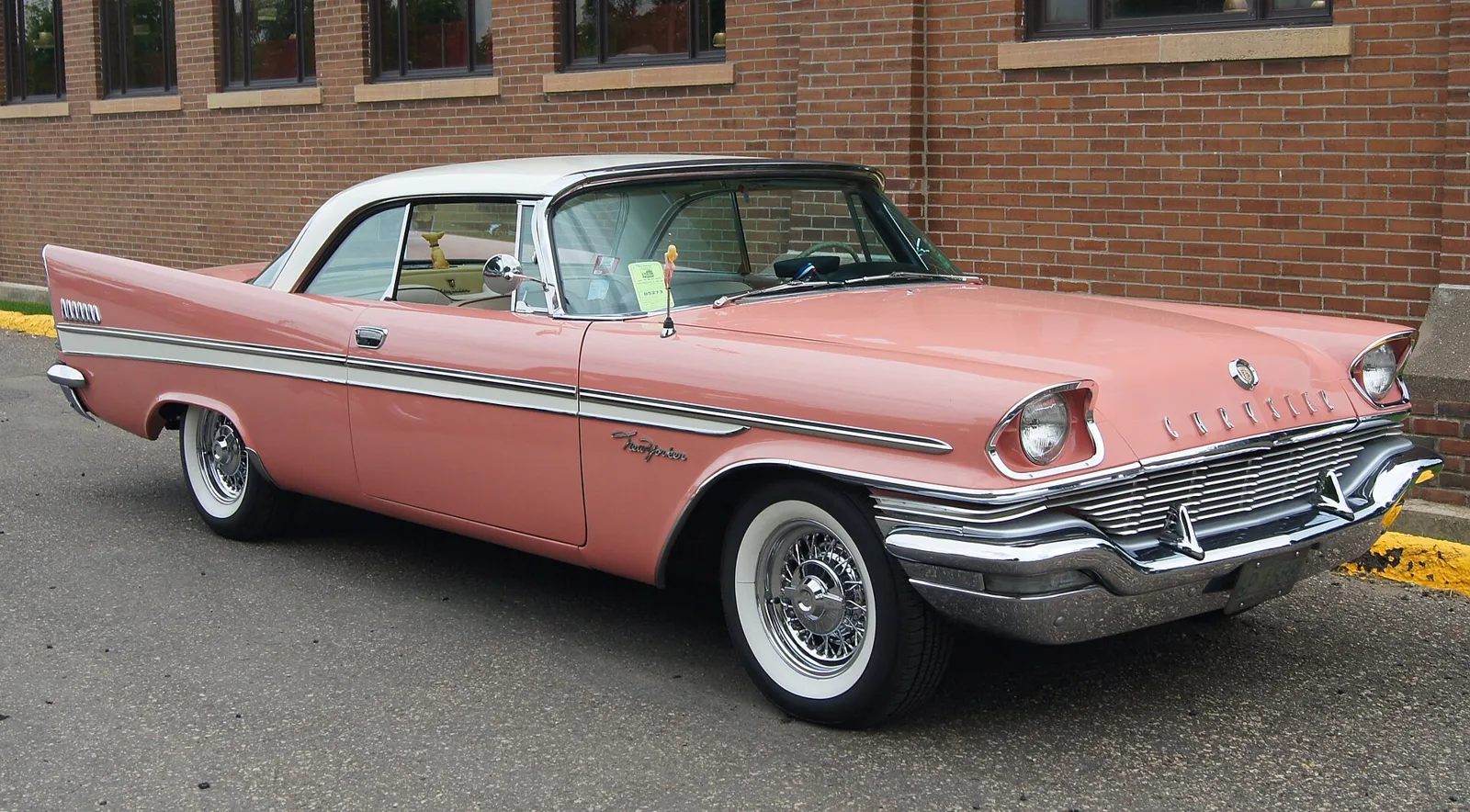
Built from 1940 to 1996, the New Yorker was Chrysler's flagship for most of its life and the longest-running American car nameplate when it was dropped.
The Chrysler New Yorker was built from 1940 to 1996 and was Chrysler's flagship for most of that time. It began as a 1938 New York Special trim of the Imperial, took its name in 1939, and ended as the longest-running American car nameplate when the 1996 cars were built.
Chrysler's New Yorker was built from 1940 to 1996, serving as the brand's flagship for most of that time or as a junior sedan to the Imperial when the Imperial name was used in the lineup. It was the longest-running American car nameplate when it was dropped.
How did the New Yorker begin?
The New York Special was a 1938 sub-series of the Imperial, offered as a sedan with a 298.7 cu in (4.9 L) straight-eight. It took the New Yorker name in 1939, and in 1940 the C26 became the first New Yorker treated as a standalone model.
The early cars offered broadcloth upholstery in two single colours or four two-tone combinations, with polished woodgrain instrument panels to match. The 1939 expansion added two coupes and a two-door sedan, and prices ran from US$1,223 for the two-passenger coupe to US$1,298 for the four-door sedan.
The 1940 C26 brought Fluid Drive, a fluid coupling between the engine and clutch, along with independent front coil suspension. The New Yorker Highlander came with tartan seats, and the 1941 models were slightly wider and lower, with a new Town Sedan whose rear doors hinged at the forward edge.
The New Yorker lasted longer than almost any other American nameplate by reinventing its body, engine and platform.
How did the New Yorker fare after the war?
After the war the New Yorker became Chrysler's top luxury trim, and the four-door sedan was listed at US$2,073 before options in 1946. It competed with the luxury cars of Cadillac, Buick and Packard, while Chrysler kept its body almost unchanged until the 1949 redesign.
The 1949 New Yorker used the new post-war ponton body shared with Dodge and DeSoto. Its wheelbase grew to 131.5 in (3,340 mm), and the straight-eight carried over with Fluid Drive and the Presto-Matic four-speed semi-automatic.
The 1950 Newport hardtop joined the line, and the Saratoga was repositioned lower in the Chrysler hierarchy. The 1951 Hemi FirePower V8 gave the New Yorker a new level of performance, rated at 180 hp (134 kW) and able to reach 60 mph (97 km/h) in 10 seconds.
The 1951 station wagon had a 131.5 in wheelbase, the longest ever used on a station wagon, but only 251 were built.
Which engines powered the New Yorker in the 1950s and 1960s?
Chrysler's Hemi and then its wedge-head V8s powered the New Yorker through these years, and output climbed with each generation of engine. Power rose from 180 hp in 1951 to 365 hp for the 440 TNT option in 1966.
| Year | Engine | Output |
|---|---|---|
| 1951 | FirePower Hemi V8 | 180 hp (134 kW) |
| 1954 | FirePower V8 | 195 hp (145 kW); DeLuxe option 235 hp (175 kW) |
| 1956 | Hemi V8, 354 cu in | 280 hp (209 kW) |
| 1957 | Hemi V8, 392 cu in (6.4 L) | 325 hp (242 kW) |
| 1958 | Hemi V8 | 345 hp (257 kW) |
| 1959 | Wedge-head 413 cu in V8 | 350 hp (261 kW) |
| 1965 | 413 cu in V8 | 340 hp (254 kW) |
| 1966 | 440 V8 | 350 hp (261 kW); 440 TNT 365 hp (272 kW) |
The 1960s New Yorker kept the same chassis but gained new styling each year. The 1963 car rode on a 122 in (3,100 mm) wheelbase, and the 1965 C-body moved to a 124.0 in (3,150 mm) wheelbase with styling from Elwood Engel.
Why did the New Yorker shrink in 1982?
In 1982 Chrysler downsized the New Yorker onto the intermediate M-body chassis and cut about 15 inches from its length. Only a four-door sedan was offered, and the Slant Six became the standard engine.
The New Yorker adopted the M-body chassis that the LeBaron had used, while the LeBaron itself became the flagship of the K-car line. The change reflected how far the luxury car had moved from its 1950s size.
In 1983 the front-wheel-drive E platform arrived mid-year, with a 103.3-inch wheelbase, a four-cylinder as standard and a larger four as an option. It was the smallest New Yorker ever built, and it carried an electronic trip computer and Electronic Voice Alert.
The 1986 cars received a Chrysler-built four rated at one hundred horsepower, and the turbocharged four remained an option. By 1988 the turbo four was the only engine left in the car.
How did the New Yorker sell in the 1960s and 1970s?
The New Yorker sold 49,871 cars in 1965, 47,579 in 1966 and 48,143 in 1968. By 1974 a four-door hardtop listed at US$6,611 was selling 13,165 units a year.
The 1967 downturn cut Chrysler's sales by about a fifth. The company still built a record 264,863 cars in 1968, and the New Yorker kept its own roofline when the 300 and Newport moved to a sportier profile.
The 1973 four-door hardtop was the New Yorker's best seller that year with 26,635 units. The 1974 models were the last full-size Chryslers designed from the ground up, and the 440 V8 became their standard engine.
The 1976 New Yorker inherited Imperial front and rear styling, and the New Yorker Brougham became a standalone top model. Its standard 400 V8 was rated at 175 hp (130 kW) with 300 lb ft (407 N m) of torque.
Sales of the 1979 model reached almost 55,000 cars at US$8,631. The 1980 model sold just over 13,500 at US$10,459, and the 1981 model fell to just over 6,500 units.
What did the late 1980s New Yorker bring?
The 1988 New Yorker was a larger C-platform car with a Mitsubishi-sourced 3.0 L V6 and optional anti-lock brakes. In 1989 it sold more than 100,000 units, the most popular New Yorker of its run, and Chrysler marked the 50th anniversary of the name with no special edition.
In 1990 the base model became the New Yorker Salon, a rebadged Dodge Dynasty with a waterfall grille. The Chrysler-built 3.3 L V6 produced 147 hp (110 kW) and 183 lb ft (248 N m), and the Salon was marketed as the Chrysler Dynasty in Canada.
A stretched New Yorker Fifth Avenue joined the range in 1990 to fill the gap left by the departing M-body platform. It was discontinued in 1993 when the Y-body and C-body cars went out of production.
How did the LH New Yorker of 1993 differ?
The 1993 New Yorker used the LH platform, a cab-forward design inspired by the Lamborghini Portofino concept of 1987. It was front-wheel drive, powered by a 3.5 L V6 producing 214 hp (160 kW), and it was sold alongside the LHS as an early 1994 model.
The LH design began with a 1986 concept sedan called the Navajo, whose exterior was reworked into the Portofino. Chrysler had bought Lamborghini in 1987, and the Portofino's cab-forward shape set the direction for the production car.
Chrysler also bought American Motors in 1987, and Francois Castaing joined in 1988 as its vice president of vehicle engineering. The chassis could support front or rear drive, and the 3.5 L V6 was standard in the LHS and New Yorker.
The automatic was a revised version of Chrysler's Ultradrive, designated the A606 or 42LE. Consumer Reports warned in February 1991 against buying a car with that transmission, citing reliability and safety concerns.
Why was the New Yorker name dropped in 1996?
The New Yorker was dropped after a short 1996 production run because the LHS was selling strongly, and the two cars were close enough in appearance that one name was enough. The LHS then offered a six-passenger option as well as its five-passenger seating.
The New Yorker was distinguished mostly by trim. It had chrome hood trim, body-colour cladding, 15-inch wheels and a column shifter, while the LHS had a floor console and a firmer, more European image.
In 1995 the New Yorker received Chrysler's revived blue ribbon logo, which replaced the Pentastar. The 1996 model added extra sound insulation and an antenna integrated into the rear window, but the name was dropped all the same.
How did the 1965 New Yorker look and drive?
The 1965 New Yorker was styled by Elwood Engel with slab sides and chrome trim along the top edges of the fenders. Its standard engine was the 413 cu in V8 rated at 340 hp, and the three-speed TorqueFlite automatic was standard.
Optional equipment for 1965 included a vinyl rear roof pillar insert, a tilt and telescopic steering wheel, and power windows, antenna and steering. The New Yorker sold 49,871 cars that year, a 62 percent increase on 1964.
What did the 1974 New Yorker offer?
The 1974 New Yorker was a slab-sided full-size car with a 440 cu in V8 as standard and more sound insulation and interior trim than before. The 440 replaced the 400 cu in V8, and fuel economy fell because of the larger engine and the car's weight. Two trim levels were offered, the base New Yorker and the upgraded Brougham, and the luxury focus was clear.
The St. Regis package, with fixed formal opera windows, body accent stripes and a forward half-covered vinyl roof, came back midway through the 1974 model year. It had last been seen in the mid-1950s.
Why did the 1979 R-body matter?
The 1979 R-body was a pillared hardtop, and its 318 cu in V8 came standard, with a 360 cu in option through 1980. It was shorter and much lighter than the previous generation, yet it kept a big-car look and ride.
Its hidden headlamps and full-width taillights set it apart from the Newport, the St. Regis and the Gran Fury, which shared its R-body underpinnings. A Fifth Avenue trim package was offered, and sales were robust at almost 55,000 cars. The early 1980s recession hit sales of large and expensive cars hard, and the New Yorker was no exception.
Why did the 1988 New Yorker mark a break?
The 1988 New Yorker was the first generation with a V6 as its standard engine, a Mitsubishi-sourced 3.0 L unit, and it was larger than the E-platform car. It shared much of its design with the Dodge Dynasty and used anti-lock brakes as an option. Base and Landau trims were offered, and the Landau carried a rear-quarter vinyl top.
After the R-body cars ended in 1981 their hidden headlamps were gone, and the 1988 car brought them back. Chrysler's Crystal Key Owner Care Program covered all thirteenth-generation New Yorkers.
What is the New Yorker's legacy?
The New Yorker's legacy lies in its long run as Chrysler's luxury flagship and in its series of reinventions, from the Hemi years to the cab-forward LH sedan. The name lasted longer than almost any other in the American industry.
Mexico sold a version of the LeBaron as the New Yorker, since the Series C was not available there. The name travelled further than its home market, and it was recognised far beyond Chrysler's own dealers.
Dual-way power sunroofs for the LH cars were designed and installed by the American Sunroof Company in Columbus, Ohio, rather than by Chrysler's own Mopar division. The New Yorker's later years show how a flagship was built from parts made by many suppliers.