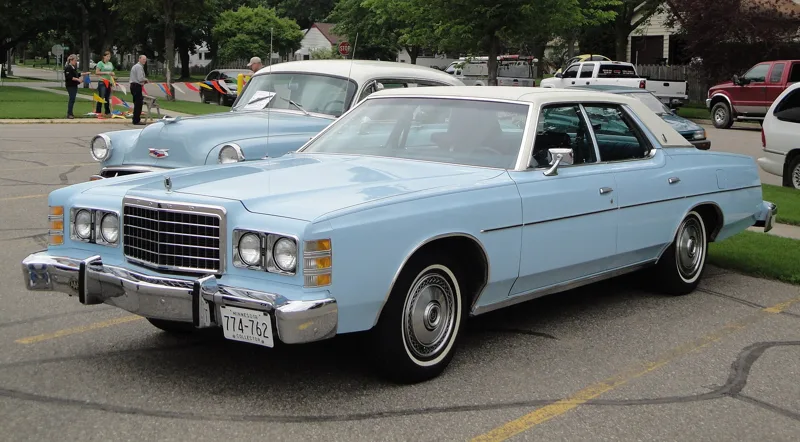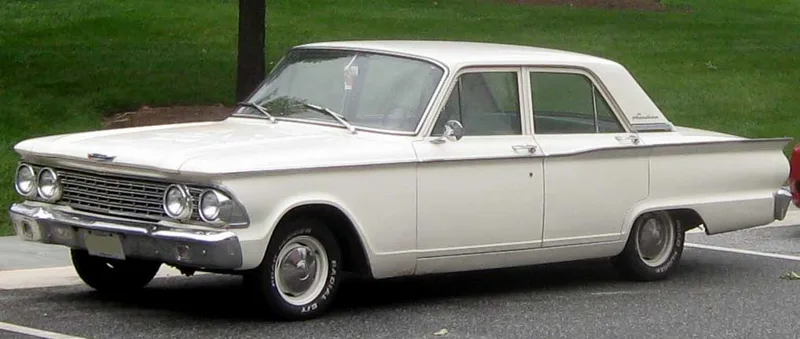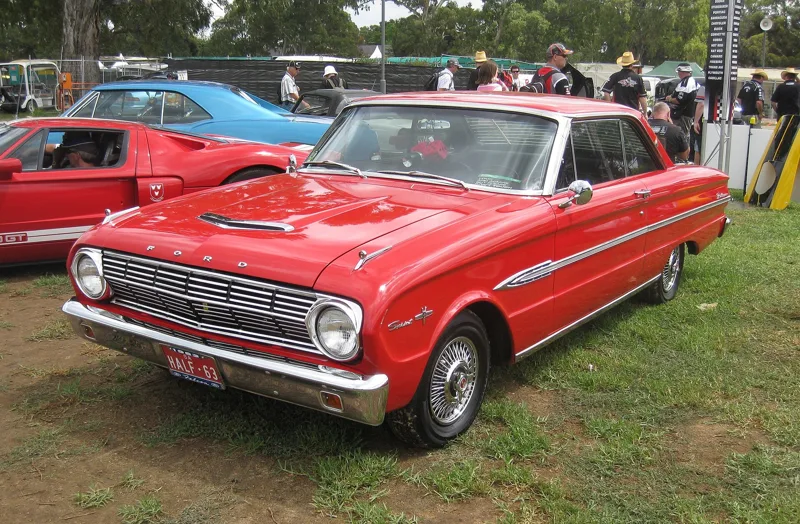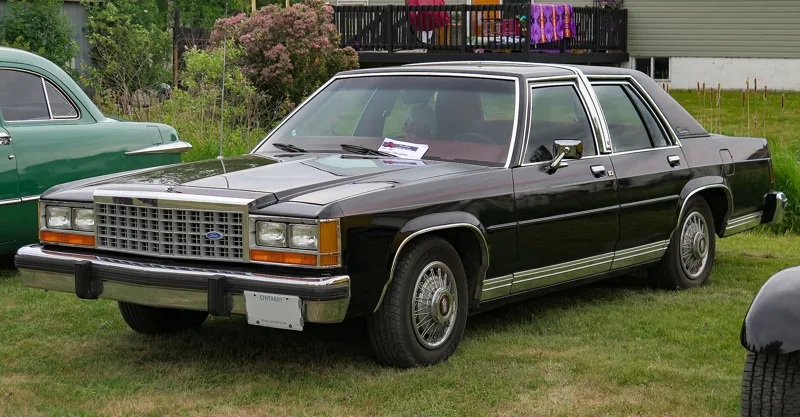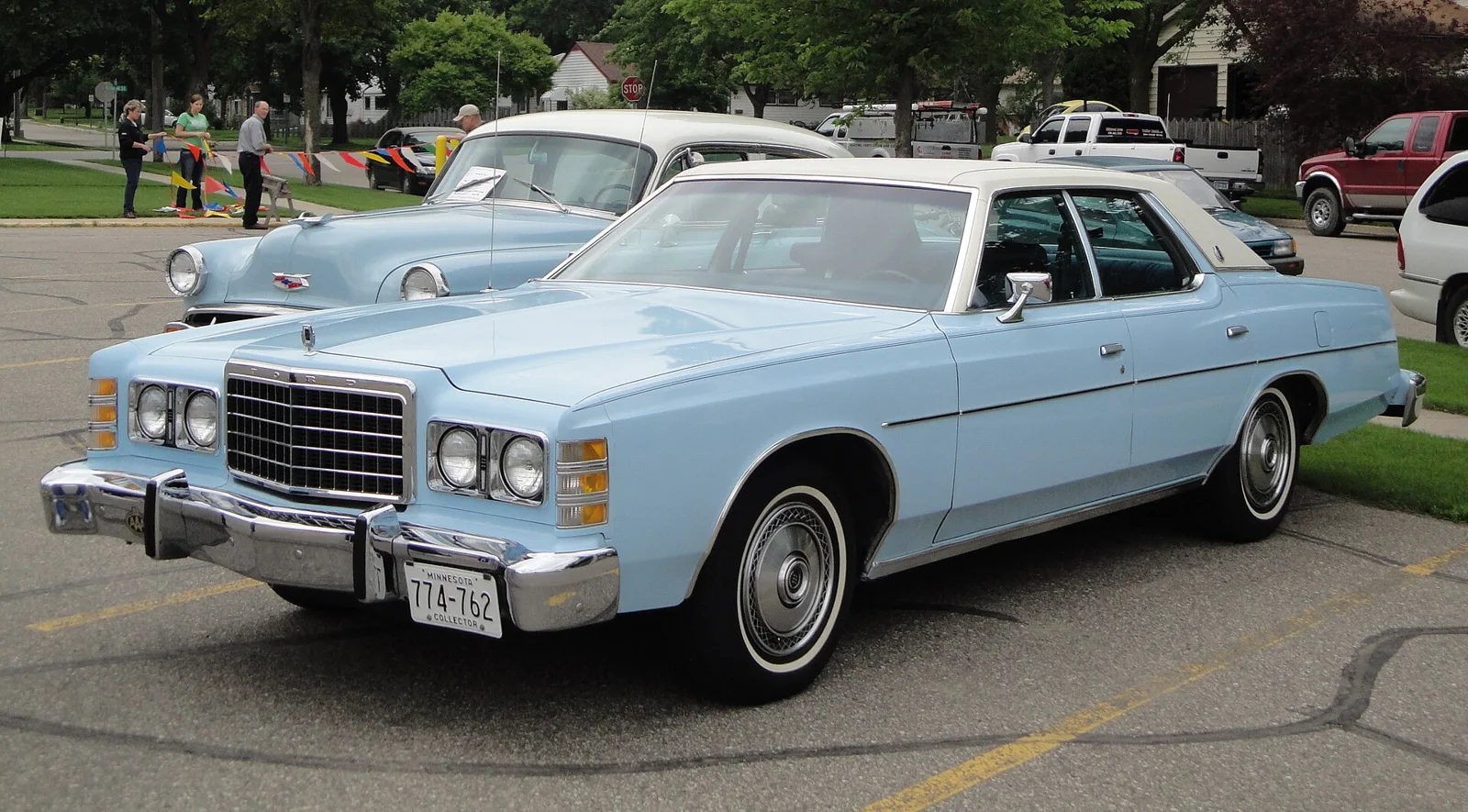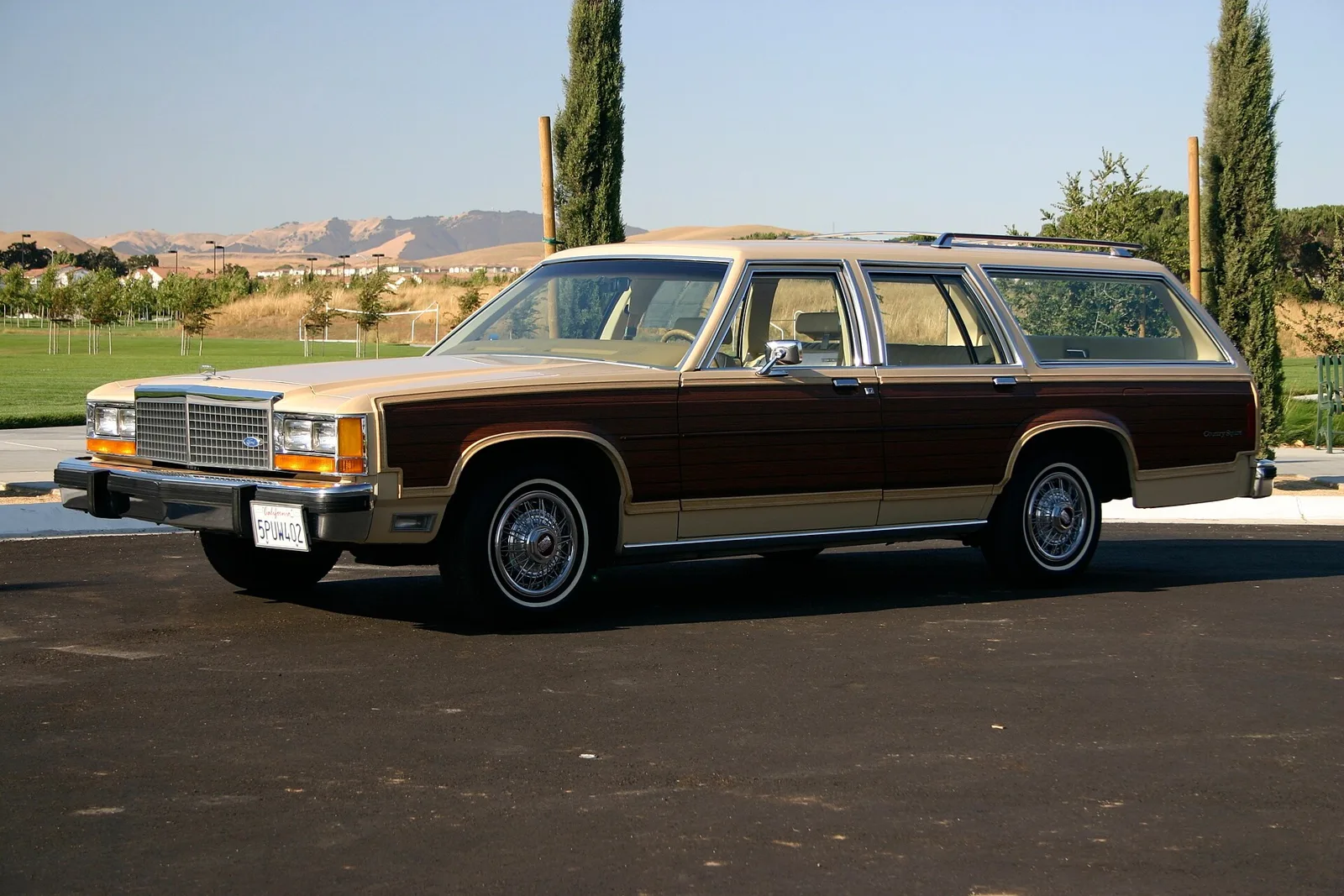
From the first 1950 woodie to the 1991 LTD-based wagon, the Country Squire carried simulated or real woodgrain through eight generations and a long run as Ford's flagship estate.
The Ford Country Squire was Ford's top-level full-size station wagon, built from 1950 to 1991 across eight generations. Known for its woodgrain trim, it began as a true woodie before moving to steel bodies with simulated wood. Its engines ran from six-cylinder units to V8s of up to 428 cubic inches.
The Ford Country Squire was a series of full-size station wagons that Ford built from 1950 through the 1991 model year, across eight generations. It was the top-level wagon in the Ford division and was marked by woodgrain bodyside trim, which later became simulated rather than real wood. Its 41-year run is the third longest for a Ford car nameplate in North America.
Where did the Country Squire name come from?
The word squire is British and refers to a village leader or a lord of the manor, a member of the landed gentry. Ford chose it for its top station wagon, giving the car a grander identity than the plainer wagons it sat above.
The nameplate was tied to a set of model lines over the decades. It turned up on a long list of Ford models, from the Falcon and Torino to the Escort and the mid-size LTD, which was the last range to carry it. A woodgrain Ranchero and a Pinto Squire two-door hatchback in 1976 also used it.
Mercury sold its own counterpart, the Colony Park, which shared bodywork and trim with the Country Squire.
A woodgrain Ford estate that started as a true woodie in 1950 and lasted through eight generations.
What made the first-generation Country Squire a true woodie?
The first-generation cars, built for 1950 and 1951, were true woodies. Ford introduced its first post-war model line for 1949, and the station wagon moved from a commercial vehicle toward a premium family car, listing at US$2,119 with 31,412 built in the first year.
Designed by Eugene Gregorie and Ross Cousins, the 1949 wagon kept a steel roof, rear fenders and tailgate frame, while the side panels and tailgate used mahogany plywood trimmed with maple or birch. Ford named the 1950 car the Country Squire, and it had two doors with three seats, giving eight-passenger seating.
Genuine wood panels came from the Iron Mountain plant in Michigan's Upper Peninsula. Cars were built at Dearborn, sent to Iron Mountain for wood fitting, then returned for final assembly. For 1951 Ford outsourced final assembly to the Ionia Body Company, a wood-bodied wagon maker that had worked for General Motors.
How did the first Country Squire's engines work?
The first generation used engines shared with Ford sedans. The standard unit was a 226 cubic-inch H-series inline six rated at 95 hp, with a 239 cubic-inch Flathead V8 producing 100 hp as the alternative. A three-speed manual was standard for 1950, and a three-speed Ford-O-Matic automatic became optional in 1951.
The steel body and woodgrain trim soon replaced the true wood. For 1952 Ford moved to all-steel bodies to cut costs, and from then on the Country Squire wore simulated woodgrain of varying coverage.
What changed with the 1952 second generation?
The second generation arrived with the redesigned Ford line for 1952. It shared much of its body with the newly introduced Mercury Monterey, though not its wheelbase, and only the Country Squire carried wood paneling as standard. It was the wagon counterpart to the Crestline sedan.
Designed by Gordon Buehrig, it aimed for parts commonality between sedan and wagon. Its wheelbase grew by an inch while its length fell by roughly 10 inches, and it added two doors for rear passengers. Pricing started at US$2,384, and production dropped sharply to 5,426 cars.
Why did the Country Squire lose its real wood?
Wood-bodied wagons were expensive to build and maintain, so the Country Squire moved to a full-steel body. To set it apart from the Country Sedan, Ford used vinyl transfers to imitate mahogany paneling with birch or maple accents, and woodgrain transfers covered the window frames and upper liftgate.
For 1954 the wood trim itself was replaced by fibreglass with a woodgrain finish. In that period the Country Squire was the only Ford wagon with standard wood paneling of any kind, a status it kept through 1956.
How did the 1955 and 1956 models change?
The third generation came for 1955, as an update of the second. The Crestline was discontinued, and the Country Squire became the wagon counterpart of the new top-level Fairlane sedan. Its listed price was $2,392, and production rose to 19,011.
Ford now grouped its three wagons into a separate line. The Country Squire was the flagship Ford wagon, sitting above the four-door Country Sedan and the two-door Ranch Wagon. That arrangement lasted until 1968. The two-door Parklane arrived in 1956 to compete with the Chevrolet Nomad.
The chassis kept a 115.5 inch wheelbase. A panoramic windshield with a vertical A-pillar was new, and the fiberglass trim ran into the front fenders. Power windows were offered for the first time, which was then a luxury feature. For 1956 the car got a new grille, a 12-volt electrical system and air conditioning as an option.
The Lifeguard package brought a deep-dish steering wheel and upgraded door latches to prevent ejection. Seat belts and a padded dashboard were available as extras. Standard power was the 223 cubic-inch Mileage Maker inline six at 120 hp, with optional V8 engines from 272 to 312 cubic inches.
How was the 1957 Country Squire redesigned?
For 1957 Ford redesigned its full-size line for the first time since 1952. Lower body height was the central goal, and the new chassis needed a lower floor. The Country Squire became the only Ford wagon with standard woodgrain from 1954 to 1956, and in 1957 the Mercury Colony Park joined it as a counterpart.
Ford wagons were now wider and seated nine, a first. The 1957 car had a 116-inch wheelbase shared with the Ford Custom, while the 118-inch wheelbase stayed exclusive to the Fairlane. A perimeter frame let the floor sit between the frame rails, and the rear leaf springs moved outboard. Wheels dropped from 15 to 14 inches to lower the car.
For 1958 rear air suspension was offered for the first time, aimed at keeping the load floor level, although few buyers chose it. For 1959 the Country Squire adopted the 118-inch wheelbase of the Fairlane and grew over five inches in length.
The 1957 model lineup carried a 144 hp 223 inline six as standard, a 212 hp 292 V8 and three versions of the 312, rated 245, 270 and 300 hp. The 300 hp car used a supercharger. The Y-block V8s were replaced for 1958 by the new FE-series engines, offered as 332 and 352 cubic-inch units, with the 352 producing 300 hp.
What did the 1958 and 1959 engines look like?
The 1958 cars offered a 332 cubic-inch V8 at 240 hp with a two-barrel carburettor or 265 hp with a four-barrel, and the 352 at 300 hp. For 1959 the 292 returned as the base V8 at 200 hp, the two-barrel 332 was detuned to 225 hp and the 300 hp 352 stayed.
Transmissions included three and four-speed manuals, the three-speed Fordomatic and, from 1958, the three-speed Cruise-O-Matic. Cruise-O-Matic began in first gear, while Fordomatic started in second and used a downshift into L to reach first.
Which body changes marked the 1959 Country Squire?
In 1957 the wagon stopped sharing a body with Mercury and was developed alongside the Edsel line, with the Country Squire becoming the counterpart of the Edsel Bermuda. It used the shorter Custom wheelbase but shared trim with the Fairlane, and it took the Thunderbird's wraparound windshield.
The 1959 model grew over five inches with the new wheelbase. The front was less steeply angled, with a wider grille, and the car kept two large round taillamps plus reworked tailfins. The simulated wood around the roof pillars became stainless steel, and the third seat was redesigned to fold flat once its cushions were removed.
How did the fifth generation of 1960 differ?
For 1960 Ford replaced its annual updates with a complete redesign. Full-size Fords grew to a 119-inch wheelbase, and the Galaxie became the flagship model range above the Fairlane, with the Country Squire as its wagon counterpart. The 1960 V8 wagon listed at US$3,080 before options.
The fifth generation was five inches wider and five inches longer than its predecessor. It kept the perimeter frame, and the wood returned in a boat-decking style with a simpler border. The A-pillar slope reversed, allowing a wider door opening. The third row still needed its lower cushion removed to fold flat.
The 1960 chassis had double-wishbone front suspension with ball-jointed A-arms and 11-inch drum brakes on all four wheels. The launch engines included a 145 hp 223 six, and a 292 retuned to 185 hp and a 352 at 235 hp with a two-barrel or 300 hp with a four-barrel.
For 1961 the engines were detuned, with the six at 135 hp, the 292 at 175 hp and the 352 at 220 hp. For 1962 a 390 cubic-inch V8 producing 300 hp became the only 390 offered in the Country Squire. The 292 was replaced in 1963 by a 260 cubic-inch V8 at 164 hp, and in 1964 that grew to 289 cubic inches at 195 hp.
The tailgate was redesigned for 1961 into a single piece with a roll-down window, which came with a safety lockout that required the window to be lowered first. Tailfins returned for 1961 in line with the Thunderbird. The wagon was facelifted in 1964, with the tailfins removed from the rear.
What did the sixth generation of 1965 to 1968 offer?
The 1965 Ford line was completely redesigned on an all-new chassis, with the Country Squire a counterpart of the Galaxie 500. The V8 car listed at US$3,216. Wood trim was revived in simulated form across the industry, with Chrysler, General Motors and others offering woodgrain wagons.
The sixth generation kept the 119-inch wheelbase, but the frame rails became fully boxed. The rear leaf springs were replaced with a three-link coil-sprung solid rear axle, a layout Ford kept on rear-drive full-size cars until the final Crown Victoria in 2011. The 1965 car also replaced the third-row seat with two flat-folding rear seats facing the cargo area, which expanded seating to 10 passengers.
For 1966 every Ford wagon introduced the Magic Doorgate, engineered by Donald N. Frey. The two-way rear door could fold down like a tailgate or swing open to the side. A traditional hinge on the passenger side and a combination of hinges on the driver side carried the weight, and the door could not open or fold down unless the rear window was lowered.
The Big Six 240 cubic-inch inline six at 150 hp replaced the 223 as the standard engine. The V8 line included a 289 at 200 hp, a 352 at 250 hp and a 390 at 300 hp. A 428 cubic-inch V8 at 345 hp was offered for the first time on the Country Squire, and Ford did not offer a 427 or any 428 above 345 hp on the Country Squire.
How did the 1968 Country Squire join the LTD line?
In 1968 the LTD became a full model line, and the Country Squire became its wagon counterpart, with LTD badging on the hood. The LTD nine-passenger wagon with a V8 listed at US$3,619 before options.
The sixth generation also absorbed a host of federal safety requirements. For 1966 Ford standardised front and rear belts, a padded dash, sun visors, a deep-dish wheel, reinforced latches and emergency flashers. For 1967 the steering wheel had a padded centre and a collapsible column. A dual-chamber brake master cylinder came in 1968.
How did the Country Squire change from 1969 to 1978?
For 1969 the full-size Ford line was redesigned on a 121-inch wheelbase, and the Country Squire moved above the Country Sedan and the Ranch Wagon. The big six was dropped from the Country Squire, and the 1969 ten-passenger version listed at US$3,721.
The Magic Doorgate became a three-way design that could swing down like a tailgate or swing out with the window up or down. The 1970 changes were minor, but the 1971 facelift gave the wagon a new look with only the roof and tailgate carried over. The Country Squire lost its hidden headlamps then, while the Mercury Colony Park gained them.
The standard engine was a 302 cubic-inch V8, replaced by a 351 midway through 1969, with the 390 and 429 as options. In 1971 the 390 became a 402 cubic-inch V8 sold as a 400. Emissions rules and unleaded fuel cut output sharply by 1972, when gross horsepower gave way to SAE net figures. The 429 fell from 365 hp to 212 hp, and a 224 hp 460 V8 arrived that year.
For 1973 the full-size range was updated with 5 mph bumpers, which made the LTD Country Squire longer by over six inches by the end of 1974. It listed at US$4,401 for the ten-passenger version. For 1975 Ford returned hidden headlamps to the LTD Country Squire, and catalytic converters became standard on all models.
From 1975 to 1978 the models were nearly identical. The Cleveland 400M was the standard V8, while the 429 and 460 were options. The manual transmissions were dropped, leaving the C6 three-speed automatic as the only option. The 351 returned in 1978 to improve fuel economy.
What was the eighth generation of 1979 to 1991?
For 1979 Ford downsized its full-size cars, and the Country Squire came out 11 inches shorter and nearly 1,000 lb (450 kg) lighter. It kept eight-passenger seating and switched to the 302 and 351 Windsor V8s shared with the Granada. The wheelbase was one inch longer than the 1962 Fairlane wagon.
For 1983 the Country Squire became the counterpart of the LTD Crown Victoria. The 4.9 L V8 gained throttle-body fuel injection, and in 1986 the V8 adopted sequential multi-port injection with an EFI 5.0 badge. For 1988 the wagon received its first external update since 1979, and for 1990 a driver-side airbag was added to the dashboard.
Between 1979 and 1991 the eighth generation sold 286,673 units in total, including non-woodgrain LTD Crown Victoria and Country Squire wagons counted from 1983. Production of the 1991 model ceased in December 1990.
Why did the Country Squire end in 1991?
Demand for big wagons shrank in the mid-1980s as minivans from Chrysler and the Aerostar appeared. By 1991 the car was Ford's least-bought vehicle in North America, with fewer than 4,000 built.
For 1992 Ford redesigned its full-size cars but did not include a wagon, and the role of the eight-passenger wagon passed to the Ford Taurus and Mercury Sable. The Taurus went on to become the best-selling car in the United States, while the family towing role split between the Aerostar, the Club Wagon and the new Explorer.
What options did the Country Squire offer?
Some Country Squires could be fitted with a combined AM/FM cassette and integrated Citizens' Band two-way radio, with a dual-purpose antenna that looked like a factory fitment. Side-facing rear seats could fold down to form a durable cargo surface, with a folding table carrying a magnetic checkers board.
What are the key Country Squire specifications?
| Specification | Detail |
|---|---|
| Production span | 1950 to 1991, eight generations |
| First-generation engines | 226 cubic-inch inline six, 95 hp; 239 cubic-inch Flathead V8, 100 hp |
| 1957 wheelbase | 116 inches (Custom); 118 inches exclusive to Fairlane |
| 1959 wheelbase | 118 inches, over five inches longer |
| 1960 wheelbase | 119 inches |
| 1969 wheelbase | 121 inches |
| 1966 top V8 | 428 cubic-inch V8, 345 hp |
| 1972 top V8 | 429 at 212 hp, 460 at 224 hp |
| 1979 engines | 302 cubic-inch (4.9 L) and 351 cubic-inch (5.8 L) Windsor V8s |
| Seating | Eight passengers in later cars; 10 in the 1965 sixth generation |
| Total eighth generation | 286,673 units, 1979 to 1991 |