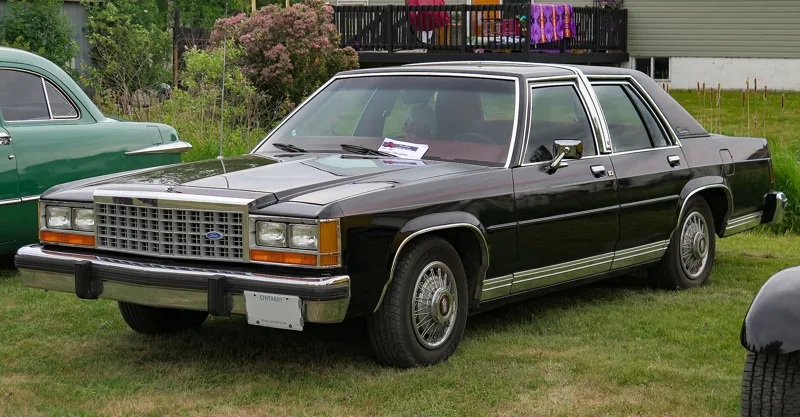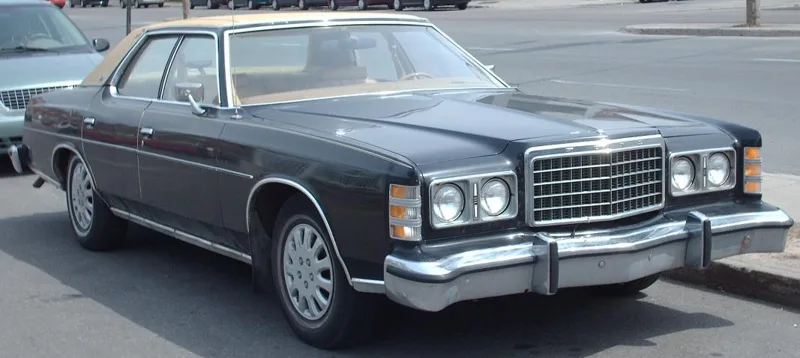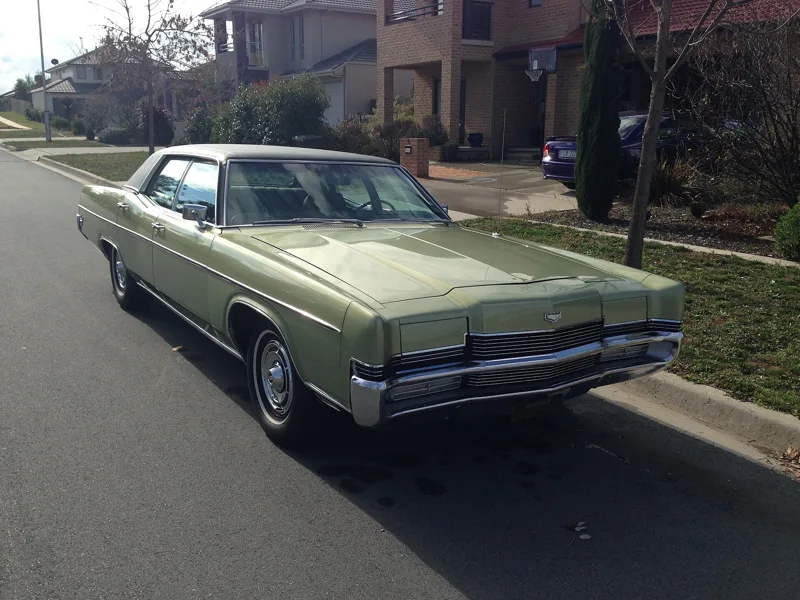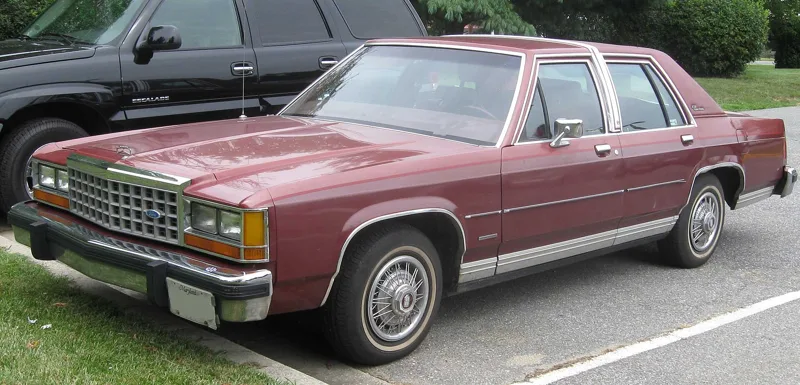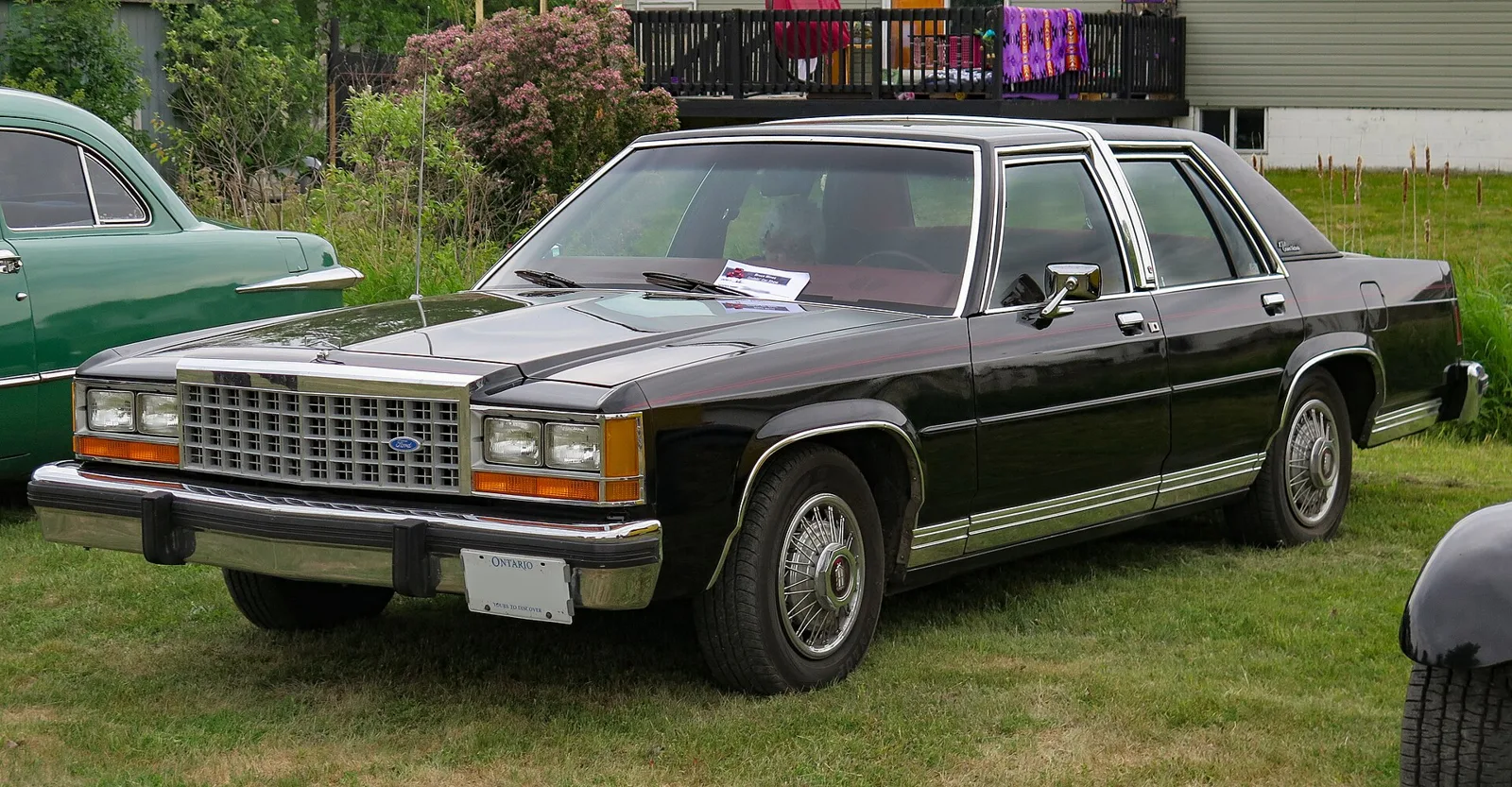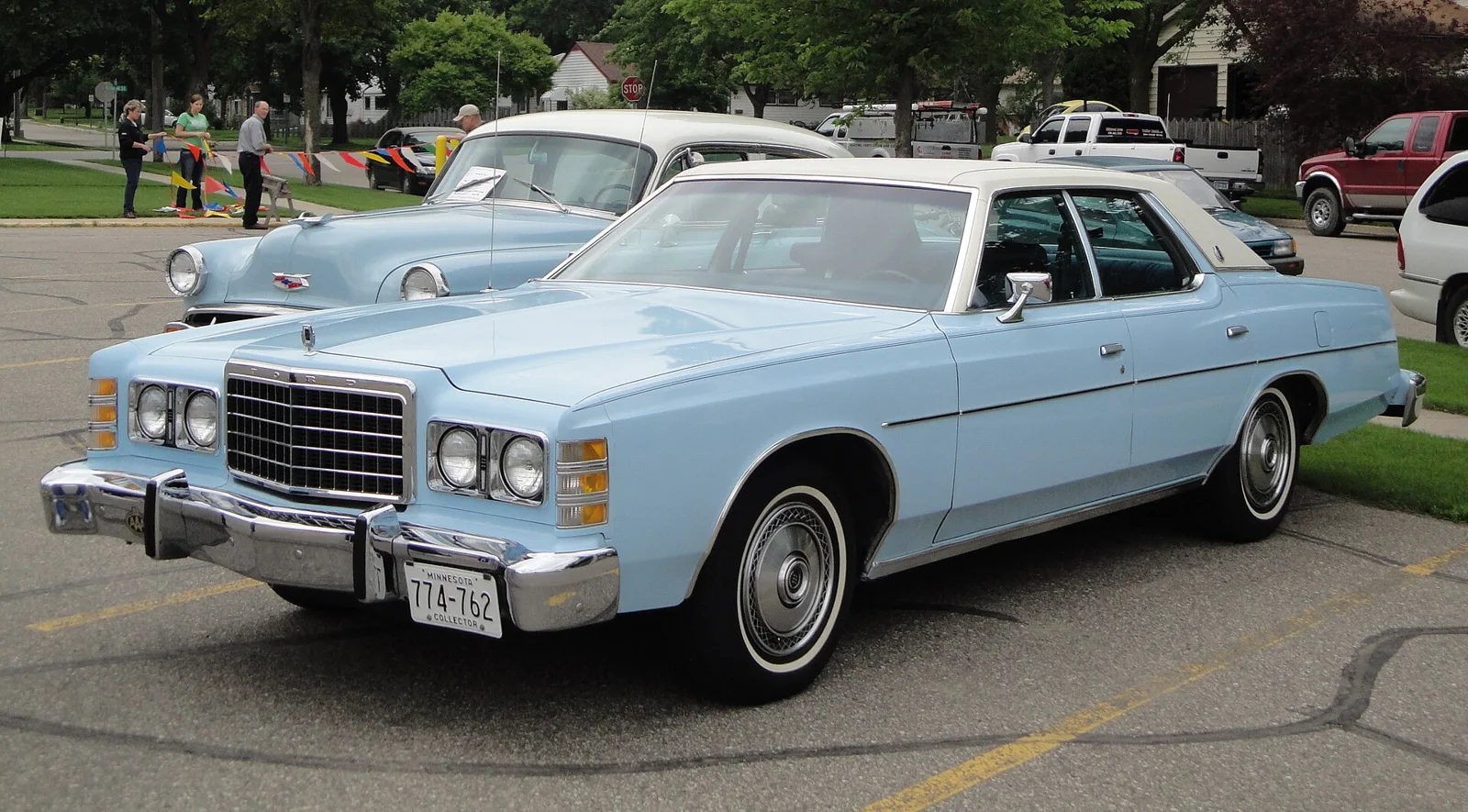
The LTD and the Marquis were Ford and Mercury versions of the same full-size idea from 1967 to 1986, sharing bodies and engines while each brand added its own trim, badges and dealer appeal.
The Ford LTD was Ford's full-size flagship trim from 1965, and it was the largest Ford in North America for its first three generations. The Mercury Marquis was its divisional counterpart from 1967 to 1986, with Mercury interior trim and a longer wheelbase. The pair shared bodies and engines for much of their lives, and each brand dressed the same idea in its own way.
The Ford LTD and the Mercury Marquis were the same full-size idea sold under two badges. The LTD was the top trim of Ford's full-size range from 1965, and the Marquis was its divisional counterpart from 1967 to 1986. The two shared bodies, platforms and engines for much of their lives, so the comparison is about what each brand added and how each one was positioned.
Where did the LTD and the Marquis come from?
The LTD was introduced as the highest trim level of the full-size Ford range, then the Galaxie 500. It moved the Ford range upmarket by offering options and features that had previously been reserved for Mercury and Lincoln. For much of its life it competed against the Chevrolet Caprice, which sat atop the Chevrolet Impala.
The Mercury Marquis was introduced for 1967 as the divisional counterpart of the LTD. Its name comes from a title of French nobility, and it was first slotted as Mercury's flagship full-size range, above the Monterey. It served as the basis for the later Grand Marquis, and the nameplate ended with the 1986 model year.
The LTD name itself has never been fully explained. Some theories suggest it stood for Luxury Trim Decor or Limited, while Ford Australia later used it as Lincoln Type Design. North American sales literature offered no such explanation, and an early Car Life review suggested that the letters stood for nothing.
One full-size car sold under two badges, each dressed to suit its own showroom, from the 1965 LTD to the last Marquis in 1986.
How did the LTD first arrive?
For 1965 Ford introduced an all-new full-size range, and the Galaxie 500 LTD was added as a luxury-oriented model. It had a plush cloth interior with woodgrain accents, contoured seats and door panels not found on other full-size Fords, and it was offered as a two-door or four-door hardtop.
The LTD triggered rival responses. Chevrolet answered with a mid-year launch of its top Caprice, AMC brought out the Ambassador DPL in 1966, and Plymouth offered the Fury VIP and Dodge the Monaco. Each was a luxury response to the LTD's new positioning.
For 1967 the LTD gained a four-door pillared sedan, and Lincoln-Mercury added the Marquis two-door hardtop as the division's equivalent of the top model. The LTD's 1968 model year brought hidden headlamps, which the LTD kept as a mark of top trim until 1971.
Options on the 1965 Galaxie 500 LTD included power windows, a power driver's seat, power brakes, power steering and air conditioning, with a full or half vinyl top known as a Landau roof or a Brougham roof.
For 1967 Ford added federally mandated safety equipment to the LTD, including a padded steering wheel hub, non-protruding instrument knobs, a dual-circuit brake master cylinder and front outboard shoulder belt mounting points.
The hidden headlamps were operated by engine vacuum, and the system was designed to retract the covers if vacuum was lost.
How did the Marquis differ from the LTD?
The Marquis shared the LTD's roofline but used higher-specification interior trim, with wood trim in place of simulated wood and a leather option that the LTD did not have. Mercury also gave it a wheelbase of 123 inches, 4 inches longer than the LTD's.
Its front seats were the Twin Comfort Lounge design, a 50/50 split bench that combined the three-passenger capacity of a bench with the individual legroom adjustment of bucket seats. Variations of the same layout were later adopted by other American automakers.
The Marquis was also distinguished by its standard vinyl roof, which gave the two-door a wider C-pillar. The Marquis was offered only as a two-door, while the Park Lane Brougham was the four-door in the same divisional line-up.
The Marquis front end borrowed elements from the Lincoln Continental, including the hood and grille proportions and chrome-topped fenders. Its grille was redesigned for 1972 and again for 1974, when it moved to a vertical layout.
For 1976 a Landau vinyl roof option was introduced for the Brougham and Grand Marquis two-doors, while the Marquis saw few other visible changes from 1976 to 1978.
Which engines did each car use?
For 1967 the standard Marquis engine was a 410 cu in Marauder V8 producing 330 hp, which was exclusive to Mercury. By 1968 that engine had been replaced by a 390 cu in Marauder Super 390 V8 at 315 hp.
The 428 cu in Super Marauder V8 was offered as an option, producing 345 hp and then 340 hp for 1968.
From 1969 the full-size Ford line was powered exclusively by V8 engines, the first time since the 1940s. The base engine was the 302 cid V8, and the next largest was Ford's 351 CID V8.
The Marquis then used a 429 cu in 385-series V8 at 320 hp with a two-barrel carburettor and 360 hp with a four-barrel, and the 460 from Lincoln arrived for the 1972 model year.
How did the two lines change size?
The LTD was redesigned for 1969 on a largely carryover chassis shared with the other full-size Ford sedans, and its wheelbase was lengthened by two inches. Ford then sold the LTD II, a mid-size car based on the Torino, from 1977 to 1979, to give buyers a smaller alternative. Ford advertising of 1977 set the LTD's dimensions beside the Cadillac Fleetwood Brougham flagship sedan.
The third-generation LTD arrived in 1979 on the new Panther platform. It was about 15 inches shorter and over 700 pounds lighter than its predecessor, and it was a completely new rear-wheel drive design that also underpinned the Marquis.
The Marquis was downsized alongside the LTD in 1979. By 1983 the Marquis had moved to the mid-size class, and the LTD became a mid-size car as well when it replaced the Granada, while the former full-size LTD was renamed the LTD Crown Victoria.
What did the 1979 downsizing mean for each car?
Drawing on the styling of the smaller Ford Fairmont, the 1979 LTD lost its optional hidden headlamps and adopted exposed rectangular headlamps behind a much wider grille. Interior and trunk space grew, even though the body was slightly narrower overall, and the Panther chassis had shed over 700 pounds in curb weight.
For 1981 Ford made a 4.2-litre V8 standard to help fuel economy, rated at only 115 hp, the lowest figure for a V8 since the 1953 Flathead. In contrast to Chrysler and General Motors, Panther-chassis cars kept V8s as standard equipment.
The 5.0 L V8 received an optional four-speed overdrive automatic, which was exclusive to the Panther chassis at the time.
In the 1979 line-up the LTD was offered as the LTD S for fleet sales, with a mid-range trim and a flagship Landau, which was renamed the LTD Crown Victoria. The Crown Victoria was the Ford equivalent of the Mercury Grand Marquis, and its name came from a brushed aluminium band over the B-pillar and roof.
The Marquis line also changed in the mid-1970s. For 1975 Mercury cut its full-size lineup to the Marquis alone, covering the Brougham and Grand Marquis versions, and the Grand Marquis became a stand-alone trim line above the Brougham that year.
What were the sales and production figures?
Approximately 7,850,000 full-size Fords and Mercurys were sold from 1969 to 1978, which made the platform the second best-selling Ford automobile platform after the Model T. The total covers both divisions, since the two cars shared the same full-size body. It is a combined figure, not a figure for either brand alone.
The 1969 Marquis four-door hardtop was listed at US$3,973, and 29,389 were made. The Marquis was also sold in Canada as the Meteor LeMoyne from 1969 to 1970, where the Meteor brand sold it as its flagship.
For its first three generations the Marquis was built at Atlanta, at St. Louis in Hazelwood, Missouri and at Los Angeles in Pico Rivera, California. The fourth generation was built at Atlanta and at Chicago. The 1979 LTD was built at Louisville Assembly from 1978, and Atlanta, Los Angeles and Oakville also built it.
The LTD II was based on the Torino, and its styling also updated the final generation of the Ranchero pickup.
For 1982 Ford dropped the 5.8 L V8 from retail sale, so it was then sold only with police cars, and a trip computer became an option.
The LTD Police Package of 1973 to 1978 fitted a 351 or 400 CID engine to city patrol cars. A 460 Police Interceptor, rated at 260 net horsepower, was built for heavy-duty and high-speed work.
How did the LTD end, and what came next?
For 1986 the mid-size LTD was replaced by the Ford Taurus, a car that marked Ford's wider move to front-wheel drive. The full-size Crown Victoria remained in the Ford line-up after the LTD name had moved to the mid-size class. The Taurus became the Ford mid-size car in the same year.
The Marquis ended production after the 1986 model year, when it was replaced by the Mercury Sable, the Mercury counterpart of the Taurus. As the Grand Marquis, the nameplate continued until Mercury closed during the 2011 model year.
Both nameplates therefore ended as the front-wheel drive transition arrived.
Side-by-side comparison
| Point | Ford LTD | Mercury Marquis |
|---|---|---|
| Years | 1965 to 1986 | 1967 to 1986 |
| Role | Top trim of the Ford full-size range | Divisional counterpart of the LTD |
| Wheelbase | Four inches shorter than the Marquis | 123 inches in 1967, 124 inches from 1969 |
| Standard V8, 1967 | Not given | 410 CID Marauder V8 at 330 hp |
| Largest V8 | 460 Police Interceptor, 1973 to 1978 | 460 from Lincoln from the 1972 model year |
| 1979 downsizing | About 15 inches shorter, over 700 pounds lighter | Not given |
| Interior | Woodgrain and cloth, no leather option | Wood trim with leather option |
| Price | Not given | US$3,973 for the 1969 four-door hardtop |
| Successor | Taurus from 1986 in the mid-size range | Mercury Sable from 1986 |