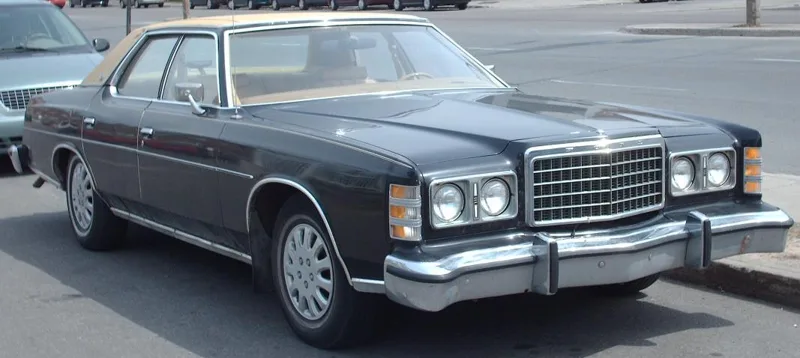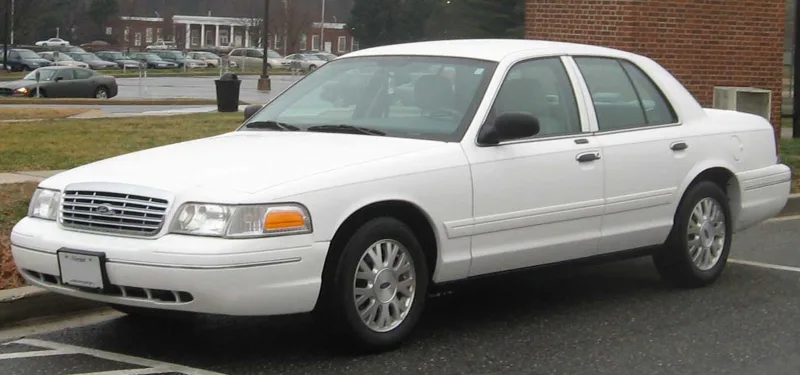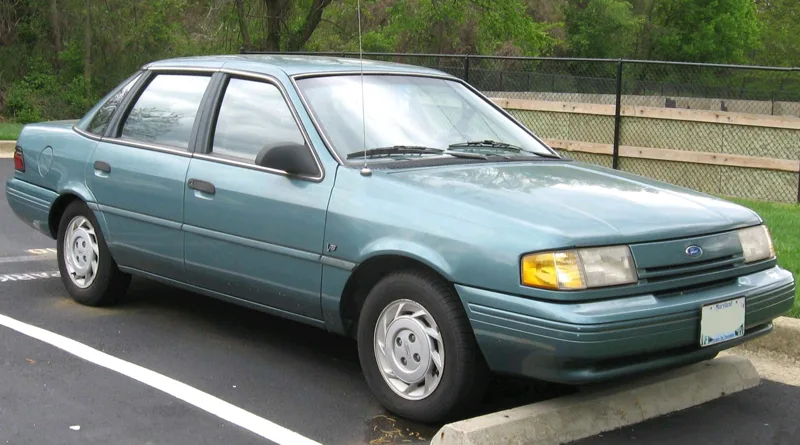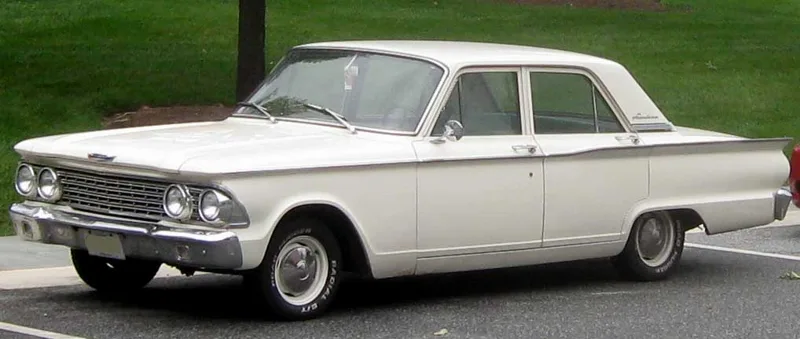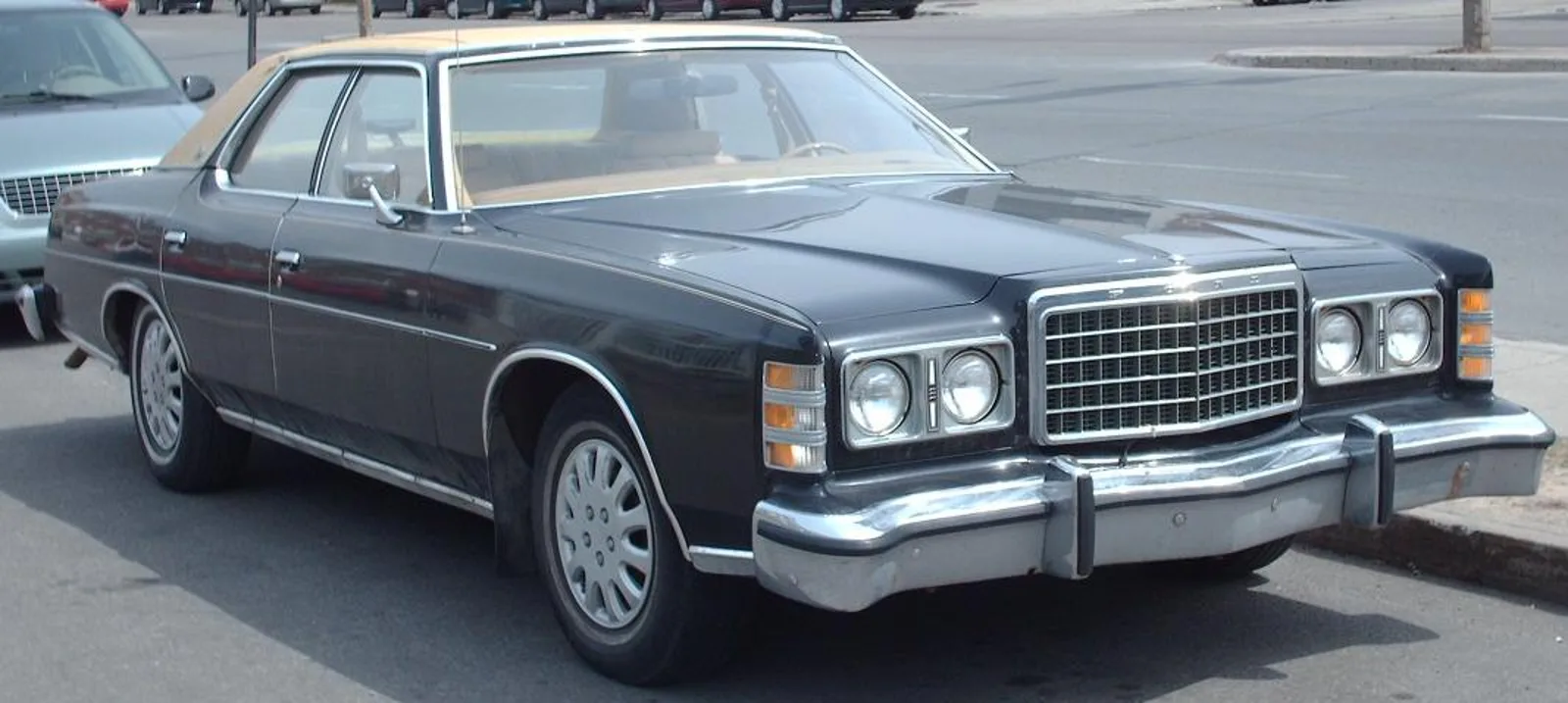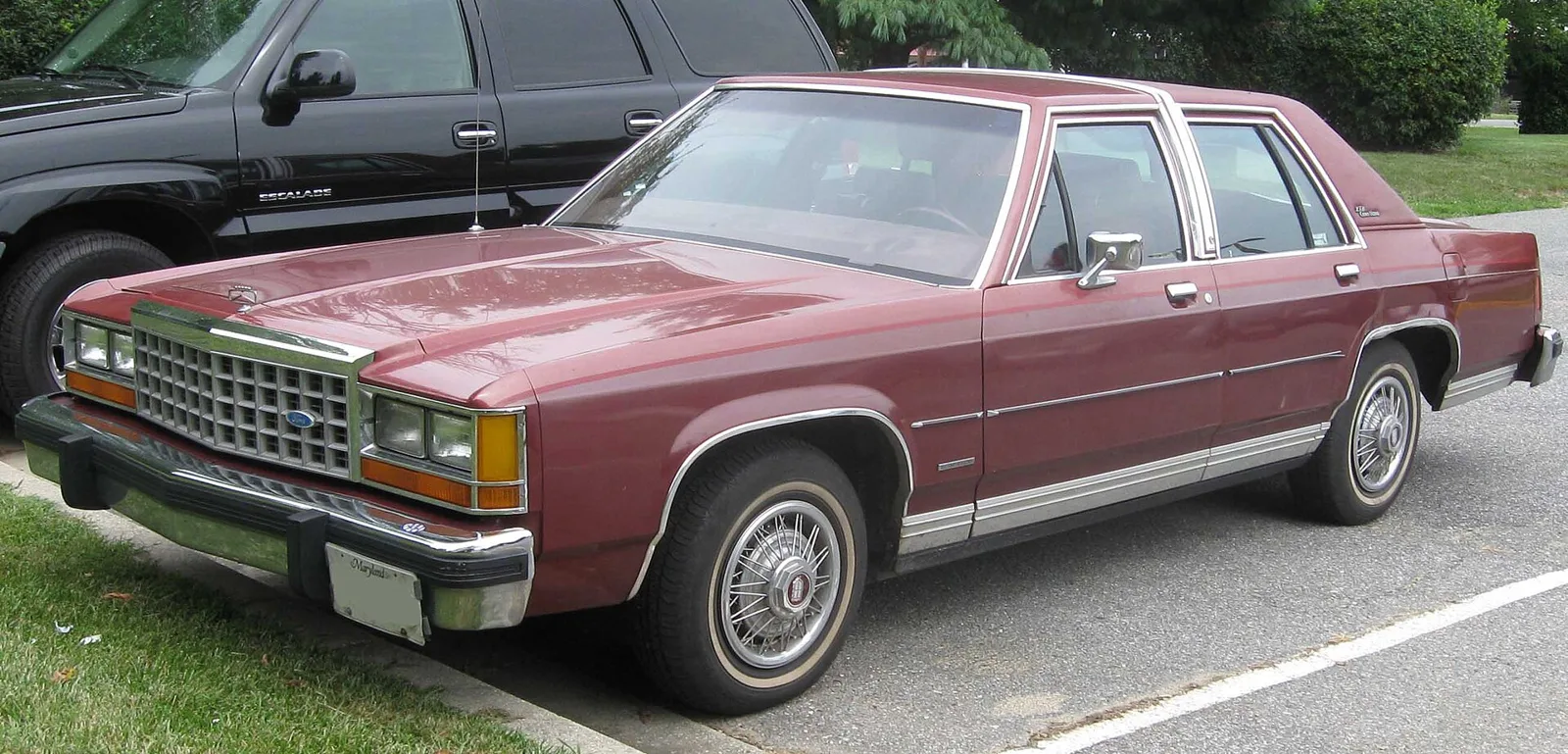
A Panther-platform Ford sedan and wagon that carried the LTD flagship badge for twelve model years, became a police favourite and gave way to the Crown Victoria name in 1992.
The Ford LTD Crown Victoria was a rear-drive full-size Ford built from 1980 to 1991 as the flagship of the LTD range. It came as a two-door and four-door sedan and a five-door wagon, used V8 engines, and was a favourite with fleets and police before the 1992 Crown Victoria replaced it.
The Ford LTD Crown Victoria was a full-size car that Ford built and sold from the 1980 to 1991 model years. It was the flagship of the LTD range in North America, with the Mercury Grand Marquis as its counterpart on the Mercury side. Buyers could choose a two-door, a four-door or a five-door wagon.
What was the LTD Crown Victoria?
The LTD Crown Victoria took over from the LTD Landau as the top trim of the Ford LTD range in 1980. It was the first time Ford matched the Grand Marquis directly, and it competed with the Chevrolet Caprice, Pontiac Bonneville and Dodge St. Regis.
The car was built on a rear-drive platform that Ford had downsized for the early 1980s. It gained its own identity through styling, equipment and a range of engines, and it stayed in the line-up for twelve model years under the same basic design.
Ford had originally planned to replace its full-size cars with the Taurus in the early 1980s. Fuel prices then stabilised, demand for the big cars rose, and Ford kept building both the Taurus and the full-size line.
A rear-drive Ford flagship that carried the Crown Victoria name from its 1955 Fairlane roots to the police fleets of the 1980s.
Where did the Crown Victoria name come from?
The badge traced back to the 1955 and 1956 Fairlane Crown Victoria, the car it was named for. Ford had first used the Victoria name in 1932, on Ford and Lincoln two-door coupes, so the badge had a long history before the LTD. It was a deliberate nod to that earlier car, and the link was meant to carry prestige.
The 1980 car revived a styling feature of the Fairlane, a targa-style band across the top of the B-pillars. The Fairlane used bright chrome for that band, while the LTD used a brushed-aluminium band for a more modern look.
The roof treatment borrowed from the Lincoln Town Car, with a half-length padded vinyl roof that covered the B-pillars with the aluminium band. The original 1965 Ford LTD had inspired the crested hood ornament.
How did the LTD Crown Victoria fit the Ford range?
In 1983 the company reworked its big and medium cars across its three divisions. The LTD Crown Victoria remained the only full-size Ford sedan, and the mid-size Granada took on the LTD name. That made the mid-size car the LTD of the 1980s.
Ford kept the car as its flagship until the end of the decade, with a minor update for 1988.
Between 1980 and 1982 the name sat at the top of the Ford LTD range. From 1983 the full-size car carried the Crown Victoria name alone, which set up the modern naming that followed in 1992.
Where was the LTD Crown Victoria built?
At launch the car was built at Louisville, Los Angeles, Atlanta and Oakville. By 1982 Oakville was the only assembly plant, and in 1983 production was added at the St. Louis Assembly plant in Hazelwood, Missouri, alongside the Grand Marquis.
Canadian production left Oakville for St. Thomas, in Southwold, Ontario, from the 1984 models. A year later that plant became the exclusive site for the car in Canada, and it built the LTD Crown Victoria until 1991.
What chassis did the LTD Crown Victoria use?
The car used the rear-wheel drive Ford Panther platform. During the downsizing from the 1973 to 1978 LTD Brougham and Landau, it lost 18 inches of length and nearly 1,000 pounds of curb weight. That made the car considerably smaller than its predecessors.
The Panther chassis was all-new, but its suspension kept the older layout. The front used double wishbones, the rear a coil-sprung live axle, and the brakes were vented discs at the front with drums at the back.
Which engines did the LTD Crown Victoria offer?
In 1980 the car had two V8s. The standard engine was a 130 hp (97 kW) 4.9-litre unit, which Ford had rounded up to 5.0 litres from the earlier 302, and the option was a 140 hp (100 kW) 5.8-litre V8 from the 351 family. Both were paired with the Ford C4 three-speed automatic.
For 1981 Ford added a 120 hp (89 kW) 4.2-litre V8 as a fuel-saving standard engine. The 4.9-litre also gained throttle-body electronic central fuel injection, which replaced the two-barrel carburettor, and an AOD overdrive automatic from Lincoln became an option. By 1982 the AOD had replaced the three-speed entirely.
For 1983 Ford ended the 4.2-litre across all of its lines, and the 5.0-litre became the main engine. The 5.8-litre carburetted V8 was restricted to fleet sales, particularly police cars, and it stayed an option in Canada through 1991.
The 1984 engine gained an EEC-IV engine computer that met OBD-I rules. Output rose to 140 hp (100 kW), and 155 hp (116 kW) was optional. In 1986 the 5.0-litre received a multiport Sequential-Fire intake, which lifted output to 150 hp.
A dual exhaust option arrived for 1990, adding 10 hp. In 1991 the standard engine stayed at 150 hp, and a 180 hp 5.8-litre was kept for fleets and Canada.
How did the body change over the years?
The 1980 car came as a two-door sedan and a four-door sedan, with the wood-panelled Country Squire as the wagon. Its roofline differed slightly from the 1979 Landau, and the brushed-aluminium band was the clearest difference. The basic shape stayed recognisable through the decade.
The mirrors moved rearward in 1981, and in 1982 the FORD lettering gave way to the Blue Oval emblem. For 1983 the grille and taillamp lenses were redesigned, and the LTD script disappeared from the back.
In 1984 a non-woodgrain wagon came back under the LTD Crown Victoria name, and a formal vinyl roof with a frenched rear window was offered on four-door sedans. The 1985 dashboard gained redesigned climate and single-DIN audio controls, and the horn switch moved to the steering wheel hub.
The two-door sedan was dropped after the 1987 model year. In 1987 the four-door sold 105,789 units, against 5,527 two-doors, and the two-door had fallen from 6,291 in 1986. Demand had moved to sportier two-doors such as the Thunderbird and the Mustang.
What did the 1988 update change?
After nine years the car received a mid-cycle revision for 1988. The front and rear fascias were restyled, the bumpers were better integrated into the body, and the taillamps wrapped into the fenders. The aim was to modernise a design that was nearly a decade old.
The grille was lowered and widened, and it combined the headlamps and turn signals in one assembly. The trunklid had a larger licence-plate opening, and the interior gained more wood trim on the LX, pivoting head restraints and a more legible speedometer.
What changed for the 1990 and 1991 model years?
The 1990 model year brought a complete redesign of the dashboard and steering wheel, the first since 1979, along with a driver-side airbag as standard on every version. Outboard rear seats gained three-point belts to satisfy federal rules. The changes were driven mainly by passive-safety rules.
Ford also standardised power windows and locks, tilt steering and AutoLamp automatic headlights, and air conditioning ceased to be a removable extra. The LTD Crown Victoria and the Grand Marquis now used almost the same cabin, separated only by small details.
The 1991 model year was lightly updated. The 1991 changes were small by comparison. The parking lamp lenses changed from amber to clear, and optional two-tone paint was discontinued.
Which trim levels did the LTD Crown Victoria have?
The standard-trim car was aimed at retail buyers and came with the 5.0-litre V8. It had a landau-style vinyl roof with targa trim and wire wheel covers, plus full carpeting, a reclining cloth bench seat and an AM/FM radio. Each trim targeted a different buyer.
The LX returned in 1986 as a direct counterpart to the Grand Marquis. It offered split-bench seats in cloth or leather, extra sound insulation, cornering lamps, two-tone paint and standard alloy wheels.
The S trim came back in 1987 as a dedicated fleet model, sold mainly to police and taxi buyers. It had a vinyl roof delete, steel wheels with partial covers, vinyl bench seats and manual windows and locks.
What was the station wagon like?
The five-door wagon was offered from 1979 to 1991. The wood-trimmed Country Squire was the flagship, and a non-woodgrain version returned in 1984 under the LTD Crown Victoria name. Together the two wagon versions covered retail and fleet buyers. It kept many of its predecessor's functional features.
Its rear door was dual-hinged, so it could work as a tailgate or swing outwards. A roof rack was standard, and side-facing rear seats were optional, lifting capacity from six to eight. The S trim lost the roof rack and the third row, leaving room for six.
Family buyers moved to minivans, vans and sport-utility vehicles from the late 1980s. The Aerostar, the Econoline and the Taurus wagon overtook the Country Squire, and the wagon was dropped after 1991.
Why was the LTD Crown Victoria popular with fleets and police?
The S trim was the base model, aimed at fleets, law enforcement and taxi firms, and it was produced under the P72 code. Many convenience features were removed to cut costs, including most bodyside chrome and some carpeting, and the 5.8-litre V8 was restricted to fleet sales after 1982.
The Police Package was available for the whole production run. It added a reinforced frame, uprated suspension and brakes, larger wheels and tyres, better engine cooling, heavy-duty interior materials, provisions for extra lights and sirens, and a 140 mph speedometer. It competed with the Chevrolet Caprice 9C1 and the Dodge Diplomat and Plymouth Gran Fury.
Customers who ordered the 5.8-litre engine to avoid gas-guzzler taxes had to prove to the IRS that the car was for law enforcement use. The package was offered on the S and LX trims.
For 1992 the police option became the Ford Crown Victoria P71, later known as the Police Interceptor, and it used a single 210 hp 4.6-litre SOHC V8.
How did the LTD Crown Victoria end?
Production of the LTD ended with the 1991 model year. The change ended the LTD name on this car. Its replacement, the Ford Crown Victoria for 1992, dropped the LTD prefix and the station wagon body, and it was offered only as a four-door sedan.
The redesigned car was built until 2011. Its final year was 2012, and because of government fuel efficiency standards in the United States, the 2012 cars were shipped only for export to the Middle East, where demand was strong.
What are the Ford LTD Crown Victoria specifications?
The table lists the main figures across the LTD years. Where a figure belongs to one engine, trim, model year or market, the table says so, so the 4.9-litre cars, the 5.0-litre cars and the fleet V8s are not confused.
| Specification | Detail |
|---|---|
| Model years | 1980 to 1991 |
| Platform | Rear-wheel drive Ford Panther |
| Front suspension | Double wishbone, independent |
| Rear suspension | Coil-sprung live axle |
| Brakes | Vented front discs, rear drums |
| 1980 standard engine | 4.9 L V8, 130 hp (97 kW) |
| 1980 optional engine | 5.8 L V8, 140 hp (100 kW) |
| 1981 added engine | 4.2 L V8, 120 hp (89 kW) |
| 1984 output | 140 hp (100 kW), with a 155 hp (116 kW) option |
| 1986 output | 150 hp from the 5.0 L with multiport injection |
| 1991 standard engine | 150 hp 5.0 L V8 |
| 1991 fleet engine | 180 hp 5.8 L V8 |
| Transmission | Ford C4 three-speed automatic; AOD four-speed overdrive option |
| Downsizing | 18 inches shorter; nearly 1,000 pounds lighter than the 1973 to 1978 LTD |
| Police speedometer | 140 mph |
| 1992 police engine | 210 hp 4.6 L SOHC V8 |
Frequently asked questions
Why is it called the Crown Victoria?
The model took its name from the 1955 and 1956 Fairlane Crown Victoria. Ford had used the Victoria name since 1932, and the 1980 car revived the Fairlane's targa-style band.
Did the LTD Crown Victoria have a station wagon?
Yes. From 1979 to 1991 a five-door wagon was offered, with the wood-trimmed Country Squire as the flagship. A non-woodgrain version returned in 1984, and the wagon was dropped after 1991.
How many LTD Crown Victorias had two doors?
In 1987 only 5,527 two-door sedans were sold, against 105,789 four-door sedans. Its sales had been 6,291 in 1986, and the model was discontinued after that model year.
Was the car sold outside North America?
The car was sold in North America, and the Canadian production shifted to St. Thomas in Ontario for 1984. The 2012 Crown Victoria, the successor, was built for export to the Middle East.