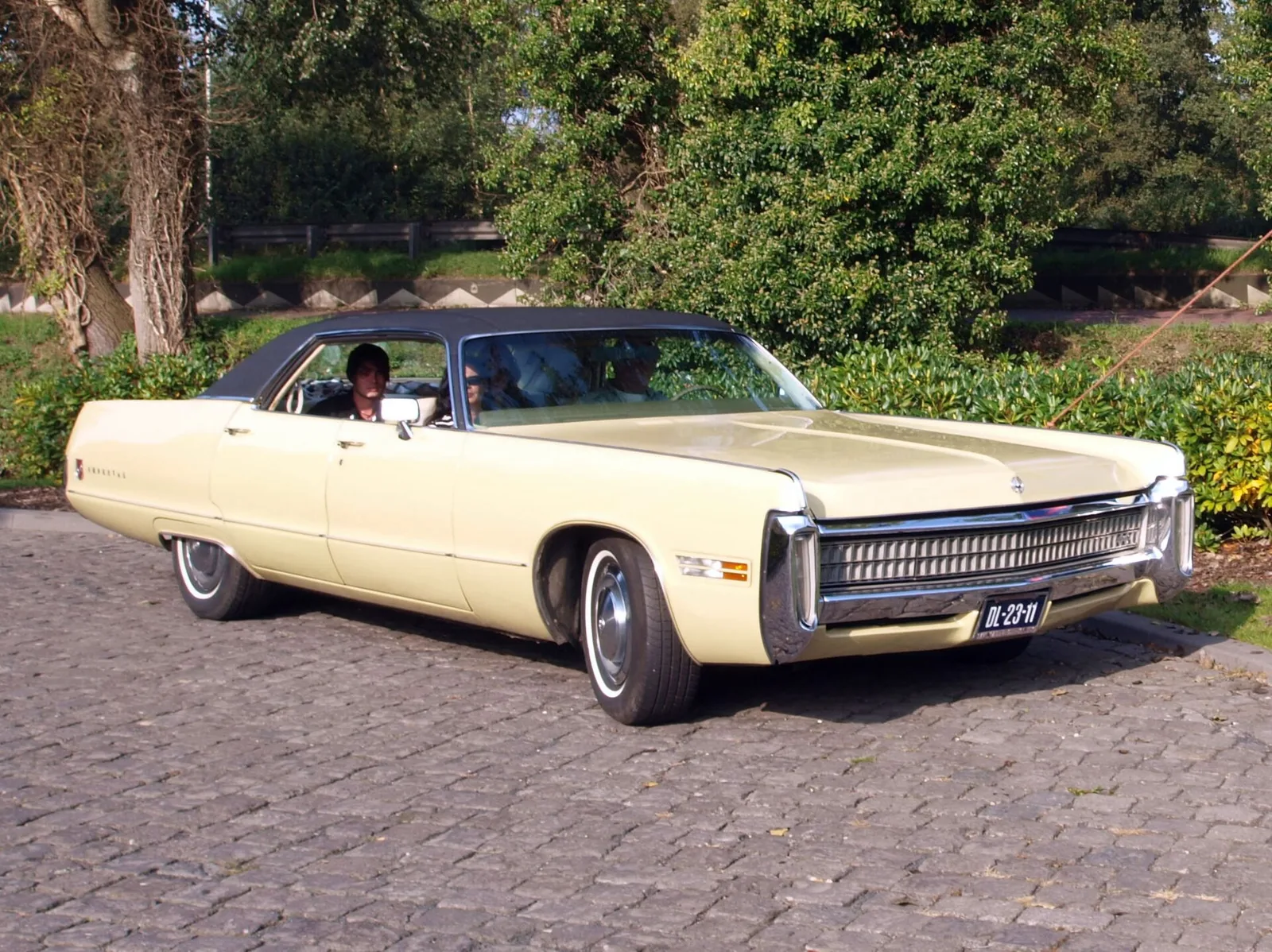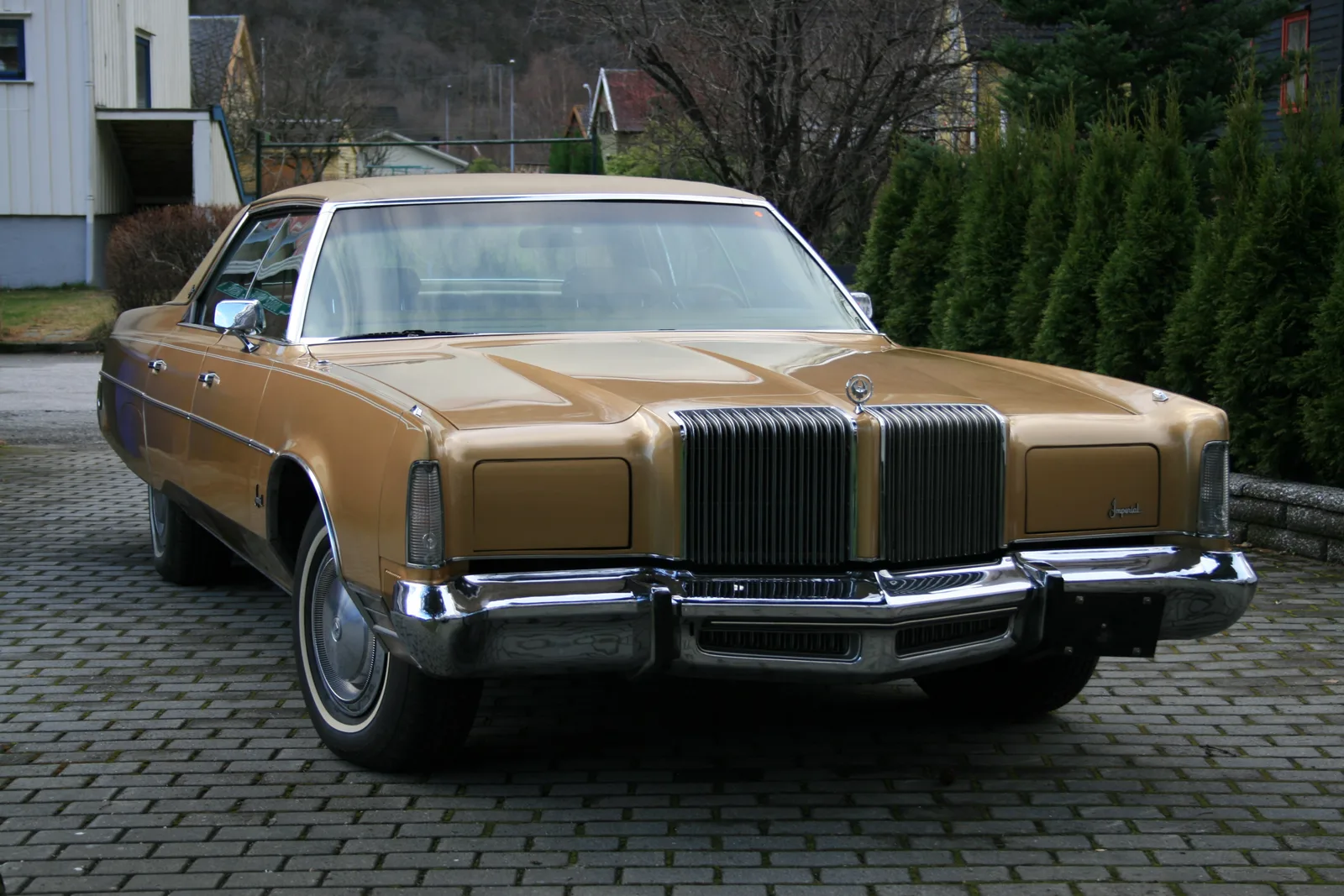
Chrysler's Imperials of 1974 and 1975 shared their bodies with the New Yorker, carried a Waterfall grille and a 7.2 litre V8, and were hit by the first oil crisis.
The Imperial LeBaron was Chrysler's large Imperial for the 1974 and 1975 model years, sharing its body with the New Yorker. It used a 7.2 litre V8 rated at 215 SAE PS, and it failed to take sales from Cadillac and Lincoln before the brand closed in 1975.
The Imperial LeBaron was Chrysler's large luxury car under the Imperial name for the 1974 and 1975 model years. Its body was shared with the Chrysler New Yorker, and it could not win buyers from Cadillac or Lincoln, so the brand was dropped in the summer of 1975.
Apart from a luxury coupe introduced in 1981, these cars were the last automobiles sold as Imperials, and the same cars continued for three more years under the Chrysler name.
Where did the Imperial brand come from?
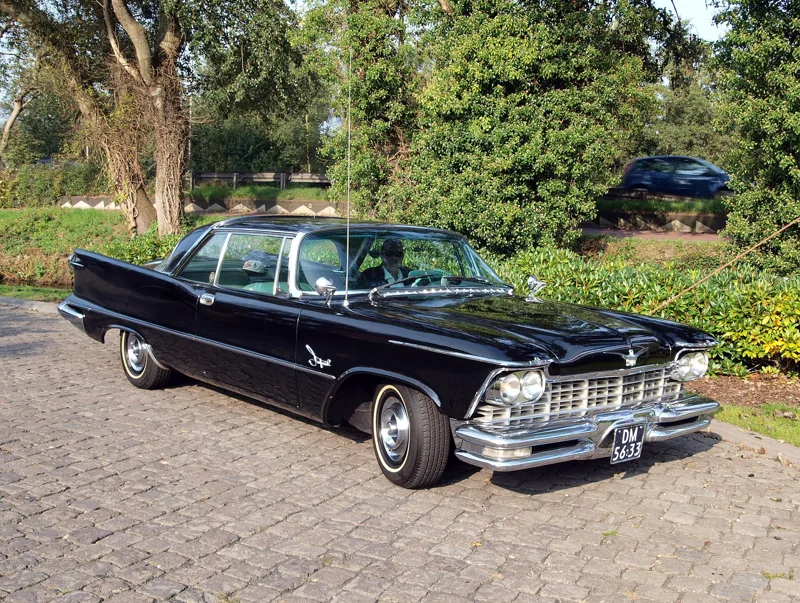
Imperial began as a model name on Chrysler's largest and most expensive cars in the 1920s, and it became an independent brand in 1955. Its cars used Chrysler's full-size technology but usually wore bodies of their own, which made them the flagships of the group.
From 1967 the Imperials stood on the C platform, which they shared with the Chrysler Newport, the Chrysler New Yorker and the top Dodge and Plymouth models. They had a longer wheelbase than those cars, which set them apart within that family.
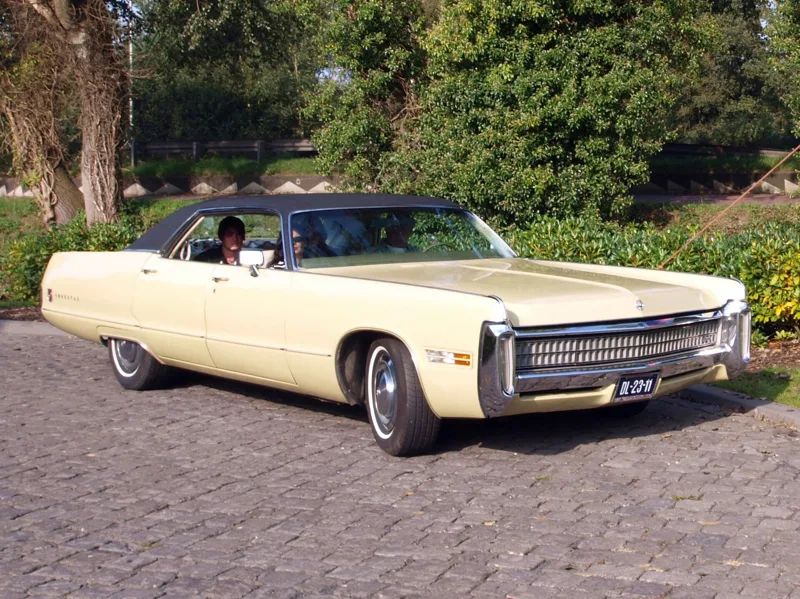
The sixth generation arrived in 1969 with a body styled in the so-called fuselage manner. The seventh generation, built from 1972 to 1973, used the same engineering with a revised outside. The eighth generation, which is the subject here, followed for 1974.
Built as a Chrysler in everything but its grille, lamps and name, and the last Imperial before the coupe of 1981.
What was the LeBaron name?
The LeBaron name came from a coachbuilder founded in 1920 by Raymond Dietrich, which Chrysler had taken over in 1935. It was the name that every Imperial of the 1974 and 1975 model years carried.
In the 1950s and 1960s Imperial had usually sold three series, Custom as the basic model, Crown in the middle and LeBaron at the top. The brand dropped that split with its sixth series, from 1971, and offered only the LeBaron after that. The Crown name came back in spring 1974 for one particularly high-quality coupe.
Why did the 1974 Imperial look like a Chrysler?
For 1974 Chrysler redesigned the full-size bodies of every brand in the group, and Imperial lost the body of its own that it had kept through the generation before. Its wheelbase now matched the Chrysler models, and the two families shared one body shell, differing only at the front and rear.
Chrysler had been in economic difficulty since the early 1970s and could not justify a unique body for a model that sold in small numbers. Critics noticed. Some observers felt Imperial had surrendered its independence, and a few enthusiasts argued that the marque had really died in the autumn of 1973 rather than the summer of 1975.
The roof, doors, wings and glazing were shared with the Chrysler New Yorker, so the Imperial was in effect an upmarket New Yorker. Chrysler tried to make up for this with costly technical features and standard equipment that went beyond the Chrysler range, but none of it brought the brand any real ground on Cadillac and Lincoln.
What set the 1974 Imperial's styling apart?
The Imperial kept its own front and rear. The front carried a narrow, upright zinc grille with vertical chrome bars that ran horizontally for a short stretch at the top, a feature that gave the design its name, the Waterfall grille. The headlights hid behind body-coloured covers when switched off. American observers occasionally compared the shape of the grille with a Rolls-Royce radiator.
At the rear the brand kept its vertical teardrop lamp layout, while the large Chrysler models used horizontal light units. The one-piece front mask was made of plastic and bolted to the front of the car. Coupes and saloons shared the same roof profile from 1974, where before the coupe had worn a more tightly cut roof than the saloon. Standard equipment was also far more extensive than on the Chrysler models.
The grille idea did not stay on the Imperial. Chrysler carried the design over to the 1977 LeBaron, a mid-size luxury car on the M platform, and the General Motors brand Oldsmobile used similar grilles on some models, including the 1973 Cutlass.
What was under the bonnet?
The Imperial used only Chrysler's largest engine, an eight-cylinder V of 7.2 litres (439.4 cu in) rated at 215 SAE PS (158 kW; 212 hp). A three-speed TorqueFlite automatic transmitted the power, and the wheelbase was no longer longer than that of the big Chrysler models.
Compared with the engines of the previous year the compression ratio was reduced, which made it possible to run the car on regular petrol. Chrysler's largest engine was the only one offered, so buyers had no smaller option.
Did the LeBaron have disc brakes?
The Imperials of 1974 and 1975 came with four disc brakes as standard. Apart from the Chevrolet Corvette, they were the first American-built cars to offer that equipment as standard, and Chrysler kept it until 1975 before dropping it across the group.
From 1976, when the car was sold as the New Yorker, the rear axle again had only drum brakes, and the anti-lock system and rear discs were removed. The 1981 to 1983 Imperial luxury coupes, built on the J-body, also had drum brakes at the rear.
What was the Crown Coupe?
The Crown Coupe arrived in spring 1974, shortly before the end of the first model year, and it set itself apart with a reversed landau roof. Its vinyl covering ran over the front of the roof rather than only the rear, and only 57 were built in 1974.
The roof was covered in vinyl up to the rear side windows, while the section around the C-pillar was bare metal painted in body colour. That reversed the usual landau concept, in which vinyl covered only the rear of the roof. The 1974 car came in gold metallic with a gold vinyl top, and the interior could be fitted in gold cloth or gold-coloured leather. In 1975 eight colour combinations were possible.
Chrysler built the base cars, and the American Sunroof Corporation handled the roof. Buyers paid 527 dollars extra over the basic model for the Crown Coupe. Chrysler offered a similar roof on the New Yorker Brougham coupe from 1974 to 1978, where it was called the St. Regis option.
How many Imperials were built?
Chrysler built the 1974 and 1975 Imperials from 25 September 1973 to 12 June 1975. Output was 14,426 cars in 1974 and 8,830 in 1975, the lowest figure in the brand's history, against a plan that had called for about 32,000 in 1974.
Chrysler had planned to sell twice as many Imperials in 1974 as in 1973. Actual 1974 output came in below the 1973 level, and 1975 then fell further. The failure of the LeBaron led Chrysler to end the Imperial brand in the summer of 1975.
Why did the Imperial fail?
The main reason is usually put down to the first oil crisis, which broke out about a month after the eighth generation went on sale in September 1973. Buyers turned to smaller and more economical cars, and large luxury cars became hard to sell across the whole industry.
The Imperial had a problem of its own. After twenty years on the market, buyers still linked the badge with a less exclusive image than Cadillac or Lincoln, and the press went on calling them Chrysler Imperials in a dismissive tone. Their outward likeness to the cheaper Chrysler models reinforced that view.
Chrysler spent little on advertising in 1974, and in 1975 it spent nothing on the Imperial at all. Most of the company's advertising budget went to the newly introduced Cordoba.
What did the press make of the LeBaron?
Reviewers criticised the car's size across the board. One described the 1975 coupe as a car for a big ego, an extreme of poor use of space, wasted material and no economy.
Technically the Imperial was rated above its rivals, the Cadillac DeVille and the Lincoln Continental. The steering and the suspension drew particular praise, and the dashboard was felt to be clearly laid out. Testers found the interior high quality and tasteful, and they singled out the soft genuine-leather seat covers.
The imitation wood was placed only where real wood could sensibly be used.
What happened to the Imperial name?
Chrysler dropped the Imperial brand in the summer of 1975. The large cars carried on for three more years as the Chrysler New Yorker Brougham, from 1976 to 1978, with no fundamental technical or visual change beyond the removal of the rear disc brakes and the anti-lock system.
The New Yorker Brougham was priced about 2,000 dollars below the previous Imperial models, and that helped sales. Just under 40,000 were sold in 1976, four times the 1975 figure, then 75,000 in 1977 and a little over 40,000 in 1978.
Across 1976 to 1978 the Brougham found more buyers than the separately sold New Yorker and Imperial models had found in 1974 and 1975. Apart from the luxury coupe of 1981, no Imperial came after the 1974 and 1975 cars.
Imperial LeBaron specifications at a glance
| Specification | Detail |
|---|---|
| Model years | 1974 and 1975 |
| Body | Two-door coupe and four-door saloon, hardtop style |
| Platform | Chrysler C platform |
| Engine | 7.2 litre (439.4 cu in) V8 |
| Power | 215 SAE PS (158 kW; 212 hp) |
| Transmission | TorqueFlite three-speed automatic |
| Brakes | Four disc brakes as standard, until 1975 |
| Production span | 25 September 1973 to 12 June 1975 |
| Output 1974 | 14,426 cars |
| Output 1975 | 8,830 cars |
| Crown Coupe | 57 built in 1974, 527 dollars above the base model |