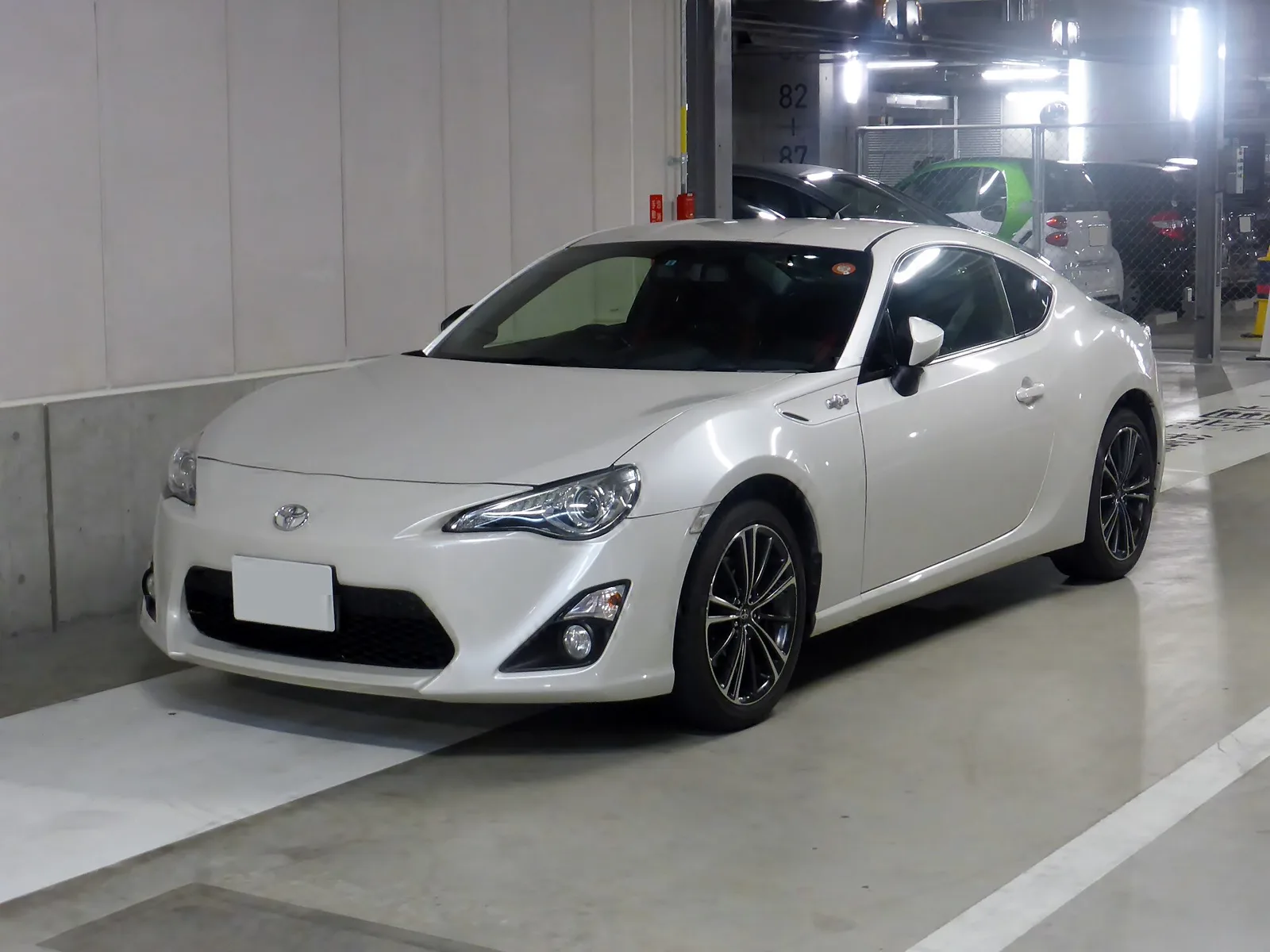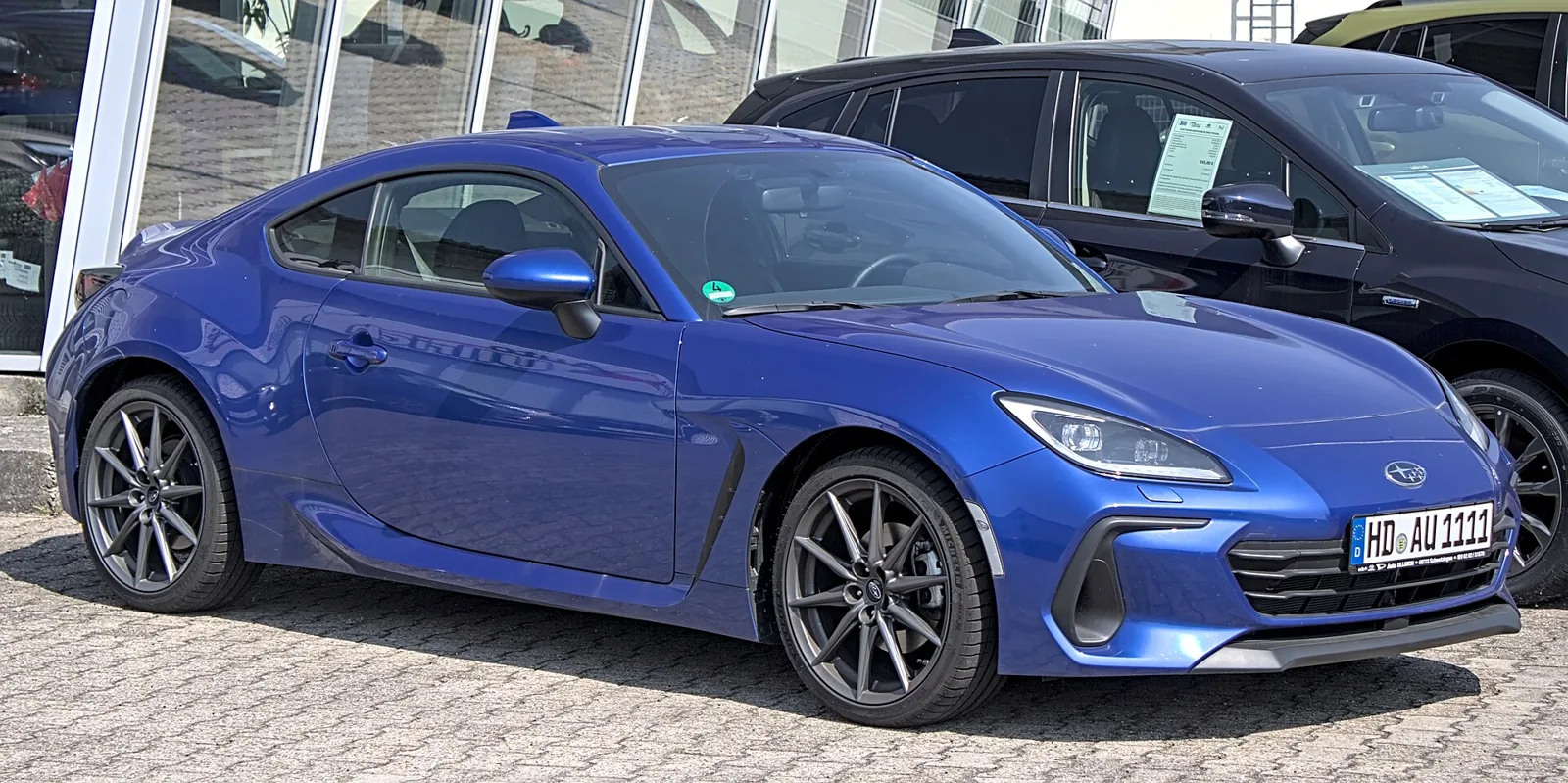
A 2+2 rear-drive coupe developed with Toyota, sold as the Scion FR-S in North America, and carried on in a second generation with a 2.4-litre boxer engine.
The Subaru BRZ is a rear-drive 2+2 boxer coupe developed with Toyota, sold as the Scion FR-S in North America. Its first generation ran from 2012 to 2020, and a second generation with the FA24D engine arrived in 2020 as the GR86 sibling.
The Subaru BRZ is a 2+2 sports coupe developed jointly by Subaru and Toyota, and it shares its chassis, engine and layout with the Toyota 86. Both cars were built at Subaru's plant in Gunma, Japan, and they were sold under different names around the world.
Its formula is simple: a front-mounted naturally aspirated boxer engine, rear-wheel drive and a light, low-slung body. The design took its inspiration from Toyota's AE86, and the joint project produced two cars that were close relations rather than rebadged copies.
Where did the Subaru BRZ come from?
The project began when Toyota led development under chief engineer Tetsuya Tada, after the company bought 16.5% of Fuji Heavy Industries in 2008. Toyota then invited Subaru to partner on a boxer engine, and the first offer was rejected because it conflicted with Subaru's focus on all-wheel drive.
After a six-month pause, Toyota invited journalists and Subaru engineers to test a development prototype, and Subaru agreed to join the project. The collaboration produced the FT-86 Concept, which debuted at the Tokyo Motor Show in October 2009 with a boxer engine in place of the earlier hybrid V6.
Subaru showed its own version in stages. The BRZ Prologue was shown at the Frankfurt Motor Show in September 2011, and the BRZ Concept STi followed at the Los Angeles show that November as the first full mock-up of Subaru's car.
A boxer-engined rear-drive coupe built with Toyota that became the Scion FR-S, then a second generation with a 2.4-litre engine.
How was the first-generation BRZ engineered?
The car's low-weight design used an aluminium bonnet and a fixed roof, with a boot rather than a hatchback. The boxer engine sat low in a front-engine, rear-drive layout, and the result was a weight distribution of 53% in front and 47% at the rear, with a low centre of mass.
The engine was a 2.0-litre flat-four known as the FA20 at Subaru and the 4U-GSE at Toyota. It used gasoline direct injection from Toyota's D-4S system and ran on 98 RON premium fuel, with a 12.5:1 compression ratio and an 86 mm bore and stroke.
Output stood at 200 PS (197 bhp; 147 kW) at 7,000 rpm, and the torque peak was 151 lb ft (205 N m) at 6,400 rpm. Two six-speed transmissions were offered, a Toyota TL70 manual and an Aisin-Warner A960E automatic, and the automatic used three modes, Sport, Snow and Normal.
The drag coefficient was Cd=0.27, and the body was built around a Torsen limited-slip differential that came standard on most models. The 2017 model manual gained more power, rising to 153 kW (205 bhp; 208 PS).
What did the name BRZ mean?
The BRZ's name combines three elements: boxer engine, rear-wheel drive and Z, standing for Zenith. The development code for the 2+2 was 086A, and the eight six nickname, Hachi-Roku in Japanese, referred to the AE86 of 1983 to 1987.
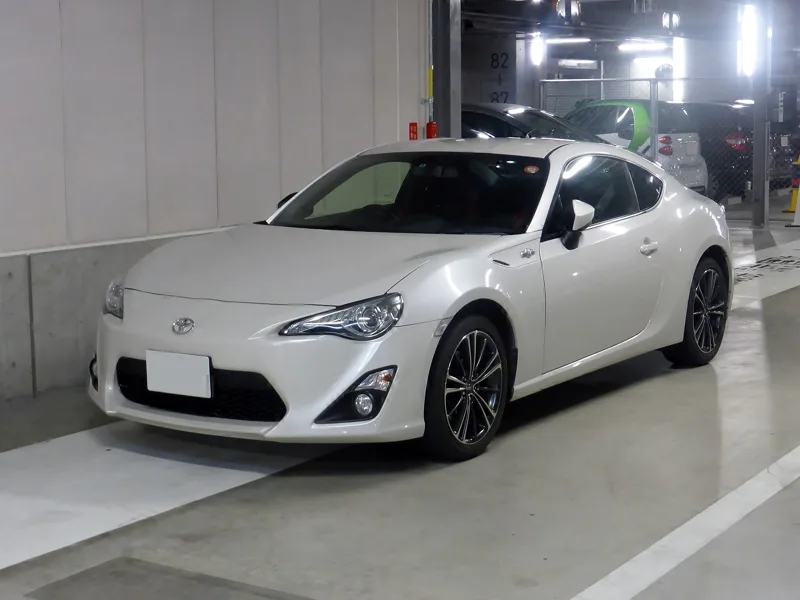
The BRZ and the 86 look similar, but Subaru's car has a different front fascia. Its grille is hexagonal and inverted, its headlights include a wraparound of LED parking lights, and its daytime running lights sit within the bumper.
How did Toyota and Subaru sell the 86 and BRZ?
Toyota marketed the car as the 86 in Asia, Australia, South Africa and South America, and as the GT86 in Europe. In the United States and Canada it was sold as the Scion FR-S from 2012 to 2016, a name taken from its front-engine, rear-wheel-drive sport layout.
Demand for the Toyota 86 far exceeded supply at launch, and Toyota took 7,000 orders in the first month of production, while Subaru took 3,500. In the United States Scion received 10,000 units of the 2013 model year, while Subaru was limited to 6,000.
Australia took a different route. The BRZ was the first new car sold exclusively online there when orders opened on 16 July 2012, and the 2012 allocation of 201 cars sold out in under three hours, with the first buyer securing a car in less than 20 minutes.
What were the first-generation trims?
The base Japanese 86 RC had unpainted bumpers and mirrors, 16-inch steel wheels and no air conditioning, and it was sold outside Japan only in New Zealand. The G model added a painted exterior, 16-inch alloy wheels and an automatic option.
The BRZ followed a similar pattern with RA base cars, while R and S trims were the main sellers. The S trim, known as Limited in North America, received heated Alcantara-trimmed leather seats instead of the cloth of the R trim, which was called Premium in North America.
In Europe and Australia the BRZ used a Toyota stereo, while Japanese and North American cars used a Subaru unit. The 86 and BRZ both carried a full-size spare wheel at launch in Australia, though that was soon replaced by a repair kit.
What special editions did the first-generation BRZ get?
The BRZ tS arrived in Japan in 2013, tuned by STI, with an improved suspension, 18-inch silver BBS wheels, Brembo brakes and interior changes. The tS was limited to 500 units in total, and a tS GT package with Recaro seats and a carbon fibre rear wing was limited to 250 of them.
Subaru also produced a run of one thousand BRZ Series Blue editions for the US and a similar Special Edition for Australia. The Australian car featured stripes across the bonnet, boot and roof, and 17-inch STI black alloy wheels with a push-button starter.
In the later years the limited runs continued. The 2016 Hyper Blue was limited to 50 cars in Australia, the 2017 Series Yellow was limited to 500 units in America, and a 2018 SOA 50th Anniversary edition built 250 cars in Heritage Blue with satin chrome trim.
How did the BRZ perform in motorsport?
Subaru unveiled a BRZ for Super GT as the BRZ GT300 in 2011, developed by R&D Sport to replace the Legacy for the 2012 season with the EJ20 engine. The Toyota 86 MC also raced in GT300, and in 2016 the VivaC team of Takeshi Tsuchiya and Takamitsu Matsui won the GT300 driver and team titles.
The second-generation BRZ GT300 won the GT300 class in the 2021 Super GT Championship in its first year of competition, driven by Takuto Iguchi and Hideki Yamauchi for R&D Sport. Toyota's GR86 GT300 used a naturally aspirated TRD 5.4-litre engine and a Hewland six-speed sequential gearbox.
In the US, Ken Gushi campaigned a turbocharged Scion FR-S in Formula Drift, using an EJ25 boxer from a Subaru WRX STI producing over 450 kW. The 86 and BRZ also took rally, autocross and time-attack roles across several series, showing how the chassis suited a broad range of racing.
Why did the first-generation BRZ end production?
Subaru ended production of the first-generation BRZ in late July 2020, and no more orders were accepted after that date. The Toyota 86 continued for a short time, because production was to carry on at least until the third quarter of 2020.
The end of the first generation marked the close of a decade-long project in which both companies shared the cost of developing a rear-drive sports car at a time when such cars were scarce in their markets.
What is the second-generation BRZ?
The second-generation BRZ made its debut on 18 November 2020, reaching US showrooms late in 2021. Toyota's counterpart arrived on 5 April 2021 under the GR 86 name, later simplified to GR86 for digital marketing reasons, and the two cars use an updated architecture on the Subaru Global Platform.
The roof, bonnet and front wings are aluminium to lower the centre of gravity. Subaru uses the FA24D designation for the new engine, a 2,387 cc flat-four with 231 to 235 PS at 7,000 rpm and 250 N m (184 lb ft) at 3,700 rpm, and it chose a naturally aspirated engine for the pure sports car it wanted to build.
Car and Driver measured the BRZ at 5.4 seconds from 0 to 97 km/h, and the top speed is electronically limited to 225 km/h (140 mph). The BRZ tS arrived in July 2023 for the 2024 model year, manual only, with an upgraded interior and Brembo brakes.
Which special editions came with the second generation?
The 10th Anniversary Special Edition arrived for the 2023 model year, with 860 units in North America and a Solar Shift orange finish. The Trueno Edition followed for the 2024 model year, honouring the AE86 Sprinter Trueno of 40 years earlier, and it was also limited to 860 units.
The Hakone Edition was limited to 860 units for the 2025 model year, and the Yuzu Edition was also limited to 860 units for 2026. In Japan the Yellow Limited was limited to 300 units, based on the RZ grade with yellow stitching and Brembo brakes.
In August 2026 the GR86 received updates that replaced the two-camera setup with a triple camera, and the Solid Gray colour returned. The updated GR86 went on sale on 28 August 2026, with an automatic transmission for the Cup Car Basic grade.
What are the Subaru BRZ specifications?
| Model | Engine | Output | Notes |
|---|---|---|---|
| BRZ, first generation | 2.0-litre flat-four, FA20 | 200 PS (197 bhp; 147 kW) at 7,000 rpm | 151 lb ft (205 N m) at 6,400 rpm |
| BRZ, first generation, 2017 manual | 2.0-litre flat-four, FA20 | 153 kW (205 bhp; 208 PS) | 212 N m (156 lb ft) of torque |
| Toyota 86 (first generation) | 2.0-litre flat-four, 4U-GSE | Same engine as the BRZ | Top speed 145 mph (233 km/h) as tested |
| BRZ, second generation | 2,387 cc flat-four, FA24D | 231 to 235 PS (170 to 173 kW) at 7,000 rpm | 250 N m (184 lb ft) at 3,700 rpm |
| BRZ tS (2024 model year) | FA24D, manual only | Same output as the second generation | Brembo brakes and STI-themed cluster |
| GR86 Trueno Edition | FA24D | Same output as the second generation | 860 units in North America |