A sporty sedan that began as a Celica companion in 1970, moved onto the Corona platform, switched to front-wheel drive and ended in Japan in 2001.
Carina ran from 1970 to 2001 as a Toyota sedan that began life beside the Celica. It moved onto the Corona platform in later years, and seven generations were sold before the Allion succeeded it in Japan.
The Toyota Carina was a sedan that Toyota built in Japan from December 1970 until December 2001, a run of 31 years. It began as a four-door partner to the Celica sports coupe and spent much of its career chasing a younger, sportier image. Over seven generations it moved onto the Corona platform and eventually to front-wheel drive.
Where did the Carina name come from?
The name echoes the constellation Carina, which shares its inspiration with the Celica. The Celica itself takes its name from coelica, a Latin term for heavenly or celestial things. The Carina was conceived as the four-door partner of the Celica, and the two originally rode on one platform.
The car was later realigned onto the Corona platform, but it kept its performance image, with distinctive bodywork and an interior aimed at younger buyers. Japanese buyers could only find it at Toyota Store outlets, and the Allion replaced it there in 2001.
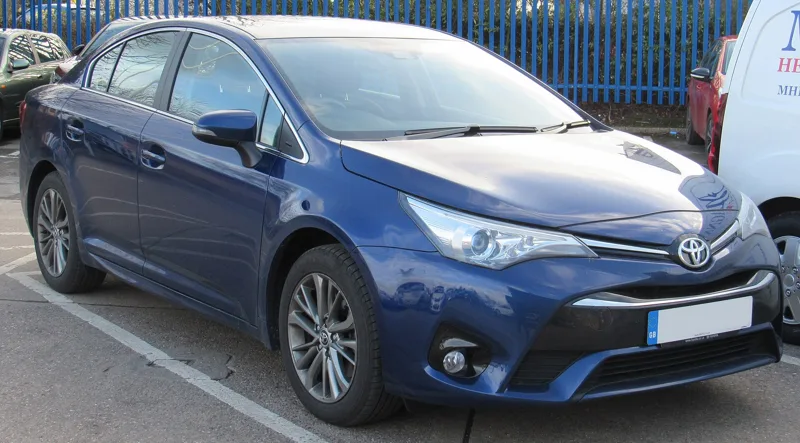
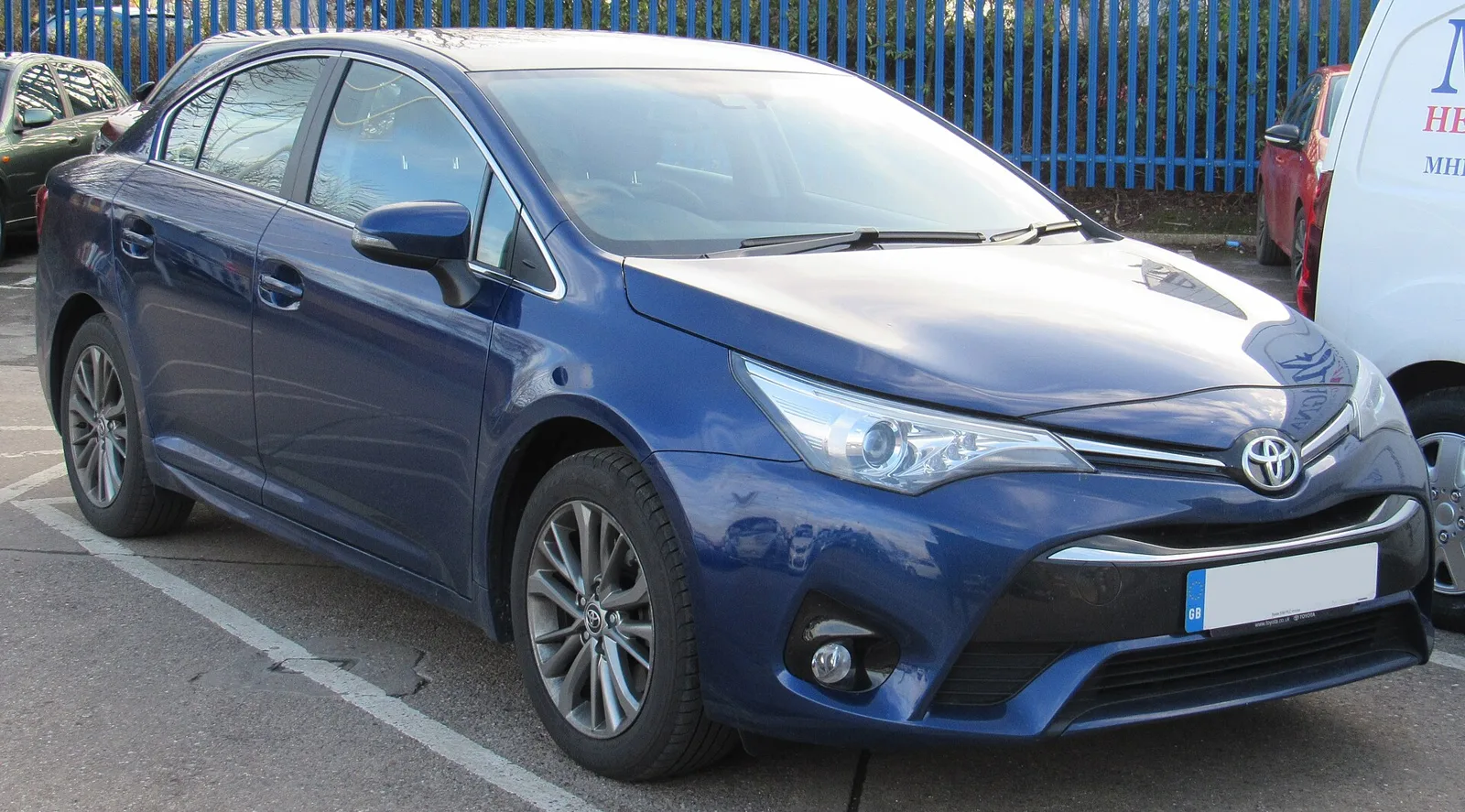
In Europe the Carina's role passed to the Avensis, which took over in 1997.
A sedan that began as a Celica sibling in 1970 and carried the Carina badge through seven generations until 2001.
How did the first-generation Carina arrive?
The first-generation Carina reached Japanese showrooms in December 1970 via Toyota Store outlets, and it arrived in Europe in October 1971. It shared its platform with the Celica sports coupe, which let Toyota save money on development and tooling by building both cars in one factory.
The Carina sat beneath the larger Crown and was about the size of the Corona. Standard features included seats that reclined and had integrated head restraints, along with a radio, a clock, reversing lights and brake servo assistance.
In 1971 a Carina 1600GT coupe arrived to rival the Corona 1600GT. It borrowed the DOHC engine from the Celica GT. Each model had its own showroom network: the Corona 1600GT at Toyopet Store sites, the Carina 1600GT at Toyota Store sites, and the Celica GT at Toyota Corolla Store sites.
Chassis codes followed a pattern. The saloon was A10, hardtop coupes used A15, A17 and A18, and the vans took A16 and A19. Some hardtop coupes later carried A30-series codes from 1975, and the van entered production that December.
What changed during the first generation?
The car gained a restyled body and new rear lights in 1972, and in 1974 it received a sealed cooling system and better brakes. The late 1975 restyle brought new front and rear ends, dual-line braking with servo assistance, and engines running from 1.4 to 2.0 litres in Japan.
The original line-up used a 1407 cc OHV unit, or a 1588 cc OHV unit in the 2T form, paired with a four-speed manual or a two- or three-speed automatic. Toyota later applied its TTC-V clean-running system to the 19R engine to meet new Japanese emissions rules.
Japan's road tax system pushed buyers towards smaller engines, because cars with 1.5 litres or more cost more to keep on the road each year. The top trim cars were therefore the ones with larger engines.
Exports were a small chapter. The A10 went to the United States, but its arrival and weak sales coincided with a new 10% import duty. Shipments then shifted to Europe and other markets, and US exports stopped after only two years.
How did the second generation differ?
The second generation, codenamed A40 and A50, appeared in Japan in August 1977 and reached German showrooms that December. It kept much of the earlier chassis, and most export markets received the 1,588 cc 2T engine, which Toyota rated at 75 PS (55 kW; 74 hp).
Many export buyers were offered an automatic for the first time. An estate version appeared abroad, using the heavy leaf-spring rear end that commercial vans in Japan had used. Japanese actor Sonny Chiba appeared in the Carina's commercials for decades.
Fuel injection became an option on the top models, and a fuel-injected 1,770 cc engine arrived in September 1978. A Celica-based hardtop, the 2000GT, was also part of the range. In August 1979 the front gained four headlamps and the rear suspension became semi-trailing, In 1980 every model received revised front and rear styling, and in 1981 the saloons and coupes gained five-speed gearboxes as standard.
What was the Celica Camry?
The Celica Camry was a four-door sports sedan based on the A40 and A50 Carina, launched in Japan in January 1980. It was sold at Toyota Corolla Store dealers, From August 1980 it was also sold through Toyota's newly introduced Vista dealership chain.
Engines ranged from a 1.6-litre 12T-U to a 1.8-litre 13T-U, with fuel-injected 1.8 and 2.0-litre variants also offered. A late sports model borrowed the twin-cam 18R-GEU from the Celica, which made 99 kW (135 PS).
Its 2,500 mm (98 in) wheelbase matched the Celica and Carina, and the three cars shared almost identical exterior dimensions. Export versions carried the Carina name with different rear styling, and some came as estates. In some markets the Celica Camry used the Carina name too, adopting the second-generation Carina front end and, in some cases, an estate body.
What did the third generation bring?
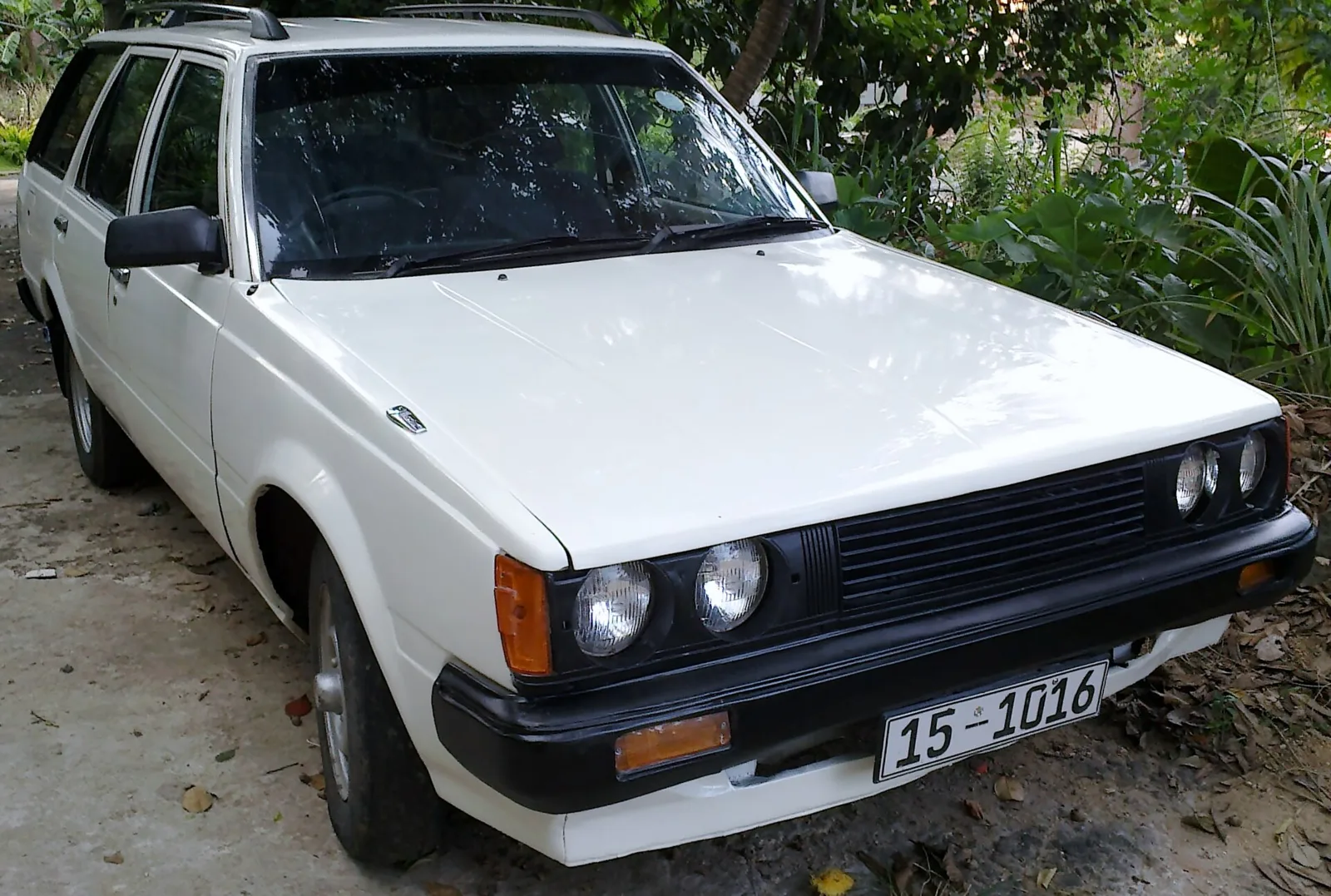
The third-generation A60 appeared in September 1981, two months after the related Celica. It kept rear-wheel drive, and it replaced the old recirculating-ball steering with more precise rack and pinion.
Its front suspension used MacPherson struts, while the rear used a five-link solid axle. The fuel-injected versions had independent semi-trailing arms at the back instead. Rivals were moving to front-wheel drive, but the Carina kept its rear-drive layout.
Private teams running Japanese entries took part in the Dakar Rally's two-wheel-drive category in 1981 and 1982, winning four championships across the marathon classes.
In February 1982 Toyota added a five-door wagon based on the van, marketed in Japan as the Carina Surf. A 1,839 cc diesel producing 65 PS (48 kW) arrived that year, and European cars received the 75 PS 2T and 86 PS 3T petrol engines. The diesel suited markets where fuel prices and supply made it sensible.
In October 1982 a turbocharged DOHC 3T-GTEU, a 1,770 cc unit making 160 PS (118 kW), appeared in the Touring Super Coupe with GT-TR trim. A May 1983 round of changes added power mirrors, a new grille and new taillights, and the 1600GT switched to the 4A-GEU 16-valve engine.
How did the fourth generation move to front-wheel drive?
From 1984 the Carina's four-door sedans used the Corona's front-wheel-drive platform, with more angular sheet metal. The rear-drive estate and van kept the older A-series platform until 1988. The front-drive Carina FF arrived in May 1984, and the Carina ED followed in 1985 as a four-door hardtop. Distributorless electronic ignition came to the 1,800 cc engine, and the range gained a 2,000 cc diesel.
Toyota expected roughly three front-drive models for every two rear-drive models across the Carina and Corona lines. The rear-drive Carina Coupe was cancelled in August 1985, when the Carina ED took its place as a four-door coupe.
The ED was designed to echo large American and European hardtops, with a small, low cabin and long front and rear ends. It gave Toyota Store dealers a compact alternative to buyers who wanted the Crown's style without the tax of a larger car. Its name stood for Exciting and Dressy.
What defined the fifth generation?
The fifth generation T170 arrived in May 1988 with rounded contours, reflecting the fashion of the time. The Surf wagon and the Van also received a full model change to match the saloon. December 1988 brought an All-Trac setup to the sedan, a full-time AWD arrangement with a centre differential. The G Limited arrived in August 1989 with the high-compression 4A-GE engine and 140 PS (103 kW).
European cars came as a four-door saloon, a five-door hatchback and an estate, with either the 1.6-litre 4A-FE or the 2.0-litre 3S-FE. Early examples were basic, but late 1989 top models gained electric mirrors and windows, central locking, a heated windscreen and updated trim.
Wagons and vans stayed on sale until 10 March 1992, when the Caldina took over that job.
How did the sixth and seventh generations end the line?
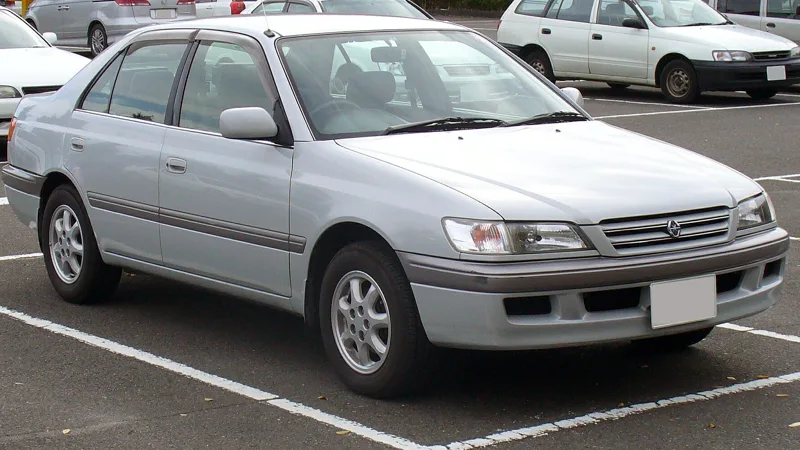
The sixth generation T190 arrived in August 1992 as a four-door sedan only, and it was larger than the car it replaced. A facelift in August 1994 swapped the 4S-FE for the newer 7A-FE 1.8. Sales were sluggish as buyers turned away from traditional sedans, and the generation was discontinued in 1996. Its replacement, the seventh generation, reached showrooms that same year as a Japan-only car.
The Carina E was the European variant on the T platform, assembled in Britain at Burnaston by Derby from 16 December 1992 to 1998. The Carina ED four-door hardtop ended production in 1998.
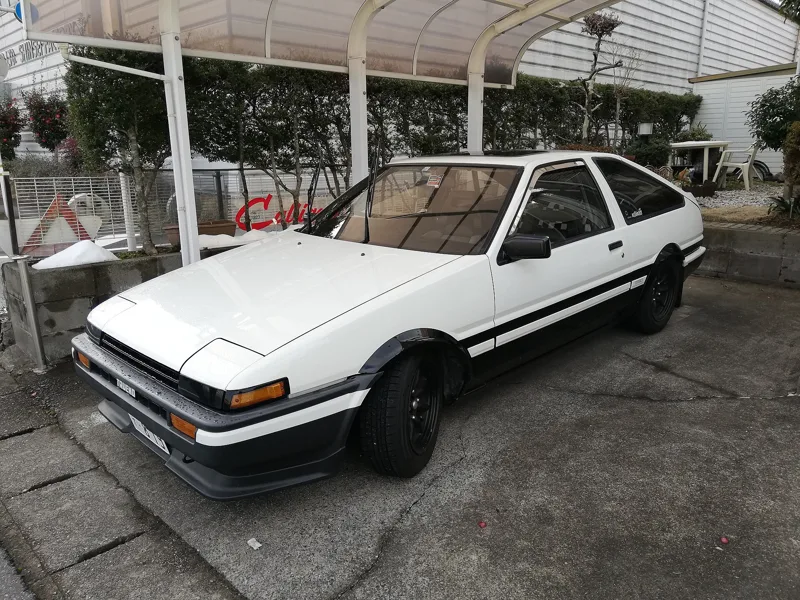
The seventh generation T210 was a Japan-only sedan from 1996, and it shared several parts with the Corona Premio. A GT version used the 4A-GE black-top engine, which revved to 8,000 rpm and made 165 PS (121 kW). The same unit powered the Corolla Levin and Sprinter Trueno.
In 1998 the GT gained a six-speed manual with a limited-slip differential and 15-inch wheels, while the Ipsum five-door wagon filled the MPV niche beside it. Front-drive layouts came standard on the Ipsum, which could be ordered with AWD adopted from the Caldina. The nameplate finally ended in December 2001, after 31 years in production.
Toyota Carina specifications at a glance
| Feature | First generation (1970) | Seventh generation (1996 to 2001) |
|---|---|---|
| Platform | Shared with the Celica sports coupe | T210 sedan, Japan only |
| Engines | 1407 cc OHV (T); 1588 cc OHV (2T) | 1.8-litre 7A-FE, 1.5-litre 5A-FE, 2.0-litre turbo-diesel 2C-TE; GT 4A-GE |
| GT output | Not given | 165 PS (121 kW), red-lining at 8,000 rpm |
| Transmission | Four-speed manual, or two- or three-speed automatic | Five-speed manual; six-speed manual on the GT from 1998 |
| Drive layout | Rear-wheel drive | Not given |
| Production | From December 1970 | Ended December 2001, after 31 years |