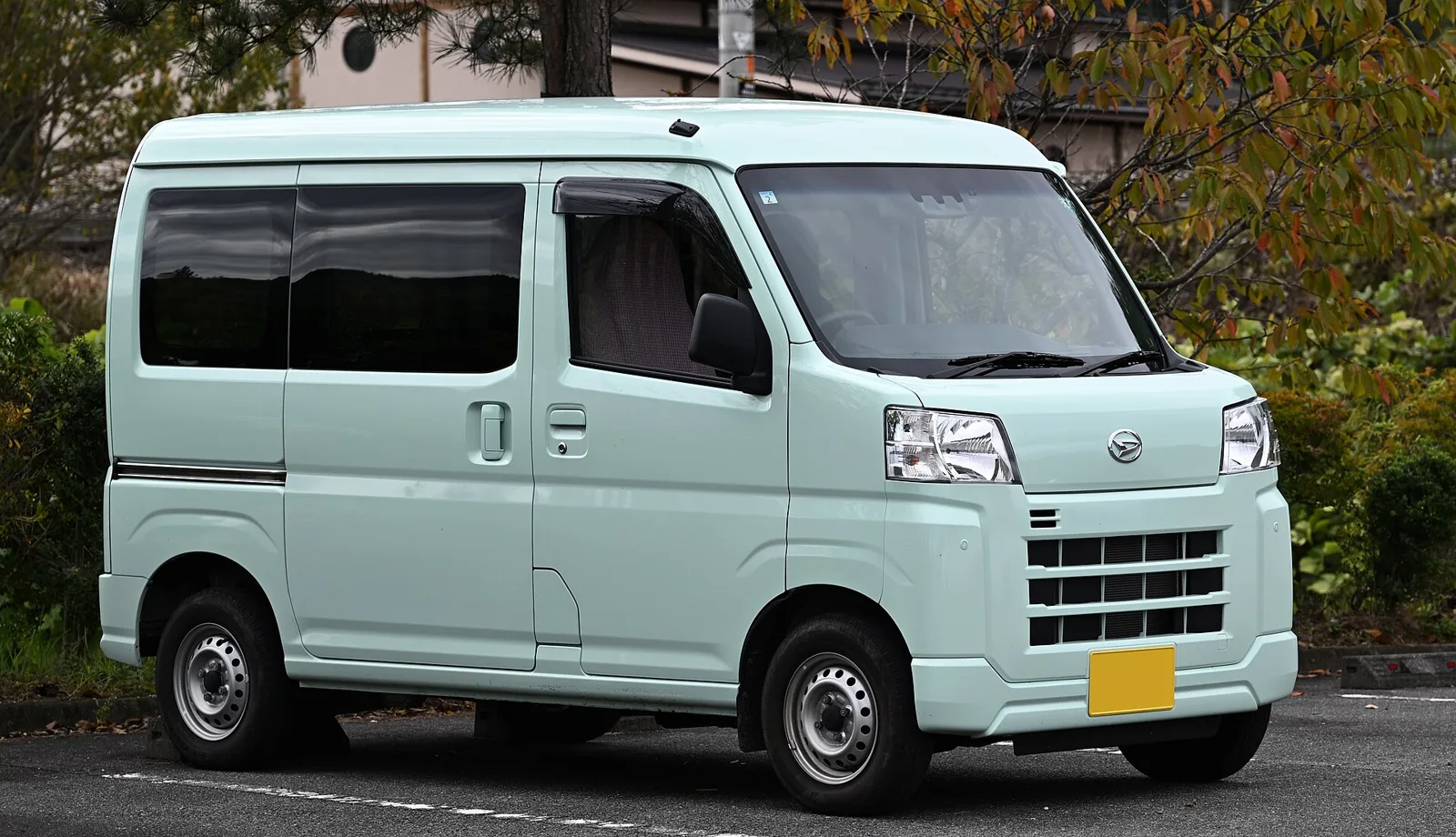
A kei van from 1999 that gained rebadged siblings, a hybrid that found few buyers and a tenth generation that outlived every other Hijet.
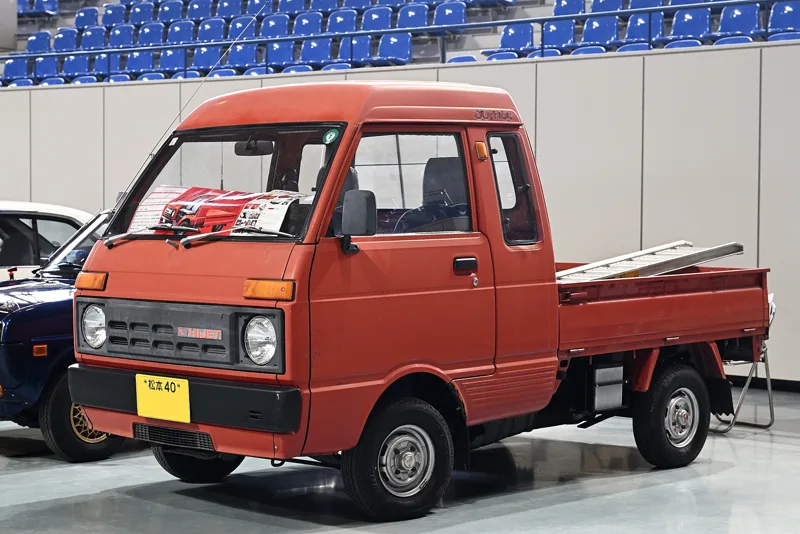
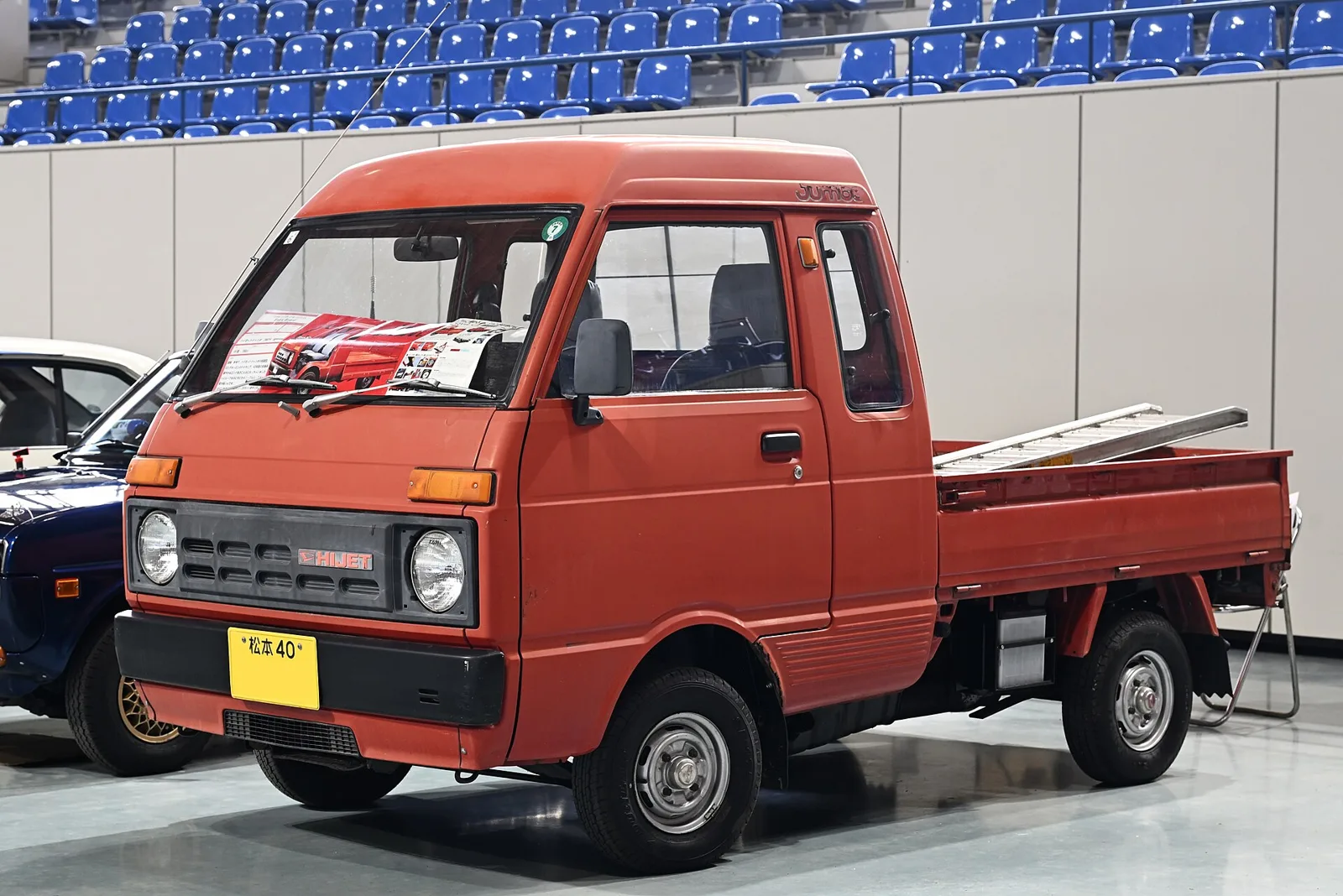
The Daihatsu Hijet Cargo is a kei van from the Hijet series, and the Cargo name has been used since the ninth-generation van of January 1999. Its rebadged siblings from Toyota and Fuji Heavy Industries, the three Hijet brothers, followed in 2011 and 2012.
The Hijet Cargo is Daihatsu's name for the van in its Hijet line of kei light commercial vehicles, a line sold mostly inside Japan. The name arrived with the ninth-generation van in January 1999. The tenth generation lasted 17 years, longer than any other model in the Hijet range.
Where did the Hijet Cargo come from?
It began as a complete overhaul of the Hijet van in January 1999, and the van took the Cargo name at the same time. The car met the newer kei standard, and by the end of that year the Hijet family, Atrai included, was the best-selling kei cab-over vehicle in Japan. Daihatsu Body's head office factory built it. On the ninth-generation van, Aisan Industry supplied the throttle body, injectors, engine valves, canister and electric fuel pump.
Design help came from Italdesign Giugiaro, the studio led by Giorgetto Giugiaro. Engineers placed the van in a semi-cab layout with the engine still under the front seats. The aim was a vehicle that was nicer to drive and more comfortable than the truck for the people who used vans.
Three Hijet brothers, one hybrid that found few buyers, and a tenth generation that outlived every other Hijet.
Who else sold a rebadged Hijet?
Two outside carmakers sold their own badged versions. Toyota Motor entered kei sales with the Pixis Truck and Pixis Van, which arrived on 1 December 2011. Fuji Heavy Industries, leaving kei manufacture, offered the Sambar Truck and Sambar Van from 2 April 2012. Together with Daihatsu's own, these are known as the three Hijet brothers.
Both pairs were built on the ninth-generation truck and the tenth-generation Cargo. Each partner swapped in new models whenever Daihatsu completed a full redesign. The eleventh generation, which added an electric vehicle in 2026, also has three brothers. SUBARU receives no model; the rebadging goes instead to Suzuki, which builds petrol models in-house.
What did the 1999 van bring?
The 1999 van came in four grades, and every one had air conditioning and an AM radio. The Extra and Deluxe added hydraulic power steering, power locks that followed the back door, and coloured bumpers. The model also debuted a steering column that could retract, the first such fitting on a domestically built car.
Roof choices were limited by grade. Buyers of the 2-seater and Special could pick a standard or high roof, but the Extra and Deluxe came only with the high roof. The rear lamps were a triple-section design, and the Special was offered with a Japanese-language display for buyers who wanted it.
How did the alternative-fuel versions arrive?
A compressed natural gas version appeared in December 1999, using a twin-cam engine that came close to the petrol cars for performance. Shifting to an inline production line allowed the price to drop by as much as 659,000 yen and cut waiting times. A liquefied petroleum gas model followed in April 2000 with an upgraded injection engine.
Electric vehicles
The Hijet electric vehicle reached showrooms on 23 April 1999. That June, a batch of 30 Atrai electric cars went to the Automobile Running Electronic Technology Association, a body doing ITS research on clean-energy vehicles. The research came under a contract from the New Energy and Industrial Technology Development Organization. From 12 July 2000, four Hijet EVs and two Atrai EVs served the foreign ministers' meeting of the advanced industrial nations held as part of the Kyushu-Okinawa Summit, finished with wood-grain interior trim and plated exterior.
LPG and CNG spin-offs
The LPG model sold under the name Hijet Cargo LPG, and a Deck Van LPG followed later. The CNG car was based on the Special. On 18 September 2001 a large-cylinder CNG version became the first kei vehicle to earn the super-low emission rating, while the standard-cylinder CNG model had its gas tank enlarged from 58 L to 65 L.
A small-car registered Hijet Grand Cargo went on sale on 3 July 2001, filling the gap left by the Delta Van, which was discontinued that November. Production of the Grand Cargo ran until November 2004.
What changed during the early updates?
Each early update added kit and tuned the engines. A three-cylinder 12-valve EFI unit arrived in February 2000 alongside the Delivery Rakuraku Pack, which brought stronger front doors and keyless entry. In January 2001 the front end and seat trim were revised, and the new Cruise grade arrived as the Extra was dropped.
January 2002 brought more power and cleaner certifications for two engines, plus a Deluxe Turbo. By June 2003 the Deluxe and Deluxe Turbo had driver airbags, and the instrument panel gained an electronic meter with an LCD odometer and trip meter.
Other additions filled out the range. A Hijet rear seat lift arrived as a welfare vehicle in May 1999, and the Atrai Sloper followed in September 2001 on the Atrai wagon platform. Five prototype hybrid vans went to local public bodies for two years of trials from November 2002.
Equipment through the early 2000s
The February 2000 update reached most grades. The Special received a rear wiper and a back door power lock, while the Deluxe got a passenger seat that slid and reclined, an intermittent two-speed wiper and a fuel lid opener. The Extra also received a driver's airbag, a cassette stereo covering AM and FM, keyless entry and wheel caps.
The Cruise, introduced in January 2001 when the Extra was dropped, came with power windows and child safety equipment. By January 2002 it also had a chrome grille, a split rear seat for passenger use, new seat fabric and a pocketed trim along the deck sides. Power steering reached every grade at that point.
The October 2005 update made dual SRS airbags standard on every grade except the hybrid. A 1-DIN AM/FM stereo with 10 cm front door speakers became standard across the range. The Special and Special Clean added locks that worked on all doors together, a passenger sun visor, a passenger seat that folds forward, a roof lamp, a load bay lamp and a fuel lid opener, while the Cruise received electrically folding, colour-matched door mirrors.
Why did the 2004 van look so different?
The 2004 van was a fresh design with a boxy profile that advertised its load space. Its tail lamps and number plate moved into the rear bumper, and the wheelbase grew to 2,450 mm (96.5 in) for steadier handling. Only the van was replaced. The truck kept the ninth-generation body after a larger facelift of its own.
Inside, the switches were grouped around the driver. The load bay gained useful nuts and utility holes, letting owners fit their own tie-downs and accessories, and the car came with a big glove box and an under-tray. The newly introduced Cruise Turbo, with an intercooled turbo engine of EF-DET type, could carry 200 kg with two people aboard, and the other grades could take 350 kg.
The new design was shown at the 38th Tokyo Motor Show in November 2004 as a planned production model. The show cars carried the New HIJET names, including the Deck Van, Sloper, CNG and Hybrid variants.
Suspension, rust protection and safety
The rear end moved to a three-link coil setup borrowed from the Atrai wagon, which smoothed the ride. Rust resistance received particular attention. More than about 75% of the bodywork used zinc-alloy-coated, rust-resistant steel plate, and a stainless steel muffler came as standard. Engineers also introduced a new frame structure for the crash-safe body, called TAF.
Belts with pretensioners and force limiters were standard on every car. Special Clean, the low-emission version of the Special, reached the 2005 standard 50% reduction level and earned three stars. From November 2004 the tenth generation was produced in Oita Prefecture, at the Daihatsu Body plant in Nakatsu, which is now Daihatsu Kyushu.
How did the hybrid van work?
The Cargo Hybrid arrived in August 2005 as a first for light commercial vehicles with a hybrid drive. A slim motor sat between engine and gearbox, and seating and load capacity matched the petrol van. Its idling stop saved fuel, but 20.0 km/L on the 10-15 mode was modest next to 15.6 km/L for the standard 2WD automatic.
The hybrid had a long run-up. The Atrai Hybrid appeared at the 34th Tokyo Motor Show in October 2000, and the ATRAI HYBRID-IV appeared as a reference exhibit at the 35th in October 2001. Five prototype vans then went out for two years of trial use from November 2002, and in October 2004 the company said the car was ready for sale, with a summer 2005 launch announced.
Few buyers were tempted. The high price meant most customers were government bodies and buyers keen on environmental issues. The hybrid still earned the four-star 75% low-emission certification in February 2006, and it met the 2010 fuel economy standard with a 5% margin.
How did the range change after 2007?
A minor change in December 2007 moved the petrol cars to the KF engine for better economy. The front bumper, steering wheel and interior were refreshed, and the Cruise and Cruise Turbo gained rear three-point ELR seat belts with child seat anchorages.
Weak demand ended the hybrid. Production stopped in May 2010, sales followed the next month, and the range was petrol-only from then on. A CNG model had joined the lineup in February 2005, so alternative fuels stayed in the picture alongside the petrol cars.
How did the 1999 recalls unfold?
Two problems hit the ninth-generation van in 1999. A corrective plan for a brake fault went to the Ministry of Transport in June, covering 83 vehicles made from 14 December 1998 to 16 April 1999. A recall for a shift cable followed in July, and every affected car had its cable replaced.
In the brake case, the control program that set when braking intervened contained an error. A light touch on the pedal while crossing a step at low speed could trigger the system and lengthen the stopping distance beyond what a driver expected. The fix replaced the control computer on each car with a good unit.
The shift cable issue was a matter of strength. Firm, repeated shifting could overload the cable, snap its inner core wire and, at worst, halt gear changes.
What did the design win?
On 20 October 2021 the Hijet Cargo received the Good Design Long-Life Design Award, the first Daihatsu car to take the honour. The award came more than two decades after the ninth-generation van first appeared.
Key figures at a glance
| Item | Detail |
|---|---|
| Sales name | Hijet Cargo, from January 1999 |
| Wheelbase, 2004 generation | 2,450 mm (96.5 in) |
| Load length, from February 2000 | 2,530 mm (99.6 in) with the passenger seat folded, all grades except the Special |
| Payload, Cruise Turbo | 200 kg with two occupants |
| Payload, other 2004 grades | 350 kg |
| Standard CNG tank | 58 L, later 65 L |
| CNG price reduction, 1999 | Up to 659,000 yen |
| Hybrid economy, 10-15 mode | 20.0 km/L |
| Petrol 2WD automatic economy | 15.6 km/L |
| Hybrid price | Above 2 million yen |
| Tenth-generation production | 17 years from November 2004 |