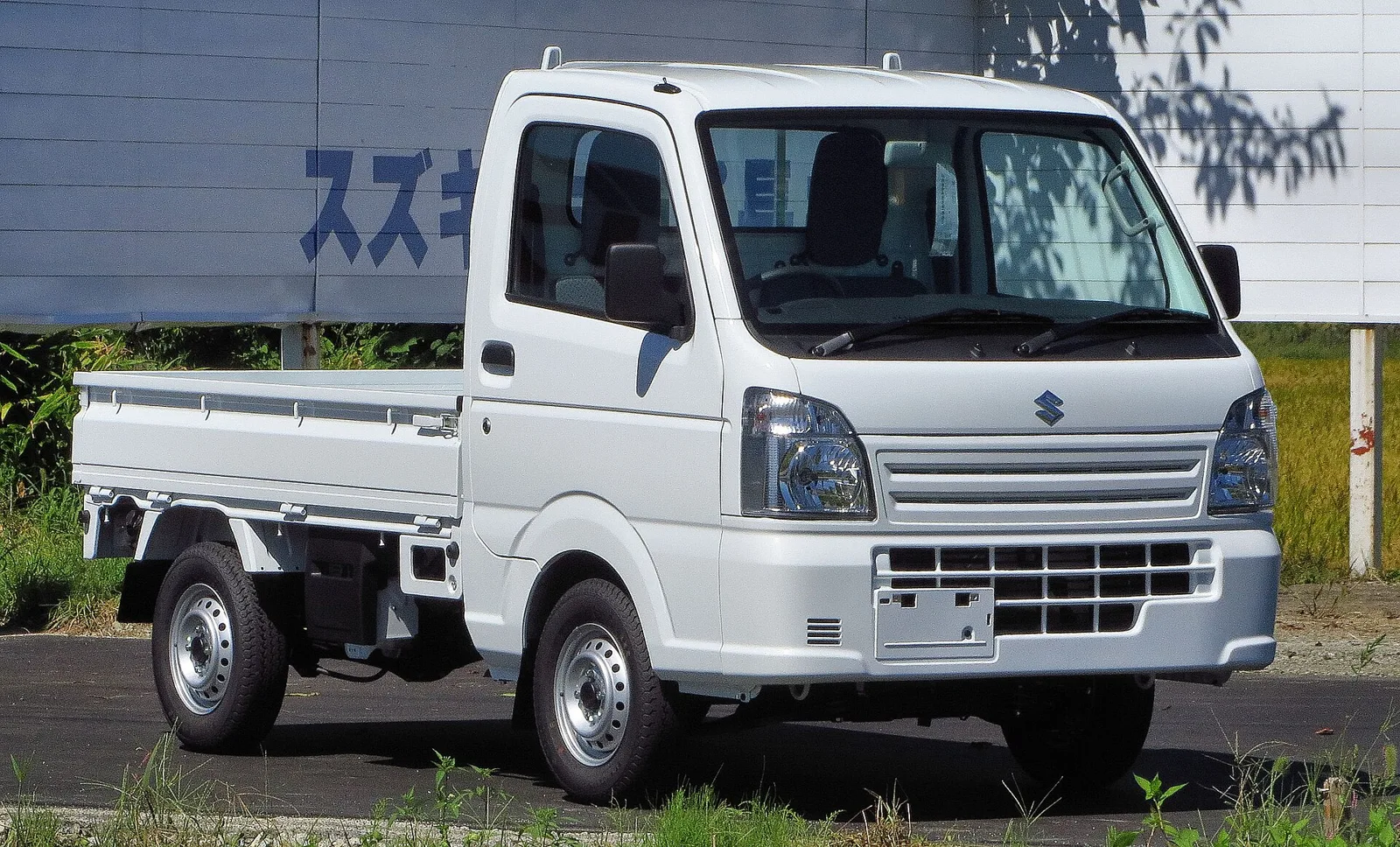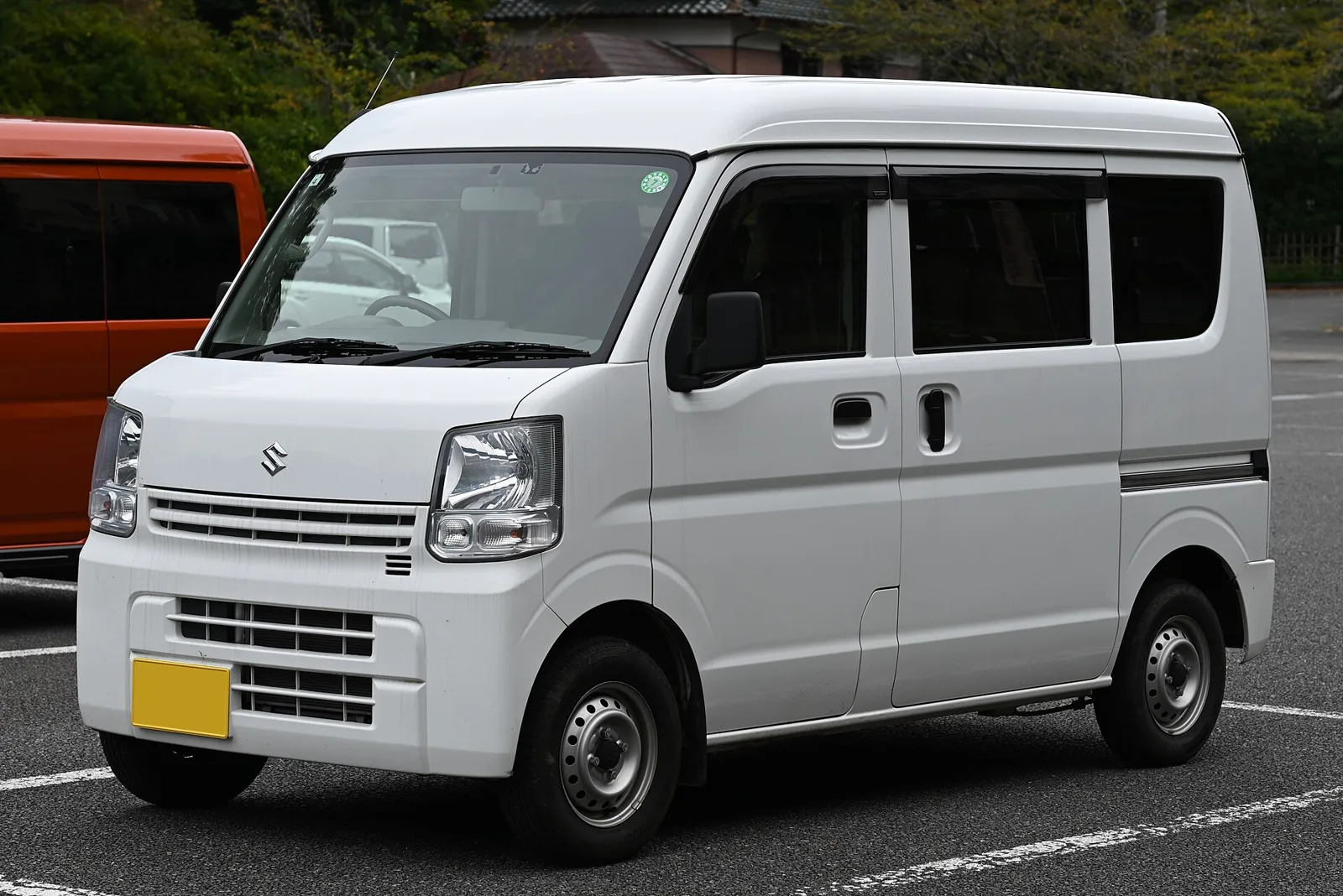
From a Daewoo-badged Every that lasted until 2021 to a Hustler that beat its sales target, four Suzuki nameplates and the rebadges that followed them.
The Suzuki Every, Solio, Spacia and Hustler are tall small cars and vans built by Suzuki around Japan's kei-car and small-car rules. The Every dates from 1982, the Solio from 1997, the Spacia from 2013 and the Hustler from 2014, and several were rebadged by Mazda, Nissan, Mitsubishi and others.
A van that Suzuki designed for the smallest class of Japanese car was still being assembled in South Korea in 2021, wearing a Daewoo badge. The Damas, a badge-engineered Suzuki Every, ran from 1991 to 2021.
The Every is one of four Suzuki nameplates that attack the same problem from different angles. The Solio, the Spacia and the Hustler share its basic idea: a tall body on a small footprint, with the cabin stretched upward because it cannot be stretched outward. The Every, Spacia and Hustler are built to Japan's kei rules on size and engine, and the Solio is the one that deliberately steps past them. Other companies have borrowed the results again and again.
Suzuki Every van: the name that means Anywhere
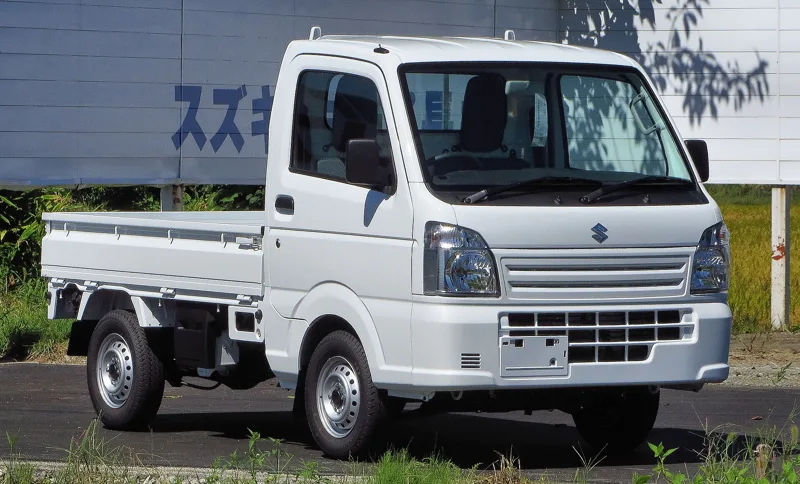
Suzuki says the word Every stands for Anywhere. The idea began in December 1982, when the van half of the Carry range was split off in Japan and sold under its own name. That first Every used the 543 cc F5A four-stroke engine and nothing else, because a two-stroke could not meet the tighter emissions rules for passenger cars. A four-wheel-drive van joined the line the same year.
The second generation followed in March 1985. By May 1989 the F5A had given way to the F5B, and a grade called Joypop Sound made a cassette deck standard when other grades charged extra for one. Mazda took its own version of the van the same year and called it the Scrum.
Then the rulebook moved. Japan altered the size and engine limits for kei cars in March 1990, so Suzuki had to rework the Carry and the Every, giving them the DA/DB51 chassis code and round twin headlamps as standard. The pair lasted only until March 1991, when a reshelled ninth-generation Carry and Every took over. A third-generation Every arrived in September 1991, and it is the one that began to separate the work van from the people carrier. The cheaper Carry Van made do with a single low-back rear seat and a SUZUKI badge on the nose. The Every had a split rear seat with removable headrests and a simple S emblem, a clear sign of who it was aimed at.
In November 1993 the Carry Van line switched to the Every name, and since then every Japanese-market Carry van has been an Every. A retro-styled Every C appeared in late 1997.
A van built for Japan's smallest class of car was still being assembled in South Korea in 2021 under a Daewoo badge.
How the Suzuki Every van became a passenger car first
The fourth generation of January 1999 dropped the Carry name for vans in Japan altogether. From then on, commercial vehicles were called Every and passenger versions Every Wagon. An electric model was offered in August 1999. In September 2001 a more powerful K6A engine with a timing chain arrived, still at 657 cc, and Chang'an in China built a version of the same van as the Star.
August 2005 brought the biggest change in the Every's story. The fifth generation was designed mainly as a passenger vehicle, with the commercial models derived from it, which reversed the old order. The rear seat slid 150 mm (5.9 in) along its rails. The PZ Turbo and PZ Turbo Special were the first kei vans with fully automatic climate control, including the vent settings, and both had powered sliding doors at the rear. The Special had them on both sides, plus a power step.
This was also the generation others wanted. From 2013 until 2015, Mitsubishi sold it as the Minicab and Town Box, and Nissan sold it as the NV100 Clipper.
The sixth generation came in February 2015 with the R06A engine already used in the Carry truck. Suzuki kept the headlamps and rear lamps of its predecessor and enlarged the body slightly. A wheelchair-access version was offered in both wagon and van form.
Recent changes have come quickly. A CVT replaced the 5-speed AMT in February 2024, and every Every Wagon now has one. LED headlights became standard on all wagons and on the Van PC and JOIN grades. In October 2024 the sixth-generation van entered production in Pakistan, taking over from the Suzuki Bolan. A crossover-styled J Limited van followed in August 2025. May 2026 brought a major facelift: a striped black grille for the van, a patterned black grille for the wagon, a TFT speedometer, standard LED headlights and a new DA18 platform code. On 27 August 2026 the Every launched in Brunei as a fully imported model built in Pakistan, in one grade only, the VXR with a 5-speed manual gearbox.
Suzuki kei cars and the Every Plus that outgrew them
In Japan the Every counts as a kei car. The Every Plus did not fit the class. It carried a longer bonnet for crash-safety reasons and a much larger engine, a 1.3-litre G13, and it was a seven-seat people carrier with the chassis code DA32W. Later it became the Every Landy, renamed in May 2001 with a new front end, and production stopped in July 2005 when the Every changed generation.
Under Carry 1.3 badging, truck and van versions went to right-hand-drive export markets that included the United Kingdom and Australia. The truck could be had with permanent four-wheel drive. Malaysia knew the wagon as the Suzuki E-RV.
India took a licensed version, the Maruti Suzuki Versa, from October 2001. It was Maruti's second van after the Omni of 1984, and about seventy percent of its components came from Indian suppliers. The eight-seat DX2 had twin air conditioners, front and rear. Its 1.3-litre engine made 82 hp (61 kW) and sat under the front seat. The Eeco refreshed it in January 2010 with a 1196 cc four-cylinder engine.
China had its own versions. The Chang'an or Chana Star, built under the Changan Suzuki joint venture, was a licensed Every Plus with a redesigned front, and newer Star 5 trucks and Star 3 minivans were still in production in 2020. Changhe Suzuki sold a Landy between 2007 and 2012 that was based on the fifth-generation Every.
Suzuki Solio: from the Wagon R-Wide to full hybrid
The Suzuki Solio has been a mini MPV since 1997, and its roots lie in the narrower Wagon R. The ancestor was the Wagon R-Wide of February 1997, a slightly bigger Wagon R that went beyond the kei limits with 1.0-litre or 1.2-litre engines. In Europe it was the Wagon R+. When it arrived, the only other tall wagon on sale there was the Daihatsu Move.
The car had one well-known flaw. It was not galvanised, so it rusted, especially along the sills, after years in Central and Northern Europe. The 996 cc K10A made 65 PS (48 kW) and 88 Nm without a turbo, and only Japan, New Zealand and Australia got the 100 PS (74 kW) turbocharged version with 118 Nm. The 1171 cc K12A made 70 PS (51 kW) and 93 Nm, and in Europe it was the only engine sold with four-wheel drive.
Other badges followed the car around the world. GM Colmotores built it in Colombia from 1999 to 2001 as the Chevrolet Wagon R+. Indonesia built it locally as the Suzuki Karimun from 1999 until 2006, and in China it became the Changhe Beidouxing, or Big Dipper. Between 2000 and 2007, Opel and Vauxhall sold the same car as the Agila, built at Gliwice in Poland with Opel engines and gearboxes.
The Chevrolet MW, sold from September 2000, was a different kind of relative. It came from the joint venture between General Motors and Suzuki, used the Wagon R Plus and Wagon R Solio as its base, and wore aero bumpers, side spoilers and a roof spoiler. Production ended in August 2010, after the joint venture had been dissolved in 2008.
Suzuki Solio generations, from Wagon R Solio to Z12E
The Japanese Wagon R+ went on sale in May 1999. It reached European showrooms in the summer of 2000, and the difference between the two markets came down to door handles, body-coloured in Japan and black in Europe. In December 2000 the Japanese car was renamed Wagon R Solio, in a basic X trim and a sportier 1.3. A 1.0 E trim came in June 2002, a mid-life facelift in August 2003, and in April 2004 the Wagon R part of the name was dropped entirely, leaving the Solio.
Europe kept going on Hungarian-built cars for years after the Japanese ones stopped, though with a limited range. By 2006 British buyers could only have the GL, with a 1298 cc 16-valve engine making 59 kW (80 PS; 79 hp). It was 3,540 mm long with 597 litres (21.1 cu ft) of luggage space. Euro NCAP crash-test ratings proved too difficult for it to meet, and the Splash replaced it in late 2008.
The second-generation Solio arrived on 7 January 2011 after a full model change the month before. It was based on the Palette, which itself used the Wagon R platform. A Solio Bandit with LED headlights, a spoiler and chrome tail-lamp reflectors joined in June 2012, offered with front-wheel drive or four-wheel drive. Mitsubishi sold a rebadged version as the Delica D:2 from March 2011 through its Car Plaza chain.
The third generation went on sale on 26 August 2015 with a chrome grille, LED headlights and a K12C engine. Mitsubishi's Delica D:2 followed in December 2015, and a facelift came in July 2018.
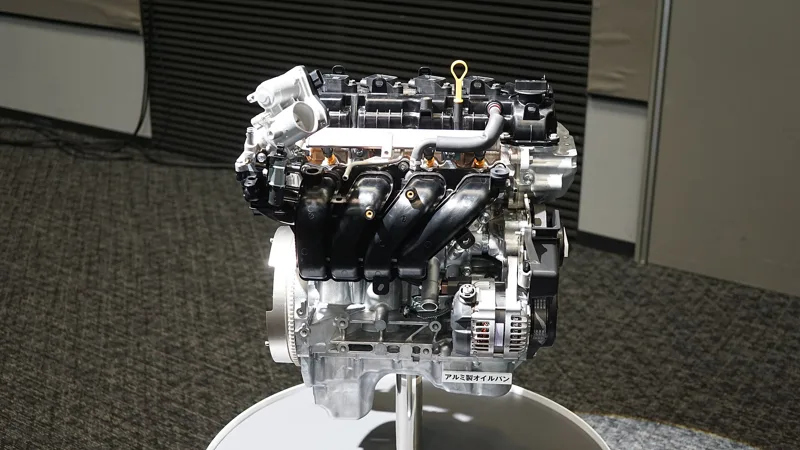
The fourth generation arrived in Japan on 25 November 2020, at first with only the 1.2-litre four-cylinder K12C petrol engine and an optional mild-hybrid system. A full hybrid was added in December 2022. In January 2025 a three-cylinder Z12E, slightly smaller in displacement, replaced the older engine, and the car was facelifted at the same time.
Suzuki Spacia: the tall kei car with a Mazda twin
The Suzuki Spacia replaced the Palette, which ended in February 2013. It was lighter, more efficient and roomier inside than that car, and Mazda sold it too, as the Flair Wagon. Mazda had already been selling the Palette under that name and simply carried on.
The first generation went on sale in March 2013 in G, X and turbocharged T grades, with Mazda's two naturally aspirated versions following in April. A smarter Spacia Custom arrived in June 2013 in GS, XS and turbocharged TS form, and Mazda added its Flair Wagon Custom Style a month later. A Z grade for the Custom line arrived in December 2016 with a different front end, which Mazda did not take. Production of the first generation largely ended in December 2017, though wheelchair-accessible versions kept going until February 2018.
The second generation was shown at the 2017 Tokyo Motor Show and went on sale on 14 December 2017. It sits on the lightweight HEARTECT platform that it shares with the sixth-generation Wagon R, and it came only as a hybrid. A crossover version, the Spacia Gear, appeared on 20 December 2018 in XZ and XZ Turbo grades, and Mazda sold it as the Flair Wagon Tough Style. A facelift on 3 December 2021 brought a new grille and a My Style Gear grade with a coloured grille and white two-tone roof.
The third generation was unveiled at the 2023 Japan Mobility Show and released on 22 November 2023. A more rugged Spacia Gear arrived on 20 September 2024 in one grade, the Hybrid XZ, with naturally aspirated and turbo engines. The Custom and the Mazda derivatives carried on.
Suzuki Hustler: a kei car that dresses as an SUV
Suzuki's designers picked the Hustler name to suggest a lively, rough-riding character. It has a history in Japan as a nickname for the Hustler TS, a two-stroke dual-sport motorcycle, and the car's accessories include a sticker that copies the TS50 emblem. Suzuki's American distributor had also sold the T20 as the Hustler during the second half of the 1960s.
The first Hustler was shown at the 2013 Tokyo Motor Show as a two-door coupe concept, and the production car was revealed on 24 December 2013. It shared a platform with the fifth-generation Wagon R and went on sale in January 2014 in A, G and X grades, with an R06A engine that was either naturally aspirated or turbocharged. Mazda's Flair Crossover arrived the same month. Coloured dashboard panels joined by pipes gave the cabin a distinct look. The Hustler won the 2014-2015 Good Design Award and was named 2014 Car of the Year by the Japan Automotive Hall of Fame. A J Style two-tone option came in December 2014.
The second generation was shown as a concept at the 46th Tokyo Motor Show in late 2019 and went on sale on 20 January 2020. It was designed to look closer to the fourth-generation Jimny. The round headlights stayed but the shape got squarer, and a more upright rear window extended the roof by roughly 120 mm (4.7 in). It came as the Hybrid G or Hybrid X, with a turbo available in every grade and only a CVT gearbox. Mazda announced its Flair Crossover on 29 January 2020, with sales from 27 February. Naturally aspirated cars got a new R06D engine of 49 PS (36 kW), and turbo cars kept the R06A, which the MR92S and MR52S chassis codes reflect.
A rugged J Style went on sale on 27 November 2020. A May 2024 update made LED headlights standard and added the Tough Wild, with a black grille, chrome bumper, 15-inch aluminium wheels and roof rails.
Suzuki kei cars and their rebadges at a glance
| Nameplate | Started | Body | Versions sold under other badges |
|---|---|---|---|
| Every | 1982 | Microvan and wagon | Mazda Scrum, Daewoo Damas, Mitsubishi Minicab, Nissan NV100 Clipper |
| Solio | 1997 (as Wagon R-Wide) | Mini MPV | Opel and Vauxhall Agila, Chevrolet MW, Mitsubishi Delica D:2 |
| Spacia | March 2013 | Tall kei wagon | Mazda Flair Wagon |
| Hustler | January 2014 | Crossover-style kei car | Mazda Flair Crossover |
Rust, crash tests and gearboxes: practical points on these Suzukis
A Wagon R+ used for years in northern Europe could rust badly around the sills, because it was not galvanised. The same car struggled to meet Euro NCAP crash-test ratings, which is why the Splash took its place in late 2008. The Every Plus, unlike the kei Every, reached Britain and Australia as a truck and van. A modern Every Wagon has a CVT on every grade, the second-generation Spacia launched as a hybrid only, and the second-generation Hustler comes only with a CVT.
Demand for the Hustler gives a sense of the appetite. In December 2023 Suzuki set a monthly sales target of 5,000 units. The car beat that target, and Suzuki raised the aim to 6,000.
The e Every and the 2026 updates
The big new idea is electric. In 2023 Suzuki, Daihatsu and Toyota developed a battery-electric light commercial vehicle together and showed a prototype based on the eleventh-generation Daihatsu Hijet Cargo at the 2023 Japan Mobility Show. The e Every was released on 9 March 2026. An earlier Every EV had been shown in 2012 but never reached mass production. Suzuki received type approval for it, based on the Mitsubishi Minicab MiEV, and at least 12 units were to be supplied before the plan was cancelled.
The line-up is also being trimmed. After the May 2026 Hustler facelift only the Hybrid X turbo and Tough Wild turbo grades remain, because the Hybrid G turbo was discontinued. The Every received its own facelift the same month, and its Pakistan-built vans have started reaching new markets, as Brunei showed in August 2026.