From a cab-over pickup in 1968 to the D:5 minivan still sold today, a nameplate that spread across Asia, Europe and Australia under many names.
Since 1968 Mitsubishi has sold the Delica in vans, pickups, passenger wagons and, from 2007, the D:5 minivan. It started as a cab-over pickup, and export markets knew it under many different badges. Versions of nearly every generation are still sold in various markets, and the Delica Mini kei car arrived in 2023.
The Mitsubishi Delica is a family of vans, pickups and people carriers built by Mitsubishi Motors since 1968. The name is short for delivery car, and it has covered cab-over pickups, passenger wagons and the D:5 minivan, which remains on sale in several markets. Export versions were known by different names almost everywhere they went.
Where did the Delica name come from?
Delica is a contraction of the English phrase delivery car. The first model began production in July 1968 as a light commercial cab-over pickup with chassis code T100, which matched the Canter T90 introduced in January 1968. A cargo van and a passenger van followed a year later.
The Delica name then passed to passenger versions, which were known as the Delica Star Wagon from 1979 to 1994 before the Delica Space Gear took over. The commercial line kept the Delica name in Japan for many years, while export markets used their own labels.
A delivery van name that outlived its first pickup and became a minivan that still sells in several markets.
What was the first-generation Delica like?
The launch engine was a 1,088 cc KE44 rated 58 PS (43 kW), with a maximum payload of 600 kg (1,323 lb) and a top speed of 115 km/h (71 mph). The engine was upgraded to 62 PS (46 kW) in 1969. The passenger van, called the Delica Coach, seated nine in three rows and was discontinued in 1976.
In March 1971 a facelifted model called the Delica 75 arrived, with chassis T120 and a small grille in place of the naked metal front. A 1.4-litre Neptune engine, code 4G41, rated 86 PS (63 kW), joined the range. After a fall 1974 facelift the car became the Delica 1400, and a longer wheelbase one-ton T121 followed in 1976.
- Export name: Colt T100, T120 and 1400
- Indonesia: the Colt became a common name for minibuses
- Production: the T120 continued until 1982
- Copycat: Greek maker Record used the T120 design for its GS2000 truck
How did the second-generation Delica change?
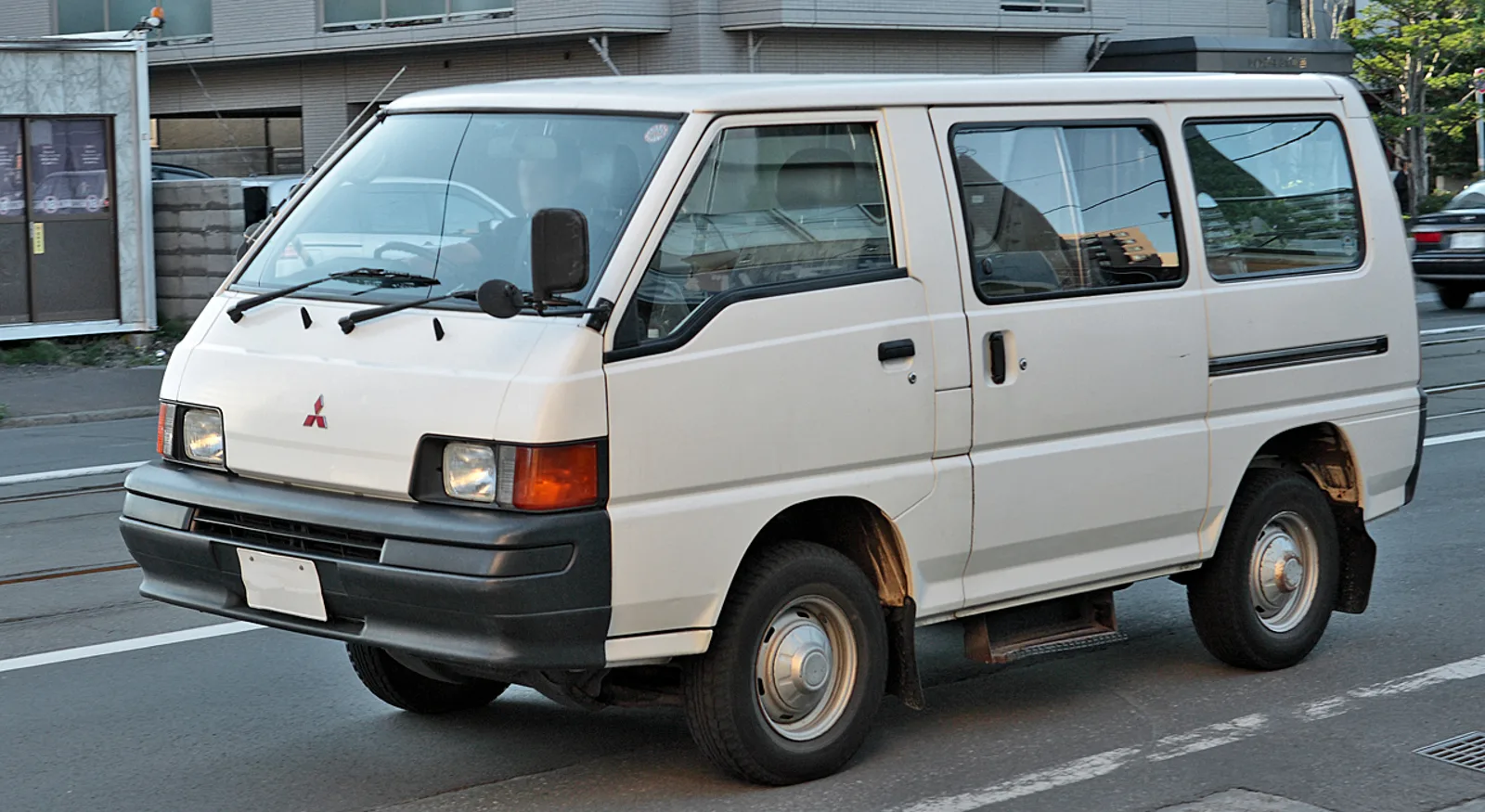
The Delica series was replaced in June 1979 by an all-new design that brought its width up to 1,690 mm (67 in), the maximum allowed for compact vehicles in Japan. It used an independent wishbone front suspension and leaf springs at the rear, with sliding side doors and a one-piece gas strut tailgate. Ten model variations were offered, from passenger vehicles to cargo and recreational versions.
Four-wheel drive arrived in October 1982, a first for the Japanese van market, based on a modified Pajero chassis. Engines came from Mitsubishi's passenger cars. These included a 1,439 cc Saturn 4G33 rated 80 PS (59 kW), a 1.6-litre 4G32, and a 1.8-litre Sirius 4G62 rated 100 PS (74 kW) from May 1980. A 2.3-litre Astron diesel followed in October 1982, and a 2.5-litre version arrived in 1986.
How did the Delica sell in Australia?
Chrysler Australia introduced the SA series Delica on 14 April 1980 under the name Chrysler L300 Express, after debuting it at the Adelaide Motor Show on 12 April. Mitsubishi took control of the Australian operation the same month and renamed the firm Mitsubishi Motors Australia in October 1980. The car was then badged as a Mitsubishi.
The SB series of November 1981 introduced radial tyres on bigger wheels, lifting payload from 925 kg (2,039 lb) to 1,000 kg (2,205 lb). A Deluxe trim with an electric sunroof followed in December 1981. In October 1982 that trim was renamed Starwagon and gained a 1.8-litre engine, and the SC series of May 1983 brought rectangular headlights.
- October 1983: 4WD version with a floor-mounted five-speed manual
- October 1984: SD series with a 2.0-litre 4WD and new black headlight surrounds
- 1986: SE series, the final minor update of the second generation
What did Asian markets build?
In the Philippines the second generation was built from 1987 as the Mitsubishi L300 Versa Van, which was discontinued in April 2012. An extended Exceed variant was added in 2010, and in 2014 a minibus version called the XV Mikrobus was launched on the same platform. A 4N14 CRDi engine met Euro 4 standards from April 2019, and local production reached 200,000 units by 2020.
In Indonesia the car was sold as the Colt L300 from November 1981, with a 1.4-litre 4G33 petrol engine. A 2.5-litre 4D56 diesel replaced the short-lived 2.3-litre in 1988, and petrol production stopped around October 1995. Production moved to the Cikarang plant in April 2018 and resumed in May 2023 after a pause caused by Euro 4 rules.
South Korea built the car as the Hyundai Porter, while India saw the Mahindra Voyager sold from 1997 to 2000. The Voyager used PSA's 2.5-litre XD3P diesel rated 72.5 PS (53 kW), but it was priced too high and had only limited success.
What was the third-generation Delica?
The third generation arrived in June 1986 with a more aerodynamic monocoque body and extensive safety features. Mitsubishi called its rounded styling soft cube. Passenger versions were known as Starwagon in Australia, and the commercial version was the Express. Two wheelbases were offered, and an export engine line ran from a 1.4-litre to a 2.6-litre naturally aspirated diesel.
A truck version followed in May 1994. Production of the vans and wagons for Japan ended in 1998, but the L300 and Delica vans stayed in production for export markets. In Japan the commercial range was replaced under an OEM deal with Mazda that began in November 1999.
How did the fourth generation differ?
The fourth generation launched on 12 May 1994 with considerably more aerodynamic bodywork. Passenger versions were called Delica Space Gear in Japan, and in export markets the cargo cars became the Mitsubishi L400 while the passenger cars became Space Gear. Hyundai used the platform for the Starex from 1997 to 2007.
In Australia this generation was sold as the WA series, with the Express cargo model and the Starwagon passenger model. The Starwagon ran from September 1994 to 2003, and the Express continued until 2005. The GL had a 2.0-litre carburetted four, the GLX a fuel-injected 2.4-litre four, and the GLS a 3.0-litre V6. In May 2013 the older Express was finally pulled from sale, having held a one-star rating for safety.
What is the D:5 minivan?
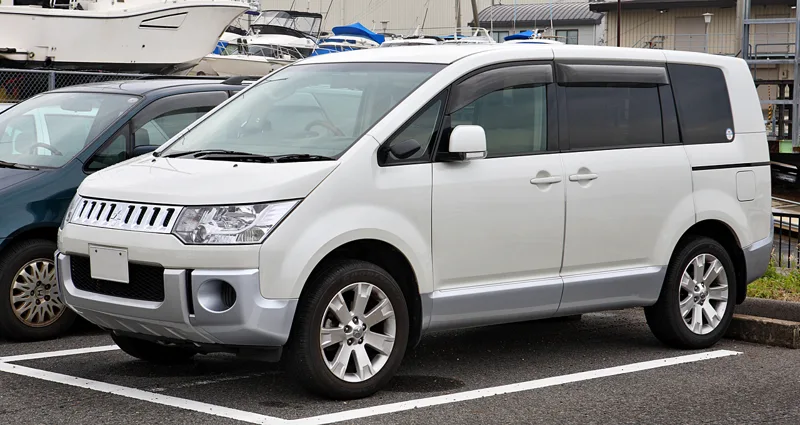
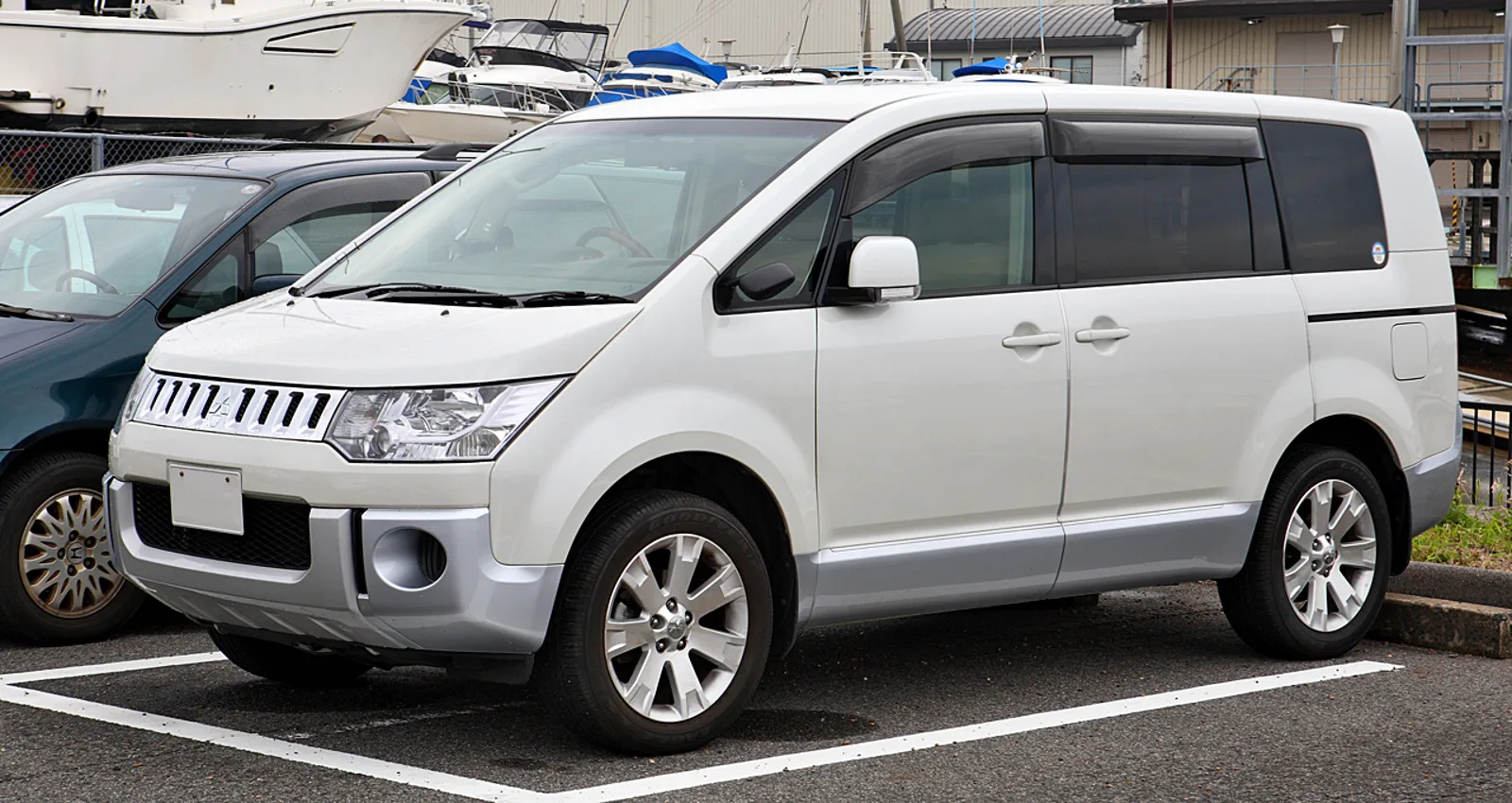
Mitsubishi announced its fifth-generation minivan on 30 October 2006, under the internal designation D:5, and launched it in Japan on 31 January 2007. It is a five-door monobox with seven or eight seats, available in front-wheel drive or AWC all-wheel drive. It is built on the GS platform that also underpins the Xpander and the second and third generation Outlander.
The petrol version used a 2.4 L 4B12 MIVEC inline-four with an INVECS-III continuously variable transmission. A clean diesel with a 2.2 L 4N14 turbo arrived for January 2013, rated 148 PS and 360 Nm, and it returned 13.6 km/L on the JC08 cycle. Its drag coefficient is 0.42, compared with 0.33 for the Toyota Alphard, which is relatively high for the class.
- Height: reduced by about 100 mm (3.9 in), with interior height up by the same amount
- Ground clearance: 20 mm (0.79 in) higher than before
- Colours: fourteen, split between seven mono and seven two-tone
- Wheels: 225/55R18 on most models, and 215/70R16 steel on the M trim
- Doors: power sliding rear doors and an electric tailgate as standard
How did the D:5 facelifts and sales go?
The 2019 facelift was unveiled on 21 November 2018 with the Dynamic Shield design language, a 10.1-inch infotainment screen and e-Assist. It appeared at the 2019 Tokyo Auto Salon and went on sale on 15 February 2019. A minor 2025 facelift was unveiled at the Japan Mobility Show on 29 October 2025, with a redesigned grille and rear bumper and an 8-inch colour LCD meter.
At launch Mitsubishi set a monthly sales target of 2,300 units, which was later reduced to 1,300. The D:5 was underperforming for years, but it beat the target in 2019, 2022 and 2023.
What other models carried the name?
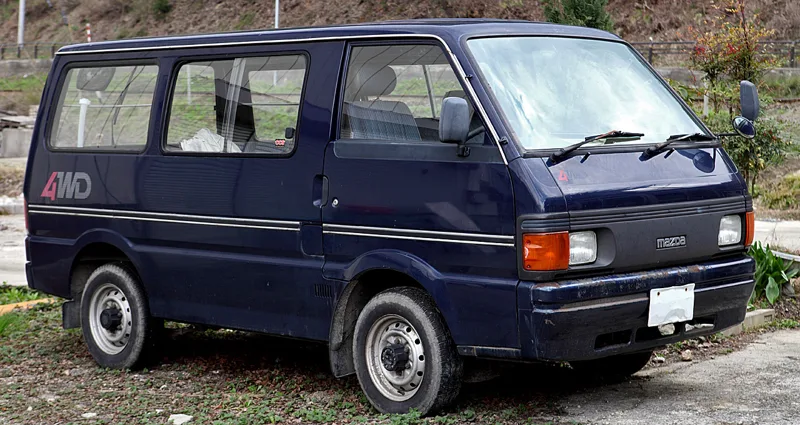
Between November 1999 and October 2011 Mitsubishi sold a badge-engineered Mazda Bongo as the Delica Truck and Van, and the Delica Cargo was discontinued in August 2010. From October 2011 the Delica D:3 and Delica Van were rebadged Nissan NV200 models, which ended in April 2019. The Delica D:2 has been a rebadged Suzuki Solio since March 2011.
The Delica Mini is a kei car variant based on the eK X Space, which went on sale in May 2023. It keeps the family name in Japan's smallest vehicle class.
Where was the Delica built outside Japan?
Several overseas plants built or rebadged the Delica. Taiwan's China Motor Corporation produced cargo versions, Hyundai built a licensed version in South Korea, and Soueast rebadged the car in China from 1996 to 2013. Malaysia's launch came in 1986 through a local distributor, and the Philippines built its own L300 variants from 1987.
Each market added its own engines and trims. Export cars carried local badges and specifications, which is why the same underlying vehicle could be a Starwagon in one country and a Colt or Space Gear in another.
What were the Dongfeng Lingzhi models?
The Dongfeng Fengxing Lingzhi was a range of MPVs produced by Dongfeng Liuzhou Motor after the Delica platform was acquired from Taiwan's China Motor Corporation. Early Lingzhi cars were essentially rebadged Delicas, but Dongfeng later developed its own facelifts and trims.
Three trims were offered: the M5 premium version, the M3 basic passenger version and the V3 utility version with a sealed cargo area. The M5 priced from 77,900 to 98,900 yuan, the M3 from 55,900 to 71,900 yuan, and the V3 from 55,900 to 66,900 yuan, with long wheelbase L versions of each.
Specifications at a glance
| Specification | Detail |
|---|---|
| First generation launch | July 1968, T100 chassis |
| First generation payload | 600 kg (1,323 lb) |
| Second generation width | 1,690 mm (67 in) |
| Fifth generation launch | 31 January 2007, D:5 |
| Fifth generation drag coefficient | 0.42 Cd |
| Diesel output | 148 PS, 360 Nm, 13.6 km/L (JC08) |
| Sales target at launch | 2,300 units a month, later 1,300 |