A compact Nissan van from 2009 that became a New York City taxi, a London hopeful and an electric panel van before it was retired.
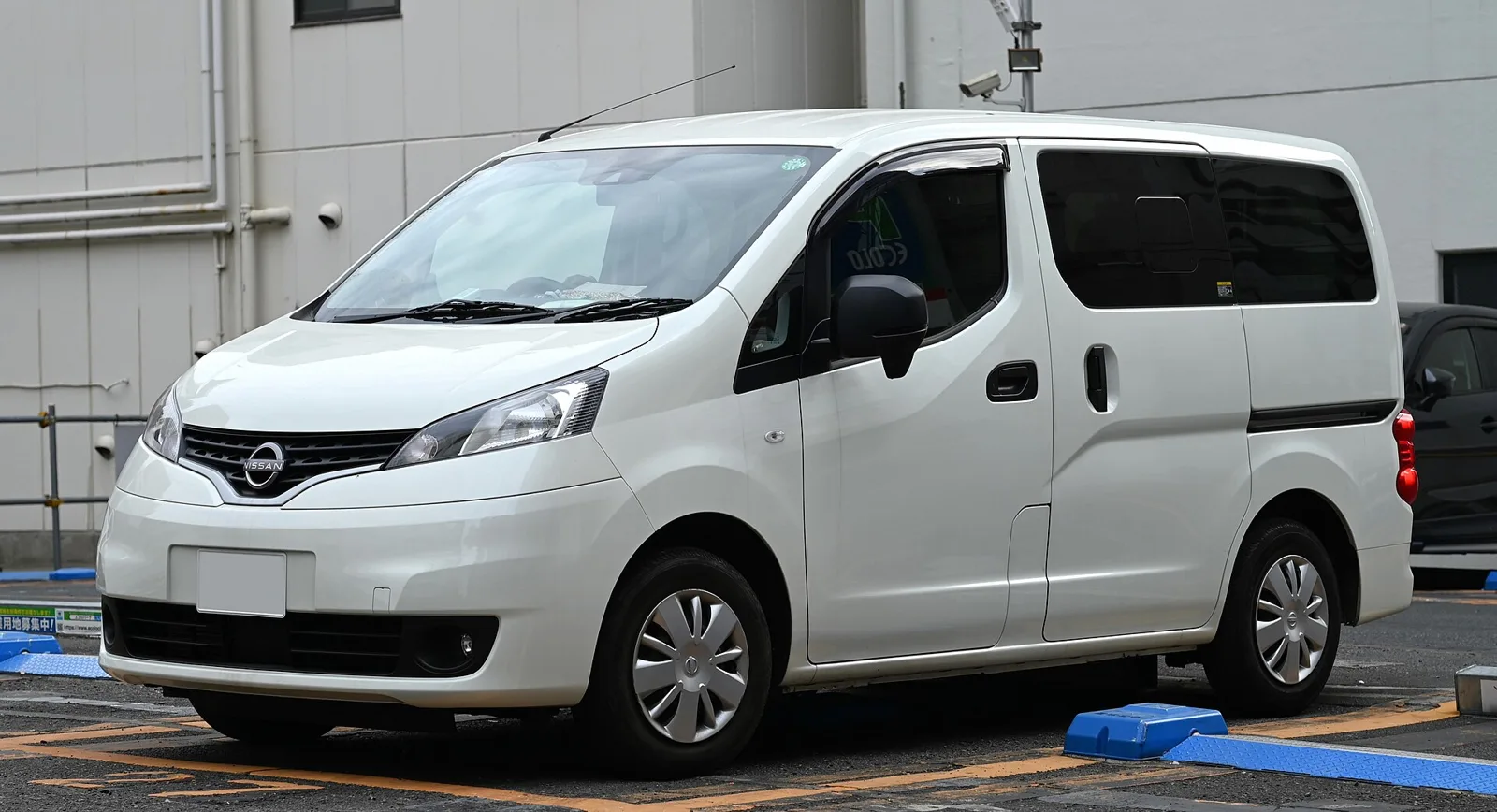
The Nissan NV200 is a light commercial and leisure van that Nissan has produced since 2009. It became a New York City taxi, spawned an electric e-NV200, and ended its North American production in the summer of 2021 after being built at Cuernavaca, Mexico.
The Nissan NV200 is a light van that Nissan has built since 2009 for commercial and leisure use. It spread across several markets under different names, from Japanese Vanettes and Mitsubishi Delicas to a New York City taxi and an electric e-NV200. Its North American production finally ended in summer 2021.
Where did the NV200 first appear?
Nissan first showed the NV200 as a concept at the 2007 Tokyo Motor Show. It was then unveiled at the 2009 Geneva Motor Show, and it went on sale in Japan before the summer of 2009. European sales followed in the autumn of 2009.
The van was built on a modified version of Nissan's B platform. It used independent strut front suspension on a separate subframe, with a leaf spring rear axle. It was offered as a combi and as a passenger car.
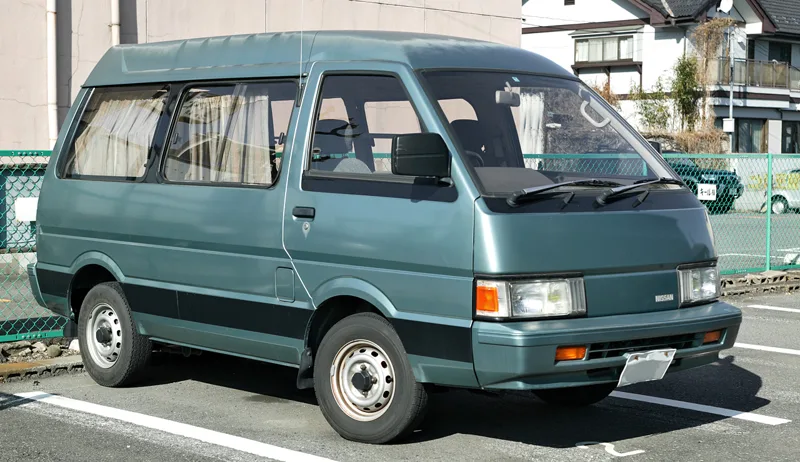
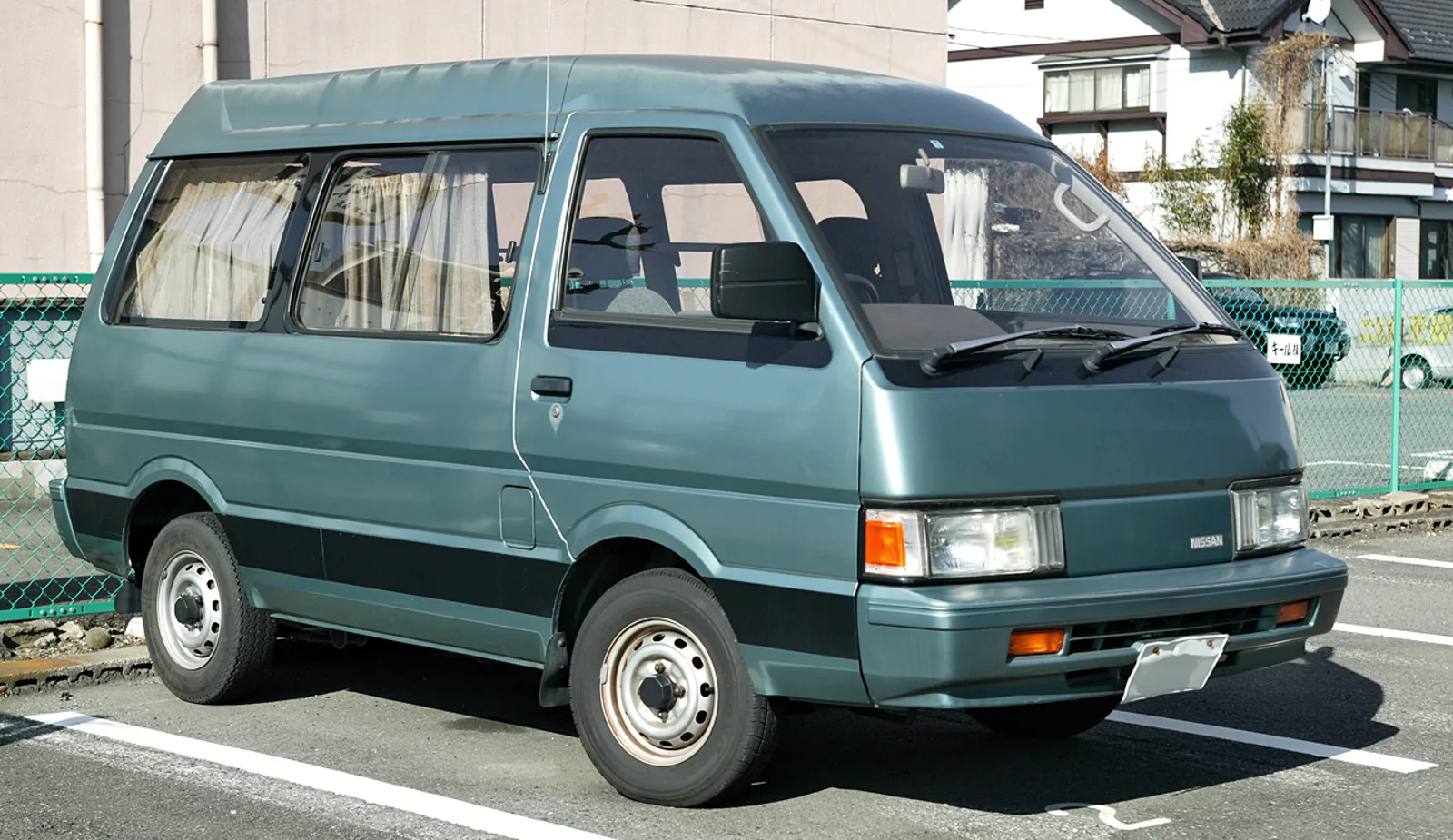
In Japan the NV200 Vanette replaced the older Nissan Vanette. It went on sale on 21 May 2009, and the Vanette name carried through the Japanese range.
A small Japanese van that won New York's taxi contract, lost a legal fight, and lived on as an electric delivery van.
What were the Japanese NV200 Vanette grades?
At launch the Vanette was offered in three grades: DX van, GX van and the 16S wagon. In October 2010 the wagon 16S was replaced by the 16X-2R and 16X-3R.
The passenger car variant received improvements in 2022. A camper-based MyRoom variant was also released, which gave the range a leisure option alongside the commercial vans.
What did the Mitsubishi Delica models add?
Mitsubishi Motors sold a badge-engineered version of the NV200 in Japan as the Delica D:3 and the Delica Van. Both used a 1.6-litre straight-four engine, and they went on sale on 6 October 2011.
The Delica D:3 came as an M model with five seats or a G model with seven seats. The Delica Van offered DX and GX versions with two or five people in the cab. Both models were discontinued in April 2019 due to poor sales.
How did the NV200 become a New York taxi?
The prototype of the New York taxi was unveiled at the 2011 Taxi of Tomorrow Design Expo. Nissan then showed the production version in 2013 at the Matsuya Ginza New York Week fair, and it went on sale as a 2014 model year vehicle.
The taxi used a 2.0-litre four-cylinder engine and had sliding doors with an entry step and grab handles. Its transparent roof panel had a shade, and standard traction control and Vehicle Dynamic Control were fitted. Lights alerted other road users when the taxi doors were opening.
Passengers had a mobile charging station with a 12 V outlet and two USB plugs. Front and rear curtain airbags were fitted, along with seat-mounted airbags for the front row, and the driver's seat had six-way adjustment.
When did the taxis reach the streets of New York?
The taxi entered service in New York in late October 2013. The first cab was handed over on 18 October 2013 by Koeppel Nissan in Queens, and the first one-passenger fare ran from JFK International Airport on 23 October 2013.
As of 16 December 2013, Nissan was distributing the first 200 units to dealers across the city. Another batch went to dealers in Seattle, Los Angeles, Salt Lake City and Texas.
Nissan was the winner of the Taxi of Tomorrow competition, beating the Karsan V-1 and the Ford Transit Connect. The company was awarded a 10-year contract to provide the city with about 13,000 yellow cabs, starting in 2013.
Why did the taxi deal end up in court?
A New York Supreme Court justice ruled the deal unenforceable, reasoning that the NV200 was not a hybrid vehicle. A second judge found that the taxi commission had exceeded its authority by mandating the replacement of city taxis with the NV200.
An appeals court reversed that decision on 10 June 2014. Justice David B. Saxe found that the commission's mandate was legal, which kept the contract alive.
How was the wheelchair-accessible taxi built?
The Mobility Taxi, with a rear ramp and a restraint system for wheelchairs, debuted at the 2012 New York show. BraunAbility carried out the conversion.
The Mobility Taxi reflected the city's wider accessibility goals, and it showed how the same platform could be adapted for different passengers. It also gave the taxi programme a wheelchair-accessible option from the start.
What was the NV200 Compact Cargo Van?
The Compact Cargo Van debuted at the 2012 Chicago show. American examples reached showrooms in early 2013 as 2013 models, equipped with a 2.0-litre 16-valve four and an Xtronic CVT.
The 2014 model year arrived in January 2014 with S and SV trims, and the taxi was sold alongside them.
Where was the NV200 built for North America?
Production started at Nissan Mexicana's Cuernavaca plant in 2013, serving the North American market. By 2020 Nissan's share of American commercial vans was small.
Nissan then announced that NV200 production for North America would end in summer 2021. The taxi, the cargo van and the combi had all been built on the same line in Mexico during that period.
What did European buyers get?
European models of the NV200 van and combi began sales from October 2009 in most markets, with a Family version added in 2010. Early models included a 1.6-litre HR16 petrol with 108 PS (79 kW) and a 1.5 dCi (K9K) diesel with 86 PS (63 kW).
The five-speed manual gearbox was standard, and a rear view parking camera was an option. European models were first built in Japan, and production moved to Nissan's plant in Barcelona in November 2009.
On 1 February 2019 Nissan announced the end of the internal combustion NV200 in Europe. It was replaced by the NV250, a rebadged Renault Kangoo. The last diesel NV200s were built in mid-2019, and sales ended by early 2020.
What was the London taxi project?
In 2011 Nissan approached Transport for London and the Licensed Taxi Drivers Association about adapting the NV200 to London's streets. The vehicle was engineered by the Coventry firm ADV Manufacturing, with Nissan Design Europe handling the design in London.
The prototype used a 1461cc dCi (K9K) turbodiesel. After feedback and stricter emissions rules, Nissan offered production versions from January 2014 with a 1.6-litre petrol engine and an automatic transmission. A battery-electric London taxi based on the e-NV200 was planned for 2015.
The London taxi project was shelved later in 2014. A revised proposal followed in 2017, but it depended on the British Government approving electrification of the London taxi network.
How was the NV200 sold in China and India?
In China the NV200 was built by Nissan with Dongfeng Motor and released in June 2010. Early models used the HR16 DOHC engine rated at 83 kW and 150 Nm. The February 2014 refresh added a V-Motion grille and a Luxury variant.
In India the Evalia launched in September 2012 in four variants: XE, XE Plus, XL and XV. It used a 1.5-litre dCi diesel with a 5-speed manual transmission. Nissan stopped production in June 2015 because demand was low, after 2,412 units had been sold.
A badge-engineered version went on sale as the Ashok Leyland STiLE from September 2013. It used a 1.5-litre K9K engine of 86 PS and was withdrawn in 2015 after low sales.
How did the Evalia do in Indonesia?
The Evalia launched in Indonesia on 7 June 2012 with five grade levels. The update of 23 January 2014 reduced the line-up to three grades: St, SV and Highway Star.
The Evalia was discontinued in Indonesia in 2018 after poor sales. Its short life there mirrored the difficulties the van had in several Asian markets.
What was the e-NV200?
The e-NV200 is the battery-electric panel van built on the NV200. The concept was shown at the 2012 North American International Auto Show in Detroit. The original battery pack was 24 kWh, with a range similar to the Nissan Leaf of 73 mi (117 km).
Trials began with Japan Post in July 2011, followed by FedEx in London from December 2011. A more advanced pre-production version was shown at the 64th IAA Commercial Vehicle show in Hanover and tested in Singapore, the UK, the US and Brazil.
A six-month trial with 28 units delivered to British Gas began in November 2013. The production car appeared at the 2014 Geneva Motor Show with 30% new components compared with the combustion NV200.
How did the e-NV200 perform in sales?
Production began at Nissan's plant in Barcelona, Spain, by mid-2014. The e-NV200 led Europe's electric commercial van class in 2016, with 4,319 units delivered. In 2020 a tall-roof version, the XL Voltia, added 90% more cargo volume.
The van was expected to serve New York City's taxi of tomorrow fleet by 2017. Structural changes would have been needed to meet US federal safety standards, and the van was never released to the US market. In 2021 Nissan unveiled the Townstar EV to replace it.
What are the e-NV200 technical details?
The e-NV200 shared an 80 kW (110 hp) AC traction motor with the second-generation Leaf, and its 254 N m (187 lb ft) of torque came from the same unit. The battery had 48 modules and a 24 kWh capacity, and it formed part of the structural frame.
The standard on-board charger had a 3.3 kW AC input, doubling to 6.6 kW with an optional charger. The optional charger also added a CHAdeMO port accepting up to 50 kW (DC). Maximum speed was 120 km/h (75 mph), dropping to 100 km/h (62 mph) when the battery charge was low.
In 2018 the battery capacity rose by 67% to 40 kWh, with a range of 300 km (190 mi) under the JC08 cycle. The van was about 160 mm (6.3 in) longer than the NV200, and it was 60 mm (2.4 in) wider at 1,755 mm (69.1 in) to fit the Leaf's front subframe.
What cargo did the e-NV200 carry?
The e-NV200 offered a cargo capacity of 4.2 m3 (150 cu ft) and could carry two Euro pallets. Both sides had sliding doors, and the rear had swinging doors. The maximum payload was 770 kg (1,700 lb).
The front suspension was taken from the Leaf, using MacPherson struts, while the rear used the conventional NV200 setup with leaf springs and a beam axle.
What was the Dynamo Taxi?
In 2019 a Coventry company launched the Dynamo Taxi, based on the e-NV200. It was based on the Evalia version of the van.
In 2022 the Dynamo Motor Company phased out the Dynamo Taxi, after Nissan replaced the e-NV200 Evalia with the Renault Kangoo E-Tech-based Townstar EV.
What was the Chevrolet City Express?
The Chevrolet City Express was a badge-engineered NV200 for the United States and Canada, sold by Chevrolet. It was aimed at urban business owners as a cheaper and more compact option than the full-size Express van. It came in LS and LT trims.
The LT trim had a 5.8 in (150 mm) touch screen, navigation, Sirius XM Radio and Bluetooth. The City Express debuted at the 2014 Chicago show and was sold from autumn 2014. Chevrolet discontinued it in 2018 because of lackluster sales.
How did the NV200 fare in safety tests?
Euro NCAP gave the NV200 Combi three stars in May 2013. The adult occupant assessment found the floor had separated from the A-pillar base, and the car was penalised for an unstable passenger compartment.
The driver's footwell was also found to have ruptured, which led to a further penalty. The result was a useful warning on the van's structure, even though the vehicle was popular in several markets.
What awards and sales did the NV200 earn?
In April 2010 the NV200 was named the International Van of the Year 2010 by Professional Van and Light Truck Magazine. The taxi programme added a major commercial prize when Nissan won the Taxi of Tomorrow.
As of 30 August 2013, sales of the Nissan NV200 had reached 170,000 units. The taxi and the e-NV200 both helped the model reach new markets after its launch.
What are the Nissan NV200 specifications?
| Specification | Detail |
|---|---|
| Launch | Japan, 21 May 2009, as the NV200 Vanette |
| Sales milestone | 170,000 units as of 30 August 2013 |
| Mitsubishi Delica engine | 1.6-litre straight-four |
| European diesel | 1.5 dCi (K9K), 86 PS (63 kW) |
| European petrol | 1.6-litre HR16, 108 PS (79 kW) |
| e-NV200 motor | 80 kW (110 hp), 254 N m (187 lb ft) |
| e-NV200 battery | 24 kWh, later 40 kWh |
| e-NV200 cargo capacity | 4.2 m3 (150 cu ft) |
| e-NV200 payload | 770 kg (1,700 lb) |
| e-NV200 width | 1,755 mm (69.1 in) |
| Chevrolet City Express trims | LS and LT |