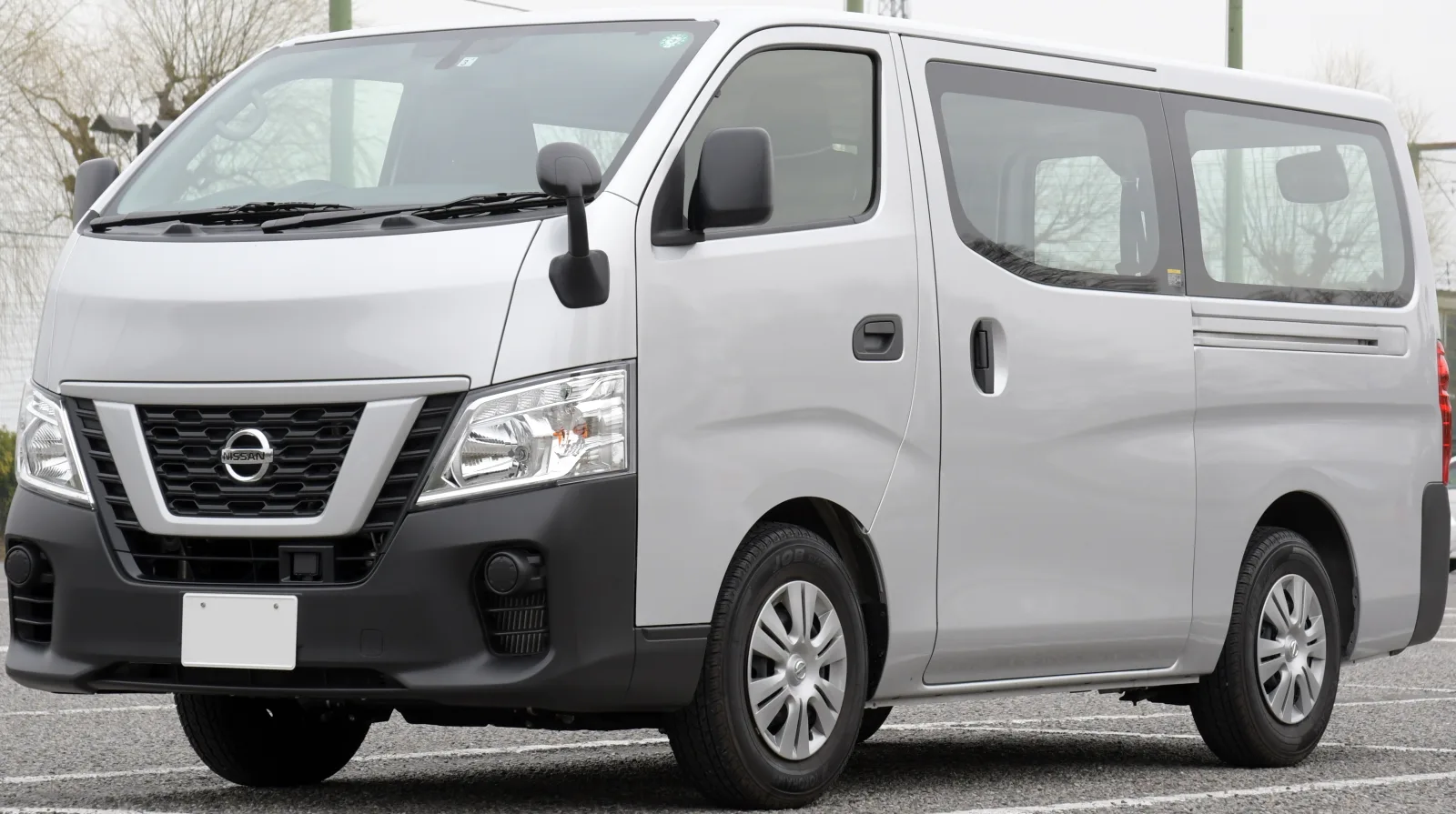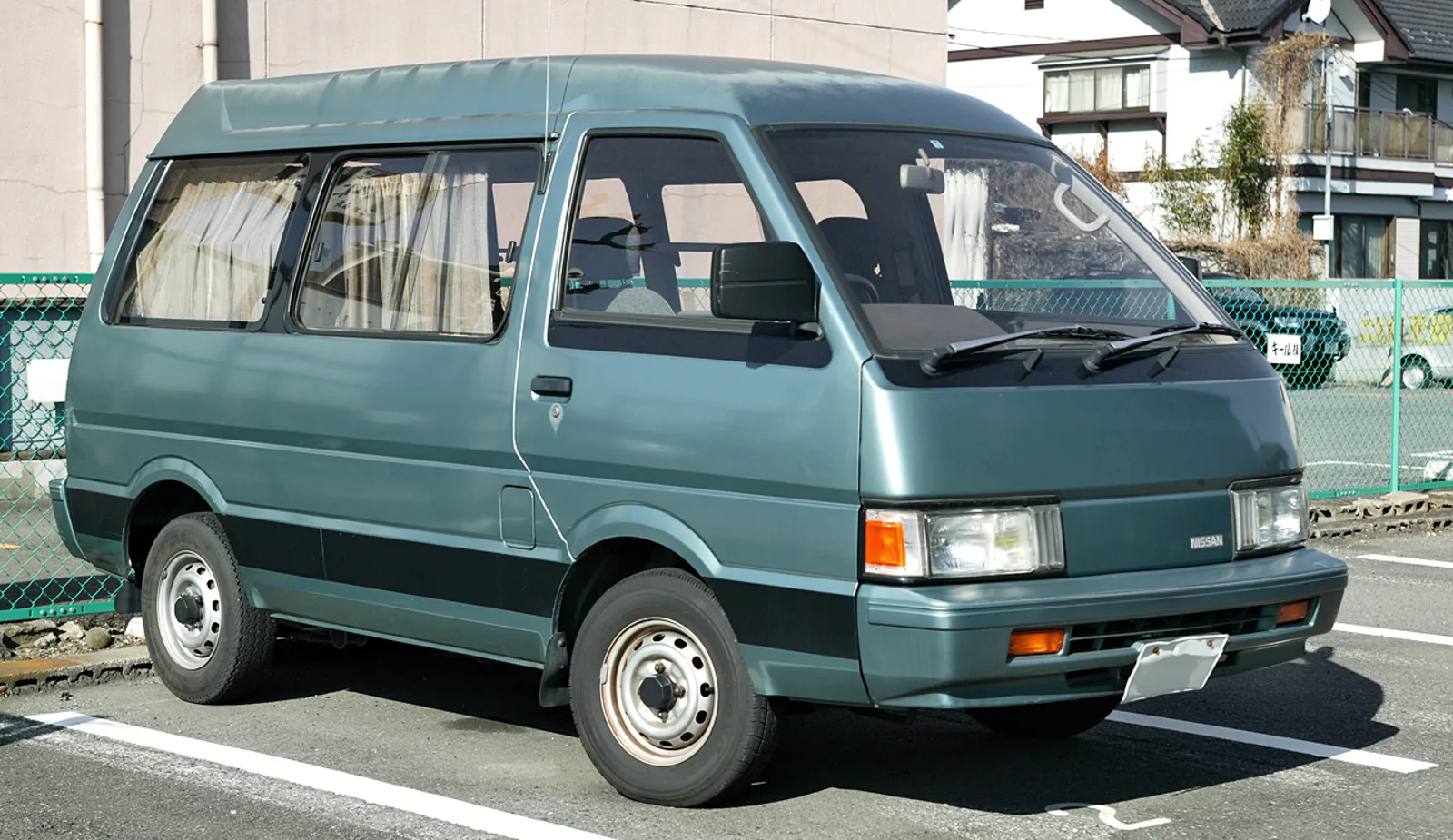
A compact cab-over van and pickup that spanned Japan, Spain, South Korea, the United States, Malaysia and the Philippines before its name was passed on.
The Nissan Vanette was a cab-over van and pickup built from 1978 to 1994, with C120 and C22 generations. Overseas builds in Spain, South Korea, the United States and Malaysia extended its life, and it was succeeded by the NV200.
The Nissan Vanette is a cab-over van and pickup that Nissan built from 1978 to 1994. Production continued in Malaysia until about 2010, and a rebadged Mazda Bongo carried the Vanette name until 2017. This guide covers the generations, trim levels, overseas builds and the controversy around the US Nissan Van.
What is a cab-over van, and where did the Vanette start?
A cab-over van places the driver above the engine, which leaves the cargo area as long as possible within the same exterior length. Nissan's line began in 1962 with the Datsun Cablight, and the Cherry Cab and Sunny Cab models that followed built on that layout.
The Datsun Cablight reused the earlier Kurogane Mighty under a different badge, which Nissan acquired when it took over the operations of Tokyu Kogyo Kurogane. The cab-over Sunny Cab and Cherry Cab (C20) arrived in 1969, one size smaller than the Prince Homer truck and Prince Homy van.
The Sunny Cab van seated five, and an extended version carried eight. Its passenger doors were conventional front-hinged units with extra length on the passenger side, and the rear tailgate split into two pieces. The commercial truck was kept basic to hold the price down.
The Sunny Truck was replaced in early 1971 by the B120-series truck, and the cab-over trucks took the Vanette name during that transition.
A cab-over workhorse that outlived its own generations and still shaped how Nissan built its vans.
When did the first Vanette go on sale?
The first Vanette, code C120, arrived in October 1978, replacing the 1969 Cherry Cab and Sunny Cab C20. It was exported as the Datsun C20 or Nissan Datsun Vanette, and at home it was sold as the Sunny Vanette or Cherry Vanette depending on the dealer network.
The C120 borrowed heavily from the rear-wheel-drive B210 and B310 Sunny models, sharing engines and transmissions with them. Sunny Vanettes were sold through Nissan Satio Store outlets and Cherry Vanettes through Nissan Cherry Store locations, with slightly different front ends.
In March 1980 a Datsun Vanette joined the range through the Nissan Bluebird Store network. It had twin headlights where its siblings had single ones, and it sat as a junior model beneath the larger Nissan Caravan.
Which engines did the Vanette use?
Early Vanettes relied on the A12, a 1.2-litre unit rated at 64 PS (47 kW) at 5,400 rpm. The 1.4-litre A14 produced 75 PS (55 kW) at the same engine speed, and the larger engine later reached the van and truck versions as well.
The Coach minibus used the A14 at first, then switched in June 1980 to the 1,487 cc A15, which made 83 PS (61 kW). The LD20 diesel and a 2-litre Z20 petrol engine were added in June 1981, with the Z20 reserved for the top-of-the-line SGX.
Long wheelbase versions were never offered with the smallest A12 engine. The high-roof and long-wheelbase body arrived in July 1979, with the wheelbase lengthened by 33 cm, measured between the front and side doors.
How did the Vanette Largo differ?
The Vanette Largo, introduced in October 1982, was a wider and slightly longer version. It was 90 mm wider, which kept it just under Japan's 1,700 mm tax threshold, and a Spanish-built cargo version by Nissan Iberica later became the mainstay of European sales.
The Largo continued until a successor arrived in May 1986, when the name split off as a plusher model in its own right. In Spain the C220 received a facelift and remained in production into the 1990s, mostly in markets that restricted Japanese-built imports.
What changed with the second-generation C22?
The C22 Coach was launched in Japan in 1985 with five trim levels and four engine options, along with two transmission choices. Its range ran from the basic SC through to the top-of-the-line SGL EXCEL, and each step added seats, comfort or equipment.
The main Japanese variants were:
- SC: five or six seats, with a 1.5L A15 petrol engine or a 2L LD20.II diesel. Manual only; round headlamps and a rear screen with no wiper.
- GL: eight or nine seats, with a choice of the 1.5-litre or 2-litre diesel. Manual only, with square headlamps.
- SGL: automatic optional, rectangular headlamps with a high roof, collapsible seats and rear air conditioning. The body was longer than that of the SC and GL.
- SGL EXCEL: an eight-seater with a 2-litre Z20S petrol or LD20.II diesel, colour-coded bumpers, central locking and a panoramic glass roof.
A late update with a bigger body, close in style to the US-market Nissan Van, continued as the Largo in Japan until 1992, when a Serena-based version took over.
How did the Vanette fare as a Daewoo in South Korea?
Nissan and Daewoo signed a technical collaboration agreement on February 3, 1986, partly in response to South Korea's plan to lift restrictions on manufacturing certain vehicle types. The first Daewoo Vanette was sold in South Korea on May 3, 1987, and production there ran until 1992.
The South Korean version used an Isuzu 2.2-liter diesel in place of the original Nissan engine. High levels of noise and vibration, along with fuel consumption, weighed on the van's reputation, and sales were slow.
Buyers preferred 12-seater vans and double-cab trucks, while the Vanette came as a nine-seat van or a single-cab truck. A 12-seat van was eventually developed, yet sales stayed low and the model was not carried forward in the Daewoo range.
Why was the Nissan Van recalled in the United States?
Nissan sold a C22-based Nissan Van in the United States for model years 1987 and 1988, fitted with a larger 2.4-liter Z24i engine. The tight engine bay contributed to overheating and engine fires, and in 1994 Nissan recalled every Nissan Van sold in the country.
Nissan modified the C22 to compete in the growing minivan segment, against the Toyota Van, the Mitsubishi Van and Chrysler's minivans. Sales clustered in the Sun Belt, mainly California, Texas and Florida, where buyers wanted air conditioning and highway capability.
Fires were first reported in 1987, shortly after the vans reached American showrooms. Four safety recalls failed to end the problem, and with a class action pending, Nissan took the unusual step of recalling the whole fleet in 1994. Reports of at least 135 fires had reached Nissan by then, though none caused deaths or injuries.
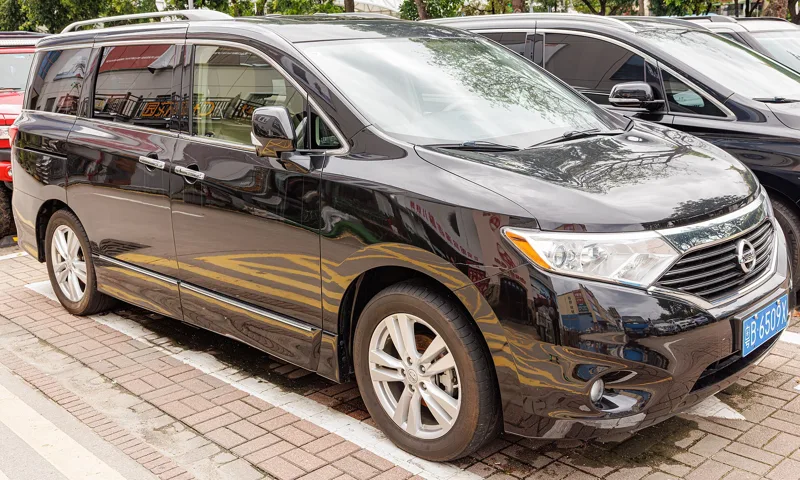
Vehicle owners could take Kelley Blue Book value or better, and most did. Critics argued that Nissan had known about the problem for years before acting, and the class action settlement offered discounts on a new Nissan. The Quest arrived in 1993 to take the Van's place, developed jointly with Ford.
How was the Vanette built in Malaysia?
Tan Chong Motor Assemblies built the C22 Vanette at its Segambut plant in Kuala Lumpur from 1997 to 2010, a run of 13 years. As Malaysia's longest-running build, it also went to several export markets.
Options ran from chassis cabs and open-bed trucks to vans with panel or windowed bodies, all using the pushrod A15, a 1.5-liter unit rated at 82 PS (60 kW). Several facelifts kept the body profile largely unchanged, and the 1980s interior remained in place.
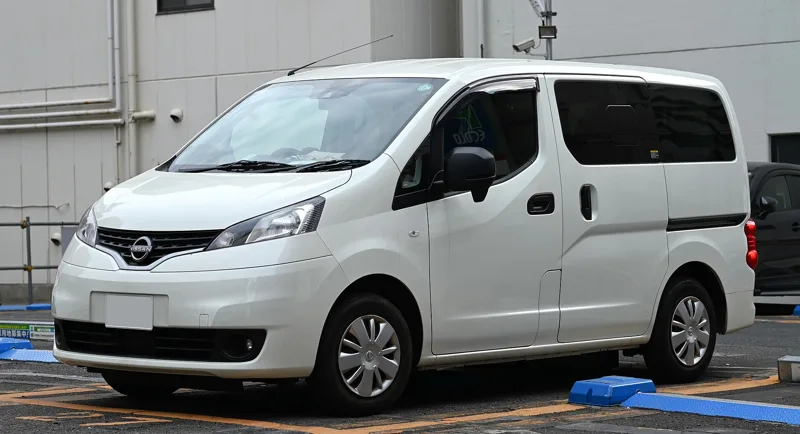
The C22 was last built in Malaysia. The Nissan NV200 succeeded it, and the Vanette name was retained for the Malaysian market.
Was the Vanette sold in the Philippines and India?
The Vanette was sold in the Philippines as the Vanette Grand coach until the end of 1999. It used only the Z20 2.0-liter petrol engine, with no diesel option, while in India the C22 served as the starting point for Ashok Leyland's Dost, the first product the Indian truck maker offered in this class.
The final Philippine version was largely unchanged, apart from new wheels, better seat fabric and faux wood trim on the dashboard. The lack of a diesel was an oversight that may have cost the van some popularity.
What were the later Vanette generations?
The third generation, coded S20, SE and SK, ran from 1994 to 1999 as a rebadged Mazda Bongo. The same van also appeared as the Ford Econovan and Ford Spectron, showing how widely the platform was shared.
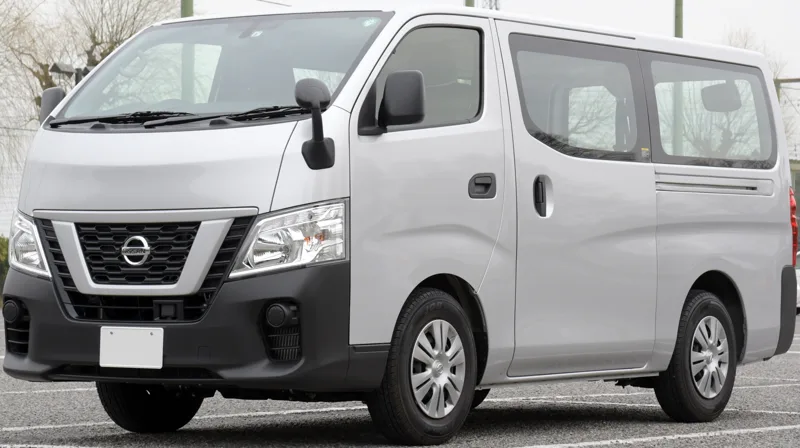
The fourth generation, coded S21 and SK, ran from 1998 to 2017 and was again a rebadged Mazda Bongo. Its successor, the NV200 Vanette, carried the name forward into a new era.
What are the key Vanette specifications?
| Specification | Detail |
|---|---|
| Production span | 1978 to 1994, with Malaysian production to about 2010 |
| Early engines | A12 1.2 L (1,171 cc), 64 PS (47 kW); A14 1.4 L (1,397 cc), 75 PS (55 kW) |
| Coach engine from June 1980 | A15 1,487 cc, 83 PS (61 kW) |
| Drive | Both 2WD and 4WD versions |
| Transmission | Manual and automatic options, floor or column shift |
| C22 SGL body | Longer than the SC and GL, with a high roof |
| Malaysian engine | 1.5-liter A15, 82 PS (60 kW) |
| Philippine engine | Z20 2.0-liter petrol only |
| US engine | 2.4-liter Z24i, model years 1987 and 1988 |
| Successor | NV200 Vanette |