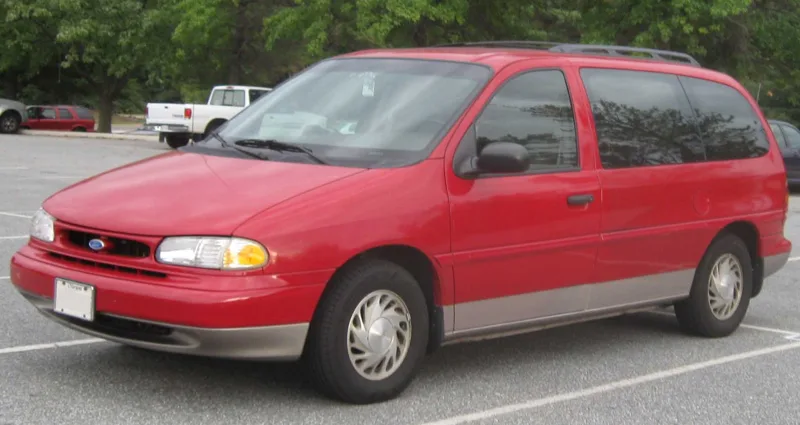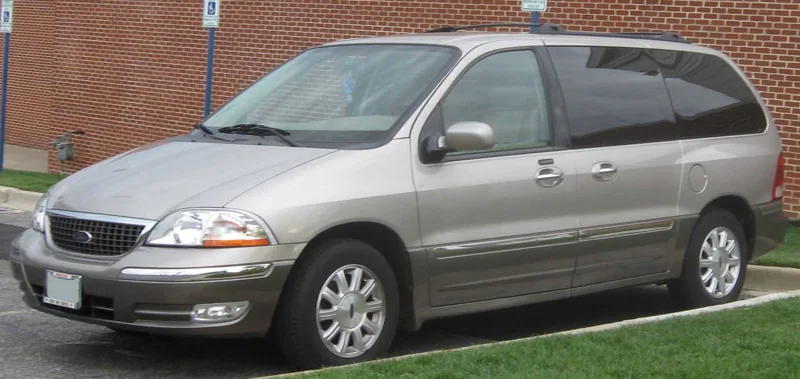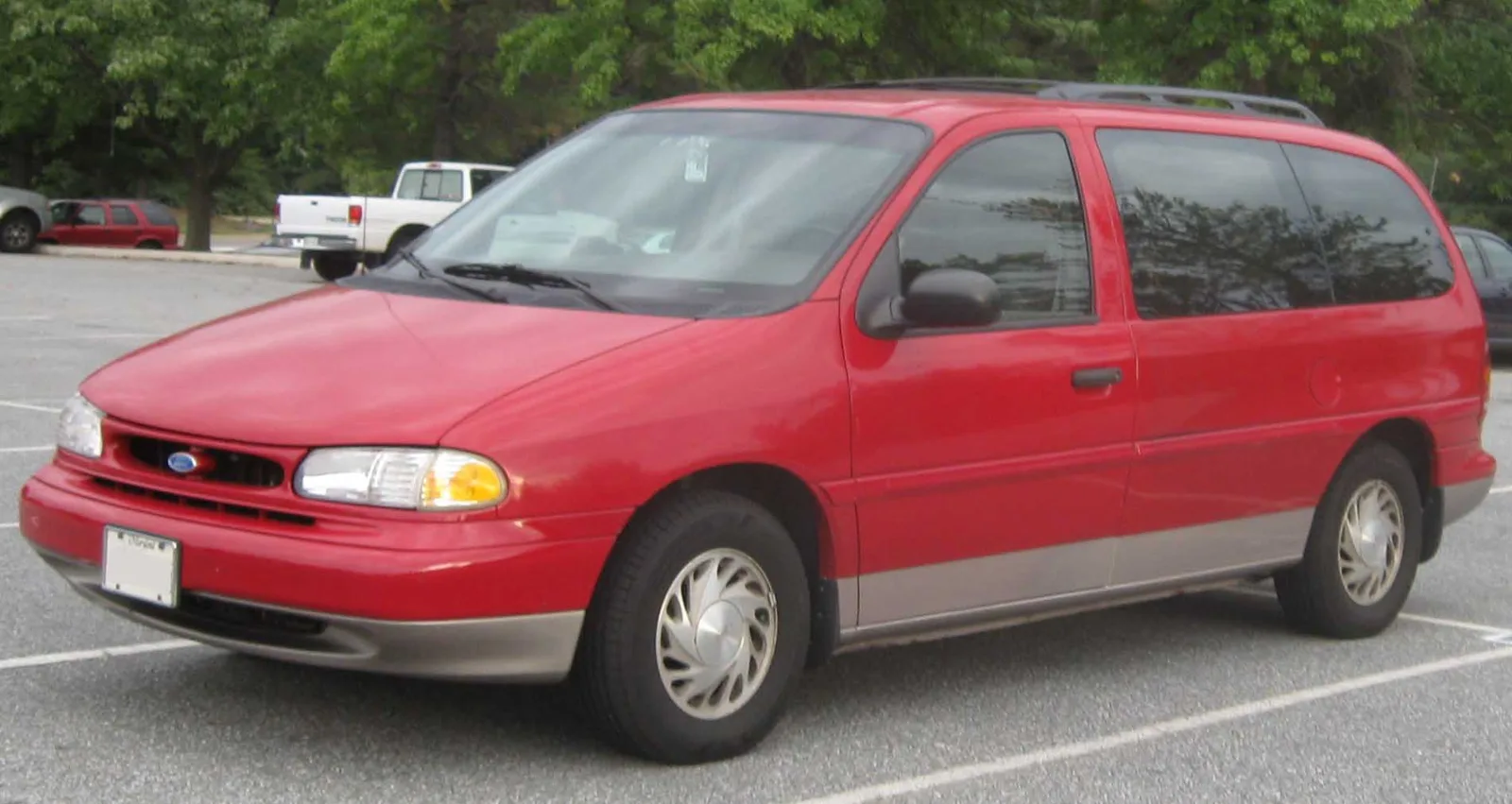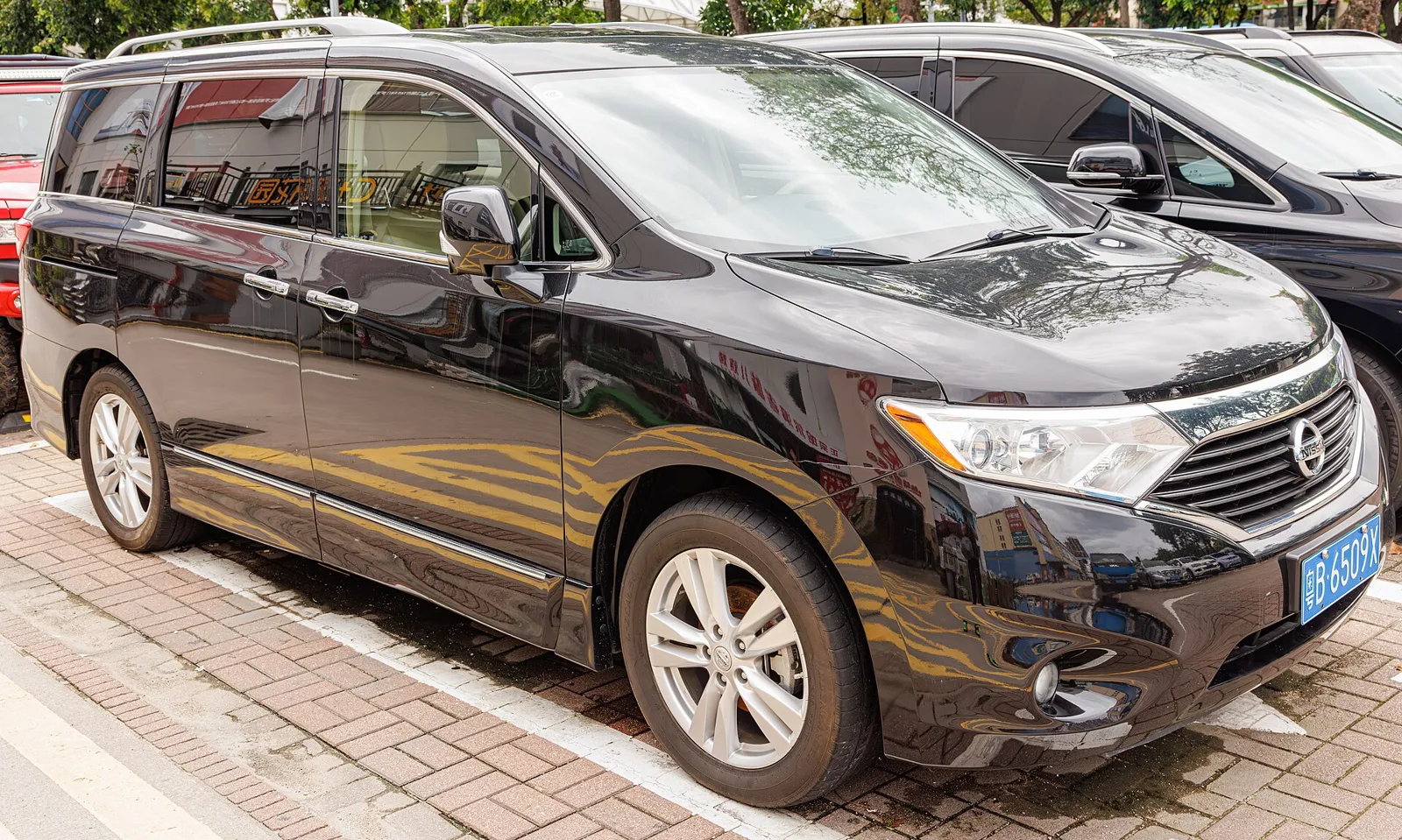
Built with Ford and sold beside the Mercury Villager, the Quest was Nissan's first Japanese-brand minivan designed for North America, and it ran until the 2017 model year.
A Ford joint venture produced the first two generations of this minivan, which Nissan sold beside the Mercury Villager from 1993. Later generations used Nissan platforms, and the final cars came from Japan before sales ended in 2017.
The Nissan Quest was a minivan that Nissan sold in North America from the 1993 model year until 2017. It was the first Japanese-brand minivan developed specifically for that market, and for its first two generations it was built alongside the Mercury Villager in a joint venture with Ford. Once minivan sales had fallen sharply, Nissan withdrew the Quest and ended its run.
How did the Quest come about?
In 1987 Ford and Nissan agreed to develop a shared vehicle for the minivan segment, with a launch scheduled for 1991. Ford was already preparing its own front-wheel drive minivan, but the deal allowed both companies to share costs. Mercury had no minivan of its own, and Nissan's compact cars were proving hard to adapt for American buyers.
Development began that year under the codename VX54. The shared line was designed by Nissan Design International in La Jolla, California, a studio later renamed Nissan Design America. Ford's model would be marketed by Mercury, and the Tracer compact that Mercury sold was built by Mazda.
Nissan saw the venture as a route to more American-made content in its US-built cars. It launched with 140 new suppliers, and the domestic parts content started at 75 percent with a target of 90 percent.
A Ford joint-venture minivan that became Nissan's own vehicle, moved production to Japan and then ended a 24-year run in 2017.
Where were the first Quests built?
The first production Quest left the line on 14 April 1992 at the Avon, Ohio plant. Nissan provided the engines and the main body panels, which were stamped at its Smyrna plant before Ford completed final assembly in Ohio.
Parts were initially imported from Japan while American production ramped up. Body stamping at Smyrna began in June 1992, and engine assembly followed in August 1992. The joint venture meant the car was built partly in Japan and partly in the United States during its launch year.
What did the first-generation V40 offer?
The Quest made its debut at the 1992 Detroit show, as a 1993 model. It carried the V40 chassis code and rode on the Ford VX54 platform, which had been adapted from the Nissan Maxima midsize sedan. Front-wheel drive, MacPherson struts at the front and a leaf-sprung beam axle at the rear made up the basic layout.
The wheelbase was 112.2 inches, 0.1 inch shorter than the standard-wheelbase Chrysler Voyager and Caravan. The Quest was nearly 12 inches longer overall, about an inch longer than the extended-length Aerostar. Nissan then sold 1,358 Quests in its first full month on the market.
Both the Quest and the Villager used the 3.0-litre VG30E V6, which made 151 hp (113 kW) and 182 lb ft (247 Nm). Ford asked Nissan to change the engine in several ways, including an oil level sensor, a relocated oil filter and a non-interference design, so that a timing belt failure would not let the pistons hit open valves. The V6 was paired with a four-speed automatic from the Maxima.
Trim levels were the base XE and the deluxe GXE, in line with other Nissan models. The Quest shared almost all of its body with the Villager, but Nissan fitted a single-slot body-coloured grille in the style of the 1992 Altima, along with different bumper air intakes and rear lamps.
Many interior parts came from Ford to keep costs down. The two vans shared a dashboard that included the radio, heater controls and window switches. A driver's airbag arrived in 1994, when both models adopted a steering wheel from the Altima.
How did the Quest's seating and 1996 update work?
The third-row bench seat ran on tracks, so it could be slid forward against the front seats when the second row was removed. The seatbacks could also fold flat, and each one doubled as a tabletop. The third row was removable with tools, but other manufacturers did not copy the system because simpler alternatives later appeared.
For 1996 the Quest received a mid-cycle update. The grille reflected the redesigned Maxima, the taillamps were no longer monochromatic, and dual airbags replaced the single driver's bag. The glovebox moved to knee level, and a double-DIN radio and climate controls were fitted into the centre of the dashboard, while the front seats gained three-point belts.
What changed with the second generation (V41)?
The second generation arrived for the 1999 model year as the design counterpart of the Mercury Villager. It kept the VX54 chassis and the 112.2-inch wheelbase, but it grew an inch wider and nearly 5 inches longer. Dual sliding doors returned as standard, which made the Quest the first in its segment to offer them across the range.
Nissan Design America developed the car between 1993 and 1995 under the code V41. The engine changed to the 3.3-litre VG33E V6, which was shared with the Pathfinder and Frontier and made 20 hp more than before. Every external body panel was changed, although the styling remained an evolution of the earlier car.
The XE was dropped, and the GXE became the base model with a two-passenger bench. The sporty SE came with cloth or leather, while the luxury GLE offered leather as standard. A removable parcel shelf added a second level of storage, and the third-row sliding bench returned.
For 2000 the GLE adopted the rear stabiliser bar of the SE, and an optional rear-seat video system was offered. The 2001 update redesigned the front fascia, with an Altima-style grille, made the rear stabiliser bar standard on all models and moved GLE vehicles to 16-inch wheels.
Why did the Ford partnership end?
In 2000 Ford and Nissan decided to end their joint venture earlier than originally planned. Both companies already had replacements in development. Ford planned a Mercury variant on the successor to the Windstar, while Nissan built its replacement on the Altima and Maxima platform.
The final VX54-platform Quest was assembled by Ford in June 2002. The Quest was withdrawn from the Canadian market in 2002 as well, and the second generation received few changes in its last years apart from six-spoke alloy wheels.
What was the third-generation V42 like?
The third-generation Quest, code V42, was shown at the 2003 North American International Auto Show as a 2004 model. It rode on Nissan's FF-L platform, which it shared with the Altima and Maxima, and it was slightly longer than Chrysler's long-wheelbase minivans.
Development began in 1999 alongside a proposed Ford replacement, and the design by Alfonso Albaisa was chosen in late 2000. A concept was shown at the January 2002 show as a thinly veiled preview. Design patents were filed on 27 December 2002, and production moved to a new plant in Canton, Mississippi, where it began on 27 May 2003.
Power came from the 3.5-litre VQ35DE V6 used in the Maxima, Altima and other Nissans. The Quest made 240 hp (179 kW) and 242 lb ft (328 Nm), and a 2004 model reached 60 mph in 8.8 seconds. Interior volume was 211.9 cubic feet (6.00 m3).
The moonroof glass was split into separate panels above each passenger, each with its own sunshade, and two DVD screens were set into the roof. The SE trim added side front airbags, curtain airbags for every row, vehicle stability control, traction control, dual power sliding doors and a power rear hatch.
How well did the third generation sell?
Sales began strongly. The company recorded 23,170 sales in 2003, a figure that included early sales of the remaining 2002 and 2004 models, and then 46,430 in 2004, the best year of the generation.
Sales slipped after that: 40,357 in 2005, 31,905 in 2006, 28,590 in 2007 and 18,743 in 2008, before falling to 8,564 in 2009. Production ended after the 2009 model year, because Nissan needed room at the Canton plant for a commercial vehicle based on the NV2000 concept.
What happened to the V42 concept car?
In March 2022 a Facebook user came across a V42 concept sitting at a scrapyard near Nashville, Tennessee, due to be crushed. It stood beside the 2007 Nissan Bevel concept, and its front end matched the production car closely, though its rear was styled differently.
Nissan said that both concepts had degraded to the point where maintenance proved impossible. They were destroyed a few days later, and video proof was taken, as Nissan required, to make sure no features from the concepts reached production cars. The 1999 NCS concept was destroyed as well.
How did the fourth-generation RE52 differ?
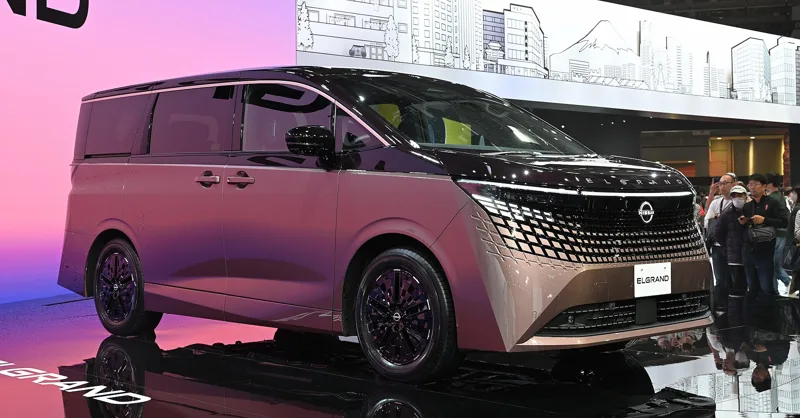
The fourth-generation Quest, code RE52, was unveiled at the 2010 Los Angeles Auto Show and went on sale for 2011. In a break from earlier generations, Nissan designed it in Japan, where production moved to the Nissan Shatai plant.
The Quest was developed together with the Japanese Elgrand minivan and adopted front-wheel drive. The two share a common chassis and much of their bodywork, differing mainly in the taillamp styling. The Quest is 4.7 inches (120 mm) wider than the Elgrand, and it was over 3 inches shorter overall, with a wheelbase nearly six inches shorter than before.
The RE52 kept the 3.5-litre VQ V6, retuned for the new car, but it replaced the 5-speed automatic with a continuously variable transmission. North American rivals included the Dodge Grand Caravan, Volkswagen Routan, Toyota Sienna, Kia Sedona and Honda Odyssey, while the Elgrand faced the Alphard and the Elysion in Japan.
In China the Quest was used as a free airport escort vehicle at Beijing Nanyuan Airport and Beijing Capital International Airport, taking visitors to and from the terminals. The promotion was part of Nissan's effort to introduce the model to the Chinese market.
Why did Nissan end the Quest?
Minivan sales in North America declined sharply, and the fourth generation was dropped from the Canadian market after the 2014 model year. Retail sales in the United States ended after the 2016 model year, and a shortened 2017 model year was built solely for fleet customers.
The fourth generation was assembled at Nissan Shatai in Kanda, Fukuoka, alongside the Elgrand. The third generation had been built entirely by Nissan at its Canton, Mississippi plant, after the Ford joint venture ended.
How did the third generation perform in crash testing?
The third generation fared poorly in a small overlap frontal test, a type that the Insurance Institute for Highway Safety had introduced in 2013. The institute's executive vice president described the result as one of the worst crash tests it had ever seen.
He speculated that a person experiencing that crash would be lucky to walk normally again. The result was a reminder that a minivan's size did not guarantee protection in every type of collision, and it was discussed widely as the model's reputation was settling.
What are the Nissan Quest specifications?
| Specification | Detail |
|---|---|
| Class | Front-wheel drive minivan, seven seats |
| Production | 1993 to 2017 model years |
| Platform (first two generations) | Ford VX54, 112.2 in wheelbase |
| First-generation engine | 3.0 L VG30E V6, 151 hp (113 kW), 182 lb ft (247 Nm) |
| Second-generation engine | 3.3 L VG33E V6, 20 hp more than before |
| Third-generation engine | 3.5 L VQ35DE V6, 240 hp (179 kW), 242 lb ft (328 Nm) |
| Third-generation 0-60 mph | 8.8 seconds in 2004 |
| Third-generation interior volume | 211.9 cubic feet (6.00 m3) |
| Fourth-generation engine | 3.5 L VQ V6, retuned, with CVT |
| Build locations | Avon, Ohio (first two generations); Canton, Mississippi (third); Nissan Shatai, Fukuoka (fourth) |