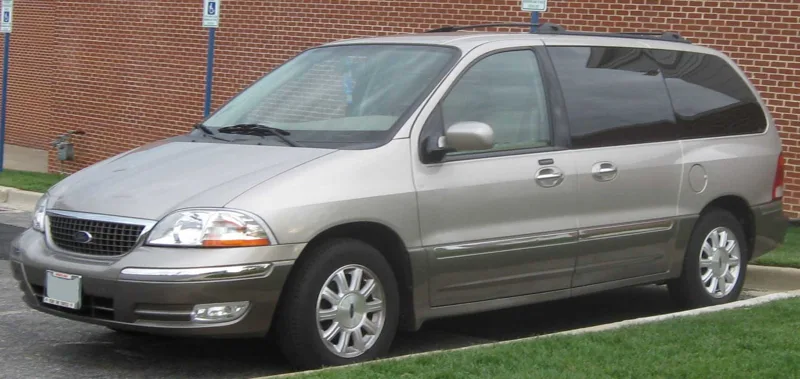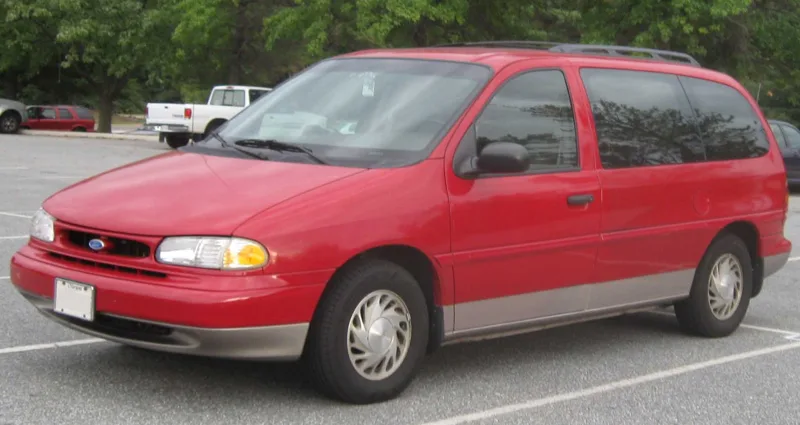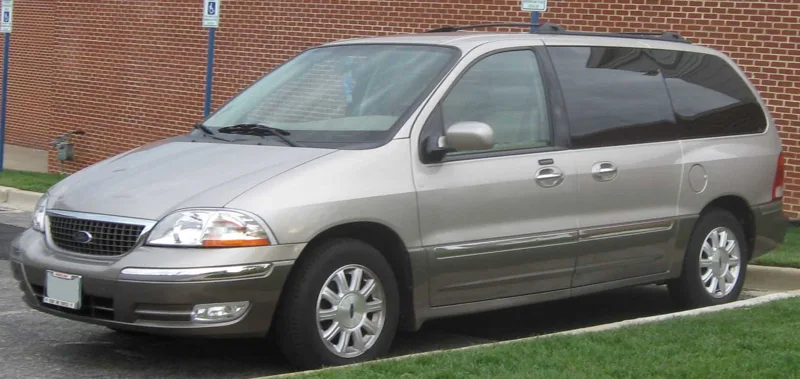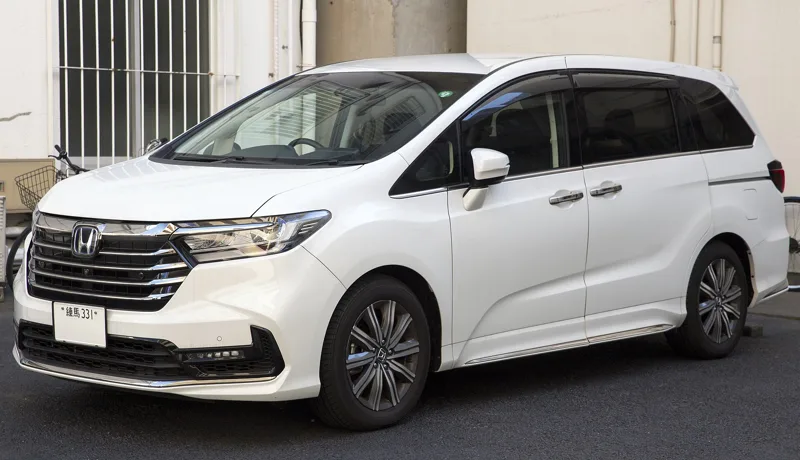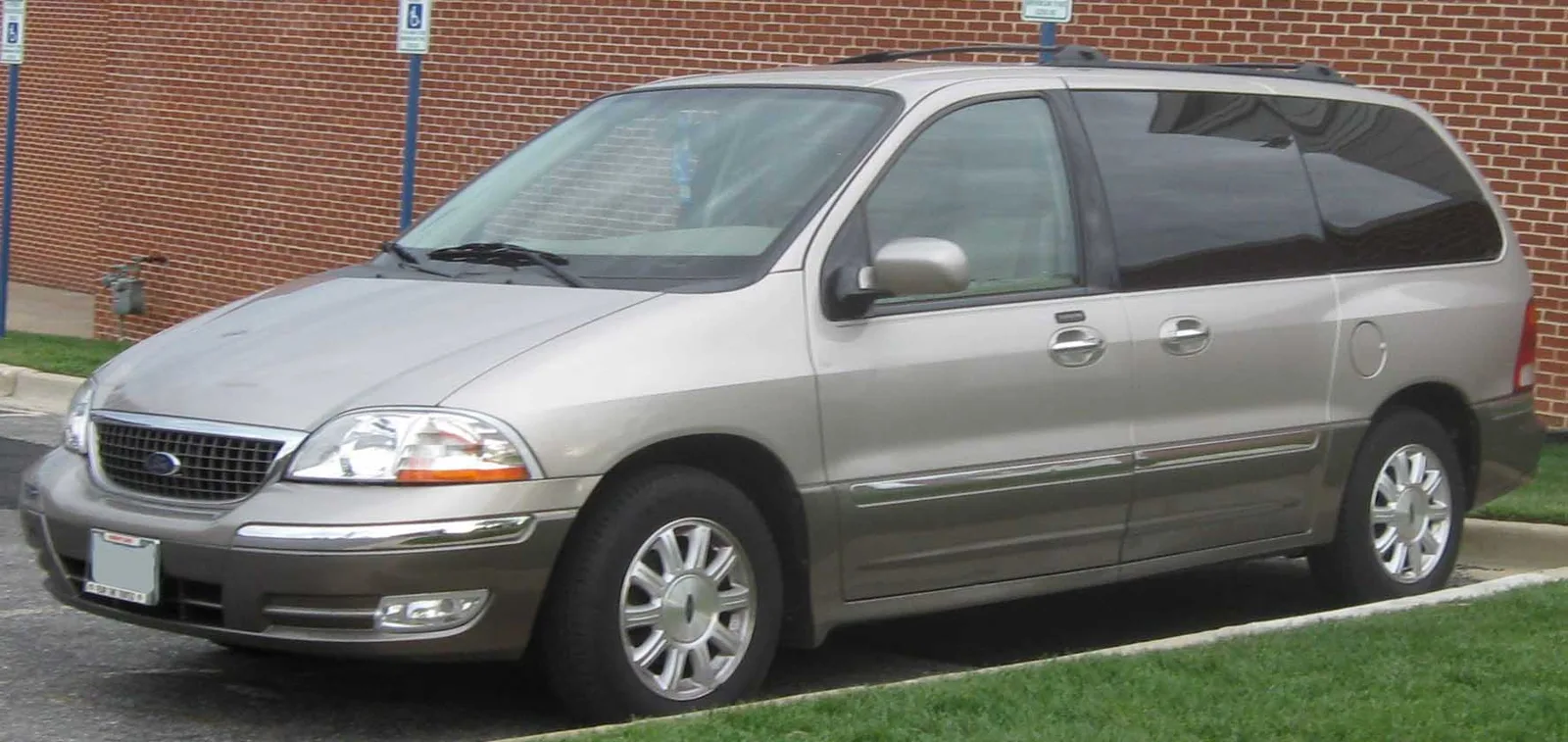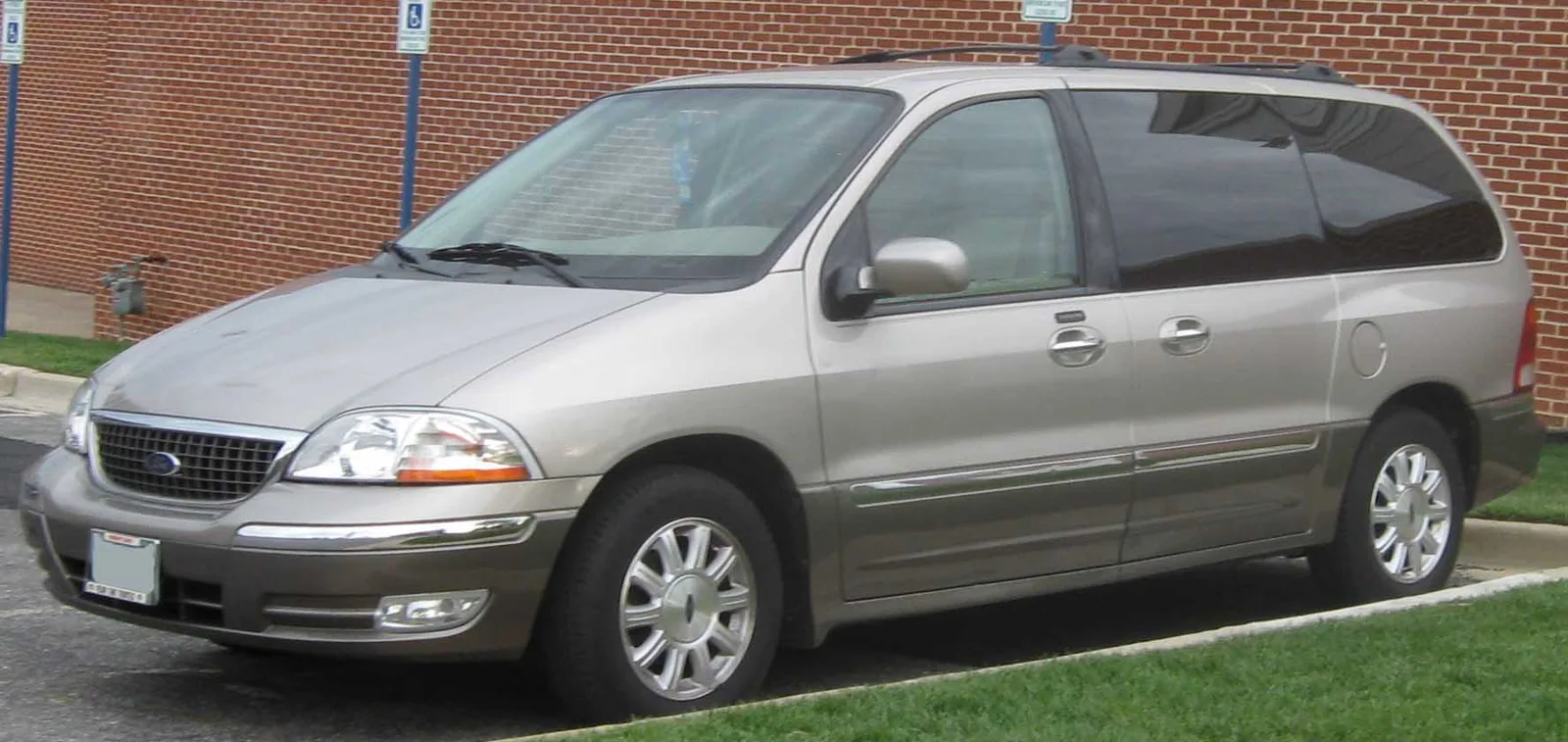
Ford's Windstar and Honda's Odyssey were both front-drive minivans sold in North America in the same years, but they came from different design briefs and different markets.
The Ford Windstar was a front-drive minivan sold from 1995 to 2007, with 1,984,232 family vehicles built. The Honda Odyssey began in 1994 as an Accord-based minivan, and it has since reached its fifth generation, becoming a larger North American model from 1999.
The Ford Windstar and the Honda Odyssey were both front-wheel-drive minivans sold in North America in the 1990s and 2000s. The Windstar was Ford's second minivan line, designed to compete with Chrysler's front-drive vans. The Odyssey began in 1994 as an Accord-based van engineered in Japan, and it later grew into a larger North American model. The two shared a segment, though their starting points were different.
Were the Ford Windstar and Honda Odyssey rivals?
They competed in the same North American minivan segment, although neither history names the other as a direct rival. The Windstar was benchmarked against the long-wheelbase Chrysler minivans, while the Odyssey was first measured against home-market rivals.
The Windstar was sold only as an equivalent to the long-wheelbase Chrysler vans. The Odyssey, by contrast, began as a smaller compact MPV, and only later became a larger North American vehicle.
Their overlap in showrooms came in the late 1990s and early 2000s, when both were family minivans with front-wheel drive and a choice of six or seven seats.
Two front-drive minivans with different origins, one a Ford built to compete with Chrysler and the other a Honda that began life as an Accord-based van.
When did each minivan go on sale?
The Windstar was released in March 1994 as a 1995 model, ahead of the third-generation Chrysler minivans. It was produced until the 2007 model year, when the Freestar and Monterey were discontinued with no direct replacement.
The first-generation Odyssey was launched in Japan and North America in 1994. Honda has built the Odyssey since then, and it is now in its fifth generation.
The second-generation Odyssey appeared in December 1999 in Japan and Australia, and the third generation followed in October 2003 in Japan and early 2004 in Australia and other markets. The fourth generation began in Japan on 17 October 2008.
How were the two minivans built?
The Windstar was codenamed WIN88 and shared the front-wheel-drive DN5 platform with the first-generation Taurus and Mercury Sable. Its 120.7-inch wheelbase was nearly 15 inches longer than the Taurus, and it had full unibody construction.
The first Odyssey was based on the fifth-generation Accord sedan. Its size was limited in Japan by the economic crisis of the 1990s, which led to a smaller compact MPV that was well received at home but less so in North America.
Honda later built a plant in Lincoln, Alabama, which allowed larger models to be made. Since model year 1999 the North American Odyssey has been larger than the Japanese version, which kept the smaller size for its home market.
What are the Ford Windstar and Honda Odyssey specifications?
| Specification | Ford Windstar (first generation) | Honda Odyssey (first generation) |
|---|---|---|
| Introduced | March 1994 as a 1995 model | 1994 in Japan and North America |
| Platform | DN5, shared with the Taurus and Sable; 120.7-inch wheelbase | Based on the fifth-generation Accord sedan |
| Drive | Front-wheel drive | Front-wheel drive; optional 4WD on RA2 and RA4 |
| Engine at launch | 3.8 L V6, 155 hp | 2.2-litre engine, 130 PS (96 kW; 128 hp) |
| Later engine | 3.8 L V6 at 200 hp from 1996; 3.0 L V6 at 150 hp from October 1995 | 2.3-litre at 150 PS (110 kW; 148 hp) from August 1997; V6 J30A at 200 PS (147 kW; 197 hp) from October 1997 |
| Sliding doors | No driver-side door until the 1998 revision | Not recorded for the first generation |
| Seats | 7-passenger seating in the base 3.0 L Windstar | Six or seven seats throughout the first generation |
| Built at | Oakville Assembly, Ontario | Japan, with North American production later at Lincoln, Alabama |
| Exported to Europe | Yes, with a 3.0 L V6 and automatic only | Sold as the Honda Shuttle, hampered by no manual or diesel |
| Awards | IIHS Excellent, five stars, for the 1995 model | 1995 Car of the Year in Japan |
| Total built | 1,984,232 across the Windstar family | not recorded for the first generation |
How did the first Odyssey sell in Japan and Europe?
The first Odyssey was well received in Japan, where it won the Car of the Year award in 1995. In its home market it competed with the Toyota Gaia, the Toyota Ipsum and the Nissan Presage.
European buyers were less keen, because the car came without a manual gearbox or a diesel. The van was sold in Europe under the name Honda Shuttle, and its strongest markets remained at home and in North America.
The Japanese range changed as the model matured. The Odyssey gained the M grade in October 1996, and the 1997 facelift discontinued the Exclusive grade in favour of the Prestige model.
How were the Windstar's trims arranged?
The Windstar's base trim was the GL, with the LX as the flagship. The 1998 Limited added monochromatic exterior paint, five-spoke 16-inch chrome wheels and wood interior trim, and it sat above both the LX and the Mercury Villager LS.
Keyless entry and an alarm were shared with Ford sedans, and the Family Security Package added a door-mounted keypad, heated exterior mirrors and full automatic lighting. The GL could be ordered with Quad Command bucket seats, which dealers often called the GLX.
Traction control was available on the upper GL models. The 1996 and 1997 Windstars had no exterior changes except that the base trim was renamed the 3.0L.
Which van had more power?
The Windstar's 3.8 L V6 produced 155 hp at launch and rose to 200 hp in 1996, while the 3.0 L V6 at 150 hp became the standard engine from October 1995 on base and lower GL models.
The first Odyssey's power was lower at launch, with a 2.2-litre engine at 130 PS (96 kW; 128 hp). It was enlarged to 2.3 litres and 150 PS (110 kW; 148 hp) in August 1997, and a domestic 3.0-litre V6 with 200 PS (147 kW; 197 hp) arrived in October 1997.
By the second generation the Odyssey's V6 gave 210 PS (154 kW), and the 2000 model became the first Honda to receive a five-speed automatic, although only with the 3.0-litre engine.
How did the third-generation Odyssey perform?
The third-generation Odyssey dropped the V6 completely and used the 2.4-litre K24A i-VTEC engine, rated at 160 PS (118 kW). It was the same engine used in the CR-V and Accord, and a 200 PS variant served the sporty Absolute.
The engine matched the old 2.2-litre unit for fuel consumption, and the car became a sales success. Its height was lowered, with multi-level parking in mind, particularly for Japan.
The fourth generation, from 17 October 2008, used a 2.4-litre engine with a CVT for the front-wheel-drive versions, and it made 173 PS on the standard grade and 204 to 206 PS on the Absolute.
What set the Windstar's doors apart?
The first-generation Windstar had no driver-side sliding door, a choice Ford said focus groups did not regard as important. Vans with a driver-side sliding door had sold poorly in the United States.
The 1998 revision extended the driver's door and added a tilt-slide driver's seat, a short-term measure marketed as the Family Entry System Door and nicknamed the king door. Ford was responding to the driver-side sliding door trend of the day.
The Odyssey's doors were a different story. The fifth generation swapped its rear hinged side doors for dual power sliding doors, much like most Japanese minivans of its time.
How did the Odyssey change through its later generations?
The second-generation Odyssey was a major upgrade of the first rather than a new model, and it was 85 mm (3.3 in) longer and 10 mm (0.4 in) wider. Its interior was completely new, with a touchscreen climate control and a navigation system.
The Odyssey's Australian sales were strong at first but fell back. Sales hit an all-time low in 2002, and in 2003 only 649 units were sold, which was almost a third of the total in 2000.
The Odyssey recovered in Australia. Its best-ever year came in 2005 with 3,543 units, and it outsold the Toyota Tarago for the first time. By the fourth generation it was the best-selling people mover among private buyers in Australia.
Which van sold more?
The Windstar family produced 1,984,232 vehicles from Oakville, made up of 1,704,786 Windstars, 246,493 Freestars and 32,953 Montereys. It was a substantial seller in its segment.
The Odyssey's total production for the first generation is not recorded in this comparison, so a complete sales race cannot be called. Its Australian record shows a strong third generation, and the fourth generation maintained its lead among private buyers there.
The two vans therefore cannot be compared on a like-for-like sales basis. The Windstar's total is recorded, while the Odyssey's is spread across generations and markets that the figures here do not fully cover.
How did the fifth-generation Odyssey differ?
The fifth-generation Odyssey was teased on 26 September 2013 and went on sale in Japan on 1 November 2013. It was bigger than its predecessors, and seven-seat versions offered premium cradle seats with ottomans in the second row.
Its 2.4-litre i-VTEC Earth Dreams engine produced 175 PS (129 kW) and 225 N-m, and the Absolute grade's direct injection raised output to 190 PS (140 kW). Fuel economy was 14.0 km/L on the JC08 cycle.
The fifth generation replaced the Elysion in Japan and competed with the Toyota Alphard and the Nissan Elgrand. The Odyssey Hybrid, with a 2.0-litre petrol hybrid engine, went on sale in Japan on 5 February 2016.
Which van suits which buyer?
The Windstar suits a buyer who wanted a long-wheelbase Ford minivan with V6 power, a family-focused design team and, from 1998, a driver's door that was wider than the original.
The Odyssey suits a buyer who wanted an Accord-derived minivan with a strong reputation in Australia and a line of engine choices that grew through its generations.
The figures do not settle which is the better van, because they come from different design briefs. The Windstar has the larger recorded production total, while the Odyssey has the longer generational story.