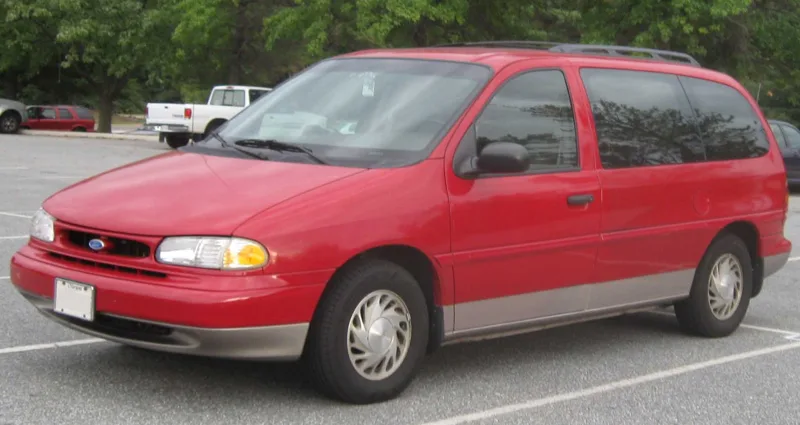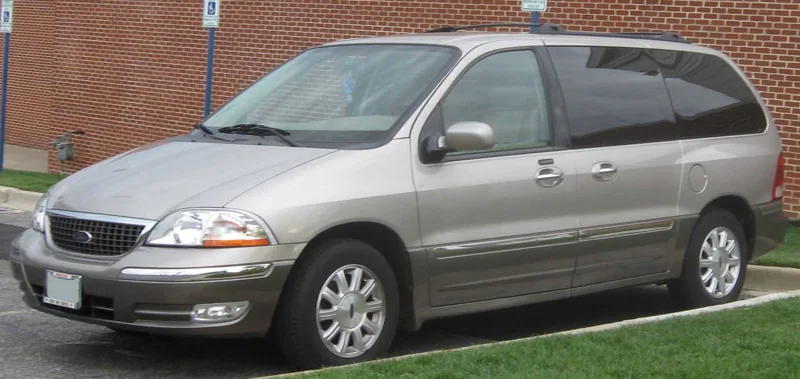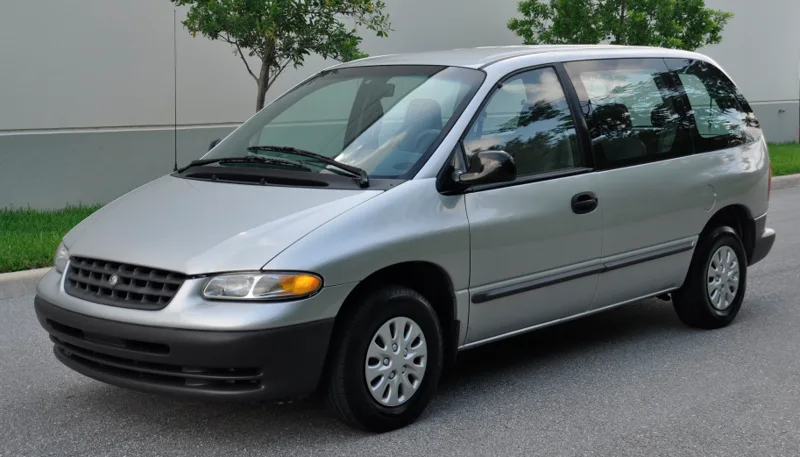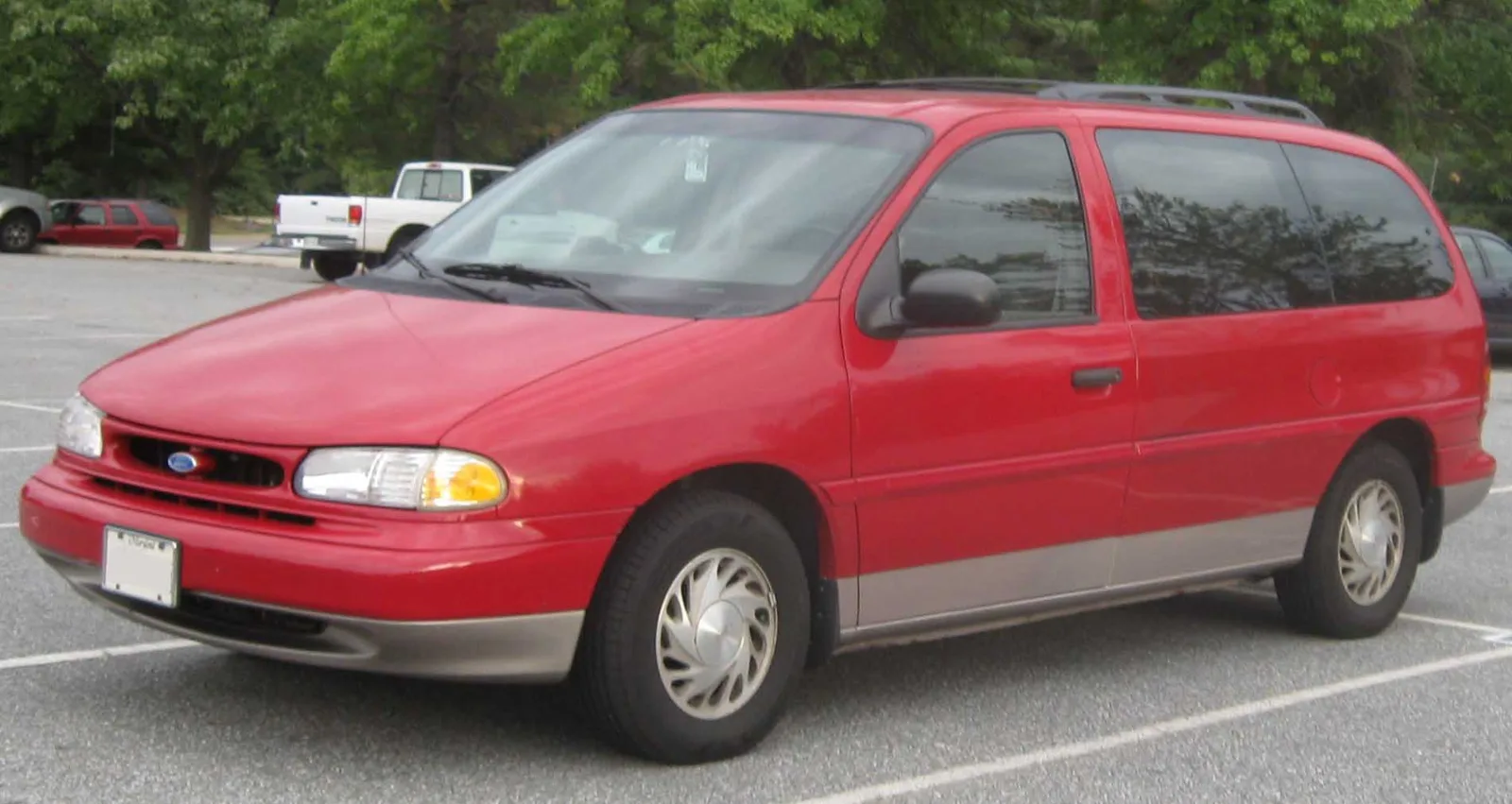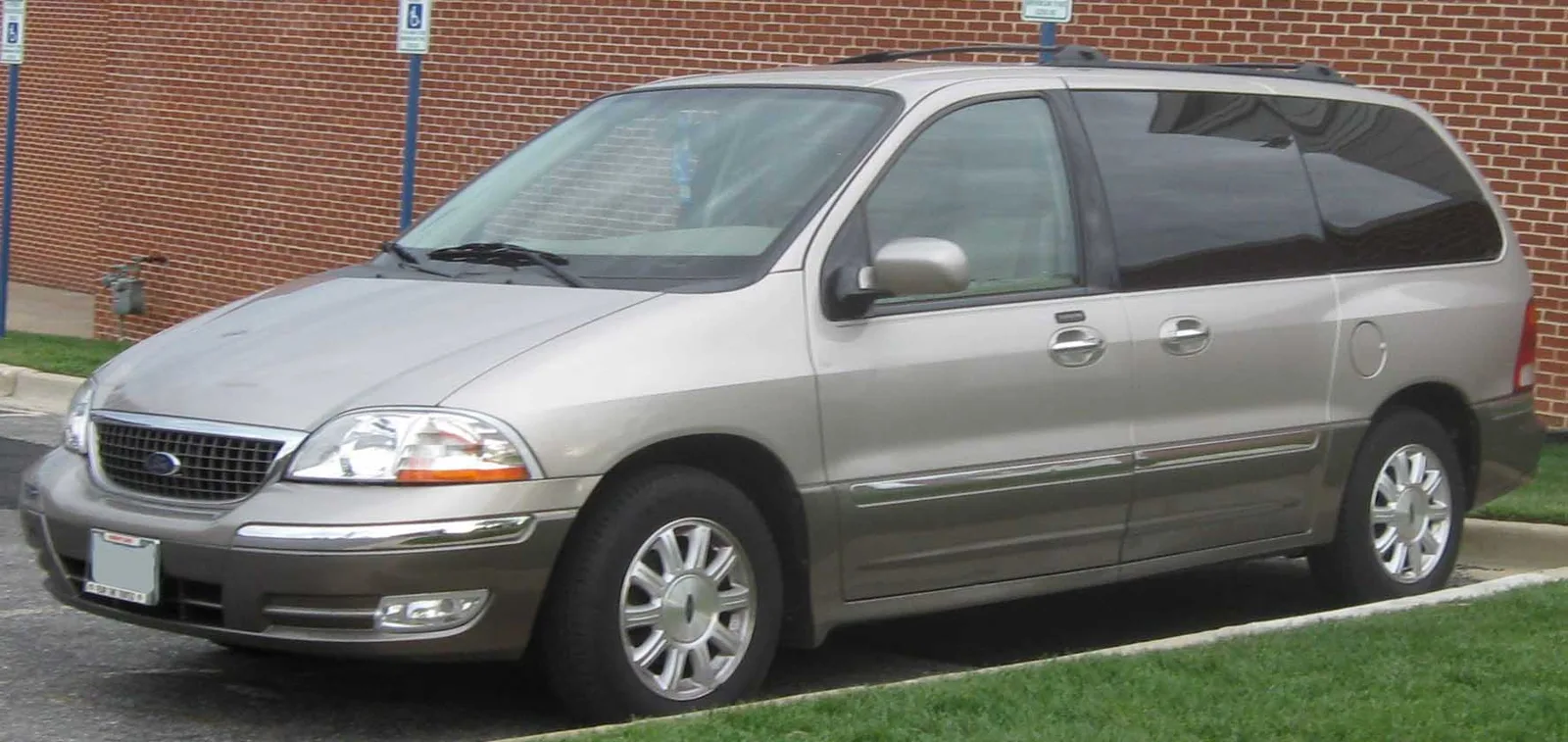
Ford's Windstar and Toyota's Sienna both aimed at North American families with front-wheel-drive minivans, and they overlapped on sale from 1998 to 2007.
The Ford Windstar was a front-drive minivan from 1995 to 2007, built with 1,984,232 family vehicles. The Toyota Sienna arrived for the 1998 model year on a Camry-based platform, and the two vans competed for North American family buyers through the 2000s.
The Ford Windstar and the Toyota Sienna were both front-wheel-drive minivans sold to North American families, and they overlapped on sale from the 1998 model year to 2007. The Windstar was Ford's second minivan line, designed to take on Chrysler's front-drive vans. The Sienna replaced Toyota's rear-drive Previa and was built on a platform shared with the Camry.
Were the Ford Windstar and Toyota Sienna rivals?
Yes, in the North American minivan market. Both were front-drive vans aimed at families who wanted space, and both were on sale through much of the same period. Neither history names the other as a direct rival, but they competed for the same buyers.
The Windstar was sold only as an equivalent to the long-wheelbase Chrysler Grand vans. The Sienna, by contrast, was smaller than its rivals in its first generation, and it grew in its 2003 redesign to match them.
The Sienna's first generation faced a new rival a year after its launch, when the redesigned Honda Odyssey arrived with a V6. The Windstar competed in the same space, so the two American and Japanese vans were at least partly in the same contest.
Two front-drive family vans from the 1990s, one a Ford built to challenge Chrysler and the other a Toyota built on the Camry platform.
When did each minivan go on sale?
The Windstar was released in March 1994 as a 1995 model. It was produced until the 2007 model year, when the Freestar and Monterey were discontinued with no direct replacement. From 1995 to 1997 it was sold alongside the Aerostar it succeeded, because demand for the older van stayed strong.
The first-generation Sienna was launched in 1997 for the 1998 model year. It was redesigned in 2003, for the 2004 model year, and the third generation followed for the 2011 model year.
The two vans therefore overlapped from 1998 to 2007. The Windstar's final years coincided with the Sienna's second generation, and both were sold in North America during the 2000s.
How were the two vans designed?
The Windstar was codenamed WIN88 and designed predominantly by a women-led engineering and design team. It shared the front-wheel-drive DN5 platform with the Taurus and Sable, and it had a 120.7-inch wheelbase with full unibody construction.
The Sienna shared a heavily revised platform with the Camry, and it used an extended XV20 Camry platform in its first generation. Toyota marketed it as the Camry of minivans, capitalising on the Camry's popularity and reputation.
The Sienna's first generation replaced the mid-engined, rear-wheel-drive Previa. Toyota also made the car front-wheel drive for the 1998 model year.
What are the Ford Windstar and Toyota Sienna specifications?
| Specification | Ford Windstar (first generation) | Toyota Sienna (first generation) |
|---|---|---|
| Introduced | March 1994 as a 1995 model | 1997 for the 1998 model year |
| Replaced | The Ford Aerostar | The Previa and the Camry wagon |
| Platform | DN5, shared with the Taurus and Sable; 120.7-inch wheelbase | Extended XV20 Camry platform |
| Drive | Front-wheel drive | Front-wheel drive |
| Engine | 3.8 L V6 at 155 hp at launch; 200 hp in 1996 | 3.0-liter 1MZ-FE V6 at 194 hp (145 kW) and 209 lb-ft (284 N-m) |
| Later output | 3.0 L V6 at 150 hp from October 1995 on base models | 210 hp (157 kW) and 220 lb-ft (298 N-m) with VVT-i from 2001 |
| Trims | GL, LX and Limited from 1998 | CE, LE and XLE |
| Driver-side sliding door | Not in the first generation; added in 1998 | Standard on the XLE; optional on LE and CE |
| Fuel economy | not recorded | 16 mpg-US city and 22 mpg-US highway, best in class |
| Safety | IIHS Excellent, five stars, for the 1995 model | IIHS Good in all six frontal crash measures |
| Built at | Oakville, Ontario | Georgetown, Kentucky |
| Total built | 1,984,232 across the Windstar family | not recorded for the first generation |
What did the Sienna's first-generation interior offer?
The first-generation Sienna came in three trims: the CE, the LE and the XLE. The LE and XLE had second-row captain's chairs, while the CE had a two-passenger bench seat, and the second-row seats could be folded and removed as needed.
The XLE offered leather seats and a wood trim package, and it was the only trim with the driver-side sliding door as standard. A roof rack was standard on the XLE too, but optional on the LE and CE.
How did the Windstar's trims and features compare?
The Windstar's base trim was the GL, and the LX was its flagship. Both were offered as passenger vans and as cargo vans, and Ford used car-style model names instead of the XL and XLT names of its trucks.
The Windstar offered rear-seat audio controls, rear air conditioning and middle-row bucket seats, along with a digital instrument panel and a trip computer. Keyless entry with a door-mounted keypad and an alarm were shared with Ford sedans.
What did the Sienna's 2001 and 2002 updates add?
The Sienna's 2000 facelift, for the 2001 model year, redesigned the front grille, bumper and tail lights, and it revamped the centre console controls. Its engine gained VVT-i, lifting output to 210 hp (157 kW).
For the 2002 model year the Symphony Package became available on the LE. It added a premium JBL cassette, captain's chairs in the front and middle rows, and heated mirrors, and it could be ordered in three body colours.
How did the engines compare?
The Windstar's 3.8 L V6 was the sole engine in the GL and LX at launch, producing 155 hp, and a 150 hp 3.0 L V6 became the standard engine from October 1995. The 3.8 L was raised to 200 hp for 1996.
In Europe, where the Windstar was slotted above the Ford Galaxy, the 3.0 L V6 with an automatic was the only choice. The van was not sold in the United Kingdom, because it lacked right-hand drive and had a left-side sliding door.
The Sienna's 3.0-liter 1MZ-FE V6 produced 194 hp at launch and 209 lb-ft of torque. The 2001 model year brought VVT-i and a rise to 210 hp, along with 220 lb-ft.
The second-generation Sienna used a 3.3-liter 3MZ-FE V6 with a five-speed automatic. For 2007 it gained a 3.5-liter 2GR-FE V6 at 266 hp (198 kW), which replaced the 3.3-litre unit.
Which van had the better safety record?
The first-generation Windstar was rated Excellent, with five stars, by the Insurance Institute for Highway Safety for its 1995 model. The 1998 revision added the driver-side door that the first Windstar had lacked.
The first-generation Sienna offered side torso airbags and Vehicle Stability Control as options, and it was one of the few minivans of its time with such features. The IIHS rated it Good in all six frontal crash measures.
The Windstar's problems included head gasket failure in some 1995 V6 engines. The Sienna's first generation was affected by an oil sludge problem that led to a class-action settlement, a reminder that both families had reliability issues to answer for.
Which van had the better doors?
The first Windstar had no driver-side sliding door, which Ford said focus groups did not regard as important. The 1998 revision extended the driver's door and added an optional tilt-slide seat, a measure nicknamed the king door.
The Sienna's driver-side sliding door was standard on the XLE and optional on the LE and CE in its first generation. From the 2001 model year it became standard on all models.
How did the Sienna's second generation compare with the Windstar?
The second-generation Sienna was unveiled at the Detroit show on 6 January 2003, with production moved to Toyota Motor Manufacturing Indiana. It offered 45% more volume and 39% more cargo space than the first generation.
The chief engineer, Yuji Yokoya, drove the previous model more than 53,000 miles across North America to find weaknesses in the design. That level of testing was part of the new van's pitch.
The second-generation Sienna also brought an AWD version with a 50:50 power split and seating for eight as an option. Its drag coefficient was Cd 0.30, and its turning radius was 11.2 metres (37 ft).
How did the third-generation Sienna add new features?
The third-generation Sienna premiered at the Los Angeles Auto Show in December 2009 for the 2011 model year, and it was designed at Calty studios. It was the first Sienna to offer an SE trim, with 19-inch wheels and firmer suspension.
It was also the first Toyota minivan in North America to offer a four-cylinder engine since the Previa was discontinued in late 1997, using the 1AR-FE. The electric power steering replaced the older hydraulic system.
Toyota kept all-wheel drive in the third generation. GM had dropped its AWD minivans after 2006, which left the Sienna as the only North American minivan with AWD until the 2021 Chrysler Pacifica.
Which van sold more?
The Windstar family produced 1,984,232 vehicles from Oakville, which made it a very large seller over its life. The breakdown was 1,704,786 Windstars, 246,493 Freestars and 32,953 Montereys.
The first-generation Sienna's sales are not recorded in this comparison, so a complete sales race cannot be called. Its fuel economy and safety content were its main claims in those years.
Later Siennas reached other markets as well. The fourth generation has been built in China since July 2021, where it is marketed as the Granvia.
Which van suits which buyer?
The Windstar suits a buyer who wanted a long-wheelbase Ford minivan with V6 power and, from 1998, a wider driver's door. It was a larger van than the first Sienna.
The Sienna suits a buyer who wanted a Camry-based minivan with strong fuel economy and, in later years, all-wheel drive.
The figures do not settle which is the better van. The Windstar had the larger launch footprint, while the Sienna had the stronger fuel economy and the longer run of later generations.