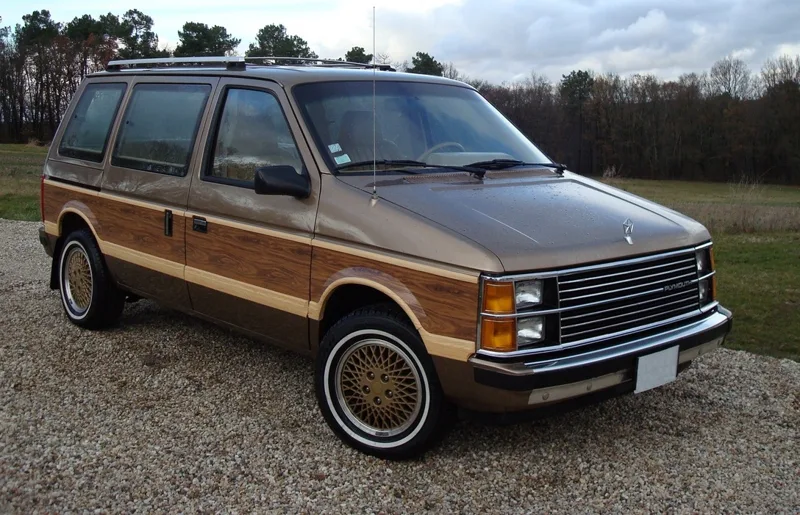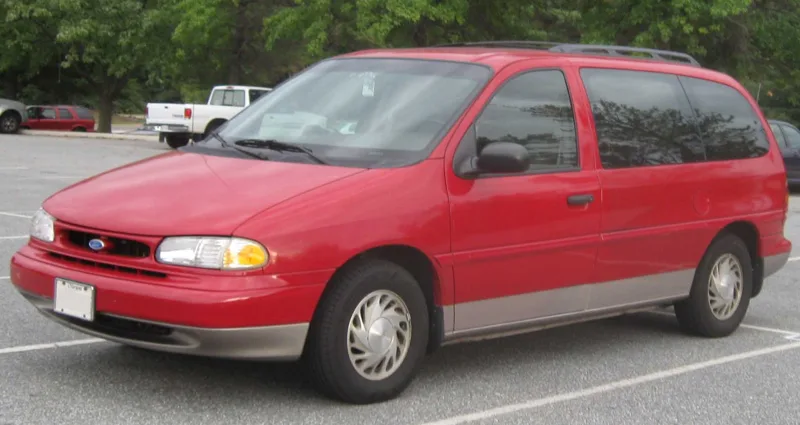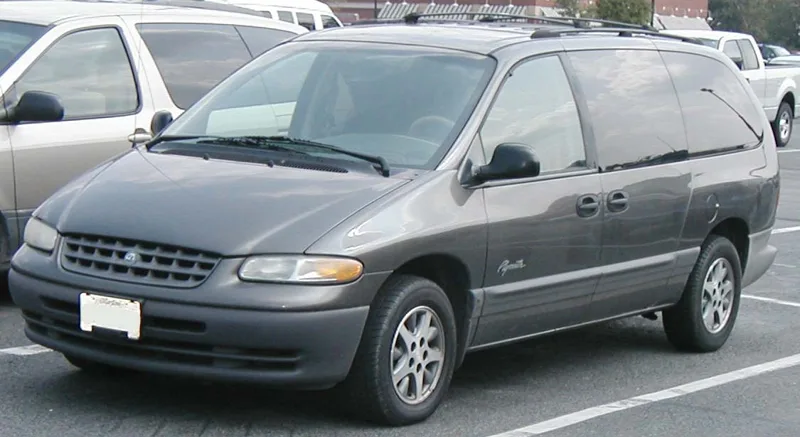
A rear-drive one-box van with a 5,000-pound tow rating, a rare all-wheel drive option and a production run of just over two million cars.
The Ford Aerostar was a rear-drive minivan built from the 1986 to 1997 model years. It was Ford's first minivan, shared engines with the Ranger and Bronco II, and was built in St. Louis until August 1997.
The Ford Aerostar was a range of vans that Ford built for the 1986 to 1997 model years. It was the company's first minivan, and it used a rear-wheel drive chassis with a 5,000-pound tow rating. Over one generation Ford produced 2,029,577 of them at its St. Louis plant in Missouri.
What was the Ford Aerostar?
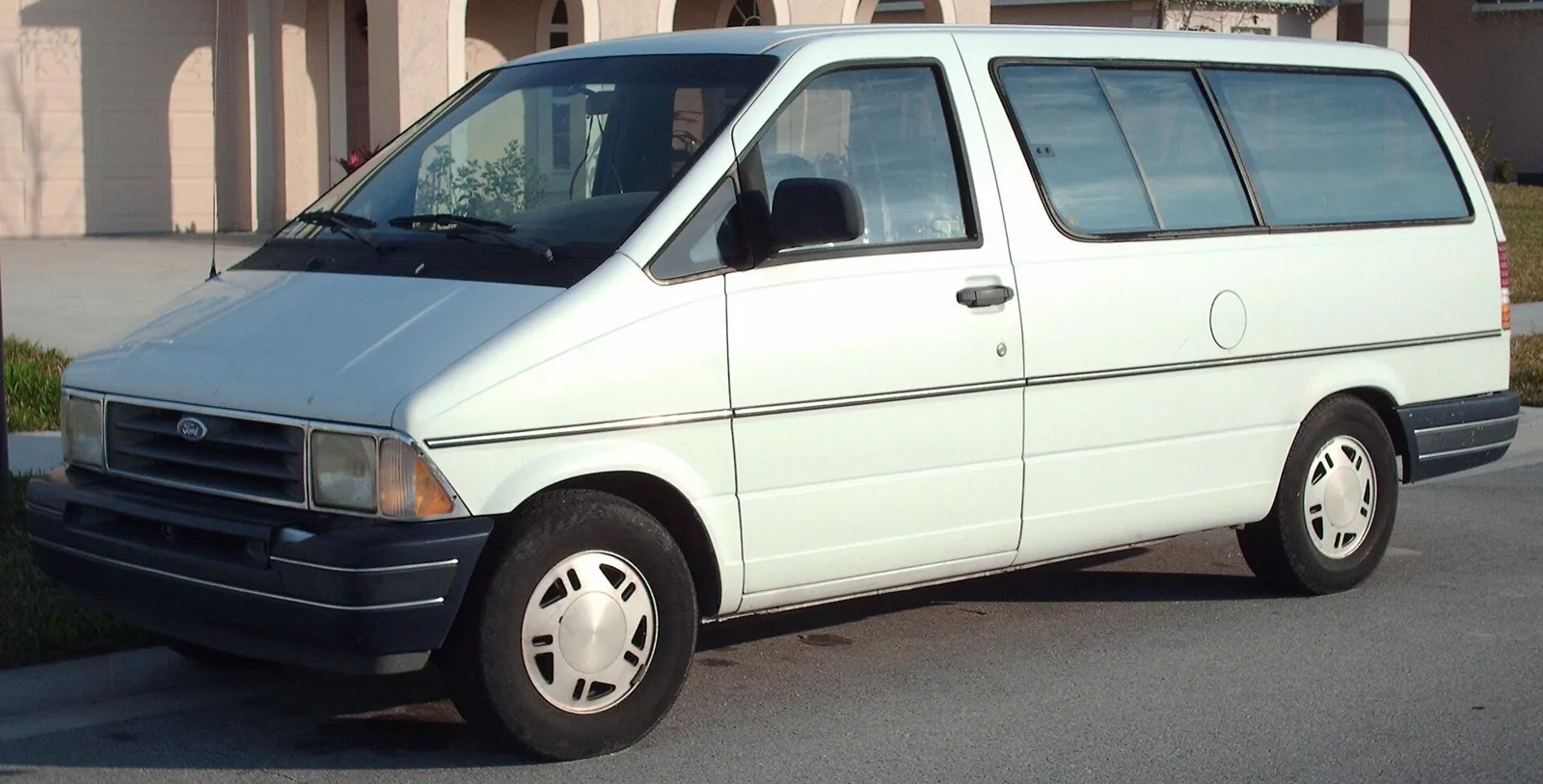
The Aerostar was a one-box minivan with a slope-nosed exterior that gave it its name. Although it stood over six feet tall, its drag coefficient was 0.37, which was lower than that of the Lincoln Mark VII. It was introduced shortly before the Ford Taurus and marketed against the Chevrolet Astro, the GMC Safari and the first two generations of Chrysler minivans.
The line was sold as passenger vans, cargo vans and an extended-length body. It was offered mainly in the United States and Canada, with only a limited number exported elsewhere.
Ford's first minivan, a rear-drive one-box van that began as a garageable concept and ended after two million sales.
Where did the Aerostar's idea begin?
Ford's minivan story began in the early 1970s as a companion to the third-generation Econoline and Club Wagon, which was under development for the 1975 model year. The full-size van was slated to grow, and Ford explored a "garageable van" with a roofline that would fit through a typical garage door.
The concept was dubbed the Ford Carousel. A prototype was tested from 1972 to 1974 on the 124-inch wheelbase chassis of the Club Wagon. Its roofline sat roughly 12 inches lower than a standard-wheelbase Club Wagon, which put its height close to that of the later Windstar and Freestar.
The Carousel also had a more steeply raked windshield, a longer front fascia and wraparound window glass. Its rear tailgate had a drop-down window, and it wore simulated woodgrain trim, a sign of its family orientation.
Why was the Carousel never built?
The prototype won a positive response from many Ford executives, but it did not reach production under any model name. The company was short of money and had to put funds into critical projects such as the Fox platform, the Panther platform and the 1980 F-Series.
The Carousel also did not replace an existing Ford model, and it did not compete with a General Motors or Chrysler vehicle. It was developed during the 1973 energy crisis and was fitted with a 460 V8 shared with full-size Ford vehicles and one-ton trucks.
How did Chrysler get its minivan first?
Ford ended development of the Carousel in 1974. Through the rest of the decade the company kept studying garageable vans, but in 1978 Lee Iacocca and Hal Sperlich left Ford and joined Chrysler. Chrysler then adopted the basic idea of the Carousel for its own project, approved for development in 1979.
The resulting 1984 Dodge Caravan and Plymouth Voyager took the height and seating layout of the Carousel concept, but they were very different vehicles in layout and engineering.
What goals shaped the new Ford van?
By 1980 Ford had committed to a smaller vehicle. The American industry was learning of Chrysler's minivans, and after the 1979 gas crisis the company judged that a rebodied E-Series Carousel released in the 1980s would be uncompetitive.
Market research pointed to a new design that combined garageability, seven-passenger seating and walk-around interior space. It also needed fuel economy comparable to compact cars, towing and payload comparable to full-size station wagons, and modern exterior design with up-to-date features.
Why did the Aerostar use rear-wheel drive?
The new van was given a rear-wheel drive layout for two main reasons. Its 119-inch wheelbase placed the wheels at the four corners, which gave the van a carlike ride, and the design was meant to tow 5,000 pounds, matching the Ford Ranger that was then in development.
The layout also allowed mechanical components to be shared with several Ford light trucks, which kept production and engineering costs down. Chrysler and GM small vans shared chassis with other lines to varying degrees, but the Ford van received a model-specific chassis with its own front and rear suspension.
How did the Ghia concepts shape the Aerostar?
The design carried over two features from the 1972 Carousel: its roughly six-foot garageable height and its long wheelbase. A large B-pillar also allowed a generous window area.
Two Ghia-designed seven-passenger concepts followed: the 1982 Ford Aerovan, a two-door wagon, and the 1984 Ford APV, a three-door MPV. Both were derived from the Escort. The Aerovan previewed the sloped-nose front fascia of the Aerostar and the larger 1986 Ford Transit.
The concepts were styled by Ghia, and the Aerovan drew a positive public response. That encouraged Ford to push a highly advanced exterior design, even though the company would reach the market almost two years behind Chrysler's minivans.
What did the 1984 concept look like?
The Aerostar name first appeared on a 1984 concept. It was nearly identical to the production van and had a two-slot grille and composite-lens headlamps, with skirted rear fenders and changes to the taillamps, windows and door handles.
The concept was originally meant to enter production for the 1986 model year, ahead of the Taurus. The production van was planned with a three-engine line-up taken from the Ranger and Bronco II. A turbodiesel four was intended as a second option, which would have been a first for an American-built minivan, but it was dropped after prototype testing.
How did Ford launch the Aerostar?
Ford launched the model in the summer of 1985 with the "Ford Aerostar Airlift", in which eight Lockheed C-130 Hercules transport aircraft carried Aerostars into eight cities across the United States at the same time.
The whole development of the line cost Ford more than $300 million. That was less than the cost of the Chrysler minivans, and the Aerostar was developed at the same time as the Ford Taurus, which cost $3.5 billion.
How was the Aerostar's chassis built?
The Aerostar was developed under the Ford model code VN1, the first Ford chassis given an alphanumeric designation. It used a rear-wheel drive layout that combined unibody construction with full-length frame rails, a hybrid design that cut weight while keeping the strength needed for towing.
The hybrid frame gave the van a 5,000-pound tow rating, about two and a half times that of the Caravan and Voyager and matching the Chevrolet Astro and GMC Safari. Other large designs used similar construction, including the Chevrolet Van of 1971 to 1996 and the Jeep Cherokee XJ of 1984 to 2001.
How was the Aerostar's suspension set up?
In a break from Ford light-truck tradition, the Aerostar did not use Twin I-Beam front suspension. It used unequal-length A-arms and coil springs at the front, and a coil-sprung live rear axle with a three-link layout behind.
Among North American minivans, this van alone used coil springs at every wheel. Front discs were fitted throughout, with rear drums.
Which engines did the Aerostar use?
For its 1986 launch the Aerostar used two engines shared with the Ranger and Bronco II. The 100 hp 2.3-litre inline-four was standard, and a 115 hp 2.8-litre V6 from Ford of Europe was optional. During 1986 the 2.8 was replaced by a 145 hp 3.0-litre V6 shared with the Taurus and Mercury Sable.
For 1988 the 2.3 was discontinued, which made the 3.0 the only engine and the first minivan with only V6 engines. For 1990, with the new E-4WD option, a 160 hp 4.0-litre V6 arrived, which was paired with all-wheel drive and offered on higher-trim rear-drive vans.
| Model year | Engine | Output | Notes |
|---|---|---|---|
| 1986 | 2.3 L inline-four | 100 hp | Standard at launch, shared with the Mustang |
| 1986 | 2.8 L V6 | 115 hp | Optional at launch, from Ford of Europe |
| 1986 to 1997 | 3.0 L V6 | 145 hp | Shared with the Taurus and Mercury Sable |
| 1990 to 1997 | 4.0 L V6 | 160 hp | Paired with E-4WD and higher trims |
What transmissions did the Aerostar offer?
The Aerostar shared transmissions with the Ranger and Bronco II. A five-speed manual was offered until 1995, mostly in cargo vans and XL trims. Unlike the Chrysler minivans, every automatic was a four-speed overdrive unit until 1997.
For 1997 a five-speed overdrive automatic was introduced for the 4.0-litre V6, which was a first in the minivan segment.
How did the E-4WD system work?
For the 1990 model year Ford added all-wheel drive, called E-4WD for Electronic 4-Wheel Drive. It was developed for the model line and offered from 1990 to 1997 on the XLT and Eddie Bauer trims. Unlike four-wheel drive in other Ford light trucks, it was not intended for off-road use and had no low-range gearing.
The system used a Dana TC28 transfer case with a centre differential regulated by an electronically controlled electromagnetic clutch, so all four wheels received traction. It was paired with the higher-torque 4.0-litre V6 and the automatic. Ford did not offer all-wheel drive on North American vans again until the 2020 Transit.
What did the body look like?
The sloped-nosed Aerostar used a one-box design similar to the European Ford Transit and Renault Espace. Its long wheelbase placed the wheels near the corners, which kept body overhangs short. Plastic parts from the 1984 concept, including the bumper covers, fuel tank and rear hatch, were kept to save weight and improve aerodynamics.
An extended-length version was added for 1989, lengthened by 14 inches while sharing the 119-inch wheelbase. It became the most popular version of the van during the 1990s.
How did the Aerostar change through its life?
For 1988 the exterior badging moved from both fenders to the tailgate and changed from chrome to silver. The V6 and electronic fuel injection badges were removed because those features were now standard.
For 1989 the chrome grille was replaced by a black-trim grille and the towing mirrors became power-operated. The 1992 update was the most substantial, moving the Blue Oval to the top slot of the grille and fitting composite headlamps in place of the sealed-beam units.
After 1992 few changes were made, because Ford was preparing to withdraw the model. A centre brake light arrived for 1994 to meet federal rules, and the taillamps were revised for 1997, when XLT vans received new 14-by-6-inch seven-hole alloy wheels.
How was the Aerostar's interior laid out?
Inside, the Aerostar used the 2-2-3 seven-passenger layout of its Chrysler and GM rivals. XLT and Eddie Bauer vans could have second-row bucket seats, a feature borrowed from full-size conversion vans. Both rear bench seats could fold down to form a bed, and both rows could be removed.
Some of the interior came from Europe. The van had a floor-mounted shifter and a handbrake, and its second-row windows slid open in the manner of the Volkswagen Vanagon. Up to two cigarette lighters and six ashtrays could be specified.
The 1992 update redesigned the dashboard and added a driver-side airbag, with three-point belts for all six outboard seats. A column-shift automatic was also introduced that year, and integrated child safety seats became an option in 1993.
What trims did the Aerostar come in?
The cargo van was distinguished by its double rear doors and lack of side windows. The passenger Wagon came in two trims, the base XL and the deluxe XLT, in keeping with the Ford truck line. Many XLT features, such as power windows, mirrors, locks, air conditioning and privacy glass, were extra-cost options on the XL.
XLT Wagons could be equipped with an overhead trip computer, rear climate control, second-row captain's chairs and fold-flat seats. Audio options included an eight-speaker AM/FM cassette and a premium system with a seven-band equaliser and rear headphone jacks. Rear anti-lock brakes and electronic four-wheel drive were also available, along with two-tone paint and 14-inch aluminium wheels.
Why did the Eddie Bauer trim matter?
The Eddie Bauer trim was introduced for the 1988 model year, making the Aerostar one of the first Ford vehicles to carry the outdoors brand as a trim package. It sat above the XLT and was the first minivan aimed at luxury buyers.
It combined XLT convenience features with two-tone tan paint and a tan outdoors-themed interior. Cloth was standard, and leather became an option in 1992. A fold-flat bed was standard, although many buyers ordered the second-row bucket seats instead.
Eddie Bauer was offered on both body lengths from 1989, and the 4.0-litre V6 came standard from 1989 with a choice of rear-wheel or all-wheel drive. The trim was discontinued after the 1994 model year.
What was the Aerostar Sport?
The Aerostar Sport was an option package from 1992 to 1996 for any non-Eddie Bauer Wagon. It was largely a cosmetic upgrade, with silver-accented paint, Sport pinstriping, integrated running boards, a colour-matched front air dam and rear mud flaps.
The easiest way to tell the trim apart is by the wheels. XL Sport Wagons had full wheel covers, and the less common XLT Sport Wagons had aluminium wheels.
What was the HFX Aerostar Ghia?
The HFX, short for High Feature Experimental, was a prototype shown at the 1987 Frankfurt Auto Show. It came from a collaboration between Ford and Ghia, and two running prototypes were built, both with the 3.0-litre Vulcan V6 and the A4LD automatic.
Its feature list included four-wheel air suspension, electronic climate control and run-flat tyres, along with adjustable pedals, sliding side doors that worked under power and electric steering assistance. Traction control, ABS, seatbelt pretensioners and moving grille shutters completed the package. Its rear panel carried an LCD for twelve pre-programmed warning messages.
How was the Aerostar received?
The Aerostar was named Motor Trend's Truck of the Year for 1990. It sold well, but in the late 1980s the minivan segment was dominated by Chrysler. Ford considered its innovative design and features a key selling point, although it had trailed Chrysler to market by nearly two years.
The Aerostar's rear-drive layout gave it class-leading payload and towing capacity over the front-drive minivans, with a 2,000-pound payload and a 5,000-pound tow rating in the concept stage.
Why did the Aerostar end in 1997?
Ford began designing a successor in 1988 for a planned 1993 introduction. The front-drive Windstar adopted the form factor of the long-wheelbase Chrysler minivans, and it was developed alongside the 1996 Taurus. The Windstar was readied for a 1995 launch, and 1994 was initially set as the Aerostar's last year.
Dealers and the public reacted badly to the idea of dropping the Aerostar, so Ford sold the two models side by side. On March 17, 1997, Ford announced the discontinuation of the Aerostar, along with the Aspire, Probe and Thunderbird/Cougar. The final vehicle rolled off the St. Louis line on August 22, 1997, after 12 years of production and 2,029,577 vehicles.
A major factor was a requirement for dual airbags from September 1, 1997, which would have meant a costly redesign of the front dashboard and crash structure.
What replaced the Aerostar?
The Windstar and later the Freestar offered a cargo van configuration, but the closest successor in size and capability to the Aerostar Van is the Ford Transit Connect. Imported into North America since 2010, the front-drive Transit Connect is also offered in passenger form. A 2014 redesign brought the first seven-seat Ford minivan since 2007.
How is the Aerostar remembered?
The Aerostar is remembered as Ford's first minivan, a rear-drive design that tried to combine van utility with car-like handling. Its long production run, with over two million built from one generation, shows it was a significant part of Ford's range in the late 1980s and 1990s.
Its rear-drive chassis and all-wheel drive option set it apart from the front-drive minivans that followed, and its 1985 Airlift launch and 1997 end mark the start and finish of a distinctive chapter in Ford's van history.