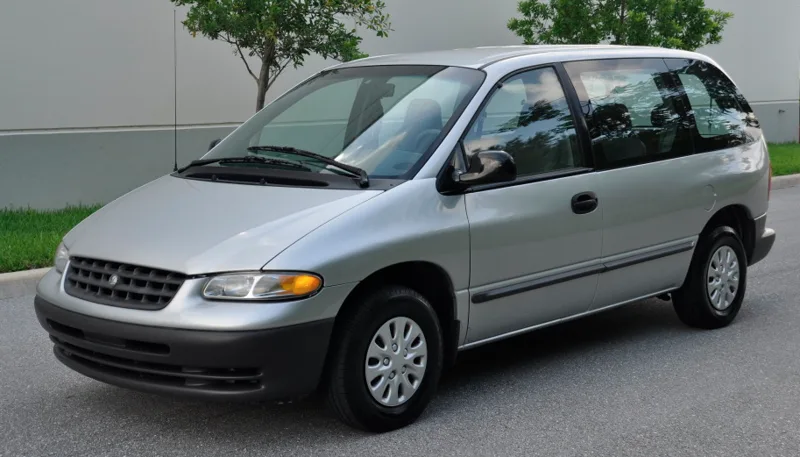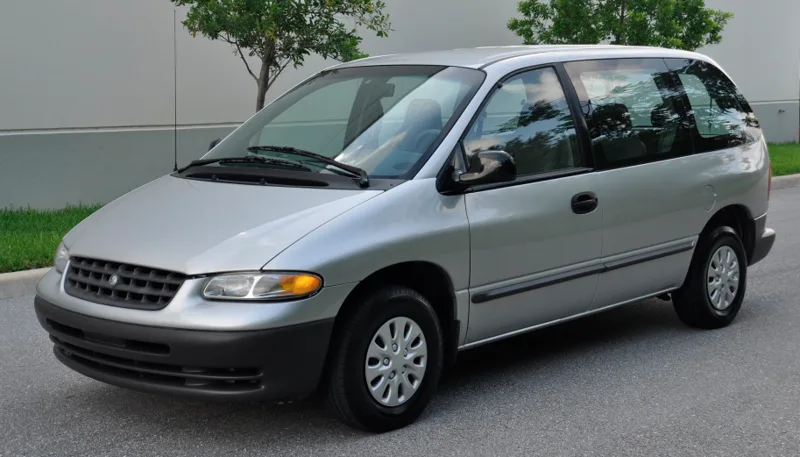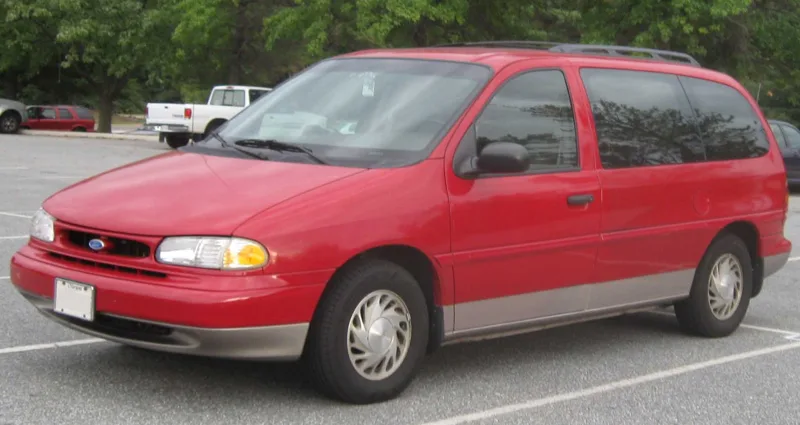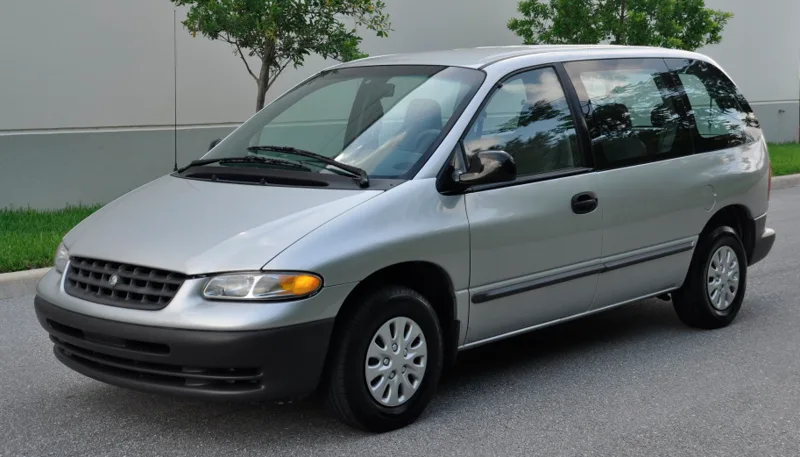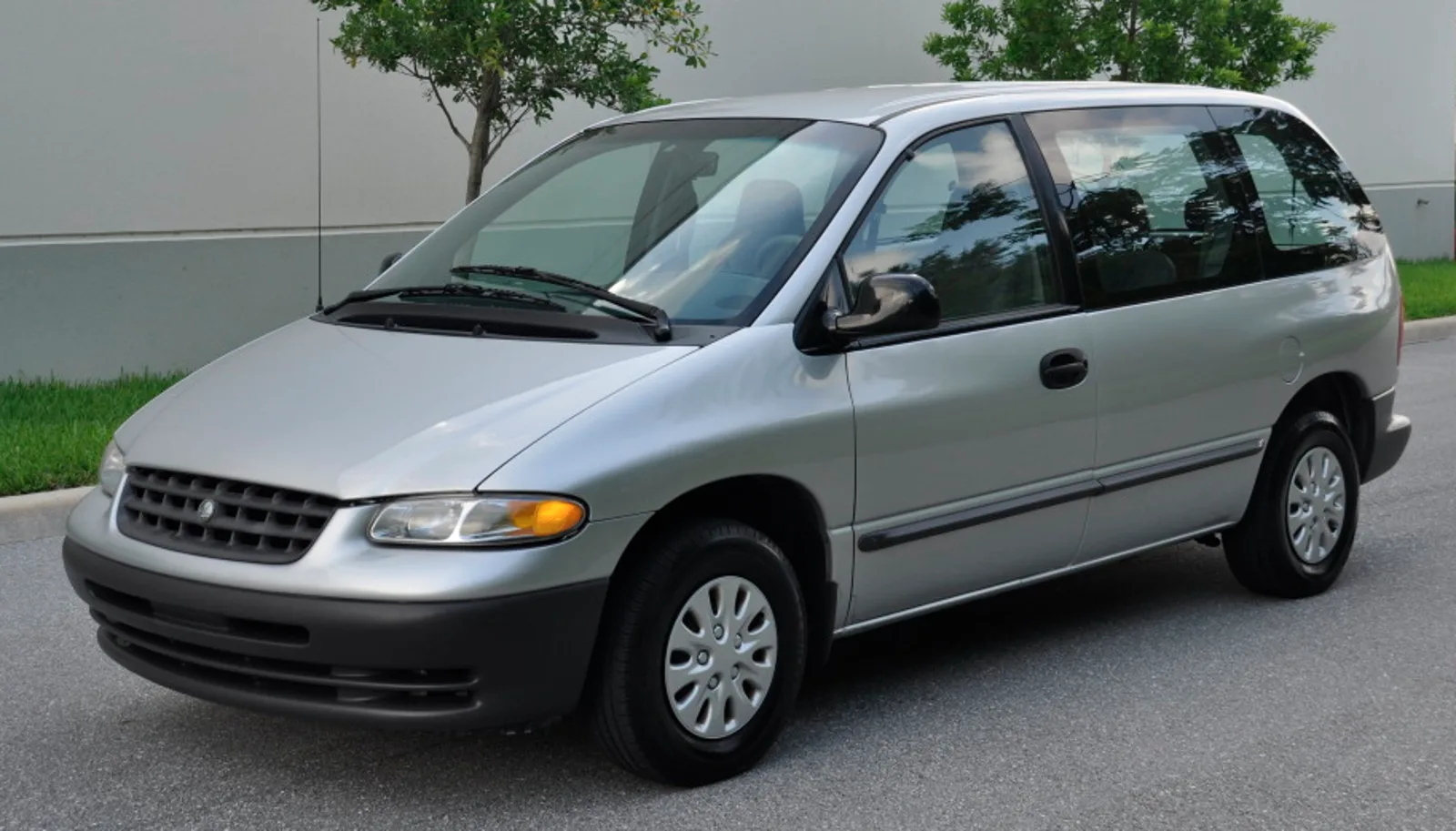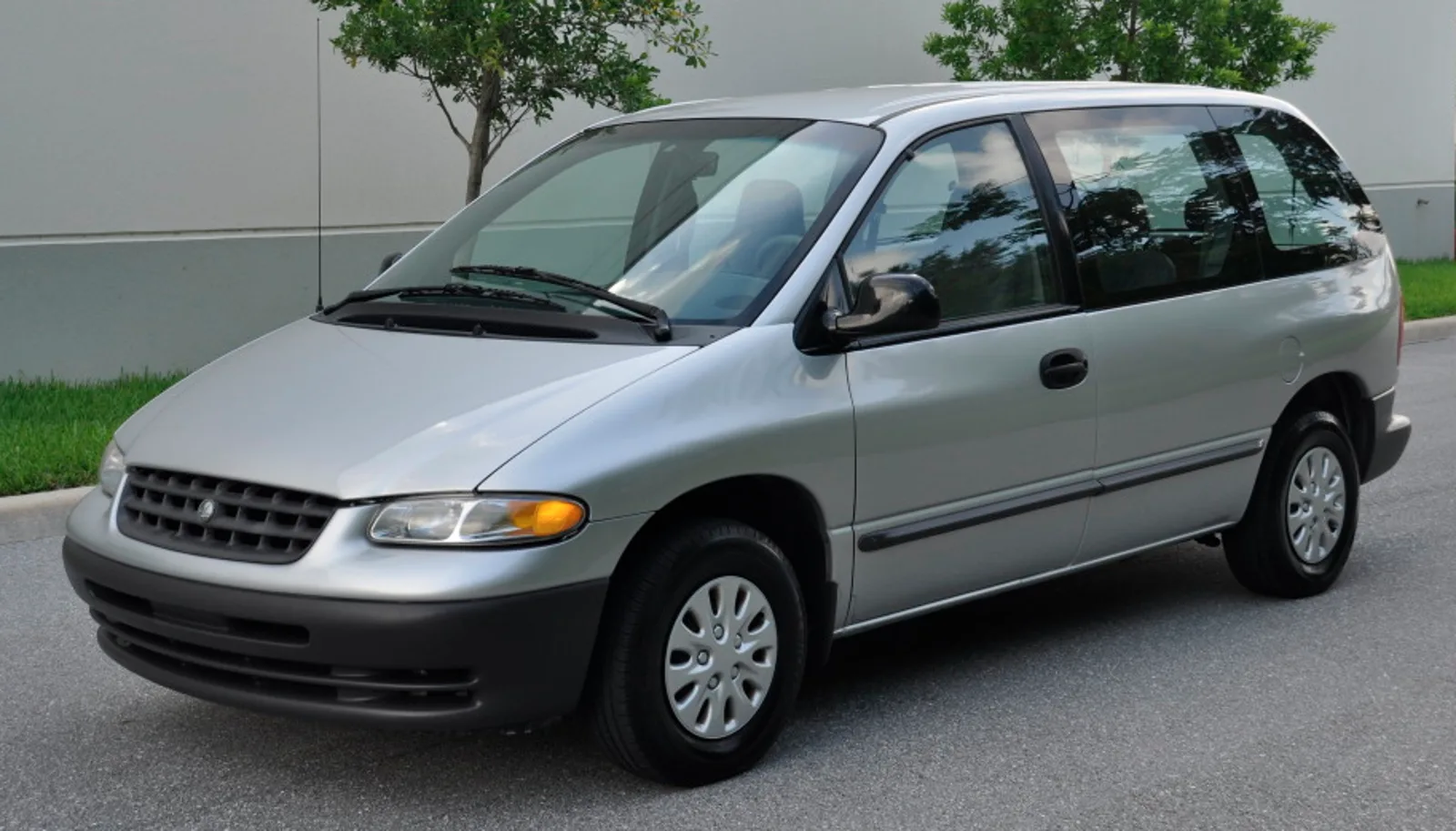
Ford's Windstar arrived a year ahead of Chrysler's all-new NS vans and forced a rethink, while Chrysler answered with a sliding door, cab-forward styling and a bigger engineering bill.
The Ford Windstar reached the market in March 1994 as a 1995 model, nearly a year before Chrysler's third-generation NS minivans. The two front-drive vans went head to head for family buyers, and the NS added a driver-side sliding door that the first Windstar did not offer.
The Chrysler NS minivans and the Ford Windstar were the two front-drive minivans that set the shape of the North American segment in the mid-1990s. Ford's Windstar reached showrooms first, while Chrysler's third-generation vans followed a year later and went on to be copied across the market.
Both cars were built to answer the same family buyer, and both were the work of long, expensive programmes. Their rivalry ran through styling, engines, the sliding door and the way each company handled its safety record.
Were the NS vans and Windstar rivals?
They were direct rivals. The Windstar came out nearly exactly a year before the NS Chrysler minivans, and it let Ford cut into Chrysler minivan sales significantly. The NS programme was itself partly a response to Ford's front-drive replacement for the Aerostar, which became the Windstar.
The NS vans later took their form factor across the industry, but the Windstar had the first move. Each car was measured against the other in showrooms and in the minivan press, and the two lines sold into the same family market.
Ford's front-drive Windstar arrived first, and Chrysler's NS vans answered with the sliding door and a shape the whole segment would copy.
Specifications side by side
| Specification | Chrysler NS minivan (1996) | Ford Windstar (1995) |
|---|---|---|
| Launch | March 1995, for the 1996 model year | March 1994, for the 1995 model year |
| Production | 1996 to 2000 model years | 1995 to 2007 model years, 1,984,232 built in total |
| Platform | NS, all-new unibody | WIN88 on the DN5 platform shared with the Taurus and Sable |
| Wheelbase | 113.3 in standard; 119.3 in long wheelbase | 120.7 in, nearly 15 in longer than the Taurus |
| Front suspension | MacPherson struts | MacPherson struts |
| Rear suspension | Leaf springs and a beam axle | Beam axle with coil springs; air suspension optional |
| Base engine | 2.4-litre four, 150 hp; 3.0-litre V6 where California rules did not apply | 3.0-litre V6, 150 hp, from October 1995 |
| Top V6 | 3.8-litre V6 standard in the Caravan ES and Town & Country LXi | 3.8-litre V6, 155 hp at launch, 200 hp for 1996 |
| Transmission | 3-speed TorqueFlite or 4-speed Ultradrive; manual dropped in the US and Canada | No figure given |
| Drag coefficient | 0.35, down from 0.39 | No figure given |
| Sliding door | Driver-side sliding door offered | None on the first generation |
| Safety | NHTSA 4 stars frontal, 5 stars side for the driver | IIHS Excellent rating on the 1995 model |
| Development | About $2.8 billion, begun in 1990 | WIN88 started in 1988 |
Why did Chrysler redesign its minivans?
The third generation was the first ground-up redesign of the Chrysler minivan lines, and it added a further degree of divisional identity between the Plymouth Voyager, the Dodge Caravan and the Chrysler Town & Country. The cargo van was discontinued, and all examples were sold as passenger vans.
Development began in 1990 under Tom Gale and Chris Theodore, with design work by Don Renkert approved in September 1991 and a design freeze in May 1992. The programme cost about $2.8 billion, the most expensive vehicle Chrysler had developed at that time.
How did the NS platform's dimensions compare?
The NS platform used a 113.3-inch wheelbase for standard vans and a 119.3-inch wheelbase for long-wheelbase models. Standard-length vans were only 4 inches shorter than the previous Grand vans, while the front track was widened by three inches to lower the engine and transaxle.
The Windstar's 120.7-inch wheelbase was nearly 15 inches longer than the Taurus it shared a platform with. Ford built the car as a full unibody in place of the Aerostar's integrated frame-rail design.
How did the NS and the Windstar handle their sliding doors?
The NS vans introduced a driver-side sliding door, which had previously been seen only in compact MPVs in North America. Chrysler tested the option with minivan owners, and 85 percent said they would buy a van with the second sliding door even at extra cost.
The Windstar did not have a driver-side sliding door in its first generation. Ford found in its focus groups that the feature was not important, but the choice later became a design faux pas, and in 1998 Ford extended the driver's door and added an optional tilting and sliding seat.
What did the NS redesign change inside?
The NS abandoned the boxy body of earlier vans, and the shift from the second generation was extensive. The roof was raised nearly 3 inches and the cowl lowered, and the body moved to a cab-forward design with a windshield set further back for better visibility.
Inside, the second and third row seats could be released by floor latch and lifted out, and the front bucket seatbacks folded forward for the first time. Dual-zone climate control and adjustable cupholders were firsts for minivans.
How did the Windstar's engines develop?
The Windstar launched with a 3.8-litre V6 at 155 hp as the sole engine in the GL and LX. A 150 hp 3.0-litre V6 became the standard base engine in October 1995, and the 3.8 rose to 200 hp for 1996.
Its powertrains were shared with the Taurus and Sable, and four-wheel disc brakes arrived as an option in 1996 on cars ordered with traction control or the towing package.
How did the NS engines compare?
The NS vans received the first new four-cylinder in the range since 1987, a 2.4-litre engine of 150 hp that was shared with the JA-platform cars. It nearly matched the 3.0-litre V6 in output and fuel economy, despite being smaller.
Engines varied by market. In states that did not follow California standards the Mitsubishi 3.0 V6 was standard, and in California-standard states the Chrysler 3.3 V6 took that role. The 3.8 V6 was standard on the Caravan ES and the Town & Country LXi.
Which safety results did the two vans get?
The 1996 to 2000 Dodge Grand Caravan received a Marginal rating in the IIHS 40 mph offset test, though its structure was graded acceptable. In NHTSA tests it earned 4 stars for the driver and front passenger in frontal impact and 5 stars for the driver in side impact.
The Windstar earned an Excellent rating from the IIHS for the 1995 model, and Ford marketed it as the safest minivan on the market. The first-generation 3.8 V6 was prone to head gasket failure in 1995 models.
How did the NS vans fare in Europe?
EuroNCAP results were less kind to the NS family. The 1999 Chrysler Voyager scored no points in the frontal impact test, where the body structure became unstable and the steering column was driven back toward the driver. The 2007 model reached only 19 percent in that test for an overall two stars.
Real-world evidence told a fuller story. A Swedish insurer's 2009 report rated the 1996 to 2000 generation as Safest, at least 30 percent safer than the average car.
Where were the two minivans built?
Canada was central to both programmes. The NS vans were assembled at Windsor Assembly in Windsor, Ontario, with extra production at Saint Louis (South) Assembly in Fenton, Missouri. The Chrysler Voyager for Europe was built at Graz, Austria, in the Eurostar joint venture.
The Windstar and Monterey were sourced from Oakville Assembly in Ontario, and the full Windstar, Freestar and Monterey run came to 1,984,232 vehicles.
How did the Windstar's development begin?
Ford launched the Aerostar in 1985 with some success, but it remained second in sales in the minivan segment. Ford then decided its next minivan would take the front-wheel-drive layout that Chrysler had made popular, because it wanted to compete more directly with Chrysler.
Codenamed WIN88, the programme began in 1988 with a projected 1993 introduction. Trademarks for the Windstar name were filed on April 13, 1992, and the exterior design by Camilo Pardo was frozen in 1990.
What did the Windstar's trim and options include?
The GL was the base trim, with a 3.0-litre V6 in the lower versions, cloth bucket front seats and 15-inch hubcaps. Step up to the GL with the 3.8-litre V6 option, and buyers could add a high-capacity air conditioning system with an auxiliary heater, rear audio controls and a luggage rack.
The LX brought two-tone paint at no cost, power locks and windows, 15-inch cast alloy rims and a premium AM/FM radio with cassette and four premium speakers. The Family Security Package added an alarm, a door-mounted keypad and heated exterior mirrors, while a towing package included load-levelling rear suspension, a Class 3 trailer hitch and four-wheel disc brakes.
How did the Windstar change in 1998?
The 1998 revision was a mid-cycle update. Ford extended the driver's door to meet the rival sliding door, and it added a tilting and sliding driver's seat, which marketing called the Family Entry System Door and which Ford also called the king door.
The front fascia moved to a trapezoidal grille with redesigned headlamps and amber turn-signal lenses, and the fog lamps left the lower intake. New wheel covers and alloy designs appeared on every trim, and the rear bench seats gained head restraints. A Northwoods appearance package was offered for the GL and LX.
How did the NS line-up split its divisions?
The third-generation vans returned the Plymouth Voyager, Dodge Caravan and Chrysler Town and Country as three distinct divisional versions. The Voyager was the entry-level minivan, the Caravan sat between it and the Town and Country, and the Town and Country was the top of the range.
The Voyager and Caravan were made in both standard and extended-length Grand versions, and the Town and Country introduced a standard-length body for the first time. The line was introduced in March 1995 for the 1996 model year.
How did Ford sell the Windstar against the NS?
Ford sold the Windstar only as the equivalent of the long-wheelbase Grand Chrysler vans, while Lincoln-Mercury offered the smaller Mercury Villager, which Nissan had developed jointly. The Villager's base price passed the Windstar's by several hundred dollars by 1997, and its top Nautica models sat some $6,000 higher.
The Windstar was also marketed as the safest minivan on the market, and the Aerostar continued to sell alongside it through 1997 because dealers and buyers still wanted it. Its lack of a driver-side sliding door was later seen as a design faux pas.
Which buyer suits each car?
The NS suits a buyer who wants a Chrysler minivan with a sliding driver's door, cab-forward styling and a choice of Voyager, Caravan or Town & Country trim. The Windstar suits a buyer who wants a front-drive Ford with a V6 and the oval-windowed two-box body that set it apart.
Practicality is only partly covered. Neither van's cargo or seating capacities are compared here, and running costs for either model are not given.
How did the Windstar's trim levels compare?
The Windstar was sold in GL, LX and Limited trim, with the GL as the base model and the LX as the flagship until the Limited arrived in 1998. The Limited was slotted above both the LX and the Mercury Villager LS. The Limited had five-spoke 16-inch chrome wheels and wood interior trim.
The Windstar's trim structure followed the car lineup, not the truck nomenclature, so the GL and LX sat in the same range as the Ford cars of the time.