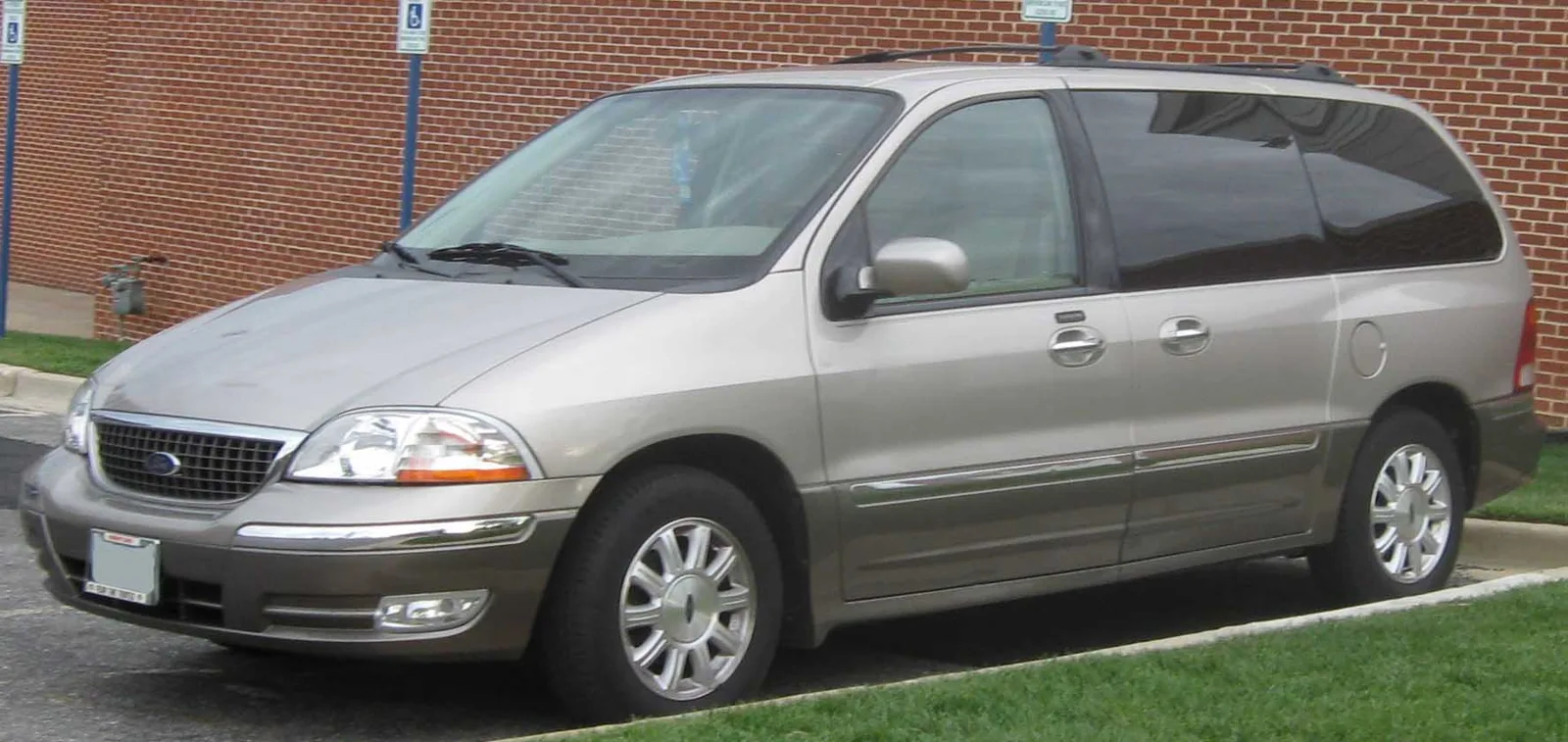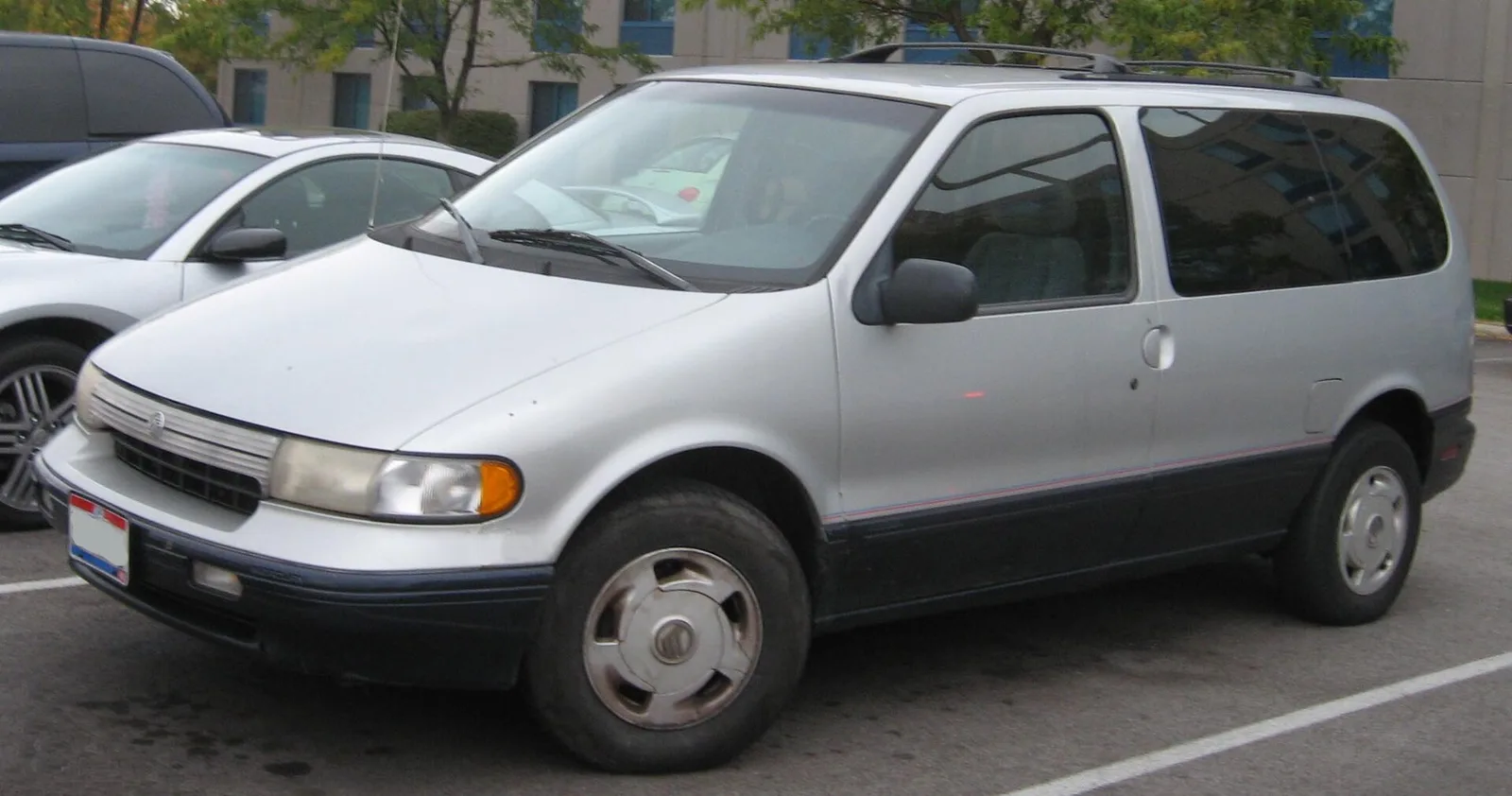
Built on Ford's VX54 platform with Nissan engines, the Villager ran in two generations from 1993 to 2002 and was the first front-wheel drive van Ford produced.
The Mercury Villager was a minivan sold from 1993 to 2002 in two generations, built on Ford's VX54 platform with Nissan engines. It was Ford's first front-wheel drive van and was sold alongside the Nissan Quest.
Sold by Mercury between 1993 and 2002, the Villager was a minivan born from a Ford and Nissan joint venture. Nissan sold the same vehicle as the Quest, and the Villager became the first front-wheel drive van Ford had produced.
Where did the Villager name come from?
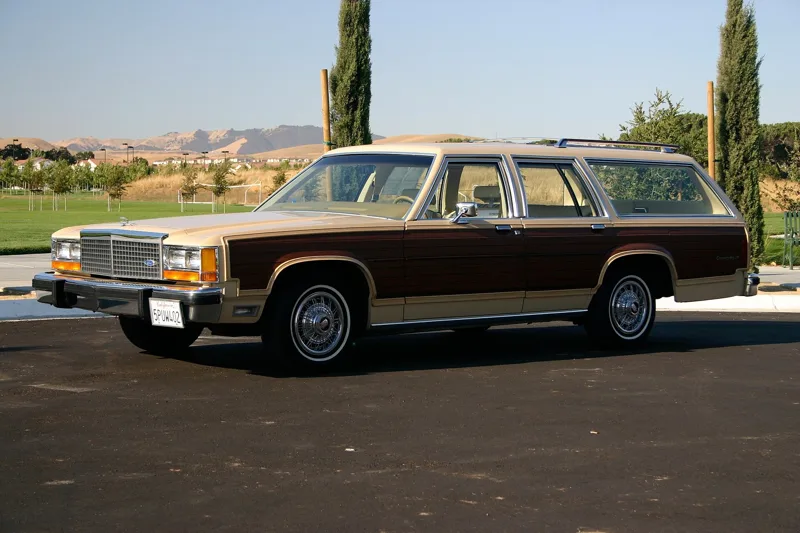
The name came from Mercury's wood-trimmed station wagons. The Villager nameplate first appeared for 1958 on an Edsel station wagon, then moved to Mercury for 1962 on the compact Comet series. From 1962 to 1984 Mercury Villager wagons were the counterpart of the Ford Squire trim, denoting wood-trim wagons.
Mercury used the Villager name for several other models as well, including the Montego from 1970 to 1976, the Bobcat from 1975 to 1980, the Cougar in 1977 and 1982, the Zephyr from 1978 to 1981 and the Lynx from 1981 to 1984. When the 1983 Marquis arrived, Brougham replaced the Villager name on wood-trim wagons.
A Ford-built minivan with Nissan running gear, sold in Mercury showrooms until the joint venture ended in 2002.
How did Ford and Nissan build the minivan?
At the beginning of 1988 Ford and Nissan agreed a joint venture for an all-new minivan that both makers would sell. Nissan handled development and engineering in the United States and supplied the engine and transmission, while Ford built the vehicles in its own plant.
The programme was codenamed VX54 and replaced two Nissan products developed in Japan, the Van and the Axxess. Ford sold its version as a Mercury, and the work ran alongside a separate programme, WIN88, which later became the Ford Windstar.
Nissan chose the final designs in 1989, and prototype testing began in 1990. Real-world testing continued through 1991, and development concluded at the end of that year.
Designers aimed for the ride and handling of a mid-size car rather than the full-size Colony Park. They took the front lightbar grille from the Sable and the two-way liftgate from the station wagon. All-wheel drive was planned at first, but slow sales of Chrysler all-wheel-drive minivans led Ford to drop it.
What was the first-generation Villager's chassis and engine?
The first-generation Villager used the front-wheel drive Ford VX54 platform, an evolution of the 1989 to 1994 Nissan Maxima J30 chassis. It had a 112.2-inch wheelbase, and it shared a 3.0L Nissan VG30E V6 with the Maxima, detuned from 160 to 151 horsepower.
Suspension used MacPherson struts at the front and leaf springs with a solid rear axle. Vented front discs were paired with rear drums, with rear discs on models fitted with the trailer towing package, and antilock brakes came as standard.
Ford asked Nissan for several changes before it adopted the VG30E, including making the engine non-interference and adding an oil level sensor. The oil filter was moved for easier access, and a Jatco-supplied 4-speed automatic was the only transmission on offer.
What made the first generation distinctive?
The first Villager was a passenger van in a single body length, measuring 190 inches and nearly matching the extended Chrysler minivans. It carried a single sliding door and a front lightbar grille that linked it to the Mercury Sable and Topaz sedans.
Its rear liftgate was modelled on compact station wagons, a minivan first, and the rear window opened independently from the door. The exterior door handles were faired into the doors to help aerodynamics.
Inside, many components came from Ford. The third-row bench sat on sliding tracks, so it could be set up for passengers or cargo without removal, and optional rear-seat radio controls and air vents echoed the Aerostar.
Safety came with an unusual feature. The first Villager used automatic seatbelts to meet passive restraint rules, which made it the only American-market minivan to do so. A driver-side airbag arrived for 1994, and dual airbags replaced the automatic belts as standard for 1996.
What trims did the first-generation Villager offer?
The first generation came in GS and LS trims, in line with Mercury sedans. The GS had a two-passenger bench seat and wide grey body moldings, while the LS offered either a bench or two bucket seats and a standard two-tone exterior.
For 1996 the exterior was revised. A conventional grille modelled on the Sable and Mystique replaced the lightbar, the taillamps gained a red panel, and monochromatic trim arrived on the lower trims.
The Villager Nautica special edition arrived in 1994 on the LS. It wore blue and white paint with a yellow pinstripe, multi-colour leather seats and a luggage set with Nautica-designed duffel bags. Multiple two-tone schemes joined the blue and white for 1996.
The Nautica was developed to complement Eddie Bauer editions of Ford vehicles, including the Aerostar. It became the only Nautica-edition Lincoln-Mercury vehicle ever produced.
What changed with the second generation in 1999?
The second generation arrived for 1999 as a full redesign with no sheet metal shared with its predecessor. It kept the VX54 platform and 112.2-inch wheelbase, standardised a driver-side sliding door and used two sliding doors on every example. It was five inches longer than the first generation.
Power came from a Nissan VG33E 3.3L V6 producing 170hp, an engine shared with Nissan light trucks and SUVs in the United States. The Jatco-supplied 4-speed automatic remained the only transmission. The chassis was retuned for a softer ride, with MacPherson struts and a rear beam axle carried over.
Four-wheel disc brakes were dropped, and antilock brakes became optional. Ford designer Moray Callum was responsible for the exterior. The chrome-ringed grille gave way to an oval waterfall-style grille with a horizontal trim bar holding the Mercury emblem, and a red trim panel between the taillamps set the car apart from the Quest.
What trims did the second generation offer?
The second generation dropped the GS and LS names in favour of Villager, Villager Sport and Villager Estate. The Sport had a grey lower body, upgraded suspension settings and larger wheels and tyres, while the Estate had a gold lower body, gold wheels and gold badging.
The Nautica trim was discontinued with the change of generation. For 2000 a three-person second-row seat became an option, increasing capacity to 8. A rear-seat entertainment system with a flip-down LCD screen, connected to a VCR or video-game console, cost $1,295 as an option.
For 2001 the front and rear fascias were revised, the Mercury emblem was enlarged on the grille and liftgate, the foglamps became round, and the electronic instrument panel returned as an option.
Mercury Villager specifications at a glance
| Specification | First generation (1993 to 1998) | Second generation (1999 to 2002) |
|---|---|---|
| Platform | Ford VX54 | Ford VX54 |
| Wheelbase | 112.2 inches | 112.2 inches |
| Length | 190 inches | Five inches longer |
| Engine | 3.0L Nissan VG30E V6, 151 hp | 3.3L Nissan VG33E V6, 170hp |
| Transmission | Jatco 4-speed automatic | Jatco 4-speed automatic |
| Front suspension | MacPherson struts | MacPherson struts |
| Rear axle | Solid axle on leaf springs | Rear beam axle |
| Trims | GS, LS and Nautica (1994) | Villager, Sport and Estate |
| Sliding doors | One | Two |
Where was the Villager built and sold abroad?
Ford built the Villager at its Ohio Assembly facility in Avon Lake, Ohio, alongside the Econoline and Club Wagon. An Austrian importer called Sauber, with no link to the F1 team, sold a small number under its own name in 1993 and 1994.
From 1995 to 2001 Chinese manufacturers built the first-generation Villager from CKD kits. Guangzhou Yunbao marketed it as the YB6480 with Mercury badging, Dongfeng Fengshen sold it as the EQ6482, and Guangdong Bus Works produced the GDK6480 with few parts added in China.
The bodies were made in the United States for CKD purposes, while the engines were built in China by joint ventures with Nissan.
Why did the Villager end, and what replaced it?
Ford and Nissan ended their joint venture after 2000, because both had begun designing their own front-wheel drive minivans. Following a shortened 2002 model year, the final Mercury Villager was assembled on June 27, 2002.
Mercury and Nissan skipped minivans in 2003 and returned for 2004. Mercury's replacement was the Monterey, its first Ford-based minivan, derived from the Freestar that Ford had renamed from the Windstar for 2004. The name came from a line of Mercury sedans built for nearly 25 years.
The Monterey was aimed at the Chrysler Town and Country and the Buick Terraza, the renamed Oldsmobile Silhouette. Falling minivan sales hurt it, and it was discontinued after the 2007 model year, alongside the Freestar.