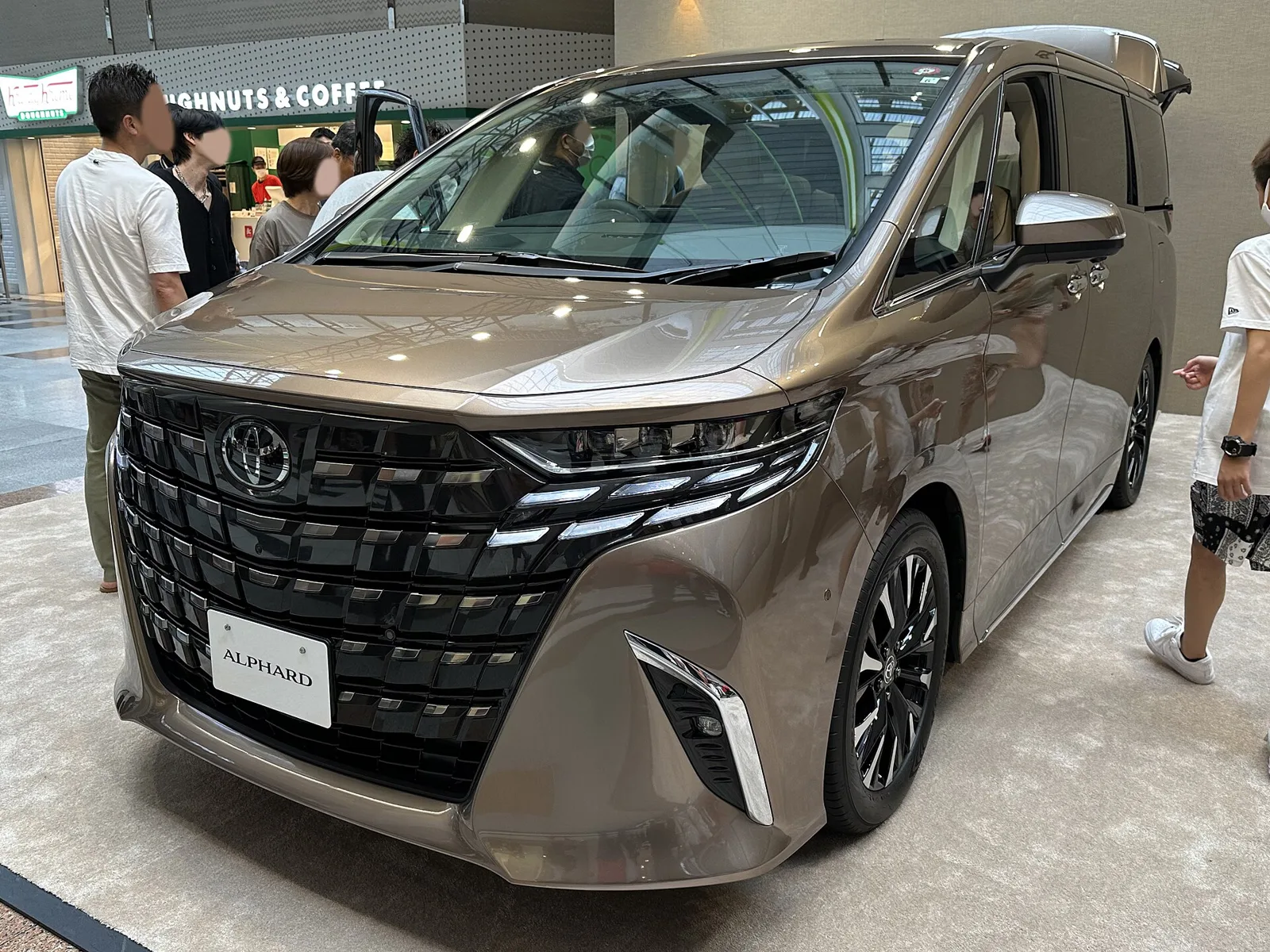
A luxury people mover built mainly for Japan, with hybrid power from 2003, a sportier Vellfire twin and a long run of refreshes.
Toyota's flagship MPV, the Alphard, has been built since 2002 as a seven- or eight-seat people mover. It has moved through four generations, gained hybrid power from 2003 and spawned a sportier Vellfire twin and the Lexus LM.
The Toyota Alphard is a large MPV that Toyota has produced since 2002. Buyers can pick seven or eight seats, with petrol or hybrid power, in a car that tops Toyota's people-mover range. Its name is taken from the star Alphard, the brightest in Hydra.
Most cars stayed in Japan, although many Asian markets bought them, along with Belarus, Russia and the Middle East. In Southeast Asia the Alphard is often regarded as a luxury car, much as the Camry is in other places.
Where did the Alphard come from?
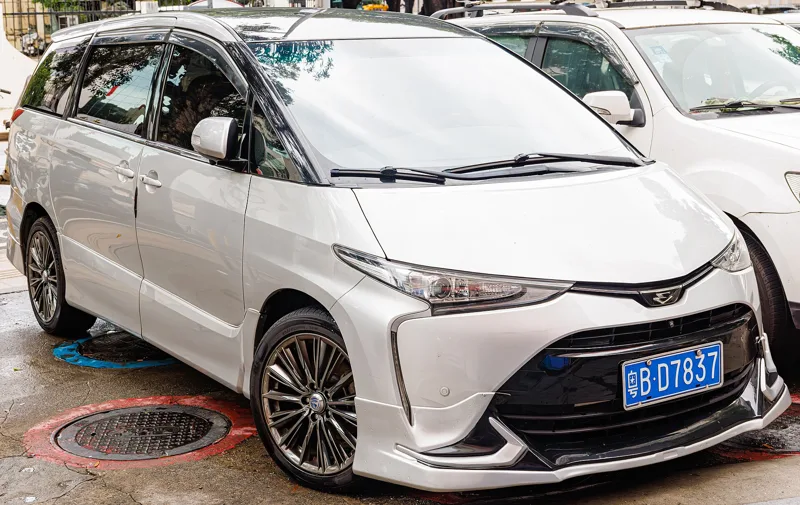
Toyota launched the first Alphard on 22 May 2002, under chief engineer Hideyuki Iwata. It was built on the second-generation Previa and Estima, which in turn shared many parts with the Camry, and it used front-wheel drive to do away with the space-hungry shaft of its predecessor.
That predecessor was the Granvia or Grand HiAce, whose drive shaft took up room in the cabin. Curved styling made the new van look smaller than it was, aimed at buyers in the 30 to 40 age bracket.
Toyota weighed a diesel option early on but dropped it over emissions and fuel-efficiency rules. At launch, then-president Fujio Cho acknowledged that the Alphard was up against the second-generation Nissan Elgrand, which had come out a day earlier.
Toyota's flagship people mover, with a luxury face, hybrid power from 2003 and a long line of refreshes.
What made the first-generation Alphard different?
The first-generation car had rear side windows that rolled down and an optional electric tailgate, features that set it apart from rivals such as the Elgrand. Grilles told the two trims apart: the G wore chrome with three horizontal bars and diagonal louvres, and the V was body-coloured with horizontal louvres.
The V was sold exclusively through Netz Store dealers and the G through Toyopet Store outlets. Toyota set monthly targets of 4,000 units for the V and 2,500 for the G in Japan, which added up to 6,500 units.
Early grades were MX/AX, MS/AS and MZ, and a Welcab version was also offered. The V was eventually replaced by the sportier Vellfire.
How did the Alphard change in its early years?
The April 2005 refresh reworked the nose, bumper, headlamps and rear lamp clusters. The update kept the car's packaging intact while modernising its face. On the 3.0-litre model, the four-speed automatic gave way to a five-speed unit. The changes were modest, touching the look and the gearbox rather than the layout.
A Royal Lounge version arrived in 2006 as a more upmarket four-seat variant of the G. For model year 2007, Japanese cars could be fitted with G-BOOK, a subscription telematics service, as an option.
The hybrid joined in May 2003, pairing a 2.4-litre Atkinson-cycle petrol unit, the 2AZ-FXE, with 98 kW (133 PS; 131 hp) and torque of 190 N-m (140 lb-ft). The engine was built for Toyota's Hybrid Synergy Drive, but its high-expansion cycle caused piston-ring wear and heavy oil consumption.
How does the Alphard Hybrid work?
A by-wire system in the hybrid reads brake pedal force and road speed, then sets the hydraulic pressure it needs. Working with the E-Four all-wheel-drive system, it captures braking energy to turn back into electric power. That approach is aimed at maximising the energy recovered from braking.
The hybrid can deliver up to 1,500 watts through 100-volt AC outlets, enough to run devices like laptops and emergency lights. In Japan it qualifies as an ultra-low emissions vehicle, with emissions 75% lower than the year 2000 benchmark.
How did the second generation differ?
The second generation was previewed as the FT-MV in 2007 and went on sale in May 2008. This generation introduced the Vellfire twin, which took over from the Alphard V and wears a split headlight and taillight design. The change marked a clear split between the two cars' characters.
Chief engineer Yuzo Nakagoshi led development. Toyota described the Alphard as elegant and sophisticated, while the Vellfire was built around strength and individuality. The Alphard was sold through Toyopet Store dealers and the Vellfire through the youth-oriented Netz Store chain.
The line-up offered 2.4-litre and 3.5-litre petrol engines in two-wheel or four-wheel drive, plus a 2.4-litre hybrid with E-Four four-wheel drive.
What were the second-generation grades?
The X was the base model, with beige cloth upholstery, seven or eight seats and xenon headlights. The S, badged Vellfire Z on the twin, was the sportier middle grade, with body side mouldings, deeper bumpers and LED strip lighting. The G, or Vellfire V, was the top standard grade, with cruise control and electric front seats.
Special editions such as Platinum Selection, Golden Eyes, Prime and Type Gold added option packs, often with a powered tailgate or cruise control. The C Package and G Package, sold with the 3.5 engine until November 2011, added captain's chairs with powered ottomans and recline.
The Royal Lounge was a dealer option for 3.5 cars until November 2011. Its rear was stripped out and fitted with two first-class-style seats by the tuner Modellista.
What changed with the 2011 facelift?
The 2011 facelift was announced on 27 September 2011, and Japanese sales began on 1 November. The update brought a hybrid back and let every grade run in all three drivetrains: 2.4 petrol, 3.5 petrol and 2.4 hybrid. The hybrid used a later generation of Toyota's system, with Eco mode and EV mode.
Petrol versions gained Eco mode buttons on the dash to smooth acceleration and improve efficiency. Nanoe air purifiers were available on almost every variant, and the interiors used new trim colours and materials.
The 2.4 hybrid S-grade cars became SR and ZR models, both with cruise control and Nanoe purification as standard. The Gazoo GS was a limited edition based on the S grade, with a Gazoo body kit, alloys and half-leather trim. A performance exhaust and deeper rear bumper ruled out a spare wheel, so a puncture kit came with the car. Petrol engines joined that edition in October 2013.
How safe is the Alphard?
The Alphard earned JNCAP's full six stars for occupant protection and its safety kit. Every variant came with ABS, brake assist, stability control and seven airbags, among them a driver's knee bag and curtain bags. The safety package was standard, not an extra, across the range.
Higher Japanese variants could add a first-in-class Pre-Crash system. Higher grades could also be fitted with radar cruise, a lane-departure system that steers back toward the lane, and a pre-collision alert. The emergency braking applies only a moderate amount of pressure and does not bring the car to a full stop.
What did the third generation bring?
The third generation went on sale on 26 January 2015 with restyled bodywork and two fresh 2.5-litre engines, a petrol 2AR-FE and a petrol hybrid, the 2AR-FXE. The 3.5-litre 2GR-FE V6 and six-speed automatic carried over, and a new Executive Lounge sat at the top of the range.
Toyota framed the car as a luxury saloon with a large space, with extra focus on ride comfort. The new car was 60 mm (2.4 in) longer and 20 mm (0.8 in) wider, its wheelbase grew by 50 mm (2.0 in), and it stood 10 mm (0.4 in) lower than before.
A double wishbone rear suspension replaced the torsion beam, keeping the body quiet and rigid. A flatter floor let the second-row seats travel forward and back by as much as 1,160 mm (45.7 in).
Hong Kong, Singapore, Brunei, the Philippines, Thailand, Indonesia and Malaysia were among the first markets beyond Japan to get the new model. Russia took it as the only European market, and only with the V6.
Toyota has imported the Vellfire into India since February 2020, the only import from the brand there, fitted with a 2.5-litre hybrid.
What did the 2018 facelift change?
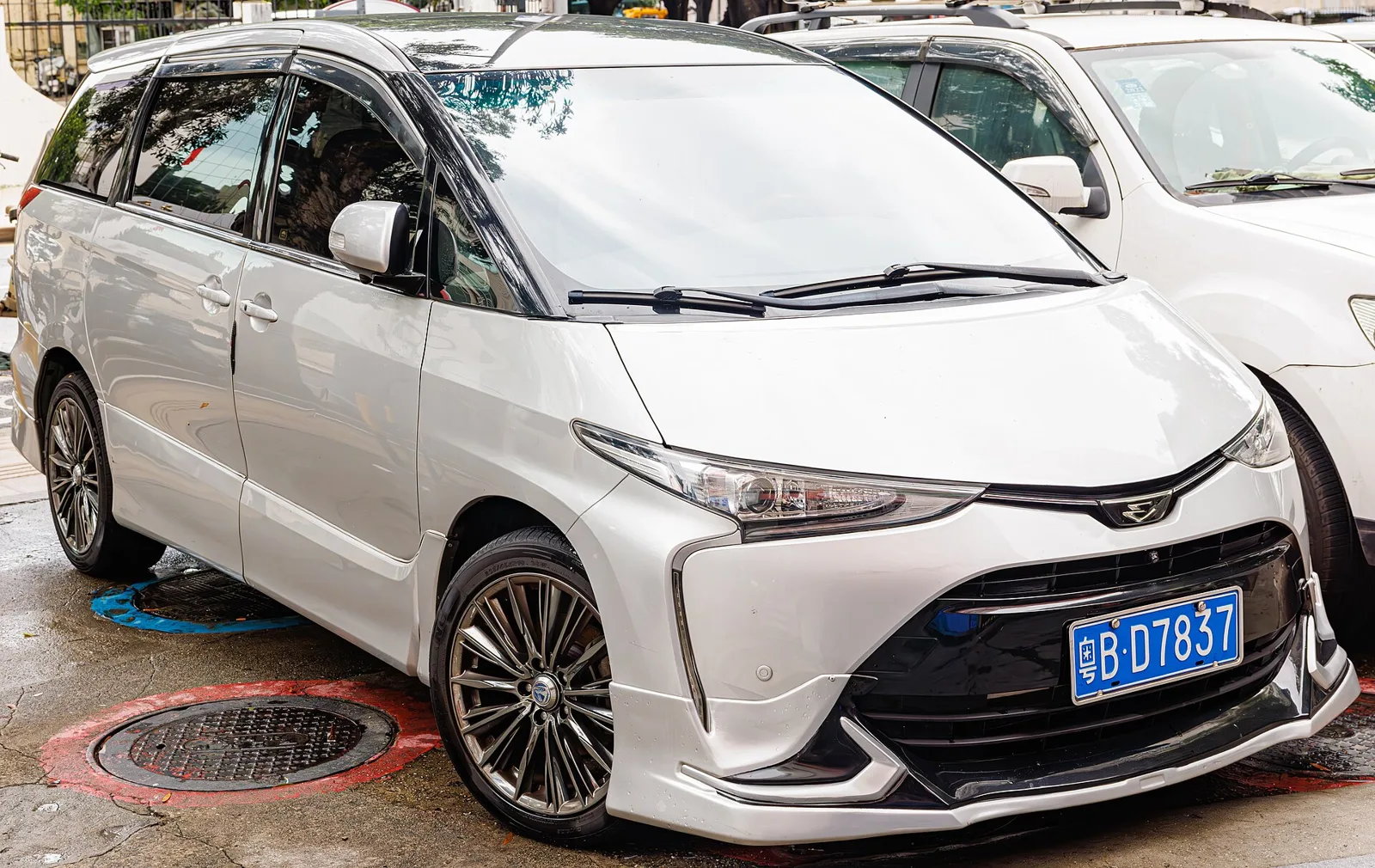
Facelifted versions of both cars were shown on 25 December 2017 and went on sale on 8 January 2018. Most changes were exterior and powertrain, while the interior equipment stayed largely the same. The Vellfire received new trapezoidal taillights, and the Alphard gained slimmer LED headlights and a larger grille.
The revised V6 made 221 kW (300 PS; 296 hp), with torque of 362 N-m (267 lbf-ft), and it was mated to a Direct-Shift eight-speed gearbox. Acceleration from 0 to 100 km/h (0 to 62 mph) took 7.5 seconds.
Toyota Safety Sense, in its second generation, became standard across the facelifted range. Both cars could also be specified with sequential indicators.
How did sales channels and names change?
From 1 May 2020 both models were sold through all Toyota dealer networks in Japan, and the Vellfire's grille swapped its Netz badge for the Toyota emblem. In April 2021 the Vellfire was cut back to one special edition in Japan, the Golden Eyes II.
That same month, China's Vellfire became the Toyota Crown Vellfire, wearing a Crown badge where the Toyota logo had been.
Production of the third-generation car ended in June 2022, leaving buyers without new cars for a year. When the AH40 went on sale in June 2023, demand was huge, and orders were suspended in late 2023 as waits stretched out.
What is the Lexus LM?
The Lexus LM is the luxury-badged take on the third-generation Alphard. It is a close relative of the Alphard rather than a separate design. The reveal took place in Shanghai on 16 April 2019, at the 18th show of its kind, and China sales opened on 20 February 2020. The name stands for Luxury Mover.
At 5,040 mm (198.4 in) the LM runs a little longer than its Alphard base, and it has its own suspension tuning. It comes as a seven-seater based on the Executive Lounge, or as a four-seat version called the Emperor Suite, based on the Royal Lounge.
What is the fourth generation like?
The fourth-generation Alphard and third-generation Vellfire went on sale on 21 June 2023 on the TNGA-K platform, which it shares with the more luxurious Lexus LM. Dimensions were kept within 5 m (16 ft) long and 1.85 m (6.1 ft) wide, so the car fits the size limits of standard automated parking systems in Japan.
Straight rockers and a V-shaped brace low at the rear stiffened the body, raising rigidity by 50% over the previous generation. Rubber bushings and memory foam seats cut vibration by 30%, and the front suspension uses MacPherson struts.
The Alphard's badge moved from the nose to the front door window frames, with the Toyota emblem now at the front. The Vellfire has its own stylised V on the front door frames as well.
Toyota's chief branding officer, Simon Humphries, said the company had wanted to end the Vellfire name because sales were falling in Japan. Dealers pushed back, and the decision was reversed during development.
How is the Alphard sold in Japan now?
In Japan the fourth-generation Alphard comes as X, G, Z or Executive Lounge, and the Vellfire as Z Premier or Executive Lounge Premier. Toyota aimed to sell 8,500 units a month across both, with 70 per cent of them Alphards and 30 per cent Vellfires.
Orders were suspended in November 2023 because demand was overwhelming. When waits reached August 2024, Toyota halted new orders until the backlog had cleared.
A plug-in hybrid was announced in Japan on 20 December 2024, with sales opening on 31 January 2025. A minor update followed on 3 June 2026, adding an entry-level G Hybrid and a Z Plug-in Hybrid.
How did the Alphard spread across Asia?
Indonesia's Alphard debuted at the 30th Gaikindo show on 10 August 2023, offered as 2.5 X, 2.5 G or 2.5 HEV. The Vellfire followed on 15 February 2024 at the 31st Indonesia International Motor Show, as a single Executive Lounge HEV.
Taiwan launched the Alphard on 21 June 2023 with a single grade and a 2.5-litre petrol hybrid. China's Crown Vellfire followed on 22 June 2023 with its own 2.5-litre hybrid, and Malaysia revealed its cars on 6 July 2023 before launching them on 23 October 2023.
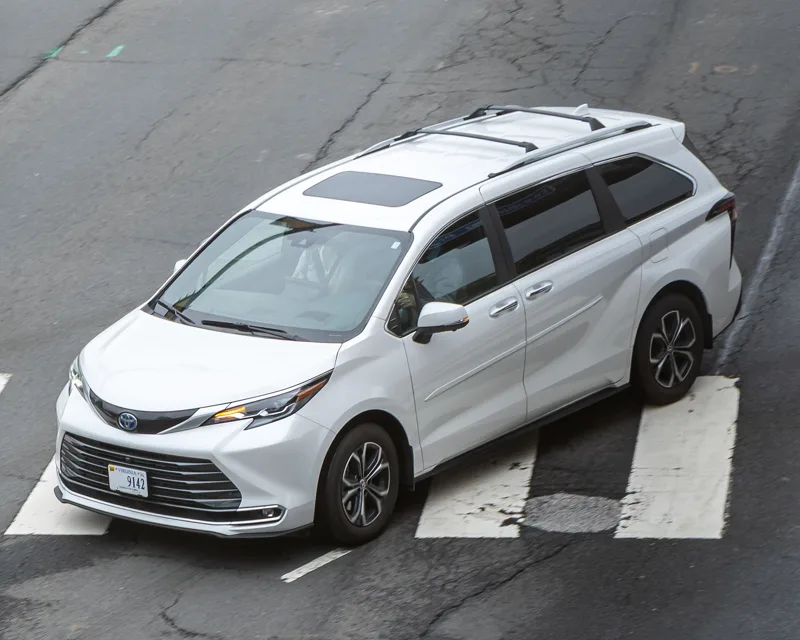
Thailand revealed its Alphard and Vellfire on 16 August 2023 and upgraded the range on 3 August 2026. South Korea launched the car in September 2023, placed above the Sienna, as a single hybrid top trim.
Which engines does the Japanese range use?
Japanese Alphards use a 2.5-litre 2AR-FE petrol paired with the Super CVT-i automatic carried over from the previous generation, plus a new 2.5-litre A25A-FXS hybrid. Japanese Vellfires pair a 2.4-litre turbo petrol, the T24A-FTS, with the hybrid, and the 3.5-litre V6 is gone.
What are the main Alphard specifications?
| Specification | Detail |
|---|---|
| Launch | 22 May 2002 |
| Early hybrid engine | 2.4-litre 2AZ-FXE, 98 kW (133 PS; 131 hp), 190 N-m (140 lb-ft) |
| Third-generation length change | 60 mm (2.4 in) |
| Third-generation width change | 20 mm (0.8 in) |
| Third-generation wheelbase change | 50 mm (2.0 in) |
| Second-row slide range | 1,160 mm (45.7 in) |
| 2018 facelift V6 output | 221 kW (300 PS; 296 hp) output, with 362 N-m (267 lbf-ft) |
| 2018 facelift sprint | 0 to 100 km/h (0 to 62 mph) in 7.5 seconds |
| Lexus LM length | 5,040 mm (198.4 in) |
| Fourth-generation length limit | 5 m (16 ft) |
| Fourth-generation width | 1.85 m (6.1 ft) |
| Japan target | 8,500 units a month, 70 per cent Alphard |

_front.jpg)