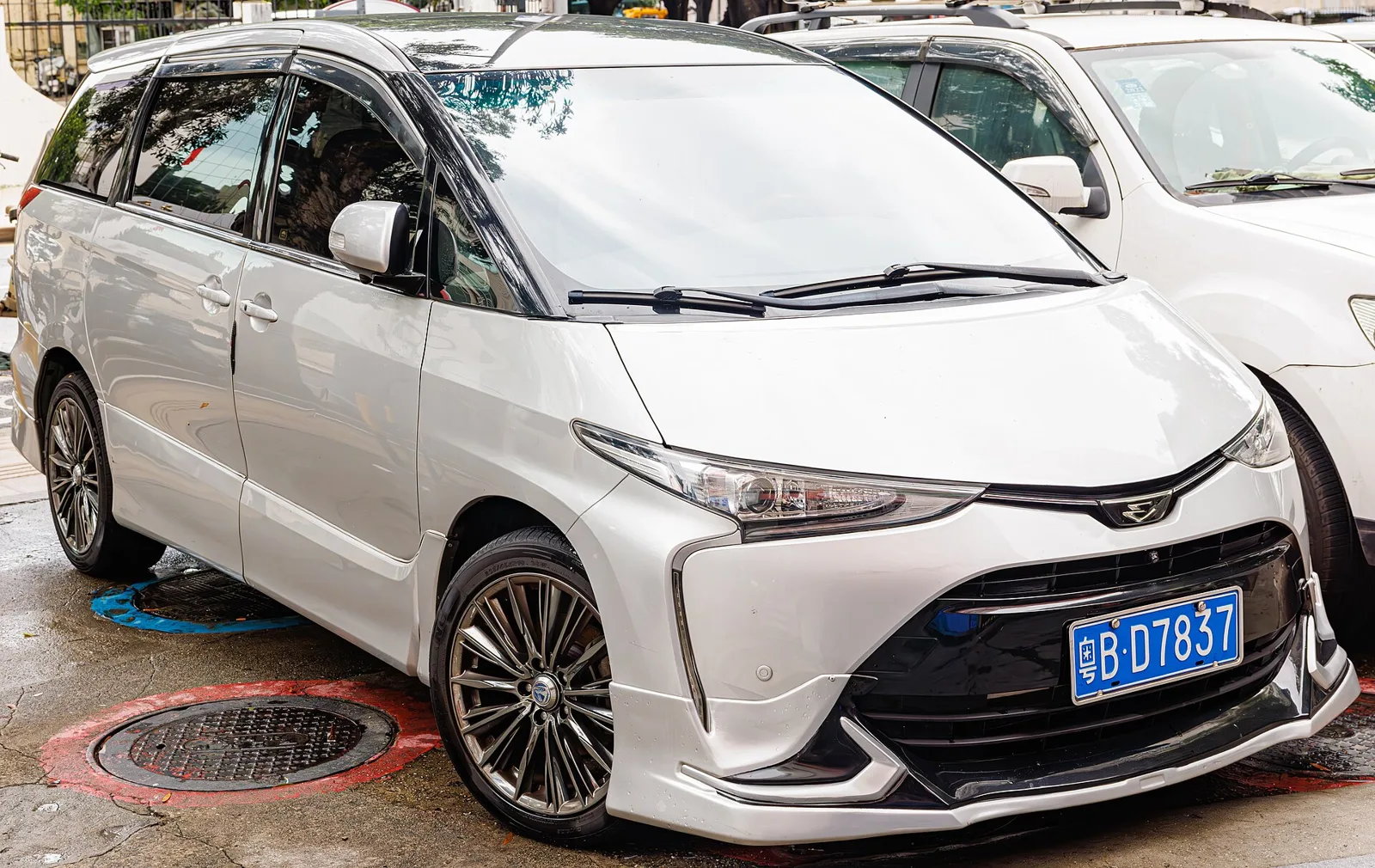
Sold as the Estima in Japan and the Tarago in Australia, Toyota's minivan went through three generations, a supercharged option and a bitter US import fight.
Built by Toyota between 1990 and 2019, the Previa ran in three generations and wore the Estima and Tarago names in Japan and Australia. The first generation used a mid-engined design, and a supercharged engine joined the range in 1994.
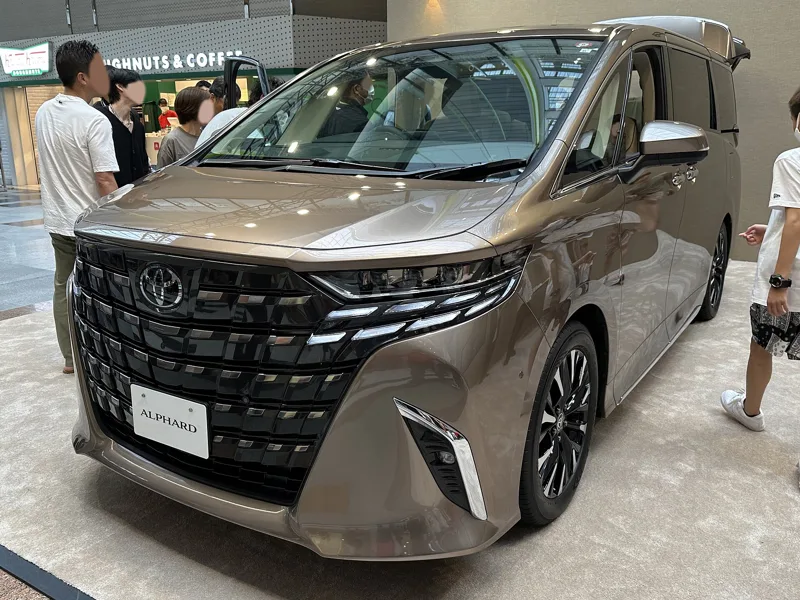
Toyota built the Previa minivan between 1990 and October 2019, through three generations. In Japan the same family of vehicles was called the Estima, while Australian buyers knew it as the Tarago. In Toyota's Japanese range it ranked second in size, behind the more luxurious Alphard and Vellfire, and its mid-mounted engine set it apart from the American vans it competed with.
Each generation took a different engineering path. The first offered rear-wheel drive or all-wheel drive, the second switched to front-wheel drive on Camry underpinnings, and the third brought hybrid models to Japan.
Where did the Previa name and design come from?
Tokuo Fukuichi of Toyota and David Doyle of Calty drew the first generation, with the design dated to 1987 and a patent lodged on 24 December 1987. Launch came on 27 January 1990, and the name Previa draws on an Italian word meaning providence or foresight.
Japanese customers knew the van as the Estima, a name borrowed from the adjective estimable. The Previa label was used in the United States and Britain, so one design wore several badges.
Only one sliding door was fitted, on the side, and it served the rear seats. Toyota wanted as much interior space as possible within a given body size, and the layout followed from that goal.
A mid-engined minivan that put the engine under the seats and kept the cabin open for family use.
Why was the engine placed under the seats?
The first-generation Previa placed a 2.4-litre inline-four almost flat beneath the front seats, tilted 75 degrees from upright. Packaging the engine that way freed cabin room within a given body size, but it also restricted which engines could be used.
Engine-driven ancillaries were all reached from the front through a forward driveshaft, which Toyota named the Supplemental Accessory Drive System, or SADS.
Moving the ancillaries forward left the weight almost evenly split between the axles, which helped ride and handling. The downside was that a larger engine would not fit, and sharing the platform with other models was not possible, so the cost of developing it could not be spread.
Routine jobs were awkward as well. Reaching the spark plugs meant removing the right-hand front seat, floor carpet and an access panel.
How much power and economy did the Previa offer?
The naturally aspirated 2.4-litre 2TZ-FE was rated at 99 kW (133 hp; 135 PS) at 5000 rpm, with 206 N-m (152 lb-ft) of torque at 4000 rpm. A supercharged 2TZ-FZE arrived for the 1994 model year and lifted output to 120 kW; 161 hp; 163 PS at 5000 rpm.
Economy was not a strength. Estimated combined consumption for the naturally aspirated engine ran between 12 and 13 L/100 km (18-20 mpg-US). An instrumented rear-drive test returned 12 L/100 km (20 mpg-US) overall, while an all-wheel-drive automatic managed 14 L/100 km (17 mpg-US).
The supercharger, made by Aisin, engaged through an electromagnetic clutch that the engine control unit commanded. The boosted engine ran a slightly lower compression ratio and beefier internals, and it was estimated at 12 L/100 km (19 mpg-US) combined, a small improvement.
Five-speed manuals came on base cars, with a four-speed automatic available at extra cost and standard on higher grades. The all-wheel-drive system split torque through a viscous-coupled centre differential, normally 50/50 between the front and rear axles.
Chassis hardware differed by version. Some rear-drive vans had independent suspension at each corner, with Macpherson struts up front and double wishbones behind, while most used a beam axle located by four links and a Panhard rod. Brakes were discs all round or discs at the front with drums behind, and anti-lock brakes were an option.
What did the cabin and styling look like?
Front seats sat forward, and the rear held a three-seat bench that split and folded flat against the walls. Seven-seat vans could carry two swivelling captain's chairs in the middle row, while eight-seaters used a 2/1 split bench. Big glass areas gave a wide outlook but made the cabin hot.
The windows wrapped so much of the body that the Previa behaved like a greenhouse, trapping heat quickly. Solar control glass was later offered as a remedy.
Buyers could add two roofs: a power sliding glass panel over the middle row, sized 810 x 1,020 mm (32 x 40 in), and a pop-up glass panel over the front seats. Fitting them lifted the roof 30 mm (1.2 in), leaving headroom unchanged.
Owners nicknamed the rounded body eggvans, eggs and beans. Australians dubbed it the Wombat after the marsupial, and New Zealand freedom campers called it the Bucky bus.
Two updates altered the front end, in December 1994 and January 1998, and each is identifiable by its grille. The console, pushed back towards the front passengers, was described by the press of the time as pregnant.
How safe was the first-generation Previa?
The Previa became the first minivan to satisfy every US passenger-car safety standard for the 1992 model year. A driver's airbag, under-dash knee bolsters and a centre high-mounted stop light were part of that package. Later crash testing was harsher, and a 1996 model received a Poor rating in a moderate overlap test.
The Insurance Institute for Highway Safety ran that moderate overlap frontal test on a 1996 car and found the cabin unstable. The steering column rose toward the windscreen, the head snapped about violently, the lap belt tore and the dummy slumped partly reclined. Leg, head and neck loads were high.
North American cars had a driver's airbag and a third brake light from 1992. From September 1993 airbags were standard for both front occupants, for the 1994 model year, which made it the first minivan with a standard passenger airbag.
Why were the Japanese versions smaller?
Toyota built two narrower, shorter Japanese models, the Estima Lucida and Estima Emina, from 13 January 1992. Width was reduced by 110 mm (4.3 in) and length by 70 mm (2.8 in) compared with the standard van, which kept them in a lower tax band. Japanese vehicle tax is based on length multiplied by width.
The regular car carried on as the wide-body Estima. The Estima and Emina were sold only through Toyota Store outlets, whereas the Lucida was for Toyota Corolla Store showrooms.
How did the Previa sell in the United States?
The US market received the Previa from March 1990, as the 1991 model year, and it stayed on sale until 1997. Imported from Japan to take on Chrysler's minivans, it was supplanted after the 1997 model year by the Camry-based Sienna, a van built in America.
Competition turned sour quickly. Lee Iacocca, Chrysler's chief executive, and other domestic manufacturers claimed Toyota was dumping vans at prices up to 30.5% under cost in America. The Department of Commerce concluded the imports were sold below fair value, yet the US International Trade Commission saw no material injury to domestic producers.
Sales beat those of the Toyota Van it succeeded, yet Chrysler lost little ground. The Previa's higher price, divisive styling, weaker economy and modest performance all told against it, and Chrysler's new minivans appeared at roughly the same time.
Interior room was a selling point: 4.47 m3 (157.8 cu ft) of cargo space, against 3.28-3.95 m3 (115.9-139.4 cu ft) in the short and long Chrysler vans.
American trims ran from the DX to the LE, with All-Trac indicating all-wheel drive and S/C signalling the supercharger. The supercharged option was LE-only in 1994, became available on the DX and LE in 1995, and was the standard engine from 1996.
The manual gearbox disappeared from the American line after the 1993 model year, so no factory car paired a manual with a supercharger. Blown cars wear an S/C tailgate badge.
Which trim levels were sold in the UK and Australia?
British buyers first received the Previa in September 1990, offered only as the GL with an eight-seat layout. The seven-seat GX came in October 1993, and the base GS followed in March 1995. Australia sold the van as the Tarago from its September 1990 debut, in GL/GLi, GLS and GLX trim.
UK special runs were the Solair I, Motiv-8, Solair II and Liber-8. Britain never received a diesel Previa. In the Netherlands the van was sold from 1991 to 1994 in base, GL, GLi and GXi guise.
Down Under, special editions such as the RV, the Rugby World Cup commemoratives and the Getaway were offered. The update renamed the GLS as the Ultima and rebadged the Getaway as the Getaway II.
What changed in the second generation?
The second generation took over from the first outside America on 8 January 2000. Front-wheel drive, Camry underpinnings, a 2900 mm wheelbase and a body 1790 mm wide and 1770 mm tall marked the change. North America never received it, because the Sienna covered that market.
Seating ran from six to eight, with sliding doors on both sides. Japan called it the Estima and Australia the Tarago.
European vans had a 2.0-litre 1CD-FTV diesel with 85 kW (116 PS), or a 2.4-litre 2AZ-FE petrol giving 115 kW (156 PS). Australia took only the petrol engine, matched with a four-speed automatic.
A July 2003 update brought slimmer headlamps. In Britain, GS, GLS and CDX became T2, T3 and T Spirit. The Estima Aeras, a Japanese variant, added wings, spoilers and an aero kit.
What did the third generation bring?
Launched in 2006, the third generation wore the Estima name in Japan, Tarago in Australia and Previa elsewhere, and it never reached Europe. Japanese models offered the second-generation Hybrid Synergy Drive, and a power-folding third row came on seven-seat cars.
Estima-only extras included automatic parallel and reverse parking, lane keeping that reads lane markings and steers, and adaptive front lighting for the low beams. Active driving aids such as radar cruise were confined to V6 cars, and G-BOOK connectivity was an optional extra.
Australian Tarago versions adopted a 3.5-litre 2GR-FE V6 rated at 202 kW (271 hp) in February 2007. A seven-seat option followed in 2008, and a 2009 refresh redid the headlamps and bumpers.
The first facelift, in December 2008, gave the Estima its own identity away from the hybrid: a fresh grille, HID headlights with adaptive front lighting, LED rear lamps, and Whiplash Injury Lessening seats in the front headrests.
Engines were revised in December 2009 so that the 2.4 and 3.5 units emitted only 75% of what the 2005 standards allowed.
A mid-2016 facelift removed the 3.5-litre V6, leaving a 2.4-litre inline-four with 170 PS (125 kW) and 224 N-m (165 ft-lbf), beside the hybrid. Japanese cars alone received Toyota Safety Sense C, and the glass blocked 99% of UV rays.
How did production of the Previa end?
Toyota unveiled the Granvia in May 2019. Built largely from the latest HiAce, it was slated to succeed the Tarago, with the handover due by the end of 2019. The two were sold alongside each other briefly, and the Tarago was off the Australian market by March 2020.
The Previa's own production stopped in October 2019, closing a line that had begun in January 1990 with the first generation's launch.
Its design was unusual but practical. The mid-engined layout gave a van with more usable room than many rivals, though American shoppers wanted more punch than the naturally aspirated engine offered.
What were the main Previa specifications?
| Specification | Detail |
|---|---|
| Production | 1990 to October 2019, three generations |
| First-generation length | 4,750 mm (187.0 in) |
| First-generation width | 1,800 mm (70.9 in) |
| First-generation height | 1,780 mm (69.9 in), with the dual moonroof option |
| First-generation wheelbase | 2,870 mm (112.8 in) |
| Naturally aspirated engine | 2.4-litre 2TZ-FE inline-four, 99 kW (133 hp; 135 PS) at 5000 rpm |
| Supercharged engine | 2.4-litre 2TZ-FZE, 120 kW; 161 hp; 163 PS at 5000 rpm |
| Torque | 206 N-m (152 lb-ft) at 4000 rpm naturally aspirated; 273 N-m (201 lb-ft) at 3600 rpm supercharged |
| Combined economy | 12-13 L/100 km (18-20 mpg-US) estimated, naturally aspirated |
| Second-generation wheelbase | 2900 mm, front-wheel drive, Camry platform |
| US cargo capacity | 4.47 m3 (157.8 cu ft) |
_China_(32).jpg)