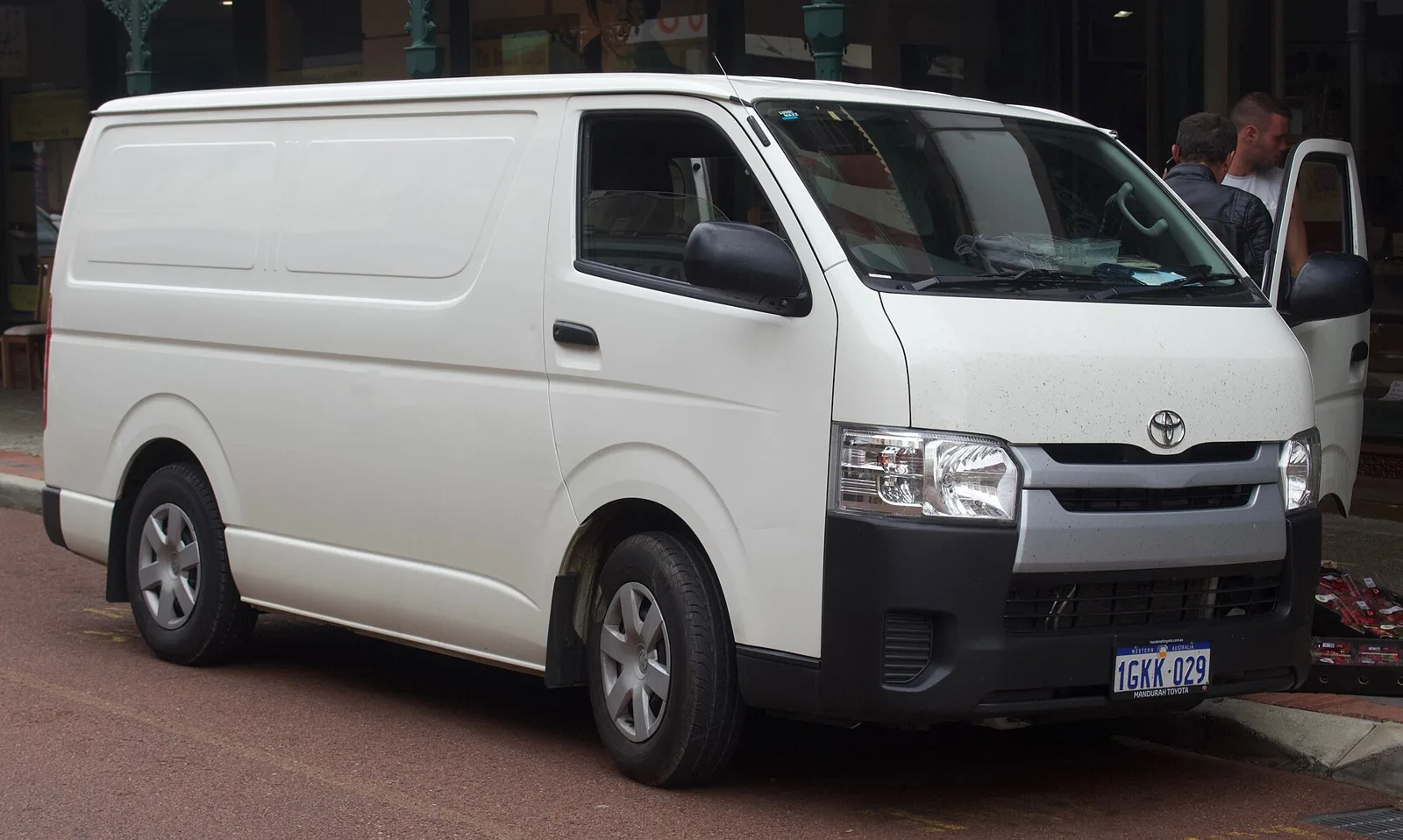
A light commercial van from Toyota, first sold in October 1967, that has grown into a family of vans, minibuses and pickups across many markets.
Built by Toyota since October 1967, the HiAce is a light commercial vehicle with a long history of body variants. Its body styles have included vans, minibuses, pickups, taxis and ambulances, and it has passed through six generations, the latest debuting in 2019.
The Toyota HiAce is a light commercial vehicle that Toyota has built since October 1967. It has been made as a minivan, minibus, panel van, crew van, pickup, taxi and ambulance, and it is known for its practical, boxy shape.
What is the Toyota HiAce?
The HiAce is a light commercial vehicle from the Japanese maker Toyota, first launched in October 1967. Its name is pronounced High Ace, and it has been sold in a wide range of body configurations since its debut. It has remained in production for more than half a century.
Across its history the HiAce has covered passenger and cargo roles, from commuter vans for up to eight people to taxis and emergency vehicles. Across six generations the design has been adapted to many roles.
A light commercial van first sold in October 1967 that became a family of vans, minibuses and pickups across six generations.
How did the first generation begin?
Toyota Auto Body, a Toyota subcontractor, led the development of the first HiAce in the late 1960s. It was conceived as a compact one-box van, much like European vans of the time, which one former Toyota senior employee described as something unseen in the Japanese industry.
The 1967 model came as a delivery van, a stretched commuter and a cab-over pick-up, plus a camper variant called the HiAce Commercial. Launch engines ranged from 70 PS (51 kW) from a 1.35-litre unit to 83 PS (61 kW) from a 1.6-litre, and a 1.8-litre 16R joined the range in 1975.
The first HiAce was designed as a commuter vehicle able to carry up to eight people. Its exterior dimensions and engine size complied with Japanese government rules, which helped sales, and its cab-over body put the engine between the front passengers.
Compared with the bigger Toyota Coaster minibus, the van was the smaller choice. The MiniAce, based on the Publica and an early predecessor of the Corolla, arrived that same year and was much smaller.
What changed in the second generation?
The second generation arrived in 1977 with a longer and more streamlined cab, and it used single headlights. As the new van grew, Toyota added the smaller LiteAce to keep a junior cab-over option closer to the first generation's size.
A 2.2-litre diesel joined the petrol engines in some markets. New body variants included a double-cab pick-up, a super-long-wheelbase van and a high-roof Commuter that could seat up to 15 passengers.
The vans were grouped by wheelbase, with the 20 series having short wheelbases, the 30 series long and the 40 series super long. The pick-up first used the H11 chassis code.
When the third generation appeared in 1982, some second-generation variants, such as the truck, stayed in production for several more years. Many second-generation vans were later shipped out of Europe and Japan to Africa and Asia, where they became public transport.
How did the third generation differ?
A new HiAce van went on sale in 1982, and the HiAce pick-up followed in August 1985. The truck cab shared its basic design with the larger ToyoAce light truck, although its front styling differed, and the truck was a separate model from the van.
The van's model code also reflected wheelbase, with 50 series short, 60 series long and 70 series at the longest. The pick-up used the 80 and 90 series codes.
The Toyota Mobile Lounge, shown at the 1987 Tokyo Motor Show, was based on the high-roof Commuter. The 1989 redesign covered the van and Commuter, while the pick-up ran until the 1995 model year as the last pick-up based on the HiAce.
In South Africa production carried on next to the Quantum, the H200-based model introduced in 2005, until a taxi variant of the Quantum arrived at the end of 2007.
What was the fourth generation like?
The fourth generation (H100) appeared in August 1989 in standard and long wheelbase forms, along with a Grand Cabin and high-roof vans. Its high-roof long-wheelbase body was shared with the 15-seat Commuter minibus. Those body choices made it a versatile family of vans.
Engines ranged from 2.0-litre petrol units to a 3.0-litre turbo diesel. The 2L-T turbo diesel, a 2.4-litre, received electronic control as the 2L-TE in October 1990.
Most versions drove the rear wheels. Four-wheel drive, part-time or full-time, was offered depending on trim and country. Four-wheel-drive models initially used only the 2.8-litre 3L diesel in Japan.
A facelift arrived in August 1993, when Japanese passenger-car Wagons gained the 1KZ-TE, a 3-litre turbodiesel that took over from the 2L-TE and 3L units. A larger 5L engine replaced the 3L in commercial models in August 1998, and the 1TR-FE petrol followed in September 2003.
In the United Kingdom the H100 went on sale in November 1989 with a 2.0-litre 1RZ petrol or a 2.4-litre 2L-II diesel. A short-wheelbase Hiace Compact arrived in 1994 to replace the Liteace van.
The HiMedic, an emergency medical vehicle with a 4.0-litre V8 shared with the Celsior, went on sale in May 1992. It was replaced in 1997 by a HiMedic based on the XH10 Granvia.
The luxury variant launched in August 1999 went by Regius HiAce and Regius Touring HiAce, and Toyopet and Vista showrooms sold them. When the Vista network gave way to Netz, the RegiusAce moved exclusively to Netz Store outlets, and it was built between 1999 and 2004.
How did the HiAce sell in China and other markets?
The H100 remained popular in China, where several local makers built it. Jinbei Motors began the Jinbei Haise in 1991, King Long followed in 1995 with the Golden Dragon XML6532, and Foton started the View C1 in 2000. Each of those makers built its own version of the design.
Those vehicles were exported to several markets, including Chile, and were also assembled in Egypt and Sri Lanka. Common Chinese engines included the 2.0- and 2.2-litre petrol units and the 2.8-litre 4JB1 diesel.
The Jinbei HiAce has spanned six generations, five of them facelifts. The 2006 variant stayed the popular version under Jinbei, and the Haise was given a 2-litre four-cylinder update in 2025.
New Zealand imported many used HiAces from Japan. The 3.0-litre turbo diesel suited the hilly roads of a country with a 100 km/h speed limit, and many of these vans remain in commercial passenger service.
What were the Granvia and GranAce?
The Granvia was a semi-bonneted van sold in Japan between 1995 and 2002, with the front wheels set ahead of the front seats for safety. It came with seven or eight seats, in rear-wheel or four-wheel drive, and it took over from the mid-engined HiAce in Europe and other markets.
The Granvia spawned the luxury HiAce Regius, Grand HiAce and Touring HiAce. In Europe the Granvia-based HiAce usually had a 2.5-litre 2KD-FTV diesel, and it was built until 2012, when the Toyota ProAce replaced it.
In the UK the XH10 replaced the H100 in 1996. Its first engines were a 2.4-litre diesel and a 2.7-litre 3RZ-FE petrol, and in November 2001 the diesel was swapped for the 2KD-FTV to meet Euro Step III rules.
The Granvia reached Australia badged as the HiAce SBV between 1996 and 2003, in short and long wheelbase versions. That model had a 2.4-litre 2RZ-E petrol with a five-speed manual.
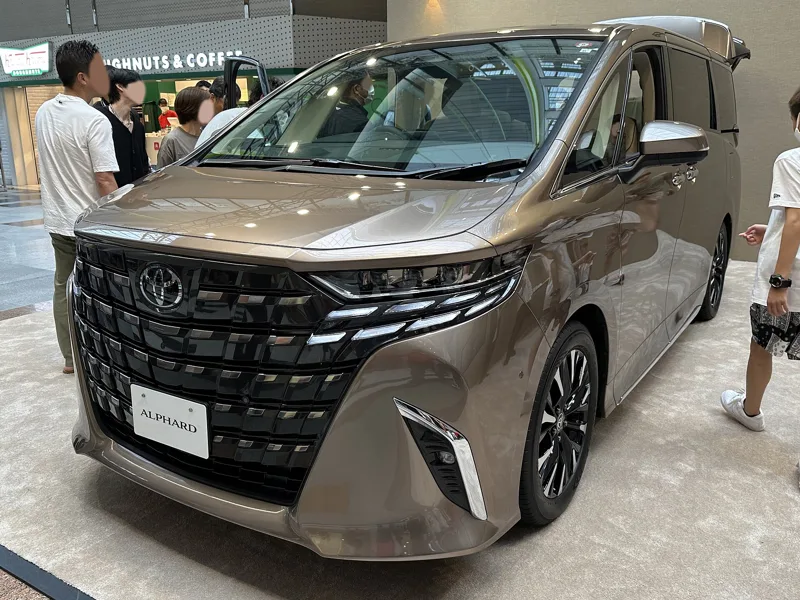
The Grand HiAce, based on the HiAce Powervan, went on sale in Japan in 1999 with petrol and turbo-diesel engines. It was replaced by the Alphard in 2002, and Taiwan sold the Granvia as the HiAce Solemio.
How did the fifth generation change the HiAce?
The fifth-generation HiAce went on sale in Japan on 23 August 2004. Its design was previewed by a DMT concept at the 2001 Tokyo Motor Show, and the gear lever moved to the dashboard to ease movement in the cabin.
Most models used a four-cylinder DOHC engine, including a 2000 cc petrol unit, a 2,700 cc petrol unit, a 2,500 cc turbo diesel and a 3,000 cc turbo diesel. At launch the 3.0-litre 1KZ-TE carried over until the 1KD-FTV took its place in 2006.
In Japan, Toyota's G-Book telematics service was an option on all trims for private and commercial buyers. A HiMedic emergency version followed in April 2006.
The Philippines took the fifth generation from 13 June 2005, fitted with 2.5-litre 2KD units. The top-of-the-line 11-seat Super Grandia arrived in March 2006 as the first HiAce there with a standard automatic.
At 3400 rpm the 2.5-litre diesel made 109 PS (107 hp; 80 kW), and the 3.0-litre reached 144 PS (142 hp; 106 kW) at the same speed. Torque peaked at 260 Nm (192 lb-ft) and 300 Nm (221 lb-ft) respectively.
A Japanese fact that stuck was theft. As of November 2008 the HiAce ranked first on Japan's list of most commonly stolen vehicles, because it lacked a theft immobiliser.
In November 2017 the Japanese HiAce Van and RegiusAce received a 2.8-litre 1GD-FTV diesel with a six-speed automatic, which supplanted the 1KD-FTV. A CBU-imported GL trim reached India in February 2021, and only 55 units were sold.
What is the sixth generation like?
The sixth-generation HiAce, known as the H300, made its global debut in the Philippines on 18 February 2019. It used a front bonnet instead of the cab-over design of its predecessors, and its development was led by chief engineer Takuo Ishikawa.
The sixth generation came with a turbocharged 2.8-litre 1GD-FTV inline-four diesel or a naturally aspirated 3.5-litre 7GR-FKS V6 petrol.
In Australia the sixth generation went on sale on 28 May 2019 in five grades. The 3.5-litre V6 was offered only on the long and super-long wheelbase models, and a six-speed manual was limited to the long-wheelbase van.
Other markets followed at different times. Thailand received the HiAce on 10 June 2019, Mexico in late August 2019 and Brazil in September 2025. Indonesia's version, the HiAce Premio, was unveiled in July 2019 at the Gaikindo show, then in its 27th edition.
The Philippines range runs to five grades, from a 15-seat Commuter Deluxe to a 10-seat Super Grandia, and all use the 2.8-litre turbodiesel. Toyota Motor Philippines used H300 models as a premium taxi service in Cebu from March 2021.
Toyota HiAce specifications
| Generation or market | Engine and output |
|---|---|
| First generation, launch | 1.6-litre petrol, 83 PS (61 kW) |
| Fourth generation, UK petrol | 2.0 1RZ, 5400 rpm: 74 kW; 2600 rpm: 165 Nm |
| Fourth generation, UK diesel | 2.4L 2L-II, 3900 rpm: 57 kW; 2400 rpm: 162 Nm |
| XH10, UK petrol | 2.7L 3RZ-FE, 4800 rpm: 105 kW; 2400 rpm: 226 Nm |
| Fifth generation, 2.5 KD | 2.5 KD, 3400 rpm: 109 PS (107 hp; 80 kW) |
| Fifth generation, 3.0 KD | 3.0 KD, 3400 rpm: 144 PS (142 hp; 106 kW); 300 Nm (221 lb-ft) |
| Fifth generation, 2.7 TR petrol | 2.7 TR petrol, 5200 rpm: 160 PS (158 hp; 118 kW) |
| Japan, 2017 update | 2.8 L 1GD-FTV, 3600 rpm: 151 PS (149 hp; 111 kW) |
| Australia, SBV | 2.4-litre 2RZ-E, 4800 rpm: 88 kW; 3600 rpm: 200 Nm |
| Sixth generation | 2.8 L 1GD-FTV diesel or 3.5 L 7GR-FKS V6 petrol |
_LWB_van_(2018-10-01)_01.jpg)