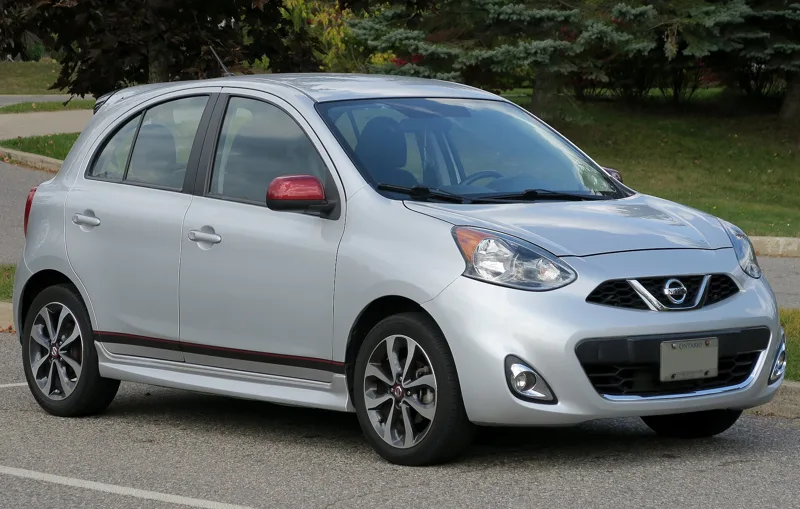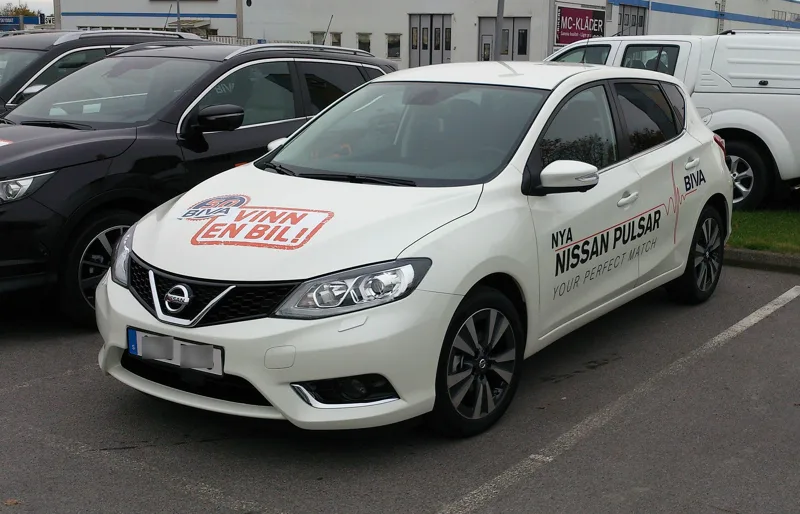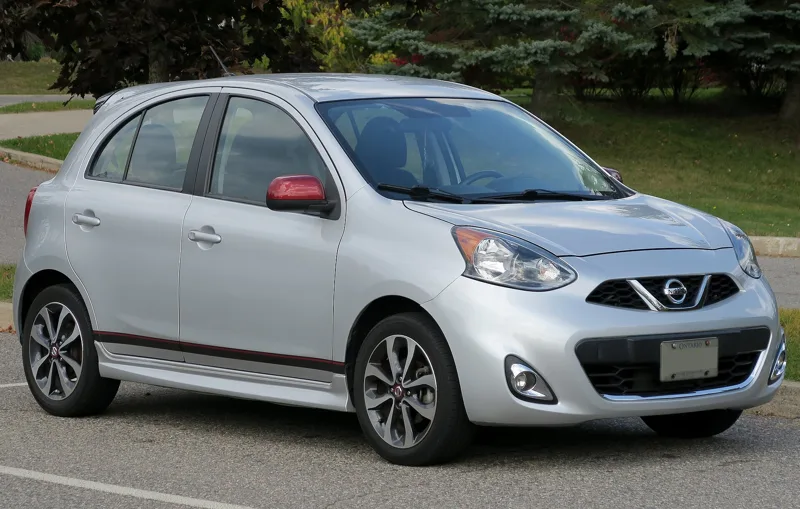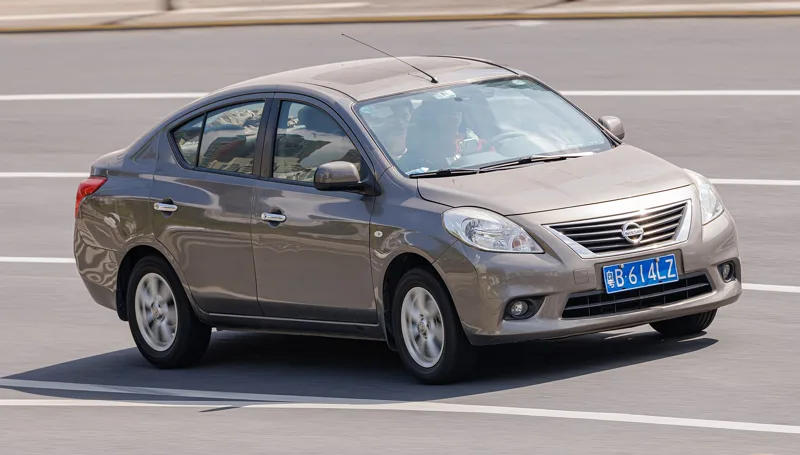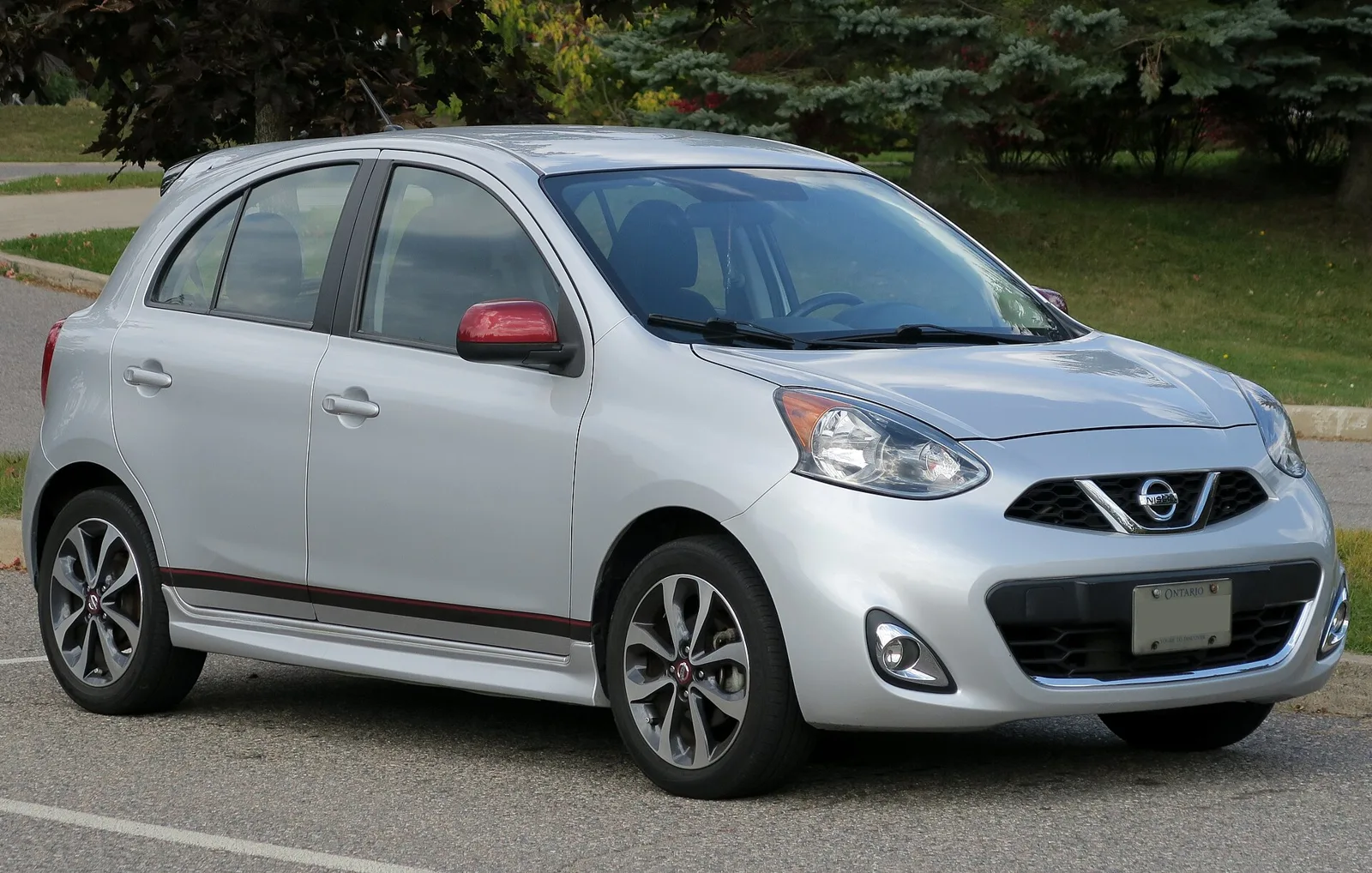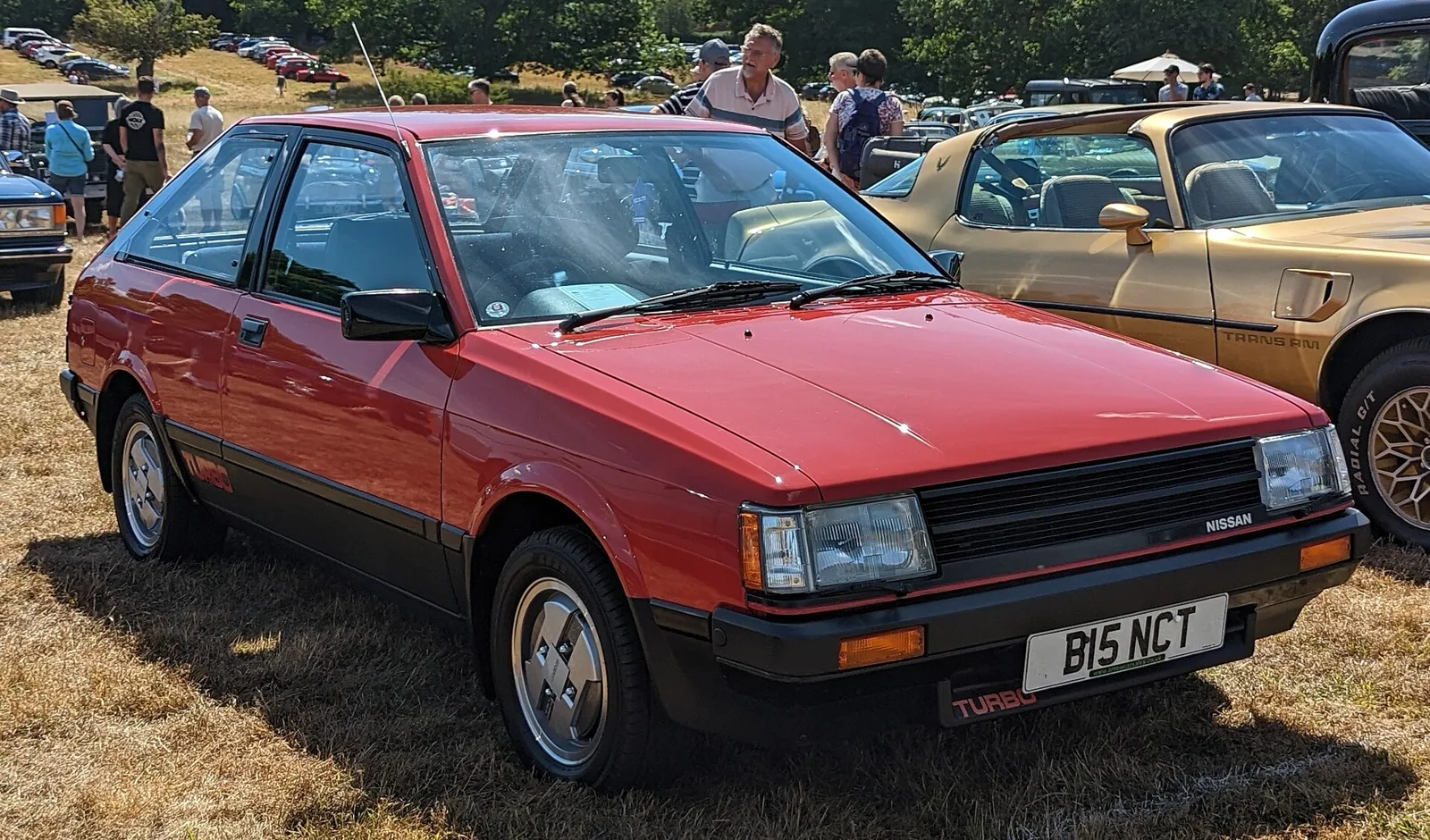
From the 1970 E10 with its Mini-style gearbox to the N12 hatchback and the Alfa-built Arna, the Cherry tracked Nissan's move to front-wheel drive.
The Nissan Cherry was Nissan's first front-wheel-drive supermini line, begun as the Datsun Cherry in 1970. It ran through four generations, sold under names including Datsun 100A, Datsun F10 and Cherry Europe, before the Sunny took over. Its later models included a turbocharged 1.5-litre version.
The Nissan Cherry was a series of subcompact cars that formed Nissan's first front-wheel-drive supermini line. It began life as the Datsun Cherry in 1970 and ran through four generations, with the name fading in most markets once the Sunny and Pulsar took over.
Where did the Nissan Cherry come from?
The Cherry was Nissan's first front-wheel-drive car, released in 1970, and it was a clear departure from the rear-drive cars that came before it. It had a front-mounted engine driving the front wheels, and the Cherry line began with the E10 and continued through the F10 and later models.
The idea behind the car predated the Nissan link. The Prince Motor Company had planned to mass-produce a front-engine, front-wheel-drive car before its merger with Nissan in 1966, and the Cherry carried that plan forward.
Nissan's direct successor was the Pulsar, which was sold worldwide and kept the Cherry name in certain markets. In Japan the Cherry was sold exclusively through Nissan Cherry store locations, while Asian markets also received a Cherry Cab cabover truck closely related to the Sunny.
Nissan's first front-drive supermini, built on a Prince concept, that ended up sold under four different names.
What did the first-generation E10 look like?
The E10 generation featured four-wheel independent suspension and inline four-cylinder Nissan A-series OHV engines, so the range covered two sizes. Both engines were overhead-valve designs. Buyers could choose a 1.0-litre unit of 988 cc, the A10, or a 1.2-litre A12 of 1,171 cc.
Although the car used a Nissan engine, its powertrain traced back to Prince's original concept. That layout was inspired by the transmission-in-sump arrangement that the British Motor Corporation used in the Mini, but the transmission sat in a separate housing and did not share oil with the engine.
The separate transmission gave the E10 a distinctive whine, which was characteristic of that mechanical configuration.
The sporting Japanese-market Cherry X-1 used a twin-carburettor A12T engine, fitted with dual sidedraft Hitachi carburettors.
What were the Cherry's other names?
In Europe the A10-engined E10 was sold as the Datsun 100A, while the A12 cars became the Datsun 120A, which was only offered as a coupe or as a semi-automatic version. The Cherry and Datsun 1000 names also appeared in advertising, although the 1000 name belonged to early Sunny and Bluebird models.
In Japan the Cherry had its own dealership channel, the Nissan Cherry Shop, while the Sunny sold at the Nissan Satio Shop and the Bluebird at the Nissan Bluebird Shop. The E10 continued in many places until 1977, even after the Cherry F-II successor arrived.
How did the Cherry sell in Britain?
The Cherry arrived in the UK just before Datsun's surge in sales, and Datsun's growing prominence there was tied closely to the car's launch. Its success was a major reason the brand gained ground. Sales reached just over 6,000 units in 1971, then more than 30,000 in 1972.
The Cherry's popularity was strong enough to make Datsun a leader in the early 1970s, when the British car industry was faltering. Japanese makers were gaining market share quickly, and Datsun led the charge.
Britain's Motor magazine polled owners in February 1973. Asked whether they would buy the same model again, 76 percent of Cherry owners said yes. That beat the 66 percent recorded for the Volkswagen Beetle, a car long known in the UK for owner loyalty.
What was the second-generation F10?
The second-generation Cherry was known as the F-II in Japan and as the Datsun F10 in North America. North American buyers got it as a front-drive Nissan, and it kept four-wheel independent suspension. Sales fell short of expectations, and the Cherry name left the Japanese market with this generation.
The F10 relied on three A-series engines, the A10, A12 and A14, displacing 1.0, 1.2 and 1.4 litres. A two-pedal semi-automatic called the Sportmatic used a torque converter, so no clutch pedal was needed.
In Europe the F10 was sold as the Datsun 100A F-II or 120A F-II, although marketing material still used the Cherry name. The A12-powered 120A F-II was the most common model, and the coupe came only with the larger engine in Britain.
New Zealand assembly of the 100A four-door sedan used imported kits, making it a bargain entry for Datsun buyers. Its 988 cc engine was smaller than the Mini's 998 cc unit, which made it the smallest-engined car assembled in New Zealand at the time.
The American market offered only the coupe and wagon, both with the 1.4-litre engine. Canada also had a two-door sedan.
The F10 timeline included a September 1974 Japanese launch, a Europe-wide lineup in 1976 and a UK coupe in 1977. Four F-IIs entered the 1978 Swedish Rally, and the local dealer entry finished 19th overall.
What was the third-generation N10?
The N10 became the Nissan Pulsar in Japan, but Europe and many other export markets knew it as the Cherry. Its body was boxier and reflected European design thinking of the day, when small hatchbacks such as the Ford Fiesta, Volkswagen Polo and Renault 5 were selling well.
It arrived in Japan in May 1978, with European sales starting in March 1979. The N10 became the most popular foreign car in Britain in 1981. In the United States it was sold as the Datsun 310, which sat slightly above the older rear-drive Datsun 210.
Engines carried over from the previous model, with Nissan's A-series in 1.0, 1.2 and 1.4-litre forms. The A12 was later replaced by the slightly larger A12A in export markets, and production of the N10 ended in mid-1982.
What was the fourth-generation N12?
The N12 Cherry was an angular three- or five-door hatchback introduced in September 1982. It replaced the N10 in Europe, where the Cherry name was kept. It was somewhat larger than earlier Cherries, and its wheelbase and track each grew by about 20 mm (0.8 in).
Nissan reduced weight by using lighter E-series engines and extensive high-strength low-alloy steel. The aerodynamics improved, although a drag coefficient of 0.38 was no better than average for the segment. Better seats and a redesigned suspension improved comfort.
A quirk of the three-door was that its rear glass could be wound by a pair of levers on the console, and those levers also operated the child-safe locks on five-door cars. Sound levels dropped thanks to the aerodynamic gains, better door seals and a sandwiched firewall.
A one-litre E10-engined version sold in Europe where tax favoured small engines. It was usually offered only in the DX trim with a four-speed manual. Export buyers could also order a diesel from early 1983, and Belgian buyers received a 1985 special edition called the Cherry Pulsar.
The turbocharged 1.5-litre produced 114 PS (84 kW) at 5,600 rpm in European trim.
What was the Alfa Romeo Arna?
Alfa Romeo's plant at Pratola Serra, near Naples, produced a version of the N12 as well. Alfa badged it the Arna, while the United Kingdom and Spain sold it through Nissan dealers as the Cherry Europe.
The Cherry Europe came only as a three-door, in the base 1.2 SL and the later performance 1.5 GTi.2 SL and the later performance 1.5 GTi. Under the skin it used Alfasud-based parts, including the engine, transmission and front suspension. The rear suspension, brakes and most body pressings came from Japan.
It was a joint project between Alfa Romeo and Nissan. Arna stood for Alfa Romeo Nissan Autoveicoli. It did not sell well, and the partnership ended with the car's demise in 1987. The tie-up was short-lived.
The Arna was never sold in Japan, but a domestic Pulsar Milano X1 used the Alfa connection in its publicity and shared the Arna's black and green interior. It was otherwise a standard N12 with the normal transversely mounted E engine.
How did the Cherry name come to an end?
After Cherry production ended, the Sunny became Nissan's only car of its size in Europe. The range launched in autumn 1986 with a hatchback as well as a saloon, and the estate continued from the earlier Sunny line.
In most export markets the Nissan Sunny name replaced the Cherry from the N13 Pulsar onwards, and the change came gradually, market by market, rather than all at once. Greece kept the Cherry nameplate on the N13 Pulsar. In Japan and parts of Asia, the Pulsar name remained until the N15.
What are the Nissan Cherry specifications?
| Specification | Detail |
|---|---|
| Layout | Front-engined, front-wheel drive supermini |
| First generation suspension | Four-wheel independent |
| E10 engines | 1.0 L (988 cc) A10 and 1.2 L (1,171 cc) A12 |
| F10 engines | 1.0, 1.2 and 1.4-litre A-series OHV inline-four |
| X-1 engine | Twin-carburettor A12T with dual sidedraft Hitachi carburettors |
| UK sales | Just over 6,000 in 1971; more than 30,000 in 1972 |
| Motor poll | 76 percent of Cherry owners would buy the same model again, February 1973 |
| N12 layout | Three- or five-door hatchback, September 1982 |
| N12 aerodynamics | Drag coefficient Cd 0.38 |
| N12 wheelbase and track | Each up by about 20 mm (0.8 in) |
| Turbo 1.5-litre | 114 PS (84 kW) at 5,600 rpm, European trim |
| Arna | Alfa Romeo, Pratola Serra, produced until 1987 |
| Arna engines | Alfasud-based engine, transmission and front suspension |
The rows keep the E10 and N12 figures apart, so the 1970s and 1980s cars are not blended into one set of values.