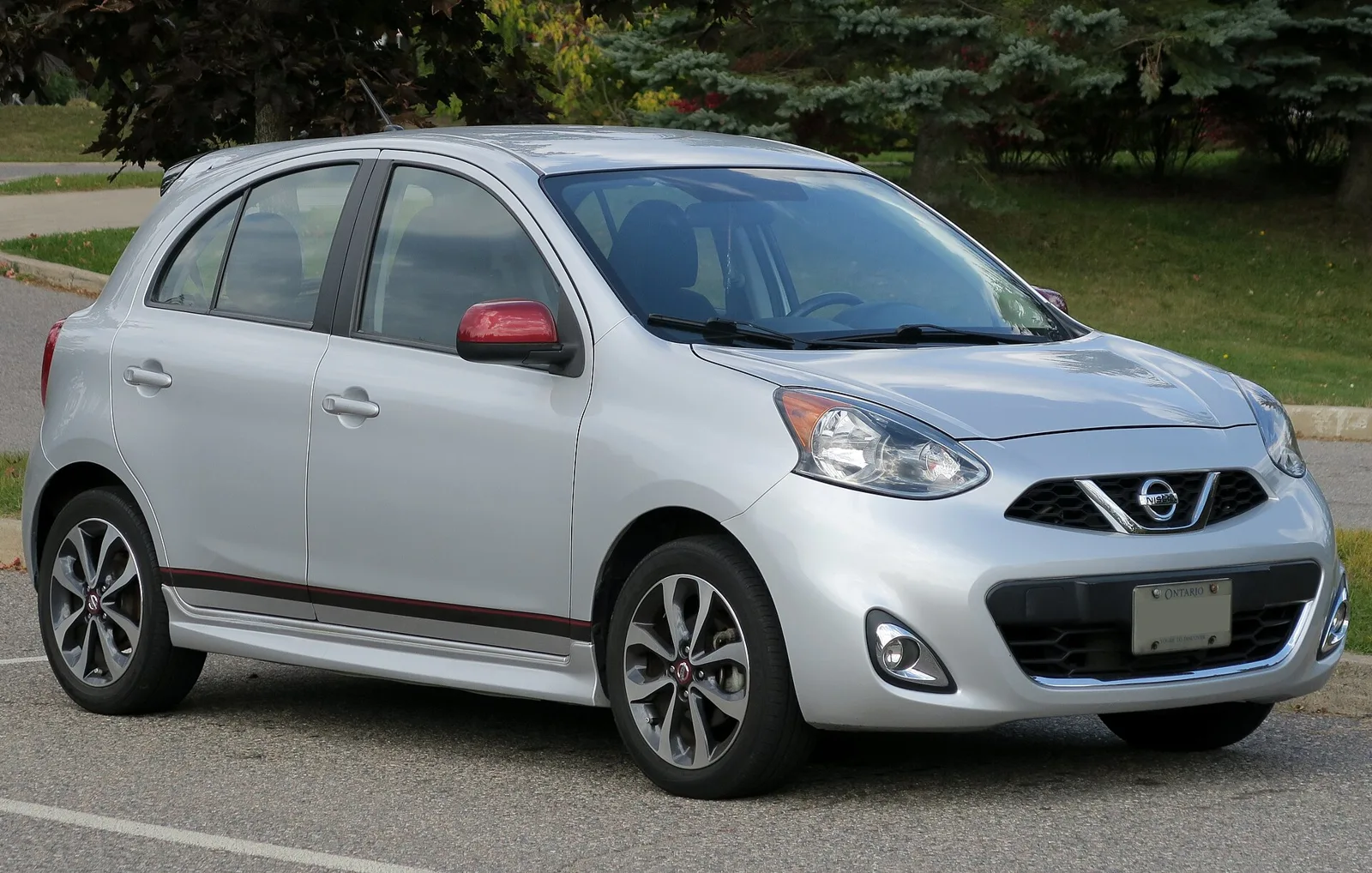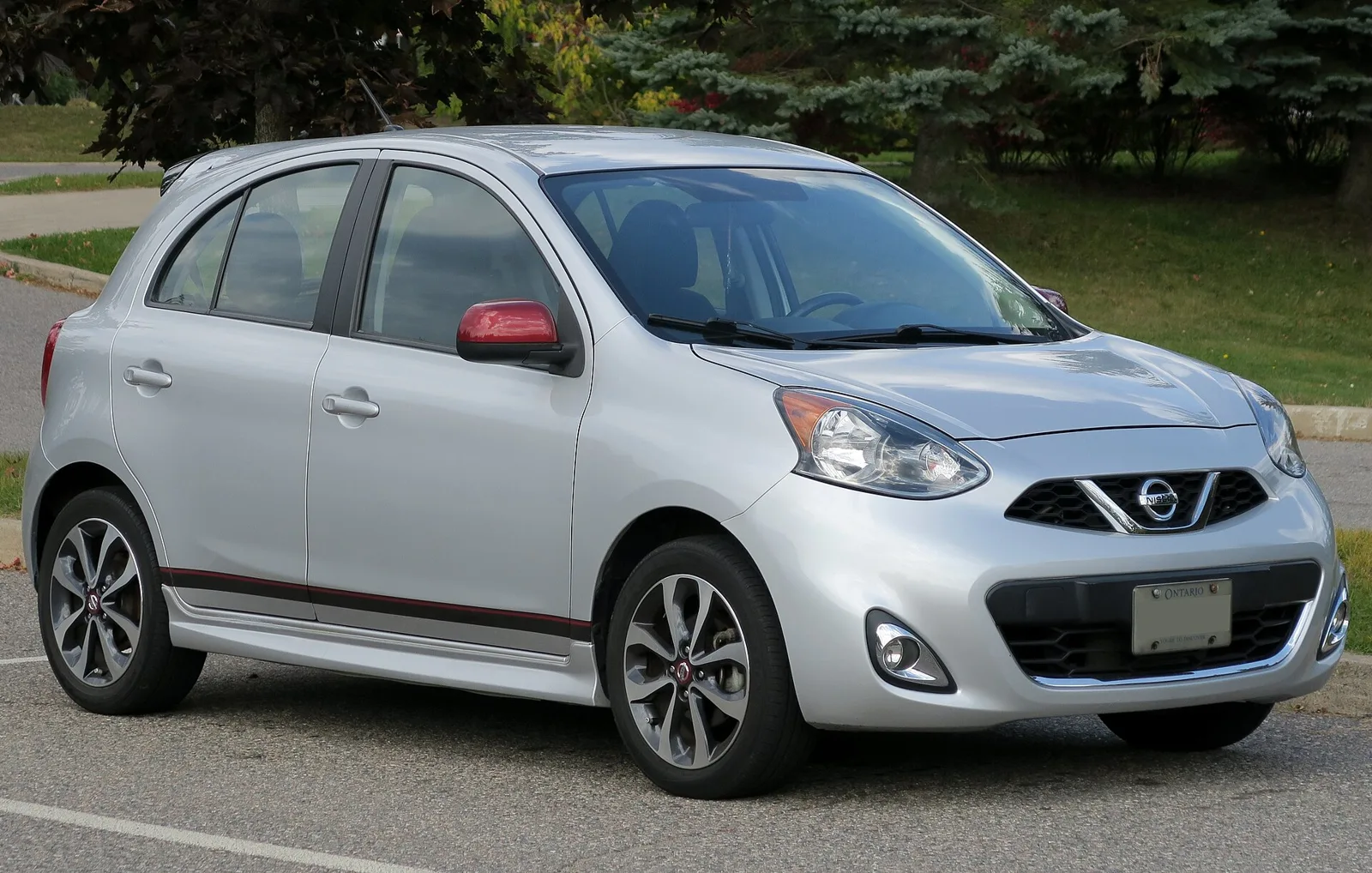
How the Micra, sold as the March in Japan, grew from a 1982 Cherry replacement into a 2025 battery-electric hatchback, with its Verita and hot-hatch cousins along the way.
The Nissan Micra, sold as the March in Japan, is a supermini that Nissan has built since 1982. It went through six generations, from the K10 to the electric K15 of 2025. Its Taiwanese cousin, the Verita, was a retro-styled upscale K11 variant.
Few small cars have stayed on sale as long as the Nissan Micra. Built since 1982, it carried the March name in Japan and in many Asian and Latin American export markets. Over six generations it has moved from a light, frugal hatchback to a battery-electric model launched in 2025.
Where did the Nissan Micra come from?
The Micra began life as the March, a Japanese supermini launched in October 1982 to challenge the Honda City, Daihatsu Charade, Suzuki Cultus and Toyota Starlet. It replaced the Nissan Cherry, which had grown larger with each generation. Europe received it as the Micra in June 1983.
Nissan Cherry Store dealerships were the only outlets for the car in Japan until 1999, when the Cherry network merged into Nissan Red Stage. Engineers drew on the work of the Prince Motor Company, which Nissan had acquired in 1966 and which had developed the Cherry.
The body style was first drawn for Fiat as a 127 replacement. Fiat chose the Giugiaro-styled Uno instead, and Nissan used the design for its own supermini. A small Datsun badge stayed on the tailgate for the first two years of sales while the company phased out that name.
A supermini that began life as the March, passed through six generations and went fully electric in 2025.
How did the first-generation K10 Micra perform?
The K10 was light and frugal. Early European cars weighed 630 kg (1,389 lb) and used a specially developed all-aluminium MA10S engine, with 37 kW (50 PS) or 40 kW (55 PS) in the high compression version. Gearing was unusually high, and the five-speed manual and automatic gearboxes were rare in superminis at the time.
Weight saving came at a cost, because the thin insulation made early cars loud. Japanese buyers liked the sub-1000 cc engine, which kept the annual road tax low. A June 1985 revision brought a restyled tailgate and larger rear lamps, and a 1989 facelift added deeper bumpers, a new grille and the five-door hatchback for Europe.
Why was the Micra considered reliable?
The K10 earned a strong reputation for reliability. In a 1995 ADAC survey of cars aged four to six years, it topped the small car class, with 7.5 breakdowns per 1,000 vehicles at four years and 11.5 at six. The Volkswagen Polo recorded 8.0 and 15.3 over the same ages.
The Fiat Uno, the class loser, recorded 20.7 and 37.3 breakdowns per 1,000 at the same ages. British owners stayed loyal too. An Auto Express survey in August 2006 found 96,000 of the 340,000 K10s registered in the UK between 1983 and 1992 still on the road.
What did the K11 generation change?
The K11 arrived in 1992 with all-aluminium DOHC engines and a toughened safety cage. Its 1.0-litre CG10DE made 55 PS (40 kW) and the 1.3-litre CG13DE made 75 PS (55 kW). It was built at Sunderland in the UK as well as in Japan and Taiwan.
The K11 became the first Japanese car to win European Car of the Year, taking the 1993 title. It also won the Japanese Car of the Year award in 1992, and Nissan built 2,000 limited V3 Award editions to mark its major honours. Euro NCAP later gave the Mk2 Micra only two stars, in 1997.
How did the K12 Micra differ?
The K12, unveiled at the 2002 Paris Motor Show, was a fresh design developed with Renault. Its wheelbase was 70 mm longer, the body was taller and wider, and the headlamps ran into the wings. Engines included 1.2 and 1.4 petrol units and a Renault-sourced 1.5 diesel.
The K12 stayed in production until model year 2011, and its chassis later formed the basis of the Renault Clio launched in 2005. A C+C coupe-convertible followed in 2005, designed in London with an electric folding glass roof made by Karmann. Its 2+2 seating and 1.4 or 1.6-litre petrol engines made it a distinct model.
What was the fourth-generation K13 like?
The K13 was built on the V platform with a new 1.2-litre three-cylinder HR12DE, producing 59 kW (79 hp) and 108 N m (80 ft lbf). It was the first three-cylinder engine in the March and Micra line, and its drag coefficient was 0.32. The car weighed 915 kg (2,017 lb).
The K13 was sold in more than 160 countries. Thai production began on 12 March 2010 and qualified the car for Thailand's Eco Car tax incentives, and production followed in India, Indonesia, Mexico, Brazil and China. Global sales passed six million by the end of May 2011.
Chennai built its 100,000th Micra on 16 June 2011. Thai production ended in July 2022 after an 11-year run, while Mexico was still building the car in 2024.
What did the K14 Micra bring?
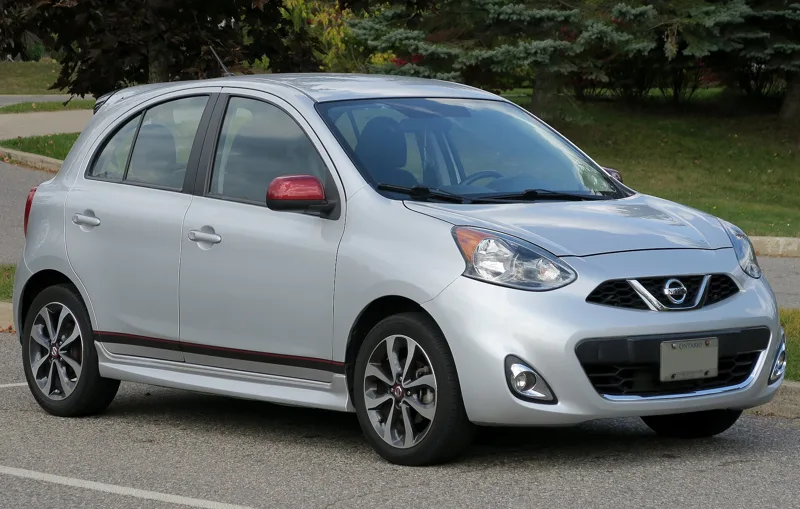
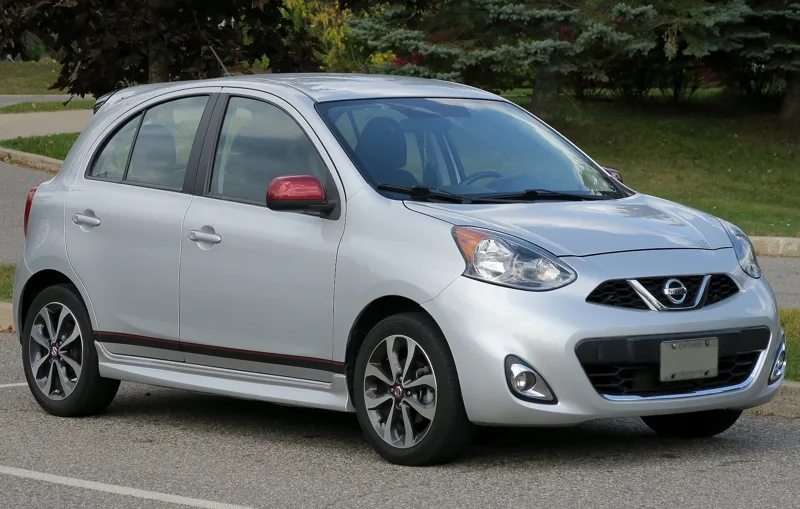
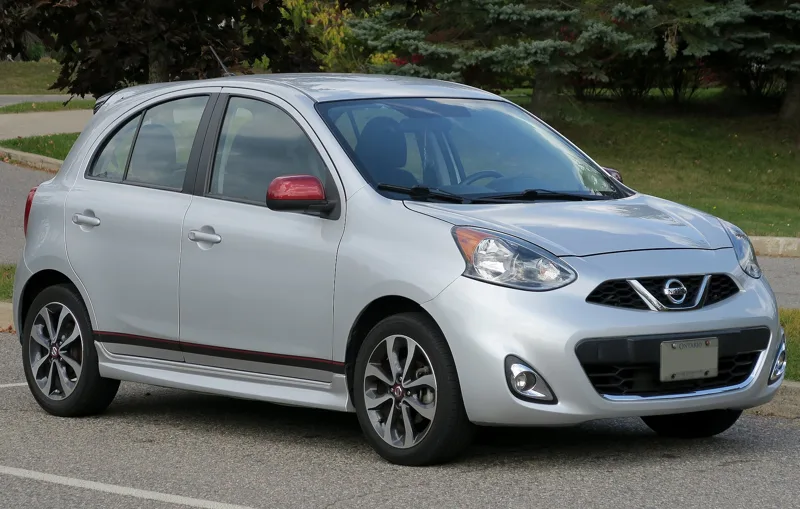
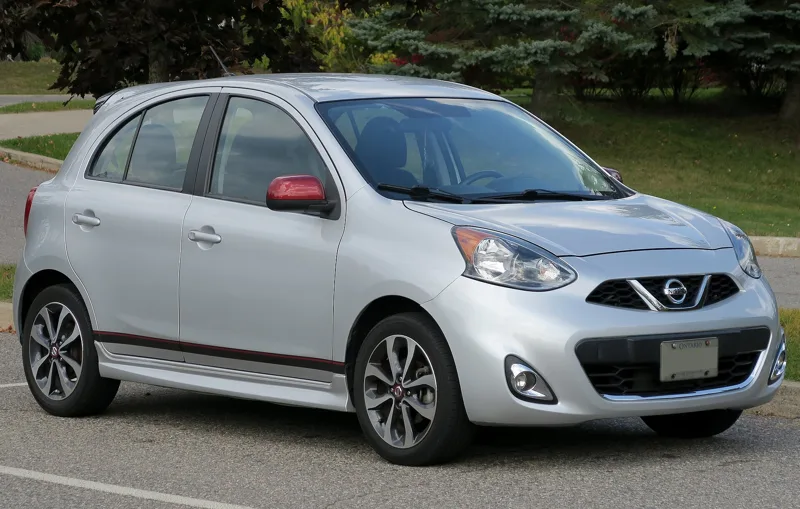
The fifth-generation K14, unveiled at the 2016 Paris Motor Show, had all-new styling but kept the K13 platform. Its engines were shared with the Renault Clio IV. European sales began in March 2017, and the car was also offered in South Africa, Turkey, Morocco and New Zealand.
The base engine was a 1.0-litre petrol with 70 hp (52 kW; 71 PS). Options included a 1.5-litre diesel with 90 hp (67 kW; 91 PS) and a 0.9 petrol with 90 hp, or 95 hp with overboost. Trace control softly pinches the brakes to reduce understeer, and the higher trims added hill start assist and a reversing camera.
Is the Nissan Micra electric now?
Yes. The sixth-generation K15, unveiled on 21 May 2025, is a battery-electric hatchback built on the AmpR Small platform, which it shares with the Renault 5 E-Tech and Renault 4 E-Tech. Nissan went electric-only because proposed Euro 7 rules could add up to 5,000 euros to a conventional supermini.
A 90 kW (121 bhp) motor pairs with a 40 kWh lithium iron phosphate battery for up to 309 km (192 mi) WLTP range. The 110 kW (148 bhp) version uses a 52 kWh nickel manganese cobalt battery for up to 408 km (253 mi), with 100 kW DC fast charging that takes 10-80% in 28 minutes.
The car is built at Renault ElectriCity in Douai, northern France. UK prices start from around 22,995 pounds, with sales beginning on 1 September 2025 in Engage, Advance and Evolve trims.
Which hot Micras were built?
The most famous performance Micra is the Super Turbo, built in a limited run of 10,000 units from 1988 and still the fastest production Micra Nissan has made. Its 930 cc engine combined a supercharger and a turbocharger to produce 110 PS (81 kW; 108 hp) at 6400 rpm.
It reached 100 km/h in 7.7 seconds and covered the quarter-mile in 15.5 seconds. Its top speed of 180 km/h (112 mph) was the limit Japan placed on production cars at the time, and production ran until December 1991.
The March Nismo went on sale in Japan in December 2013 with 16-inch aluminium wheels and Vehicle Dynamic Control, on a 1.2-litre engine with 79 bhp (59 kW; 80 PS). The Nismo S added a tuned 1.5-litre engine with 114 bhp (85 kW; 116 PS). In 2016 Autech built 30 A30 Boleros for the company's 30th anniversary, each in Night Veil Purple and sold by lottery for 3,564,000 yen.
What is the Nissan Verita?
The Nissan Verita was an upscale Taiwan-market K11 variant, positioned above the standard March. It had retro styling inside and out, rounded headlights and taillights, a distinctive front end and a chrome and faux wood trimmed interior. Like other Taiwanese K11s, it used the CG13DE 1.3-litre engine.
The Verita was also sold in the Philippines. It sat in the same family as the Bolero and Rumba variants of the Japanese March, but its grille was lower and wider. Nissan Yulon also produced a Taiwan-only three-box March Cubic sedan with its own rear end.
How did the Micra sell in Australia and Canada?
The Micra reached Australia in three phases. A UK-built K11 arrived in 1995, but only 303 were sold, and the car was dropped in 1997. Japanese-built K12s returned in 2007, and the K13 went on sale from October 2010 until Nissan dropped the Micra on 29 April 2016.
Canada had its own timeline. The K10 was sold there until 1991, when the Nissan Sentra Classic replaced it. The Micra returned for the 2015 model year at C$9,998 with a manual gearbox, making it the least expensive new car in the country by a significant margin, and it was discontinued after 2019.
How did the Micra race?
The March was a favourite in the Japanese Rally Championship. Its first motorsport outing was the March Superturbo R of 1987, built for the sub-1600 cc Group A class and weighing 740 kg (1,631 lb) with half interior, a roll cage and a tool kit.
Swedish driver Per Eklund finished 21st on the 1988 RAC Rally. The Micra Challenge gave K11 owners identical 1.3-litre race-prepared engines, and the UK series ran from 1995 to 1999. A K11 converted to mid-engined four-wheel drive raced in the Trophee Andros ice racing series.
How did the Micra's reputation hold up?
The K10 and K11 earned praise for reliability, build quality and ease of use. The K12 drew consistent reviews despite limited rear head room and luggage space. Folksam rated the 1988 to 1995 models as dangerous in a crash, but later models improved on safety.
In What Car?'s 2007 Reliability Supertest Nissan ranked sixth of 26 manufacturers, and the K11 from 1998 to 2002 was its most reliable model. In an independent keyless test against Thatcham's 2005 standard, the Micra was the most secure car tested, while certain BMW and Mercedes models failed.
Top Gear placed the Micra C+C on its 2013 list of the 13 worst cars of the previous 20 years, though Richard Hammond had praised the K12 in its 2003 value segment for cars costing 9,000 pounds. Banksy's 2024 London animal series included a spray-painted rhinoceros mounting an abandoned Micra in Charlton.
What are the Nissan Micra specifications?
The Micra's core figures vary by generation and market. The K13 used a 1.2-litre three-cylinder with 59 kW (79 hp), weighed 915 kg (2,017 lb) and had a drag coefficient of 0.32. The electric K15 offers 309 to 408 km (192 to 253 mi) of WLTP range, depending on battery.
| Generation | Years | Engines | Notable points |
|---|---|---|---|
| K10 | 1982 to 1992 | MA10S 1.0 SOHC; MA12 1.2 from late 1987 | Early European car weighed 630 kg (1,389 lb); 37 kW (50 PS) or 40 kW (55 PS) |
| K11 | 1992 to 2002 | CG10DE 1.0 L; CG13DE 1.3 L | 55 PS (40 kW) and 75 PS (55 kW); European Car of the Year 1993 |
| K12 | 2002 to 2011 | CR12DE 1.2; CR14DE 1.4; K9K 1.5 diesel | Wheelbase 70 mm longer; Micra 160 SR with 113 PS (83 kW; 111 hp) |
| K13 | 2010 onward | HR12DE 1.2 three-cylinder | 59 kW (79 hp), 108 N m (80 ft lbf), 915 kg (2,017 lb), Cd 0.32 |
| K14 | 2016 onward | 1.0 petrol; 0.9 petrol; 1.5 diesel | Base 70 hp (52 kW; 71 PS); trace control; 2019 and 2020 updates |
| K15 | 2025 | Electric: 40 kWh LFP or 52 kWh NMC | 90 kW (121 bhp) or 110 kW (148 bhp); 309 to 408 km WLTP |