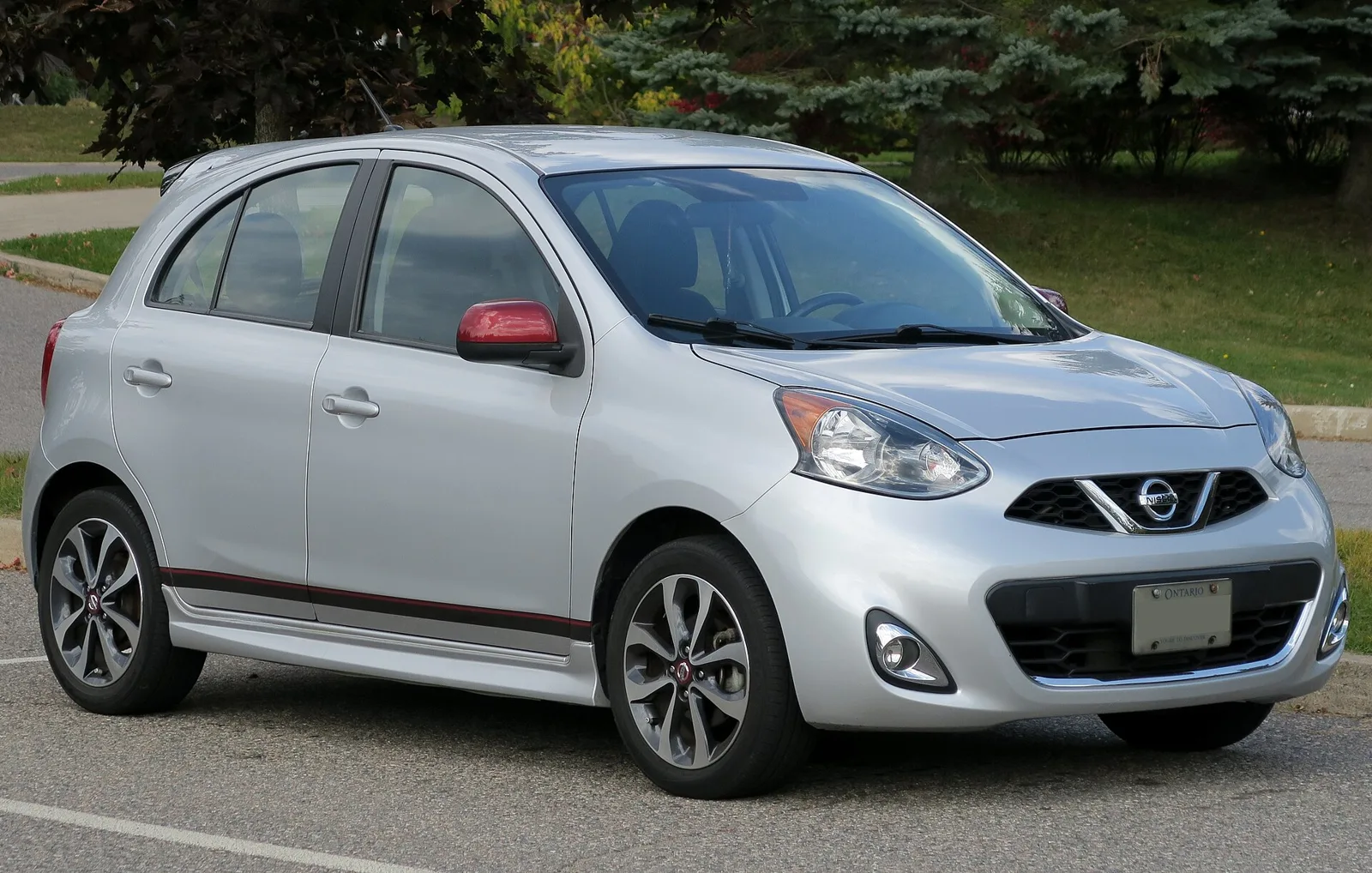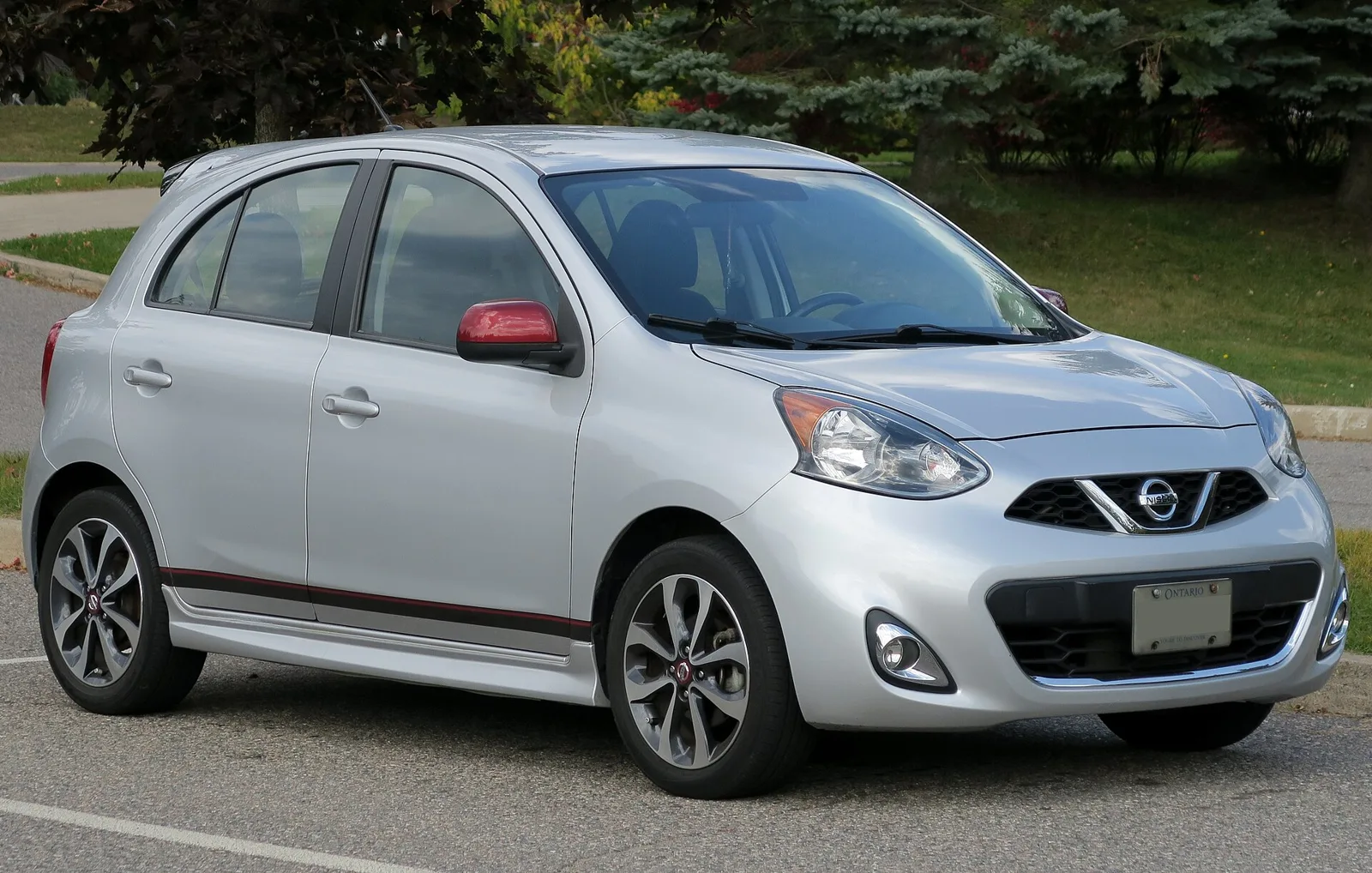
Nissan's Micra and Honda's tall little City both reached showrooms in the early 1980s, then followed very different paths.
Launched within a year of each other, the Micra and City were small cars from the early 1980s. The Micra, sold as the March in Japan, arrived in 1982 to challenge the City, which had launched in 1981. The Micra later became a strong seller in Britain, while the City became a subcompact sedan for developing markets.
The Nissan Micra and Honda City were both small cars built for crowded streets, and both reached buyers in the early 1980s. The City arrived first, a tall and compact hatchback from November 1981, and Nissan answered with the Micra a year later. Their paths then split, with the Micra becoming a strong seller in Britain and the City reinventing itself as a sedan for developing markets.
Why were the Micra and City rivals?
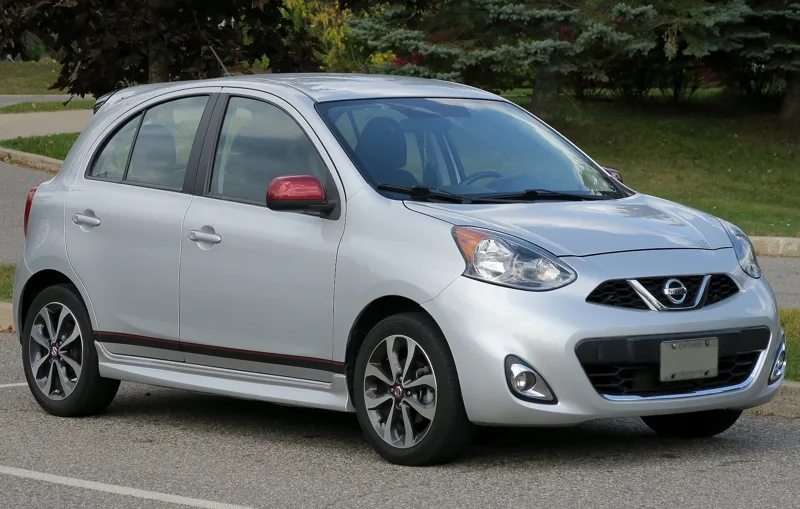
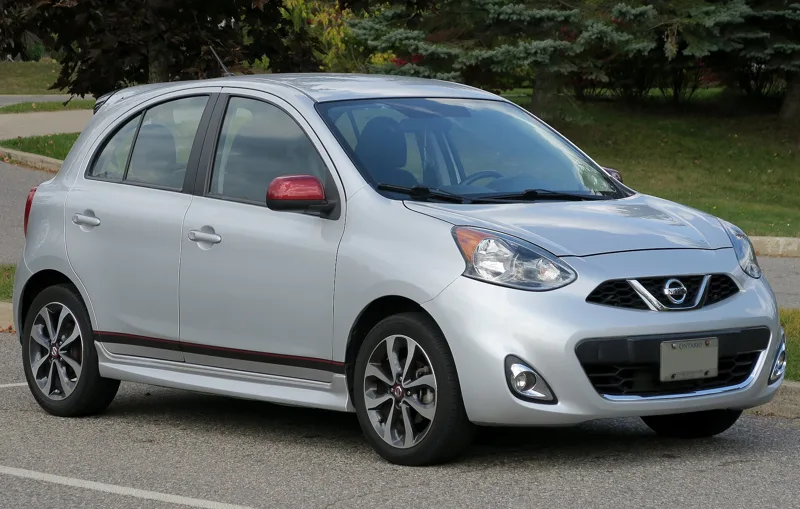
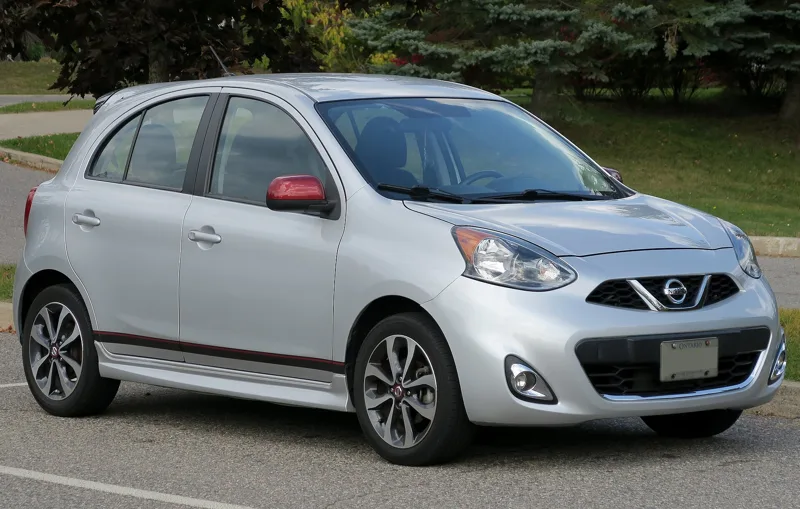
Nissan launched the Micra in October 1982 as a direct challenger to the Honda City, a class that also included the Daihatsu Charade, Suzuki Cultus and Toyota Starlet. The Micra was meant to replace the Cherry, which had grown larger with each generation. The City was Honda's smallest car when it arrived in November 1981.
In Japan the Micra was sold only through Nissan Cherry Store locations, and the March name carried over to many export markets across Asia and Latin America. Its engineering drew on Nissan's 1966 purchase of the Prince Motor Company, which had developed the outgoing Cherry. The City, by contrast, went on sale through Honda Clio dealerships when its second generation appeared in 1986.
One car was built to replace a Cherry, the other was built around a tall, short body, and both were aimed at the same small-car buyer.
What did the first Micra and City look like?
The first City was a three-door hatchback under 3.4 m (11.2 ft) long, with a tall body that let four adults sit in comfort. The Micra used a body first drawn for Fiat, which had asked for a replacement for the 127 and then chose the Giugiaro-styled Uno instead. Both were short cars made for city traffic.
Honda also offered a 50 cc Motocompo scooter with 2.5 PS (1.8 kW) that fitted into the City's small luggage area. Honda called it a trunk bike and invented the compound word trabai for it. Nissan's car was less playful, but its low weight was the point: early European Micras weighed 630 kg (1,389 lb), which meant very little insulation and a noisy cabin.
The Micra reached European showrooms in June 1983, and its five-door hatchback body arrived there only in March 1989. Honda's City stayed a three-door in its first generation, and the City name was not used in Europe at all, because Opel held the trademark. Honda sold the car there as the Jazz.
Micra and City compared on paper
| Specification | Nissan Micra | Honda City |
|---|---|---|
| Debut | October 1982 in Japan, sold as the March | November 1981, three-door hatchback |
| Body | Hatchback on a body first designed for Fiat | Tallboy hatchback, four adults |
| Length | not given | under 3.4 m (11.2 ft) |
| Early engine | MA10S SOHC, 37 kW (50 PS) or 40 kW (55 PS) in Europe | Turbo variant of the 1231 cc Honda ER, from September 1982 |
| Early weight | 630 kg (1,389 lb) in early European trim | not given |
| Transmission | Five-speed manual; four-speed or five-speed automatic | not given |
| Fastest version | Super Turbo, 110 PS (81 kW; 108 hp), 7.7 seconds to 100 km/h | Turbo II, 1983, nicknamed Bulldog; output not given |
| Top speed, fastest version | 180 km/h (112 mph) | not given |
| Export markets | Sold as the March across Asia and Latin America; Micra in Europe | Europe as the Jazz, Australia as a two-seater van, New Zealand assembled |
| First generation ended | 21 December 1992 (K10) | Late 1986, replaced by the GA |
| Second generation | K11, January 1992 in Japan | GA, November 1986 |
Did the Micra's engines change during its first generation?
The original 1.0-litre MA10 was joined in late 1987 by a 1.2-litre MA12 with an electronically controlled carburettor, producing 42 kW (57 PS). Europe received only the 1.0 and 1.2 engines, while a turbocharged Micra with electronic fuel injection was sold in Japan alone.
The model was revised in June 1985, with a restyled tailgate and larger rear lamp clusters. The 1989 facelift brought deeper bumpers, a new front grille, minor interior details and new headlights, and it was the point at which the five-door hatchback reached Europe.
Canada followed a different path. For the 1991 model year a rebadged Nissan Sentra B12 took the Micra's place, and Nissan had announced it would stop importing the Micra into Canada after that year. The Sentra Classics were built in Mexico.
How fast were the hot versions?
The Micra Super Turbo still holds the crown as the fastest production Micra. Its 930 cc engine made 110 PS (81 kW; 108 hp) at 6400 rpm, and it reached 100 km/h (62 mph) in 7.7 seconds. It was built in a limited 10,000-unit run from 1988, and production continued until December 1991.
The engine combined a supercharger with a turbocharger, in a sequential compound charging arrangement. The car came with either a three-speed automatic or a five-speed manual, and a viscous limited slip differential was fitted. Factory figures gave it 15.5 seconds for the quarter-mile, and its top speed of 180 km/h (112 mph) matched the limit applied to Japanese production cars at the time.
The City took a different route. The Turbo arrived in September 1982 with a turbocharged 1231 cc Honda ER engine. The Turbo II followed in October 1983 with wider fenders, and the extra width earned it the nickname Bulldog. A Pininfarina-designed drop-top used the Turbo II's wider fenders but carried only the naturally aspirated 67 PS (49 kW) engine.
What special versions did the Micra spawn?
The Micra family produced several special models. The Be-1 was a limited-edition model with a rounder body, and only 10,000 were sold. The canvas-topped Pao, first shown in 1987, went on sale in 1989 and sold 51,657 units. Demand for the Figaro outran the 20,000 built, so Nissan sold it by lottery.
The Be-1 was shown at the 1985 Tokyo Motor Show but not sold until 1987. The Pao was a retro-looking hatchback with a canvas roof. The Figaro coupe was unveiled at the same show in 1989 and released in 1991. Although it was sold only in Japan, it became one of the most imported K10 derivatives, helped by a long list of celebrity owners who gave it cult status.
Europe received a more modest trim as well. The Super S, introduced with a facelift in 1989, added a factory body kit, racing seats and a tachometer, and came only in black, grey, white and red. It shared the standard MA12 engine, although its catalytic converters made it slightly less powerful than the non-catalyzed cars.
How reliable was the Micra?
In a 1995 survey by the German Automobile Association (ADAC), the Micra topped the small-car class for cars aged four to six years. Four-year-old Micras recorded 7.5 breakdowns per 1,000 vehicles, against 8.0 for four-year-old Volkswagen Polos. Six-year-old Micras managed 11.5 per 1,000, while the Polo recorded 15.3.
Last in that class was the Fiat Uno. Its four-year-old cars averaged 20.7 breakdowns per 1,000, and its six-year-old examples 37.3. Over the long term the Micra also reached a much higher survival rate than many of its competitors.
What changed with the second generation?
The Micra K11 went on sale in Japan in January 1992 and in Europe in the final quarter of that year, built in the UK, Japan and Taiwan. The City's second generation, the GA, had appeared in November 1986 with a low, wide body that Honda called its Crouching form.
Micra K11 engines were all-aluminium 1.0 L CG10DE and 1.3 L CG13DE units with DOHC 16-valve heads, producing 55 PS (40 kW; 54 hp) and 75 PS (55 kW; 74 hp). A diesel, the Micra 1.5 D, used a 1.5 L PSA unit in Europe. Continuously variable transmission and power steering were options on some models.
The City's main engine changed in October 1988 to a 1.3 L SOHC inline-four, the D13C. Honda's PGM-FI fuel injection was fitted to the sporting CR-i and CZ-i, while the base models kept a single carburettor. Honda tied that low, wide body to a lighter car, with basic trim at 680 kg.
Which awards did the second Micra win?
The second-generation Micra won the European Car of the Year award for 1993, the first Japanese car to take the prize. It also won the Good Design Award and Car of the Year Japan in 1992, and the Automotive Researchers' and Journalists' Conference award in 1993. Nissan built 2,000 limited V3 Award editions to mark the three honours.
Safety was a more mixed story. The car had a toughened safety-cage and side-impact door beams as standard, but Euro NCAP gave the Mk2 Micra only a modest two stars in 1997. Airbags, antilock brakes and air conditioning were offered as standard or as options on some models in the range.
How did the City become a sedan?
Honda revived the City name in 1996 for a four-door subcompact sedan aimed at developing markets. It was built on the EF Civic platform, production began in April 1996 at a new plant in Ayutthaya, Thailand, and the Thai-made models had more than 70% local content.
The sedan reached India in 1998, where it quickly became one of the top sellers in its segment. The City got a lukewarm reception in Pakistan at first, but the third generation became a massive hit there. Its D13B 1.3 L engine made 95 PS (70 kW) at 6,400 rpm, Its top speed was put at 171 km/h, and it covered 0-100 km/h in 11.3 seconds.
The fourth generation debuted at the Thailand International Motor Expo in Bangkok in November 2002. In Japan it was sold as the Fit Aria from 20 December 2002, a Thai-built import with four-wheel drive available. Honda picked the word aria, a type of expressive melody usually heard in opera, to continue a musical naming habit that already included the Prelude, Accord, Ballade, Quint and Concerto.
What did the fourth-generation City bring?
The fourth-generation City, sold in Japan as the Fit Aria, arrived with a twin-spark, lean-burn i-DSI engine producing 88 PS. A VTEC version followed in 2004 with a 7-speed Multimatic CVT. The 2005 facelift also extended the front end by 65 mm (2.6 in).
The VTEC car used 15-inch alloy wheels, where the i-DSI had 14-inch wheels, and solid rear discs instead of drums. Its CVT used paddle shifts on the steering wheel to simulate seven speeds, and the facelifted car was known as the City ZX in Thailand.
What became of the Micra and City?
Nissan quietly discontinued the Micra in August 2023, and only its fourth generation remained on sale in some markets. The City's later life was more scattered, with the nameplate reappearing under different badges in different countries.
Honda's Chinese partner, Guangqi Honda, sold a badge-engineered City as the Everus S1 from 2011. It shared the fourth generation's 4,420 mm length and its 1.3-litre or 1.5-litre engines, and production concluded in 2014. In Japan the City was reintroduced as the Honda Grace, which was discontinued in 2020.
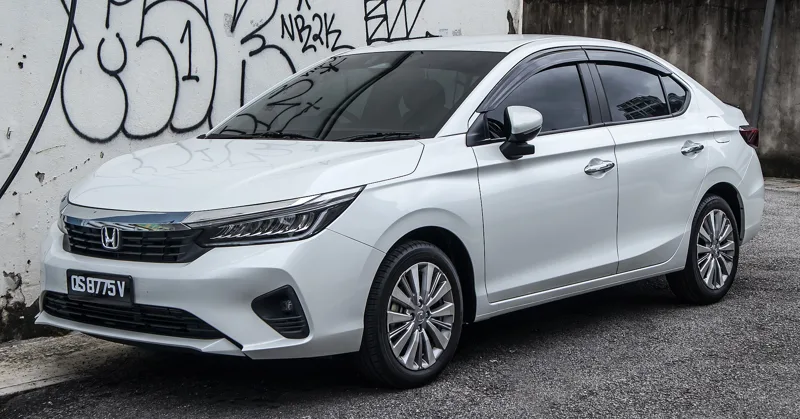
The seventh generation, launched in 2019, grew to an exterior size on par with the ninth-generation Civic sedan. A five-door hatchback joined the range from 2020, which was a long way from the tiny three-door that started the story in 1981.