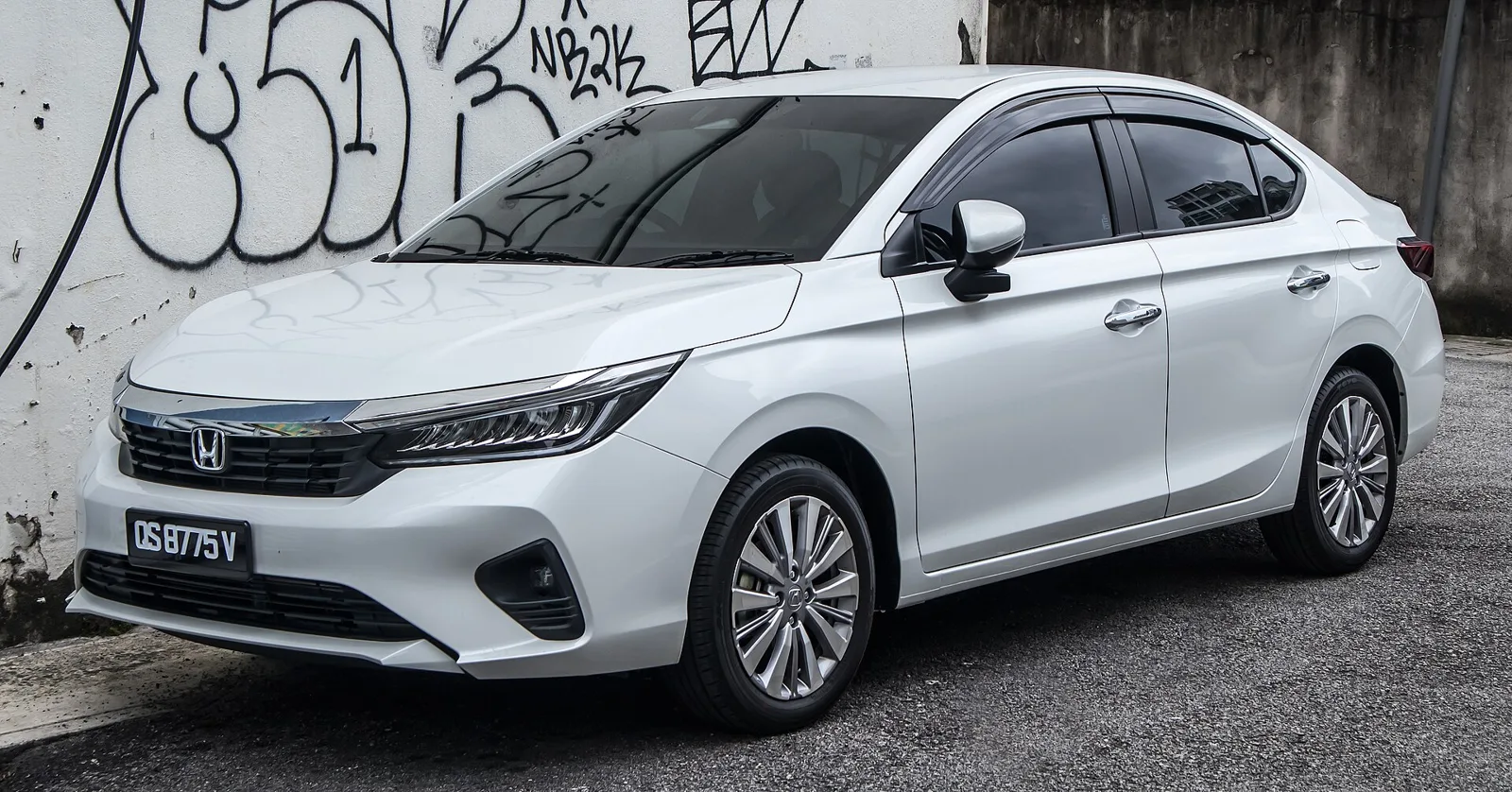
A tall three-door hatchback from 1981, a sedan revival in 1996 and a seventh generation that grew close to Civic size.
The Honda City is a subcompact car from Honda, first produced in 1981 as a three-door hatchback. It was revived in 1996 as a four-door sedan for developing markets and has since become a global nameplate. The seventh generation, unveiled in Bangkok in November 2019, uses petrol and hybrid engines.
The Honda City has been a Honda subcompact since 1981, when a tall three-door hatchback arrived with room for four adults. The nameplate returned in 1996 on four-door sedans aimed at developing markets, and the car has since grown into a wider family that also includes a hatchback. Its engines have ranged from small petrol fours to turbocharged units and a hybrid, depending on the market.
What was the first Honda City?
The first City went on sale in November 1981 with a Tallboy body that was unusually tall for its length. It was offered as a three-door hatchback in several trim levels, and Honda added a turbocharged version in September 1982. At the time it was the smallest car Honda sold, which made it a useful city runabout.
The Tallboy idea was practical rather than fashionable. Four adults could sit comfortably in a car of modest length, and the small luggage area was designed to take the Motocompo, a 50 cc foldaway scooter producing 2.5 PS (1.8 kW). Honda coined the compound word trabai to describe that machine, which it called a trunk bike.
Export markets saw the car differently. Europe sold it as the Honda Jazz because Opel held the City trademark there, so the name changed while the basic car stayed the same. The model also grew sportier as the decade went on, and the City Turbo II arrived in October 1983.
The Turbo II had wider fenders, and its extra width earned it the nickname Bulldog. Its front fenders grew by 30 mm and the rear fenders by 20 mm, a change that made it visibly wider than the standard turbo. Pininfarina also designed a Cabriolet that borrowed the Turbo II's wider fenders but kept a naturally aspirated 67 PS (49 kW) engine.
The first generation came in several shapes. Pro-series vans were offered with either two or four seats, and an R Manhattan Roof version sat 10 cm (3.9 in) taller than the standard roof. Together with the hatchback and Cabriolet, these variants showed how far Honda stretched a small platform in its early years.
A tall little hatchback that became a global nameplate, then grew into a family car.
How did the second generation change the City?
Honda replaced the original City in November 1986 with a second generation whose low, wide body was called Crouching form. The 1.2-litre D12A engine gave way to a 1.3-litre D13C in October 1988, and PGM-FI injection came on the sporting CR-i and CZ-i trims. Production of the three-door City ended in 1995, when the Logo took its place.
Styling was a major theme of the second generation. Its body shared visual cues with the Civic and the Honda Today. In basic form the 1.2-litre D12A made 56 kW (76 PS) at 6,500 rpm, and the name Fit first appeared as a trim level on this generation.
Fit started life as a trim name rather than a model. PGM-FI fuel injection was reserved for the sporting variants of the 1.3-litre car, which set them apart from the base models.
Why did the nameplate return as a sedan in 1996?
Honda revived the City in 1996 as a subcompact four-door sedan for developing markets, first sold mainly in Asia. The third generation was codenamed SX8, with chassis codes 3A2 and 3A3, and production began at Ayutthaya in Thailand in April 1996.
Thailand became the base for the sedan, and the Ayutthaya plant made it the first City built there. The original engine was the D13B, which displaced 1,343 cc and made 70 kW (95 PS) at 6,400 rpm. Its claimed top speed was 171 km/h, and it took 11.3 seconds to reach 100 km/h.
That performance was modest by modern standards, but it suited the markets where the sedan was first sold. The model's reach kept widening after that. Argentina production began in March 2011, when the City became the first Honda built in that country, and Pakistan production resumed on 1 May 2012 after floods had interrupted it.
Which engines powered the fourth and fifth generations?
The fourth generation made its world debut in Bangkok in November 2002, and it launched with a twin-spark i-DSI engine rated at 88PS. A VTEC version followed and used a 7-speed Multimatic CVT. The fifth generation relied on the 1.5-litre L15A7, which produced 120 PS (88 kW).
Engine choices depended on the market. The Brazilian flex-fuel 1.5 i-VTEC was rated at 115 hp on petrol and 116 hp on ethanol. In India the 1.5-litre i-VTEC made 118 PS (87 kW; 116 hp) and 146 Nm of torque, so output figures were close across those markets.
Pakistan's City offered petrol engines of 1.2 and 1.5 litres, while the later Thai seventh generation used a 1.0-litre VTEC Turbo. The Thai choice was shaped by the country's Eco Car rules, which are covered further on.
Did the sixth generation include a hybrid?
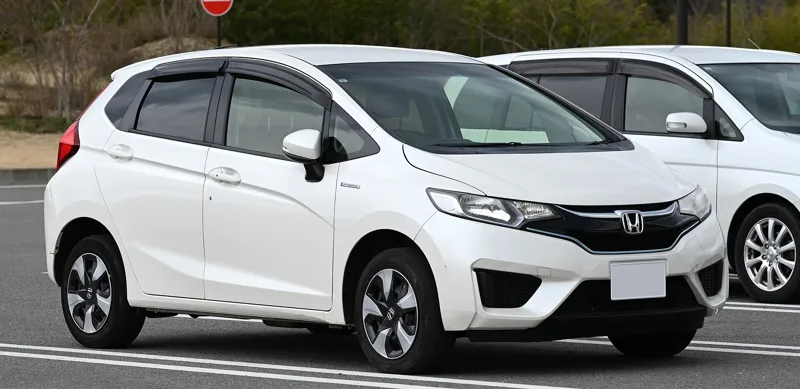
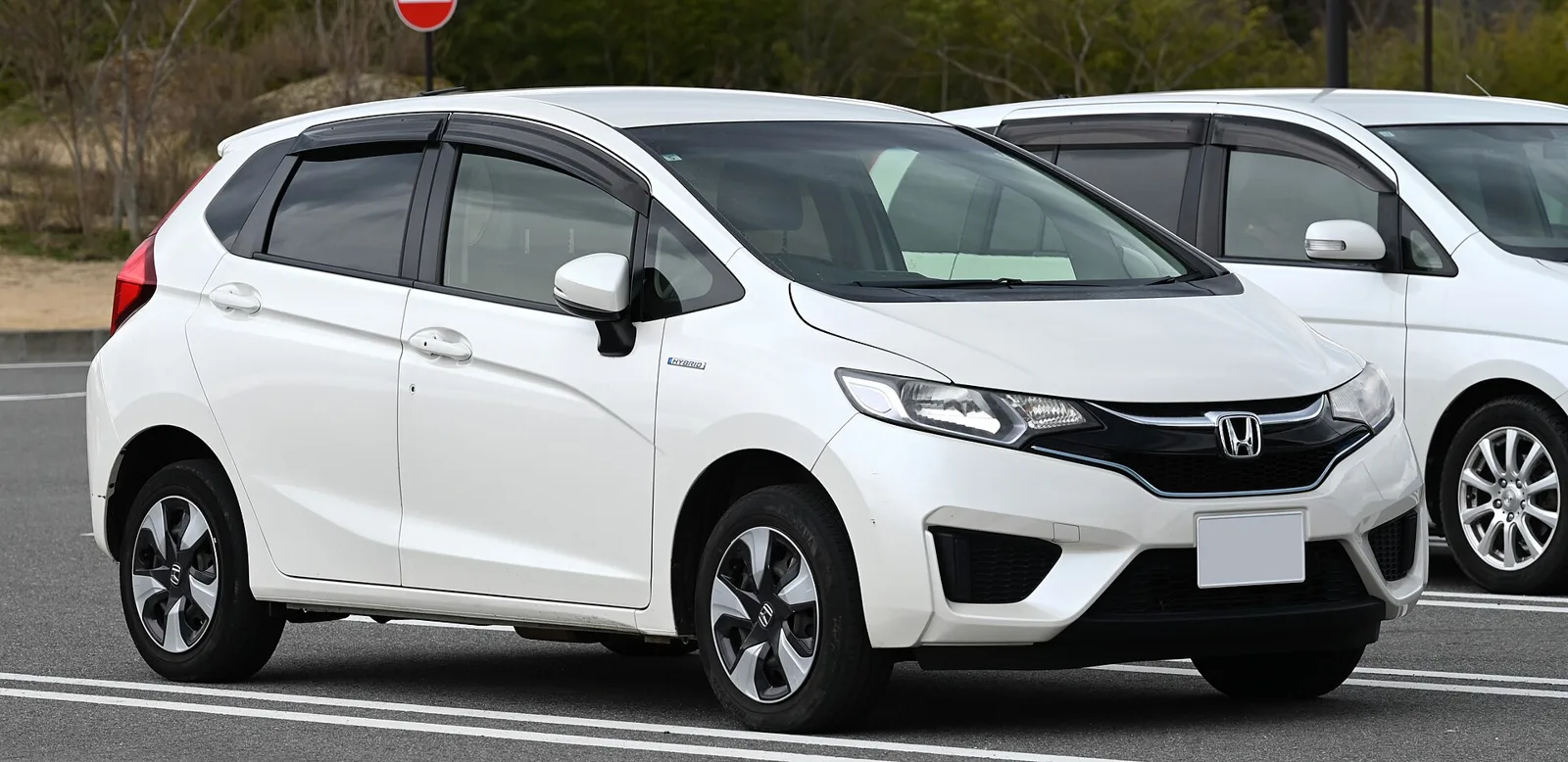
Yes. The sixth generation moved its fuel tank from the centre of the car to the rear, which allowed a lower seating position and roofline. The hybrid used Honda's i-DCD system with a 1.5-litre engine, delivering 132 PS (97 kW; 130 hp) combined, with 178 N m (131 lb ft) as its torque figure.
Malaysia became the second market for the City Hybrid after Japan. The Malaysian car followed two years of testing and paired the hybrid with a 7-speed dual-clutch transmission. Japan sold the same car as the Grace, a name that lasted until its discontinuation in August 2020.
The sixth generation also sold strongly in India, where the launch date was 7 January 2014. The car passed 100,000 sales in just 15 months.
How big is the seventh-generation City?
The seventh generation grew to be a touch bigger than the ninth-generation Civic sedan, while Honda still marketed it as a subcompact. Its platform is shared with the fourth-generation Fit and Jazz. The hatchback measures 4,345 mm (171.1 in) long, which is 208 mm shorter than the sedan.
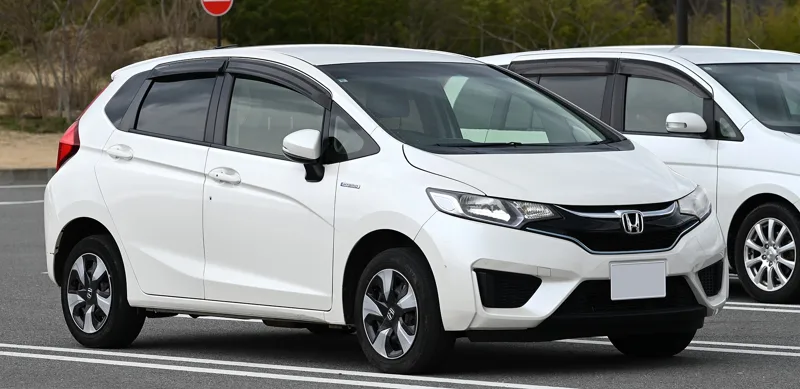
The hatchback arrived in November 2020, and its Ultra Seats offer four rear seat arrangements.
A first-facelifted hatchback was revealed on 8 February 2024. Because the two body styles share a platform heritage, the sedan and hatchback can be read as two versions of one family.
What does the Thai seventh generation offer?
The Thai seventh generation comes in S, V, SV and RS trims and uses a 1.0-litre VTEC Turbo engine. Honda Sensing is standard on every Thai trim level, and the e:HEV version pairs a 1.5-litre Atkinson-cycle engine with a motor. The hatchback arrived in Thailand on 24 November 2020.
The seventh generation was unveiled in Bangkok on 25 November 2019, and Thailand's Eco Car incentive shaped its engine choice.
Where was the City built, and how many were sold?
Cumulative sales passed 3.6 million units by 2017, across more than 60 countries. India alone reached 700,000 cumulative sales by that year and accounted for 25 per cent of global sales. The City has been Honda's best-selling model in India.
Production began at Thailand's Ayutthaya plant in April 1996, then at Sumare in Brazil in July 2009. Those two sites were joined by a further plant in Argentina, which opened its production in March 2011.
Not every market kept the car. Japan's Grace sales ended in August 2020, Taiwan's production ceased in November 2020, and Indonesia discontinued the City in early 2026. The model's range has therefore narrowed in some markets.
China added its own models. Dongfeng Honda sold the Greiz and Gienia between 2015 and 2019, while Guangqi Honda's Everus S1 was a badge-engineered City from 2011.
Which awards and sales milestones did the City reach?
India's City led the compact sedan segment in the first six months of 2017, and Honda counted more than 10,000 orders within a single month of the facelifted car's mid-February 2017 release. The sixth generation had earlier won the Middle East Car of the Year 2014 award.
The Middle East honour and the Indian sales success came within a few years of each other, which shows the car's appeal across two very different markets.
What were the Thai Eco Car rules?
Thailand's Eco Car rules were tied to a tax incentive, and the City's 1.0-litre VTEC Turbo was the first City to qualify. The rules asked for CO2 emissions below 100 g/km and a fuel consumption figure not exceeding 23.25 km/L. The Thai-spec City was rated at 4.2 L/100 km, or 23.8 km/L.
Both conditions had to be met for the tax incentive, which makes the City's rated figures central to its Thai story.
Did the City race?
The City's performance story runs through its turbo variants rather than a racing programme. The City Turbo arrived in September 1982 with a turbocharged 1231 cc engine, and the City Turbo II followed in October 1983 with wider fenders. Both belonged to the first generation.
No competition programme is recorded for the City, so the turbo road cars remain its sporting chapter.
Honda City specifications at a glance
| Item | Detail |
|---|---|
| First generation launch | November 1981, Tallboy three-door hatchback |
| First generation length | Under 3.4 m (11.2 ft) |
| Third-generation engine | 1.3 L (1,343 cc) D13B, 70 kW (95 PS) at 6,400 rpm |
| Third-generation top speed | 171 km/h |
| Third-generation 0-100 km/h | 11.3 seconds |
| Fifth-generation engine | 1.5-litre L15A7, 120 PS (88 kW) |
| Sixth-generation hybrid | 132 PS (97 kW; 130 hp), 178 N m (131 lb ft) |
| Seventh-generation hatchback length | 4,345 mm (171.1 in) |
| Thai Eco Car CO2 threshold | Below 100 g/km |
| Cumulative sales by 2017 | 3.6 million units |
_%E2%80%93_f_22032025.jpg)