A 1983 Suzuki born as a General Motors project, sold in Japan as the Cultus and worldwide as the Swift, then rebadged for India, Colombia and North America until 2016.
A General Motors project completed by Suzuki, the Cultus ran from 1983 to 2016. Japan knew it by its own name, export markets by the Swift, Geo Metro and Chevrolet Sprint, and India by the Maruti 1000. Its nameplate lived on in Pakistan.
The Suzuki Cultus was a supermini built by the Japanese maker Suzuki from 1983 to 2016. It was sold in Japan under its own name, worldwide as the Suzuki Swift, and through General Motors under a dozen or so badges, among them the Geo Metro, Chevrolet Sprint and Pontiac Firefly. In India it became the Maruti 1000, and in Pakistan the name was reused on a rebadged Celerio from 2017.
Where did the Cultus come from?
The Cultus began life as a General Motors project known inside the company as the M-car. GM found the project was not going to be profitable enough, so it handed the unfinished design to Suzuki and took a five per cent holding in the Japanese firm in exchange. Suzuki completed the development work and put the car on sale in Japan in October 1983 as the Cultus.
The name is Latin, and it means care or adoration. Outside Japan the car was sold as the Swift, and it was first shown at the 25th Tokyo Motor Show before its formal Japanese introduction in 1983.
A General Motors project that Suzuki finished, sold worldwide as the Swift and Geo Metro, and built in India as the Maruti 1000.
Why did General Motors share the Cultus?
A 1981 alliance between General Motors, Suzuki and Isuzu allowed GM to sell the car as a captive import in international markets. The result was a set of badge-engineered models that carried more than a dozen names, from the Holden Barina in Australia to the Pontiac Firefly in Canada. Within GM the car was known as the M-car, and its design fitted neatly with the corporate look of the General Motors range.
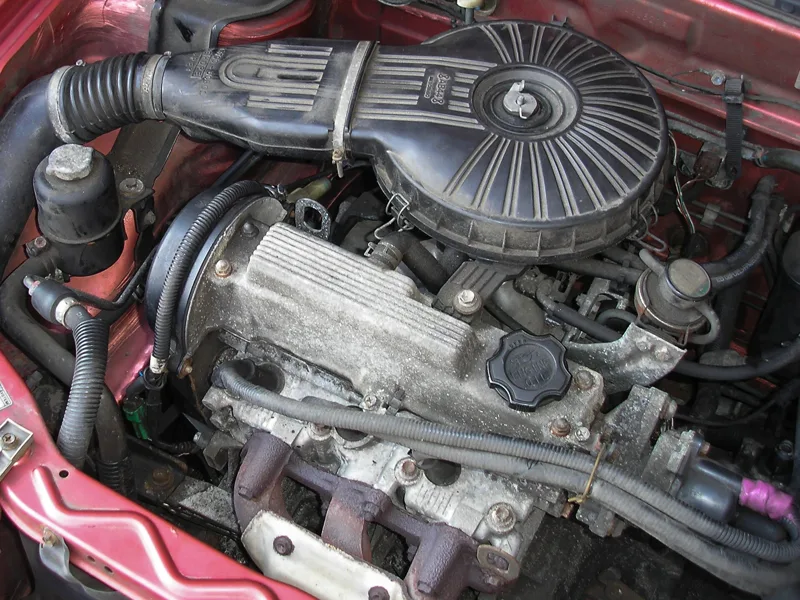
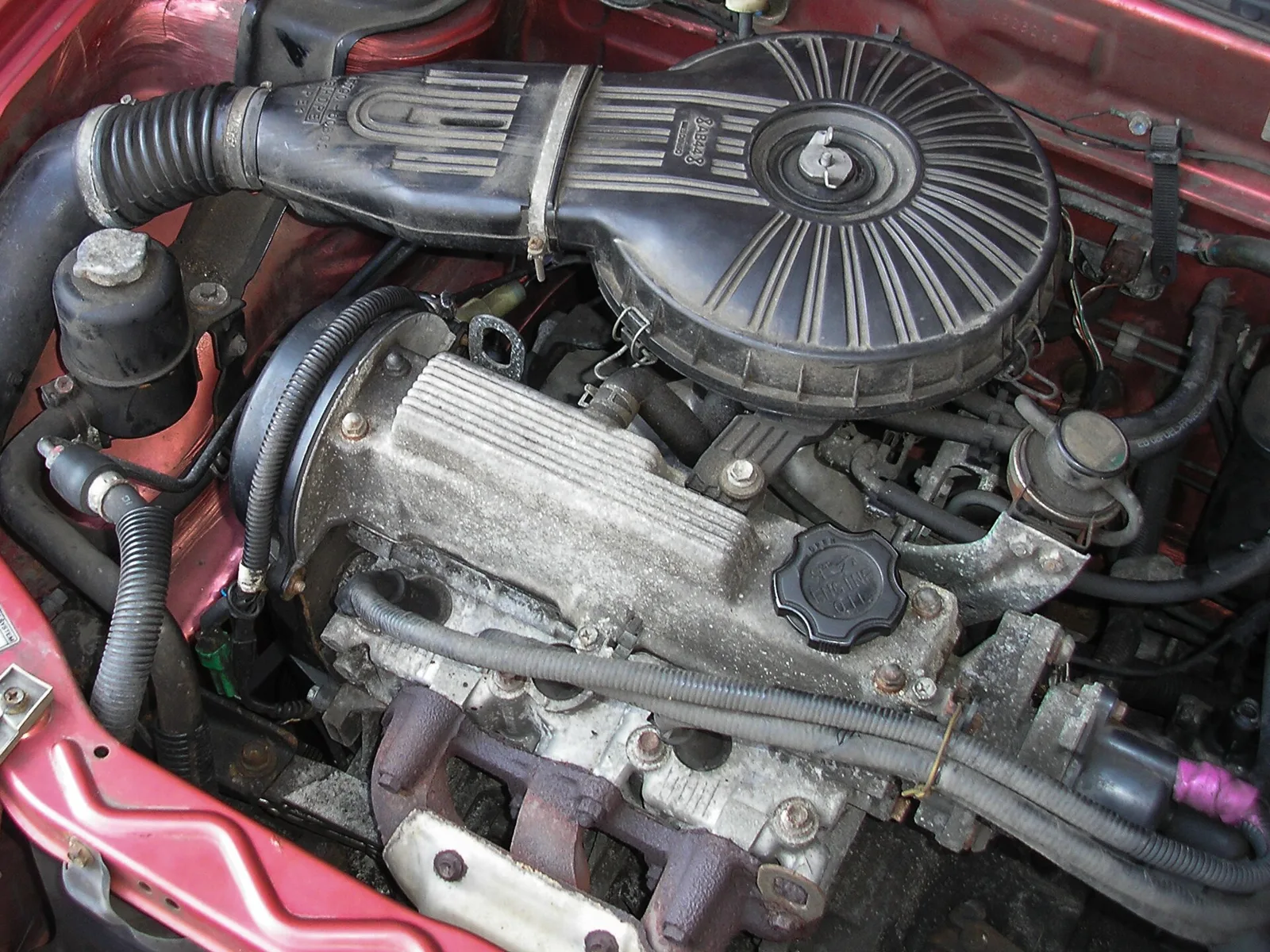
Across its lifespan the Cultus was offered in four body styles, with engines from Suzuki's G family. Those engines and drivetrains were usually modified versions of the earlier units, which kept development costs manageable for a car sold through many different channels.
How did the first Cultus launch?
The first generation was Suzuki's first serious entry into a class of car larger than the kei Fronte, and it used the SA model code. Early export models were coded SA310. The car had leaf spring rear suspension and a 1.0 litre (993 cc) three-cylinder engine coded G10. Its European premiere took place in southern Spain in late 1983.
The original range comprised the GA, GL and the more expensive GLX, and only three-door versions were offered for the first few years. In Finland the car was sold as the Suzuki Extra. The drag coefficient of an early model was quoted at Cd=0.38.
What engines did the first generation offer?
In May 1984 Japan received a turbocharged 1.0 litre, the G10T, along with a three-speed automatic. The turbo's JIS-rated output was 80 PS (79 hp; 59 kW). In August 1984 a five-door body arrived, 10 cm longer than the three-door, along with a 1.3 litre four-cylinder, the SA413.
The sporting Swift GS was a three-door with two-tone paint, flush headlights and a 1.3 litre G13A. Its engine was more potent than the standard 1.3, with 73 PS (72 hp; 54 kW) on the DIN rating against 67 PS. The GS also carried a sporty three-spoke steering wheel and a grey interior with red strips across the seats.
The 1985 model year brought the Swift name to the European market, replacing the SA310 designation used on earlier export cars.
How was the Cultus sold in Australia and New Zealand?
In Australia the car entered the market in 1985 as the Holden Barina. Before that, the importer lacked the quota for a passenger car, so it sold the model as a two-seat van under the Swift name. Models were the GA, GL, GC, GLS and GTi.
In New Zealand the Swift was assembled locally at Wanganui from 1985, and it carved out its own niche with about 800 cars a year. The Barina was assembled there too, but by GM New Zealand at its Petone plant. In Indonesia a five-door version of the earlier SA310 was briefly offered in late 1985, then replaced by the Forsa, which used a 970 cc four-cylinder F10A engine from the Suzuki Carry 1.0 and produced 55 PS (54 hp; 40 kW).
What changed in the June 1986 facelift?
In June 1986 the car was refreshed. Coil springs took over from the leaf springs at the rear, the front end was remodelled with a more forward swept grille and headlights, and the dashboard was redesigned. The windscreen was now caulked in place rather than held by a moulded seal.
The 1.0 and 1.3 litre engines were slightly detuned, while the turbo gained fuel injection and was rated at 82 PS (81 hp; 60 kW) JIS. The facelifted model reached Indonesian production by early 1987 as the Forsa GL, with trim pieces borrowed from the sporting GTi, and a more luxurious GLX was added later.
What did the GTi offer?
In June 1986 Suzuki introduced the flagship GTi, code AA33S, with styling and performance upgrades. It was offered first as a manual three-door, and a five-door called the GXi arrived later. It was one of the first Suzuki cars with electronic fuel injection on its G13B twin-cam engine, which displaced 1298 cc thanks to a shorter stroke of 75.5 mm, down from 77 mm.
Japanese GTi output was 97 PS (96 hp; 71 kW) JIS. In export markets it made 101 PS (100 hp; 74 kW) at 6,450 rpm and 83 lb ft (113 N m) of torque at 4,950 rpm. Period road tests put its 0-60 mph run at between 8.7 and 9.0 seconds, and its quarter mile at 16.8 seconds at 83 mph (134 km/h). The front discs were upgraded as well.
How was the Cultus sold in North America?
In North America the car first appeared as the Suzuki Forsa between 1985 and 1988, sold in Ecuador, Chile, Indonesia, Canada and the United States. The Forsa had a carbureted 1.0 litre three producing 48 hp (49 PS; 36 kW), and a fuel-injected turbo version producing 70 hp (71 PS; 52 kW). The EPA listed the 1985 Forsa under the original Japanese name SA310.
In 1984 Suzuki and General Motors had announced that they would sell rebadged Cultus models in North America as Chevrolets and Pontiacs, with Suzuki keeping the Forsa name. In the end the Pontiac Firefly was sold only in Canada.
What did the Chevrolet Sprint and Geo Metro do?
The Chevrolet Sprint arrived in 1985, first in the western United States and nationwide from 1986. It came in ER, Base and Turbo models. The Sprint Plus five-door appeared in 1986, and a three-speed automatic became available that year. The Turbo Sprint used an IHI RHB32 turbocharger from 1987, and sold 6,360 examples that year and 1,544 in 1988, a total of 7,904.
The Sprint badge was replaced in the United States by the Geo Metro for the second generation, although it lingered in Canada until the Geo brand arrived there in 1992. The Metro's one-litre three produced 61 PS (60 hp; 45 kW), and its economy-tuned XFi with 50 PS (49 hp; 37 kW) was a frugal variant. The XFi accounted for under 10 per cent of Metro sales.
Metro production at CAMI Automotive in Canada began in late 1989, with 660 cars finished in the first year. Apart from convertibles, every Metro built after that was made in Canada. Under the Geo Metro name, the American Council for an Energy-Efficient Economy named it the leading gasoline vehicle on its Greenest Vehicles list in 1998 and 1999.
How did the Cultus fare in Colombia and Pakistan?
The Colombian Chevrolet Sprint was presented on 7 October 1986 and caused a sensation. Colombian cars were five-door hatchbacks with the 993 cc G10A three-cylinder and a five-speed manual. The model stayed in production almost unchanged until 2004, with 70,848 built in total. A 1997 update brought monopoint injection and 53 PS.
In Pakistan the first generation was sold as the Suzuki Khyber by Pak Suzuki from 1989 to 2000, in GA trim only. Its four-stroke engine was based on the G10A and mated to a five-speed manual. The final cars were sold as Limited Editions with unique metallic colours and a Clarion sound system.
What changed with the second generation?
The second-generation Cultus appeared in Japan in September 1988. Its European debut as the Swift came at the Brussels Auto Salon that October. General Motors, whose Design Center helped with development, called it the GM M platform. The engineering was done by Suzuki, and it introduced new styling and four-wheel independent strut suspension.
Engines included a 1.0 litre three with 53 PS (52 hp; 39 kW), a 1.3 litre four and, for the sedan only, a 1.6 litre four. A turbocharged three remained popular in Canada, which was the only market for that version. Japan never saw that version at all.
How did the second-generation GTi and Esteem differ?
The Cultus GTi was given an improved G13B with hollow camshafts, a stronger block, a better flowing intake manifold and electronic control of ignition timing. It produced 101 PS (100 hp; 74 kW) and had disc brakes on all four wheels. The Japanese GTi ran a higher compression ratio of 11.5:1, giving 115 PS (113 hp; 85 kW), and it could be ordered with permanent four-wheel drive.
In June 1989 Suzuki launched its first three-box sedan since the Fronte 800 was discontinued in 1969. In Japan it was the Cultus Esteem, and it was available with a 1.6 litre engine that was never offered in the hatchbacks. The Esteem later used a 1.5 litre G15A with 91 PS (90 hp; 67 kW). A July 1991 facelift came with the 1992 model year, moving the rear plate to the bumper.
Where was the Swift built in Europe?
The first European-built Swift came from Magyar Suzuki in Esztergom, Hungary, in September 1992. Suzuki put $230 million into the new company and sent its Hungarian staff to Japan for training. Three-door models ended in September 2002, the four-door sedan in December 2002, and the five-door ran until March 2003.
What happened to the Cultus in Indonesia and Ecuador?
In Indonesia the hatchback was sold as the Forsa Amenity from 1990 to 1992, then as the Eleny until 1994. The Forsa Esteem sedan arrived in 1991. Early cars used a carbureted 1.3 litre G13BA producing 71 PS (70 hp; 52 kW), and the Esteem GT later offered a 1.6 litre G16A, rated at 92 PS (91 hp; 68 kW). The hatchbacks ended in 1994 and the sedan in 1996.
In Ecuador, Aymesa assembled the Forsa II and a Chevrolet Swift sedan. GM took over Aymesa's output in 1999, and the hatchback was built until at least 2003 as the Chevrolet Forsa. In Colombia, GM-Colmotores in Bogota built the Chevrolet Swift until 2004.
How did the Cultus sell in Japan and China?
In Japan the Cultus was gradually replaced in 1995 by the larger Cultus Crescent, which had a chassis stretched by 10 cm and new styling. In May 1998 the hatchback became the Cultus M, and it stayed on sale until August 2002 as one of the cheapest non-kei cars available. Its successor was the larger Aerio.
In China the car was built by Chang'an as the Suzuki Lingyang from 1999 until early 2015, with a 1.3 litre G13BB and a five-speed manual as the only choice. The Lingyang was facelifted in 2007, 2010 and 2012.
How did the Maruti 1000 come about?
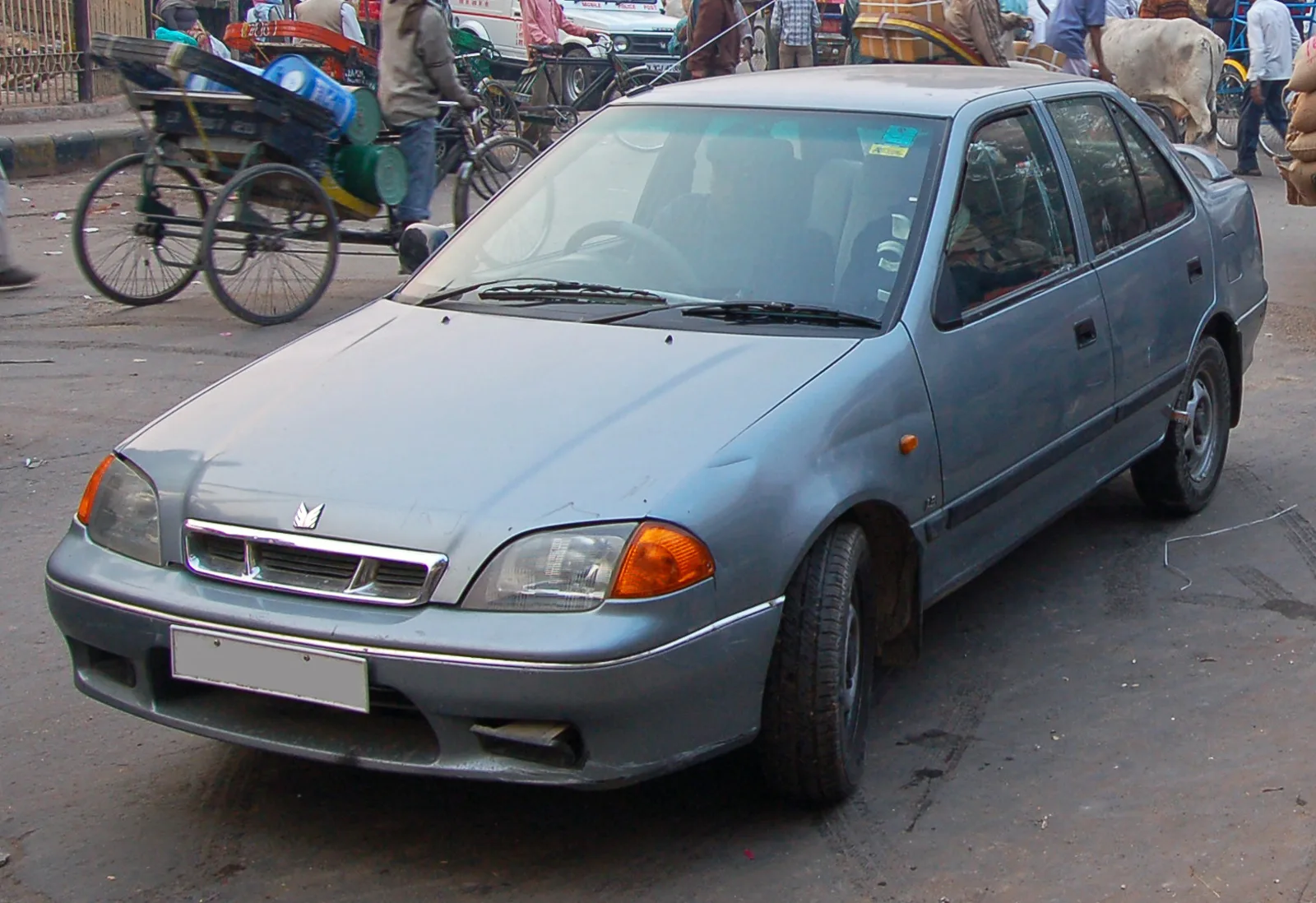
The Maruti 1000 was a sedan built by Maruti Udyog in India from October 1990 until 2000. It was a rebadged Suzuki Cultus or Swift, although Maruti had been showing the car since 1989. Demand was strong, and a computerised lottery decided who could buy one from the waiting list.
The car was a luxury item at its launch price of Rs. 381,000, which put it out of reach for more than 99.5 per cent of India's population. A period commentator called it a project by the elite for the elite. The 970 cc engine produced just 46 hp, which was underpowered for a car weighing 825 kg (1,819 lb). A 1.0 GLX version with air conditioning and leather was offered to buyers who could pay in foreign exchange.
What was the Maruti Esteem?
The Maruti Esteem arrived in November 1994, with a 1.3 litre engine and similar looks to the 1000. Its first engine was a 65 PS (64 hp; 48 kW) carbureted unit, replaced in 2000 by an 85 PS (84 hp; 63 kW) fuel-injected 16-valve. Its engine ranked among the best power-to-weight figures of any sub-two-litre car, and the Esteem became popular in Indian motorsport, especially rallying.
The Esteem was offered in LX and VX trims from late 1995, with VX adding power steering and power windows. An automatic AX followed in June 1996. The Maruti 1000 remained below it until March 2000. The Esteem was updated in 2000 and 2002, and a 2004 facelift borrowed lights and bumpers from the Chinese Lingyang. Its production ended in December 2008, when it was replaced by the Swift DZire.
Did the Cultus race?
In 1992 Nobuhiro Tajima took a heavily modified twin-engined Cultus to the Pikes Peak International Hill Climb. Later that year, Mark Brame and Henry Draper took a Swift GTi to victory in the Yokohama 6-Hour production car race at Winton, Victoria, on 29 November 1992.
Suzuki Cultus key figures
| Version | Years | Engine and output |
|---|---|---|
| Cultus, first generation | 1983 onward | 1.0 litre G10 three, 993 cc |
| Turbo G10T | 1984 onward | 80 PS (79 hp; 59 kW) JIS |
| GTi AA33S | 1986 onward | 1298 cc G13B, 101 PS (100 hp; 74 kW) export |
| Forsa, North America | 1985 to 1988 | 48 hp (49 PS; 36 kW) carbureted three |
| Turbo Sprint | 1987 to 1988 | IHI RHB32 turbocharger, 7,904 built |
| Second generation Swift | 1988 onward | 1.0 three, 53 PS (52 hp; 39 kW) |
| Cultus Esteem | 1989 onward | 1.5 litre G15A, 91 PS (90 hp; 67 kW) |
| Maruti 1000 | 1990 to 2000 | 970 cc, 46 hp |
| Maruti Esteem | 1994 to 2008 | 1.3 litre, 85 PS (84 hp; 63 kW) by 2000 |